- English
- French
- German
- Portuguese
- Spanish
- Russian
- Japanese
- Korean
- Arabic
- Greek
- German
- Turkish
- Italian
- Danish
- Romanian
- Indonesian
- Czech
- Afrikaans
- Swedish
- Polish
- Basque
- Catalan
- Esperanto
- Hindi
- Lao
- Albanian
- Amharic
- Armenian
- Azerbaijani
- Belarusian
- Bengali
- Bosnian
- Bulgarian
- Cebuano
- Chichewa
- Corsican
- Croatian
- Dutch
- Estonian
- Filipino
- Finnish
- Frisian
- Galician
- Georgian
- Gujarati
- Haitian
- Hausa
- Hawaiian
- Hebrew
- Hmong
- Hungarian
- Icelandic
- Igbo
- Javanese
- Kannada
- Kazakh
- Khmer
- Kurdish
- Kyrgyz
- Latin
- Latvian
- Lithuanian
- Luxembou..
- Macedonian
- Malagasy
- Malay
- Malayalam
- Maltese
- Maori
- Marathi
- Mongolian
- Burmese
- Nepali
- Norwegian
- Pashto
- Persian
- Punjabi
- Serbian
- Sesotho
- Sinhala
- Slovak
- Slovenian
- Somali
- Samoan
- Scots Gaelic
- Shona
- Sindhi
- Sundanese
- Swahili
- Tajik
- Tamil
- Telugu
- Thai
- Ukrainian
- Urdu
- Uzbek
- Vietnamese
- Welsh
- Xhosa
- Yiddish
- Yoruba
- Zulu
Top RB4010UUCC0 Cross roller bearing Suppliers Worldwide
When sourcing precision cross roller bearings for robotics, machining centers, or medical equipment, finding a reliable global supplier is mission-critical. The RB4010UUCC0 cross roller bearing stands out among precision rotary components due to its unique split outer ring design, integrated inner ring structure, and dual-sealed protection system that delivers exceptional rigidity under multi-directional loads. Leading suppliers worldwide—ranging from established manufacturers in Asia to specialized distributors in Europe and North America—offer varying levels of technical support, lead times, and certification compliance. Selecting the right partner requires evaluating quality certifications like ISO 9001 and IATF 16949, production capacity, engineering responsiveness, and proven track records in serving automotive OEMs, industrial machinery builders, and automation equipment manufacturers.

Understanding RB4010UUCC0 Cross Roller Bearings
Technical Specifications and Design Architecture
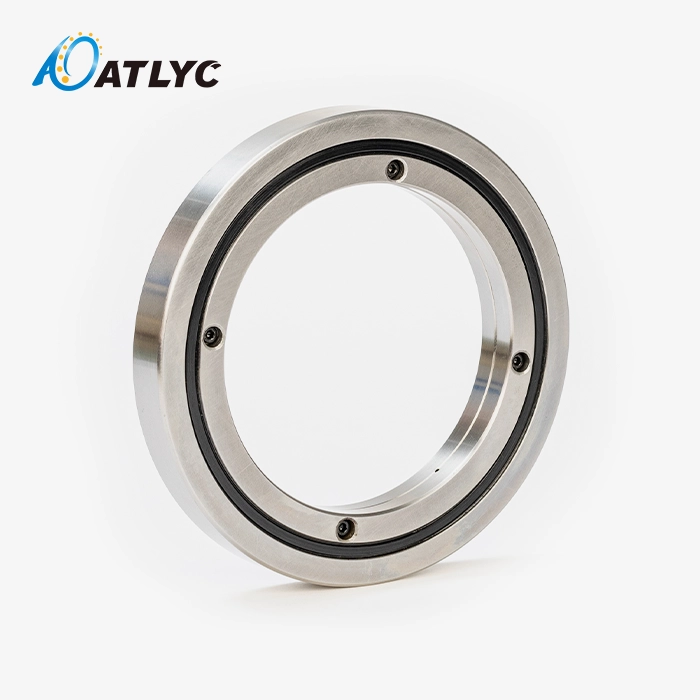
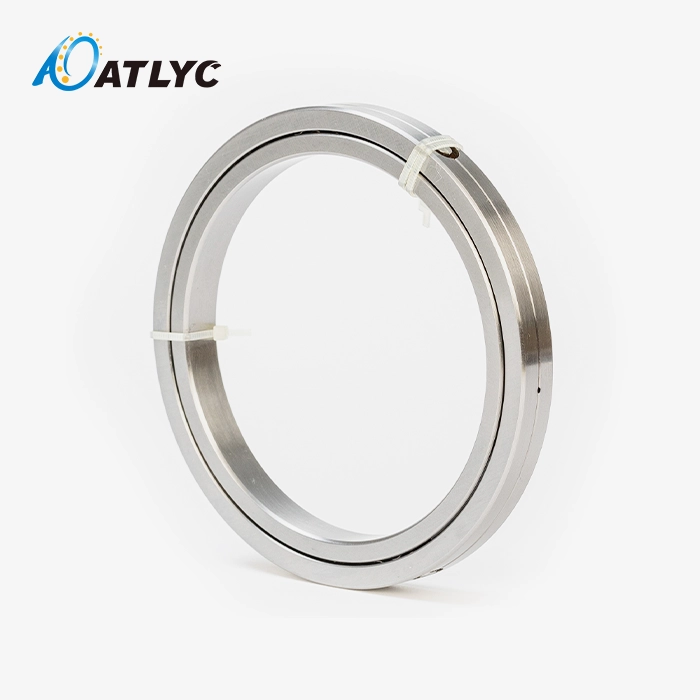
The RB4010UUCC0 Cross roller bearing has exact measurements: a 45mm inner diameter, a 65mm outer diameter, and a 10mm width. This bearing is made of high-carbon chromium bearing steel (GCr15 or GCr15SiMn) that has been strengthened to HRC 58–64. It is tough enough to work in harsh industrial settings. The integrated inner ring makes fitting easier, and the split outer ring design with retention plug makes installation easier in parts that are hard to get to. The "UU" label means that there are two rubber seals that keep the lithium-based grease that was put in by the factory in place and keep out dust, moisture, and small particles. This sealed design keeps the raceway's integrity in tough production environments and extends the time between repair visits. According to the "CC0" clearance standard, there should be a controlled negative radial clearance between -0.008 mm and 0mm. This sets up an internal preload that stops elastic movement under load and provides zero backlash performance.
Load Capacity and Operational Principles
RB4010UUCC0 Cross roller bearings place circular rollers at 90-degree angles across from each other, while traditional ball bearings rely on point contact. The bearing can handle radial loads, axial forces, and moment loads all in one small unit thanks to its perpendicular arrangement. The shape of the line contacts lowers the concentrations of contact stress, which increases the operational life under heavy loads while keeping the smooth rotation. Most of the time, the crossed-roller architecture is three to four times stiffer than similar ball bearing assemblies. This extra rigidity is very important in precision positioning systems where deflection under load would make it harder to repeat. Because of their low friction coefficient, these bearings can rotate smoothly even when they are under a lot of stress. This means they can be used for both steady spinning and oscillating motion.
Industrial Applications and Use Cases
Industrial robots are one of the main areas where joint systems can benefit from the moment rigidity of bearings when moving quickly into place. These parts are used in the waist and elbow units of six-axis robots, which need very stiff structures because of the acceleration forces and offset loads. The preload setting makes sure that the positioning is always the same over millions of rounds, and the sealed design keeps factory floor dirt out. This type of bearing is needed for machining center rotating tables to hold heavy workpieces in place and keep them straight while cutting. The joint load capacity can handle the weight of the workpiece, cutting forces, and excess moments all at the same time without affecting the accuracy of the position. Medical imaging equipment like CT scanners needs to be able to rotate quietly and smoothly, with little vibration. The crossed-roller design and integrated ring structure provide these qualities, as well as mounting precision that is essential for image quality. These bearings are used in chip handling systems and precision positioning stages used in semiconductor manufacturing equipment. They have to be compatible with cleanrooms and work with no slack. Because they can keep their accuracy under changing loads, they can be used in IC manufacturing devices that work in controlled environments where keeping contamination to a minimum is very important.
| Domain for Applications | Main Type of Load | Key Requirement for Performance | Typical Class of Accuracy |
|---|---|---|---|
| Joints for industrial robots | Moment plus Radial | High stiffness and no blowback | P5, P4 |
| Rotary tables for machining | Axial plus Moment | Loading on the center of mass | P5, P4, P2 |
| Systems for medical imaging | Radar and Axial | Operation with low shaking and noise | P4, P2 |
| Equipment for Semiconductors | Radial plus Moment | Compatibility with cleanrooms | P4, P2 |
Maintenance Strategies for Extended Service Life
Proper lubrication is still very important for getting the stated life out of bearings. Under normal conditions, the factory-applied grease (usually Alvania EP2 or a similar lithium complex substance) does a good job of protecting the machine. Depending on the temperature and load cycles, heavy-duty applications may need to be re-greased every six to twelve months. The split outer ring usually has an oil port built in so that it can be re-oiled without taking the whole thing apart. Visual checks should be done on a regular basis to check the state of the seal and find early signs of contamination getting in. Strange noises, higher operating temperatures, or changes in torque that don't happen regularly can all be signs of damage to the raceways that need immediate attention. Environmental controls that keep bearings from being exposed to acidic atmospheres and too much moisture make them last a lot longer. When you store and install a bearing the right way, you can keep the raceway from getting damaged by impact loads or dirt before it goes into service.
Top RB4010UUCC0 Cross Roller Bearing Suppliers Worldwide
Evaluation Criteria for Supplier Selection
Quality approvals are the basis for trusting a seller. The ISO 9001 certification shows that a basic quality management system is being followed. The IATF 16949 certification, on the other hand, is specific to the car industry and covers things like preventing defects, managing the supply chain, and making improvements all the time. Suppliers that work with the military, medical, or semiconductor industries often have extra licenses like AS9100 or ISO 13485. A supplier's production capacity shows whether they can meet volume needs while keeping quality standards high. When it comes to accuracy and surface finish, manufacturers with dedicated RB4010UUCC0 Cross roller bearing production lines and automated grinding equipment are better than job shops that don't specialise much. Strategic partners are different from transactional sellers because they offer engineering support services like application analysis, mounting suggestions, and custom changes. Delivery performance measures, such as the percentage of on-time shipments, the regularity of wait times, and the ability to coordinate operations, have a direct effect on the predictability of production schedules. When a supplier has warehouses in key geographic markets, it cuts down on transit times and customs problems. When production equipment depends on bearing performance, warranty terms and quick response times for after-sales support are essential for reducing risk.
Leading Manufacturers and Regional Distribution Networks
Asian companies make most of the RB4010UUCC0 Cross roller bearings because they have well-established supply chains, specialised manufacturing knowledge, and low costs. Luoyang Auto Bearing Co., Ltd., which was founded in 2010, is a great example of this area of strength because it has been growing steadily for 15 years and serves markets around the world. The company has six specialised workplaces with 120 trained workers who do things like production, research and development, quality control, and assembly. The building has both ISO 9001 and IATF 16949 certifications, which show that it meets international quality standards that are important for automotive OEM supply chains. The company's ability to meet different technical and legal standards in different industrial sectors is shown by the fact that it has export markets in South Korea, the US, Germany, Russia, Iran, and Turkey. European distributors often work with Asian manufacturers to offer localised technical support and faster shipping through regional warehouses. These partnerships mix low production costs with benefits like being close to customers and being able to communicate in their own language for European customers. North American distributors use similar models and often keep standard bearing sizes in stock to cut down on lead times for urgent replacement needs.
Supplier Comparison: Capabilities and Service Levels
The size of a factory has a direct effect on how low prices are and how reliable deliveries are. Large producers get economies of scale when they buy raw materials, heat treat them, and grind them, which means that the cost per unit is lower. Most of the time, these facilities have higher minimum order quantities, but their production lots are more consistent. Most of the time, mid-sized specialised makers can make changes more easily and take smaller orders. These suppliers are great at making changes that are specific to an application, like using non-standard seal materials, making special grease formulations, or changing the sizes of parts to fit different mounting needs. In exchange, unit costs might go up, but engineers will be able to work together better. Lead times are very different depending on how material is managed and when products are made. Standard-size distributors usually ship within days, but it could take eight to twelve weeks from the time an order is confirmed until it is delivered for custom-sized items. Suppliers who have good forecasting systems and strategically place their product can balance supply with holding costs well.
| Type of Supplier | Minimum Order Amount | The average lead time | Ability to Customise | Main Advantage |
|---|---|---|---|---|
| Big Company That Makes Things | 500 to 1000 units | 6 to 8 weeks | Moderate | Consistency and low costs |
| Mid-sized producer with a focus | 100 to 300 units | 4 to 6 weeks | High | Help with engineering and freedom |
| Distributor in the region | 10 to 50 units | 1-2 weeks (for stock items) | Limited | Instant availability |
| OEM Direct Source | Based on projects | 8 to 12 weeks | High | Integration of technology |
Customer Feedback and Verified Performance Records
Reviews of the industry always point out that one thing that sets one supplier apart from another is how quickly they respond to technical questions. Long-term partnerships are stronger when manufacturers assign dedicated engineering contacts and make suggestions based on the application. Case studies with written evidence of successful methods in similar applications are a good way to back up choices about procurement. When quality stays the same across multiple order rounds, it means that manufacturing processes are stable and quality control systems are working well. Suppliers who are willing to give first-article inspection reports, material certifications, and dimensional verification data show that they are honest, which makes it easier for inspectors to do their jobs. Customer references from businesses in the same industry can help you figure out how well a supplier will do in real-life production settings.
Comparing RB4010UUCC0 with Other Cross Roller Bearing Options
Model Variations and Selection Considerations
The RB4010UUCC0 Cross roller bearing and RB4010UUCC1 are mostly different in how much internal space they have. The CC0 designation means standard negative clearance, which creates medium preload, while the CC1 designation means tighter negative clearance, which creates higher preload and better rigidity. Both have the same external measurements and general design architecture. The CC1 version is better for applications that need maximum stiffness under heavy moment loads, but the tighter preload makes starting torque higher and friction heat production higher. Another important choice is between sealed and open designs. The double-sealed UU design keeps out contamination, but the seal friction limits the fastest speeds that can be used. In controlled environments with little chance of contamination, open bearings may be needed to reduce friction and heat production, but the housing design must include external sealing arrangements. Different axial room limits are met by the different widths in the RB line. When room is limited, the RB4010UUCC0 Cross roller bearing's 10mm thickness makes for small packaging. Wider versions, on the other hand, can hold more weight when envelope dimensions allow. To choose the right width, you have to weigh the load needs against the mounting room you have.
Cross Roller Bearings versus Traditional Ball Bearings
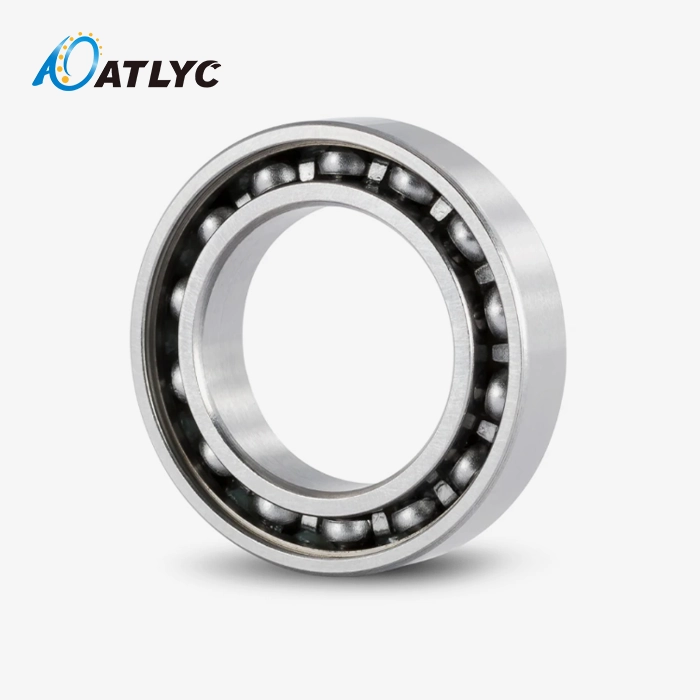
Standard deep groove ball bearings work great for applications with only radial loads and moderate speed needs, but they aren't rigid enough for situations with mixed loads. Angular contact ball bearings can hold more weight in some directions, but they need to be mounted in pairs in duplex or triplex arrangements, which makes the assembly more complicated and requires more axial space.RB4010UUCC0 Cross roller bearings get rid of these problems because they can handle loads that are moving in more than one direction within a single unit. Three to four times more rigidity is provided by the line contact shape than by ball bearing sets of the same size. This advantage in stiffness is very important in precision positioning systems where accuracy is lost when parts bend under load. When compared to paired angular contact setups, the small cross-section lowers the overall height of the unit. These efficiency benefits are reflected in the difference in cost. RB4010UUCC0 Cross roller bearing assemblies usually cost two to three times more than similar ball bearing assemblies. However, the higher price is more than made up for by easier mounting options, lower assembly height, and better performance. Life cycle cost analysis often recommends cross roller bearings for tough jobs, even though they cost more at first.
Performance Benchmarking Against Competitor Products
NSK, IKO, and THK are all well-known Japanese companies that make a wide range of cross roller bearings. These companies sell tried-and-true designs that come with full technology specs and worldwide shipping systems. Their goods usually have higher prices because the name is well-known and has been used in many different industries. Chinese companies, like Luoyang Auto Bearing, have closed the performance gap by buying more precision cutting tools, heat treatment systems, and quality control systems. Products made in factories that are ISO 9001 and IATF 16949 certified have similar accuracy in measurements and work well at reasonable prices. The value proposition is based on meeting international quality standards while keeping cost advantages that help buyers who care about price. Material requirements for most good makers stay mostly the same. They use GCr15 or an equal grade of hardened bearing steel. Performance differences are mostly caused by controls in the manufacturing process that affect the finish on the raceway, the accuracy of the roller sorting, and the quality of the assembly. Testing by a third party and written performance data give us objective comparison metrics that go beyond what suppliers say.
How to Procure RB4010UUCC0 Cross Roller Bearings Efficiently
Sourcing Channels and Supplier Authentication
Well-known business-to-business sites like Alibaba, Made-in-China, and Global Sources let you connect with many Chinese manufacturers, each with different skills and levels of trustworthiness. To make sure a seller is real, you need to look at their business licenses, quality certifications, and documents from their production facilities. Before agreeing to big orders, third-party inspection services can make sure that the manufacturing skills and quality systems are sound. Direct connections with manufacturers offer the best prices and technical help, but they also require bigger investments and more time to build relationships. Regional wholesalers make it easier to get standard goods faster and in smaller amounts, but the unit costs go up because of the distribution profits. How these trade-offs are balanced depends on the number of orders, how quickly they need to be filled, and the strategic sourcing goals. Trade shows like Hannover Messe, IMTS, and specialised events for the bearing business make it easier to talk to makers and dealers directly. These events let people test products in real life, talk about technical issues in person, and build relationships, all of which speed up the seller approval process.
Procurement Workflow and Documentation Requirements
For procurement to work well, there must be clear technical specs about things like tolerances for size, accuracy level needs, preferred seal type, and working conditions. Giving providers information about the application helps them suggest the best options and find any possible application problems early on in the quoting process. Request for quotation (RFQ) packages should include information about the amount needed, when it needs to be delivered, what certifications are needed, and how the goods should be inspected. Asking for material certifications, dimensional inspection reports, and sample availability shows that you are serious about buying something and gets more complete responses from suppliers. To compare quotes, you have to make sure that the price terms are all the same, such as Incoterms, payment terms, and guarantee coverage. Specifications, inspection requirements, packaging instructions, and delivery terms should all be clearly stated in purchase orders. Misunderstandings can be avoided during order fulfilment by setting clear standards for quality acceptance and dispute settlement. Updates on progress during production and pre-shipment inspections let you see where your order is in the process and make sure the quality is good.
Negotiation Strategies and Cost Optimization
Due to lower setup costs and faster access to materials, volume agreements have a big effect on unit prices. Using blanket orders with scheduled releases or combining needs from multiple projects can help you get better prices while still keeping your inventory flexible. Long-term supply deals that include volume promises can often get you better prices and more capacity during times of high demand. Payment terms affect how much a seller charges and how much risk they see. Letters of credit offer security for both parties, but they come with banking fees. Wire transfer fees show resolve and may get you better prices, but they also make the buyer more vulnerable to risk. Case-by-case analysis is needed to find the best balance between payment terms, ties with suppliers, and order values.RB4010UUCC0 Cross roller bearing customisation options for OEMs let products stand out and make the best use of their features. Custom seal materials, special grease formulations, or changes to the size of an item usually come with tooling costs and minimum order quantities, but they can improve performance in certain situations. When custom specs are worth the extra cost, they are weighed against the performance benefits and competition placement.
Installation, Maintenance, and Longevity Best Practices
Proper Installation Procedures
When installing a RB4010UUCC0 Cross roller bearing, it's important to pay attention to the mounting tolerances and handling steps that keep the raceways from getting damaged. To keep the bearing from being over-stretched by too many interference fits, housing bores and shaft sizes should meet H7 tolerance standards. When press-fitting, the force must be spread evenly across the face of the ring using the right tools to avoid edge loading and raceway distortion. The split outer ring design needs to be handled carefully to keep the two halves of the ring in the right place. When installing, use a press plate to apply even pressure to the outside of the ring face and make sure the housing or cover plate holds the split ring in place. Assembly mistakes that hurt bearing performance can be avoided by measuring gap sizes and visually inspecting to make sure the bearings are properly seated. How clean the installation is has a direct effect on the life of the bearing. When contaminants are added during fitting, they damage the raceways too soon and cause more friction. Using gloves and lint-free products to install bearings in clean areas lowers the risk of contamination. A pre-installation test that checks the consistency of the grease fill and seal finds any possible quality problems with the bearing before it is put to use.
Preventive Maintenance Protocols
Regular lubrication keeps the film width between the wheels and the raceways at the right level. This keeps the metals from touching each other, which would otherwise cause wear and strain. The tight design keeps the factory-applied grease in well under normal conditions. For heavy-duty uses, however, the oil port on the outer ring should be used for regular cleaning. Between six months and a year is the recommended time between regreasing, but this depends on the working temperature, load, and job cycle. Monitoring the operating temperature lets you know quickly if there are problems with lubrication or too much preload. When the machine is first turned on, measurements of the baseline temperature set normal limits that can be used for comparison during regular inspections. If the temperature rises more than 10 to 15°C above the average, it's time to look into the lube, preload settings, or possible contamination problems. Vibration analysis finds flaws that are starting to show up before they cause a catastrophic failure. Baseline sound patterns recorded during setup can be used as a starting point for analysing trends during operation. Increasing vibration amplitudes, frequency shifts, or the appearance of new spectral peaks are all signs that the bearing is wearing out and needs to be fixed. Adding vibration tracking to preventative maintenance plans increases the availability of machinery and decreases unplanned downtime.
Service Life Extension Strategies
Environmental controls that keep bearings from being exposed to corrosive atmospheres, too much moisture, and extreme temperatures make them last a lot longer. When housing designs include good sealing systems, outside contaminants can't get in and hurt the lubrication or damage the raceways. Controlling the operating temperature by using the right loads and letting heat escape keeps the material's qualities and the lubricant's effectiveness. Edge loading, which puts stress on limited raceway sections, can be avoided by making sure the system is aligned correctly during installation and operation. When the shaft and hub are perpendicular within certain limits, the load is spread evenly across all the roller contact surfaces. Checking the alignment of equipment as part of routine maintenance finds problems before they lead to premature bearing failure. Replacement factors shouldn't just look at the amount of time that has passed or the number of working hours. They should also look at other performance measures as well. Increasing friction torque, high running temperature, strange noise patterns, or clear signs of seal degradation mean the end of the service life is getting close. Unexpected failures that mess up production plans and put other tools at risk of damage can be avoided by replacing things before they break.

Conclusion
Finding precision cross roller bearings means finding the right balance between technical requirements, the supplier's abilities, and cost, all while working within the limits of the global supply chain. The RB4010UUCC0 Cross roller bearing performs very well in tough situations thanks to its crossed-roller design, sealed safety, and controlled loading that gets rid of backlash. To do a good job of procuring something, you need to check the certifications of the seller, look at their manufacturing ability, and set clear quality standards. When you install and take care of your bearings correctly, they will last longer and work better, which will justify your initial investment. Long-term value comes from strategic relationships with suppliers that offer stable quality, technical support, and a reliable supply chain.
FAQ
What advantages does the RB4010UUCC0 cross roller bearing offer over standard ball bearings?
Because they have line contact instead of point contact, RB4010UUCC0 Cross roller bearings are three to four times stiffer than ball bearings of the same size. This design lets a single, small unit handle radial, axial, and moment loads at the same time, so there's no need for complicated paired bearing setups. The increased rigidity is very important in precision positioning systems where accuracy is lost when parts bend under load. The cross roller shape is very useful for situations where moment loads or zero pushback are needed.
How can I verify authorized distributors and avoid counterfeit products?
Ask suppliers for copies of their ISO 9001 and IATF 16949 certifications, and then use the databases of the issuing certification body to make sure the certificates are real. Facility audits by a third party confirm that the factory can make things and that quality systems are in place. More proof can be found by asking for material certifications, dimensional inspection reports, and sample evaluations before placing large orders. Suppliers that have been around for a while communicate clearly and back up their quality claims with specific paperwork.
What lead times should I expect for bulk RB4010UUCC0 orders?
Standard lead times from makers with a history of production usually take six to eight weeks from the time an order is confirmed until it is delivered. Due to the need for custom tools and production schedules, lead times can go up to eight to twelve weeks for changes like non-standard seals, special grease, or changes to the size. Regional wholesalers who keep standard-sized items in stock usually ship stock items within one to two weeks, but supply depends on how often items are ordered and when they are restocked.
Source Your Precision Bearings from a Trusted Manufacturer
ATLYC is an expert at making high-precision cross roller bearings and has been improving them for 15 years to serve the automotive and industrial equipment markets around the world. Our factory keeps its ISO 9001 and IATF 16949 certifications up to date, which makes sure that the quality always meets international OEM standards. We make RB4010UUCC0 Cross roller bearings with very tight limits on sizes and very strict quality control all the way through the production process. Email our engineering team at auto@lyautobearing.com for technical advice, competitive quotes, and reliable supply solutions that are made to fit your production needs. ATLYC has the precise production, quick support, and low prices that procurement managers look for in a reliable cross roller bearing provider. They can make standard designs or custom changes to fit your needs.
References
1. Harris, T.A. & Kotzalas, M.N. (2006). Advanced Concepts of Bearing Technology: Rolling Bearing Analysis, Fifth Edition. CRC Press.
2. ISO 5593:1997. Rolling Bearings — Vocabulary. International Organization for Standardization.
3. Deutschman, A.D., Michels, W.J. & Wilson, C.E. (1975). Machine Design: Theory and Practice. Macmillan Publishing.
4. SKF Group. (2018). Rolling Bearings Catalogue: Technical Product Information. SKF Motion Technologies AB.
5. Tsutsumi, M. & Matsumoto, K. (2008). "High-Rigidity and High-Accuracy Machine Tool Design Using Cross Roller Bearings." International Journal of Automation Technology, Vol. 2, No. 4.
6. American Bearing Manufacturers Association. (2020). ABMA Standards for Precision Bearings: Installation and Maintenance Guidelines. ABMA Technical Publications.
Learn about our latest products and discounts through SMS or email