- English
- French
- German
- Portuguese
- Spanish
- Russian
- Japanese
- Korean
- Arabic
- Greek
- German
- Turkish
- Italian
- Danish
- Romanian
- Indonesian
- Czech
- Afrikaans
- Swedish
- Polish
- Basque
- Catalan
- Esperanto
- Hindi
- Lao
- Albanian
- Amharic
- Armenian
- Azerbaijani
- Belarusian
- Bengali
- Bosnian
- Bulgarian
- Cebuano
- Chichewa
- Corsican
- Croatian
- Dutch
- Estonian
- Filipino
- Finnish
- Frisian
- Galician
- Georgian
- Gujarati
- Haitian
- Hausa
- Hawaiian
- Hebrew
- Hmong
- Hungarian
- Icelandic
- Igbo
- Javanese
- Kannada
- Kazakh
- Khmer
- Kurdish
- Kyrgyz
- Latin
- Latvian
- Lithuanian
- Luxembou..
- Macedonian
- Malagasy
- Malay
- Malayalam
- Maltese
- Maori
- Marathi
- Mongolian
- Burmese
- Nepali
- Norwegian
- Pashto
- Persian
- Punjabi
- Serbian
- Sesotho
- Sinhala
- Slovak
- Slovenian
- Somali
- Samoan
- Scots Gaelic
- Shona
- Sindhi
- Sundanese
- Swahili
- Tajik
- Tamil
- Telugu
- Thai
- Ukrainian
- Urdu
- Uzbek
- Vietnamese
- Welsh
- Xhosa
- Yiddish
- Yoruba
- Zulu
RB6013UUCC0 Crossed Roller Bearings Manufacturer Selection Guide
When sourcing precision bearings for automation equipment and robotic applications, procurement professionals face a critical decision. Selecting the right manufacturer for RB6013UUCC0 crossed roller bearings directly impacts production uptime, product quality, and long-term operational costs. This comprehensive guide walks you through essential evaluation criteria—from technical specifications and quality certifications to supplier reliability and cost considerations—enabling you to make informed decisions that align with your operational demands and budgetary constraints.
Understanding RB6013UUCC0 Crossed Roller Bearings Specifications and Features
Because they are small and strong, RB6013UUCC0 Crossed Roller Bearings are essential in high-precision industrial settings. Knowing the technical basis helps buying teams decide if a model meets the needs of the application.
Core Dimensional Parameters
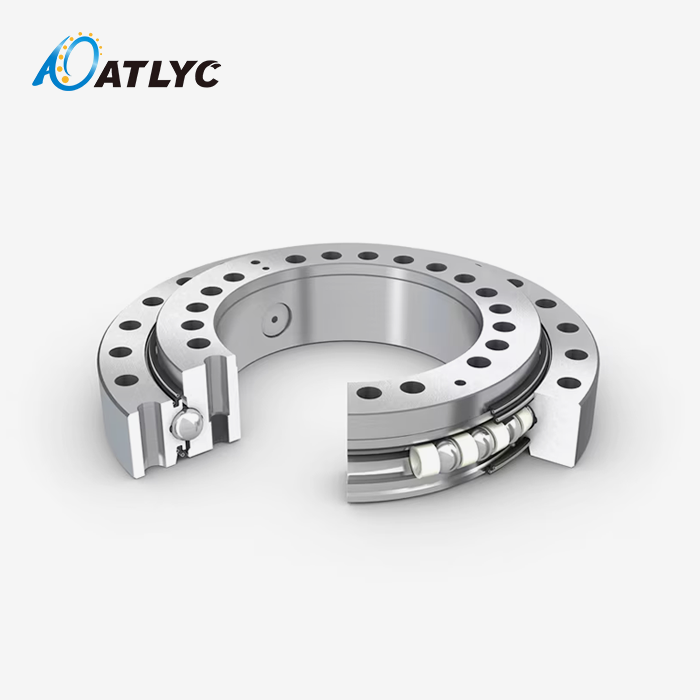
The RB6013UUCC0 has a width of 13mm, an inner diameter of 60mm, and an outer diameter of 85mm. Compared to traditional bearing arrangements, this thin-section design makes great use of space. Engineers can make the machine smaller without lowering its load capacity or stiffness thanks to the compact shape. This crossed roller design can handle radial, axial, and moment loads at the same time, while normal ball bearings need to be mounted in pairs to handle combined loads. The split outer ring design and integrated inner ring make installation easier and keep the precision alignment over the life of the product.
Material Composition and Durability
These bearings are usually made from GCr15 or GCr15SiMn steel, which are both high-carbon chromium alloys that are known for being very hard and resistant to wear. After being heated, the raceway surfaces reach a hardness of 58 to 64 HRC, which means they won't wear down even when they're loaded and unloaded over and over again. The choice of material has a direct effect on the life of the bearing, especially in situations where shock loads or dirty surroundings are present. The "UU" marking shows that there are two rubber contact seals that keep dust, wetness, and other contaminants out of the internal parts. This protected design makes maintenance times longer and is especially useful in factories where airborne particles could otherwise speed up wear.
Precision Classes and Performance Standards
There are different levels of accuracy for crossed roller bearings, with P2 being the most precise. The other levels are P6, P0, P5, P4, and P2. Dimensional tolerances, raceway geometry, and runout requirements are all based on the accuracy class.
| Precision Class | Applications | Runout Tolerance |
|---|---|---|
| P6, P0 | General industrial machinery | Standard tolerance |
| P5 | CNC machine tools, precision rotary tables | ≤5 microns |
| P4, P2 | Robotic joints, measuring instruments, semiconductor equipment | ≤2 microns |
If the clearance rating is CC0, it means that there is negative internal clearance, which means that the bearing is compressed during assembly. This loading gets rid of backlash, makes the joint stiffer, and improves positional accuracy. These are all very important qualities for robotic arm joints and precision indexing. Knowing these specs will help you match the bearing's powers to the performance needs of your tools.
Comparing RB6013UUCC0 with Alternative Bearing Models: Making an Informed Decision
Before finalising specs, procurement teams often look at more than one type of bearing. When you compare differences in structure and performance, you can find the best solution for each application using RB6013UUCC0 Crossed Roller Bearings.
RB6013UUCC0 vs. RB6012UUCC0
The bore diameter of both types is 60 mm, but the width and top diameter are different. The RB6012UUCC0 is 12 mm wide and has a slightly smaller OD, so it can hold a slightly lower load. The RB6012 version might work when installation space is very limited, and loads aren't too high. However, the RB6013UUCC0 works better in situations that need the most rigidity and load capacity within the 60mm bore size.
Crossed Roller Bearings vs. Angular Contact Bearings
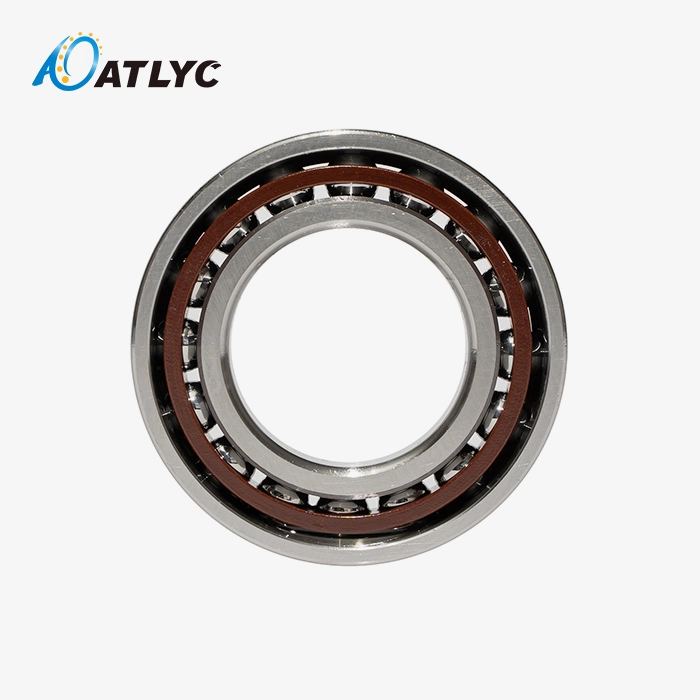
Pairs of angular contact ball bearings can be mounted back-to-back or face-to-face to handle joint loads. This configuration works, but it needs precise axial preloading and takes up more axial space. Crossed roller bearings combine these functions into a single unit, which makes fitting easier and lowers the chance of mistakes during assembly. The design of orthogonal rollers also gives more stiffness per unit volume. Instead of just supporting loads at one point, each roller supports loads along its entire length. This spreads stress more evenly. This structural benefit means that the part will last longer when it's under heavy moment loads, which happens a lot in robotic wrist systems and swivel mechanisms.
Application-Specific Selection Guidance
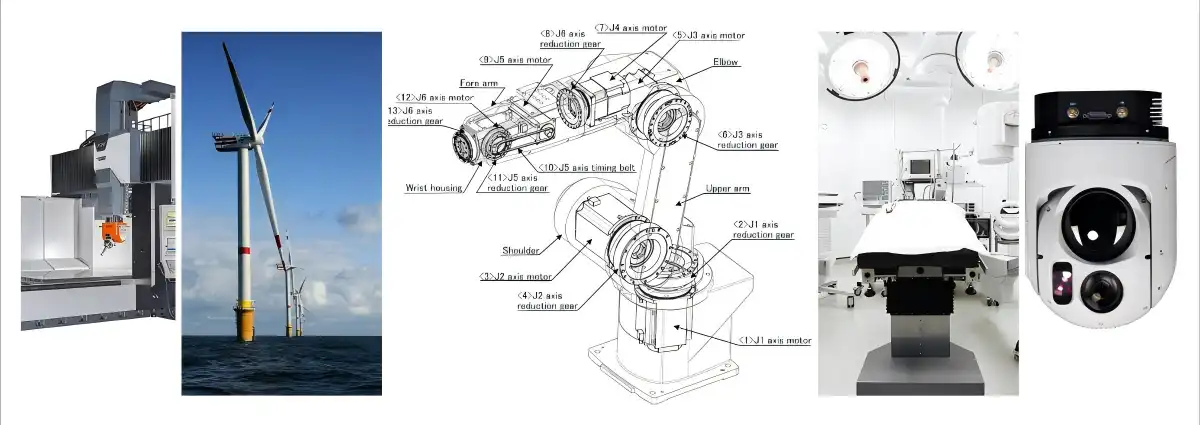
Figuring out what the crossed roller design does best helps to make the investment worthwhile. Zero-backlash action and small cross-sections are good for robotic joint systems. In machining centers, precision rotary tables use the high moment load capacity to keep the accuracy of the work even when cutting quickly and roughly. Medical imaging equipment needs to rotate smoothly and quietly, and it also needs little maintenance. The sealed, preloaded design meets all of these needs. On the other hand, deep groove ball bearings may be better for applications with only radial loads at high speeds because they have lower friction coefficients at high RPMs. Matching the bearing design to the loading situations improves both performance and cost-effectiveness.
Procurement Insights: How to Source RB6013UUCC0 Crossed Roller Bearings Efficiently
Procurement methods that work well balance cost, quality, and the dependability of the supply chain. Knowing how the market works and how suppliers are set up can help you negotiate and control risk for RB6013UUCC0 Crossed Roller Bearings.
Pricing Factors and Cost Optimization
Unit pricing is affected by several factors. Choosing the right material affects the base price. For example, GCr15SiMn metals cost more than regular GCr15 because they have better qualities. Precision class has a big effect on price. For example, P4 and P2 grades need more grinding and strict quality control, which makes them 30–50% more expensive to make than P5 variants. Costs can be lowered by increasing the number of orders. Setting up blanket purchase deals with planned releases helps makers plan their production, and for yearly promises of 500 units or more, the price is often lowered by 10-15%. This method also keeps your supply chain stable, which lowers the risks that come with buying on the spot when demand goes up.
Distribution Channels and Supply Chain Considerations
Authorised wholesalers keep stock on hand so that it can be delivered right away, which is very important for covering unplanned repair needs. But markups by distributors usually add 20 to 30 percent to the price from the maker. Costs are lower when you buy directly from ISO-certified manufacturers, but lead times may be longer, and the MOQ may be higher. Using both routes at the same time works well: keep in touch with distributors in case of emergencies, but get large amounts of production straight from makers. This hybrid strategy makes the best use of cash flow and keeps operations running smoothly.
Lead Time Management and Inventory Planning
Standard versions usually ship in two to three weeks from well-known makers. Lead times are extended to 6 to 8 weeks for custom specifications like different sealing arrangements, special materials, or non-standard preload settings. Planning the buying processes around these dates keeps production from being held up. Using a two-bin inventory system for important bearings gives you extra stock without tying up too much capital. Trigger reorders while taking items from the second bin when the first bin runs out. This easy method works with changing wait times and keeps supplies from being interrupted.
Evaluating and Selecting the Right RB6013UUCC0 Manufacturer
Assessing a supplier involves more than just looking at unit prices. A structured evaluation system makes sure that the RB6013UUCC0 Crossed Roller Bearings meet your quality standards and operational needs.
Quality Certifications and Compliance
ISO 9001 certification shows basic quality management skills, but stricter standards are needed for car and industry uses. IATF 16949 certification focuses on the needs of the automotive supply chain and covers things like process capability studies, production part approval processes, and methods for continuous improvement. Material certificates, dimensional inspection reports, and tracking paperwork should be provided by manufacturers who sell to customers all over the world. These records are very important for customer checks and reviews of legal compliance. ATLYC is committed to meeting world quality standards, as shown by our dual ISO 9001 and IATF 16949 certifications and our full tracking systems that are used at every stage of production.
Manufacturing Capacity and Scalability
Knowing how much a supplier can produce helps you figure out if they can support your growth. Manufacturers that have been around for a while and have more than one dedicated workshop show both scale and specialisation. Our facility has grown from one workshop in 2010 to six specialised production lines today. This shows that our manufacturing infrastructure is flexible enough to handle both small batches of prototypes and large quantities of mass production. Production capacity also affects how reliably goods are delivered. When manufacturers are close to their full capacity, it's hard for them to handle rush orders or changes in demand. Suppliers who keep 15-20% of their capacity in backup are better able to respond quickly to emergencies.
Technical Support and After-Sales Service
Commodity sellers are different from strategic partners because they don't offer application engineering help. Manufacturing companies with a good reputation offer help with choosing bearings, fitting them, and fixing problems. This knowledge is very helpful for improving designs or fixing problems with how they work in the field.
| Evaluation Criteria | Strategic Partner | Commodity Supplier |
|---|---|---|
| Application engineering support | Dedicated technical team | Limited or outsourced |
| Warranty coverage | 12-24 months with failure analysis | Standard warranty only |
| Documentation | Complete inspection reports, material certs | Basic compliance documents |
| Responsiveness | <24-hour technical inquiry response | 2-5 business days |
Warranty terms show that the company that made the product is confident in its quality. Standard guarantees cover flaws in the manufacturing process for 12 months. Premium providers cover flaws for 24 months and offer thorough failure analysis services when problems happen.
Global Market Presence and Customer References
Manufacturers that serve a wide range of foreign markets show that they can be flexible and dependable. We have established ourselves in South Korea, the US, Germany, Russia, Iran, and Turkey, showing that we can meet the needs of customers and meet the requirements of regulators in a variety of industrial ecosystems. Ask for customer recommendations from people in the same business as you. Talking to current customers gives you information about shipping speed, how quickly technical support responds, and how consistent your products are that marketing materials can't show.
Installation and Maintenance Best Practices for RB6013UUCC0 Bearings
The performance and life of RB6013UUCC0 Crossed Roller Bearings are directly affected by how they are installed and maintained. Following well-known best practices will help you get the most out of your investment.
Critical Installation Procedures
Before fitting, make sure the mounting areas are very clean. When there is contamination, stress builds up, which speeds up fatigue failure. To get rid of machining leftovers, rust preventatives, and other debris, use lint-free brushes and the right chemicals. The split outer ring design needs to be put together carefully. To keep the raceway's shape, apply the preload force evenly. When there isn't enough preload, there is internal clearance that makes the structure less rigid. Too much preload increases friction and heat generation. The torque values given by the manufacturer are exact and depend on the size of the bearing and its use. The alignment of parts that fit together must stay within certain limits. When wheels are out of line, the edges load, which causes stress to be spread out unevenly. For precise uses, use dial marks to check alignment during trial assembly before tightening the whole thing down. This step of testing stops early wear patterns that make positional precision less accurate.
Routine Maintenance Protocols
Even though sealed bearings require less maintenance, they still need to be inspected on a regular basis. Using infrared thermography to keep an eye on the operating temperature; temperature rises of 10 to 15°C above the baseline could mean that the lubrication is breaking down or there is more internal friction, which needs to be looked into. Vibration analysis finds problems before they become too big to fix. Setting up standard vibration patterns during commissioning makes it possible to compare them during regular tracking. Frequency changes show how wear is progressing, so replacements can be planned for planned maintenance windows instead of emergency shutdowns. The built-in plugs keep the grease that was put on at the factory in place for the entire design life when used normally. You shouldn't try to re-oil sealed bearings because adding contaminants during this process usually does more harm than good. If the operating conditions are too harsh, like high temperatures, chemical exposure, or a lot of dirt, talk to the manufacturer about other sealed bearing options or ways to seal the bearing from the outside.
Storage and Handling Recommendations
Bearings that aren't ready to be installed need to be stored properly to keep them from rusting or getting dirty. Keep the temperature and humidity in storage places under control. The best safety is in the original packing, so don't open packages until right before installation. Wearing clean gloves when handling bearings will keep your skin's oils and moisture from getting on the precision surfaces. When handling, don't use impact or shock loading. Even small impacts can cause brinelling damage, which lowers the load capacity and makes noise when the machine is running.
Conclusion
To choose the right manufacturer for crossed roller bearings, you need to weigh technical requirements, quality certifications, production capacity, and the overall cost of ownership. The RB6013UUCC0 Crossed Roller Bearings is great for robotic systems, rotary tables, and precision machinery because it is small, can handle loads going in multiple directions, and work very precisely. Suppliers with ISO and IATF certifications, output scalability, technical support skills, and foreign experience that has been proven will provide a reliable supply and consistent quality. When you install and maintain bearings correctly, you can get the most out of them and keep operations running smoothly. Using the evaluation method described in this guide, procurement teams can build strategic partnerships with makers that can meet both current needs and future growth across a wide range of industrial uses.
FAQ
What distinguishes RB6013UUCC0 from standard angular contact bearings?
The main difference is in how the load is handled. To handle combined loads, angular contact bearings need to be mounted in pairs, which takes up more axial room and requires careful preload adjustment during installation. Crossed roller bearings combine radial, axial, and moment load capacities into a single, small unit that has a preload that is set at the factory. The arrangement of the orthogonal rollers gives these bearings more rigidity per unit volume. This makes them perfect for robotic joints and precision indexing tasks that need to work with no backlash and limited space.
How do I verify manufacturer authenticity when sourcing these bearings?
Ask for all the paperwork, like copies of ISO 9001 and IATF 16949 certificates, material licenses, and size inspection reports with exact measurements. Genuine makers link each batch of bearings to production records and the sources of the raw materials. Check the quality of the packing. Well-known brands use uniform, professional packaging with easy-to-read labels. When making big deals with suppliers, ask for facility audits or verification reports from a third party. By comparing prices to market standards, you can also spot quotes that seem too low, which could mean that the goods are fake.
What service life should I expect under normal operating conditions?
Service life is affected by how much is loaded, how fast it is being used, and the surroundings. When used correctly and with loads of 10-15% of their rated capacity, sealed crossed roller bearings can last for 20,000 to 30,000 hours. Applications that use shock loads, dirty environments, or activity close to temperature limits shorten the projected life. Consulting bearing life calculation standards like ISO 281 gives numbers-based figures based on specific application factors, which helps with planning upkeep and figuring out the total cost of ownership over a bearing's life.
Partner with ATLYC for Your Crossed Roller Bearing Requirements
ATLYC is a reliable company to buy crossed roller bearings from because they have been making them precisely for 15 years and have strong quality systems in place. Our ISO 9001 and IATF 16949 certifications show that we are dedicated to meeting international standards. Our expanded six-workshop building also makes sure that we can meet the needs of both pilot and volume production. Our 120 specialised pros make sure that the standard of production, research and development, quality inspection, and assembly is always the same. We know that getting precision bearings is more than just finding the best price. You also need to be able to rely on your supply lines, get quick technical help, and be sure that the bearings will work. We have been serving South Korea, the US, Germany, and other tough markets for a long time, which shows that we can meet high-quality standards. No matter if you need standard configurations or unique specs, our engineering team can help you choose the best bearings for your robotic systems, precision machinery, or automation equipment. Email our technical team at auto@lyautobearing.com to talk about your specific needs. We give you detailed technical specifications, competitive quotes, and sample shipments so that you can fully evaluate our work before you commit to buying in bulk. Check out our full line of bearings at https://aotezhoucheng.aixdb.cn/ and see why global makers choose ATLYC as their key bearing manufacturer partner.
References
1. Harris, T.A. & Kotzalas, M.N. (2006). Advanced Concepts of Bearing Technology: Rolling Bearing Analysis, 5th Edition. CRC Press.
2. Wijnant, Y.H. (2002). Contact Dynamics in the Field of Elastohydrodynamic Lubrication. University of Twente Press.
3. ISO 281:2007. Rolling Bearings — Dynamic Load Ratings and Rating Life. International Organization for Standardization.
4. Eschmann, P., Hasbargen, L. & Weigand, K. (1985). Ball and Roller Bearings: Theory, Design and Application, 2nd Edition. John Wiley & Sons.
5. Budynas, R.G. & Nisbett, J.K. (2014). Shigley's Mechanical Engineering Design, 10th Edition. McGraw-Hill Education.
6. NSK Ltd. (2019). Precision Machine Components: Crossed Roller Bearings Technical Reference. NSK Technical Documentation Series.
Learn about our latest products and discounts through SMS or email