- English
- French
- German
- Portuguese
- Spanish
- Russian
- Japanese
- Korean
- Arabic
- Greek
- German
- Turkish
- Italian
- Danish
- Romanian
- Indonesian
- Czech
- Afrikaans
- Swedish
- Polish
- Basque
- Catalan
- Esperanto
- Hindi
- Lao
- Albanian
- Amharic
- Armenian
- Azerbaijani
- Belarusian
- Bengali
- Bosnian
- Bulgarian
- Cebuano
- Chichewa
- Corsican
- Croatian
- Dutch
- Estonian
- Filipino
- Finnish
- Frisian
- Galician
- Georgian
- Gujarati
- Haitian
- Hausa
- Hawaiian
- Hebrew
- Hmong
- Hungarian
- Icelandic
- Igbo
- Javanese
- Kannada
- Kazakh
- Khmer
- Kurdish
- Kyrgyz
- Latin
- Latvian
- Lithuanian
- Luxembou..
- Macedonian
- Malagasy
- Malay
- Malayalam
- Maltese
- Maori
- Marathi
- Mongolian
- Burmese
- Nepali
- Norwegian
- Pashto
- Persian
- Punjabi
- Serbian
- Sesotho
- Sinhala
- Slovak
- Slovenian
- Somali
- Samoan
- Scots Gaelic
- Shona
- Sindhi
- Sundanese
- Swahili
- Tajik
- Tamil
- Telugu
- Thai
- Ukrainian
- Urdu
- Uzbek
- Vietnamese
- Welsh
- Xhosa
- Yiddish
- Yoruba
- Zulu
RE3010UUCC0 Crossed Roller Bearings for Automation Systems
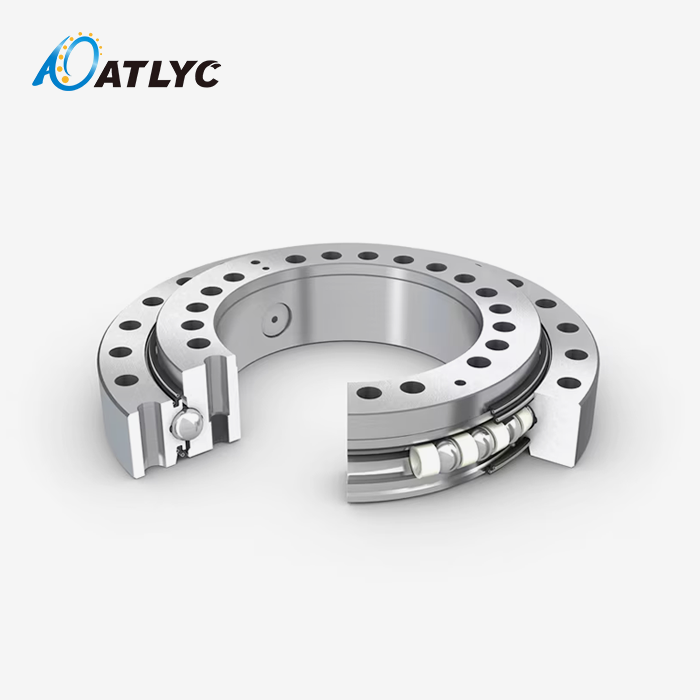
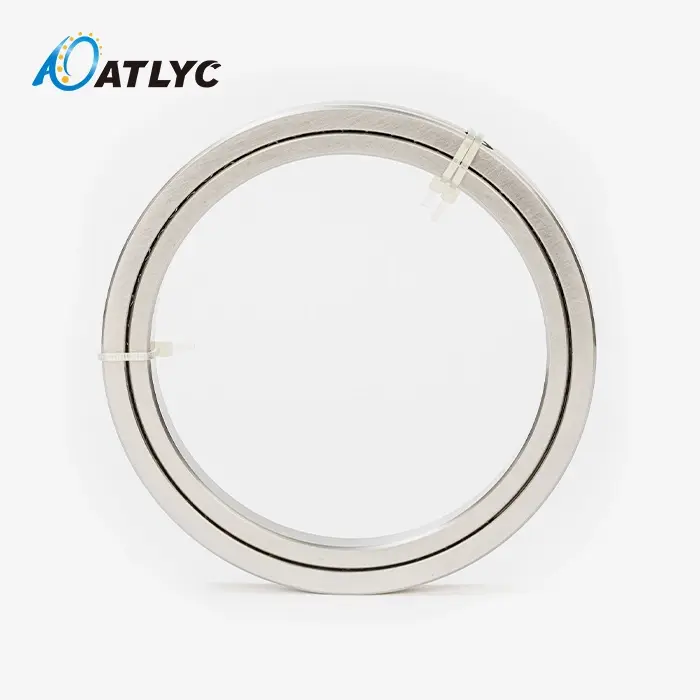
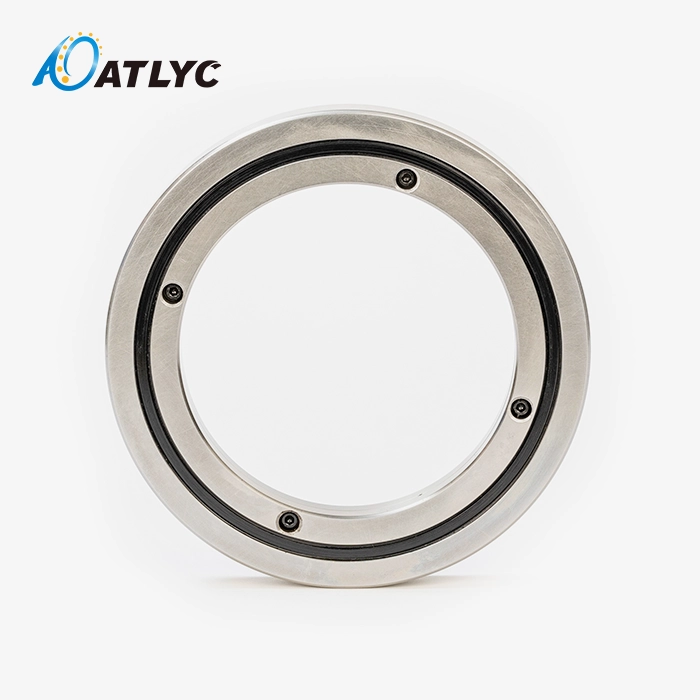
The RE3010UUCC0 crossed roller bearings represent a pivotal advancement in precise motion control, specifically engineered for automation systems demanding exceptional outer ring rotational accuracy. These compact bearings feature an integral outer ring paired with a split inner ring configuration, measuring 30mm inner diameter, 55mm outer diameter, and 10mm width. Their unique 90-degree orthogonal roller arrangement enables simultaneous handling of radial, axial, and moment loads within a single ultra-thin footprint, eliminating the need for complex double-bearing setups while delivering zero-backlash performance critical for modern robotic and semiconductor manufacturing applications.

Understanding RE3010UUCC0 Crossed Roller Bearings
Fundamental Design and Operating Principles
The crossed-roller bearing architecture distinguishes itself through a sophisticated V-groove raceway system where cylindrical rollers alternate at perpendicular orientations. This orthogonal positioning allows each roller to counterbalance forces from multiple directions simultaneously, a capability traditional ball bearings simply cannot match. When automation equipment requires precise indexing or continuous rotation under varying loads, this design ensures consistent performance without the deflection issues common in conventional bearing arrangements. Our experience manufacturing these precision components since 2010 has demonstrated that the split inner ring design offers significant installation advantages. Maintenance technicians can mount the bearing directly around existing shafts without complete disassembly, reducing downtime during retrofits or repairs. The integral outer ring maintains critical dimensional stability, ensuring the housing bore tolerances remain consistent throughout the bearing's operational life.
Technical Specifications and Material Composition
The bearing utilises high-carbon chromium bearing steel—specifically GCr15 or GCr15SiMn alloys—hardened to 58-62 HRC through controlled heat-treatment processes. This material selection provides the durability needed for applications generating high contact stresses while maintaining the dimensional stability required for precision-class tolerances. The 'CC0' designation indicates negative radial clearance, essentially a controlled preload that eliminates internal play. This preloaded condition proves essential in robotic joints where even microscopic movement during directional changes would compromise positional accuracy. Available accuracy grades span from P6 (standard industrial) through P2 (ultra-precision), allowing procurement teams to match bearing specifications precisely to application requirements. A machining centre rotary table might function adequately with P5 accuracy, while alignment stages for semiconductor wafers typically require P4 or P2 grades to achieve sub-micron positioning repeatability.
Load Capacity Analysis and Performance Advantages
The multi-directional load handling capability represents the most significant performance advantage of crossed roller bearing technology. Testing data from our quality management system—certified to both ISO 9001 and IATF 16949 standards—consistently shows these bearings handle moment loads approximately 3-4 times greater than comparably sized angular contact ball bearing pairs. Radial and axial load capacities also exceed traditional alternatives while maintaining a friction coefficient typically 15-20% lower than conventional arrangements.
Here are the core performance characteristics that address critical automation requirements:
- Omnidirectional Load Management: The orthogonal roller arrangement distributes radial forces, axial thrust, and overturning moments across the entire roller complement. This eliminates the need for separate thrust bearings or moment-resisting bearing pairs, simplifying machine design and reducing assembly complexity.
- Zero-Backlash Operation: The CC0 preload specification ensures contact between rollers and raceways remains constant regardless of load direction changes. Collaborative robot arms benefit significantly from this characteristic, as positional accuracy remains consistent during rapid acceleration and deceleration cycles.
- Exceptional Runout Accuracy: Manufactured rollers undergo precision grinding to achieve cylindricity tolerances within 0.5 microns. Combined with the rigid outer ring structure, total indicated runout values consistently measure below 3 microns in P5 grade bearings, enabling smooth rotation essential for optical inspection equipment and medical imaging devices.
- Compact Envelope Dimensions: Achieving equivalent load capacity with traditional bearing arrangements would require roughly 40-50% more axial space. Automation system designers leverage this compactness to reduce robot arm weight, lower the center of gravity in machine tools, and enable tighter integration in space-constrained semiconductor fabrication equipment.
These performance advantages translate directly into operational benefits that purchasing managers and design engineers prioritise: extended maintenance intervals, improved throughput consistency, and reduced total cost of ownership across the equipment lifecycle.
Advanced Sealing and Environmental Protection
The "UU" designation specifies dual contact seals installed on both bearing faces, creating a protective barrier against particulate contamination while retaining factory-applied lithium soap-based grease. Industrial automation environments frequently generate metal fines from machining operations or abrasive dust from material handling processes. Without effective sealing, these contaminants rapidly degrade bearing performance through increased friction and accelerated wear.
Our sealing design balances protection with operational efficiency. While contact seals introduce slightly higher starting torque compared to open bearings, the friction remains negligible relative to application loads. More importantly, the sealed configuration extends lubrication intervals significantly—many installations operate 3-5 years between regreasing procedures, reducing maintenance overhead and associated production interruptions.
Comparing RE3010UUCC0 with Other Crossed Roller Bearings
Dimensional and Structural Variations
Understanding the distinction between RE and RB series bearings proves crucial during component selection. The RE3010UUCC0 Crossed Roller Bearings feature a split inner ring with an integral outer ring, optimising designs where the outer ring rotates relative to a stationary shaft. Conversely, RB series bearings incorporate a split outer ring with an integral inner ring, suited for applications requiring inner ring rotation. Selecting the incorrect configuration compromises installation integrity and can lead to premature failure under operational loads.
Compared to standard 3010 crossed roller bearings without the UU seal designation, the RE3010UUCC0 offers superior environmental resistance at a modest cost premium. Procurement teams serving industries with challenging operating conditions—automotive paint shops, food processing automation, or semiconductor cleanrooms—consistently find the sealed variant delivers better cost-performance ratios through extended service life.
Performance Benchmarking Against Traditional Solutions
Angular contact ball bearing pairs represent the most common alternative for applications requiring combined load capacity. While proven technology, these arrangements require precise axial preloading during installation, occupy considerably more space, and remain sensitive to mounting surface imperfections. A typical setup using two angular contact bearings would measure approximately 15mm wide versus the RE3010UUCC0's 10mm profile—a 50% increase that cascades through the entire machine design, adding weight and cost.
Deep groove ball bearings, though economical, lack the moment load resistance that is essential for cantilevered automated components. Robot wrist assemblies or machine tool indexing heads using deep groove bearings require substantial structural reinforcement to prevent deflection under operational loads. This reinforcement negates any initial cost savings while compromising dynamic performance.
Application-Specific Excellence in Critical Industries
The bearing demonstrates particular effectiveness across three high-value automation segments:
These bearings' small size and great rigidity make them ideal for lightweight robot arms made for human interaction, which is a huge boon to collaborative robotics. The zero-backlash preload guarantees accurate tool centre point setting during delicate assembly operations, and the integral outer ring facilitates housing machining. This is very helpful for engineers designing cobot joints, especially wrist and elbow assemblies.
Machines used in the semiconductor industry, such as the wafer handling robots and the theta-alignment stages, must be able to precisely position themselves in extremely sterile settings. P4 or P2 accuracy grades provide the sub-micron repeatability needed for current chip fabrication methods that operate at ever-smaller geometry nodes, while the sealed configuration stops outgassing that could contaminate wafer surfaces.
In medical device applications, vibration-free rotation is crucial for imaging equipment rotating components like C-arm positioning systems or optical inspection turrets to keep picture quality intact. Ensuring hygienic operation in clinical contexts, the sealed construction prevents micro-stuttering, and the low friction coefficient inherent to the crossed roller bearing design improves image resolution.
Reliability is the defining characteristic, according to customer feedback from our installations in South Korean electronics manufacturing facilities and German car assembly lines. Zero bearing failures in 240 robot installations over 36 months of operation is a result of high-quality manufacturing and strong design, according to one automotive OEM.
How to Select the Right Crossed Roller Bearing for Your Automation Systems
Essential Selection Criteria for Procurement Teams
Load capacity requirements form the foundation of proper bearing selection. Engineering teams should calculate not just steady-state loads but also dynamic forces generated during acceleration, emergency stops, and worst-case operational scenarios. The RE3010UUCC0 handles radial loads of up to 7,800 N and axial loads of up to 5,400 N, with a moment load capacity of 98 N·m—specifications suitable for robots handling payloads of up to approximately 5-7 kg at typical arm extensions.
Rigidity requirements correlate directly with positioning accuracy needs. Applications demanding repeatability within ±5 microns typically require P5 accuracy or better, while general industrial automation with ±20 micron tolerances can utilise P6 grade components. Understanding this relationship prevents over-specifying (and overpaying for) unnecessary precision while ensuring critical applications receive adequate performance.
Lifecycle expectations must account for both operational hours and duty cycle characteristics. Continuous rotation applications accumulate wear differently than indexing operations with frequent start-stop cycles. Our technical support team assists customers with L10 life calculations specific to their operating profiles, ensuring bearing selection aligns with planned maintenance schedules and equipment replacement strategies.
Matching Bearing Capabilities to Industrial Needs
Precision-centric applications—semiconductor equipment, metrology instruments, and optical systems—prioritise accuracy and smooth operation over raw load capacity. These installations benefit from P4 or P2 accuracy grades paired with light preload configurations that minimise friction while maintaining zero backlash. Lubrication selection also shifts toward lower-viscosity greases that reduce drag at the expense of slightly shorter relubrication intervals.
Heavy-duty automation—welding robots, material handling manipulators, and machine tool rotary tables—emphasises load capacity and durability. Standard P5 accuracy typically suffices for these applications, while CC0 preload provides the rigidity needed to resist deflection under cutting forces or impact loading. Higher-viscosity greases extend maintenance intervals, a critical consideration for equipment operating multiple shifts with limited scheduled downtime.
Procurement Considerations and Supply Chain Strategy
Minimum order quantities vary by supplier and product configuration. Standard RE3010UUCC0 Crossed Roller Bearings with common accuracy grades typically ship in quantities as low as 10-20 pieces, while custom preload specifications or non-standard seal configurations may require 100+ piece orders. Establishing relationships with manufacturers offering flexible MOQs provides agility when prototyping new designs or supporting low-volume speciality equipment.
Lead times for standard configurations from established suppliers generally span 4-6 weeks from order confirmation to delivery. Custom specifications, precision grinding to P2 accuracy, or non-standard materials extend timelines to 8-12 weeks. Procurement professionals should factor these durations into project schedules and maintain strategic inventory for critical production equipment to mitigate supply disruptions.
Warranty coverage and supplier reputation demand careful evaluation beyond simple price comparisons. Our 15-year manufacturing history demonstrates the production scale and continuous improvement commitment that long-term partnerships require. IATF 16949 certification specifically addresses automotive quality management system requirements, while ISO 9001 confirms broader quality process discipline applicable across industrial sectors.
Authorised distribution networks ensure product authenticity and traceability. Counterfeit bearings—often manufactured to superficially correct dimensions but using inferior materials and inadequate heat treatment—represent a persistent risk in global supply chains. Sourcing through verified suppliers with documented material certifications and dimensional inspection reports protects both equipment reliability and corporate liability exposure.
Maintenance and Lifecycle Management of RE3010UUCC0 Bearings
Routine Maintenance Best Practices
In sealed setups, where regreasing chances are less common compared to open bearing designs, lubrication management has a direct impact on bearing service life. Under typical conditions—constant rotation at moderate speeds with constant temperatures—the factory-applied lithium soap grease usually works well for 20,000 to 30,000 operating hours. Regular testing is necessary for applications that operate at high speeds, are subject to harsh temperatures, or are located in polluted areas.
Critical manufacturing machinery should normally have inspections every three months to coincide with preventative maintenance programmes. By visually inspecting the seal, one can detect any signs of deterioration that could indicate contamination intrusion, such as grease leaking. When bearing temperatures exceed 15-20°C above ambient, it is important to enquire about lubrication breakdown or preload concerns. Infrared thermography temperature monitoring can identify growing problems before final failure occurs.
To keep seals intact and protective lubricants in place, cleaning techniques performed during maintenance windows should not use harsh solvents. When it comes to external bearing surfaces, mild detergents tackle obstinate pollution, while dry compressed air eliminates surface dirt. Proper tooling and qualified staff are required to disassemble the bearing completely for internal cleaning to avoid damaging the rollers or raceways.
Identifying Wear Symptoms and Troubleshooting Approaches
When bearing issues are starting to manifest, the first sign is abnormal noise. In normal operation, crossed roller bearings produce only a little rushing sound as the rollers make contact with the raceways. Clicking or popping sounds indicate broken rollers or raceway spalling, whereas grinding sounds indicate contamination. Instead of unexpected repairs delaying output, scheduled replacement during planned downtime can be arranged if these indications are caught early.
When operating temperatures rise, it could be because of contamination-induced friction, an excess of preload, or a breakdown in the lubrication. An actionable maintenance window often occurs weeks or months before catastrophic collapse, when temperatures rise. Critical equipment may be monitored continuously and alerted automatically when temperatures surpass specified levels thanks to thermal sensors.
For valuable automation systems, vibration analysis provides high-tech condition monitoring. Different bearing problems, such as worn rollers, damaged outer rings, or inner ring problems, produce different vibration patterns that accelerometers can identify by analysing their frequency signatures. Trending this data over time, which indicates gradual decline, supports predictive maintenance solutions that optimise the timing of bearing replacement.
Environmental Factors and Service Life Optimisation
Temperature changes have an effect on the dimensional stability and lubricant performance. The preload conditions change across temperature ranges due to bearing steel's thermal expansion coefficients. Applications that are subject to temperature fluctuations greater than 30–40°C may necessitate designs that account for temperature compensation or revised preload requirements. While very low temperatures cause greases to harden and increase breakaway torque, very high temperatures hasten lubricant oxidation and decrease viscosity to ineffective levels.
Beyond bearing seals, contamination management is critical. House designs need to avoid contaminant buildup around seal interfaces, discourage entrance via labyrinth paths, and make cleaning during maintenance processes easier. When it comes to food processing and pharmaceutical automation, where washdown methods create conditions that are moisture-laden, a typical technique is positive pressure purging. This involves creating an outward flow using filtered air that repels particles.
How long bearings last is heavily dependent on the installation method. A common installation fault that leads to early failure is inadequate tightening torque, which means the split inner ring needs to be clamped securely to avoid separation under moment loads. Shaft and housing bore tolerances should match the bearing requirements; bearings cannot handle too much preload, and if the interference is too low, creep and fretting corrosion can happen. For complicated installations, our technical literature includes step-by-step mounting instructions, and for more general questions, our engineering team is available to help.
Procurement Guide: Where and How to Buy RE3010UUCC0 Crossed Roller Bearings?
Sourcing from Trusted Global Suppliers
Established manufacturers with certified quality systems provide the reliability foundation B2B partnerships require. Luoyang Auto Bearing Co., Ltd. exemplifies this commitment through ISO 9001 and IATF 16949 certifications earned through rigorous process auditing and continuous improvement initiatives. Our six manufacturing workshops—expanded from a single facility at our 2010 founding—now serve customers across South Korea, the United States, Germany, Russia, Iran, and Turkey, delivering consistent quality through scalable production capabilities.
Distribution networks extend manufacturing reach into regional markets, offering local inventory, technical support in native languages, and reduced shipping timelines. To evaluate distributors, you need to check their authorisation status. Legitimate distributors have documented relationships with manufacturers and provide traceable products that come with full material certifications and inspection reports.
Bulk Purchasing Advantages and Competitive Pricing
Volume commitments unlock meaningful cost reductions through manufacturing efficiencies and reduced per-unit handling expenses. Orders exceeding 500 pieces typically qualify for tier-one pricing, while annual supply agreements that provide demand visibility enable further optimisation. Our 120-person production team efficiently manages both high-volume runs for major OEMs and smaller batches supporting aftermarket requirements or speciality equipment manufacturers.
Pricing transparency builds trust in supplier relationships. Responsible manufacturers document cost structures—material expenses, machining operations, heat treatment processes, quality inspection procedures, and administrative overhead. This transparency allows customers to understand price positioning and evaluate proposals objectively rather than relying solely on lowest-bid criteria that may conceal quality compromises.
Online Ordering Process and Delivery Expectations
Modern procurement workflows increasingly incorporate digital channels that streamline ordering and improve transaction visibility. Our website at https://aotezhoucheng.aixdb.cn/ provides detailed product specifications, technical drawings, and inquiry submission functionality. Email communication through auto@lyautobearing.com connects customers directly with our technical sales team for application guidance, custom requirements discussion, and quotation requests.
Standard lead times from order confirmation to delivery span 4-6 weeks for in-production configurations, including manufacturing, quality inspection, packaging, and international shipping. Express production options reduce timelines to 3-4 weeks for urgent requirements, subject to production schedule availability. Customers receive proactive updates at key milestones—order acknowledgement, production completion, quality release, and shipment tracking information.
After-Sales Support and Warranty Terms
Comprehensive warranty coverage demonstrates manufacturer confidence in product quality and manufacturing processes. Our standard warranty addresses material defects and manufacturing flaws for 18 months from delivery or 12 months from installation, whichever occurs first. This coverage reflects realistic equipment commissioning timelines while protecting customers from premature component failures.
Technical support extends well beyond initial purchase transactions. Application engineers assist with bearing selection, mounting specification development, and troubleshooting operational issues. This consultative approach builds partnerships rather than transactional relationships, supporting customer success through equipment lifecycles spanning years or decades. Access to responsive expertise proves particularly valuable when integrating precision components into complex automation systems where component interactions significantly impact overall performance.
Return policies for defective components give you a way to get help when quality issues happen, but our low defect rates—always below 0.1% across production volumes—reduce these problems. Documented complaint handling procedures ensure issues receive prompt attention, root cause analysis, and corrective action implementation that prevents recurrence.

Conclusion
RE3010UUCC0 crossed roller bearings deliver precision, compactness, and reliability that automation system designers increasingly demand. Their integral outer ring configuration, CC0 preload, and dual seal protection meet important application needs in robotics, semiconductor manufacturing, and medical equipment sectors. Knowing the selection criteria, maintenance requirements, and procurement strategies helps engineering and purchasing teams improve performance and reduce lifecycle costs. Partnering with established manufacturers offering certified quality systems, scalable production, and comprehensive technical support ensures long-term success in increasingly competitive global markets.
FAQ
What distinguishes RE3010UUCC0 from RB3010UUCC0 bearings?
The fundamental difference lies in ring construction: RE3010UUCC0 features a split inner ring with an integral outer ring, optimised for outer ring rotation applications. RB series bearings utilize a split outer ring with an integral inner ring, suited for inner ring rotation designs. Selecting the appropriate configuration based on your specific rotation requirements ensures proper clamping and load distribution.
Why does CC0 clearance matter for precision automation?
CC0 specifies negative radial clearance—essentially a controlled preload that eliminates internal play. Robotic joints and indexing tables require zero backlash to maintain positional accuracy during directional changes. Without preload, microscopic internal movement compromises repeatability, making CC0 critical for applications demanding sub-10 micron positioning accuracy.
What accuracy grade should I specify for my application?
P5 accuracy suits most industrial automation applications requiring ±10-20 micron repeatability. Semiconductor equipment, metrology instruments, and optical systems typically require P4 or P2 grades for sub-5 micron positioning. Over-specifying accuracy increases costs unnecessarily, while under-specifying compromises performance—consult with technical specialists to match grade to actual requirements.
How do UU seals affect operational performance?
Contact seals add minimal friction—typically 0.002-0.005 N·m starting torque—negligible compared to application loads. The contamination protection they provide dramatically extends service life in industrial environments generating dust or debris. Sealed bearings eliminate the constant contamination ingress that degrades open bearing performance, making the slight torque increase a worthwhile trade-off.
Partner with ATLYC for Your Precision Bearing Requirements
ATLYC combines 15 years of manufacturing excellence with ISO 9001 and IATF 16949-certified quality systems to deliver RE3010UUCC0 crossed roller bearings that meet the exacting standards mid-to-large automotive and industrial equipment manufacturers demand. Our 120-person production team operates six specialised workshops that produce high-precision bearings for global markets, ensuring a stable supply, competitive pricing, and responsive technical support. When you choose ATLYC as your crossed roller bearing supplier, you gain a strategic partner committed to your long-term success through consistent quality, scalable production, and engineering expertise. Contact us today at auto@lyautobearing.com to discuss your application requirements and discover how our precise motion control products can enhance your automation system performance.
References
1. Harris, T.A. and Kotzalas, M.N. (2006). "Rolling Bearing Analysis: Essential Concepts of Bearing Technology," Fifth Edition, CRC Press, Boca Raton.
2. Wensing, J.A. (1998). "On the Dynamics of Ball Bearings," Doctoral Thesis, University of Twente, Netherlands.
3. ISO 5593:1997. "Rolling Bearings - Vocabulary," International Organisation for Standardisation, Geneva.
4. Budynas, R.G. and Nisbett, J.K. (2011). "Shigley's Mechanical Engineering Design," Ninth Edition, McGraw-Hill, New York.
5. Palmgren, A. (1959). "Ball and Roller Bearing Engineering", Third Edition, SKF Industries Inc., Philadelphia.
6. DIN 616:2000. "Rolling Bearings - Boundary Dimensions General Plan," Deutsches Institut für Normung, Berlin.
Learn about our latest products and discounts through SMS or email