- English
- French
- German
- Portuguese
- Spanish
- Russian
- Japanese
- Korean
- Arabic
- Greek
- German
- Turkish
- Italian
- Danish
- Romanian
- Indonesian
- Czech
- Afrikaans
- Swedish
- Polish
- Basque
- Catalan
- Esperanto
- Hindi
- Lao
- Albanian
- Amharic
- Armenian
- Azerbaijani
- Belarusian
- Bengali
- Bosnian
- Bulgarian
- Cebuano
- Chichewa
- Corsican
- Croatian
- Dutch
- Estonian
- Filipino
- Finnish
- Frisian
- Galician
- Georgian
- Gujarati
- Haitian
- Hausa
- Hawaiian
- Hebrew
- Hmong
- Hungarian
- Icelandic
- Igbo
- Javanese
- Kannada
- Kazakh
- Khmer
- Kurdish
- Kyrgyz
- Latin
- Latvian
- Lithuanian
- Luxembou..
- Macedonian
- Malagasy
- Malay
- Malayalam
- Maltese
- Maori
- Marathi
- Mongolian
- Burmese
- Nepali
- Norwegian
- Pashto
- Persian
- Punjabi
- Serbian
- Sesotho
- Sinhala
- Slovak
- Slovenian
- Somali
- Samoan
- Scots Gaelic
- Shona
- Sindhi
- Sundanese
- Swahili
- Tajik
- Tamil
- Telugu
- Thai
- Ukrainian
- Urdu
- Uzbek
- Vietnamese
- Welsh
- Xhosa
- Yiddish
- Yoruba
- Zulu
What Are the Key Features of RB6013UUCC0 Crossed Roller Bearings?
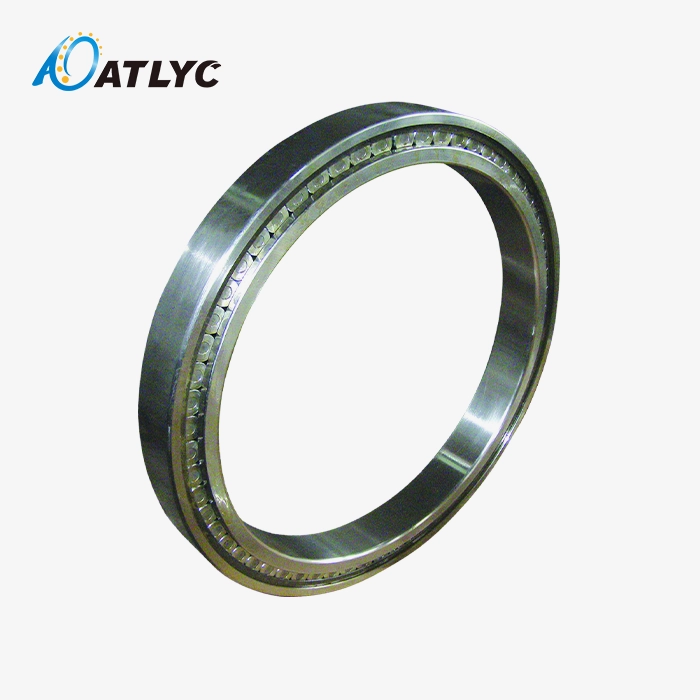
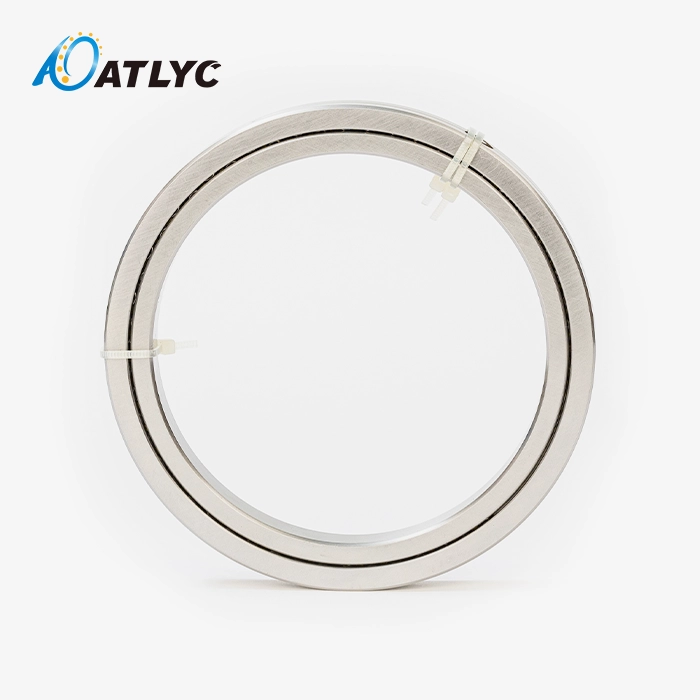
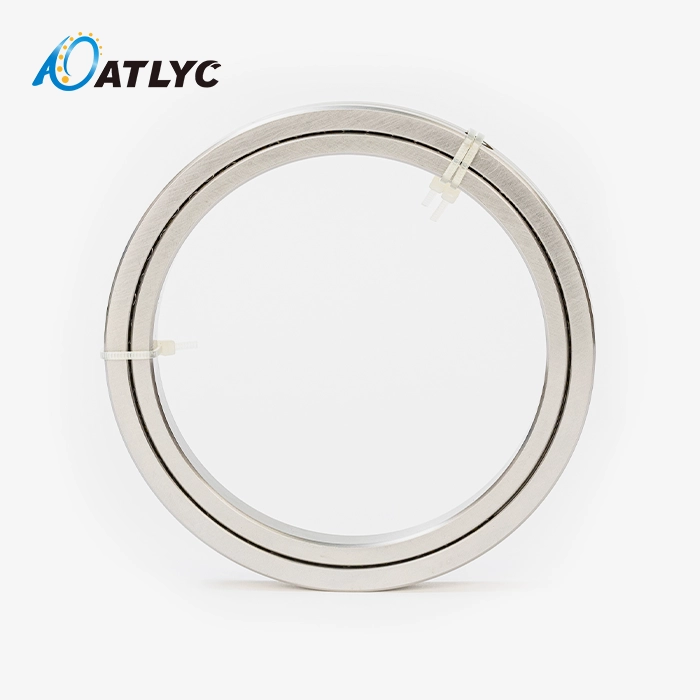
When precision and load capacity cannot be compromised, the RB6013UUCC0 crossed roller bearings provide exceptional performance for demanding industrial applications. This specialised bearing features cylindrical rollers arranged orthogonally at 90-degree intervals, enabling simultaneous handling of radial, axial, and moment loads within a single compact unit. With an integrated inner ring and split outer ring with plug design, plus dual rubber contact seals (UU designation), this bearing provides zero-backlash rigidity, superior rotational accuracy, and extended service life in contaminated environments common to robotics, precision machinery, and automated manufacturing systems.

Understanding RB6013UUCC0 Crossed Roller Bearings
Core Design Philosophy and Construction
The crossed roller bearing concept addresses a fundamental challenge in precision engineering: how to manage multidirectional loads without stacking multiple bearing types. We've observed throughout our 15 years at Luoyang Auto Bearing that OEMs consistently seek space-saving solutions that don't sacrifice performance. The RB6013UUCC0 answers this need through its unique architecture. Rollers alternate in a perpendicular orientation along precision-machined V-groove raceways, separated by spacer retainers that prevent roller-to-roller contact and minimise friction. This crisscross arrangement distributes loads evenly across the raceway surface, dramatically increasing load capacity compared to traditional single-direction bearings of equivalent size. The inner ring maintains complete structural integrity, while the outer ring incorporates a plug system that simplifies installation while maintaining assembly precision.
Material Composition and Surface Engineering
Manufacturing these bearings requires materials that balance hardness with fracture toughness. The RB6013UUCC0 utilises high-carbon chromium-bearing steel—specifically GCr15 or GCr15SiMn alloys. These materials undergo through-hardening heat treatment to achieve 58-64 HRC surface hardness, providing exceptional resistance to rolling contact fatigue and plastic deformation under heavy static loads. Surface finishing goes beyond basic grinding. Precision lapping processes achieve surface roughness values below 0.2 Ra, reducing friction coefficients and extending lubrication intervals. The dual rubber seals (UU designation) use nitrile or fluoroelastomer compounds selected for chemical compatibility with synthetic greases while maintaining elasticity across temperature ranges typical in industrial machinery. These seals prevent lubricant migration and block contaminant ingress—a critical consideration for equipment operating in environments with metal particulates or coolant mist.
Technical Specifications and Performance Metrics of RB6013UUCC0
Critical Dimensional Parameters
Understanding the physical dimensions helps engineers assess fitment compatibility within existing machinery designs. The bearing measures 60mm inner diameter, 85mm outer diameter, and 13mm width. This thin-section profile (width-to-diameter ratio of approximately 0.15) enables integration into space-constrained assemblies without compromising structural rigidity. The compact footprint proves particularly valuable in robotic joint applications where multiple axes must fit within confined envelopes. Mounting surface tolerances become critical—we recommend shaft and housing fits per ISO 492 specifications, typically h5 for rotating inner ring applications and H7 for stationary outer ring housings. Proper fitting prevents fretting corrosion and ensures accurate load distribution across the roller complement.
Load Capacity and Service Life Calculations
Dynamic load capacity defines bearing lifespan under rotating conditions, while static load capacity determines resistance to permanent deformation when stationary or oscillating. The crossed-roller configuration of the RB6013UUCC0 crossed-roller bearings achieves load ratings significantly higher than conventional ball bearings of comparable size—typically 2-3 times greater radial capacity and 5-7 times higher moment load capacity. Calculating expected service life requires analysing actual operating conditions: applied loads, rotation speed, lubrication quality, and operating temperature. Using ISO 281 bearing life calculation standards, proper load distribution across the orthogonal roller arrangement extends L10 life (the operating duration where 90% of bearings remain functional) substantially compared to point-contact bearing types. Moment load handling proves especially advantageous—a single bearing can often replace paired angular contact ball bearings, reducing assembly complexity and potential alignment errors.
Maintenance Protocols for Extended Performance
Maintenance strategies directly impact the total cost of ownership. The sealed design (UU designation) substantially reduces maintenance frequency by protecting factory-applied grease from contamination. Under normal operating conditions with temperatures below 80°C and moderate load cycling, relubrication intervals can extend to 10,000-15,000 operating hours. Condition monitoring should track starting torque increases, abnormal temperature rise, and acoustic emission patterns indicating raceway surface distress. We've developed diagnostic protocols at our ISO 9001 and IATF 16949-certified facility that identify early-stage fatigue before catastrophic failure occurs. Vibration analysis using accelerometers mounted near bearing housings can detect frequency signatures associated with roller spacing irregularities or raceway spalling, enabling predictive maintenance scheduling that prevents unplanned downtime.
Comparative Analysis: RB6013UUCC0 Versus Alternatives
Structural Differences from Conventional Bearing Types
Traditional deep groove ball bearings handle primarily radial loads with limited axial capacity. Angular contact ball bearings improve axial performance but require matched pairing and precise preload adjustment. Cylindrical roller bearings excel at radial loads but offer minimal axial capacity. The RB6013UUCC0 eliminates these compromises through its orthogonal roller arrangement. Comparing with standard cylindrical roller bearings of similar envelope dimensions, the crossed roller design provides approximately 60% of the radial capacity but adds substantial axial and moment load-handling capabilities completely absent in conventional cylindrical designs. This multidirectional capacity eliminates the need for combination bearing arrangements that add weight, cost, and alignment complexity.
Performance Comparison with Similar Models
The RB6013UUCC0 crossed roller bearing designation indicates specific configuration details. Alternative models like RB6013UUCC1 feature slightly different internal clearance classifications affecting preload characteristics. The CC0 designation specifies a particular preload range optimised for applications requiring maximum rigidity and positioning accuracy with minimal backlash. CC1 variants offer slightly lighter preload, reducing starting torque but allowing higher-speed operation. When procurement teams evaluate alternatives, selection should prioritise application requirements. Robotic joints that benefit from zero-backlash positioning favour CC0 configurations. Continuously rotating applications at higher speeds may accept slight clearance (CC1) to reduce friction heat generation and extend lubrication life. Understanding these nuances prevents misapplication that could compromise performance or accelerate wear.
Application-Specific Selection Criteria
Environmental factors significantly influence bearing selection. Temperature extremes require consideration of dimensional stability—differential thermal expansion between steel components and aluminium housings can alter clearance and preload conditions. The sealed design protects against moisture and particulates but limits maximum operating temperatures to approximately 100°C due to seal material limitations. Load characteristics determine optimal bearing type. Impact loads or vibrations favour the crossed roller design's high contact stiffness. Continuous high-speed rotation above 1000 RPM may warrant alternative designs with lower friction torque. We've supported numerous global clients—from South Korea to Germany—through application engineering that matches bearing specifications to actual operating conditions, preventing premature failures and optimising performance.
Procurement Insights for RB6013UUCC0 Crossed Roller Bearings
Pricing Dynamics and Cost Drivers
Understanding pricing structures enables informed procurement decisions. Raw material costs—primarily high-grade bearing steel—represent 30-40% of manufacturing expense. Precision grinding and lapping operations contribute significantly to cost, particularly for higher accuracy grades (P5, P4, and P2) that require additional processing steps and stricter quality control. Volume purchasing provides substantial cost advantages. At our manufacturing facility, production runs exceeding 500 units enable optimised machine setup amortisation and material purchasing efficiencies. We've structured pricing tiers that reward long-term partnership commitments, recognising that stable demand enables capacity planning and quality improvements that benefit both parties. Clients ordering quarterly quantities consistently achieve 15-25% cost reductions compared to spot purchases.
Supplier Verification and Quality Assurance
Counterfeit bearings represent a persistent procurement risk, particularly in international supply chains. Verification strategies should include certification review (ISO 9001 and IATF 16949), facility audits assessing manufacturing capabilities, and sample testing protocols. Reputable manufacturers like NSK, SKF, and Timken maintain authorised distributor networks with traceability documentation. As a manufacturer serving global markets since 2010, we've implemented comprehensive quality documentation, including material certifications, dimensional inspection reports, and performance test data accompanying each shipment. Our IATF 16949 certification specifically addresses automotive industry supply chain requirements, demonstrating process control and continuous improvement systems that prevent defect propagation.
Lead Times and Logistics Considerations
Production lead times vary based on order quantity and specification complexity. Standard configurations with common accuracy grades (P5, P6) typically ship within 4-6 weeks from confirmed orders. Custom specifications requiring special materials or precision grades (P2) may extend to 8–10 weeks to accommodate specialised processing requirements. International shipping logistics require coordination to prevent damage during transport. Bearings should ship in protective packaging with corrosion inhibitors, particularly for ocean freight where humidity exposure risks surface oxidation. We've developed export packaging protocols refined through 15 years of shipping to destinations including the USA, Russia, Iran, and Turkey—markets with diverse climate conditions and handling infrastructure. Documentation including commercial invoices, packing lists, and certificates of origin must comply with import regulations specific to each destination country.
Advantages and Industry Applications of RB6013UUCC0 Bearings
Precision Engineering Benefits
The manufacturing precision achievable with crossed roller bearings directly translates to machinery performance improvements. Runout accuracy—the variation in radial or axial position during rotation—can achieve values below 2 microns in P4 or P2 accuracy grades. This positioning precision eliminates backlash that would otherwise accumulate through gear trains and linkages, improving end-effector accuracy in robotic systems. Low friction coefficients result from the line contact between cylindrical rollers and raceways, compared to point contact in ball bearings. Reduced friction lowers heat generation, decreases energy consumption, and extends lubrication life. In continuously operating automation equipment, these advantages compound over millions of rotation cycles, delivering measurable improvements in operational efficiency and maintenance cost reduction.
Real-World Application Case Studies
Industrial robotic arms represent the most demanding crossed roller bearing application. A six-axis articulated robot incorporates multiple bearings at each joint interface, handling complex load combinations as the arm moves through three-dimensional space. The elbow joint experiences simultaneous radial loads from component weight, axial loads from linear actuator forces, and moment loads from cantilevered tooling. We've supplied bearings for robotic systems in automotive assembly plants where positioning repeatability of ±0.05mm must be maintained through 50,000 cycle shifts. The zero-backlash characteristics of properly preloaded crossed roller bearings prevent accumulated positioning errors that would otherwise require frequent recalibration and compromise production quality. Sealed variants (UU designation) maintain performance despite exposure to welding spatter, cutting fluid mist, and airborne particulates common in manufacturing environments.
Precision rotary tables in CNC machining centres demonstrate another critical application. The bearing supports the worktable while enabling indexed or continuous rotation for multi-side machining operations. Moment loads from cutting forces can exceed 500 Nm in heavy milling applications. The RB6013UUCC0's compact 13mm width provides this load capacity within space envelopes that would require much larger conventional bearing arrangements.
Medical imaging equipment, particularly CT scanners, relies on smooth, vibration-free rotation to achieve diagnostic image quality. The gantry rotating around patients incorporates large-diameter crossed roller bearings that must operate silently while maintaining positioning accuracy throughout millions of rotation cycles. The sealed design prevents contamination in sterile clinical environments while eliminating maintenance requirements that would disrupt equipment availability.
Quality Certifications and Warranty Support
Certification to international quality standards assures manufacturing consistency and traceability. Our ISO 9001 certification demonstrates comprehensive quality management systems covering design, production, and after-sales support. IATF 16949 certification specifically addresses automotive industry requirements, including production part approval processes, advanced product quality planning, and failure mode and effects analysis. We back our precision bearings with comprehensive technical support and warranty coverage. Engineering assistance helps optimise bearing selection, mounting procedures, and maintenance protocols specific to your application requirements. Warranty terms reflect our confidence in manufacturing quality—typically covering material and workmanship defects for 12-18 months from the shipment date or defined operating hours, whichever occurs earlier.

Conclusion
The RB6013UUCC0 crossed roller bearing represents advanced crossed roller bearing technology that addresses critical needs in precision automation, robotics, and industrial machinery. Its inner ring and split outer ring work together with the orthogonal roller arrangement and dual-seal protection to provide excellent multidirectional load capacity in a compact space. Technical specifications, including a 60mm bore, 85mm outer diameter, 13mm width, and availability in precision grades from P6 to P2, enable integration into demanding applications requiring zero backlash and superior rotational accuracy. Proper supplier selection, quality verification, and application engineering ensure optimal performance and service life, supporting long-term operational reliability across diverse industrial sectors.
FAQ
What maintenance schedule should I follow for RB6013UUCC0 bearings?
The dual-seal design significantly extends maintenance intervals compared to open bearing configurations. Under normal operating conditions (temperatures below 80°C, moderate loads, clean environments), factory-applied grease typically provides 10,000-15,000 hours of operation before relubrication becomes necessary. Monitor starting torque and operating temperature as indicators of lubrication condition. Excessive temperature rise or torque increase signals potential lubricant degradation requiring attention.
How does load capacity compare with traditional bearing arrangements?
A single crossed roller bearing replaces combinations of ball or roller bearings that would otherwise be needed to handle multidirectional loads. Radial capacity approximates that of cylindrical roller bearings of similar size, while axial and moment load capacity far exceeds angular contact ball bearing pairs. This consolidation simplifies machine design, reduces assembly complexity, and eliminates potential alignment errors between multiple bearing positions.
Where can I source authentic RB6013UUCC0 bearings?
Reputable manufacturers and their authorised distributors provide authenticated products with full traceability documentation. Verify supplier credentials, including quality certifications (ISO 9001, IATF 16949); request material certificates and dimensional inspection reports; and confirm warranty support terms before committing to purchase orders, particularly for critical applications where counterfeit components could compromise safety or performance.
Partner with ATLYC for Premium RB6013UUCC0 Crossed Roller Bearings
ATLYC (Luoyang Auto Bearing Co., Ltd.) brings 15 years of precision bearing manufacturing expertise to your most demanding applications. Our ISO 9001 and IATF 16949-certified facility produces high-performance crossed roller bearings meeting international quality standards demanded by automotive, industrial machinery, and automation equipment manufacturers worldwide. With 120 skilled professionals dedicated to production, quality inspection, and engineering support, we've expanded from a single workshop to six specialised manufacturing divisions serving clients across South Korea, the United States, Germany, Russia, Iran, and Turkey.
Whether you need RB6013UUCC0 crossed roller bearings for robotic joints, precision rotary tables, or specialised machinery, we provide technical consultation, competitive volume pricing, and reliable delivery schedules that support your production requirements. Contact our procurement specialists at auto@lyautobearing.com to discuss your specific application needs, request detailed technical datasheets, or obtain quotations for both prototype quantities and production volumes. As your trusted bearing manufacturer and supplier, we're committed to delivering precision components that enhance your equipment performance and operational reliability.
References
1. Harris, T.A. and Kotzalas, M.N., "Rolling Bearing Analysis: Essential Concepts of Bearing Technology", Fifth Edition, CRC Press, 2006.
2. ISO 5593:1984, "Rolling bearings — Vocabulary", International Organisation for Standardisation, Geneva, Switzerland.
3. Wensing, J.A., "On the Dynamics of Ball Bearings," PhD. Dissertation, University of Twente, Enschede, Netherlands, 1998.
4. NSK Ltd., "Precision Bearings: Technical Catalogue", NSK Motion & Control Technical Report Series, Tokyo, Japan, 2018.
5. Xu, H. and Zhang, D., "Analysis of Crossed Roller Bearing for Industrial Robot Joint," Journal of Mechanical Engineering Science, Vol. 233, No. 12, 2019.
6. American Bearing Manufacturers Association (ABMA), "Load Ratings and Fatigue Life for Ball Bearings," ANSI/ABMA Standard 9-1990, Washington, D.C., 1990.
Learn about our latest products and discounts through SMS or email