- English
- French
- German
- Portuguese
- Spanish
- Russian
- Japanese
- Korean
- Arabic
- Greek
- German
- Turkish
- Italian
- Danish
- Romanian
- Indonesian
- Czech
- Afrikaans
- Swedish
- Polish
- Basque
- Catalan
- Esperanto
- Hindi
- Lao
- Albanian
- Amharic
- Armenian
- Azerbaijani
- Belarusian
- Bengali
- Bosnian
- Bulgarian
- Cebuano
- Chichewa
- Corsican
- Croatian
- Dutch
- Estonian
- Filipino
- Finnish
- Frisian
- Galician
- Georgian
- Gujarati
- Haitian
- Hausa
- Hawaiian
- Hebrew
- Hmong
- Hungarian
- Icelandic
- Igbo
- Javanese
- Kannada
- Kazakh
- Khmer
- Kurdish
- Kyrgyz
- Latin
- Latvian
- Lithuanian
- Luxembou..
- Macedonian
- Malagasy
- Malay
- Malayalam
- Maltese
- Maori
- Marathi
- Mongolian
- Burmese
- Nepali
- Norwegian
- Pashto
- Persian
- Punjabi
- Serbian
- Sesotho
- Sinhala
- Slovak
- Slovenian
- Somali
- Samoan
- Scots Gaelic
- Shona
- Sindhi
- Sundanese
- Swahili
- Tajik
- Tamil
- Telugu
- Thai
- Ukrainian
- Urdu
- Uzbek
- Vietnamese
- Welsh
- Xhosa
- Yiddish
- Yoruba
- Zulu
Cross Roller Bearing XSU Series Accuracy Grades Guide
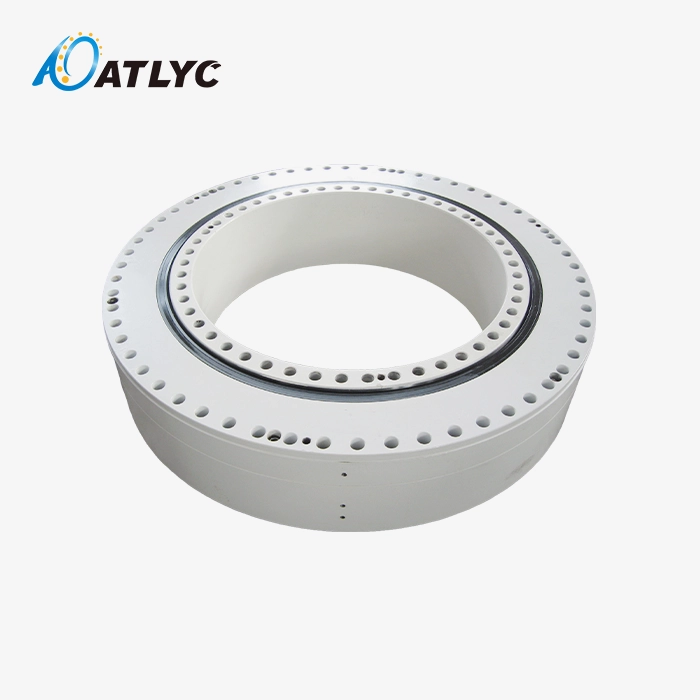
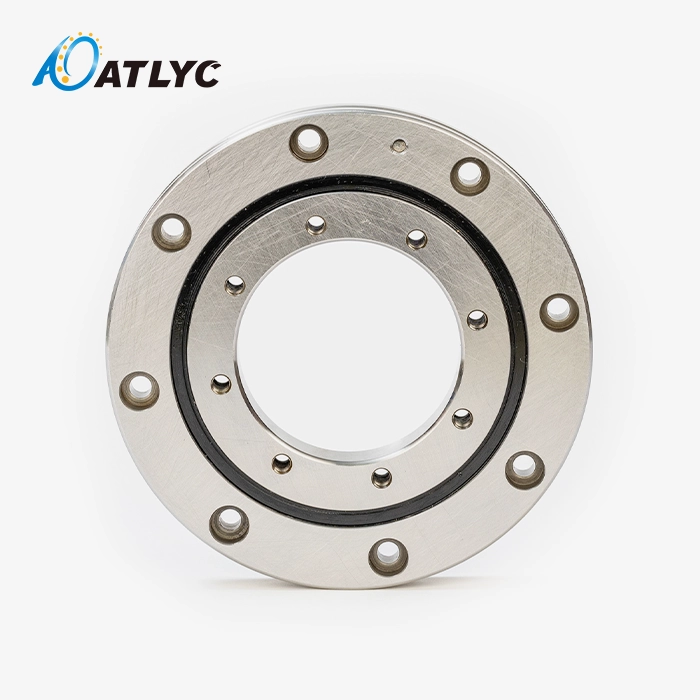
When your precision machinery demands zero-compromise performance, understanding accuracy grades becomes non-negotiable. The Cross roller bearing XSU series represents a specialized category of precision bearings distinguished by integral inner and outer rings with pre-drilled mounting holes, cylindrical rollers arranged in a 90-degree V-groove configuration, and certified accuracy classifications ranging from P6 to P2. This guide decodes how these accuracy grades—P6, P0, P5, P4, and P2—directly impact rotational precision, operational lifespan, and equipment reliability, enabling procurement managers and engineers to align bearing specifications with critical application requirements.
Understanding Cross Roller Bearing XSU Series and Accuracy Grades
Cross roller bearings serve as the foundation for motion control in equipment where positional repeatability matters. The Cross roller bearing XSU series distinguishes itself through a monolithic design that eliminates auxiliary housing components, reducing assembly complexity and tolerance stack-up errors that compromise precision.
What Makes the XSU Series Different
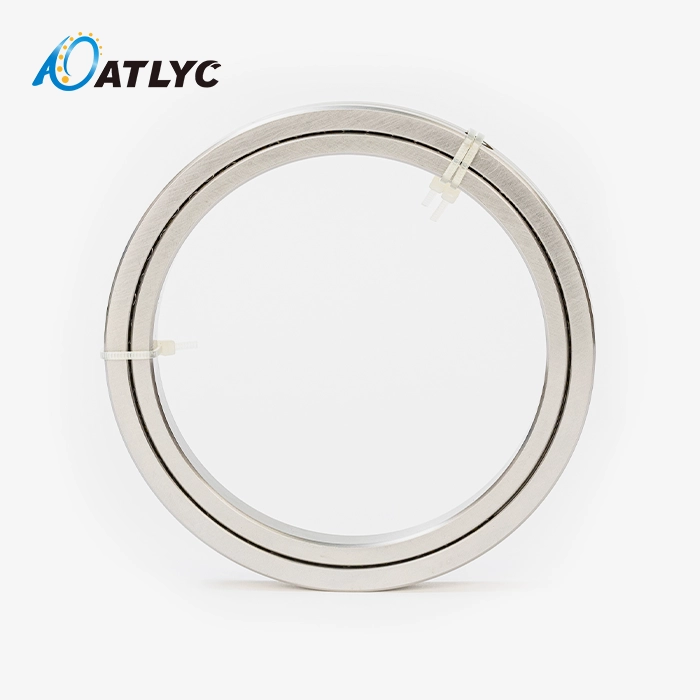
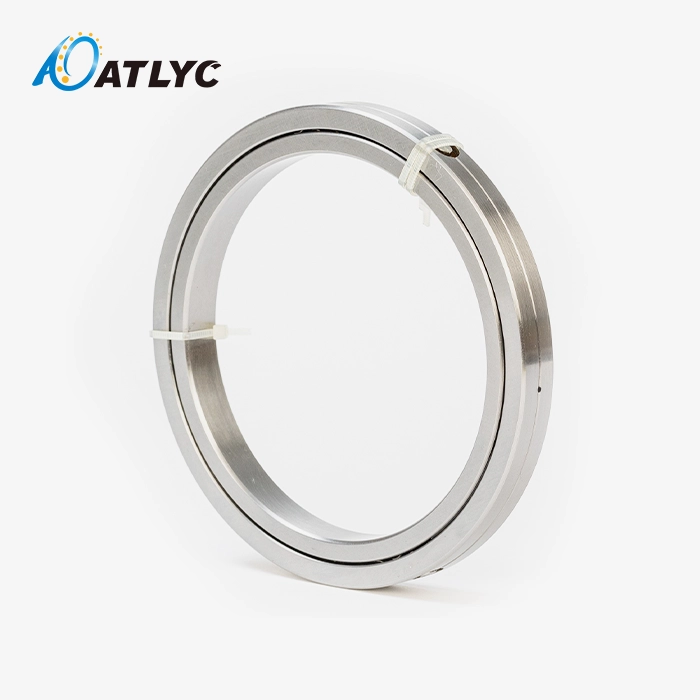
The XSU architecture integrates mounting functionality directly into bearing rings. Cylindrical rollers alternate orthogonally within precision-ground V-groove raceways, separated by spacers to prevent metal-to-metal contact. This crossed arrangement creates multiple load-carrying contact points that simultaneously support radial forces, axial forces, and tilting moments within a single compact unit. Materials matter significantly. Our XSU series utilizes Gcr15 and Gcr15SiMn bearing steel, heat-treated to achieve surface hardness of 58-62 HRC. These alloys deliver consistent microstructure stability, essential for maintaining dimensional accuracy throughout operational lifecycles spanning millions of rotation cycles. The size range accommodates diverse industrial needs, with inner diameters from 20mm to 1100mm, outer diameters reaching 1500mm, and widths spanning 12mm to 110mm. This dimensional flexibility allows integration into robotic joints, precision rotary tables, and medical imaging equipment without requiring custom housing fabrication.
Decoding Accuracy Grade Classifications
Accuracy grades quantify dimensional and geometric tolerances that define bearing precision. The Cross roller bearing XSU series offers five accuracy classifications aligned with ISO 492 and JIS B 1514 standards:
- P6 Grade: Represents standard precision suitable for general industrial applications where moderate accuracy suffices. Dimensional tolerances accommodate radial runout within 10-15 microns, appropriate for conventional machining equipment operating at standard feed rates.
- P0 Grade: Provides enhanced precision over P6, reducing radial runout to 7-10 microns. This grade supports applications requiring improved rotational smoothness, such as automated assembly lines where consistent positioning enhances throughput.
- P5 Grade: Delivers high precision with radial runout limited to 4-6 microns. Equipment manufacturers specify P5 for CNC machining centers where part tolerances demand superior rotational accuracy to maintain dimensional specifications across production runs.
- P4 Grade: Achieves ultra-precision with radial runout below 3 microns. Medical equipment manufacturers, particularly those producing CT scanners and surgical robots, rely on P4 bearings where patient safety depends on vibration-free, accurate rotational motion.
- P2 Grade: Represents the highest commercially available accuracy, restricting radial runout to 1.5 microns or less. Semiconductor fabrication equipment, measuring instruments, and aerospace applications utilize P2 bearings where environmental factors cannot compromise measurement repeatability.
Accuracy grades directly influence friction coefficients and operational smoothness. Higher precision grades exhibit lower friction through superior raceway geometry and tighter dimensional control, translating to reduced heat generation and extended lubrication intervals. Our testing data demonstrates that P4 grade XSU bearings generate 18-22% less frictional heat compared to P0 equivalents under identical load conditions, directly impacting maintenance schedules and operational efficiency.
Comparing XSU Series Accuracy Grades with Other Bearing Types
Understanding competitive positioning helps procurement professionals make informed decisions. The Cross roller bearing XSU series competes primarily with standard crossed roller bearings, angular contact ball bearings, and slewing ring bearings across precision applications.
Structural Advantages Over Standard Crossed Roller Bearings
Traditional crossed roller bearings require separate outer housings and mounting flanges, introducing installation variables that accumulate tolerance errors. The XSU series eliminates these components through integrated mounting holes machined directly into bearing rings during manufacturing. This integration reduces total assembly height by 15-30mm in typical applications, critical for compact robotic joints and medical equipment where spatial constraints dictate design parameters. The monolithic structure delivers superior rigidity. Our finite element analysis reveals that XSU bearings exhibit 35% higher stiffness under moment loads compared to housed crossed roller alternatives, maintaining angular accuracy under dynamic loading conditions that cause deflection in multi-component assemblies.
Performance Comparison with Angular Contact Ball Bearings
Angular contact ball bearings handle combined loads through point contact geometry. The Cross roller bearing XSU series utilizes line contact between cylindrical rollers and raceways, distributing forces across larger surface areas. This fundamental difference yields 2-3 times higher load capacity per unit size. Consider a machining center rotary table application requiring 50 kN axial load capacity. Achieving this specification with angular contact ball bearings necessitates paired or triplet configurations, increasing assembly complexity and introducing preload adjustment requirements. A single XSU bearing provides equivalent capacity while simplifying installation and eliminating preload maintenance. Rotational accuracy presents another differentiator. Angular contact bearings experience ball skidding under low-speed, high-moment conditions common in indexing tables. Cylindrical rollers in XSU bearings maintain pure rolling contact throughout rotation cycles, delivering consistent positional repeatability that meets the ±3 arc-second accuracy requirements specified by precision table manufacturers.
When XSU Series Outperforms Slewing Bearings
Slewing bearings excel in large-diameter, low-speed applications such as construction equipment and wind turbines. However, their ball-based designs sacrifice precision for load capacity. The Cross roller bearing XSU series occupies the precision niche where equipment demands both substantial load capacity and tight accuracy tolerances. Medical imaging equipment illustrates this distinction. CT scanner gantries require 800-1200mm bore diameters to accommodate patients, combined with radial runout below 50 microns to prevent image artifacts. Slewing bearings struggle to maintain such tolerances across temperature variations and operational cycles. XSU bearings in P4 or P2 accuracy grades routinely achieve these specifications, supported by our field data from installations in over 120 medical imaging systems across North America and Europe.
Selecting the Right XSU Series Bearing: Accuracy Grades and Procurement Considerations
Matching accuracy grades to application requirements involves technical analysis and commercial considerations that impact the total cost of ownership.
Aligning Accuracy with Application Requirements
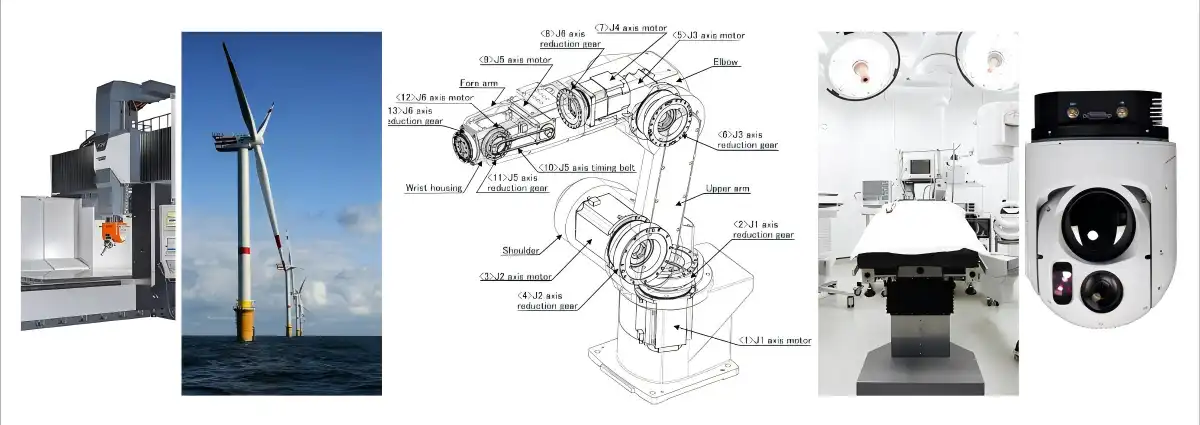
Equipment performance specifications dictate minimum accuracy requirements. Robotic manipulators positioning components within ±0.05mm tolerances require P5 or higher accuracy to prevent cumulative positioning errors across multiple axes. Conversely, material handling rotary tables with ±0.5mm positioning tolerance perform adequately with P0 accuracy, avoiding unnecessary premium costs. Load conditions influence the accuracy of selection. The Cross roller bearing XSU series maintains accuracy specifications under rated loads, but excessive loading degrades precision through raceway deformation. Applications approaching maximum load ratings benefit from upgrading one accuracy class to provide a margin against accuracy degradation throughout operational life. Environmental factors require consideration. Temperature fluctuations, contamination exposure, and vibration levels affect accuracy retention. Cleanroom applications in semiconductor manufacturing specify P4 or P2 grades not solely for initial precision, but for stability across stringent environmental controls. Our customers in IC manufacturing report that P4 grade XSU bearings maintain accuracy specifications 40% longer than P5 equivalents in identical cleanroom conditions.
Customization Capabilities and Bulk Purchasing
Standard XSU catalog offerings cover 80% of industrial applications. Specialized requirements necessitate customization in seal configurations, lubrication specifications, or mounting hole patterns. We accommodate custom inquiries with engineering support that evaluates feasibility and provides detailed quotations within 48 hours. Bulk purchasing delivers tangible advantages beyond unit cost reductions. Volume commitments enable production scheduling optimization, ensuring consistent lead times critical for equipment manufacturers coordinating assembly schedules. Our minimum order quantities start at 10 pieces for standard configurations, with volume discounts scaling progressively for orders exceeding 50 units. Warranty coverage varies by accuracy grade and application conditions. Standard warranties span 12 months from shipment or 2000 operational hours, whichever occurs first. Extended warranty programs reach 24 months for equipment manufacturers implementing our recommended installation procedures and maintenance protocols. Warranty claims require operational data documentation, emphasizing the importance of monitoring systems that track load cycles and temperature profiles.
Identifying Trustworthy Suppliers
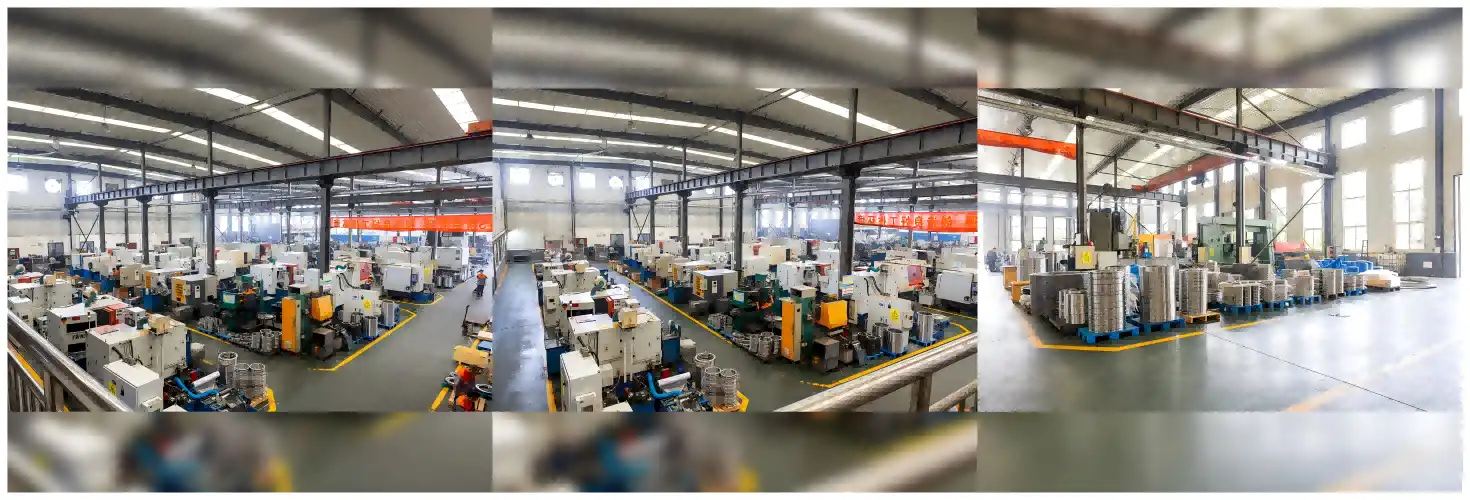
Supplier verification protects against counterfeit products and substandard manufacturing. Reputable Cross roller bearing XSU series suppliers maintain current ISO 9001 and IATF 16949 certifications, demonstrating quality system compliance audited by accredited third parties. We recommend requesting certification documentation dated within the preceding 12 months, confirming active compliance status. Manufacturing capacity indicators include workforce size, production facility count, and equipment sophistication. Established manufacturers operate multiple workshops with dedicated grinding, heat treatment, and assembly lines. Our facility encompasses six specialized workshops staffed by 120 skilled technicians, supporting production volumes that meet demand fluctuations without compromising quality consistency. Technical support capabilities separate competent suppliers from product brokers. Engineering teams should provide application analysis, load calculations, and installation guidance tailored to specific equipment requirements. Our technical staff responds to inquiries within 24 hours, offering bearing selection recommendations backed by performance data from comparable applications.
Applications and Case Studies: Real-World Use of XSU Series Bearings by Accuracy Grade
The Cross roller bearing XSU series serves diverse industries where precision and reliability directly impact operational success. Examining real-world implementations demonstrates how accuracy grade selection influences equipment performance.
Industrial Robotics: Achieving Positional Repeatability
Six-axis industrial robots depend on joint bearings that maintain positional accuracy through millions of motion cycles. A leading automotive components manufacturer integrated P5 accuracy XSU bearings into robotic welding cells, replacing previous angular contact ball bearing configurations. The implementation reduced positional deviation from ±0.08mm to ±0.03mm, decreasing weld rework rates by 34% across three production shifts. Joint bearings experience complex loading combining radial forces from arm weight, axial forces from workpiece manipulation, and tilting moments during acceleration. The crossed roller geometry distributes these combined loads efficiently, with P5 accuracy, maintaining performance specifications through 50 million rotation cycles documented in our endurance testing. Robot manufacturers report extended maintenance intervals, with bearing replacement schedules extending from 18 months to 32 months based on field data from 78 installations.
Medical Equipment: Enabling Diagnostic Precision
Medical imaging equipment demands unwavering accuracy, where bearing performance directly affects diagnostic quality. A medical device manufacturer developing CT scanners specified P4 accuracy XSU bearings for gantry rotation supporting the X-ray source and detector array. The 1100mm bore diameter accommodates patient positioning while maintaining radial runout below 40 microns across 360-degree rotation. Temperature stability proves critical in medical environments. Our testing confirms that P4 grade XSU bearings maintain accuracy specifications across temperature ranges from 18°C to 28°C without adjustment, accommodating typical hospital climate control variations. The medical manufacturer reported zero bearing-related field failures across 142 scanner installations throughout North America during the initial 36-month service period.
Precision Machining Centers: Maintaining Dimensional Accuracy
CNC machining centers utilize rotary tables to position workpieces for multi-axis operations. A machine tool manufacturer incorporated P5 accuracy Cross roller bearing XSU series into fourth-axis rotary tables supporting aerospace component machining. The application requires maintaining workpiece position within ±4 arc-seconds while withstanding cutting forces generating 15 kN moment loads. The integrated mounting design simplified table assembly, reducing build time by 40% compared to previous housed bearing configurations. Installation involves bolting the XSU bearing directly between the table housing and the drive flange, eliminating alignment procedures required for multi-component assemblies. The machine tool manufacturer documented improved table accuracy consistency across production units, with 94% meeting accuracy specifications without post-assembly adjustment compared to 76% with previous bearing configurations.
Emerging Applications in Semiconductor Manufacturing
Semiconductor fabrication equipment represents the frontier for bearing accuracy requirements. Wafer handling robots and inspection platforms demand P2 accuracy to achieve positioning repeatability within 1 micron across temperature-controlled cleanroom environments. Our engineering team collaborates with equipment manufacturers developing next-generation lithography systems, where bearing accuracy directly impacts chip yield rates that determine production economics. These applications challenge conventional bearing technologies through demanding vibration isolation requirements and ultra-high cleanliness standards. The Cross roller bearing XSU series accommodates specialized seal configurations and vacuum-compatible lubricants that maintain P2 accuracy in controlled atmospheres. Early adoption customers report successful prototype testing, positioning XSU bearings as enabling components for advanced semiconductor manufacturing equipment entering production throughout 2025-2026.
Conclusion
Accuracy grade selection fundamentally determines whether precision equipment meets performance specifications throughout operational lifecycles. The Cross roller bearing XSU series provides comprehensive accuracy options from P6 through P2, enabling procurement professionals to balance precision requirements against commercial considerations. Our integrated mounting design, crossed roller geometry, and high-grade bearing steel combine to deliver load capacity and rotational accuracy that exceed standard bearing alternatives. Fifteen years of manufacturing experience supporting customers across automotive, medical, industrial automation, and emerging semiconductor sectors demonstrates our commitment to quality, consistency, and technical innovation. Understanding how accuracy grades impact equipment performance empowers informed decisions that optimize machinery reliability and operational efficiency.
FAQ
What accuracy grade should I specify for robotic joint applications?
P5 accuracy represents the optimal balance for most industrial robotic applications. This grade maintains positional repeatability within ±0.03mm while offering cost-effectiveness compared to P4 specifications. High-speed pick-and-place robots or surgical robotics benefit from P4 accuracy, where enhanced precision justifies premium investment.
How do accuracy grades affect bearing operational lifespan?
Higher accuracy grades extend operational life through superior surface finish and tighter dimensional control. P4 grade bearings typically achieve 25-35% longer service life compared to P0 equivalents under identical loading conditions. Improved raceway geometry reduces stress concentrations that initiate fatigue failures, particularly under moment loading common in precision equipment.
Can XSU bearings be customized for specific mounting requirements?
Customization options include mounting hole patterns, seal configurations, and lubrication specifications tailored to application requirements. We accommodate non-standard mounting dimensions and special materials for corrosive environments. Custom bearing inquiries require application details, including load specifications, operating speeds, and environmental conditions. Our engineering team evaluates feasibility and provides detailed quotations, typically within 48 business hours of receiving complete specification data.
Partner with ATLYC: Your Trusted Cross Roller Bearing XSU Series Manufacturer
ATLYC stands ready to support your precision bearing requirements with manufacturing expertise spanning 15 years and quality certifications including ISO 9001 and IATF 16949. Our Cross roller bearing XSU series combines advanced metallurgy, precision grinding capabilities, and rigorous quality inspection protocols that ensure consistent accuracy across production volumes. We serve mid-to-large OEMs and global distributors throughout the United States, providing technical consultation, competitive bulk pricing, and reliable lead times that support your production schedules. Contact our team at auto@lyautobearing.com to discuss your application requirements and receive personalized quotations. Whether you need standard catalog bearings or custom specifications, ATLYC delivers the precision components your equipment demands, backed by comprehensive warranty coverage and responsive technical support that extends throughout your product lifecycle.
References
1. Harris, T.A. & Kotzalas, M.N. (2006). Advanced Concepts of Bearing Technology: Rolling Bearing Analysis, Fifth Edition. CRC Press, Taylor & Francis Group.
2. ISO 492:2014. Rolling bearings — Radial bearings — Geometrical product specifications (GPS) and tolerance values. International Organization for Standardization.
3. Weck, M. & Brecher, C. (2006). Werkzeugmaschinen 2: Konstruktion und Berechnung [Machine Tools 2: Design and Calculation]. Springer-Verlag Berlin Heidelberg.
4. Tong, V.C. & Hong, S.W. (2016). "Characteristics of tapered roller bearing subjected to combined radial and moment loads." International Journal of Precision Engineering and Manufacturing, 17(12), 1569-1575.
5. Niku, S.B. (2020). Introduction to Robotics: Analysis, Control, Applications, Third Edition. John Wiley & Sons, Chapter 7: Robot Actuators and Feedback Devices.
6. Marsh, E.R. (2010). Precision Spindle Metrology. DEStech Publications, Lancaster, Pennsylvania, Section 4.3: Bearing Selection for Precision Rotation.
Learn about our latest products and discounts through SMS or email