- English
- French
- German
- Portuguese
- Spanish
- Russian
- Japanese
- Korean
- Arabic
- Greek
- German
- Turkish
- Italian
- Danish
- Romanian
- Indonesian
- Czech
- Afrikaans
- Swedish
- Polish
- Basque
- Catalan
- Esperanto
- Hindi
- Lao
- Albanian
- Amharic
- Armenian
- Azerbaijani
- Belarusian
- Bengali
- Bosnian
- Bulgarian
- Cebuano
- Chichewa
- Corsican
- Croatian
- Dutch
- Estonian
- Filipino
- Finnish
- Frisian
- Galician
- Georgian
- Gujarati
- Haitian
- Hausa
- Hawaiian
- Hebrew
- Hmong
- Hungarian
- Icelandic
- Igbo
- Javanese
- Kannada
- Kazakh
- Khmer
- Kurdish
- Kyrgyz
- Latin
- Latvian
- Lithuanian
- Luxembou..
- Macedonian
- Malagasy
- Malay
- Malayalam
- Maltese
- Maori
- Marathi
- Mongolian
- Burmese
- Nepali
- Norwegian
- Pashto
- Persian
- Punjabi
- Serbian
- Sesotho
- Sinhala
- Slovak
- Slovenian
- Somali
- Samoan
- Scots Gaelic
- Shona
- Sindhi
- Sundanese
- Swahili
- Tajik
- Tamil
- Telugu
- Thai
- Ukrainian
- Urdu
- Uzbek
- Vietnamese
- Welsh
- Xhosa
- Yiddish
- Yoruba
- Zulu
What Are RE Crossed Roller Bearings Used For?
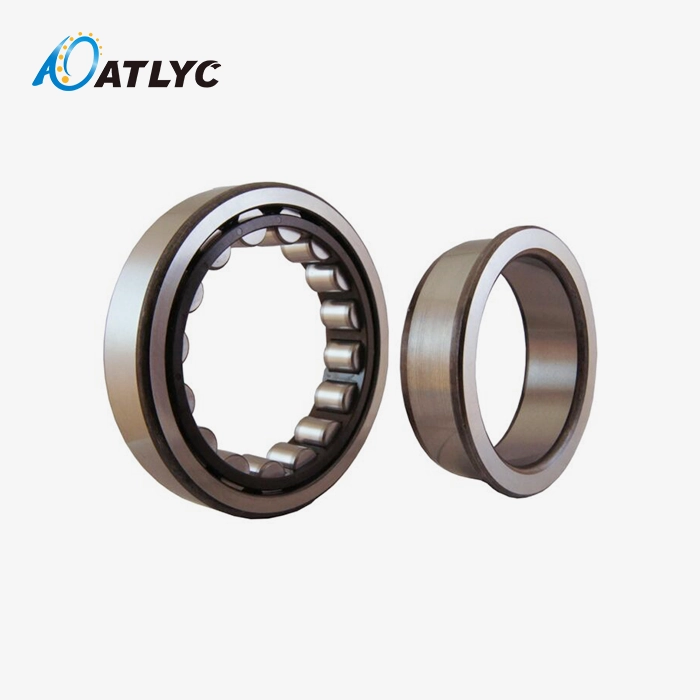
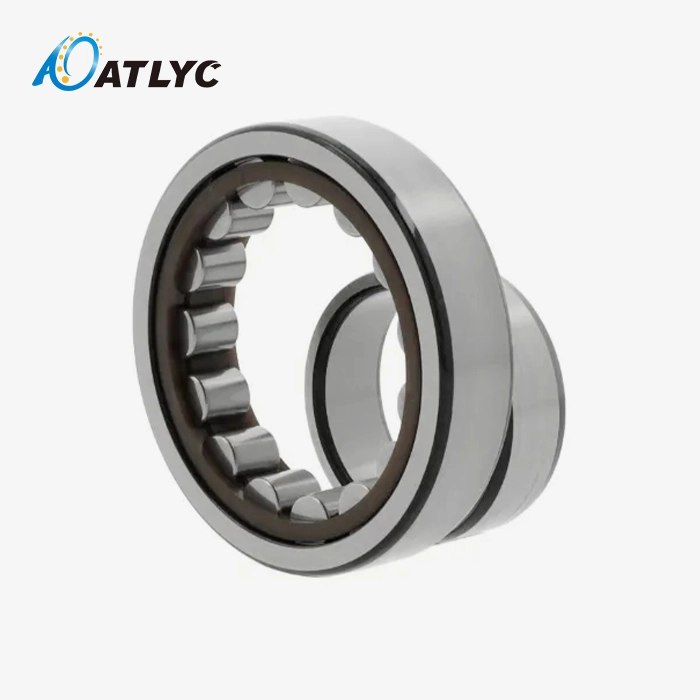
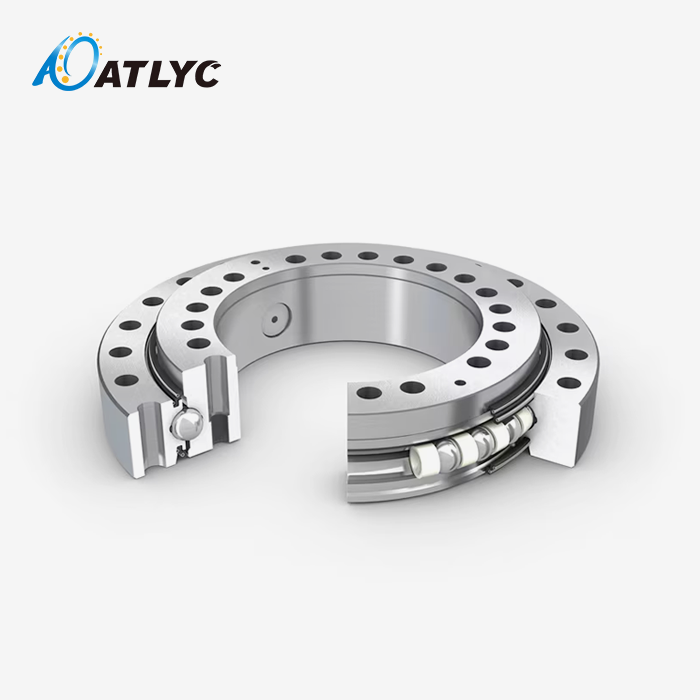
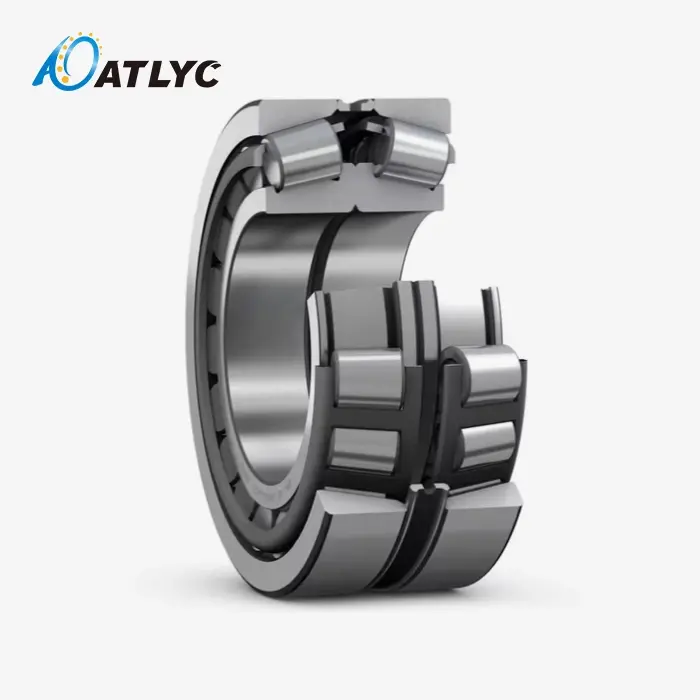
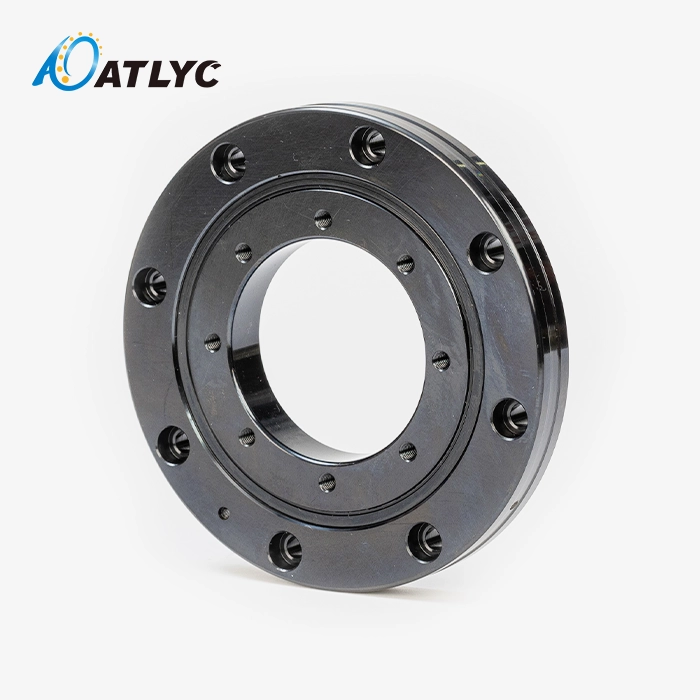
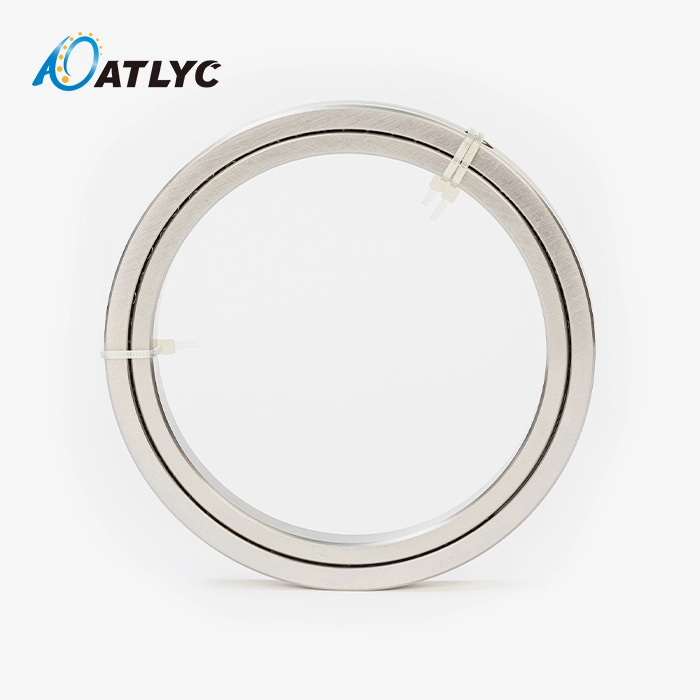
Crossed roller bearings are precision bearing elements consisting of an integral outer ring and a split inner ring. The rollers are cylindrical and are set at 90-degree angles between the V-grooved raceways. Spacers are used to separate the rollers so they don't rub against each other. In this shape, a single bearing may simultaneously support radial, axial, and moment loads. RE crossed roller bearings provide a true solution for manufacturers and OEMs in robotics, medical equipment, machine tools, and aerospace systems: high stiffness and rotational precision in a small footprint with no need for twin bearing setups.

Understanding RE Crossed Roller Bearings: Design and Functionality
Structural Configuration
The outer ring of the RE series is solid and built-in, while the inner ring is divided into two halves. Unlike other types of crossed roller bearings, this kind of crossed roller bearing is intended to enable the outer ring to revolve. The inner ring is divided so it is easier to assemble without sacrificing its strength. Each roller looks like a cylinder and is mounted within a V-shaped track. Spacers between the rollers protect them from contacting each other. This means that the preload is constant over the complete bearing, and it spins easily and with little friction.
Material and Precision Standards
REM Most crossed roller bearings are composed of stainless steel (SUS440C) or high carbon chromium bearing steel (GCr15). Both materials are heat-treated to a surface hardness of 58-64 HRC, which makes them very resistant to wear and fatigue. Precision grades have tolerances of ISO P5, P4, or P2, and runout accuracy is in microns. This level of control over the dimensions allows these bearings to be utilized in circumstances where mistakes in position can not be tolerated.
Load Capacity and Preload
The crossing 1:1 roller design maximizes the contact area between the rollers and raceways. Research indicates that this design may provide three to four times more rigidity than conventional angular contact ball bearings under the same circumstances. RE Crossed Roller Bearings may also be configured to “negative clearance” or “preload,” eliminating pushback. Automation experts believe that zero backlash is one of the most crucial things to look for in precision bearings, since it signifies that there is no position error when the motion is reversed.
Key Applications of RE Crossed Roller Bearings in Industry
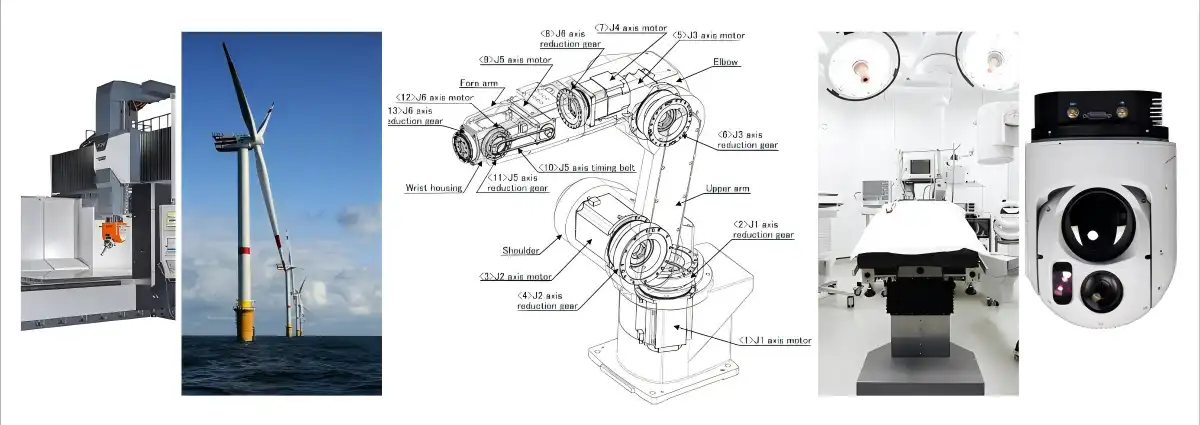
Across industries that depend on precise motion, RE crossed roller bearings appear consistently in critical assemblies. Their ability to carry combined loads in a single compact unit makes them the preferred choice wherever space and accuracy both matter.
| Industry | Typical Application |
|---|---|
| Robotics & Automation | Joint actuators, precision robotic arms |
| Medical Equipment | CT scanners, surgical robots |
| Aerospace & Defense | Gimbal mounts, flight control mechanisms |
| Machine Tools | Rotary tables, indexing devices |
Every one of these application areas has its own requirements for a bearing. In all of them, RE cross roller bearings work reliably. Here’s how they meet the particular demands of each field:
Robotics & Automation: Smooth, reproducible angular motion is a must for robotic joint actuators. RE crossed roller bearings are used in servo-driven robotic arms, where they offer the necessary rigidity and backlash-free rotation. The single bearing replaces what would have been two distinct bearing rows, decreasing assembly complexity and weight.
Medical equipment: CT scanners and surgical robots are used when even tiny vibrations or positional drift might impair the results. RE crossed roller bearings provide low-friction, high-accuracy rotation with the steady, continuous motion required by these devices, and their small size enables them to be included in closely confined equipment housings.
Aerospace and Defense: Multi-directional load situations in flight control systems and gimbal mechanisms are among the most challenging in engineering. RE crossed roller bearings stand up successfully to these complicated load combinations even with temperature changes and mechanical stress.
Machine Tools . Crossed roller ring bearings are used in rotary tables and indexing heads in CNC machining machines to ensure cutting accuracy throughout lengthy production runs. The greater stiffness means tighter part tolerances and quicker cycle times.
These examples prove that RE crossed roller bearings are not a niche product – they are an engineering standard in precision production.
Comparative Analysis: RE Crossed Roller Bearings vs. Other Bearing Types
Choosing the right bearing type directly affects machine performance and service life. The table below compares RE crossed roller bearings against the bearing types most commonly considered as alternatives.
| Bearing Type | Load Directions | Rigidity | Backlash | Compact Design |
|---|---|---|---|---|
| RE Crossed Roller | Radial + Axial + Moment | Very High | Zero (with preload) | Yes |
| Angular Contact Ball | Axial + Some Radial | Moderate | Low | Moderate |
| Cylindrical Roller | Radial Only | High | Moderate | Moderate |
| Slewing Ring | Radial + Axial + Moment | Moderate | Higher | No |
Rolling elements in ball bearings flow without the crossing orientation, limiting their capability to take moment stresses and reducing the total stiffness. Angular contact ball bearings provide better handling of axial loads but still are no match for the multi-directional load capability of crossed roller bearings.
Slewing bearings are similar in that they can take multiple loads, but are meant for large diameter, low speed applications such as crane slewing rings. They are not appropriate for the tiny diameter, high-precision conditions that RE crossed roller bearings work in.
Cylindrical roller bearings can support large radial loads but cannot support axial or moment loads without additional bearings. And engineers who add these components make the assembly larger and heavier, just the reverse of what precise equipment design needs.
RE crossed roller bearings give procurement teams comparing bearing type to application needs the optimum mix of load adaptability, stiffness, and compact shape.
Procurement Considerations for RE Crossed Roller Bearings
Specification Evaluation
When searching for RE Crossed Roller Bearings, the main elements to consider are the bore diameter, the outer diameter, the width, the precision grade (P5, P4, or P2), the static and dynamic load ratings, and the preload class. The matching of these requirements to the real-world operating circumstances prevents failure before it occurs. If you don't specify enough, the life will be shorter, and the price will increase for no reason. Procurement teams that engage directly with a manufacturer that provides them with precise load-rating paperwork and application assistance may make better selections faster.
OEM Customization
Please be aware that normal catalog sizes will not work for all needs. OEM clients often require tailored inner ring geometry, different cage designs, or unique coatings for corrosive or hot environments. A competent firm making RE Crossed Roller Bearings should provide engineering assistance in the design process, not simply after the order is placed. That reduces the amount of design revisions that are required and shortens the time between the plan and delivery.
Supplier Qualification and Pricing
As a supplier, you should evaluate their ISO 9001 and IATF 16949 licenses, manufacturing capacity, quality checking techniques, and defect rate statistics. Prices vary on the grade of accuracy, the material you choose, and the quantity you want. Large and medium-sized clients may buy in bulk from a reputable RE Crossed Roller Bearings source and get the price much lower price. They don’t have to worry about the time it takes to ship. Always ask for traceability documents and inspection reports throughout the standard purchase procedure.
Maintaining and Maximizing the Lifespan of RE Crossed Roller Bearings
Lubrication and Inspection
The most critical maintenance you can do to a bearing to help it live longer is to lubricate it properly. The speed, temperature, and load dictate the kind of grease used and the frequency of replenishment. “Some things get used all the time. A good place to start for inspections is 500 to 1,000 hours of work. Early detection of noise, temperature, or surface wear changes prevents modest issues from becoming assembly failures.
Contamination and Alignment Control
Metal particles or water contaminating precision bearings is a common cause of early failure. Keep the mounting location clean and use sealed or shielded versions whenever possible to drastically reduce the danger of contamination. If the fitting is not done properly, the load is not distributed equally, which causes faster wear of the raceways. The bearing will be protected from the start by respecting the manufacturer's increasing tolerances and by using the appropriate tools for the assembly.
Load Management and Environmental Factors
Running a bearing continuously at or near its maximum load without allowing it to cool down can cause it to wear out sooner. Monitoring the load trend and scheduling the load decrease during the off-peak hours may improve the bearing performance. Another crucial aspect is temperature control. Prolonged usage above 120°C may alter material stiffness and decrease their load-bearing capability. Monitoring these operating parameters reduces unplanned downtime and lifetime expenses.
Conclusion
RE Crossed Roller Bearings are a proven and practical choice for any application requiring accurate rotation, high total load capacity, and compact size. They are the norm for robotics, medical equipment, aerospace systems, and machine tools because they have crossing rollers between V-grooved raceways in a solid outer ring construction and a split inner ring structure. Buying anything from a firm with ISO 9001 and IATF 16949 certification, good OEM customisation, and verifiable quality records reduces the chance of buying something and making it operate properly for a long time.
FAQ
1. How do RE crossed roller bearings differ from standard ball bearings?
Ball bearings use spherical rolling elements that limit contact area and rigidity. RE crossed roller bearings use cylindrical rollers arranged at 90-degree angles, increasing contact area and delivering 3 to 4 times higher rigidity. They also handle radial, axial, and moment loads simultaneously, while most ball bearings handle only one or two load directions efficiently.
2. Can RE crossed roller bearings be customized for OEM applications?
Yes. Dimensions, precision grade, preload class, material type, and cage configuration are all adjustable for OEM requirements. Manufacturers with engineering support teams can assist with application-specific designs, especially for robotics, medical equipment, and aerospace assemblies where standard catalog parts may not fit.
3. What is the typical service life of RE crossed roller bearings under continuous use?
Under properly calculated load conditions, correct lubrication, and clean operating environments, RE crossed roller bearings routinely achieve service lives exceeding 20,000 hours in industrial applications. Actual lifespan depends on speed, load magnitude, contamination exposure, and maintenance consistency.
4. What precision grades are available?
ISO P5, P4, and P2 grades are standard. P2 represents the highest accuracy tier, with runout tolerances in the low-micrometer range, suited for surgical robots and precision measurement equipment.
Source Your RE Crossed Roller Bearings From ATLYC
ATLYC, which is part of Luoyang Auto Bearing Co., Ltd., has been making precision bearings since 2010. They have both ISO 9001 and IATF 16949 certifications and have six production sites with 120 trained specialists working there. As a reliable maker of RE Crossed Roller Bearings, we provide quality products, consistent lead times, and engineering support for special needs to OEMs and distributors in the US, Germany, South Korea, and other places. You can email our team at auto@lyautobearing.com to get product specs, samples, or a price for buying our products.
References
1. Harris, T. A., & Kotzalas, M. N. — Rolling Bearing Analysis, Taylor & Francis, 2006.
2. Eschmann, P., Hasbargen, L., & Weigand, K. — Ball and Roller Bearings: Theory, Design, and Application, John Wiley & Sons, 1985.
3. ISO 492 — Rolling Bearings — Radial Bearings — Dimensional and Geometrical Tolerances, International Organization for Standardization, 2014.
4. SKF Group — SKF Bearing Maintenance Handbook, SKF Industrial Division, 2012.
5. JTEKT Corporation — Technical Report: Crossed Roller Bearings for Robotic and Precision Machinery Applications, JTEKT Engineering Journal, 2018.
6. American Bearing Manufacturers Association (ABMA) — Load Ratings and Fatigue Life for Roller Bearings, ABMA Standard 11, 2011.
Learn about our latest products and discounts through SMS or email