- English
- French
- German
- Portuguese
- Spanish
- Russian
- Japanese
- Korean
- Arabic
- Greek
- German
- Turkish
- Italian
- Danish
- Romanian
- Indonesian
- Czech
- Afrikaans
- Swedish
- Polish
- Basque
- Catalan
- Esperanto
- Hindi
- Lao
- Albanian
- Amharic
- Armenian
- Azerbaijani
- Belarusian
- Bengali
- Bosnian
- Bulgarian
- Cebuano
- Chichewa
- Corsican
- Croatian
- Dutch
- Estonian
- Filipino
- Finnish
- Frisian
- Galician
- Georgian
- Gujarati
- Haitian
- Hausa
- Hawaiian
- Hebrew
- Hmong
- Hungarian
- Icelandic
- Igbo
- Javanese
- Kannada
- Kazakh
- Khmer
- Kurdish
- Kyrgyz
- Latin
- Latvian
- Lithuanian
- Luxembou..
- Macedonian
- Malagasy
- Malay
- Malayalam
- Maltese
- Maori
- Marathi
- Mongolian
- Burmese
- Nepali
- Norwegian
- Pashto
- Persian
- Punjabi
- Serbian
- Sesotho
- Sinhala
- Slovak
- Slovenian
- Somali
- Samoan
- Scots Gaelic
- Shona
- Sindhi
- Sundanese
- Swahili
- Tajik
- Tamil
- Telugu
- Thai
- Ukrainian
- Urdu
- Uzbek
- Vietnamese
- Welsh
- Xhosa
- Yiddish
- Yoruba
- Zulu
RA Cross Roller Bearing Benefits for High-Accuracy Motion
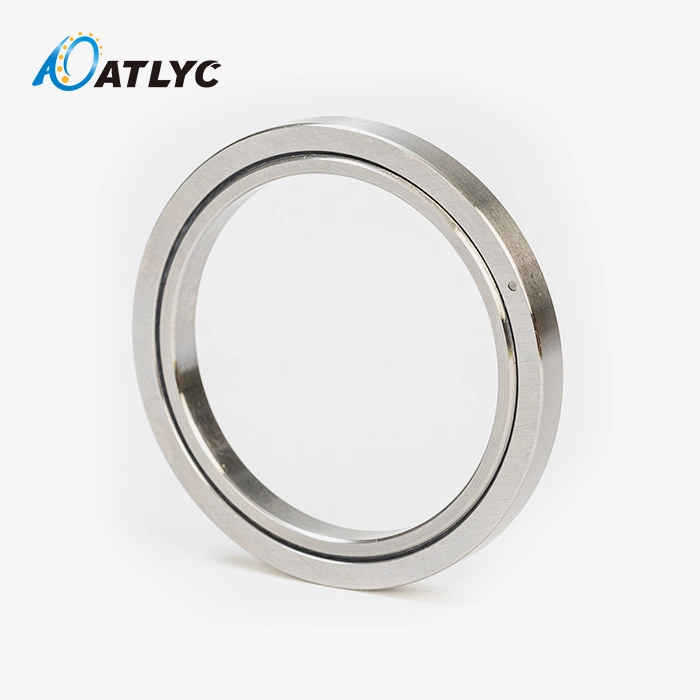
If you care most about accuracy, the kind of bearing you choose may make or break your whole motion system. The RA cross roller bearing is designed for high-precision motion applications with limited space, multi-directional loads, and no tolerance for positional drift. This bearing type uses cylindrical rollers in a 90° V-groove raceway and can accommodate radial, axial, and moment loads concurrently in an ultra-thin assembly. For OEMs or procurement teams looking for bearings for robotics, automation, or medical equipment, knowing what makes this design tick is the first step to making better buying selections.
Understanding the RA Cross Roller Bearing Design
What Makes the RA Series Different
RA Cross Roller Bearing is a crossed roller bearing with an ultra-thin wall. It has substantially smaller walls than the usual RB series; hence, it is the ideal solution when weight and envelope space are restricted. The outer ring is separable from the inner ring; the inner ring is designed to give great precision for rotation. Spacers separate the rollers, preventing them from contacting and reducing the heat build-up from friction.
Orthogonal Roller Arrangement and Load Capacity
The rollers are adjacent to each other, rotate 90°, and are located in a precisely ground V-groove raceway. This configuration enables one unit to withstand rotating loads, bi-directional axial loads, and torsional moment loads simultaneously. With a standard bearing configuration, you would want two different bearings, one for radial loads and the other for thrust loads. These tasks are combined into a single tiny component in the cross roller design, saving space and facilitating installation.
Dimensional Standardization and Global Compliance
RA series bearings are manufactured to worldwide dimension standards, making it easy to incorporate them into global supply chains. The common bore, outer diameter, and breadth sizes enable straightforward replacement of parts in designs originally manufactured for corresponding series from firms like THK, NSK, or IKO. This dimensional compatibility provides purchasing engineers additional choices when buying from more than one eligible source.
| Feature | RA Series | RB Series |
|---|---|---|
| Wall Thickness | Ultra-thin | Standard |
| Outer Ring | Separable | Separable |
| Inner Ring | Solid/Integrated | Solid |
| Primary Use | Weight-critical, compact joints | General high-rigidity applications |
| Typical Application | Cobot joints, medical imaging | Machine tool tables, indexers |
Core Benefits of the RA Cross Roller Bearing in Precision Environments
The RA Cross Roller Bearing’s improved design results in measurable performance improvements in production environments. The primary characteristics that distinguish this kind of bearing are the following:
Multi-directional loads supported by a unit: The orthogonal roller architecture provides radial, axial, and moment loads at the same time, thus engineers do away with paired bearing setups. This immediately decreases assembly weight and reduces axial length and part count, a significant advantage in robotic arm joint design.
Near-zero internal clearance: Precision-ground raceways and regulated preload settings provide little backlash and great rotational precision. This means that the repeatability is in the micrometer range, which is a must in semiconductor wafer handling stages and laparoscopic surgical robots where positional inaccuracy cannot be tolerated.
Compact footprint for OEM integration: Motor housings and gearbox assemblies may be built smaller thanks to the extremely thin wall profile. With collaborative robots (cobots), this immediately leads to a better payload-to-weight ratio and dynamic reactivity of the joint.
Long service life with good sealing: Sealed types with lithium soap-based EP grease (e.g., Alvania EP2 or comparable) greatly decrease contaminant intrusion. Fluorine-based lubricants with minimal outgassing are used for vacuum or cleanroom settings to keep the bearing functioning without particle contamination.
These advantages immediately address frequent production challenges such as heavy robotic joints, intricate mounting arrangements with multiple bearings, and early wear from contaminated lubricants.
RA Cross Roller Bearings vs. Other Bearing Types
Cross roller bearings are often compared to other options by procurement managers.
| Bearing Type | Load Direction | Accuracy Level | Space Efficiency | Best Use Case |
|---|---|---|---|---|
| RA Cross Roller | Radial + Axial + Moment | Very High | Excellent | Robotics, medical, semiconductor |
| Angular Contact Ball | Radial + Axial (one direction) | High | Moderate | Spindles, pumps |
| Cylindrical Roller | Radial only | High | Good | Heavy radial loads |
| Thrust Ball | Axial only | Moderate | Poor | Low-speed thrust |
| Needle Roller | Radial only | Moderate | Very Good | Thin sections, low loads |
| Slewing Ring | Radial + Axial + Moment | Moderate | Poor | Large diameter, slow rotation |
The RA Cross Roller Bearing always works better than the other options listed above in situations that need high stability, the ability to handle loads in multiple directions, and limited space. To get moment resistance, angular contact ball bearings need to be mounted in pairs. Needle roller bearings, on the other hand, can't handle the load for cantilevered joints. Both problems are solved by the cross roller design, which fits both into a single, space-saving machine.
Procurement Insights: Sourcing RA Cross Roller Bearings Efficiently
Understanding Price Drivers
The price of a bearing depends on its load rating, lubrication requirements, bore size, outer diameter, wall thickness tolerance class, and tolerance class. Prices are higher for larger bore sizes and tighter tolerance classes (P5, P4). When buying from companies that have their own grinding machines, blanket purchase orders and promises to buy in bulk that are delivered at different times can often lead to big cost savings.
Evaluating Suppliers and Quality Standards
A good company that makes RA Cross Roller Bearings should be certified by both ISO 9001 and IATF 16949. These approvals show that the provider has a written quality management system that can meet process controls for the car industry. When looking at different sources, make sure to ask for dimensional inspection records, material certifications, and references from companies in the same industry.
Managing Lead Times and Supply Chain Risk
Buying fine bearings from a single source makes the supply chain more vulnerable. Your production schedule will be safe if you work with a provider that keeps finished goods in stock and gives you written lead time promises. In the supply chains for cars and medical devices, it is common to find a second qualified source during the qualification phase.
Installation, Maintenance, and Best Practices
Precision Mounting Requirements
The RA Cross Roller Bearing's separate outer ring needs a housing bore that has been precisely machined and a clamping flange to fix any out-of-roundness. If the flange isn't properly supported, the thin outer ring can bend when the load is mounted, causing uneven preload distribution and faster wear. Before putting the bearing together, you should always compare the housing bore tolerance to the manufacturer's fit suggestions.
Lubrication Practices by Environment
Industrial and robotic uses that follow the rules use lithium-based EP2 grease. To keep things clean in a semiconductor factory or a medical cleanroom, switch to fluorine-based grease that doesn't give off a lot of gas. When to re-oil depends on the load, speed, and temperature; check the bearing manufacturer's lubricant book for cycle-specific advice.
Condition Monitoring and Preventive Maintenance
Regularly checking sound patterns and working temperature lets maintenance teams find early signs of wear before they cause unplanned downtime. In high-cycle robotic applications, comparing the total number of revolutions to the calculated L10 life (using the formula L10 = (C/Pc)^(10/3) for roller bearings) gives a data-driven reason for when to replace the bearings.

Conclusion
The RA Cross Roller Bearing is widely renowned for its capacity to transfer load in numerous directions, spin correctly, and take up minimal space. This is something that very few other bearing types can perform in one unit. Choosing the appropriate cross roller bearing and the right supplier may make all the difference for procurement professionals in robotics, industrial automation, and the automotive sector. It impacts equipment performance, maintenance costs, and the length of production. ATLYC can assist you with your large-scale sourcing requirements since we have 15 years of manufacturing experience and have quality certifications that are recognized across the globe.
FAQ
1. How does the RA series differ from the RB series?
The RA series features a thinner outer ring cross-section compared to the RB series. While the RB is the standard model for general high-rigidity use, the RA is specifically designed for applications where weight reduction and compact housing design are priorities.
2. Can RA cross roller bearings handle high-speed rotation?
These bearings are designed for rigidity and positioning accuracy, not sustained high-speed rotation. Due to spacer sliding contact and preload, the limiting speed is lower than ball bearings. They perform best in intermittent, oscillating, or moderate-speed precision motion.
3. What lubrication should I use in cleanroom environments?
Standard EP2 lithium grease is not suitable for vacuum or cleanroom conditions. Specialized low-outgassing fluorine-based greases are required to prevent particulate contamination in semiconductor or medical applications.
4. How is service life calculated for these bearings?
Service life uses the roller bearing rating life formula: L10 = (C/Pc)^(10/3), where C is the basic dynamic load rating, and Pc is the equivalent dynamic load adjusted for the load factor fw, which accounts for shock and vibration conditions.
5. Can RA cross roller bearings be customized for non-standard dimensions?
Yes. Qualified manufacturers can produce non-standard bore sizes, special tolerance classes, and modified ring configurations. Provide your application load data and dimensional constraints when requesting a custom specification.
Partner with ATLYC for Your RA Cross Roller Bearing Supply
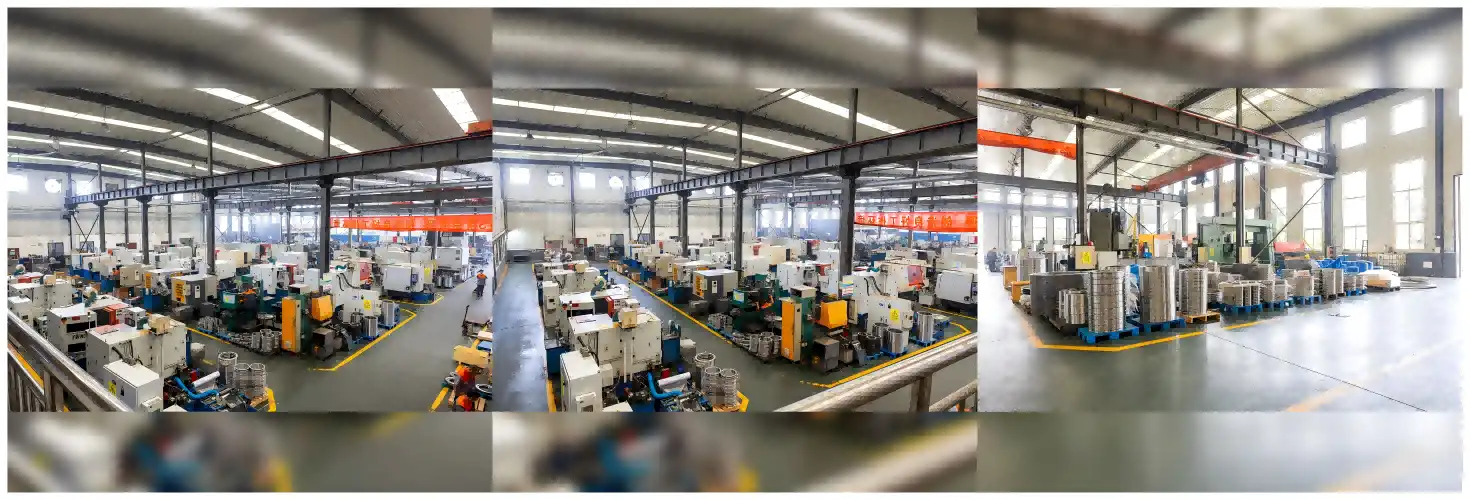
ATLYC, which is part of Luoyang Auto Bearing Co., Ltd., has been making precision bearings in six production workshops since 2010. They are certified by both ISO 9001 and IATF 16949. As an RA Cross Roller Bearing provider, we can meet both standard and custom requirements. We also offer engineering help and quality paperwork that has been checked. You can email our team at auto@lyautobearing.com right now to get a quote or technical advice.
References
1. Hamrock, B. J., Schmid, S. R., & Jacobson, B. O. Fundamentals of Machine Elements. McGraw-Hill, 2005.
2. THK Co., Ltd. General Catalog: Cross Roller Rings. THK Technical Publications, 2020.
3. NSK Ltd. Precision Rolling Bearings Catalog. NSK Technical Report Series, 2019.
4. ISO 281:2007. Rolling Bearings — Dynamic Load Ratings and Rating Life. International Organization for Standardization, 2007.
5. Eschmann, P., Hasbargen, L., & Weigand, K. Ball and Roller Bearings: Theory, Design, and Application. John Wiley & Sons, 1985.
6. Bearing Technical Journal: Precision Bearings in Robotics and Automation Applications. Power Transmission Engineering, 2022.
Learn about our latest products and discounts through SMS or email