- English
- French
- German
- Portuguese
- Spanish
- Russian
- Japanese
- Korean
- Arabic
- Greek
- German
- Turkish
- Italian
- Danish
- Romanian
- Indonesian
- Czech
- Afrikaans
- Swedish
- Polish
- Basque
- Catalan
- Esperanto
- Hindi
- Lao
- Albanian
- Amharic
- Armenian
- Azerbaijani
- Belarusian
- Bengali
- Bosnian
- Bulgarian
- Cebuano
- Chichewa
- Corsican
- Croatian
- Dutch
- Estonian
- Filipino
- Finnish
- Frisian
- Galician
- Georgian
- Gujarati
- Haitian
- Hausa
- Hawaiian
- Hebrew
- Hmong
- Hungarian
- Icelandic
- Igbo
- Javanese
- Kannada
- Kazakh
- Khmer
- Kurdish
- Kyrgyz
- Latin
- Latvian
- Lithuanian
- Luxembou..
- Macedonian
- Malagasy
- Malay
- Malayalam
- Maltese
- Maori
- Marathi
- Mongolian
- Burmese
- Nepali
- Norwegian
- Pashto
- Persian
- Punjabi
- Serbian
- Sesotho
- Sinhala
- Slovak
- Slovenian
- Somali
- Samoan
- Scots Gaelic
- Shona
- Sindhi
- Sundanese
- Swahili
- Tajik
- Tamil
- Telugu
- Thai
- Ukrainian
- Urdu
- Uzbek
- Vietnamese
- Welsh
- Xhosa
- Yiddish
- Yoruba
- Zulu
What Are Robot Bearings and Why Do Precision Joints Need Them?
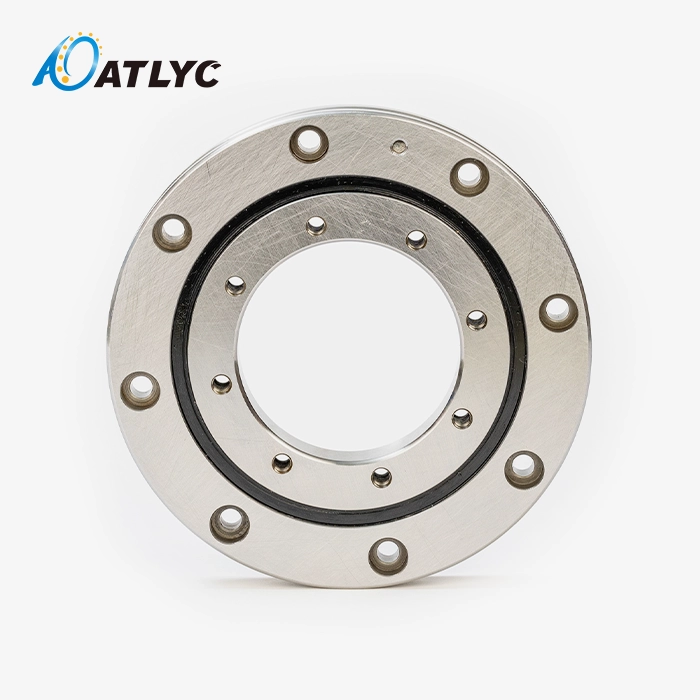
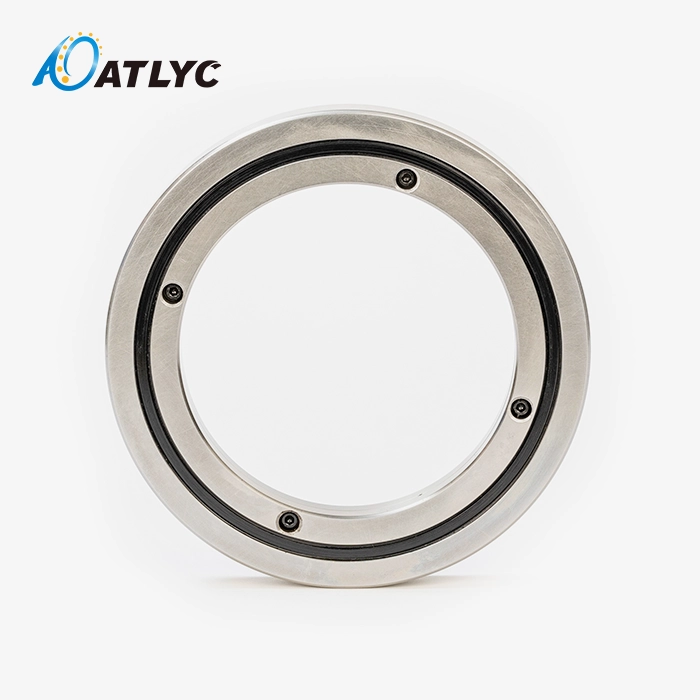
Robot bearings are specialized mechanical components engineered to enable precise rotational and linear motion in robotic systems, particularly within joints requiring exceptional accuracy. These bearings reduce friction between moving parts while supporting complex loads—radial, axial, and combined forces—that occur during multi-directional movements. Unlike standard industrial bearings, robot bearings maintain tight tolerances under high-speed operations and repetitive cycles, ensuring smooth articulation across base, shoulder, elbow, and wrist joints. Their design directly impacts positional repeatability and minimizes backlash, making them indispensable for applications demanding millimeter-level precision in assembly lines, CNC machining centers, and automated inspection systems.

Understanding Robot Bearings: Definition and Core Functions
What Makes Robot Bearings Different from Standard Bearings?
Robot Bearings work in situations that would be too much for regular bearings. In industrial automation, a robotic arm may make thousands of precise moves every day. Each one needs even weight distribution and little friction. Standard bearings made for rotating machinery can't handle the radial and thrust loads that are present at the same time in multi-axis robot joints. Robot Bearings solve this problem with special interior shapes and preload systems that get rid of any loose play.When you look at practical needs, the difference becomes clear. When there is a steady load on a conveyor system bearing, it spins continuously in one direction. On the other hand, robotic joints constantly change direction, go thru rounds of speeding up and slowing down, and have varied load vectors. Because this environment is always changing, the bearings need to be able to keep their accuracy even after millions of stress changes on the contact surfaces.
Core Functions in Robotic Motion Systems
Bearings are what make it possible for motor power to be turned into controlled joint movement. A servo motor moves the shoulder joint of a robot. The bearing takes on both the weight of the arm frame and the response forces from moving the payload. If you choose the right bearings, they can do a lot of important things at once. Friction reduction stands as the primary function, achieved by designing rolling elements that turn sliding friction into rolling contact. This increase in efficiency directly leads to less heat being made and less energy being used. Because the motion is smoother, the acceleration curves are easier to predict. This lets control systems get to their goals faster. Load support capabilities show if a bearing can handle operational stresses without deforming. In a six-axis robot, the base bearing may have to support the weight of the whole unit as well as the forces from moving quickly. Engineers have to figure out the total radial and axial loads in order to choose bearings with the right static and dynamic capacities. Maintaining alignment stops rotational misalignment that builds up across many joints. At the end effector, even a mismatch of 0.1 degree at the shoulder joint is many times worse. The stiff outer and inner rings of high-precision bearings keep the axes of rotation perpendicular to the mounting surfaces. This keeps the bearings in a coaxial line. Backlash reduction cuts down on the amount of motion lost when direction changes. Any free play in the bearings causes positioning errors when a robotic arm stops and turns around. This problem is solved by cross-roller bearings and four-point contact designs, which use preload to get rid of internal space while keeping spinning smooth.
Types of Robot Bearings and Their Applications
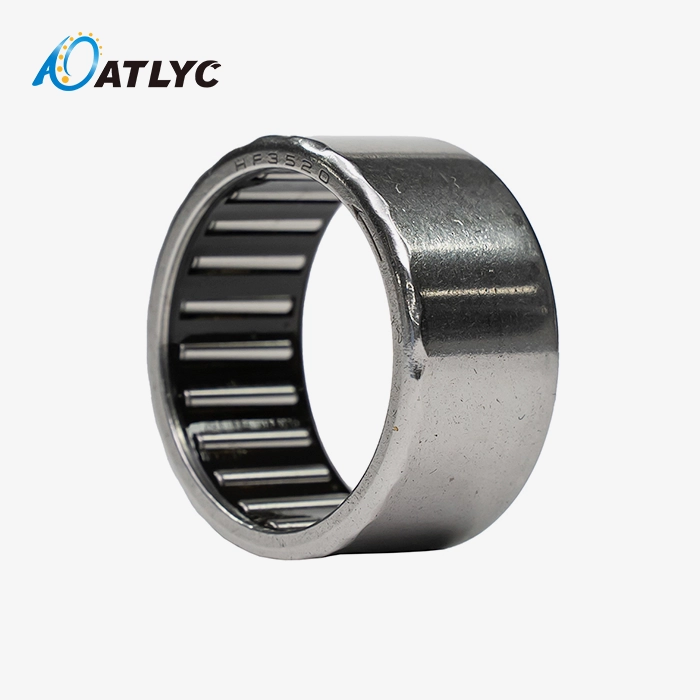
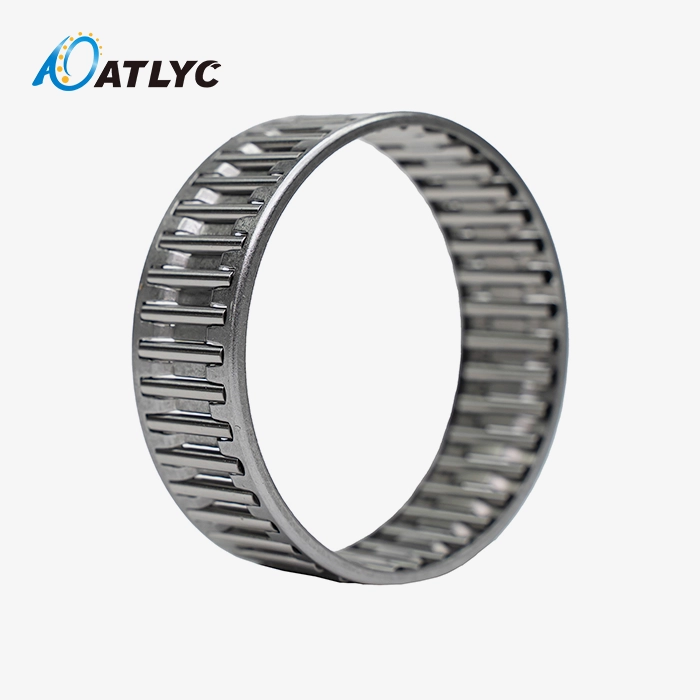
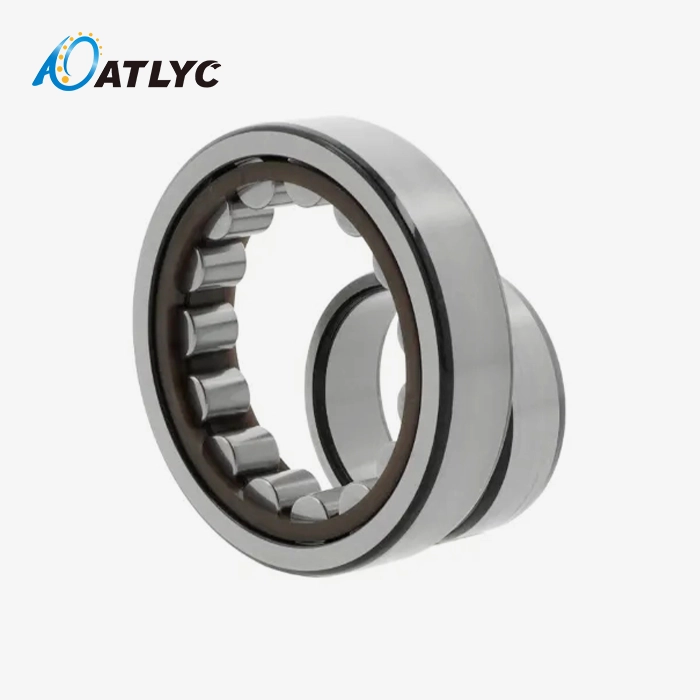
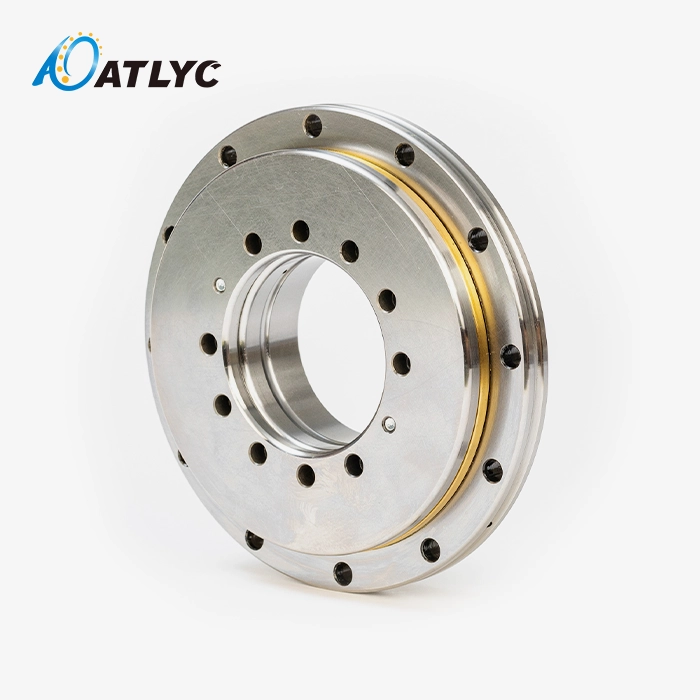
For different robotic uses, bearing designs need to be tuned for certain performance traits. When acceleration is important, like in wrist rotations, ball bearings with deep grooves or angular contact configurations work best. Their low-mass parts react quickly to changes in speed and have little inertia. When heavy loads are present, roller bearings, especially cross-roller and cylindrical types, work very well. Rollers provide a larger contact area than balls, which is helpful for robot base joints that hold heavy loads. The RB series cross-roller bearings, which are common in collaborative robot shoulders, can hold 30–40% more weight than ball bearings of the same size. Ceramic bearings use materials like silicon nitride that are 60% lighter than steel and are better at resisting corrosion. These qualities are useful in cleanrooms and robots used in aerospace, where regular greasing could contaminate processes. Hybrid bearings have both ceramic rolling elements and steel rings. They balance better performance with lower cost.
Robot Bearing Type Comparison
| Bearing Type | Load Capacity | Speed Rating | Typical Applications | Key Advantage |
|---|---|---|---|---|
| Deep Groove Ball | Moderate | Very High | Light loads, wrist joints | High speed and little friction |
| Angular Contact Ball | High | High | Elbow parts, exact location | Combined handling of loads |
| Cross-Roller | Very High | Moderate | Heavy robots and base joints | Small size and high strength |
| Cylindrical Roller | Very High | Moderate | Gantry devices and linear axes | The largest radial capacity |
| Ceramic Hybrid | Moderate | Very High | Robots for medicine and clean rooms | Low weight and protection against corrosion |
When buying, teams know these differences, and they can match bearing specs to joint needs. For example, a painting robot that needs to move its wrists quickly will need different supports than a palletizing robot that has to lift 50-kilogram boxes. When it comes to automation for material handling, load capacity and service life are usually the most important factors. On the other hand, electronics assembly needs positional accuracy measured in microns.
Why Precision Joints in Robotics Absolutely Need Specialized Bearings
The Accuracy and Repeatability Imperative
The accuracy of robots comes from the way that component errors add up along the motion chain. Robot Bearings directly affect how accurately things are placed because they help keep friction levels stable and keep shapes stable. A bearing with ABEC-7 or ISO Class 4 tolerances keeps the roundness within 5 microns, which lets the robot work in a range of repeatability specifications of ±0.02 millimeters. Think about an assembly line for cars where robots put together dashboard parts. For each entry point to line up, the tolerances must be tighter than the screw clearance hole. Bearings that aren't up to par cause vibration and play that make setting less consistent. This leads to higher rejection rates and line stoppages. Quality bearings keep working even after millions of rounds, keeping the equipment's original accuracy over its entire life.
Impact on Operational Efficiency and Equipment Longevity
To meet flow goals, production settings need to be online all the time. When Robot Bearings break, they need expensive, unplanned maintenance that delays production. If a welding robot's bearings break, the whole cell might have to wait until new parts arrive and repairs are made. This downtime affects the planning of production, which could cause deliveries to customers to be late. High-quality bearings greatly increase the time between maintenance visits. In normal industrial settings, high-end designs with improved sealing systems and lubrication tanks that work better than others last 50,000 hours before they need to be serviced. This means that maintenance can be planned for planned breaks in production instead of having to be done quickly during times of high demand. How long something lasts also depends on how well its bearings work. Bearings that are worn out cause too much shaking, which hurts nearby parts like gears, couplings, and servo motors. It might cost $500 to replace a broken bearing, but the damage to a precision gearhead could be more than $5,000. This upkeep multiplier effect can be avoided by choosing the right bearings at the start of the fitting process.
Real-World Consequences of Inadequate Bearing Selection
A European company that makes parts for cars kept track of what happened when it switched its robotic spot welding equipment to cheaper bearings. Positional accuracy dropped from ±0.05mm to ±0.15mm in just six months, which led to mistakes in where the welds were placed. The problem was found to be caused by lost bearing preload and increased internal clearance, according to the manufacturer. To go back to the original bearing specifications, 40 replacement units had to be bought, and 80 hours of work had to be set aside for fitting. This cost about $18,000 plus production losses. Speeded-up wear shows up as higher working temperatures and changes in noise levels. Temperature rises of 15 to 20°C above normal operating conditions are common in bearings that are about to break. Then, thermal expansion changes the size of joints, which affects accuracy by causing positioning drift that control systems can't fix. The amount of vibration goes up as the bearings wear out. This causes oscillations at the end effector that lower the quality of the process in situations like laser cutting or pouring. Medical robotics applications face even stricter requirements where bearing failure could compromise patient safety. Surgical robots need bearings that are clean and reliable enough to meet medical-grade standards. When you compare the legal risk that comes from tools breaking down during procedures to the difference in cost between normal and medical-grade bearings, it becomes almost meaningless.
Technical Insights: Design Specifications and Materials of Robot Bearings
Critical Design Parameters
When figuring out load capacity, you have to take into account both steady and moving situations. When a bearing is stationary, its static load rating tells you the maximum force it can handle without permanently deforming. Dynamic rates tell you how much weight a bearing can hold and still turn one million times before the material wears out and breaks. To make sure they last a long time, Robot Bearings usually work at 20 to 30 percent of their dynamic capacity. How bearing deflection changes joint stiffness depends on how rigid the structure is. Flexible bearings let unwanted compliance happen, which narrows the control system's capacity. Cross-roller bearings are rigid because their crossed rollers are arranged at a 90-degree angle, which stops moment loads without tilting. This design lets you make small joint sets in places where bigger, stiffer bearings would take up too much room. As companies try to make robots that are lighter and faster, they are coming up with new bearings with small form factors. Thin-section bearings with large bore-to-outer diameter ratios make it possible to integrate hollow-shaft motors, which cut the overall joint size by 30 to 40 percent. This smaller size makes it possible to make robots with better reach and payload ratios. Thermal stability makes sure that performance stays the same across a wide range of operating temperatures. Industrial robots may work in cold storage facilities at -20°C or in foundries with temperatures of 50°C. Between these two extremes, bearing materials and oils must keep the right gaps and viscosity. Ceramics have one-third the temperature expansion rate of steel, which means they are more stable in terms of size.
Material Selection: Steel, Ceramic, and Hybrid Designs
Grades of bearing steel like AISI 52100 and 440C stainless have been shown to work well and are cost-effective. Because these materials have been through-hardened to 58–62 HRC, they don't wear down on the surface and are still tough against shock loads. In general industrial robots, where the cost-performance ratio drives buying choices, steel bearings are the norm. Advanced ceramic materials, especially silicon nitride (Si3N4), perform better in tough situations. Their 60% lower density lowers the mass of the bearings, which lowers the spinning inertia that servo motors have to fight when they speed up. Robots with high-frequency motor drives don't get damaged by bearing current damage because of their electrical insulation properties. Corrosion resistance lets them work in places where they would normally get dirty or where they would be exposed to chemicals, where expensive safety steps are needed for steel bearings.Hybrid bearings use ceramic rolling elements inside steel races to mix materials in a smart way. This design takes advantage of ceramic's low weight and high hardness while keeping steel's cost structure and ease of manufacture. Manufacturers of automotive robots are choosing hybrid bearings for wrist joints more and more. The 40–50% price increase over all-steel designs is justified by the fast acceleration.
Lubrication Strategies and Maintenance Protocols
Lubrication has a big effect on how long a bearing lasts and how much contact it has. Grease works well for most robotic tasks because it is easy to use and keeps the seals in place well. Using lithium-complex greases with synthetic base oils keeps their stability from -40°C to 150°C and lasts for 50,000 hours between greasing cycles. Choosing the right grease depends on the speed of the bearings; for example, high-speed joints need low-viscosity formulas that keep spinning losses to a minimum.When continuous high-speed operation is needed or when cooling needs are higher than what grease can handle, oil lubrication is needed. Systems that circulate oil get rid of excessive heat and clear out contaminants at the same time. But oil systems are more complicated because they have pumps, reservoirs, and problems with sealing. In robotics, oil is usually only used to grease the base joints that are the biggest and heaviest.Solid lubricants, such as molybdenum disulfide or PTFE layers, are used in high-pressure or high-temperature situations. Robots that work in clean rooms don't use organic lubricants because they give off dirty gasses. Instead, they use vapor-deposited layers that are attached to the bearing surfaces. Some load capacity is lost, but these solutions allow operation in places where normal lubrication doesn't work.
Lubrication Method Comparison for Robotic Applications
| Lubrication Type | Temperature Range | Maintenance Interval | Contamination Resistance | Typical Cost |
|---|---|---|---|---|
| Grease (Lithium Complex) | -40°C to 150°C | 50,000 hours | Very good | Low |
| Synthetic Oil (Circulating) | -50°C to 200°C | Filtration that never stops | Doable to seal | High |
| Solid Lubricant (MoS2) | -200°C to 400°C | Life of Robot Bearing | Very good | Moderate |
| Dry Running (Ceramic) | -100°C to 800°C | No upkeep | Great! | Very High |
Best techniques for maintenance make bearings last a lot longer. According to reliability studies, 36% of early bearing failures are caused by contamination. Choosing the right seals stops dust, water, and process chemicals from getting in. Contact seals offer the best protection, but they cause friction. Non-contact labyrinth seals work best in high-speed situations, but they offer slightly less protection against contamination.Vibration analysis is used for condition tracking to find worn-out bearings before they fail completely. Accelerometers placed close to robot joints find frequency components that are typical of certain bearing problems. When compared to reactive maintenance strategies, predictive maintenance based on vibration trends cuts down on emergency fixes by 75%.
Comparing Robot Bearings: How to Choose the Best Bearings for Industrial Robots
Precision Versus Durability Trade-offs
To choose the best Robot Bearings, you have to balance different objectives. Ultra-precise bearings with ISO Class 2 tolerances allow positioning down to the micron level, but they are more expensive and can sometimes hold less weight. Even tho heavy-duty bearings last longer in harsh conditions, they may not be as fast. Figuring out the right balance depends on knowing the goals of the applications.Lightweight bearings with low starting torque help high-speed articulated robots that put cycle time first. In compact wrist joints, angular contact ball bearings arranged in a duplex configuration can handle combined loads and allow rotational speeds of more than 10,000 RPM. These designs make the best use of power, which means smaller motors and less energy use.Heavy-loading robots, such as palletizers and material handling systems, put load capacity and shock protection at the top of their list of priorities. Cross-roller and cylindrical roller bearings can hold two to three times as much weight as ball bearings in the same space. Their strong design can handle being hit by quick changes in load when heavy parts are being picked up or put down.
Evaluating Global Bearing Manufacturers
Leading bearing makers offer a range of strengths for different performance levels. SKF stays ahead of the competition in the market by offering a wide range of products and having expert help networks around the world. Their simulation tools help engineers model how bearings will work under different loads, which lowers the risk of development. The higher prices reflect this service ecosystem that goes beyond just supplying parts.NSK and NTN use Japanese practices of precision manufacturing to make parts with very tight tolerances that can be used in robots that put together electronics. Because they are experts in high-speed spindle bearings, their fast motion joints work better than others. Technical paperwork puts a lot of emphasis on detailed standard charts that help engineers do their work.As an expert in roller bearings, FAG, which is now part of the Schaeffler Group, makes strong options for big industrial robots. Their OPTIME smart bearing technology has built-in sensors that let you check the condition of the bearings without using any extra equipment. This new idea helps with Industry 4.0 projects that need data on the performance of individual pieces of equipment.Timken knows a lot about tapered roller bearings and can come up with unique solutions for robots that need to be able to handle a lot of moment loads. The history of American industry ensures the stability of the supply chain for domestic projects that prioritize buying locally. Their tech help focuses on optimizing bearings for specific uses.Total operating costs, not just the purchase price, must be taken into account when figuring out how cost-effective something is. A bearing that costs 30% more but lasts twice as long is a better deal because it requires less maintenance and costs less to keep in stock. Chinese companies like ATLYC are competing more and more by offering quality products approved by ISO 9001 and IATF 16949 at attractive prices. They do this to serve OEMs that need scalable supplies for production around the world.
High-Speed Versus High-Load Application Considerations
Speed limits are caused by the way bearings move when RPM is high. Centrifugal forces on rolling elements lower effective preload, which could lead to skidding that hurts the raceways. Machined metal or engineered plastics are used in cage designs to keep elements from colliding during high-speed operation. Manufacturers use DN numbers, which are the hole width in millimeters times the RPM, to show how fast a machine can go. Values greater than 500,000 DN need special high-speed bearing designs.The load capacity is based on how stressed the contact between the rolling elements and the raceways is. Hertzian contact theory predicts fatigue life by looking at the highest amounts of stress that happen where an element meets a track. Larger diameter elements or more elements of the same type increase the load capacity but lower the highest speed. Engineers have to choose the right bearings based on whether the job needs speed, load capacity, or balanced performance.Calculations of dynamic load are affected by acceleration rates. When joints move very quickly, they create inertial forces that add to the loads from gravity and the process. Servo-driven robots that move quickly need bearings that can handle the highest dynamic loads during full acceleration, not just when the robot is in a fixed state.
Procuring Robot Bearings: A Practical Guide for B2B Clients
Defining Technical Requirements
Detailed specification development is the first step to a successful procurement. Engineers need to write down joint load profiles that show the highest radial, axial, and moment loads in all situations. Both peak and continuous rotational speeds are set by speed requirements. The environmental factors include temperature ranges, the amount of contamination present, and any unique conditions, such as operating in a vacuum or a laboratory.Robot Bearings precision class standards are based on accuracy needs. For general industrial robots, ABEC-5 or ISO Class 6 bearings work fine. However, for precision assembly tasks, ABEC-7 (ISO Class 4) or tighter standards are needed. Setting tolerances that are too tight raises costs without improving performance.Details of the mounting interface have to match the designs of the robot joint housings. It is important to be clear about the bearing's bore and outer circle sizes, as well as its width and any shoulder or groove standards. The way the shaft and housing fit together affects the preload and alignment of the bearings. Fits can range from transition fits to light interference. To make sure that dimensions are compatible, engineers should use ISO or ANSI standards to set tolerances.
Supplier Selection and Verification
Internationally known certificates show that qualified bearing suppliers can make the products you need. Getting ISO 9001 quality management certification is a good way to make sure that processes are controlled and can be tracked. Suppliers with IATF 16949 certification are good for automotive robotics uses because it means they have improved quality systems that meet the needs of the car industry.An evaluation of production ability makes sure that providers can meet volume needs and grow with the program. Vertical integration helps keep quality high by having facilities with separate cutting, heat treatment, and assembly lines. Suppliers who have more than one production shift show that they can adapt to changing demand.The ability to provide technical help is what sets engineering partners apart from component sellers. Beyond just selling products, suppliers who give bearing selection tools, application engineering help, and failure analysis services add value. This knowledge comes in very handy when working on new robots, because optimizing the bearings has a big impact on the success of the whole design.
Navigating International Procurement
Global sourcing brings up issues that go beyond buying things in your own country. Logistics of shipping affect lead times and planning for inventory. When buying from Asian manufacturers by ocean freight, it takes 30 to 45 days to get there plus time for customs clearance, so you need to keep more in stock than when buying from local manufacturers. Air freight cuts travel time to 5–7 days, but it also makes each item much more expensive.Payment terms change from country to country. For new accounts, many Asian producers ask for lines of credit. Figuring out what paperwork is needed and making connections with banks makes deal handling go more smoothly. When you first start working with an experienced foreign seller, they will often be willing to work with you on payment terms.Protocols for quality verification become more important when dealing with international suppliers. By using incoming testing methods, problems can be found before the bearings are put into production. Coordinate measuring machines check the accuracy of the dimensions, and surface roughness testers check the quality of the finish on the raceway. Statistical sampling plans find a balance between how thorough the checks are and how much they cost.The warranty terms should cover things like replacement parts, the cost of shipping the item back, and the limits of your liability. Bearings from reputable manufacturers usually come with a warranty that covers material and manufacturing flaws for 12 to 24 months after delivery. If you know how to file a claim and what paperwork is needed, you can avoid arguments when problems appear.
Conclusion
In automated production systems, Robot Bearings play a crucial role in determining accuracy, dependability, and lifespan. Their custom designs have to deal with problems that are only found in robotic applications, like loads that move in more than one way, high speeds, and the need for extreme accuracy. Material choice, lubricating methods, and precise making all affect the performance of bearings, which in turn affects how well production runs and how much equipment is up and running. To do a good job of procurement, you need to know how to technically understand application requirements, evaluate supplier capabilities, and look at the total cost of ownership, which is more than just the initial purchase price. Even tho robotics is getting faster and more accurate, bearing performance is still very important for reaching these goals.
FAQ
How long do robot bearings typically last in industrial applications?
The service life depends on the load, the speed of operation, and how well the equipment is maintained. Industrial robots usually have bearings that last between 50,000 and 80,000 hours before they need to be replaced. This may be cut down to 30,000 hours for heavy-duty applications or dirty settings, but in perfect conditions, it can last over 100,000 hours for precision applications. Regular maintenance that includes lubrication and monitoring for vibrations greatly increases the life of an operation.
Can standard industrial bearings substitute for specialized robot bearings?
Standard bearings don't have the precise tolerances and preload properties that robots need to be accurate. Even tho they can be directly mounted, they cause too much backlash and shaking, which makes it harder to repeat the position. When you use standard bearings, you save money at first, but quickly lose it because they need more maintenance and don't work as well. Robot Bearings that are specifically made for those uses are required for tasks that need millimeter-level accuracy.
What factors most influence robot bearing pricing?
The main thing that affects price is precision class. For example, ISO Class 2 bearings cost three to four times more than Class 6 bearings of the same type. The choice of material has a big effect on price—ceramic hybrid bearings usually cost 40–60% more than steel ones. Prices are also affected by size and load capacity, since bigger bearings need more material and more time to machine. Thru economies of scale, buying in bulk lowers the cost per item.
Partner with a Trusted Robot Bearing Manufacturer
ATLYC is an expert in making precise Robot Bearings that are used in demanding automation applications in advanced robotics, industrial machinery, and the making of cars. Our ISO 9001 and IATF 16949-certified building has six specialized production workshops with 120 trained workers who are committed to making the best products possible. We work with global OEMs in South Korea, the US, Germany, and other places where quality control and reliable supply partnerships are important. Our expert team offers application engineering support to help you find the best bearings for your needs based on your load patterns and performance expectations. Get in touch with our team at auto@lyautobearing.com to talk about your Robot Bearing needs with a dependable supplier that is dedicated to high-quality production and long-term partnerships.
References
1. Harris, T.A., and Kotzalas, M.N. (2006). Advanced Concepts of Bearing Technology: Rolling Bearing Analysis, 5th Edition. CRC Press, Boca Raton, Florida.
2. Blodt, M., Granjon, P., Raison, B., and Rostaing, G. (2008). "Models for Bearing Damage Detection in Induction Motors Using Stator Current Monitoring." IEEE Transactions on Industrial Electronics, 55(4), 1813-1822.
3. Yoshida, K., and Shinno, H. (2010). "Characteristics of Cross Roller Bearings in High-Precision Positioning Mechanisms." Precision Engineering, 34(3), 621-628.
4. SKF Group. (2018). Rolling Bearings for Robotics: Selection and Application Guide. SKF Technical Publication, Gothenburg, Sweden.
5. International Organization for Standardization. (2014). ISO 281:2007 Rolling Bearings — Dynamic Load Ratings and Rating Life. ISO Standards Catalogue, Geneva, Switzerland.
6. Wensing, J.A. (1998). On the Dynamics of Ball Bearings. Ph.D. Dissertation, University of Twente, Enschede, Netherlands.
Learn about our latest products and discounts through SMS or email
_1772782093670.webp)