- English
- French
- German
- Portuguese
- Spanish
- Russian
- Japanese
- Korean
- Arabic
- Greek
- German
- Turkish
- Italian
- Danish
- Romanian
- Indonesian
- Czech
- Afrikaans
- Swedish
- Polish
- Basque
- Catalan
- Esperanto
- Hindi
- Lao
- Albanian
- Amharic
- Armenian
- Azerbaijani
- Belarusian
- Bengali
- Bosnian
- Bulgarian
- Cebuano
- Chichewa
- Corsican
- Croatian
- Dutch
- Estonian
- Filipino
- Finnish
- Frisian
- Galician
- Georgian
- Gujarati
- Haitian
- Hausa
- Hawaiian
- Hebrew
- Hmong
- Hungarian
- Icelandic
- Igbo
- Javanese
- Kannada
- Kazakh
- Khmer
- Kurdish
- Kyrgyz
- Latin
- Latvian
- Lithuanian
- Luxembou..
- Macedonian
- Malagasy
- Malay
- Malayalam
- Maltese
- Maori
- Marathi
- Mongolian
- Burmese
- Nepali
- Norwegian
- Pashto
- Persian
- Punjabi
- Serbian
- Sesotho
- Sinhala
- Slovak
- Slovenian
- Somali
- Samoan
- Scots Gaelic
- Shona
- Sindhi
- Sundanese
- Swahili
- Tajik
- Tamil
- Telugu
- Thai
- Ukrainian
- Urdu
- Uzbek
- Vietnamese
- Welsh
- Xhosa
- Yiddish
- Yoruba
- Zulu
Why Does the YRT100 Rotary Table Bearing Cost More Than Standard?
The YRT100 Rotary Table Bearing costs more than others because it has a three-in-one design that can handle thrust, rotational, and moment loads all in one small unit. Standard bearings need different kits, but this precision part has double-row angular contact ball arrangements with contact angles between 45° and 60°, precision-ground raceways with tolerances of less than 1 micron, and GCr15 bearing steel that has been hardened to HRC 58–64. These engineering specs make it possible to handle complex loads in multiple directions at the same time while keeping the bearings very rigid. This makes them a must-have for CNC rotary tables and indexing tasks where standard bearings just won't do.
Understanding YRT100 Rotary Table Bearing Specifications and Design Features
The engineering behind precision rotary bearings shows why different types of bearings cost different amounts. Standard bearings have simple designs that work best for applications with a single load direction. On the other hand, specialised rotary models have complex geometries that deal with multiple stress vectors at the same time.
Integrated Three-in-One Structural Design
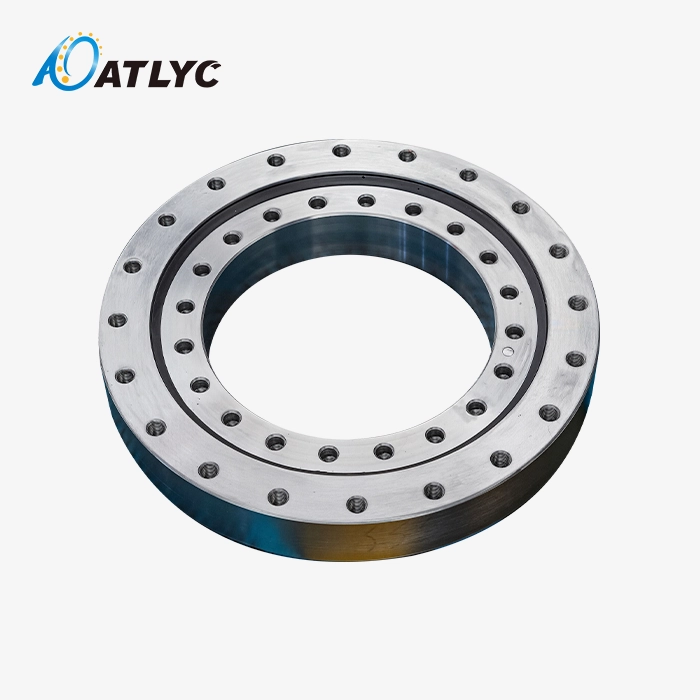
The YRT100 rotary table bearing has a thrust bearing, a radial bearing, and an indexing mechanism all built into one unit. It has a fixed outer ring, a rotating inner ring, precision steel balls, and a cage assembly. This unified design gets rid of the hassle of putting together a lot of different parts. This makes installing equipment much easier and reduces the overall size of the mechanical structure. Engineers have to choose, buy, and match three different types of bearings when using traditional methods. Each type has its own case, mounting tools, and alignment limits.
At Luoyang Auto Bearing, we make sure that these combined units, YRT100 Rotary Table Bearing, come ready to be installed right away by drilling 18 precise fixing holes into both the inner and outer rings during the making process. This choice in design turns installation from a difficult alignment task that took several days into a simple mounting job. This saves money
Double-Row Angular Contact Ball Arrangement
The bearing can handle axial loads, radial loads, and composite tilting moments from multiple directions at the same time, thanks to its two rows of steel balls arranged at specific contact angles, usually 45° or 60°. This geometric arrangement successfully raises the structure's load-bearing capacity and stiffness, ensuring safe operation even under complex load conditions that would be too much for standard single-row designs.
The performance characteristics are directly affected by the contact angle choice. Our engineers choose these angles by looking at the load profiles that are specific to the application. They do this by combining the axial capacity with the radial requirements and keeping the smooth rotation that is needed for precision positioning systems.
Precision-Ground Raceway Manufacturing
Our six specialised workshops do precise grinding and super-finishing on the inner and outer raceways of YRT bearings. This way of making things makes sure that the surface quality is the same across all production batches. This lowers contact friction and extends the life of bearings in tough situations. Surface roughness values reach or beat 0.05 micrometres, while normal industrial bearings have values between 0.2 and 0.4 micrometres.
Because of these manufacturing tolerances, there is less vibration during rotation, the lubricant lasts longer, and the performance remains the same over millions of operational cycles. The dimensions—100mm bore diameter, 185mm outer diameter, and 38mm height—stay within the ISO P4 or P2 precise classes, which means that the axial and radial runout accuracy is usually less than 3 micrometres.
| Design Feature | YRT100 Rotary Table Bearing | Standard Combined Bearing |
|---|---|---|
| Structural Integration | Three-in-one unit (thrust + radial + indexing) | Separate thrust and radial assemblies |
| Contact Angle | 45° or 60° double-row arrangement | Single-row or parallel arrangement |
| Mounting Holes | 18 integrated holes (inner and outer rings) | Requires separate housing and retention plates |
| Raceway Surface Finish | Ra ≤0.05 μm (super-finished) | Ra 0.2–0.4 μm (standard ground) |
| Precision Class | ISO P4 or P2 | ISO P5 or P6 |
| Installation Complexity | Direct bolt-on mounting | Multi-component assembly with alignment |
Factors Contributing to the Higher Cost of YRT100 Bearings
The prices of precision rotary bearings are set by a number of manufacturing and engineering factors that are all connected. These factors include more than just the cost of materials. They also include specialised methods, quality control routines, and performance promises.
Advanced Material Selection and Heat Treatment
The higher price of YRT100 bearings is partly due to the use of advanced materials like GCr15 bearing steel (equivalent to AISI 52100) that have been through processes that make the surface hardness reach HRC 58–64. This heat treatment method makes a tough core that can withstand shock loads and a surface that won't wear down over billions of stress cycles. Standard bearings usually use lower-grade steels that haven't been heat-treated as thoroughly. This means that they don't last as long and are more likely to break down in tough situations.
Our mechanical testing labs check the makeup and strength of every batch of materials that goes into production. This makes sure that the quality meets IATF 16949 standards for the car industry. Quality control like this adds a measurable cost, but it stops the catastrophic failures that sometimes happen with standard bearings in high-precision settings.
State-of-the-Art CNC Manufacturing Processes
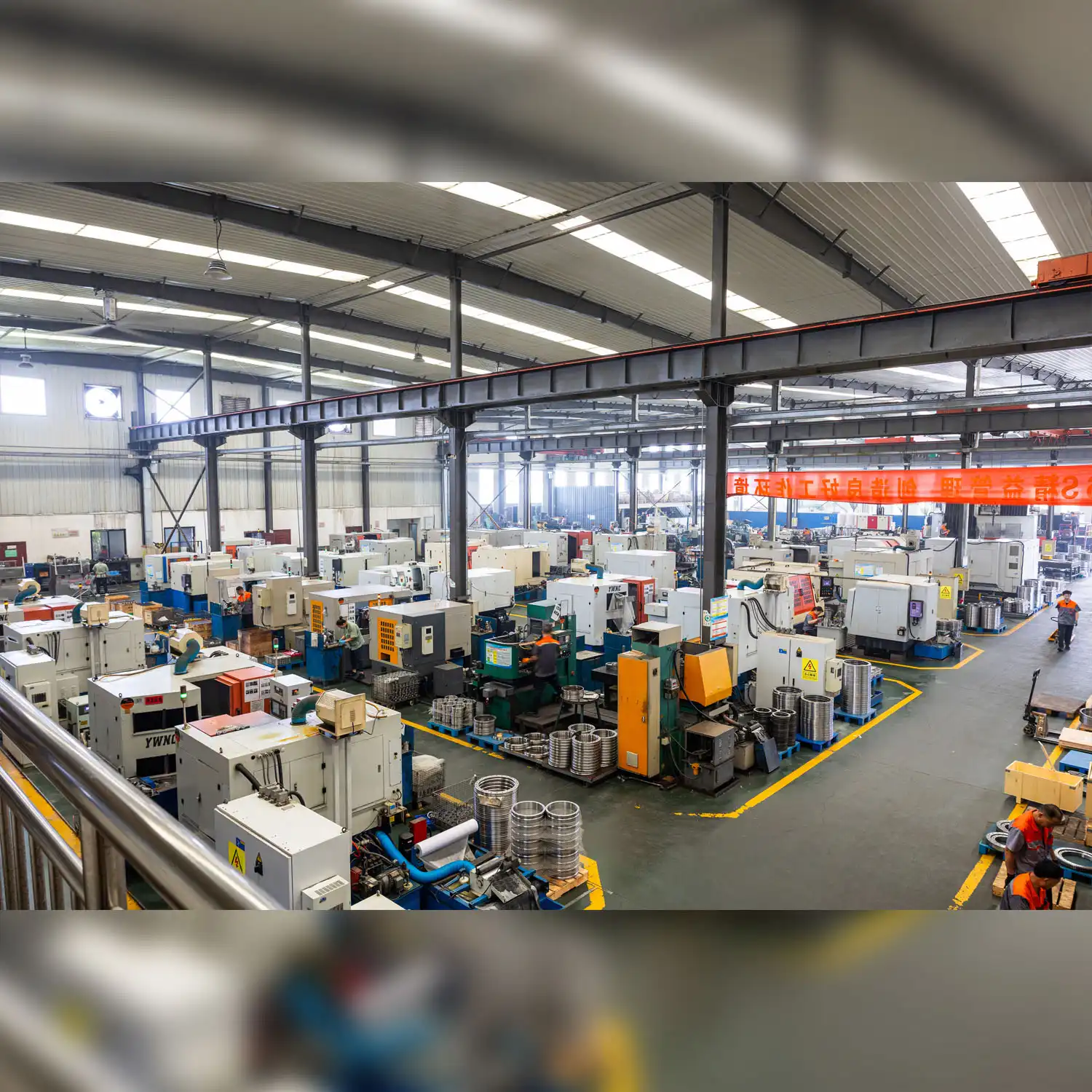
Modern CNC grinding machines and multi-axis machining centers are needed to make precise raceways and keep tolerances close in all dimensions. Our six workshops are home to specialised machines that can achieve the sub-micron accuracy needed for rotary table applications. Before it is put together, each YRT100 bearing goes through several steps of grinding, measurement verification checks, and surface quality tests.
The investment in manufacturing includes climate-controlled work areas that keep temperatures fixed within ±1°C. This stops thermal expansion that could affect the accuracy of measurements during cutting operations. These environmental controls add a lot to the cost of doing business, so normal bearing makers usually don't use them.
Extended Operational Lifespan and Reduced Downtime
Compared to normal options, these bearings, YRT100 Rotary Table Bearing, last longer, which means less downtime and lower long-term repair costs. Our field data from CNC machining centers shows that YRT100 bearings can be used continuously for more than 30,000 hours, while standard combined bearing assemblies need to be replaced every 10,000 to 15,000 hours.
This difference in longevity directly translates to lower total costs of ownership. Even though they cost more at first, precision rotary bearings often end up being a better investment when you look at all the costs over their lifetime, such as the purchase price, the cost of installation, the time lost during replacement, and the cost of disposal.
Specialized Installation and Rigorous Testing Protocols
Specialised testing protocols are used on each bearing to make sure it works well in harsh industrial environments. This adds operational value that makes the initial investment worthwhile. As part of our quality assurance process, we test for vibrations, measure runout, check the charge, and test the durability of the product under realistic working loads. These confirmation steps find any possible flaws before the goods are sent out, so there are almost no problems in the field during the guarantee period.
Standard bearings only get basic measurements and visual checks before they are fully tested to make sure they work. Our clients are protected from production delays caused by earlier bearing failures thanks to the money we keep in testing.
Comparing YRT100 Bearings with Other Rotary Table Bearing Options
When procurement professionals know how precision rotary bearings stack up against other designs, they can choose the best ones for specific operational needs. There are different types of bearing sets on the market, and each one is best suited for a certain type of purpose.
YRT100 Versus Cross Roller Bearings
Cross roller bearings have cylindrical rollers that are positioned perpendicular to each other between the inner and outer rings. This makes the bearings very rigid while still fitting into small spaces. These designs work great in some situations, but the YRT100 is clearly better for rotary table settings that need to index and rotate all the time. The ball bearing design produces less starting torque than cross roller friction, which makes motion control smoother and lowers the size of the motor that needs to be used.
Cross roller bearings usually cost 15–25% more than similar YRT models, but they can hold the same amount of weight. The difficulty of installation is also very different. Cross roller bearings need precise preload adjustment during assembly, while YRT bearings are already preloaded at the factory and are ready to be installed.
Comparison with MAR and SRB Series Bearings
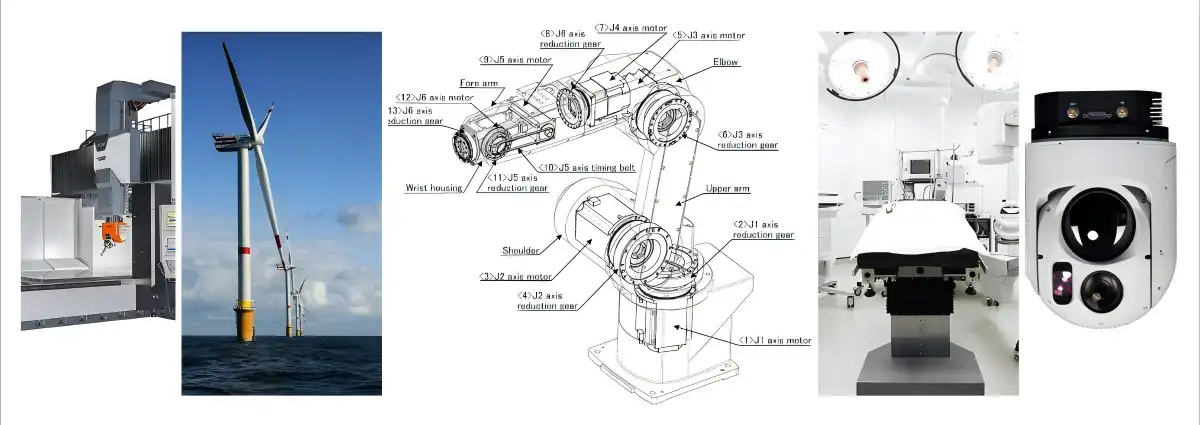
Different types of rotary bearings, such as MAR (thin-section bearings) and SRB (slewing ring bearings), are used for different kinds of tasks. MAR series bearings are designed to be as light as possible for use in robotics and aerospace. They give up some load capacity in exchange for low mass. For very big diameter uses like wind turbine turning drives and building equipment tracks, SRB bearings can be scaled up.
For precision CNC and industrial automation equipment, the YRT100 is the perfect middle ground. It has a 100 mm bore diameter and an outer diameter of 185 mm, which makes it suitable for small fitting spaces while still having high load values of up to 185 kN static axial capacity. This range of sizes is great for vertical and horizontal machining centers, bearing heads, and high-precision measuring tools.
Application-Specific Performance Advantages
When used in 4th and 5th axis CNC machining centers, the YRT100 keeps its sub-micron positional accuracy even when cutting forces are very strong and cause large tilting moments. Because it can handle these complicated load combinations without movement, the physical accuracy of the part stays within the tolerances during cutting processes. To get the same level of rigidity, standard bearing combinations would need much bigger dimensions, which would take up valuable machine tool envelope space.
The YRT100's low runout makes it ideal for direct drive motor uses and high-speed indexing heads. It also makes sure that motor feedback systems get accurate location data. In equipment used to make semiconductors, vibrations must be kept to a minimum. The balanced design stops resonance frequencies that could hurt the quality of the process.
The YRT100's zero-backlash rotation and stable friction torque make it useful for precision metrology equipment like large-scale coordinate measuring machines. Changes in temperature in measuring labs would cause normal bearing pairs to have different levels of friction, which would lead to mistakes in measurements. Because it is thermally stable, the YRT100 works the same way in a wide range of normal laboratory temperatures.
| Application Category | YRT100 Advantages | Standard Bearing Limitations |
|---|---|---|
| CNC 4th/5th Axis Machining | Sub-micron accuracy under tilting moments | Deflection under combined loads affects precision |
| Direct Drive Indexing | Low runout (<3 μm) for precise feedback | Higher runout causes positioning errors |
| Precision Metrology | Zero backlash, stable friction torque | Thermal expansion creates backlash and inconsistent torque |
| High-Speed Rotation | Balanced design minimizes vibration | Unbalanced assemblies generate resonance |
| Compact Installations | Integrated design saves 30-40% space | Multiple components require larger envelopes |
Procurement Considerations for YRT100 Rotary Table Bearings
Global sourcing of precision bearings demands careful attention to supplier qualifications, product authenticity, and supply chain reliability. The bearing market includes both reputable manufacturers and counterfeit products that compromise equipment performance and safety.
Supplier Authenticity and Quality Verification
Leading bearing brands provide recognized quality backed by decades of engineering expertise, but the market also contains counterfeit products mimicking genuine specifications without meeting performance standards. At Luoyang Auto Bearing Co., Ltd., our ISO 9001 and IATF 16949 certifications provide independent verification of our quality management systems and manufacturing capabilities.
Procurement teams should verify supplier credentials, including quality certifications, manufacturing facility inspections, and performance testing capabilities. Our six workshops welcome customer audits, providing transparency into our processes from raw material inspection through final testing and packaging.
Pricing Structures and Volume Considerations
Market factors like volume discounts and customization capabilities should influence sourcing strategies for precision bearings. Standard catalog pricing typically applies to quantities below 50 units, while volume purchases of 100+ units qualify for structured discounts reflecting reduced per-unit handling costs and optimized production scheduling.
Our pricing model balances competitive rates with the quality investments essential for reliable bearing performance. We've developed relationships with automotive OEMs and industrial equipment manufacturers requiring consistent supply across multiple production facilities, structuring agreements that guarantee availability while optimizing logistics costs.
Delivery Logistics and Lead Time Management
Global procurement requires navigating evolving lead times influenced by production scheduling, material availability, and international shipping logistics. Standard YRT100 bearings typically ship within 2-3 weeks from our Luoyang manufacturing facilities, while customized specifications require 4-6 weeks for production and testing.
We maintain a strategic inventory of common sizes serving our international markets in South Korea, the United States, Germany, Russia, Iran, and Turkey. This distributed inventory model reduces shipping time for urgent replacement orders while maintaining cost-effective container shipments for planned purchases.
OEM Partnership Advantages
Bulk purchasing and OEM partnerships offer advantages through tailored product options and comprehensive after-sales support. Our engineering team collaborates with equipment designers during development phases, optimizing bearing specifications for specific application requirements. This early engagement often identifies cost-saving opportunities through standardization across product lines while ensuring performance meets end-use demands.
Partnership agreements include technical assistance, warranty coverage, and dedicated account management, ensuring clients receive maximum value throughout the bearing lifecycle. Our 15-year manufacturing history demonstrates a commitment to long-term supply reliability essential for global production continuity.
Maximizing Value from Your Investment in YRT100 Bearings
Premium bearing performance requires proper installation, maintenance, and monitoring throughout operational life. These practices protect your investment while extending service intervals and preventing unexpected failures, YRT100 Rotary Table Bearing.
Installation Best Practices
Proper mounting procedures reduce mechanical stress and ensure optimal bearing performance from initial startup. The integrated mounting holes simplify installation but still require attention to bolt torque specifications, surface flatness verification, and proper alignment. Our technical documentation provides step-by-step procedures, including recommended torque values, surface finish requirements, and alignment tolerances.
Mounting surfaces should achieve flatness within 0.01mm across the bearing seat diameter. Deviations introduce uneven loading that accelerates wear and reduces precision. We recommend dial indicator verification during installation, adjusting shims or machining mounting surfaces as needed to achieve specification compliance.
Routine Maintenance and Lubrication
Routine lubrication, cleaning, and health monitoring prevent unexpected failures and extend operational life. The YRT100 typically uses grease lubrication with relubrication intervals of 1,000-2,000 operating hours, depending on speed, load, and environmental conditions. High-quality lithium-based greases with NLGI Grade 2 consistency provide optimal performance across typical industrial temperature ranges.
Contamination protection through proper sealing extends lubrication intervals and prevents abrasive particle intrusion. Our sealed bearing variants include integrated shields protecting against coolant spray, metal chips, and airborne contaminants common in machining environments.
Performance Monitoring and Wear Indicators
Recognizing wear indicators enables proactive upgrades that minimize production interruptions. Increased friction torque, unusual noise, elevated operating temperature, and reduced positional accuracy all signal developing problems requiring investigation. Vibration monitoring systems detect bearing degradation weeks before catastrophic failure, enabling scheduled maintenance during planned downtime rather than emergency repairs disrupting production schedules.
Temperature monitoring through infrared sensors or embedded thermocouples identifies lubrication problems or overloading conditions. Normal operating temperatures typically stabilize 10-15°C above ambient, while temperatures exceeding 25°C above ambient indicate investigation needs.
This comprehensive approach enables procurement and engineering teams to safeguard machinery reliability and maximize total cost of ownership benefits over multi-year operational periods.
Conclusion
The price premium commanded by the YRT100 Rotary Table Bearing reflects genuine engineering value delivered through integrated design, precision manufacturing, and rigorous quality control. While initial costs exceed standard bearing alternatives, the total ownership picture reveals compelling advantages through extended service life, reduced installation complexity, superior performance under demanding conditions, and minimized downtime expenses.
Throughout 15 years of serving global industrial markets, we've witnessed how proper bearing selection impacts production efficiency and equipment reliability. The investment in precision rotary bearings pays dividends through consistent accuracy, operational longevity, and reduced maintenance requirements that standard components cannot match in demanding CNC, automation, and precision measurement applications.
FAQ
1. What are the exact dimensions of the YRT100 rotary table bearing?
The YRT100 features a 100mm inner diameter, 185mm outer diameter, and 38mm width. These dimensions include integrated mounting holes—18 on the outer ring and 18 on the inner ring—enabling direct bolt-on installation without additional housing components.
2. How does load capacity compare between YRT100 and standard combined bearings?
The YRT100 achieves approximately 185 kN static axial load rating with substantial radial and moment load capabilities through its double-row angular contact design. Standard combined bearing assemblies of similar envelope dimensions typically deliver 40-60% lower load ratings, requiring larger sizes to match YRT100 performance.
3. How can I verify genuine YRT100 products from reliable suppliers?
Verify supplier ISO 9001 and IATF 16949 certifications, request factory audit opportunities, and examine product markings and packaging quality. Reputable manufacturers provide full traceability documentation, including material certifications and dimensional inspection reports. At Luoyang Auto Bearing Co., Ltd., we provide complete quality documentation with every shipment supported by our certified quality management systems.
Partner with ATLYC for Your Precision Bearing Requirements
Manufacturing excellence in rotary table bearings demands proven expertise, rigorous quality systems, and commitment to customer success. ATLYC—Luoyang Auto Bearing Co., Ltd.—brings 15 years of specialized experience as a YRT100 Rotary Table Bearing manufacturer serving automotive OEMs, industrial equipment builders, and global bearing distributors across six continents.
Our ISO 9001 and IATF 16949 certified facilities house six specialized workshops staffed by 120 skilled professionals dedicated to precision bearing production. We deliver the stable supply, competitive pricing, technical support, and customization capabilities your operations require. Whether you need standard catalog products or application-specific solutions, our engineering team collaborates with you from specification through delivery.
Contact our technical specialists at auto@lyautobearing.com to discuss your precision bearing requirements. We provide detailed specifications, application engineering support, and competitive quotations for both prototype quantities and volume production. Experience the reliability and performance that mid-to-large manufacturers across South Korea, the United States, Germany, Russia, Iran, and Turkey trust for their most demanding rotary applications. Choose ATLYC as your YRT100 Rotary Table Bearing supplier, delivering precision, consistency, and partnership you can build upon.
References
1. Harris, T.A. & Kotzalas, M.N. (2006). Advanced Concepts of Bearing Technology: Rolling Bearing Analysis, Fifth Edition. CRC Press, Boca Raton.
2. Eschmann, P., Hasbargen, L. & Weigand, K. (1985). Ball and Roller Bearings: Theory, Design and Application, Second Edition. John Wiley & Sons, Chichester.
3. ISO 199:2014. Rolling Bearings — Thrust Bearings — Geometrical Product Specifications (GPS) and Tolerance Values. International Organization for Standardization, Geneva.
4. Weck, M. & Brecher, C. (2006). Machine Tools 4: Metrological Analysis and Performance Tests. Springer-Verlag, Berlin.
5. Hamrock, B.J., Schmid, S.R. & Jacobson, B.O. (2004). Fundamentals of Fluid Film Lubrication, Second Edition. Marcel Dekker, New York.
6. Budynas, R.G. & Nisbett, J.K. (2015). Shigley's Mechanical Engineering Design, Tenth Edition. McGraw-Hill Education, New York.
Learn about our latest products and discounts through SMS or email