- English
- French
- German
- Portuguese
- Spanish
- Russian
- Japanese
- Korean
- Arabic
- Greek
- German
- Turkish
- Italian
- Danish
- Romanian
- Indonesian
- Czech
- Afrikaans
- Swedish
- Polish
- Basque
- Catalan
- Esperanto
- Hindi
- Lao
- Albanian
- Amharic
- Armenian
- Azerbaijani
- Belarusian
- Bengali
- Bosnian
- Bulgarian
- Cebuano
- Chichewa
- Corsican
- Croatian
- Dutch
- Estonian
- Filipino
- Finnish
- Frisian
- Galician
- Georgian
- Gujarati
- Haitian
- Hausa
- Hawaiian
- Hebrew
- Hmong
- Hungarian
- Icelandic
- Igbo
- Javanese
- Kannada
- Kazakh
- Khmer
- Kurdish
- Kyrgyz
- Latin
- Latvian
- Lithuanian
- Luxembou..
- Macedonian
- Malagasy
- Malay
- Malayalam
- Maltese
- Maori
- Marathi
- Mongolian
- Burmese
- Nepali
- Norwegian
- Pashto
- Persian
- Punjabi
- Serbian
- Sesotho
- Sinhala
- Slovak
- Slovenian
- Somali
- Samoan
- Scots Gaelic
- Shona
- Sindhi
- Sundanese
- Swahili
- Tajik
- Tamil
- Telugu
- Thai
- Ukrainian
- Urdu
- Uzbek
- Vietnamese
- Welsh
- Xhosa
- Yiddish
- Yoruba
- Zulu
What Industries Depend on Tapered Roller Bearing 30 Series Performance?
The Tapered Roller Bearing 30 series has become indispensable across automotive, industrial machinery, construction, mining, railways, agriculture, and forestry sectors. This metric single-row bearing family excels at handling combined radial and unidirectional axial loads with contact angles ranging from 10° to 30°. Manufacturing facilities worldwide rely on these bearings for their separable design, precise load distribution, and compliance with ISO 355 and DIN 720 standards. The 30 series delivers exceptional reliability in medium to light-load scenarios where dimensional accuracy and consistent performance determine operational success.
Understanding the Tapered Roller Bearing 30 Series: Key Specifications and Features
Understanding the technical foundation of tapered roller bearings helps procurement teams make confident sourcing decisions. The 30 series represents a carefully engineered solution for applications demanding both radial strength and axial stability.
Core Design Characteristics
These bearings are different from spherical ones because the raceways are tapered. The inner ring has a taper that is precisely machined to fit the roller profile, and the outer ring can be taken off, which makes fitting easier. This setup lets maintenance teams mount the cup and cone separately, which lets them make exact adjustments to the clearance during assembly. Each bearing has a single row of rollers held in place by either pressed steel or brass cages. Dust covers can be added for dirty environments if needed. At Luoyang Auto Bearing Co., Ltd., we make these metric parts with GCr15 bearing steel for the rings and GCr15SiMn or 20Cr2Ni4A alloy steel for the rollers. Our unique heat treatment methods make materials last longer than what is required by standard requirements. The cone shape makes sure that all roller contact points line up on the same axis. This gets rid of the edge loading stress that shortens the life of bearings.
Dimensional Range and Precision Grades
Because tapered roller bearing assemblies come in a range of sizes, they can be used with a wide range of tools. The inside diameters range from 10 mm to 500 mm, and the outside diameters range from 26 mm to 1000 mm. Engineers have a lot of freedom when building wheel hubs, reducers, machine tool spindles, and agricultural gearboxes because the widths range from 8mm to 200mm. The precision grades P0, P6, and P5 meet different operational needs. For general industry uses where moderate tolerances are okay, the standard P0 grade is fine. P6 precision works well for car wheel bearings that need better control over dimensions. The P5 grade is the most accurate for placing machine tools where runout needs to be kept to a minimum. Our quality management system, which is certified to ISO 9001 and IATF 16949 standards, keeps a qualification rate of more than 99.9% across all precision classes by checking everything against 12 core performance indicators.
Industries Relying on Tapered Roller Bearing 30 Series Performance
Multiple sectors depend on tapered roller bearing reliability to maintain production schedules and equipment availability. Understanding industry-specific applications clarifies why procurement managers prioritize these components.
Automotive Manufacturing and Aftermarket
Automotive wheel hubs represent the highest-volume application for the 30 series. Vehicle manufacturers specify these bearings because their tapered geometry naturally accommodates the combined cornering and braking loads experienced during driving. The separable design simplifies assembly line procedures, allowing automated equipment to install cups into hubs before pressing cone assemblies onto Tapered Roller Bearing 30 series axle shafts. Transmission and differential housings also utilize tapered roller bearing configurations extensively. Gearbox designers appreciate the axial load capacity that maintains proper gear mesh alignment under acceleration and deceleration forces. Our bearings support passenger vehicles, commercial trucks, agricultural equipment, and specialty vehicles across global markets, including the United States, Germany, and South Korea. The automotive aftermarket generates substantial replacement demand, as professional mechanics prefer OEM-equivalent tapered roller bearing quality for reliable repair outcomes.
Construction and Mining Equipment
Heavy machinery operates in harsh environments where bearing failures cause expensive downtime. Construction excavators, bulldozers, and wheel loaders subject their drivetrain components to shock loads, vibration, and contamination. Tapered roller bearing assemblies withstand these conditions better than ball bearing alternatives due to their robust roller-to-raceway contact area and superior debris tolerance. Mining equipment presents extreme challenges. Haul trucks carrying 200-ton payloads demand bearings capable of continuous heavy loading. Crusher mechanisms require components resistant to the impact forces generated when processing ore. The 30 series satisfies these requirements through its hardened steel construction and optimized internal geometry. Equipment manufacturers working with us receive technical support for bearing selection, ensuring appropriate contact angles and cage materials match application severity levels.
Railway and Mass Transit Systems
Railway axle boxes depend on tapered roller bearing performance for passenger safety and operational reliability. Freight car wheel assemblies experience both radial loads from cargo weight and axial loads from track irregularities. The 30 series design naturally resists these combined forces while tolerating the thermal cycling that occurs during extended journeys. Passenger rail systems specify these bearings for similar reasons, with additional emphasis on noise and vibration control. Modern transit authorities prioritize passenger comfort, making low-noise bearing operation essential. Our brass cage options reduce friction-generated sound compared to steel alternatives, meeting acoustic requirements for urban rail applications. The separable construction facilitates trackside maintenance, as technicians can replace worn components without removing entire wheel assemblies from service.
Agricultural and Forestry Machinery
Farm equipment subjects mechanical components to seasonal overload conditions and environmental extremes. Combine harvesters, tractors, and planting equipment operate in dusty fields where contamination threatens bearing integrity. The optional dust cover configuration protects internal components from particulate ingress, while the robust steel construction withstands the shock loads encountered when crossing uneven terrain. Forestry equipment faces comparable challenges. Log skidders and harvesters operate in muddy conditions where contamination risks are elevated. The tapered roller bearing design tolerates misalignment better than precision ball bearings, an important characteristic when equipment frames flex under load. Agricultural machinery distributors in Turkey, Iran, and Russia specify our bearings because they deliver consistent performance despite harsh operating environments.
Comparing Tapered Roller Bearing 30 Series with Other Bearing Types and Series
Selecting the optimal bearing configuration requires understanding how different designs perform under specific conditions. This comparison helps engineering teams match component characteristics to application requirements.
Comparison with Related Tapered Series
The bearing industry offers multiple tapered roller families, each optimized for particular size ranges and load capacities. The 30200 series features wider profiles than the basic 30 series, providing increased radial capacity for applications where axial loads remain relatively light. The 30300 series extends this concept further, delivering maximum radial strength in compact axial envelopes. The 32000 series introduces steeper contact angles, typically 15° to 20°, enhancing axial load capacity at the expense of some radial strength. Applications experiencing substantial thrust forces, Tapered Roller Bearing 30 series, benefit from this configuration. Procurement teams must evaluate their specific loading conditions when choosing between these families. Our engineering support staff assists customers in analyzing application forces to recommend appropriate bearing series, preventing premature failures caused by incorrect specifications.
Tapered Versus Ball Bearing Performance
Ball bearings offer advantages in high-speed applications where friction must remain minimal. Their point contact generates less resistance than the line contact of tapered rollers. Ball bearing assemblies also accommodate misalignment better than rigid tapered configurations in certain applications. Tapered roller bearing solutions excel when load capacity and rigidity matter most. The line contact between rollers and raceways distributes forces across greater surface areas, extending fatigue life under heavy loading. The separable design simplifies maintenance compared to sealed ball bearing units that require complete replacement. Cost considerations favor tapered configurations for applications prioritizing longevity over initial purchase price.
Cylindrical Roller Alternatives
Cylindrical roller bearings provide excellent radial capacity but lack axial load capability. Applications experiencing pure radial forces may benefit from cylindrical designs, which typically cost less than tapered equivalents. The inability to handle thrust loads limits cylindrical bearing use in wheel hubs, gearboxes, and other assemblies where combined loading occurs. The adjustable clearance advantage of tapered roller bearing designs proves valuable during equipment assembly and maintenance. Cylindrical configurations offer limited adjustment capability, making thermal expansion accommodation more challenging. Equipment designers must weigh these factors when establishing component specifications for new machinery projects.
Procurement Insights for Tapered Roller Bearing 30 Series: Buying and Maintenance Guidelines
Successful bearing procurement balances quality, cost, and supply reliability. Understanding market dynamics helps purchasing teams secure optimal value.
Supplier Selection and Quality Verification
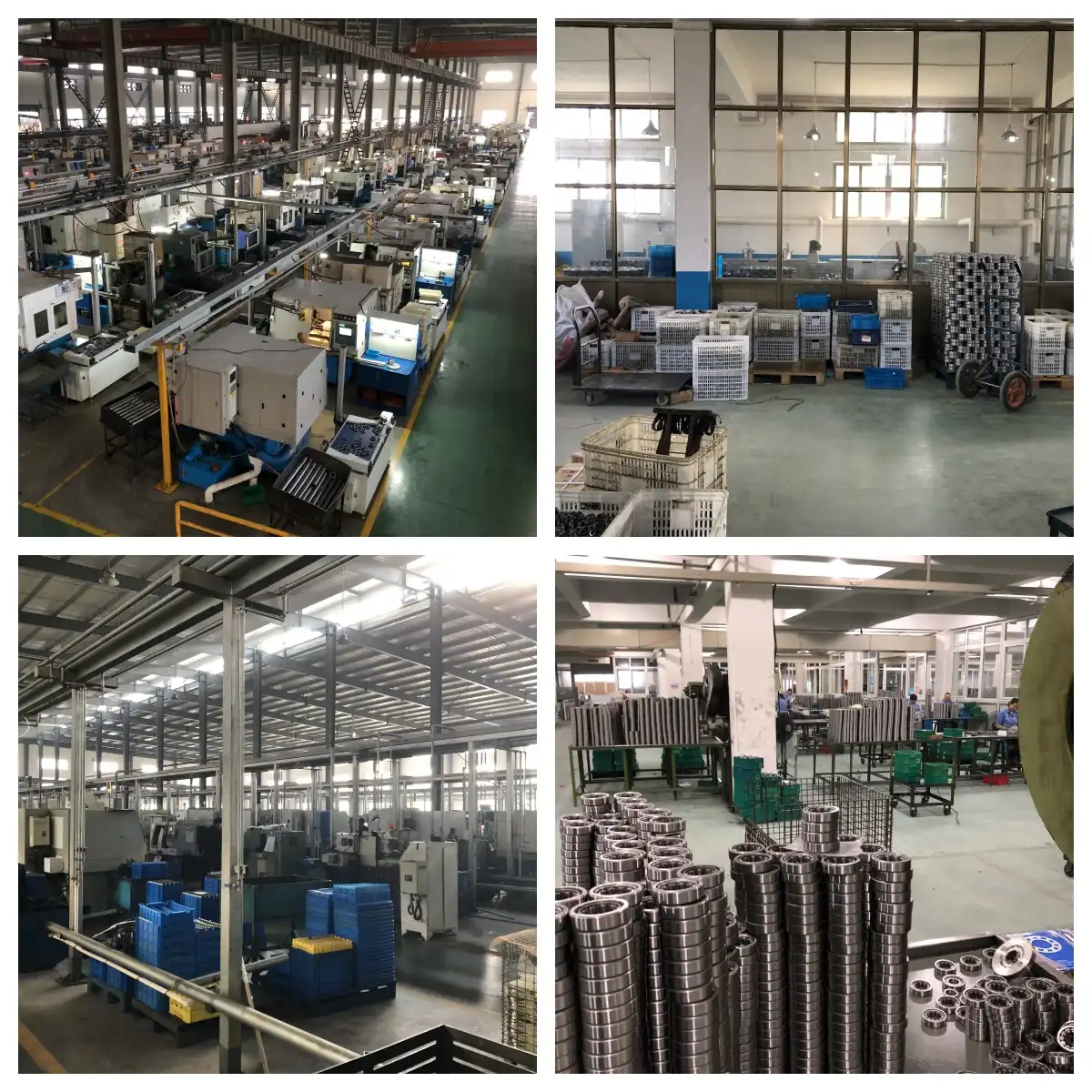
Reputable manufacturers demonstrate their capabilities through recognized certifications and consistent product quality. ISO 9001 quality management certification indicates systematic process control, while IATF 16949 automotive-specific certification confirms the capability to meet stringent industry requirements. Global bearing distributors typically source from certified manufacturers to ensure supply chain reliability. Procurement professionals should verify supplier manufacturing capacity and technical support capabilities. Facilities with multiple production lines demonstrate scalability to handle growing order volumes. Engineering support teams that assist with bearing selection and application troubleshooting add substantial value beyond component supply. Since our establishment in 2010, Luoyang Auto Bearing has expanded from one workshop to six specialized facilities, building expertise across bearing categories through continuous improvement initiatives.
Pricing Factors and Purchase Strategies
Multiple variables influence bearing costs. OEM-branded components command premium pricing based on established reputations and extensive technical documentation. Aftermarket alternatives from qualified manufacturers offer comparable performance at reduced prices. Volume purchasing generates economies of scale, with bulk orders typically qualifying for tiered discounting structures. Lead times vary based on inventory availability and customization requirements. Standard configurations ship quickly from distributor stock, while specialized specifications may require production scheduling. Establishing long-term supply agreements with manufacturers provides pricing stability and priority allocation during periods of high demand. Our competitive positioning serves mid-to-large OEMs and distributors seeking reliable Chinese manufacturing partnerships that balance cost performance with international quality standards.
Installation and Maintenance Best Practices
Proper installation procedures directly impact bearing service life. Technicians must ensure clean mounting surfaces free from burrs or contamination. Controlled heating of the inner ring or cooling of the housing facilitates interference fit assembly without applying excessive force. The separable design allows individual cup and cone installation, simplifying procedures compared to non-separable bearing types. Clearance adjustment requires careful attention during assembly. Measuring axial play after initial installation confirms appropriate preload settings. Over-tightening reduces internal clearance excessively, generating heat and accelerating wear. Insufficient preload allows excessive movement, causing impact loading that damages raceways. Following manufacturer guidelines for clearance specifications ensures optimal performance. Lubrication selection also affects bearing longevity, with grease types matched to operating temperature ranges and relubrication intervals established based on duty cycles.
Why Trust Leading Brands for Your Tapered Roller Bearing 30 Series Needs?
Selecting established suppliers reduces procurement risk and ensures access to proven performance data. The bearing industry includes manufacturers with decades of operational experience and extensive application validation.
Certification and Quality Assurance
Leading manufacturers maintain rigorous quality management systems validated by independent certification bodies. ISO 9001 certification demonstrates a commitment to consistent processes that prevent defects. IATF 16949 automotive certification requires statistical process control and continuous improvement methodologies that reduce variation. These certifications provide procurement teams with confidence that suppliers implement systematic quality assurance rather than relying on final inspection to catch defects. Third-party testing validates bearing performance claims. Accredited laboratories measure load ratings, fatigue life, and dimensional accuracy against international standards. Manufacturers providing test reports demonstrate transparency about their product capabilities. Our comprehensive testing protocols examine taper surface fitting degree, radial and axial load-bearing capacity, and dimensional accuracy across all production batches, maintaining quality consistency that supports long-term supply relationships.
Technical Support and Customization Capabilities
Complex applications benefit from supplier engineering expertise. Manufacturers with experienced Tapered Roller Bearing 30 series technical teams assist customers in selecting appropriate bearing configurations for specific loading conditions and operating environments. This support prevents specification errors that lead to premature failures and warranty claims. Customization capabilities address unique equipment requirements. Standard catalog products suit most applications, but specialized machinery may require modified dimensions, cage materials, or precision grades. Manufacturers operating multiple production facilities can accommodate custom orders without disrupting standard product availability. Our six specialized workshops enable flexible production scheduling that serves both high-volume standard requirements and smaller custom projects for equipment manufacturers developing innovative machinery designs.
Global Service Networks
International operations require suppliers capable of supporting customers across multiple geographic markets. Manufacturers with established distribution networks provide local inventory availability and technical support in regional languages. This geographic reach reduces lead times and simplifies logistics for multinational OEMs managing production facilities in different countries. Export experience demonstrates supplier capability to navigate international quality standards, customs regulations, and shipping logistics. Our established presence in South Korea, the United States, Germany, Russia, Iran, and Turkey reflects successful adaptation to diverse market requirements and regulatory environments. Equipment manufacturers and bearing distributors partnering with globally experienced suppliers gain reliable supply chains that support their own international growth strategies.

Conclusion
The Tapered Roller Bearing 30 series serves critical functions across automotive, construction, mining, railway, industrial manufacturing, agricultural, and forestry applications. Understanding the separable design, combined load capacity, and precision grades helps procurement teams select appropriate specifications for their equipment requirements. Comparing tapered configurations against alternative bearing types clarifies performance trade-offs between load capacity, speed capability, and maintenance complexity. Successful sourcing balances quality certification, technical support, and competitive pricing through partnerships with manufacturers demonstrating production scale and international experience. The strategic importance of these components to equipment reliability justifies careful supplier evaluation based on ISO 9001 and IATF 16949 certifications, engineering expertise, and proven global distribution capabilities.
FAQ
1. What load capacity can the 30 series handle?
The Tapered Roller Bearing 30 series accommodates combined radial and unidirectional axial loads based on specific model dimensions and contact angle. Load ratings vary across the size range, with larger bearings supporting greater forces. Contact angles between 10° and 30° distribute the combined loading effectively. Manufacturers provide load rating tables specifying dynamic and static capacities for each catalog number. Applications should operate below these published ratings with appropriate safety factors accounting for shock loads, contamination, and lubrication conditions. Our engineering team calculates bearing life expectations based on your actual operating parameters.
2. How do these bearings perform in high-temperature environments?
Standard GCr15 steel maintains dimensional stability and hardness up to approximately 120°C during continuous operation. Intermittent temperature spikes to 150°C remain acceptable for short durations. Applications exceeding these thresholds require special heat treatment processes or alternative materials. High-temperature greases extend lubrication intervals in elevated temperature conditions. Thermal expansion affects internal clearance, making proper initial clearance selection critical for equipment operating across wide temperature ranges.
3. What maintenance practices extend bearing service life?
Proper lubrication represents the most important maintenance factor. Establishing relubrication intervals based on operating hours and conditions prevents lubricant breakdown. Contamination control through effective sealing systems protects internal components from particulate damage. Vibration monitoring detects developing defects before catastrophic failures occur. Clearance verification during scheduled maintenance identifies wear progression. Following the manufacturer's installation procedures during replacement prevents damage from improper mounting techniques.
Partner with ATLYC for Reliable Tapered Roller Bearing 30 Series Solutions
ATLYC brings 15 years of specialized bearing manufacturing experience to support your procurement objectives. Our ISO 9001 and IATF 16949 certified production facilities in Luoyang maintain qualification rates exceeding 99.9% through rigorous quality Tapered Roller Bearing 30 series control protocols. We offer comprehensive tapered roller bearing solutions spanning inner diameters from 10mm to 500mm with P0, P6, and P5 precision grades. As an established Tapered Roller Bearing 30 series manufacturer serving global OEMs and distributors, we combine competitive pricing with reliable lead times and technical customization capabilities. Contact our team at auto@lyautobearing.com to discuss your specific application requirements and receive engineering support for bearing selection that optimizes equipment performance and service life.
References
1. Harris, T.A. and Kotzalas, M.N. "Rolling Bearing Analysis: Essential Concepts of Bearing Technology," CRC Press, 5th Edition, 2006.
2. ISO 355:2007. "Rolling Bearings - Tapered Roller Bearings - Boundary Dimensions and Series Designations," International Organization for Standardization.
3. Eschmann, P., Hasbargen, L., and Weigand, K. "Ball and Roller Bearings: Theory, Design and Application," John Wiley & Sons, 3rd Edition, 1985.
4. SKF Group. "Rolling Bearings Catalogue: Tapered Roller Bearings Technical Reference," SKF Publication PUB BU/P1 10000/2 EN, 2018.
5. Palmgren, A. "Ball and Roller Bearing Engineering," SKF Industries Inc., Philadelphia, 3rd Edition, 1959.
6. Timken Company. "Tapered Roller Bearing Catalog: Engineering and Application Guidelines," Timken Technical Publication 10594, 2020.
Learn about our latest products and discounts through SMS or email