- English
- French
- German
- Portuguese
- Spanish
- Russian
- Japanese
- Korean
- Arabic
- Greek
- German
- Turkish
- Italian
- Danish
- Romanian
- Indonesian
- Czech
- Afrikaans
- Swedish
- Polish
- Basque
- Catalan
- Esperanto
- Hindi
- Lao
- Albanian
- Amharic
- Armenian
- Azerbaijani
- Belarusian
- Bengali
- Bosnian
- Bulgarian
- Cebuano
- Chichewa
- Corsican
- Croatian
- Dutch
- Estonian
- Filipino
- Finnish
- Frisian
- Galician
- Georgian
- Gujarati
- Haitian
- Hausa
- Hawaiian
- Hebrew
- Hmong
- Hungarian
- Icelandic
- Igbo
- Javanese
- Kannada
- Kazakh
- Khmer
- Kurdish
- Kyrgyz
- Latin
- Latvian
- Lithuanian
- Luxembou..
- Macedonian
- Malagasy
- Malay
- Malayalam
- Maltese
- Maori
- Marathi
- Mongolian
- Burmese
- Nepali
- Norwegian
- Pashto
- Persian
- Punjabi
- Serbian
- Sesotho
- Sinhala
- Slovak
- Slovenian
- Somali
- Samoan
- Scots Gaelic
- Shona
- Sindhi
- Sundanese
- Swahili
- Tajik
- Tamil
- Telugu
- Thai
- Ukrainian
- Urdu
- Uzbek
- Vietnamese
- Welsh
- Xhosa
- Yiddish
- Yoruba
- Zulu
How Does SX011848 Crossed Roller Slewing Bearing Deliver Smooth Rotation?
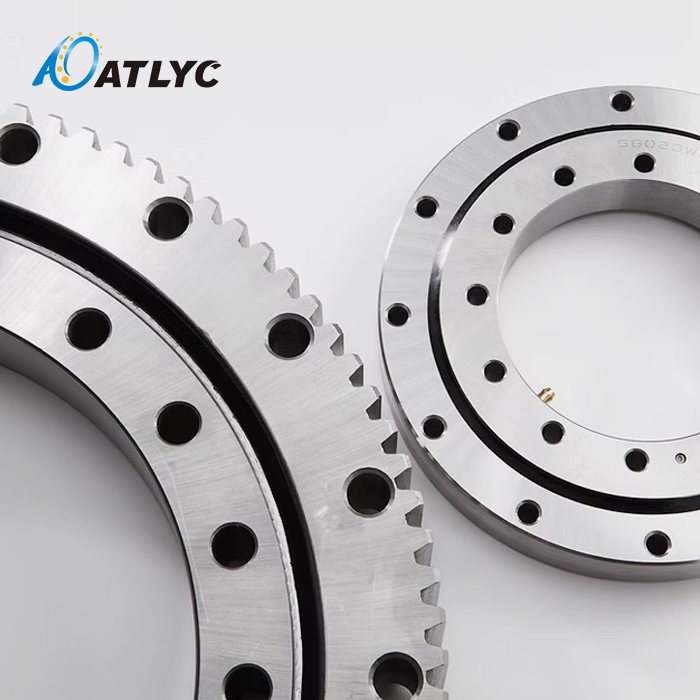
The innovative crossed-roller form of the SX011848 Crossed Roller Slewing Bearing makes rotation smooth. Cylindrical rollers are placed at right angles to precision-machined raceways. This straight-line design makes many contact points that spread radial, axial, and moment loads evenly in all directions. The bearing is made from high-quality Gcr15 or Gcr15SiMn steel, and polyamide fillers between each roller keep the friction coefficient low. This precision part has an extremely thin profile that is 240 mm in diameter on the inside, 300 mm on the outside, and only 28 mm wide. It has excellent runout accuracy that meets P5, P4, or P2 tolerance standards, so it can be used reliably in robots, machining centers, and precision instruments.
Understanding SX011848 Crossed Roller Slewing Bearing: Design and Features
Core Structural Elements
Crossed roller slewing bearings are a big step forward in small precision engineering because of the way they were designed. The SX011848 is made with an inner ring that is continuous and an outer ring assembly that is split and held together by three fastening rings. This design gets rid of the mounting holes in the ring bodies, so the whole 28mm width can add to the structure's strength instead of being compromised by fastener holes. The flanges and bearing seats keep the raceway's shape while providing mounting areas. At exact 90° intervals, cylindrical wheels move from one position to the other between these rings. Because the rollers are crossed, when one supports radial forces, its neighbour supports axial loads at the same time. V-groove raceways that are machined to very tight tolerances guide these rollers along their planned paths. This makes four points of contact that spread out the load. Each roller is supported by polyamide spacers that keep neighbouring metal parts from touching each other. This greatly reduces friction and wear.
Technical Specifications and Dimensions
Our manufacturing method makes sure that the bearing parts we make are the right size and shape to work with automated production lines. The 240mm bore can fit large shaft sizes, and the 300mm outer diameter keeps the footprint small. Most importantly, the 28mm cross-section allows for multidirectional load capacity that would normally take a lot more height to achieve. This saves a lot of room, which is very helpful when designing robotic joints where the available space limits the designs that can be made. Load rates show how well the bearing works with different types of force. The crossed roller design supports radial forces pushing inward, axial forces along the axis of rotation, and tilting moments trying to move the rings around in relation to each other, all at the same time. Because it can work in more than one way, it doesn't need paired angular contact bearings or complicated preload arrangements. We make these parts out of Gcr15 bearing steel, but Gcr15SiMn is also an option for situations that need better hardenability and physical stability when heated and cooled many times.
Comparing SX011848 Crossed Roller Slewing Bearing with Other Bearings
Load Capacity and Torque Performance
When procurement engineers look at different bearing choices, load capacity metrics have a direct effect on which parts they choose. Even though ball bearings are cheap, the contact places where the spheres and raceways meet are very small. This point contact lowers the load ratings and speeds up surface wear when it's heavily loaded. Instead of line touch along the length of the roller, the crossed roller design spreads the same forces over a much larger surface area. Because of this geometric benefit, heavier loads are allowed within the same envelope SX011848 Crossed Roller Slewing Bearing dimensions. These differences in speed are very clear when you look at rotary tables in machining centers. A normal indexing table has to stand up to cutting forces that create radial loads, stay in place when the weight of the workpiece puts axial pressure on it, and fight the overturning moment that comes from offset machining operations. One SX011848 unit handles all three load components at the same time. Ball bearing arrangements would need thrust and radial bearings together, which would take up valuable machine height and make assembly more difficult.
Durability and Service Life Expectations
How long a bearing lasts hinges on how much stress builds up below the surface as it is loaded and unloaded many times. We figure out fatigue life by using modified L10 methods that take into account the features of the material, how the contact stress is distributed, and how well the lubrication works. Crossed roller construction keeps peak stresses lower than point-contact options, which immediately increases predicted life spans. Field data from makers of industrial robots confirms that crossed roller bearings in joint applications usually last 20,000 hours of use before they need to be replaced. Choosing the right materials makes these qualities last longer. Our methods for heating Gcr15 steel make through-hardened parts that have a surface hardness of about 60 HRC and a core toughness that can handle impact loads. The Gcr15SiMn version has silicon and manganese added to it, which makes it easier to harden in bigger cross-sections and ensures that the material properties stay the same throughout the raceway depth. These features of the metal keep it from spalling and micropitting, which shorten the life of bearings in tough situations.
Applications of SX011848 Crossed Roller Slewing Bearing in Global B2B Industries
Heavy Machinery and Construction Equipment
Construction machinery designers face unique challenges balancing load capacity against weight constraints. Excavator boom pivots and crane slew rings demand bearings that withstand shock loads from digging impacts while providing smooth rotation for precise implement positioning. The 300mm outer diameter crossed roller bearing delivers load ratings previously requiring larger, heavier slewing rings. This size reduction propagates through the entire machine design, enabling weight savings that improve fuel efficiency and transport logistics. We supply bearings to equipment manufacturers serving infrastructure projects across developing markets where reliability under harsh conditions determines brand reputation. Dust ingress and contamination pose constant threats to bearing performance. The split ring design allows seal integration that protects internal components while remaining serviceable during scheduled maintenance intervals. Our technical support team assists OEMs in specifying appropriate seal materials and lubrication strategies that extend service intervals despite challenging operating environments.
Robotics and Automation Systems
Industrial robots represent perhaps the most demanding application for crossed roller bearings. Joint axes within robotic arms execute millions of positioning cycles annually, each requiring micron-level repeatability. The SX011848 delivers this precision through its exceptional runout accuracy and zero-backlash construction. When we machine raceways to P4 or P2 tolerances, geometric deviations remain under five microns, ensuring that positioning errors from bearing imperfections stay below the resolution limits of modern servo control systems. Compact dimensions prove equally critical in robot design. The 28mm bearing height allows joint assemblies with improved reach-to-weight ratios compared to designs using stacked bearing arrangements. We collaborate with robotics manufacturers across the US market to optimize bearing selection as payload capacities and reach requirements evolve. The ability to handle combined loads means a single bearing per joint axis, simplifying mechanical design and reducing parts count. This integration directly improves system reliability by eliminating potential failure points.
Maintenance and Installation Guide for SX011848
Installation Best Practices
Proper installation procedures directly impact bearing performance, SX011848 Crossed Roller Slewing Bearing, and longevity. We recommend mounting the split outer ring components to the housing bore before installing the inner ring assembly. The three fastening rings securing the outer ring must be torqued evenly in a star pattern to prevent ring distortion. We provide torque specifications based on fastener grade and thread engagement length, typically ranging from 40 to 60 Nm depending on fastener size. Thread-locking compounds rated for the operating temperature range prevent loosening under vibration. Alignment between mounting surfaces requires verification before final assembly. We specify flatness tolerances for flange faces and perpendicularity between bore and mounting surfaces to prevent preload variations around the bearing circumference. Dial indicators positioned at multiple points around the ring circumference allow measurement of axial runout during trial fitting. Correcting alignment issues during installation prevents uneven load distribution that accelerates wear and generates excessive friction torque.
Lubrication and Service Intervals
Lubrication strategy selection depends on operating speed, temperature range, and relubrication accessibility. We recommend lithium complex greases with NLGI Grade 2 consistency for general industrial applications. The grease must contain EP additives to support the contact pressures developed at the roller-raceway interface. Initial grease fill should pack the bearing to approximately 30% of free volume, allowing space for grease displacement during operation while maintaining adequate lubricant film thickness. Relubrication intervals vary with application severity but typically range from 500 to 2000 operating hours. We advise establishing intervals based on actual operating conditions rather than calendar time. Temperature monitoring provides early warning of lubrication deterioration, as bearing temperature increases of 10-15°C above baseline often indicate inadequate lubricant film thickness. Proper relubrication technique involves purging old grease through relief ports to prevent excessive buildup that increases internal friction and temperature.
Choosing the Right Supplier and Procurement Considerations
Quality Certifications and Manufacturing Credentials
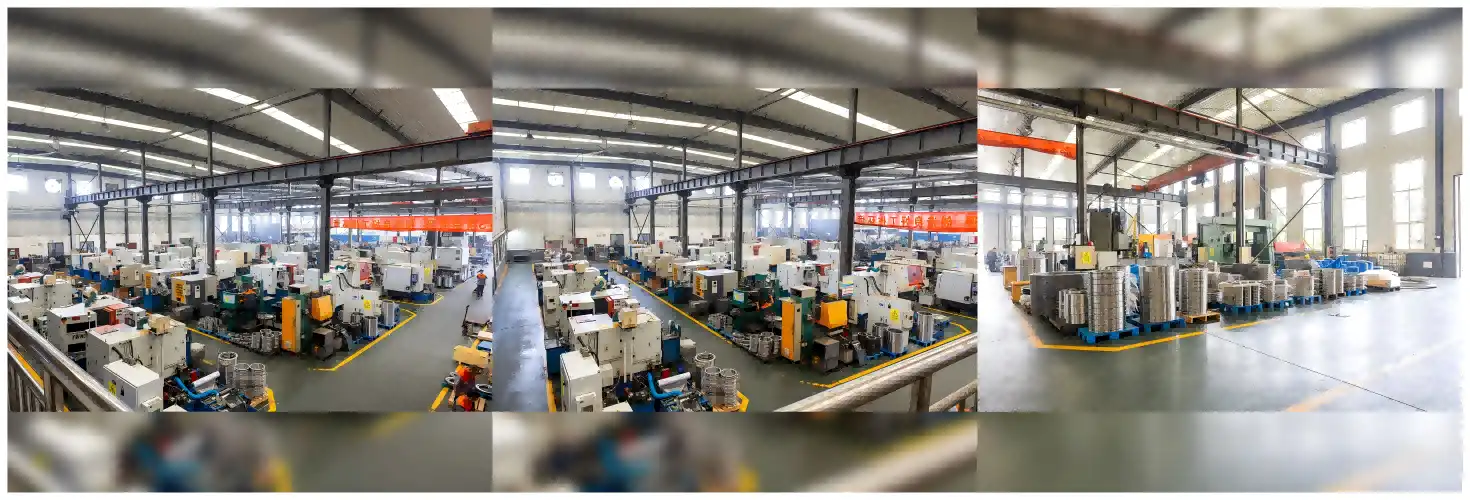
Supplier selection fundamentally impacts component quality and supply chain reliability. We established Luoyang Auto Bearing Co., Ltd. in 2010, growing from a single workshop to six specialized production facilities over our 15-year history. This expansion reflects our commitment to manufacturing excellence and continuous capability development. Our team of 120 skilled employees spans production operations, quality assurance, engineering support, and assembly functions, ensuring expertise at every stage of bearing production. Our ISO 9001 and IATF 16949 certifications demonstrate a commitment to quality management systems meeting international standards. These certifications require regular third-party audits verifying that our processes consistently produce conforming products. We maintain documented procedures covering incoming material inspection, in-process verification, and final testing protocols. Statistical process control methods monitor critical dimensions, allowing real-time correction before variations exceed specification limits. This systematic approach delivers SX011848 Crossed Roller Slewing Bearing with the low defect rates that OEMs require for automated assembly operations.
Lead Time Management and Inventory Planning
Global supply chains demand predictable delivery performance that aligns with production schedules and inventory strategies. We maintain stock positions for standard crossed roller bearing configurations, enabling shipment within days of order receipt. Custom variants require lead times accounting for material procurement, production scheduling, and quality verification steps. We work collaboratively with procurement teams to forecast requirements, allowing production planning that minimizes lead times while avoiding excess inventory carrying costs. Our logistics capabilities support customers across the US market with shipping arrangements that balance speed against transportation costs. We partner with freight forwarders experienced in bearing products, ensuring proper handling that prevents shipping damage. Packaging designs incorporate protective materials that cushion bearings during transit while preventing moisture ingress. Documentation packages accompany each shipment, including material certifications, dimensional inspection reports, and handling instructions that facilitate receiving inspection and storage procedures.
Technical Support and Partnership Approach
We view customer relationships as long-term partnerships rather than transactional exchanges. Our engineering team assists with bearing selection, application analysis, and troubleshooting support throughout the product lifecycle. When customers face performance issues or application changes, we analyze operating conditions and recommend solutions addressing root causes rather than symptoms. This collaborative approach has built lasting relationships with OEMs who value technical expertise alongside quality products. Customization discussions benefit from our manufacturing experience across diverse industries. We understand that the design constraints that automotive component manufacturers face differ substantially from those affecting medical equipment producers. This application-specific knowledge enables recommendations balancing performance requirements against cost targets and production volume realities. We maintain confidentiality regarding proprietary designs and competitive information, recognizing that trust forms the foundation of effective partnerships. Our commitment extends beyond initial sale to support customers' success in their respective markets.
Conclusion
The SX011848 Crossed Roller Slewing Bearing represents advanced engineering that addresses critical needs in space-constrained precision applications. Through its crossed roller configuration, ultra-thin profile, and precision manufacturing, this bearing delivers smooth rotation with multi-directional load capacity. We have demonstrated how its design advantages compare favorably against alternative bearing types across durability, performance, and total ownership costs. Applications spanning heavy machinery, robotics, and precision instrumentation rely on these characteristics for reliable operation. Proper installation and maintenance practices maximize service life, while supplier selection criteria ensure quality and supply chain stability. With 15 years of manufacturing experience and internationally recognized quality certifications, we deliver the precision components and technical partnership that demanding applications require.
FAQ
1. What advantages does the SX011848 offer compared to ball bearings?
Crossed roller bearings provide substantially higher load capacity than ball bearings of equivalent size through line contact versus point contact. The SX011848 handles radial, axial, and moment loads simultaneously within a single compact unit, eliminating the need for multiple bearing types. This design delivers superior rigidity and positioning accuracy while maintaining lower friction coefficients. The result is extended service life under equivalent loading conditions and simplified machine design.
2. How frequently does the SX011848 require maintenance?
Maintenance intervals depend on operating conditions, including speed, load, temperature, and environment. Under typical industrial conditions, lubrication inspection every 500-2000 operating hours proves adequate. We recommend monitoring bearing temperature and vibration characteristics to establish condition-based maintenance schedules. Proper initial installation and appropriate lubricant selection significantly extend service intervals, reducing total ownership costs while maintaining performance reliability.
3. Can the SX011848 be customized for specific applications?
We offer extensive customization capabilities addressing unique application requirements. Modifications include seal configurations, internal clearance adjustments, special coatings, and mounting interface adaptations. Our engineering team works directly with OEMs to evaluate technical requirements and develop optimized solutions. Bulk procurement enables tooling investments that support application-specific variants while maintaining quality consistency and competitive pricing for volume production requirements.
Partner with ATLYC for Your Precision Bearing Requirements
ATLYC stands ready to support your crossed roller slewing bearing needs with manufacturing SX011848 Crossed Roller Slewing Bearing excellence built over 15 years of continuous improvement. As an SX011848 Crossed Roller Slewing Bearing manufacturer holding ISO 9001 and IATF 16949 certifications, we deliver precision components meeting the demanding requirements of automotive, industrial automation, and precision equipment applications. Our six specialized production facilities and 120 skilled team members ensure a reliable supply with consistent quality. We serve OEMs and distributors across the US market with technical expertise, customization capabilities, and responsive support. Contact our team at auto@lyautobearing.com to discuss your application requirements, request detailed specifications, or obtain quotations. We invite procurement professionals and engineering teams to experience the quality and partnership approach that has made ATLYC a trusted bearing supplier across global markets.
References
1. Harris, T. A., & Kotzalas, M. N. (2006). Essential Concepts of Bearing Technology: Rolling Bearing Analysis. CRC Press, Taylor & Francis Group.
2. Wensing, J. A. (1998). On the Dynamics of Ball Bearings. Doctoral Dissertation, University of Twente, Netherlands.
3. ISO 492:2014. Rolling Bearings — Radial Bearings — Geometrical Product Specifications (GPS) and Tolerance Values. International Organization for Standardization.
4. Eschmann, P., Hasbargen, L., & Weigand, K. (1985). Ball and Roller Bearings: Theory, Design and Application. John Wiley & Sons.
5. Hamrock, B. J., Schmid, S. R., & Jacobson, B. O. (2004). Fundamentals of Fluid Film Lubrication. Marcel Dekker, Inc.
6. Tallian, T. E. (1992). Simplified Contact Fatigue Life Prediction Model — Part I: Review of Published Models. Journal of Tribology, Transactions of the ASME, Vol. 114.
Learn about our latest products and discounts through SMS or email