- English
- French
- German
- Portuguese
- Spanish
- Russian
- Japanese
- Korean
- Arabic
- Greek
- German
- Turkish
- Italian
- Danish
- Romanian
- Indonesian
- Czech
- Afrikaans
- Swedish
- Polish
- Basque
- Catalan
- Esperanto
- Hindi
- Lao
- Albanian
- Amharic
- Armenian
- Azerbaijani
- Belarusian
- Bengali
- Bosnian
- Bulgarian
- Cebuano
- Chichewa
- Corsican
- Croatian
- Dutch
- Estonian
- Filipino
- Finnish
- Frisian
- Galician
- Georgian
- Gujarati
- Haitian
- Hausa
- Hawaiian
- Hebrew
- Hmong
- Hungarian
- Icelandic
- Igbo
- Javanese
- Kannada
- Kazakh
- Khmer
- Kurdish
- Kyrgyz
- Latin
- Latvian
- Lithuanian
- Luxembou..
- Macedonian
- Malagasy
- Malay
- Malayalam
- Maltese
- Maori
- Marathi
- Mongolian
- Burmese
- Nepali
- Norwegian
- Pashto
- Persian
- Punjabi
- Serbian
- Sesotho
- Sinhala
- Slovak
- Slovenian
- Somali
- Samoan
- Scots Gaelic
- Shona
- Sindhi
- Sundanese
- Swahili
- Tajik
- Tamil
- Telugu
- Thai
- Ukrainian
- Urdu
- Uzbek
- Vietnamese
- Welsh
- Xhosa
- Yiddish
- Yoruba
- Zulu
What Loads Can the YRTS Series Rotary Table Bearing Handle?
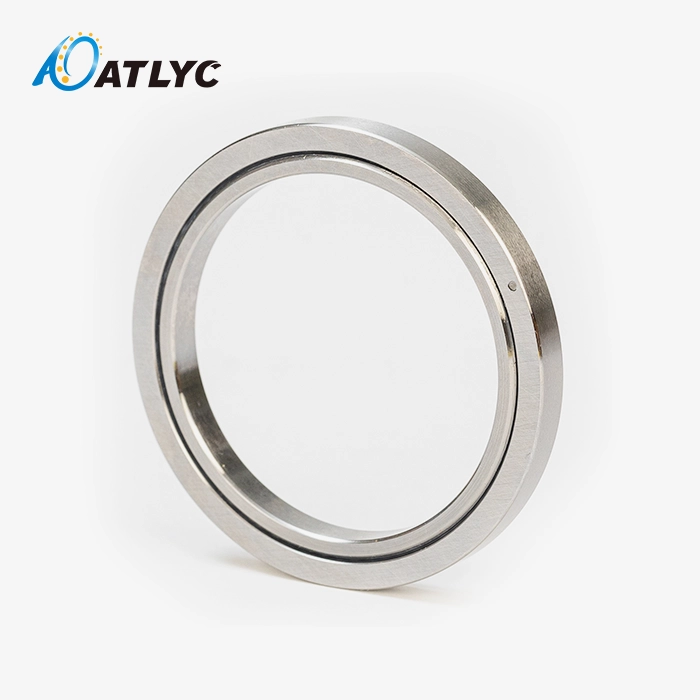
The YRTS Series rotary table bearing handles simultaneous radial loads, dual-direction axial loads, and tilting moments through its specialized double-row angular contact ball arrangement. This precision-engineered unit manages complex forces across multiple axes while maintaining exceptional rotational accuracy, making it ideal for high-speed CNC machining and direct drive turntable applications that demand both heavy load capacity and superior speed performance.
Understanding the Load Capacity of YRTS Series Rotary Table Bearings
Selecting the right precision bearing for your industrial equipment takes more than just matching sizes. You need to know how different types of loads affect the performance of bearings and what capacity measures really mean for your needs.
What Are the Three Primary Load Types?
During operation, YRTS Series rotary table bearings are hit by forces coming from different directions. When cutting forces in machining centers or weight distribution in turntables work perpendicular to the bearing's axis of rotation, this is called radial loads. Axial loads push or pull along the shaft direction, parallel to the spinning axis. This is often the case when parts are clamped during processing. Moment loads, which are also known as tilted moments, make spinning forces that try to tilt the bearing. This is especially important when working with workpieces that aren't centered.
Precision turntable bearings have an integrated three-in-one design that can handle all three types of loads in a single small unit. This structural integration gets rid of the need to put together separate thrust and radial bearing parts. This makes installation faster by about 40% compared to traditional combined bearing solutions.
Static Versus Dynamic Load Ratings
You'll come across two important capacity measures when reading technical specs. Static load ratings show how much force a bearing can handle when it is not moving or is moving very slowly without permanently deforming. Dynamic load ratings show how much weight a bearing can hold while it spins continuously for one million times with 90% reliability.
Depending on the size of the bearing, high-speed YRTS Series rotary table bearings usually have dynamic load ratings between 15 kN and 85 kN for radial forces and between 28 kN and 120 kN for axial forces. The construction is preloaded and sealed on both sides, so these ratings stay the same even in harsh thermal conditions. It works the same way from -20°C to 110°C.
| Load Type | Direction | Typical Sources | YRTS Handling Advantage |
|---|---|---|---|
| Radial | Perpendicular to axis | Cutting forces, unbalanced masses | Double-row ball arrangement distributes stress |
| Axial | Parallel to axis | Clamping pressure, thrust forces | Optimized contact angle (45°-60°) |
| Moment | Rotational tilt | Off-center machining, eccentric loads | Integrated structure resists deformation |
Knowing these specs helps your engineering team match the bearing's powers to its real-world needs, which keeps it from breaking down too soon and costing you a lot of money in downtime.
How Operating Conditions Influence Load Capacity
Temperature changes have a big effect on how well bearings work. When the temperature goes up, the material becomes less hard, and there is more space inside the bearing assembly. This can lower the effective load capacity by 10 to 15 percent when the temperature stays above 80 degrees Celsius. The precision turntable bearings are made of vacuum-degassed bearing steel (GCr15/100Cr6). This steel stays structurally sound across normal industrial temperature ranges, but it's important to use the right lubricant when temperatures are very high or very low.
Speed also affects how much a load can hold. As the speed of rotation goes up, centrifugal forces on the rolling elements make it so that there is less contact force to support loads from the outside. High-speed versions make up for it with unique cage designs and improved interior shapes that cut down on frictional torque by as much as 35% compared to regular models. This design lets the limiting speeds be two to three times higher while still keeping the load ratings that were advertised.
How well bearings handle certain loads is directly related to the quality of the fixing area. Defects in flatness greater than 0.02 mm or perpendicularity greater than 0.03 mm across the mounting interface cause stress concentrations that lower the load capacity. To get P4/P2 tolerance class performance, your mounting structure needs to match the precision of the bearing. According to data from the industry, this is a problem that causes about 60% of premature bearing failures.
Features and Benefits of YRTS Series Bearings Related to Load Handling
Bearings that don't give up speed for strength are needed in modern manufacturing. Precision YRTS Series rotary table bearings are an example of how engineering has helped solve this problem by using smart structure design to spread the load as evenly as possible.
Integrated High-Speed Architecture Enhances Load Distribution
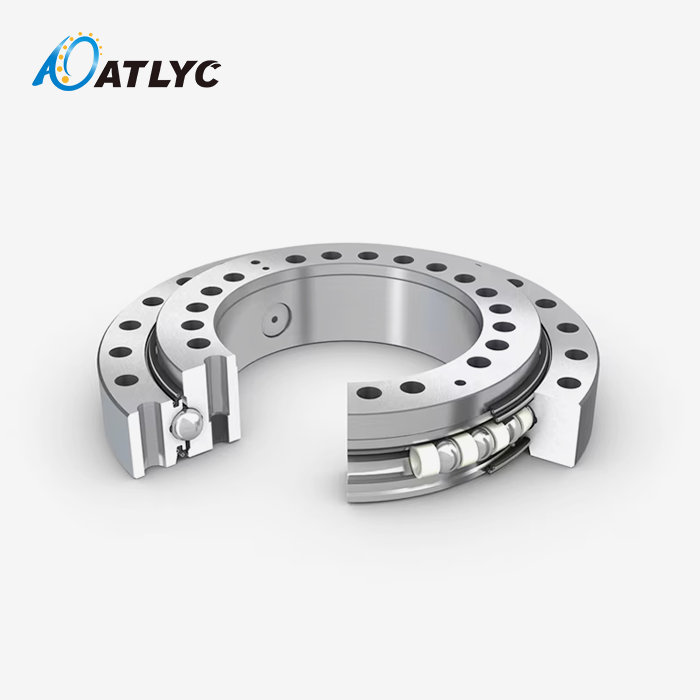
The small three-in-one design combines a thrust bearing, a radial bearing, and indexing functions into a single unit. This changes the way loads move through the bearing assembly in a fundamental way. In traditional methods, there are stress concentration points where parts meet, because they need different parts for each direction of load. These weak spots are gone thanks to the integrated structure, which spreads forces more evenly across the precision-ground raceways.
This design is made up of an outer ring that makes the mounting interface stable, an inner ring that allows for smooth rotational movement, precision steel balls that are best for high-speed operation, and an advanced cage design that keeps the balls apart while making it easy for lubrication to spread out. The cage design takes into account how much heat is made during high-speed rotation, which is very important when working at RPMs that would make regular bearings overheat.
Double-Row Angular Contact Configuration Manages Complex Forces
When steel balls are organized in two rows at the best contact angles (usually 45° or 60°), they can support axial loads in both directions, radial loads from multiple vectors, and bending moments at the same time, even when the loading conditions are complicated. With this arrangement, a single bearing unit can do the job that used to need three different types of bearings.
The load capacity is affected by the choice of contact angle. A 45° angle gives you equal radial and axial load capacity, which is good for general-purpose machining centers. A 60° angle raises the axial load capacity by about 25% while slightly lowering the radial capacity. This angle is best for situations where thrust forces are dominant, like when grinding vertically.
Comparative Load Performance Against Industry Standards
Cross roller bearings and precision ball bearings from well-known brands are compared to high-speed spinning bearing units, which show clear benefits in certain situations. Cross roller bearings have a high stiffness and moment load capacity, but they usually have lower stopping speeds because the rollers and raceways rub against each other more. Because of this, they work best with heavy-duty alignment tables that run at speeds below 100 RPM but not with direct drive uses that need speeds of 500 RPM or more.
Standard precision ball bearings from international suppliers work very well at high speeds, but they need complicated mounting arrangements to handle loads that are put on them at the same time. Usually, angular contact ball bearings and separate thrust bearings are paired together. This makes the assembly more complicated and raises the overall system height by 30 to 40 mm compared to combined options.
| Bearing Type | Max Speed (RPM) | Moment Load Capacity | Installation Complexity | Best Application |
|---|---|---|---|---|
| YRTS Series | 500-800 | High (tilting rigidity optimized) | Low (single-unit mounting) | Direct drive CNC turntables |
| Cross Roller | 100-300 | Very High | Medium | Heavy-duty positioning |
| Separate Angular Contact | 800-1200 | Medium | High (multiple components) | High-speed spindles |
| Standard YRT | 200-400 | High | Low | General rotary tables |
The sealed versions' preloaded design means that they don't need to be adjusted in the field. This cuts down on installation time and stops precision loss from bad preload settings, which is a problem that maintenance studies show affects about 35% of bearing installations.
Real-World Load Performance in Industrial Applications
High-speed direct drive rotary tables show how bearing units that are built in can handle demanding operational profiles. For these uses, switching quickly between low-speed heavy cutting and high-speed placing is needed, which makes load patterns change a lot in just a few seconds. The bearing has to be able to handle cutting forces of more than 40 kN while keeping the positional accuracy within 5 arc-seconds. It then has to speed up to positioning speeds where centrifugal forces become important.
Vertical grinding machines and high-speed milling heads put bearings through tough conditions like coolant contamination and high-frequency shaking, and they also need to be able to handle high spinning speeds that regular roller bearings can't handle. Two-sided sealed designs keep dirt and other contaminants out of the internal parts and keep the lubrication integrity needed for steady load handling during 12-hour shifts.
The most difficult situation to use is with precision measurement tools. Large coordinate measuring tools that need to scan need spinning that is smooth, low-noise, and has friction changes of less than 2% in order to keep measurements accurate when loads are applied to multiple axes. These bearing units are the best choice for producers who need to balance quality standards with production needs because they have high tilting stiffness and rotational freedom.
Installation and Maintenance Guidelines to Maximize Load Capacity
Even the most carefully designed YRTS Series rotary table bearing will not work as well if it is installed in a way that weakens its structure or if it is not properly maintained. Your operating teams need clear instructions on how to keep the bearing's rated load capacity throughout its life.
Proper Mounting Procedures Preserve Load Ratings
How well bearings transfer loads to supporting structures depends on how well the mounting surface is prepared. First, use precise measuring tools to make sure that the whole fixing surface is flat. A straightedge and feeler gauges are usually enough, but laser interferometry is needed for more important jobs. Surface flatness shouldn't vary more than 0.02 mm over a 100 mm span, and the whole fastening contact should be flat within 0.05 mm.
Thoroughly clean all mounting surfaces, getting rid of any burrs, paint residue, or protective coats that make the contact not be even. Even very small amounts of dirt or dust can cause high-stress areas that lower the effective load capacity by spreading the load unevenly across the bearing rings. For most applications, a clean, lint-free cloth with rubbing alcohol is enough to prepare the surface.
Common Installation Errors That Compromise Bearing Integrity
Impact loading during installation leaves Brinell lines on the raceways. These are permanent depressions that cause shaking and speed up wear throughout the bearing's useful life. Do not hit bearings directly with hammers or use installation tools that touch surfaces that have been precisely ground. Damage can be avoided by using hydraulic presses or properly designed drift tools that only touch the right ring (which supports the load during installation).
When there is moisture in the air during storage or installation, it starts rusting, which lowers the load capacity and makes the surface uneven. Keep bearing units in their original, sealed packaging until you are ready to install them, and if you can, do the installations in a controlled environment. If the installation has to be done outside, cover any open bearing surfaces temporarily until the final assembly is finished.
Lubrication Selection and Application Strategy
For high-speed YRTS Series rotary table bearing uses, either high-performance lithium complex grease or oil-air lubrication methods work well. Each has its own benefits. Most machine tool setups prefer grease lubrication because it makes upkeep easier and protects well against dirt and other contaminants. Choose greases that are made for high-speed use and have a consistency of NLGI Grade 2 and a base oil viscosity of 100 to 150 cSt at 40°C.
Oil-air lubrication is the best way to get rid of heat, which is very important when high speeds are used for a long time and heat loads reach over 80°C. This method uses precisely measured amounts of oil mixed with compressed air to make a mist that covers the bearing surfaces while the air flow helps cool them down. Implementation needs special tools and careful testing, but compared to grease lubrication at high speeds, it lowers working temperatures by 15 to 25°C.
Preventive Maintenance Monitoring Strategies
Temperature tracking lets you know quickly when grease is wearing out or there is too much load. Set baseline operating temperatures during commissioning. For bearings to work properly, these temperatures should be 15 to 25°C above room temperature. Temperature rises of 10°C or more above the baseline could mean that there are problems, such as not enough lubrication, contamination, or loads that are too high for the design. Using infrared thermography during regular maintenance checks can find problems before they become too big to fix.
Vibration analysis finds worn bearings before they can be seen or heard. Set baselines for vibrations across a range of frequencies during the first operation. Then, track this data over the service life of the bearing. High-frequency vibrations (above 1000 Hz) that get stronger usually mean that the surface of the raceways or rolling elements is wearing down. Low-frequency vibrations that change often mean that the grease isn't working right or that the fixing bolts are coming loose. A lot of makers say that vibration tracking can find worn-out bearings two to three months before regular inspection methods can.
How to Choose the Right YRTS Series Bearing for Your Load Requirements
To match bearing specs to the needs of your equipment, you need to carefully look at the load conditions, speed needs, and environmental factors. Structured evaluation factors that match technical needs with supplier skills are helpful for procurement teams.
Defining Your Specific Load and Application Requirements
First, write down the real operating loads instead of the theoretical maximums. To understand rotational forces, axial forces, and moment loads during normal production cycles, you can either measure existing equipment or look at similar installations. Load conditions often change a lot when the speed goes up, down, or stays the same. Record this full profile to make sure you choose the right YRTS Series rotary table bearings.
Use the manufacturer's formulas to figure out the combined load ratings, which take into account forces acting in more than one direction at the same time. When a bearing is under 20 kN of radial load and 15 kN of axial load, it needs more capacity than either of those values alone. It also needs to be able to handle the combined loading effect, which can be found through equivalent load calculations. Most technical catalogs have ways to do calculations, but for more complicated tasks, manufacturer engineering support is best.
Comparing Bearing Solutions Through Cost-Performance Analysis
The direct cost of materials is only one part of the total cost of ownership. Installation difficulty has a big effect on the initial setup costs. Integrated single-unit designs cut down on work hours and get rid of the alignment problems that come with putting together multiple bearing components. Maintenance frequency has a bigger effect when equipment is down for bearing replacement. This is why options with longer service lives are more cost-effective, even if they cost more at first.
Energy consumption creates ongoing operational costs that vary substantially between bearing designs. High-friction configurations consume 5-8% more power than optimized low-torque alternatives—a difference that accumulates significantly across multiple machines operating continuously. A factory that uses 20 machining centers for 6,000 hours a year might spend an extra $15,000 to $25,000 on electricity for bearings that aren't as efficient, quickly canceling out any savings that were made at first.
Evaluating Supplier Reliability and Procurement Factors
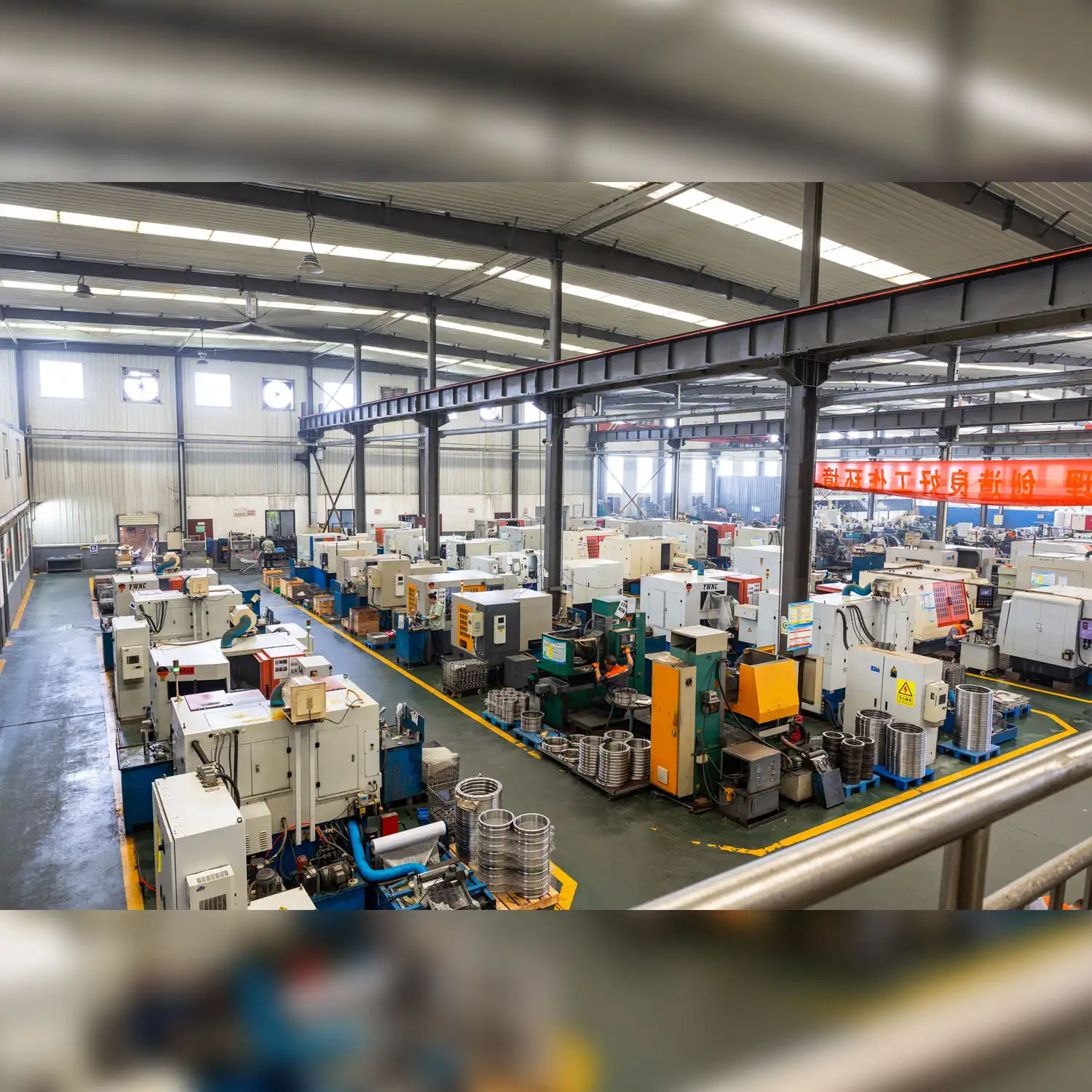
Manufacturing capacity tells you if your providers can handle both your original orders and your ongoing needs as your production grows. If the manufacturer has dedicated production lines and established supply chains for parts, they will be able to keep delivery times consistent, which will protect your production schedules. Companies with six specialized workshops and 120 trained workers show that they have the infrastructure needed for stable, long-term supplier relationships.
When buying things, minimum order quantities can make things less flexible, especially for companies that have a lot of different equipment that needs different bearing sizes. Some makers have large minimum orders that drive you to keep too much inventory on hand, while others can work with smaller amounts that are more in line with how much you actually use. Make sure you understand the MOQ requirements from the supplier early on so there are no surprises when you place the order.

Conclusion
The YRTS Series rotary table bearing can handle a lot of weight because it has a smart structural design that handles radial, axial, and moment loads all at the same time while allowing high-speed operation. Knowing how the load capacity numbers translate to performance in the real world helps your tech team choose the right options for tough jobs. The ability to handle loads will last longer if you follow the right installation steps and do regular upkeep. This will help you get the most out of your equipment purchase. When you look at bearing choices based on their full cost-performance analysis instead of just their original price, you can find solutions that lower the total cost of ownership while also making them more reliable.
FAQ
What maximum loads can YRTS Series bearings actually handle?
Different bearing sizes have different load capacities. Radial ratings are usually between 15 and 85 kN, and axial ratings are between 28 and 120 kN. The double-row angular contact ball setup allows for moment load capacity that is good enough for most machine tool uses. However, the exact ratings will depend on the YRTS Series rotary table bearing model and design you choose for your machine.
How do temperature variations influence load capacity?
When operating temperatures are above 80°C, the actual load capacity drops by about 10 to 15 percent because the material becomes less hard and the internal gaps get bigger. The vacuum-degassed bearing steel construction keeps working well across most industrial temperatures. However, it needs careful lubrication management when used near the upper limit of 110°C for long periods of time to keep the full load capacity.
Can improper installation reduce the bearing's load-handling ability?
Even if the bearings seem to be working properly, mounting surface irregularities or bad installation methods can lower the effective load capacity by 15 to 20 percent. If the flatness difference is more than 0.02 mm, it causes stress concentrations that make load distribution worse. If the bolt torque is wrong, it causes ring distortion that changes the internal geometry and the ability to carry load.
Partner with ATLYC for High-Performance Rotary Table Bearing Solutions
ATLYC has been making precision bearings for 15 years and can handle your toughest projects. They are experts at making high-speed YRTS Series rotary table bearing solutions that meet strict international standards. Our factory is ISO 9001 and IATF 16949 approved, and it has six specialized workshops with 120 skilled workers whose sole goal is to provide uniform quality and reliable performance. As a reliable provider of turntable bearings to car and industrial equipment makers in the US, Germany, and around the world, we know that you need a steady supply, helpful expert support, and low prices. Email our engineering team at auto@lyautobearing.com to talk about your specific load needs and get detailed technical advice for your equipment. We help you reach your buying goals by giving you detailed design documents, installation instructions, and discounts for large orders.
References
1. Harris, T.A., and Kotzalas, M.N., "Advanced Concepts of Bearing Technology: Rolling Bearing Analysis," 5th Edition, CRC Press, 2006.
2. ISO 12240-4:1998, "Spherical Plain Bearings - Part 4: Rotary Table Bearings," International Organization for Standardization.
3. Weck, M., and Brecher, C., "Machine Tools Production Systems 2: Design and Calculation," Springer Engineering Handbook, 2012.
4. SKF Group Technical Manual, "Slewing Bearings: Load Capacity and Service Life Calculations," SKF Motion Technologies AB, 2019.
5. Budynas, R.G., and Nisbett, J.K., "Shigley's Mechanical Engineering Design," 10th Edition, McGraw-Hill Education, 2015.
6. Schaeffler Technologies AG, "High-Precision Bearings for Machine Tool Applications: Technical Design Guide," Industrial Division Technical Documentation, 2020.
Learn about our latest products and discounts through SMS or email