- English
- French
- German
- Portuguese
- Spanish
- Russian
- Japanese
- Korean
- Arabic
- Greek
- German
- Turkish
- Italian
- Danish
- Romanian
- Indonesian
- Czech
- Afrikaans
- Swedish
- Polish
- Basque
- Catalan
- Esperanto
- Hindi
- Lao
- Albanian
- Amharic
- Armenian
- Azerbaijani
- Belarusian
- Bengali
- Bosnian
- Bulgarian
- Cebuano
- Chichewa
- Corsican
- Croatian
- Dutch
- Estonian
- Filipino
- Finnish
- Frisian
- Galician
- Georgian
- Gujarati
- Haitian
- Hausa
- Hawaiian
- Hebrew
- Hmong
- Hungarian
- Icelandic
- Igbo
- Javanese
- Kannada
- Kazakh
- Khmer
- Kurdish
- Kyrgyz
- Latin
- Latvian
- Lithuanian
- Luxembou..
- Macedonian
- Malagasy
- Malay
- Malayalam
- Maltese
- Maori
- Marathi
- Mongolian
- Burmese
- Nepali
- Norwegian
- Pashto
- Persian
- Punjabi
- Serbian
- Sesotho
- Sinhala
- Slovak
- Slovenian
- Somali
- Samoan
- Scots Gaelic
- Shona
- Sindhi
- Sundanese
- Swahili
- Tajik
- Tamil
- Telugu
- Thai
- Ukrainian
- Urdu
- Uzbek
- Vietnamese
- Welsh
- Xhosa
- Yiddish
- Yoruba
- Zulu
What Size CRBH Cross Roller Bearing Do You Need?
Selecting the correct bearing size is not about browsing catalog numbers—it's about matching precision engineering to your application's specific load demands, space constraints, and operational environment. The CRBH Cross roller bearing delivers radial, axial, and moment load capacity within a single compact unit, eliminating the need for multiple bearing arrangements. Its integrated inner and outer ring structure, combined with orthogonally positioned cylindrical rollers at 90° intervals within V-groove raceways, provides the rigidity and accuracy that mid-to-large automotive and industrial equipment manufacturers depend on. Whether you're designing robotic joints, CNC rotary tables, or medical imaging gantries, understanding dimensional specifications and how they translate to real-world performance is essential to making procurement decisions that minimize downtime and maximize equipment lifespan.
Understanding CRBH Cross Roller Bearings and Their Key Dimensions
To make a good choice for a bearing, you must first understand what makes the CRBH Cross roller bearing line fundamentally different. The configuration has solid one-piece inner and outer rings, while most RE or RB series bearings have split-ring designs. This gets rid of any structural gaps that could cause deflection under load, as well as any risks of deformation caused by installation during flange mounting. The cylindrical rollers are divided by precise spacers or cages. This keeps the rollers from rubbing against each other directly, which lets them spin faster than with full-complement setups.
Critical Dimensional Parameters
When looking at cross roller bearing sizes, three main factors affect how well they work in your application:
Bearing Diameter (Inner and Outer): The inner diameter must fit your shaft perfectly, and the outer diameter tells you if the housing will work with it. When comparing the CRBH series to normal CRB series bearings with the same inner sizes, the ring wall thickness is 30% to 40% less in the CRBH series. This makes the diameter-to-thickness ratio hit 10:1, which lets designs take up less room without lowering the load capacity.
Together, these size requirements set the rotary accuracy grades (P4/P2), the interior clearance or preload values, and the stiffness of the bearing as a whole. When buying teams know how each measurement affects performance, they can avoid undersizing (which causes failure too soon) or oversizing (which wastes room and costs more).
| Dimension Parameter | Impact on Performance | CRBH Optimization Feature |
|---|---|---|
| Inner/Outer Diameter | Fit between shaft and case, space efficiency | Thin-wall design (30%–40% less material) |
| Bearing Width | Load capacity, moment rigidity | Super-finished raceways for compactness |
| Roller Size & Count | Contact stress, load distribution | Orthogonal 90° arrangement with spacers |
| Raceway Surface Finish | Friction coefficient, service life | Super-finishing achieving ≤0.0015 friction |
People who work in procurement should ask manufacturers for thorough dimension drawings and tolerance specs. Make sure that the bearing's envelope dimensions fit within the space limitations of your equipment and meet ISO 9001 and IATF 16949 standards to ensure quality.
Load Capacity Relationship to Size
Load values are directly related to size. Dynamic load capacity (C) goes up as the roller contact area gets bigger, but static load capacity (C₀) is based on the highest contact stress that can be tolerated. High-rigidity CRBH Cross roller bearing units have a combined ring design that keeps the dimensions stable even when the loads change. This means that even in difficult industrial robotics applications, the positioning accuracy stays within micron-level tolerances.
Moment load capacity goes up or down with bearing diameter and width. This is important for rotating tables and turning heads. Larger CRBH units offer better resistance to twisting moments without the need for loading changes. This makes design calculations and installation easier. Because of this, they are perfect for harmonic drive units that need motion with no backlash.
How to Determine the Right Size for Your Application
With application-driven sizing, catalog specifications are turned into operational dependability. Instead of choosing a CRBH Cross roller bearing based only on how well they fit, smart procurement teams look at how size affects performance across six important factors.
Load Analysis: Dynamic, Static, and Moment Requirements
Find the real load rate for your program. When a wheel turns, it puts dynamic loads on the bearings, which need to be big enough to handle continuous stress cycles without surface wear. Static loads are used when the system doesn't move or only moves sometimes. The CRBH Cross roller bearing design can handle large radial, axial, and moment loads at the same time in a single, small unit, which means that complicated bearing setups are not needed.
Moment loads, or tilting forces, are very important in medical imaging tools and artificial joints. If a bearing is too small for its moment capacity, it will bend too much, which will make positioning less accurate. Use load rating tables from the manufacturer that show how bearing size is related to allowable moment values. Make sure to include safety factors that are right for your industry.
Precision Requirements and Rotational Accuracy
Handling equipment for semiconductor wafers and portable measuring tools need rotational accuracy of P4 or P2. Inductive probes are used by makers during quality checks to make sure that radial and axial runout are tightly controlled in these precise classes. The possible accuracy depends on the size of the bearing. Larger diameters make it easier to smooth out geometric flaws, while smaller sizes may need tighter production standards to meet the same grades.
The CRBH series' combined ring structure stops deformation caused by installation. This means that the stated gaps stay the same no matter how the housing is shaped or how much stress is put on it during installation. When machine performance has a direct effect on product yield rates, this level of dependability is very important.
Environmental and Operational Conditions
How long a bearing lasts depends on its operating temperature, how much dirt and dust it is exposed to, and how it is oiled. CRBH Cross roller bearing units have thin rubber lip seals that keep dust and wetness out and make the bearings small. When you mix super-finished raceways with optimal grease, the contact coefficients drop to ≤0.0015. This means that the bearings can work at lower temperatures and last longer, even during continuous-duty cycles.
The CRBH can replace standard dual-bearing setups, which is helpful for uses that don't have a lot of room. By combining radial, axial, and moment capacities into one unit, you can cut the axial length of your system by up to 50% while keeping the same load capacity. This 15% to 20% lighter weight than usual configurations is very helpful in situations where weight is important, like in aerospace actuators or mobile robotics.
Practical Sizing Tools and Customization Options
These days, choosing the right bearings depends on CAD integration and technical help from companies that have a history of being able to customize their products. By giving providers specific information about the application, such as load vectors, rotational speed, duty cycle, and environmental conditions, they can suggest the best sizes based on FEA (Finite Element Analysis) proof.
Customizing the size helps with specific problems. OEM manufacturers can change the inner and outer diameters by as little as 1 mm, the width of the bearing to fit certain space requirements, or the preload values to get the best balance between stiffness and starting torque. When you involve engineering teams in the design phase, you avoid having to pay a lot of money for redesigns when off-the-shelf sizes don't perfectly meet your needs.
Comparing CRBH Sizes and Alternatives on the Market
Procurement teams can make better decisions when they know how CRBH Cross roller bearings stack up against other designs. Standard crossing roller bearings, ball bearings, and slewing bearings are all used for rotating loads, but they work very differently based on their size.
Performance Benchmarks Across Bearing Types
CRBH vs. Split-Ring Crossed Roller Bearings: Split-ring designs, like the RB series, are easier to install because the rings can be taken apart. But the joint between the two halves of the ring makes structural breaks that make it less rigid and make it more likely that the pieces will not fit together correctly when they are put together. CRBH Cross roller bearing units don't have these problems because they are made of a solid one-piece design. This gives them more stiffness, which means they can position themselves more accurately and bend less when loads change.
Size Range Availability and Customization
Leading makers make CRBH Cross roller bearing models with inner diameters ranging from 20 mm to 300 mm and widths matching to those numbers. Standard lists allow for small changes in size, but OEM customizing is necessary for complex machines. When looking at different sources, you should check if they can make parts with non-standard sizes, if they can grind accurately enough to get P2 accuracy grades, and if they have quality control systems in place (ISO 9001 and IATF 16949 certifications).
| Bearing Type | Typical Size Range | Rigidity | Space Efficiency | Precision Grade |
|---|---|---|---|---|
| CRBH Series | 20–300 mm ID | Excellent | Optimal (thin-wall design) | P4/P2 available |
| Split-Ring Crossed | 30-400 mm ID | Good | Moderate | P5/P4 typical |
| Angular Contact Ball | 10–200 mm ID (each unit) | Moderate | Requires pairing | P4/P2 available |
| Slewing Bearing | 200 to 5000 mm ID | Moderate | Low (thick section) | P5 typical |
Application Suitability Charts
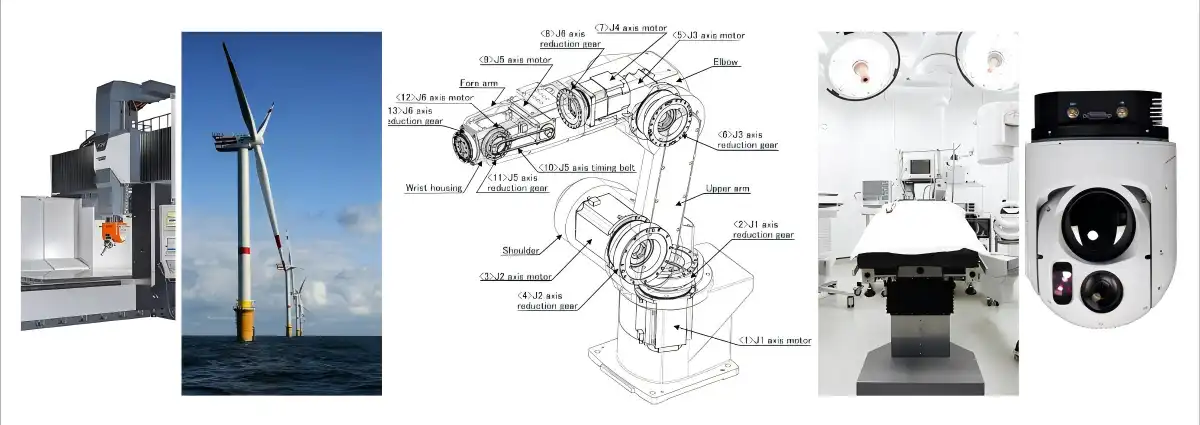
The best cost-to-performance ratio is achieved by matching the type of bearing to the purpose. The small size and light weight of the CRBH Cross roller bearing make it a good choice for small robotic joints. Rotary tables for CNC machines need bearings that can stay stable under heavy cutting forces and keep micron-level tracking accuracy in oil-mist conditions. Low starting torque and smooth rotation are important for medical imaging devices and optical inspection systems because they keep vibration artifacts from showing up during high-resolution imaging.
Procurement Tips: Sourcing the Correct CRBH Cross Roller Bearing Size
To do successful procurement, you need to do more than just choose the right dimensions for a CRBH Cross roller bearing. You also need to build relationships with suppliers that guarantee stable quality, reliable wait times, and expert help for the entire lifecycle of your equipment.
Supplier Evaluation Criteria
Check to see if possible sellers have complete systems for managing quality. Getting ISO 9001 and IATF 16949 licenses shows that you are dedicated to quality standards and consistency around the world. Ask for written proof of their quality control procedures, especially for items that need to be inspected carefully:
- Rotational Accuracy Testing: Make sure that suppliers use inductive probes to measure radial and axial runout to make sure they meet the required precision grades.
- Internal Clearance/Preload Verification: Not enough preload causes vibrations, and too much preload causes thermal seizing. Suppliers need to confirm negative clearance values required for stiffness.
- Material Hardness Testing: Eddy current or Rockwell hardness testing on raceways makes sure that the right amount of stiffening has happened, which keeps the material from breaking when shock loads are applied.
- Starting Torque Measurement: Low-power servo applications need to keep track of the frictional torque needed to start the motor turning.
- Surface Finish Inspection: Visual and profilometer inspections of the surface finish find grinding burns or other irregularities that shorten the life of bearings.
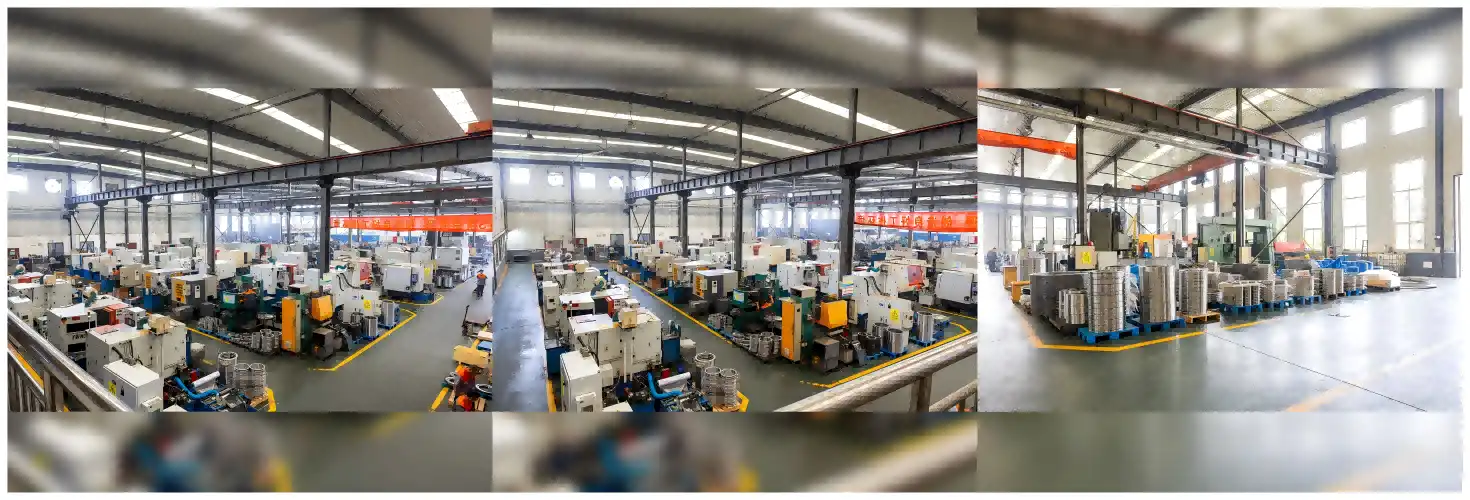
When making bulk orders or needing to quickly restock, manufacturing ability is important. Suppliers with more than one production workshop and more than 100 skilled workers dedicated to production, research and development, quality control, and assembly can increase or decrease production to meet changing demand while still meeting delivery dates.
Size Impact on Availability and Pricing
Lead times for standard CRBH Cross roller bearing sizes are usually shorter than those for custom sizes, which can be 8 to 12 weeks. Volume pricing structures encourage buying in bulk. For example, ordering yearly needs in consolidated shipments instead of many small orders reduces costs per unit by 15% to 30%. Talk about framework deals that lock in prices but let you set your own supply times that work with your production plans.
It costs more for engineering and tools to make custom sizes, but these investments pay off when off-the-shelf bearings don't work well or need design solutions. Involve OEM experts in the early stages of designing equipment to find out if standard sizes are enough or if customization will provide better long-term value through improved performance and lower upkeep costs.
Technical Support and After-Sales Service
Suppliers who offer application engineering support are helpful for complicated bearing applications. Look for companies that offer CAD models, help with load calculations, and installation instructions that are specific to CRBH Cross roller bearing designs. U.S. procurement teams can communicate better when they can talk to expert staff who speak English as their first language. This cuts down on mistakes that cause specification errors.
Operational risks are reduced by warranty terms and services provided after the sale. Make it clear what is covered for non-conformance with dimensions, premature wear, and performance loss. Suppliers who are sure of the quality of their products usually offer warranties that last between 12 and 24 months and have refund plans that are easy to follow. Set clear rules for how to handle defect claims, such as how to inspect the units and how to get them back for analysis.
Maintenance Recommendations
Proper upkeep extends the life of bearings and proves that you made the right size choices. Keep an eye on the operating temperatures—big changes from the normal range could mean that the bearings aren't oiled enough or there is too much preload. Check the rotary force on a regular basis to see if the friction is getting worse because of wear or contamination. Set up relubrication times based on job cycles. In clean settings, sealed CRBH Cross roller bearing units can usually go 3,000 to 5,000 hours without being serviced.
Document with performance details for the whole life of the tools. This information helps with future purchases by letting us know if the sizes we choose will last as long as we expect them to or if they will need to be changed for new generations of equipment. Giving practical feedback to sellers builds stronger relationships and lets you keep making products better.
Case Studies: Successful Size Selection of CRBH Cross Roller Bearings
There are real-life examples that show how precise sizing improves performance in a wide range of industrial settings using the CRBH Cross roller bearing.
Robotic Joint Articulation Enhancement
A big company that makes parts for cars redesigned six-axis welding robots to make it easier to repeat the positioning. In the original designs, each joint had a set of angular contact ball bearings, which meant that there had to be a lot of axial room and a lot of complicated preload adjustments to be made during assembly. The engineering team tested CRBH Cross roller bearing units to see how well they could handle moment loads in multiple directions while still fitting into small spaces.
After a load test showed that a CRBH-6013 (60 mm inner diameter, 13 mm width) could be used instead of the two ball bearings, 500,000 cycle testing was done on the prototype joints. The results showed that positioning errors went down by 40%, from ±0.05mm to ±0.03mm. Assembly time went down by 25% because it was easier to do, and the joint module became 18% lighter. The combined ring structure got rid of the installation-related distortion that had sometimes made the original design less accurate.
CNC Rotary Table Rigidity Improvement
Customers of a machine tool OEM were complaining that the accuracy of the positioning on their horizontal machining centers was getting worse. An investigation showed that the split-ring crossed roller bearings that supported the rotary table sagged when heavy cutting forces were applied, especially when cutting sharpened steel pieces in short bursts.
The engineering team chose a CRBH-12025 bearing (120mm ID, 25mm width) to replace the split-ring version that was already in place. Based on FEA analysis, the solid one-piece ring construction was 35% more rigid. Indexing repeatability improved from ±8 arc-seconds to ±3 arc-seconds during field tests at a customer plant that makes aerospace parts. This brought performance within the requirements for making precision parts.
Medical Imaging Gantry Optimization
A medical device company that was making a portable CT scanner had to deal with strict weight limits and picture quality that needed spinning that was smooth and didn't vibrate. In their first plan, they used several ball bearings to support the imaging gantry, but the total weight and starting torque were higher than what they had planned.
Working with a bearing source, they found a CRBH-8018 bearing (80mm ID, 18mm width) that did all the work of supporting loads in one unit. Compared to the original setup, the thin-wall design and aluminum alloy cage cut the weight of the bearing by 22%. Starting torque below 2 N·cm was achieved with super-finished raceways, which is important for battery-powered operation and keeping picture artifacts from showing up.
Conclusion
To choose the right CRBH Cross roller bearing size, you have to weigh the limitations of size against the load capacities, accuracy needs, and operating conditions that are unique to your application. These bearings are different from others because they have an integrated ring structure and an orthogonal roller arrangement. They are more rigid and can handle loads in more than one direction while still being small. A good procurement process includes a careful look at the application and working with suppliers who can provide engineering support, quality certifications, and the ability to make changes. You can build supply relationships that guarantee consistent quality and long-term dependability in automotive, industrial machinery, and precision equipment by learning how dimensional parameters affect performance and working with manufacturers who can show production scale and continuous improvement.
FAQ
What factors should I prioritize when selecting bearing size?
The main things to think about when choosing a CRBH Cross roller bearing are the load capacity (radial, axial, and moment), the installation room that is available, the level of rotational accuracy that is needed, and the working environment. Instead of guessing, figure out the real load profiles and include the safety factors that are right for your business. Limits on the outer diameter are often set by space limitations, and requirements for accuracy may mean that only certain precision grades can be achieved within certain size ranges. Extreme temperatures, contamination exposure, and greasing methods are some of the environmental factors that affect the choice of materials and covering options for each bearing size.
Can I substitute a different size if my preferred option is unavailable?
To substitute, you need to do a lot of tech research. Larger bearings can usually hold more weight, but they take up more room and are heavier. Smaller options might fit in the space available, but they could fail early if the load rates aren't good enough. Talk to the engineering teams at the bearing makers before you switch. They can help you figure out if different sizes will work for your application or if it would be better to wait for the right size to avoid failures in the field and expensive guarantee claims.
How do I verify a bearing meets international standards?
Ask suppliers for copies of their ISO 9001 and IATF 16949 certificates and make sure the certifying groups are legitimate. Ask for reports of dimensional inspections that show they meet the tolerance standards set by ISO 492 or JIS B 1514. Quality suppliers give test results for each bearing lot, such as measurements of rotational accuracy, hardness testing results, and material certifications that show how the steel is made and what grades it is.
Partner with ATLYC for Precision CRBH Cross Roller Bearing Solutions
Picking a trustworthy CRBH Cross roller bearing maker is the first step to good equipment performance and long-term business success. ATLYC (Luoyang Auto Bearing Co., Ltd.) has been making precision parts for 15 years and has quality systems that are ISO 9001 and IATF 16949 certified. They work with medium to large auto and industrial equipment manufacturers around the world. Our engineering team offers full sizing advice, the ability to make custom dimensions, and expert help for the entire duration of your equipment. We offer consistent quality and short lead times for both standard and custom sizes thanks to our six production workshops and 120 skilled workers who work on research and development, quality control, and assembly. Contact our team at auto@lyautobearing.com to talk about your unique needs and find out how our crossed roller bearing solutions can improve the accuracy, dependability, and performance of your equipment in harsh industrial settings.
References
1. Harris, T.A. & Kotzalas, M.N. (2006). Rolling Bearing Analysis: Essential Concepts of Bearing Technology (5th ed.). CRC Press.
2. ISO 5753-1:2009. Rolling bearings — Internal clearance — Part 1: Radial internal clearance for radial bearings. International Organization for Standardization.
3. Weck, M. & Brecher, C. (2006). Machine Tools 4: Automation of Machine Tools and Production Systems. Springer-Verlag Berlin Heidelberg.
4. Eschmann, P., Hasbargen, L. & Weigand, K. (1985). Ball and Roller Bearings: Theory, Design and Application (2nd ed.). John Wiley & Sons.
5. SKF Group Technical Department. (2018). Rolling Bearings Catalogue: Product Selection by Application. SKF Motion Technologies AB.
6. Budynas, R.G. & Nisbett, J.K. (2020). Shigley's Mechanical Engineering Design (11th ed.). McGraw-Hill Education.
Learn about our latest products and discounts through SMS or email