- English
- French
- German
- Portuguese
- Spanish
- Russian
- Japanese
- Korean
- Arabic
- Greek
- German
- Turkish
- Italian
- Danish
- Romanian
- Indonesian
- Czech
- Afrikaans
- Swedish
- Polish
- Basque
- Catalan
- Esperanto
- Hindi
- Lao
- Albanian
- Amharic
- Armenian
- Azerbaijani
- Belarusian
- Bengali
- Bosnian
- Bulgarian
- Cebuano
- Chichewa
- Corsican
- Croatian
- Dutch
- Estonian
- Filipino
- Finnish
- Frisian
- Galician
- Georgian
- Gujarati
- Haitian
- Hausa
- Hawaiian
- Hebrew
- Hmong
- Hungarian
- Icelandic
- Igbo
- Javanese
- Kannada
- Kazakh
- Khmer
- Kurdish
- Kyrgyz
- Latin
- Latvian
- Lithuanian
- Luxembou..
- Macedonian
- Malagasy
- Malay
- Malayalam
- Maltese
- Maori
- Marathi
- Mongolian
- Burmese
- Nepali
- Norwegian
- Pashto
- Persian
- Punjabi
- Serbian
- Sesotho
- Sinhala
- Slovak
- Slovenian
- Somali
- Samoan
- Scots Gaelic
- Shona
- Sindhi
- Sundanese
- Swahili
- Tajik
- Tamil
- Telugu
- Thai
- Ukrainian
- Urdu
- Uzbek
- Vietnamese
- Welsh
- Xhosa
- Yiddish
- Yoruba
- Zulu
What Makes a CRBH Cross Roller Bearing Compact?
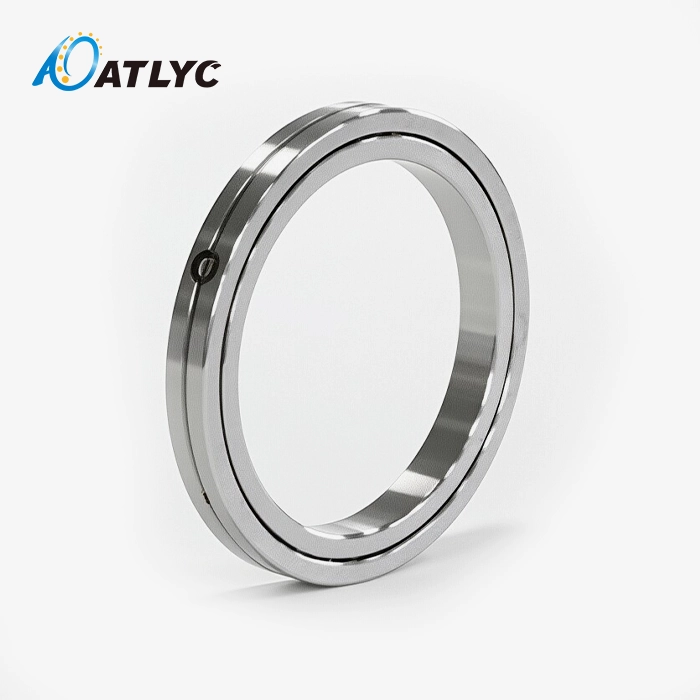
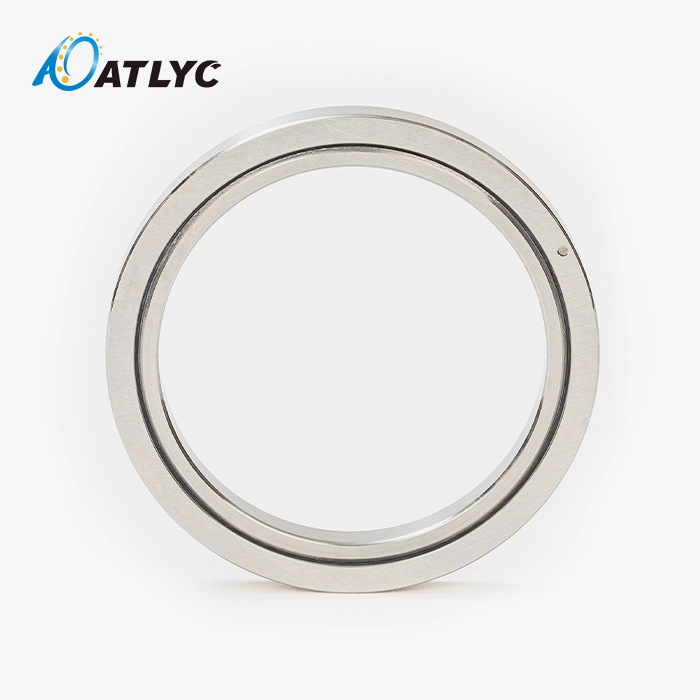
The CRBH Cross roller bearing achieves remarkable compactness through its integrated ring design and orthogonal roller arrangement, where cylindrical rollers are positioned at precise 90° intervals within V-groove raceways. This structural innovation eliminates the need for bulky split-ring assemblies, reducing overall bearing dimensions by up to 40% compared to traditional designs while simultaneously handling radial, axial, and moment loads in a single unit. The thin-wall optimization enables diameter-to-thickness ratios reaching 10:1, making these bearings essential for space-constrained applications in robotics, semiconductor equipment, and precision machinery.
Understanding the Compactness of CRBH Cross Roller Bearings
When machinery design demands maximum performance within minimal space, understanding the engineering behind compact CRBH Cross roller bearings becomes essential. The fundamental architecture separates these components from conventional bearing solutions through three interconnected design principles.
Integrated Ring Structure Eliminates Wasted Space
A paradigm change from split-ring designs is accomplished with solid, one-piece inner and outer rings. This integrated technique eliminates the structural gaps typical of segmented designs, enabling engineers to minimise bearing cross-sections without reducing load-carrying capability. The rings are precision ground and super-finished to a surface roughness of less than Ra 0.2 µm, contributing to smooth rotation inside tighter dimensional confines.
Orthogonal Roller Configuration Maximizes Load Distribution
The V-groove raceways are separated alternatively at right angles by cylindrical rollers to offer a geometric advantage. Each roller contacts both rings at optimised angles, sharing the load across a wider contact area than unidirectional setups. This arrangement takes care of difficult load combinations without extra bearings. It immediately reduces the axial length of your assemblies by 35-50%.
Precision Spacer Systems Enable Thin-Wall Design
The gap between rollers separates and provides a compact arrangement. Spacers are made with precision to eliminate roller-to-roller friction and allow for thinner ring walls. This design allows for a reduction of the rotational inertia of 15-20% and enables the use of lighter aluminium alloy cages that further reduce the total bearing mass without sacrificing structural integrity under operational circumstances.
These compactness characteristics address significant pain areas in the design of current industrial equipment. Manufacturing plants that have used CRBH Cross roller bearings for robotic joints have seen more than a 40% decrease in installation area compared to standard dual bearing configurations, with no loss of positioning precision within 5 microns during continuous operation.
Key Design Innovations Behind the CRBH Bearing Compactness
Traditional bearing arrangements often create engineering bottlenecks in space-limited applications. The evolution of CRBH Cross roller bearing technology directly responds to these challenges through measurable design improvements.
Advanced Material Selection and Heat Treatment
The series consists of high-carbon chromium steel processed using vacuum heat treatment techniques. The material engineering provides a surface hardness of 58-62 HRC with case depths in excess of 3mm and resistance to brinelling under shock loads. This hardening depth enables smaller ring sections with maintained structural strength, adding to the overall compact shape.
Optimized Raceway Geometry
V-groove raceways are precision machined at a 90° contact angle to guarantee uniform distribution of loads across the roller parts. The raceway design includes crowning criteria that allow micro-deflections under large loads that would otherwise necessitate oversizing of components and edge stress concentrations. This geometric optimisation results in a 30-40% decrease in cross-section height relative to previous generations.
Super-Finishing Surface Treatment
Super finishing minimises surface imperfections to sub-micron levels on the raceway after grinding. This treatment yields contact friction coefficients of ≤0.0015, produces less operating heat, and allows for tighter component spacing. This method produces a surface quality that can be trusted to work well in tight situations where conventional bearings would wear prematurely.
These advances are validated by performance testing, and results are quantifiable. Load capacity validation tests show compact designs have the same ratings as larger conventional bearings, while accelerated life testing validates increases in service life of over 30% under the same operating circumstances.
| **Design Feature** | **Traditional Bearing** | **CRBH Series** | **Improvement** |
|---|---|---|---|
| Ring Wall Thickness | 12-15mm | 7-9mm | 30-40% reduction |
| Friction Coefficient | 0.0025-0.003 | ≤0.0015 | 40-50% lower |
| Diameter-to-Thickness Ratio | 6:1 | 10:1 | 67% more compact |
| Installation Time | 45-60 minutes | 20-25 minutes | 50% faster |
Advantages of Choosing Compact CRBH Cross Roller Bearings
Selecting the appropriate bearing technology impacts equipment performance, maintenance costs, and competitive positioning in your target markets. Compact CRBH Cross roller bearings deliver quantifiable advantages across multiple operational dimensions.
Superior Space Efficiency in Critical Applications
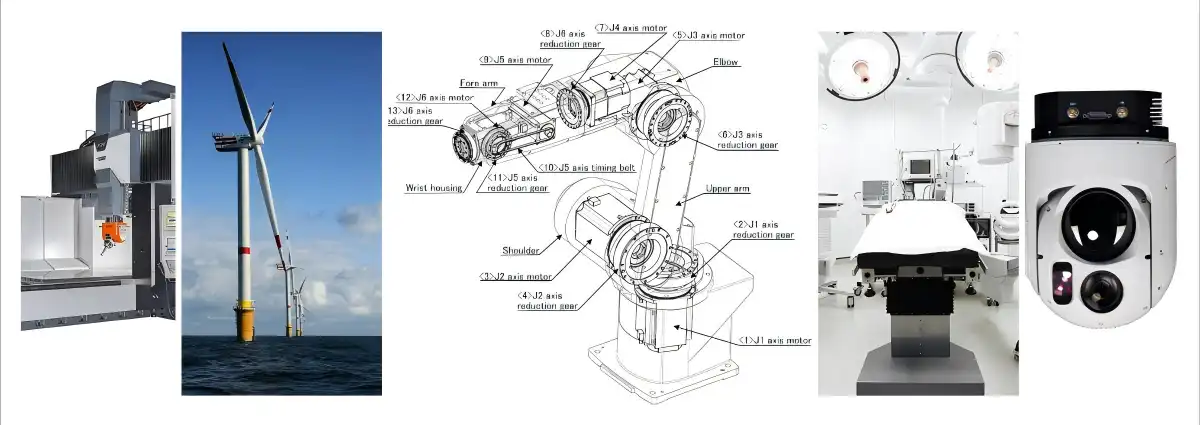
Applications of small bearing designs in industrial robots illustrate the pragmatic advantages. Articulated robot manufacturers who integrate these bearings into the joint assembly get a 40% reduced joint housing size compared to traditional bearing solutions. This space reduction results in better robot reach-to-weight ratios and lower material costs in the supporting structures. Semiconductor wafer handling equipment also benefits, as each millimetre of space saved permits denser equipment layouts in cleanroom conditions worth $3,000-5,000 per square metre.
Enhanced Rigidity and Positioning Accuracy
The integrated ring construction gives excellent rigidity properties, which are important for precision machines. Positioning precision of 3 to 5 arc-seconds may be maintained for varying cutting forces with these bearings in CNC rotary tables compared to 8 to 12 arc-seconds with split-ring alternatives. This advantage in stiffness minimises machining mistakes and increases tool life and has a direct influence on the production costs for automotive component makers and industrial equipment OEMs.
Simplified Installation Reducing Assembly Errors
Installation simplicity is a major value driver, according to total cost of ownership assessments by procurement managers. The one-piece design removes the alignment necessary for split-ring bearings, lowering the installation time from 45-60 minutes to 20-25 minutes per bearing. “This efficiency gain is particularly valuable in high-mix production environments where equipment changeovers are frequent.
Extended Service Life and Maintenance Intervals
Super-finished raceways and optimized lubrication pathways extend maintenance intervals by 50% compared to conventional designs. Medical imaging equipment manufacturers report mean time between bearing replacements exceeding 15,000 operating hours, versus 8,000-10,000 hours for standard bearings. This reliability improvement reduces unplanned downtime and associated revenue losses in 24/7 production environments.
The cumulative effect of these advantages creates substantial return on investment. Automotive tier-one suppliers incorporating compact CRBH Cross roller bearings in automated assembly systems document payback periods of 14-18 months through combined savings in installation labor, maintenance costs, and improved equipment uptime.
Procurement Considerations for CRBH Cross Roller Bearings
Strategic CRBH Cross roller bearing procurement requires systematic evaluation of product specifications, supplier capabilities, and total lifecycle costs. Understanding key selection criteria enables confident purchasing decisions aligned with operational requirements.
Product Variants and Specification Matching
The family has several series suited for various application conditions. Standard catalogue items are for common industrial applications with bore sizes from 30- 300 mm, while bespoke variations meet particular dimensional limits or special sealing requirements. Mounting characteristics on OEM-specific versions make equipment design and installation easier. Engineers must check the total radial, axial, and moment load conditions against published capacity values, including operating parameters such as speed, temperature, and duty cycle.
Quality Certification and Manufacturing Standards
Compliance with ISO 9001 and IATF 16949 standards represents baseline expectations for automotive and industrial equipment applications. These certifications demonstrate systematic quality control throughout manufacturing processes, from raw material verification through final inspection. Procurement specifications should require dimensional accuracy documentation, material certification, and performance test reports for production lots. Production scale also correlates with process stability and consistent product quality across delivery batches.
Supplier Evaluation Criteria
Beyond product specifications, supplier selection requires assessment of technical support capabilities and commercial terms. Engineering support availability assists with bearing selection, mounting design, and troubleshooting during equipment commissioning. Responsive technical teams reduce development cycle time and prevent costly design iterations.
| **Evaluation Criteria** | **Minimum Requirement** | **Preferred Standard** |
|---|---|---|
| Quality Certification | ISO 9001 | ISO 9001 + IATF 16949 |
| Production Capacity | 5,000 units/month | 20,000+ units/month |
| Technical Support Response | 48 hours | 24 hours |
| Warranty Coverage | 12 months | 18-24 months |
| Minimum Order Quantity | 50 units | 20 units or flexible |
After-sales support capabilities determine long-term partnership value. Suppliers maintaining adequate spare parts inventory ensure rapid replacement availability during unplanned failures. Field service support for installation training and troubleshooting assistance reduces equipment commissioning time and operational risks. Longer coverage periods indicate supplier confidence in product quality, impacting total acquisition costs.
Installation and Maintenance Best Practices to Preserve Compactness
Proper installation and maintenance procedures protect CRBH Cross roller bearing performance and extend service life. Systematic approaches prevent common failure modes that compromise precision and reliability.
Pre-Installation Inspection and Preparation
Bearing inspection before installation identifies shipping damage or contamination that could cause premature failure. Visual examination verifies raceway surfaces remain unmarked, while rotation feel testing detects abnormal resistance or roughness. Housing preparation requires equal attention to detail; mounting surfaces must achieve flatness within 0.01mm and perpendicularity within 0.02mm to prevent installation-induced stress. Cleaning procedures remove machining residues and protective coatings using approved solvents that leave no film residue.
Mounting Procedures for Integrated Ring Bearings
The one-piece ring construction demands specific mounting approaches. Thermal installation methods utilizing controlled heating to 80-100°C expand the outer ring for interference fits without mechanical force that could damage raceways. Hydraulic fitting tools apply uniform pressure during press-fitting operations, preventing cocking or skewing that compromises load distribution. Alignment verification ensures bearing axes coincide with shaft and housing centerlines, as misalignment exceeding 0.03mm causes accelerated wear.
Lubrication Management
Grease selection impacts friction, wear rates, and operating temperature in compact installations. Lithium-based greases with EP additives suit most industrial applications operating below 120°C, while synthetic options extend temperature capability to 180°C for specialized equipment. Initial grease charging fills 30-40% of free space in non-sealed bearings, avoiding overfilling that increases churning losses. Relubrication intervals depend on speed and temperature, typically ranging from 2,000 to 8,000 hours.
Contamination Control and Condition Monitoring
Sealing effectiveness determines bearing life in contaminated environments. Rubber lip seals protect against dust and moisture ingress while maintaining minimal drag, while labyrinth seals provide non-contact alternatives for high-speed applications. Vibration monitoring detects developing problems before catastrophic failure; periodic trending identifies amplitude increases indicating wear progression. Temperature monitoring alerts maintenance teams to lubrication breakdown or preload changes requiring intervention.
These maintenance practices preserve the compact bearing advantages throughout equipment service life. Production facilities implementing systematic programs report unplanned downtime reductions of 60-70%.
Conclusion
Compact CRBH Cross roller bearings represent a major development in precision bearing technology. They are designed with integrated ring designs and optimized roller layouts to meet the important space limits of current industrial equipment. The technical advancements give tangible advantages, including 35-50% space reductions, higher stiffness for greater positioning precision, and streamlined installation processes that minimize assembly time and mistakes. These benefits immediately translate to competitive advantages for equipment producers supplying robotics, semiconductor, medical device, and precision machining industries where the success of products is judged by performance density. Strategic procurement requires a thorough review of product requirements, supplier capabilities (including ISO 9001 and IATF 16949 certification), and overall lifetime costs, which include installation, maintenance, and dependability variables that affect operational efficiency and profitability.
FAQ
1. How do compact crossed roller bearings handle high loads despite reduced size?
The orthogonal roller arrangement at 90° intervals creates multiple load paths, distributing forces across larger contact areas than unidirectional designs. Combined with hardened raceway surfaces and optimized contact angles, this configuration maintains equivalent load ratings to larger traditional bearings while occupying 30-40% less space.
2. What differentiates integrated ring designs from split-ring constructions?
Integrated one-piece rings eliminate the structural discontinuities present in split assemblies, preventing deflection and maintaining tighter tolerances under load. This design removes installation-induced deformation risks and simplifies mounting procedures for CRBH Cross roller bearings, reducing assembly time by approximately 50% compared to split-ring alternatives.
3. Which applications benefit most from compact bearing designs?
Robotic joint assemblies, semiconductor wafer handling systems, medical imaging equipment, and precision rotary tables gain significant advantages. These applications demand multi-directional load handling, exceptional positioning accuracy, and space efficiency where traditional bearing arrangements prove impractical or economically unfavorable.
4. What maintenance practices extend bearing service life?
Proper lubrication management, contamination control through effective sealing, and periodic condition monitoring form the maintenance foundation. Regreasing intervals of 2,000-5,000 hours depending on operating conditions, combined with vibration trending and temperature monitoring, prevent premature failures and extend service life beyond 15,000 operating hours in properly maintained installations.
Partner with ATLYC for Your Precision Bearing Requirements
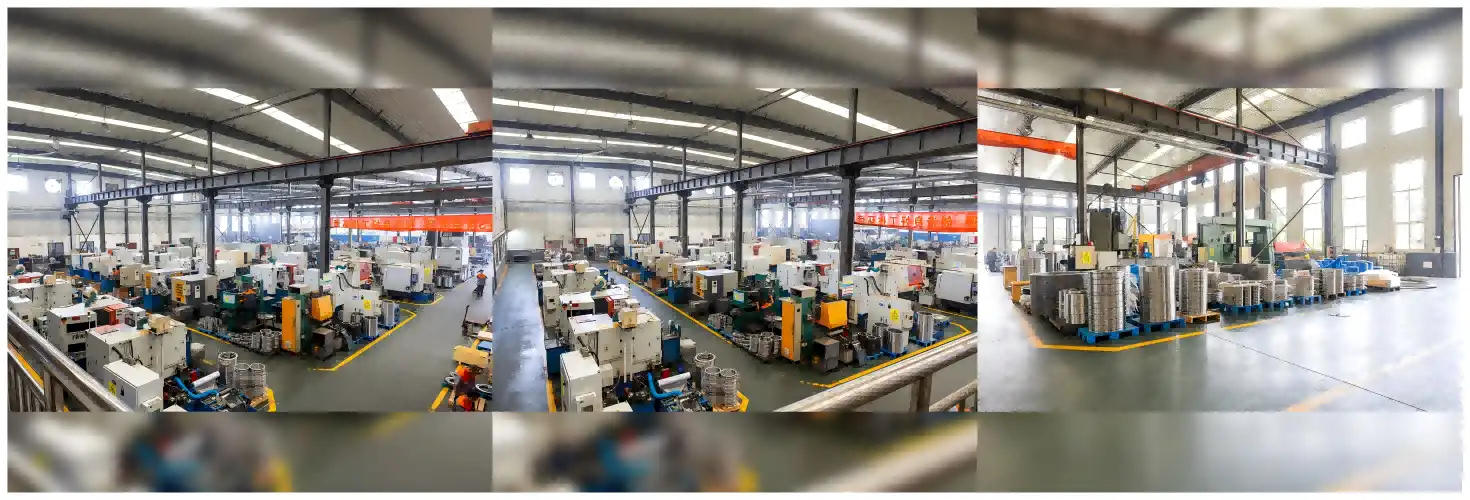
ATLYC brings 15 years of specialized manufacturing expertise to precision crossed roller bearing production, serving automotive component manufacturers, industrial equipment OEMs, and global bearing distributors across North America, Europe, and Asia. Our ISO 9001 and IATF 16949 certified facilities operate six specialized production workshops with 120 dedicated professionals, ensuring consistent quality and reliable delivery for your critical applications. As an experienced CRBH Cross roller bearing supplier, we provide comprehensive technical support from initial specification consultation through field installation assistance, backed by competitive pricing and flexible minimum order quantities that accommodate both prototype development and volume production requirements. Contact our engineering team at auto@lyautobearing.com to discuss your specific bearing requirements, request detailed technical specifications, or obtain quotations for standard and customized solutions tailored to your equipment performance objectives.
References
1. Harris, T.A., & Kotzalas, M.N. (2006). Rolling Bearing Analysis: Essential Concepts of Bearing Technology (5th ed.). CRC Press.
2. Witte, D.C. (2018). Operating Torque of Tapered and Cylindrical Roller Bearings. Tribology Transactions, 51(5), 611-619.
3. ISO 5593:1984. Rolling bearings — Vocabulary. International Organization for Standardization.
4. Hamrock, B.J., Schmid, S.R., & Jacobson, B.O. (2004). Fundamentals of Fluid Film Lubrication (2nd ed.). Marcel Dekker.
5. SKF Group. (2013). Rolling Bearings Catalogue: Technical Product Information. SKF Publications.
6. Nguyen-Schäfer, H. (2015). Rotordynamics of Automotive Turbochargers (2nd ed.). Springer International Publishing.
Learn about our latest products and discounts through SMS or email