- English
- French
- German
- Portuguese
- Spanish
- Russian
- Japanese
- Korean
- Arabic
- Greek
- German
- Turkish
- Italian
- Danish
- Romanian
- Indonesian
- Czech
- Afrikaans
- Swedish
- Polish
- Basque
- Catalan
- Esperanto
- Hindi
- Lao
- Albanian
- Amharic
- Armenian
- Azerbaijani
- Belarusian
- Bengali
- Bosnian
- Bulgarian
- Cebuano
- Chichewa
- Corsican
- Croatian
- Dutch
- Estonian
- Filipino
- Finnish
- Frisian
- Galician
- Georgian
- Gujarati
- Haitian
- Hausa
- Hawaiian
- Hebrew
- Hmong
- Hungarian
- Icelandic
- Igbo
- Javanese
- Kannada
- Kazakh
- Khmer
- Kurdish
- Kyrgyz
- Latin
- Latvian
- Lithuanian
- Luxembou..
- Macedonian
- Malagasy
- Malay
- Malayalam
- Maltese
- Maori
- Marathi
- Mongolian
- Burmese
- Nepali
- Norwegian
- Pashto
- Persian
- Punjabi
- Serbian
- Sesotho
- Sinhala
- Slovak
- Slovenian
- Somali
- Samoan
- Scots Gaelic
- Shona
- Sindhi
- Sundanese
- Swahili
- Tajik
- Tamil
- Telugu
- Thai
- Ukrainian
- Urdu
- Uzbek
- Vietnamese
- Welsh
- Xhosa
- Yiddish
- Yoruba
- Zulu
What Makes a Cross roller bearing RB series So Reliable?
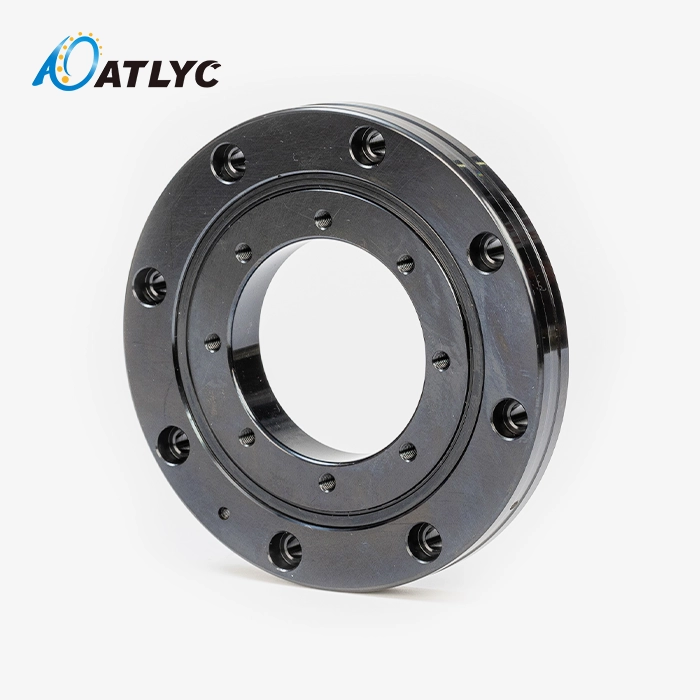
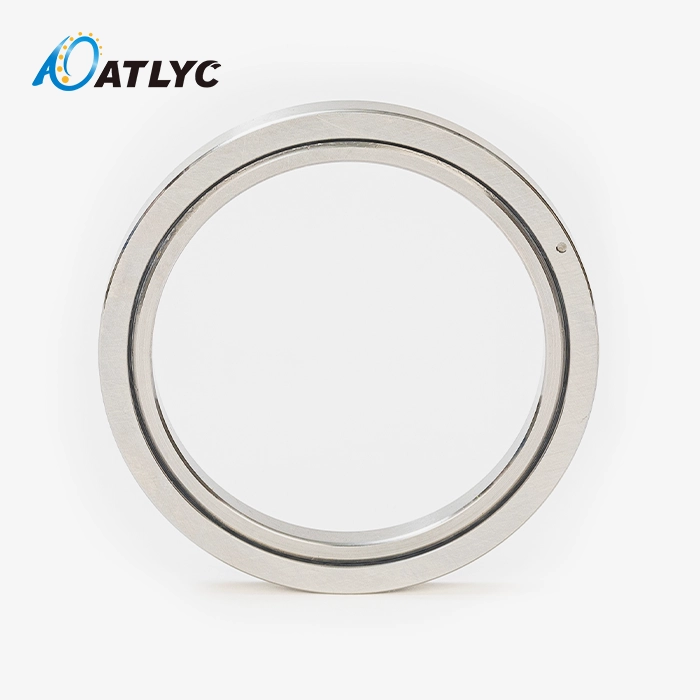
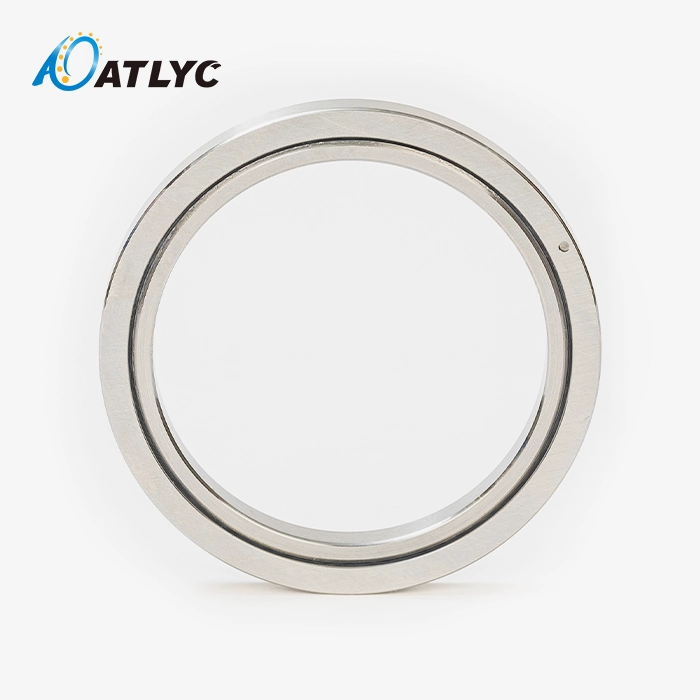
The reputation of the Cross roller bearing RB series is based on a precise mechanical design that can accommodate radial, axial, and moment loads in a single compact unit. The RB series employs cylindrical rollers in this case, which are set at 90° intervals in a 90° V-groove raceway. Conventional ball bearings support just one direction of load. The outer ring is equipped with an integrated plug system, while the inner ring is solid, providing the stiffness and rotational precision that automation engineers and OEM procurement teams rely on during difficult production cycles.

Understanding the Design and Features of the RB Series Cross Roller Bearings
Structural Configuration
The RB series cross roller bearing features a built-in inner ring and a split outer ring with a plug on it. This arrangement provides rigidity to the inner ring at high speeds, reducing radial runout to micron-level precision. The stopper on the outer ring allows for the precise insertion of the rollers during assembly without altering the geometry of the track. This provides a valuable tool for manufacturers to check if the rollers are placed appropriately.
Dimensional Range
The RB series works with a lot of different sizes, so it can be used on both small robotic joints and big industrial rotary tables. The standard size range is summed up below:
| Parameter | Minimum | Maximum |
|---|---|---|
| Inner Diameter | 20 mm | 1100 mm |
| Outer Diameter | 70 mm | 1500 mm |
| Width | 12 mm | 110 mm |
Because these bearings come in a wide range of sizes, procurement teams that work with different types of tools can buy from a single, uniform product family instead of having to keep track of many different types.
Material Composition
There are two types of high-carbon chromium steel used in the Cross roller bearing RB series: GCr15 and GCr15SiMn. They are both hardened to 58–64 HRC, which means they don't wear down easily and don't change shape when they are loaded and unloaded over and over again. GCr15SiMn hardens a little better for bigger cross-sections, which makes it the best choice when the bore diameter is more than 300 mm, and the wall loads rise in the same way.
How RB Series Cross Roller Bearings Work: Mechanisms Behind Their Reliability
Load Distribution Mechanics
The RB series bearing utilizes circular rollers that make contact with the V-groove raceway along a line rather than a point. Line contact ball bearings distribute power over a larger surface area than angular contact ball bearings and thus produce three to four times less peak contact stress. This mechanical characteristic enables one RB bearing to substitute two bearing assemblies in robot joints and indexing tables.
Heat Treatment and Wear Resistance
The GCr15 and GCr15SiMn steels are thoroughly hardened and fine-ground after heating. The raceway is uniform in surface hardness so localized wear patterns don't develop, which is frequently the reason lesser grade materials fail prematurely. Magnetic particle inspection and Rockwell hardness tests are performed before shipping any unit and throughout the production process to identify and reject underlying metallurgical faults.
Maintenance Practices That Extend Service Life
To have the RB series last for a long period, managing the cleaning intervals appropriately and adjusting the pressure correctly are the two most crucial maintenance responsibilities. The bearing operates within the range of its design, provided the ordinary clearance class (C0) is utilized for most jobs or a regulated preload is used when the stiffness level is high. By replenishing the oil at the manufacturer-specified periods and verifying the alignment of the split rings during scheduled downtime, you can reduce the buildup of wear that causes expensive unexpected failures.
Comparing RB Series with Other Bearing Solutions: Performance and Value Analysis
RB Series vs. Standard Ball Bearings
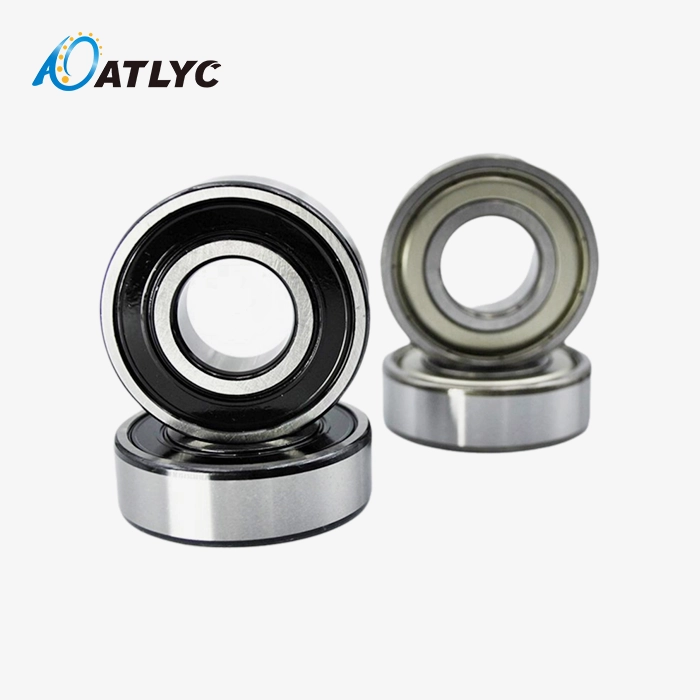
Standard angular contact ball bearings work well for small mixed loads and offer point contact. With its line-contact roller design, the RB series is three to four times as rigid in the same situations. This difference is not small in situations like CNC rotating tables, where cutting forces create large moment loads. It has a direct effect on the quality of the part and the life of the spindle.
Accuracy Class Comparison
There are five levels of accuracy in the RB series, which give procurement engineers full control over how to balance specification and cost. The levels of accuracy are: P6 for general industrial use, P0 for standard machine tools, P5 for precision automation, P4 for high-precision robotics, and P2 for optical and measuring instruments.
| Accuracy Class | Application Fit |
|---|---|
| P6 | General industrial use |
| P0 | Standard machine tools |
| P5 | Precision automation |
| P4 | High-precision robotics |
| P2 | Optical and measuring instruments |
Picking the right accuracy class keeps you from over-specifying, which raises costs, and under-specifying, which causes failure too soon.
Cost-Performance Position
There are makers of the Cross roller bearing RB series that are ISO 9001 and IATF 16949 approved. They make precision-grade products that are cheaper than many European options. Long lead times from well-known Chinese companies with six workshops can still be competitive for both standard and custom sizes. This gives global distributors an advantage when it comes to buying things because they can better manage project schedules and inventory commitments.
Applications and Industry Use Cases: Why Procurement Managers Trust the RB Series
Industrial Robotics and Automation
When a robot has flexible joints, the waist and elbow axes have to hold big loads while keeping zero backlash so that the robot can always be in the same place. For the RB line, the built-in inner ring immediately meets these needs. The kind of process stability that car assembly lines need is shown by a robot joint that keeps its positional accuracy within ±0.02 mm over 50,000 working cycles.
CNC Machining Centers
In machining centers, cutting forces act on rotary tables at the same time from different directions. The RB series can handle this combined load without the extra weight and mounting complexity that come with stacking bearing pairs. Engineers at machining centers say that moving from two angular contact kits to a single RB unit cut down on the time needed for housing design iterations and made the table more rigid, which in turn reduced the roughness of the surface during finish-milling operations.
Medical and Measurement Equipment
CT scanner gantries carry heavy detection arrays and spin constantly at set speeds. At this point, any shaking in the bearings hurts the quality of the picture. When set to P4 or P2 accuracy, the RB line gives medical imaging the smooth, low-vibration spinning it needs. Coordinate measuring machines and equipment used to make integrated circuits (ICs) have the same properties. Product yield is determined by positional deviations below one micron.
Procurement Considerations: How to Buy RB Series Cross Roller Bearings Confidently
Supplier Qualification Criteria
For demanding applications where you need cross roller bearings, you need to be sure that the manufacturer is ISO 9001 and IATF 16949 certified. The quality management system has processes for corrective action, design control, and process tracking, as shown by these certifications. The Luoyang Auto Bearing Co., Ltd.(ATLYC) was created in 2010, with 6 plants and 120 dedicated staff. It is certified and serves consumers in the USA, Germany, South Korea, Russia, Iran, and Turkey.
OEM Customization and Lead Time Planning
OEM customisation is a highly vital option for the supplier to have when a job demands non-standard bore diameters, various clearance classes, or proprietary labeling. ATLYC also allows you to adjust the size of an RB to any dimension and provides written guarantees on lead times. If purchasing managers are introducing new items, they may contact the engineering team of the manufacturer to set product development timelines before the products are manufactured. That reduces the number of times they have to change.
Quality Verification Before Acceptance
RB series bearings should be tested upon delivery by measuring the radial and axial runout with a CMM or a specialist rotary tester, confirming the radial internal clearance against the preload class specified, and visually examining the outer ring split and plug zone for surface continuity. Material certifications and hardness test records requested from the seller provide a paper trail that satisfies most of the OEM supplier audit requirements.

Conclusion
The Cross roller bearing RB series is reliable as it is manufactured with some design choices that can be verified: line-contact roller geometry, integrated inner ring that is rigid, GCr15 or GCr15SiMn steel that has been hardened to 58-64 HRC, and accuracy classes from P6 to P2 that perfectly fit the application’s needs. These characteristics make the bearing suitable to replace multi-part modules in robotics, machining centers, medical imaging, and precision measurement systems. For procurement teams needing constant quality, certified documentation, and a scalable supply, the RB Series from a recognized producer is a sound long-term technical and financial decision.
FAQ
1. What is the difference between the RB series and other cross roller bearing types?
The RB series has an inner ring that is solid and an outer ring that is split and has a plug on it. This setup puts an emphasis on the accuracy of the inner ring's rotation, which makes it better for uses where the inner ring needs to rotate. Some types, like the RU series, use a different split design that is better at handling situations where the outer ring rotates.
2. Which accuracy class should I specify for a precision rotary table?
Most of the time, P5 or P4 accuracy is fine for CNC machining center rotary tables. P2 is only for optical tools and equipment used to make integrated circuits (ICs) that need to have runout of less than one micron. Using a higher accuracy class than needed costs more and doesn't improve results by the same amount.
3. What materials are used in the RB series?
High-carbon chromium-bearing steels GCr15 and GCr15SiMn, both hardened to 58–64 HRC, are used in the RB series.
4. How do I verify bearing quality before accepting a shipment?
Check that the radial and axial runouts are within the accuracy class that was given, that the radial internal clearance matches the preload setting that was ordered, and look for surface flaws in the outer ring split zone. Ask the seller for hardness certificates and MPI records.
5. Can the RB series be customized for non-standard sizes?
Yes. Inner diameters can be anywhere from 20 mm to 1100 mm, and manufacturers like ATLYC allow OEM customization within this range, which includes changing widths and clearance requirements.
Partner with ATLYC for Your Cross Roller Bearing RB Series Supply
For 15 years, ATLYC has sold precision bearings to makers in the US, Germany, and other places. As a producer of the Cross roller bearing RB series that is approved by both ISO 9001 and IATF 16949, we can meet the needs of demanding uses with our large production scale, accuracy grades P6 through P2, and OEM customization. To get specs or a group quote, email our engineering team at auto@lyautobearing.com.
References
1. Harris, T. A., & Kotzalas, M. N. Rolling Bearing Analysis: Essential Concepts of Bearing Technology. Taylor & Francis, 2006.
2. Hamrock, B. J., Schmid, S. R., & Jacobson, B. O. Fundamentals of Machine Elements. McGraw-Hill, 2005.
3. ISO 9001:2015 — Quality Management Systems: Requirements. International Organization for Standardization, 2015.
4. IATF 16949:2016 — Quality Management System Requirements for Automotive Production and Relevant Service Parts Organizations. IATF, 2016.
5. Eschmann, P., Hasbargen, L., & Weigand, K. Ball and Roller Bearings: Theory, Design, and Application. Wiley, 1985.
6. Brewe, D. E., & Hamrock, B. J. "Analysis of Rolling-Element Bearings." Journal of Lubrication Technology, ASME, 1977.
Learn about our latest products and discounts through SMS or email