- English
- French
- German
- Portuguese
- Spanish
- Russian
- Japanese
- Korean
- Arabic
- Greek
- German
- Turkish
- Italian
- Danish
- Romanian
- Indonesian
- Czech
- Afrikaans
- Swedish
- Polish
- Basque
- Catalan
- Esperanto
- Hindi
- Lao
- Albanian
- Amharic
- Armenian
- Azerbaijani
- Belarusian
- Bengali
- Bosnian
- Bulgarian
- Cebuano
- Chichewa
- Corsican
- Croatian
- Dutch
- Estonian
- Filipino
- Finnish
- Frisian
- Galician
- Georgian
- Gujarati
- Haitian
- Hausa
- Hawaiian
- Hebrew
- Hmong
- Hungarian
- Icelandic
- Igbo
- Javanese
- Kannada
- Kazakh
- Khmer
- Kurdish
- Kyrgyz
- Latin
- Latvian
- Lithuanian
- Luxembou..
- Macedonian
- Malagasy
- Malay
- Malayalam
- Maltese
- Maori
- Marathi
- Mongolian
- Burmese
- Nepali
- Norwegian
- Pashto
- Persian
- Punjabi
- Serbian
- Sesotho
- Sinhala
- Slovak
- Slovenian
- Somali
- Samoan
- Scots Gaelic
- Shona
- Sindhi
- Sundanese
- Swahili
- Tajik
- Tamil
- Telugu
- Thai
- Ukrainian
- Urdu
- Uzbek
- Vietnamese
- Welsh
- Xhosa
- Yiddish
- Yoruba
- Zulu
What Makes CRBH Cross Roller Bearings High Rigidity?
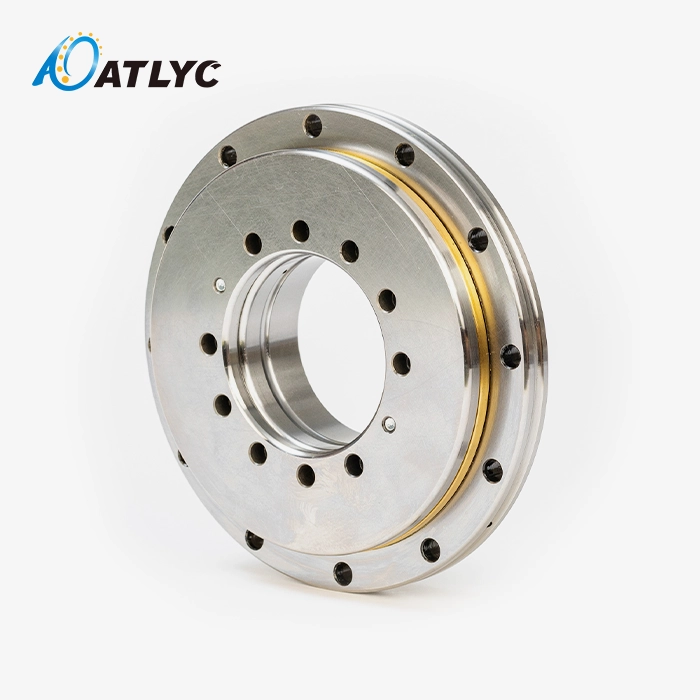
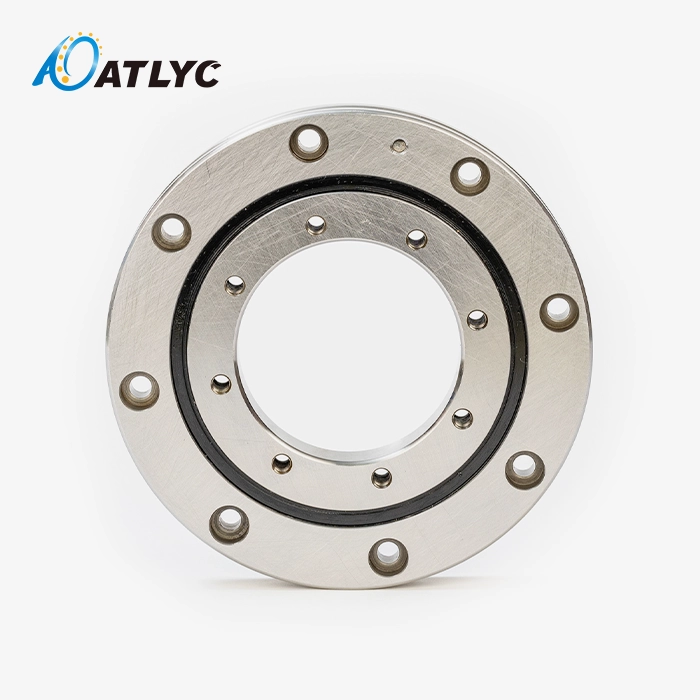
The CRBH Cross roller bearing stands out because of its integrated ring design and orthogonal roller layout. It is used in precision machinery that needs to work perfectly in all directions. The high rigidity comes from three main design elements: inner and outer rings that are solid one-pieces that eliminate structural gaps; cylindrical rollers placed at exact 90° intervals within V-groove raceways; and contact geometry that spreads radial, axial, and moment loads at the same time. This design stops the warping that happens during installation with split-ring options. It also keeps the positioning accuracy at the micron level even when the load changes.

Understanding CRBH Cross Roller Bearings and Their High Rigidity
The reason why crossed roller bearings are so stiff is that they completely change how the load is distributed across the rotating parts. Unlike regular ball bearings that only work with point contact or regular roller bearings that can only work with line contact in one direction, these precision parts can carry loads in both directions, thanks to a new way of building them.
Integrated Ring Construction
Instead of split forms like in the RB or RE series, the CRBH series uses a solid one-piece construction for both the inner and outer rings. For difficult uses, this choice of structure gives real benefits. Split-ring bearings leave gaps in the joint that become stress concentration places when the load is applied. This leads to tiny deflections that add up to mistakes in positioning. Precision grinding lowers the surface roughness of our combined rings to less than 0.2μm, and then a super-finishing process lowers the friction coefficients even more, to 0.0015. The continuous ring structure keeps the stated clearances no matter how the housing is shaped or how much stress is put on it. This solves a major problem for buying teams that have to choose equipment with different levels of manufacturing precision.
Orthogonal Roller Arrangement Principles
Between carefully cut V-groove raceways, cylindrical rollers are placed one after the other at right angles. This crossed shape makes the best contact angles so that each roller can carry loads in more than one plane at the same time. The design makes sure that different roller sets are engaged by radial forces, axial thrust, and twisting moments without having to change the preload. During use, load vectors naturally spread across the wheel population based on the direction of force at any given time. This gives the system a level of self-stabilizing rigidity that other types of bearings can't match.
Precision Spacer System Function
In addition to keeping wheels from touching, separators between them do two other mechanical jobs. The exact space between these precision-machined parts ensures the best load distribution and allows spinning speeds 30–40% faster than full-complement designs. The spacer's material and shape are designed to keep the cage's mass and inertia as low as possible, which lowers the amount of energy that gets through the bearing assembly. This is especially helpful for high-speed robotic joints where even small errors can make motion control less accurate.
Material Selection and Heat Treatment
The rings and wheels are made of bearing steel that the CRBH Cross roller bearing has been vacuum-degassed and heated in controlled processes to make the surface hard (60–64 HRC) and the core tough. In industrial settings, where temperatures change often, this mixture keeps the dimensions stable even when there is contact wear. The material specs are in line with ISO 683-17 standards, which makes sure that all output runs have the same metallurgical qualities. When designing safety factors into key assemblies, procurement managers can count on performance traits that can be predicted.
Technical Advantages of CRBH Bearings Over Traditional Bearings
When you compare these bearings to traditional ones, you can see that they work differently, which has an effect on the total cost of ownership. The benefits go beyond just load ratings and include operating traits that affect how long the machine stays up and running, how often it needs upkeep, and how accurate it stays over its lifetime.
Superior Multi-Directional Load Capacity
Dual angular contact ball bearing pairs or mixed radial-thrust bearing sets can be replaced by a single CRBH Cross roller bearing unit. This reduces the amount of room needed from 50 to 80 mm to 20 to 30 mm. The thin-wall design allows diameter-to-thickness ratios of up to 10:1 while still holding the same amount of weight as much bigger units. The results of tests show that crossed roller setups can handle combined loads with 60% less displacement than paired angular contact bearings of the same size. This space efficiency helps designers work with limited room in small industrial equipment and portable medical devices, where each millimeter impacts how well the systems work together.
Enhanced Rotational Accuracy and Runout Control
The built-in ring structure gets rid of the combined errors that come with stacks of multiple bearing components. Axial runout across the bearing hole is usually less than 3 µm, and radial runout is usually less than 5 µm. Because the contact surfaces wear evenly instead of getting high spots as they do in split-ring designs, these levels of accuracy stay the same over the life of the bearing. CNC machine builders use these parts in rotating tables that need to be able to accurately identify parts down to the micron level. If they weren't, positioning mistakes would spread through the cutting tool paths and lower the quality of the parts.
Reduced Vibration and Noise Generation
With super-finished raceways and optimized roller shapes, changes in contact stress during spinning are kept to a minimum. Vibration levels are kept below 50dB across all operating speed ranges, which meets the standards for cleanroom tools and medical images. Because of the low friction coefficient, they can work at temperatures 15–20°C lower than regular bearings when the loads are the same. This makes the oil last longer and keeps precision parts from expanding too much when the temperature rises. Manufacturers of industrial robots say that joint movement is much easier with crossed roller bearings than with ball bearings.
Extended Service Life and Maintenance Intervals
The L10 is expected to last longer than 30,000 hours in normal industrial job cycles because it has an efficient load distribution, low-friction operation, and strong sealing. The sealed versions have nitrile rubber lip seals that keep the grease in while keeping out contaminants in places where cutting fluids or dust are present. Instead of planned regreasing, maintenance routines can be sped up by doing regular checks. This lowers the cost of downtime. Manufacturers of automotive parts that run lights-out production plants value this stability because it helps them meet their throughput goals without having to stop CRBH Cross roller bearing work for no reason.
Industry Applications of High-Rigidity CRBH Bearings
Using crossed roller bearings in the real world in a variety of industries shows how they can solve specific practical problems. The performance traits work especially well in situations where accuracy, small size, and handling loads on multiple axes are all important.
Industrial Robotics and Articulated Arms
Robotic joint systems are the most difficult to work with because they have to handle complex moment loads and move smoothly without any backlash. Crossed roller bearings are used in six-axis articulated robots' wrist units and elbow joints because they don't have enough room for bigger bearing setups. The stiffness stops the tiny deflections that would add up through kinematic chains and cause positioning mistakes at the center point of the tool. Automotive production lines that use collaborative robots say that their placement is repeatable to within ±0.02mm over millions of rounds. This makes it possible to reliably put parts together and weld them.
Precision Rotary Tables and CNC Indexers
These bearings are used in direct-drive rotating tables that have to stay accurate even when cutting with a lot of force. A standard 400mm circle table can hold 2,000 kg of workpieces and have an accuracy of ±3 arc-seconds for numbering. The crossed roller design takes on both the radial cutting forces and the axial gripping loads at the same time, so you don't have to make any preload changes like you do with angular contact bearing sets. Manufacturers of aerospace parts that work with titanium and nickel metals rely on this steadiness to keep complexly shaped parts within tolerances.
Medical Imaging and CT Scanner Gantries
Computed tomography machines have a spinning gantry that has to be very smooth, have a large width, and spin very quickly so that picture artifacts don't show up. The X-ray tube and detector array are held up by crossed roller bearings with widths of 800 to 1200 mm. The wobble during spinning is kept below 0.05 mm. The low starting power makes it possible to precisely control the speed, and the sealed design makes it reliable in hospital settings. Manufacturers of equipment choose these parts because they work precisely and don't need any upkeep for more than 10 years.
Semiconductor Wafer Handling Equipment
Wafer transfer robots in production facilities need to be operated in a very clean way and be able to precisely place themselves. The thin-section crossed roller bearings make it possible for small robot arms to fit inside process tool load locks and handle 300 mm chips with placement accuracy of less than a micron. ISO Class 1 cleanliness standards are met by the low particle generation from cage and seal designs that have been improved. Builders of semiconductor capital equipment like the reliable performance and long service gaps that keep production equipment running as much as possible.
How to Choose the Right CRBH Cross Roller Bearing for Your Needs
When choosing a specification, you have to weigh a lot of technical factors against the needs of the product and the budget you have. A methodical evaluation process helps find the best CRBH Cross roller bearing design without specifying too much, which raises costs needlessly.
Load Capacity Assessment
Figure out your total loading situation, which should include both steady and dynamic rotational loads, as well as axial thrust and tilting moments. The basic load values of the bearing must be higher than your maximum working loads by a safety factor that is right for the criticality of your application. Manufacturers list dynamic load ratings (C) and steady load ratings (C0), and the ways they were calculated are in line with ISO 76 standards. It is important to think about shock loads or acceleration forces that cause rapid peak loads that are higher than steady-state values in automatic equipment.
Dimensional Requirements and Space Constraints
Take a measurement of the space that is available for installing the bearing and write down both the mounting surface dimensions and the axial length budget. The CRBH thin-wall line has ratios of outer diameter to height that make the best use of axial room. Make sure that the mounting surface is flat and straight, as required by the bearing maker (usually within 0.02mm total indicator runout), so that changes in preload or clearance caused by fitting don't happen.
Rotational Speed and Precision Needs
Check the bearing's limiting speed rate, which relies on the cage design and the way it is oiled, against the speed you need it to rotate. For uses above 500 rpm, the spacer-type design is usually better than the full-complement versions. Figure out how accurate you need your radial runout, axial runout, and rotational torque difference to be. When positioning mistakes of less than 10µm affect the quality of the output, bearings with an accuracy class of P5 or better are best.
Sealing and Environmental Conditions
When used in dirty settings, covered bearings with nitrile or Viton lip seals are needed. Unsealed bearings have less friction and can go faster, but they need to be installed in a safe area. Think about the temperature ranges. Standard bearings work effectively from -20°C to +80°C, but for extreme uses, special materials make this range even wider. Chemicals from cutting fluids or cleaning processes may mean that special sealants or coatings are needed.
Supplier Evaluation Criteria
Give more weight to suppliers who have ISO 9001 and IATF 16949 certifications. These show that they have regular quality systems and know how to make things for the car industry. For important uses, ask for proof of dimensional inspection records and material certificates. Check out the technical support options, such as engineering help with choosing bearings, step-by-step instructions for fitting, and failure analysis services. Planning for purchases is affected by lead time consistency and MOQ flexibility, especially for equipment makers whose production rates change.
Reliable CRBH Cross Roller Bearing Suppliers and After-Sales Support
Building ties with qualified bearing makers has benefits that CRBH Cross roller bearing lasts beyond the original buy. When choosing a supplier, you should look at their skills that can help you with all stages of the product lifecycle, from creation to aftermarket service.
Quality Certification and Manufacturing Standards
Check to see if possible suppliers are still certified with the ISO 9001 quality management system and, for car uses, the IATF 16949 quality standards. These certifications show that there are set process controls, written inspection methods, and plans for ongoing growth. Ask for facility audit records or third-party certificates that prove you can make the product. Suppliers should use heat lot numbers to make it easy for customers to track down materials and keep inspection records that can be viewed by customers.
Technical Support and Engineering Services
Manufacturers of good bearings offer application engineering help that helps customers choose the best bearings for their needs. This includes doing finite element analysis on house designs, coming up with fixing procedures, and giving advice on how to grease things. Having access to expert support is helpful when fixing unexpected performance problems or making changes to bearings that are caused by changes in the design. If a supplier has its own testing facilities, it can try custom setups for validity before committing to production.
Inventory Management and Delivery Reliability
Check to see how the provider handles inventory, how long it takes to make things, and how they can send them to your facilities. Well-known companies keep popular sizes in stock so that orders can be filled quickly, and they also offer fair lead times for custom specs. Knowing the MOQ standards helps with making purchases, especially for companies that make equipment for a lot of different types of customers with different bearing needs. Suppliers with distribution networks in the areas where you do business cut down on shipping times and make guarantee service easier.
Warranty Terms and Failure Analysis Support
A full guarantee protects your investment and gives you options if something breaks down too soon. Read the guarantee terms to find out how long the service lasts, what constitutes a failure, and how to get a replacement. Failure analysis services from suppliers help find the reasons why bearings don't last as long as they're supposed to, separating production flaws from application problems like contamination or overload. This technical feedback helps you make your application coding better and stops failures from happening again and again.
Conclusion
Crossed roller bearings are very rigid because they are the result of combined engineering that takes basic mechanical principles into account, such as the CRBH Cross roller bearing. The one-piece ring design gets rid of structural problems, and the placement of the rollers in an orthogonal way spreads complex loads across the best contact surfaces. When you combine these design features with precise production, you get positioning accuracy, small packaging, and longer service life that you can't get with other types of bearing setups. When the total cost of ownership goes down, machine speed goes up, and assembly complexity goes down, procurement teams can see a clear benefit. If you choose qualified providers with a track record of making quality products and full expert support, you can be sure that your bearing investment will work reliably for the entire life of your equipment.
FAQ
1. What design features create the high rigidity in CRBH bearings?
The strength comes from the solid ring structure that is built in and doesn't have any bending points like split-ring designs do. This, along with the placement of the rollers so they don't touch each other, spreads the load across many contact points at the same time. The V-groove raceway shape and precision-ground surfaces keep the contact angles the same, even when the load is applied in different directions.
2. How do the servicing needs compare to those of other types of bearings?
When compared to regular bearing setups, sealed crossed roller bearings usually only need to be inspected every so often instead of being oiled on a regular basis. This means that maintenance intervals are 2-3 times longer. The strong seals and improved internal shape make it less sensitive to contamination and wear.
3. Which industries benefit most from crossed roller bearing advantages?
The mix of small size, multidirectional load capacity, and precision features makes it most useful for industrial robots, CNC machine tools, medical imaging equipment, and semiconductor manufacturing systems. This type of bearing is useful for applications that need high stiffness in a small area and have complicated loads.
Long-Term Partnership Value
Building strategic relationships with bearing suppliers creates advantages beyond transactional purchases. Preferred customer programs may offer inventory consignment, dedicated production capacity, or priority allocation during supply constraints. Collaborative development relationships enable bearing customization that optimizes performance for your specific applications. Suppliers who care about your success give you market information about new technologies and changes in the competition that help you plan your product roadmaps.
ATLYC focuses on providing high-precision bearing solutions to medium to large industrial equipment makers and their global original equipment manufacturer (OEM) partners. Our factory is ISO 9001 and IATF 16949 approved, and it has been making crossed roller bearings for 15 years. It also has expert support programs that are made for tough situations. While we keep standard CRBH Cross roller bearing designs in stock, we also offer customization services for needs that are unique to your application. You can talk to our engineering team at auto@lyautobearing.com about your bearing needs with skilled CRBH Cross roller bearing makers who know how to meet the performance needs of robots, automation, and precision machinery. Our technical staff provides selection assistance, mounting guidance, and lifecycle support that helps you achieve reliable operation across your equipment portfolio.
References
1. Harris, T.A., & Kotzalas, M.N. (2006). Essential Concepts of Bearing Technology: Rolling Bearing Analysis. CRC Press, Boca Raton.
2. ISO 76:2006. Rolling Bearings — Static Load Ratings. International Organization for Standardization, Geneva.
3. Weck, M., & Brecher, C. (2006). Machine Tools: Design and Operation. Volume 2: Construction and Calculation. Springer-Verlag, Berlin.
4. Nishida, S. (1999). Failure Analysis in Engineering Applications. Butterworth-Heinemann, Oxford.
5. Schaeffler Technologies AG. (2019). Crossed Roller Bearings: Design and Application Guidelines. Technical Publication TI 00101, Herzogenaurach.
6. Budynas, R.G., & Nisbett, J.K. (2020). Shigley's Mechanical Engineering Design. 11th Edition, McGraw-Hill Education, New York.
Learn about our latest products and discounts through SMS or email