- English
- French
- German
- Portuguese
- Spanish
- Russian
- Japanese
- Korean
- Arabic
- Greek
- German
- Turkish
- Italian
- Danish
- Romanian
- Indonesian
- Czech
- Afrikaans
- Swedish
- Polish
- Basque
- Catalan
- Esperanto
- Hindi
- Lao
- Albanian
- Amharic
- Armenian
- Azerbaijani
- Belarusian
- Bengali
- Bosnian
- Bulgarian
- Cebuano
- Chichewa
- Corsican
- Croatian
- Dutch
- Estonian
- Filipino
- Finnish
- Frisian
- Galician
- Georgian
- Gujarati
- Haitian
- Hausa
- Hawaiian
- Hebrew
- Hmong
- Hungarian
- Icelandic
- Igbo
- Javanese
- Kannada
- Kazakh
- Khmer
- Kurdish
- Kyrgyz
- Latin
- Latvian
- Lithuanian
- Luxembou..
- Macedonian
- Malagasy
- Malay
- Malayalam
- Maltese
- Maori
- Marathi
- Mongolian
- Burmese
- Nepali
- Norwegian
- Pashto
- Persian
- Punjabi
- Serbian
- Sesotho
- Sinhala
- Slovak
- Slovenian
- Somali
- Samoan
- Scots Gaelic
- Shona
- Sindhi
- Sundanese
- Swahili
- Tajik
- Tamil
- Telugu
- Thai
- Ukrainian
- Urdu
- Uzbek
- Vietnamese
- Welsh
- Xhosa
- Yiddish
- Yoruba
- Zulu
What Makes RE Crossed Roller Bearings More Accurate?
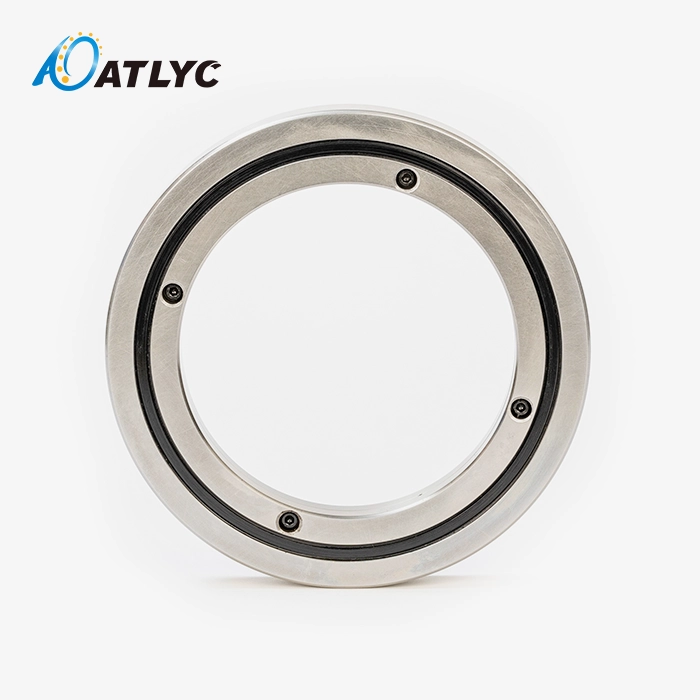
RE Crossed Roller Bearings are very accurate because they have a special arrangement of orthogonal rollers that spreads loads evenly across V-grooved raceways with little deformation. With their split inner ring and integrated outer ring design, along with tight manufacturing standards, these bearings can handle radial, axial, and moment loads all at the same time, making them more stable and accurate in their placement.

Introduction
This guide gives you a complete overview of RE crossed roller bearings, focusing on how important they are in precision-driven applications. Understanding the accuracy factors of these bearings is important for global B2B procurement workers like engineers, OEMs, and wholesalers who want to choose the best parts that improve machine performance and stability.
High-precision bearings are becoming more and more popular in many fields, from making cars to automating factories. Components used in modern factories need to be able to consistently work well while keeping tight specs, even when the load conditions change. These strict needs are met by RE crossed roller bearings, which use new design ideas and modern production methods.
This content gives an overview of important topics like design principles, material quality, performance benefits, application suitability, logistics of procurement, and customer support. This helps decision-makers make smart decisions that meet practical needs and cost-effectiveness goals. By knowing these things, procurement teams can choose bearing solutions that improve the performance of tools while also lowering the costs of long-term upkeep.
Understanding the Design Principles Behind RE Crossed Roller Bearings' Accuracy
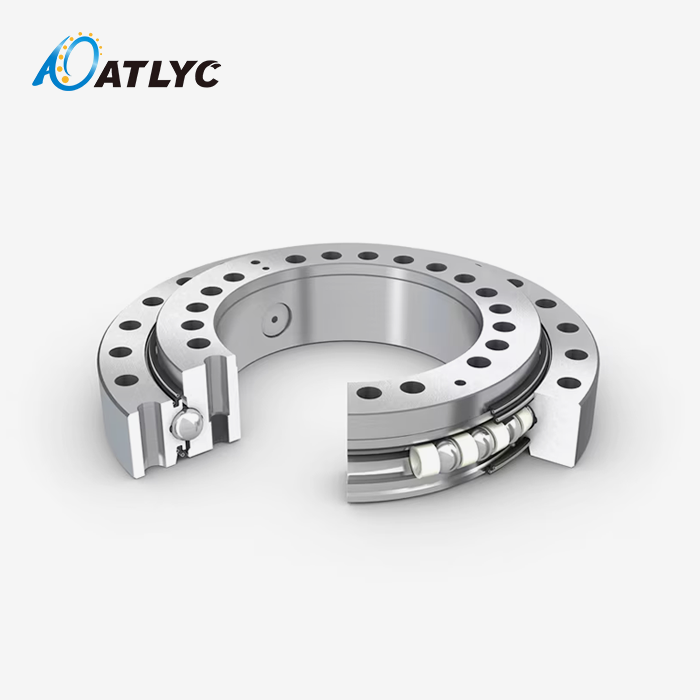
Compared to other types of bearings, RE crossed roller bearings have a special crossing roller pattern that makes them more rigid and better at distributing load. This new structure design is a big step forward in bearing technology because it gets around the problems with traditional single-direction roller setups.
The main edge in accuracy comes from the way the cylinder rollers are set up perpendicularly between the precision-machined V-grooved raceways. This crossed shape lets each roller support loads going in various directions. This evens out the force distribution and keeps the structure from deforming when it's under working loads.
Between the rollers, spacers keep them from rubbing against each other and keep their exact position throughout the spinning cycle. This design gets rid of the rotational play that is common in regular bearings. This makes the runout accuracy so good that it often goes beyond P4 standards. The crossed design turns a single bearing into a multi-directional support system that can handle a wide range of pressure conditions.
Precision in manufacturing starts with high-quality materials like GCr15 and GCr15SiMn steels, which are chosen for keeping their strength and shape better over time. Specialized heat treatments are used on these materials to get the best spread of hardness while keeping the toughness properties that are needed to keep accuracy over time.
Tolerances of less than a micrometer are kept on all important areas during precision grinding. This includes the V-grooved raceways that guide roller movement. Computer-controlled machine centers make sure that the shape stays the same from one production run to the next, and high-tech measurement systems check the accuracy of the dimensions all the way through the manufacturing process. Quality control procedures make sure that every bearing meets the required level of accuracy, which ranges from P6 to P4.
The one-piece outer ring design gets rid of any possible differences in accuracy that come with multi-piece systems. This solid ring design makes the structure very strong while still meeting the exact roundness requirements needed for high-precision uses. The split inner ring design makes it easier to put together and lets you precisely change the pressure during installation.
This arrangement cuts down on the number of tolerance stack-up places that could affect the accuracy as a whole. The fewer parts also mean there are fewer possible sources of difference. This helps make the steady performance traits of crossed roller bearings stand out from other options.
Key Performance Advantages of RE Crossed Roller Bearings
This part talks about how RE crossed roller bearings are better than ball and angular contact bearings when it comes to load capacity and stiffness, especially when they are subjected to complex, multi-axial forces. The benefits of performance go beyond just being able to move loads; they also include accuracy, sturdiness, and speed in operation.
The crossed roller design lets radial loads of up to several hundred kilonewtons, axial loads, and moment loads all be supported at the same time by a single, small bearing system. This feature gets rid of the need for various bearing setups that are usually needed to deal with complicated loading situations. This makes the system simpler and less likely to have errors.
Comparing load capacities shows that RE crossed roller bearings can usually handle three to five times more moment loads than angular contact ball bearings of the same size. This higher capacity directly leads to better accuracy under working loads, since the bearing deforms less and stays in place accurately even when force conditions change.
The even contact pattern between the wheels and the raceways makes the spinning smooth and reduces the amount of vibration that is sent. Measurements of runout accuracy often get results below 2 micrometers, which is much better than what standard bearing configurations can do. This accuracy level is necessary for tasks that need to be able to repeat exact positioning.
The spread touch pattern that dampens oscillations and uneven motion patterns is what makes the vibration-reduction work. The crossed arrangement makes the system naturally stable, so it can handle changes in outside forces and keep running smoothly at different speeds. These traits are especially useful for precise machining tasks where shaking has a direct effect on the quality of the surface finish.
This is because the crossed wheel design better distributes stress, which makes the product last longer. Sharing the load across multiple contact points lowers the peak forces on individual parts, which makes the wear life longer than with point-contact bearings. When loads are spread out more widely across various bearing surfaces, material utilization efficiency goes up.
As a result of being more stable and wearing out less quickly, line-contact roller bearings require less maintenance. Proper oil upkeep can make equipment last longer than 20,000 hours in most commercial settings. This lowers the total cost of ownership and makes the equipment more reliable.
Selecting RE Crossed Roller Bearings for Your Applications
This article gives useful tips on how to match RE crossed roller bearings to different industrial uses, like rotary tables, robots, and big machinery. To get the best performance, when choosing an application, you need to carefully think about the load requirements, accuracy requirements, and weather conditions.
Crossed roller bearings are very useful for robotic uses because they are small and can hold loads in more than one way. For joint systems to work, they need to be able to be precisely placed and handle different loads as robot arms move in different directions. These needs are met by the crossed roller design, which also needs the least amount of weight and space.
The high accuracy and moment load capacity are used in machine tool applications, especially rotary tables and positioning systems. For these uses, placement must be repeatable to within a few micrometers, and the cutting forces must be strong. Because they are strong and accurate, crossing roller bearings allow machine tools to keep their accuracy over long production runs.
CT scanners, MRI systems, and surgical robots are all examples of medical equipment that use easy operation and precise features. In these delicate situations, where accuracy directly affects diagnostic accuracy and patient safety, the clean operation and low sound are important.
Sizes cover a wide range of needs, with inner diameters ranging from 20 mm to 1100 mm and outer diameters up to 1500 mm. With widths ranging from 12mm to 110mm, you can find the best solution for your load and room needs. Custom designs are made to fit specific mounting needs and weather situations.
Engineering support services help choose the right bearings and make the best use of them. To make sure the best performance, technical teams offer services like load analysis, life estimate, and installation help. Customers can get the most out of their bearing investments and avoid common application problems with this joint method.
Seamless Procurement: How to Buy RE Crossed Roller Bearings?
For foreign B2B buyers, knowing how procurement processes work is essential for completing projects successfully. The process of buying bearings includes checking technical specifications, making sure suppliers are qualified, and coordinating the supply chain to make sure that quality parts are delivered on time.
The way prices are set reflects the need for precision while still being competitive with options from other countries. When you order more than a certain amount, you can get a volume price. This makes buying in bulk a good idea for large-scale production projects. Being clear about prices helps buying teams make good budgets for bearing parts.
Customers who need long-term supply agreements and technical help can benefit from direct OEM relationships. These connections give you faster access to technical tools and better prices for agreed-upon volume levels. Long-term contracts also make sure that supplies don't run out for important business uses.
Lead times depend on the type of bearing and the number of units ordered, but normal setups are usually ready in 4 to 6 weeks. Custom bearings may take 8 to 12 weeks, based on how complicated they are and how busy the factory is right now. Planning and making predictions can help keep shipping delays to a minimum for projects that need to be done on time.
Global transportation networks make sure that goods get to North America, Europe, and Asia, which are all big industrial markets, on time. Shipping relationships help customers plan their production schedules by letting them track packages and confirm deliveries. Bearing-protected packaging makes sure that parts arrive in perfect shape and are ready to be installed.
ATLYC: Your Trusted RE Crossed Roller Bearings Partner
ATLYC is a well-known company that makes bearings. They have been making fine bearings for fifteen years. In 2010, we started out as a single workshop that only made deep groove ball bearings. Since then, we've grown into a full-service manufacturing company that makes six types of bearings, including our modern RE crossed roller bearing line.
Our RE Crossed Roller Bearings cover the whole process, from choosing the raw materials to checking the end quality. There are specialized experts on the 120-person team who work on production, research and development, quality control, and assembly. This knowledge makes sure that the quality and performance of all of our products are the same, but it also gives us the freedom to meet the needs of specific applications.
Our ISO 9001 and IATF 16949 certifications show that we follow international quality standards and the idea of constant growth. Customers around the world can be sure that our production methods meet the strict standards of car and industrial uses, thanks to these certifications. Regular checks and changes to the quality system make sure that ongoing compliance with changing standards in the business.
Our world reach includes South Korea, the US, Germany, Russia, Iran, and Turkey, all of which are big industrial markets. This experience working with people from other countries has taught me a lot about how to meet different program needs and follow different rules. Years of reliable service have built relationships with customers that show we can support long-term smart ties with businesses that are growing.
Conclusion
RE Crossed Roller Bearings are very accurate because they are made with new design ideas that make the load distribution work best and reduce movement while they are in use. When you mix precise manufacturing, high-quality materials, and the arrangement of orthogonal rollers, you get bearing solutions that work better than usual and offer great value for demanding applications.
These bearings are perfect for precision-critical uses in robots, machine tools, and medical equipment because they have many performance benefits, such as the ability to handle loads in more than one way and better rotational accuracy. When procurement workers know about these features, they can make smart choices that improve the performance of tools while lowering the total cost of ownership.
FAQ
What distinguishes RE crossed roller bearings from conventional ball bearings in terms of accuracy?
Crossed rollers make line contact instead of point contact, which spreads loads more widely and lowers stress concentrations. This design keeps movement to a minimum when it's under load, and the runout accuracy levels often go above and beyond P4 standards, which is higher than the usual P6 accuracy that ball bearings can offer.
How do maintenance requirements differ for crossed roller bearings compared to other bearing types?
Crossed roller bearings usually need less upkeep because they spread out loads better and wear out less quickly. In similar situations, lubrication times can be 30–50% longer than with ball bearings. However, choosing the right lubricant and protecting the surroundings are still necessary for the best service life.
What customization options are available for specific application requirements?
Customization choices include changing the sizes, using different materials, adding more sealing options, and making the fastening arrangements unique. Engineering support services help choose the best bearings for the job, the climate, and the performance goals, all while making sure they work with current equipment designs.
Partner with ATLYC for Premium RE Crossed Roller Bearings Solutions
ATLYC makes great RE crossed roller bearings that are both precisely engineered and easy to get around the world. Our extensive manufacturing knowledge and ISO 9001/IATF 16949-certified quality processes make sure that your most demanding uses always work at their best. As a well-known company that makes RE Crossed Roller Bearings, we can help you reach your production goals by offering expert support, reasonable pricing, and reliable delivery. Email our engineering team at auto@lyautobearing.com to talk about your particular needs and find out how our precision bearing solutions can improve the performance of your equipment while lowering the costs of running it.
References
1. Harris, Tedric A., and Michael N. Kotzalas. "Advanced Concepts of Bearing Technology: Rolling Bearing Analysis." CRC Press, 2006.
2. Hamrock, Bernard J., and William J. Anderson. "Rolling-Element Bearings: Analysis and Design Fundamentals." NASA Technical Publication, 1983.
3. Eschmann, Paul, et al. "Ball and Roller Bearings: Theory, Design and Application." John Wiley & Sons, 1985.
4. ISO 492:2014. "Rolling Bearings - Radial Bearings - Dimensions and Tolerances." International Organization for Standardization.
5. Wijnant, Y. H., and J. A. Wensing. "The Influence of Lubrication on the Dynamic Behavior of Ball Bearings." Journal of Sound and Vibration, 2005.
6. Nlias, Daniel, et al. "Role of Inclusions, Surface Roughness and Operating Conditions on Rolling Contact Fatigue." Journal of Tribology, 1999.
Learn about our latest products and discounts through SMS or email