- English
- French
- German
- Portuguese
- Spanish
- Russian
- Japanese
- Korean
- Arabic
- Greek
- German
- Turkish
- Italian
- Danish
- Romanian
- Indonesian
- Czech
- Afrikaans
- Swedish
- Polish
- Basque
- Catalan
- Esperanto
- Hindi
- Lao
- Albanian
- Amharic
- Armenian
- Azerbaijani
- Belarusian
- Bengali
- Bosnian
- Bulgarian
- Cebuano
- Chichewa
- Corsican
- Croatian
- Dutch
- Estonian
- Filipino
- Finnish
- Frisian
- Galician
- Georgian
- Gujarati
- Haitian
- Hausa
- Hawaiian
- Hebrew
- Hmong
- Hungarian
- Icelandic
- Igbo
- Javanese
- Kannada
- Kazakh
- Khmer
- Kurdish
- Kyrgyz
- Latin
- Latvian
- Lithuanian
- Luxembou..
- Macedonian
- Malagasy
- Malay
- Malayalam
- Maltese
- Maori
- Marathi
- Mongolian
- Burmese
- Nepali
- Norwegian
- Pashto
- Persian
- Punjabi
- Serbian
- Sesotho
- Sinhala
- Slovak
- Slovenian
- Somali
- Samoan
- Scots Gaelic
- Shona
- Sindhi
- Sundanese
- Swahili
- Tajik
- Tamil
- Telugu
- Thai
- Ukrainian
- Urdu
- Uzbek
- Vietnamese
- Welsh
- Xhosa
- Yiddish
- Yoruba
- Zulu
What Makes Tapered Roller Bearing 30305 Ideal for Heavy Loads?
The tapered roller bearing 30305 stands out as one of the most dependable single-row metric bearings for heavy combined load applications. With a 25 mm bore, 62 mm outer diameter, and 18.25 mm assembly width, this bearing handles both radial and axial forces simultaneously—something standard ball bearings simply cannot match at this size class. Its Basic Dynamic Load Rating (Cr) of approximately 46.5 kN and Static Load Rating (Cor) of 36.5 kN make it a go-to component in automotive transmissions, industrial gearboxes, and agricultural machinery where load density and service life are non-negotiable.
Understanding Tapered Roller Bearing 30305: Specifications and Design Features
When I choose a bearing for heavy-duty use, I always look at the core dimensions and material information first. The 30305 is made to meet ISO 355 and DIN 720 standards. This means that its shape can be checked around the world and used in all approved supply lines.
Core Dimensional Specifications
The 30305 bearing has an inner diameter of 62 mm, an outer diameter of 25 mm, and a total width of 18.25 mm for the whole assembly. Its separate design—an inner cone unit and an outer cup—makes placement possible on its own. This is especially helpful when assembling car transmissions that need precise preload adjustment or interference fitting. The bore diameter is 25 mm, the outer diameter is 62 mm, and the assembly width is 18.25 mm. The dynamic load rating is ~46.5 kN, and the static load rating is ~36.5 kN. The operating temperature range is -30°C to +120°C, and the tolerance class is ISO 492 Normal / P6.
| Parameter | Value |
|---|---|
| Bore Diameter (d) | 25 mm |
| Outer Diameter (D) | 62 mm |
| Assembly Width (T) | 18.25 mm |
| Dynamic Load Rating (Cr) | ~46.5 kN |
| Static Load Rating (Cor) | ~36.5 kN |
| Operating Temperature | -30°C to +120°C |
| Tolerance Class | ISO 492 Normal / P6 |
Material and Hardness Properties
The 30305 is made from SAE 52100 (GCr15) high-carbon chrome steel that has been vacuum-degassed and heated until the surface is HRC 60–64 hard. This type of material meets the requirements of ASTM A295 and is very resistant to wear even when subjected to high Hertzian contact stress. To keep the track from breaking down too quickly, the microstructure is checked for non-metallic inclusions and preserved austenite.
Cage Design and Lubrication Compatibility
When the machine turns, the pressed steel J-type cage keeps the rollers evenly spaced, which stops them from skidding and keeps the heat from building up. The Tapered Roller Bearing 30305 works with both regular mineral oils and lithium-complex grease, so it can be used in most industrial and vehicle greasing systems without any special modifications.
How Tapered Roller Bearing 30305 Performs Under Heavy Load Conditions
The 30305 is different from other ball bearings because of the shape of its rolling elements. The conical rollers meet the raceways along a line instead of at a point, which spreads the load over a bigger area.
Axial and Radial Load Management
The 30305 has a higher contact angle than the 302 series, which means it can handle more axial load for its bore size. This bearing works well with two-way thrust when placed in pairs that are opposite each other, either back-to-back or face-to-face. In vehicle pinion shaft uses, it handles the strong axial forces that helical gears produce while keeping the shaft aligned even when torque loads change quickly.
Logarithmic Raceway Profile Advantage
The track curve on the 30305 is logarithmic. This shape spreads stress equally along the whole length of the roller, so the edges don't get loaded when the shaft is slightly out of line. One of the main reasons why cylindrical roller bearings prematurely spall is because of edge loading. This design detail directly extends service intervals in real-world operating conditions.
Real-World Application Performance
Here are three tried-and-true deployment situations where this bearing always works:
- Automotive differentials and transmissions: The 30305 manages combined radial and thrust loads from helical gear sets while maintaining alignment under high-torque cycling. It reduces gear tooth wear by keeping shaft geometry stable across operating conditions.
- Agricultural machinery hubs (disc harrows, seeders): Disc harrow spindles face shock loads and abrasive contamination regularly. The bearing's robust rolling element geometry and sealing compatibility allow it to perform in highly contaminated environments where fine particulate ingress would destroy lighter bearing types within weeks.
- Industrial reducers and belt conveyor systems: When used in pairs inside heavy-duty gearboxes, the 30305 maintains the rigidity needed for high belt tension loads. It sustains operational stability under continuous radial stress and vibration without significant loss of clearance.
The 30305 is a good choice for procurement teams that are in charge of large fleets of industrial machinery because it has these features that have been tested and shown to work in the field.
Choosing the Right Tapered Roller Bearing 30305 Brand and Supplier
SKF, Timken, NSK, NTN, FAG, KOYO, and ATLYC are just a few of the global names that make Tapered Roller Bearing 30305 bearings that meet ISO standards. But brand choice should be based on more than just knowing the name.
Quality Certifications to Verify
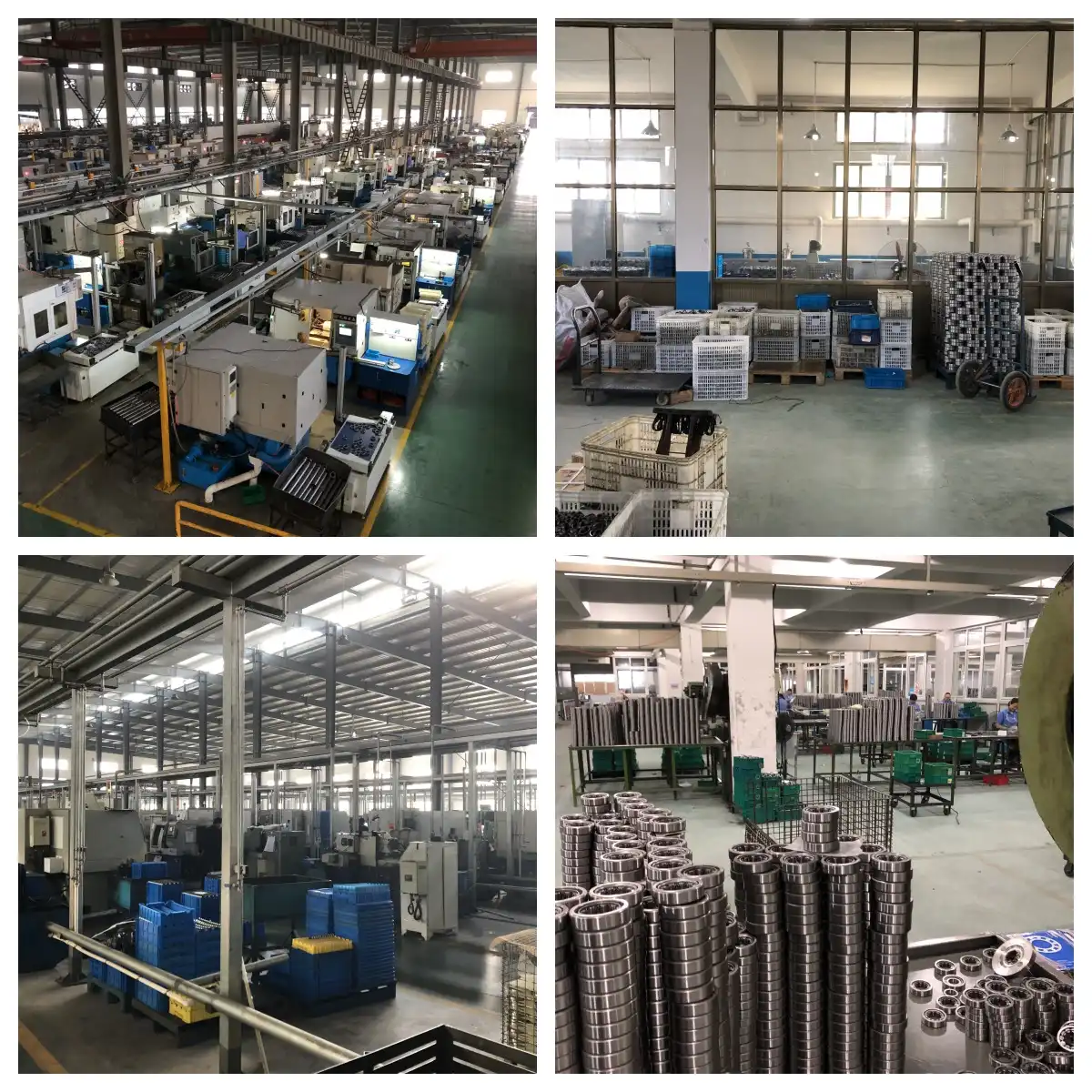
Any 30305 provider worth their salt should be certified by both ISO 9001 and IATF 16949. Controlling the manufacturing process, preventing defects, and improving all the time are governed by these standards. This is very important for OEMs that can't have field breakdowns. ATLYC, formed in 2010 and running six production workshops with 120 skilled workers, carries both certifications and serves customers across the US, Germany, South Korea, and Turkey.
Supplier Reliability and Lead Times
Consistent wait time is just as important as unit price when buying in bulk. When comparing suppliers, those who make tapered roller bearings exclusively are more likely to offer shorter and more reliable delivery windows than those who put together parts from other companies. Find out from your supplier whether they keep finished goods in stock or make them when you order them before you sign a contract.
Authenticity and Counterfeit Risk
It is known that fake bearings are a problem in the global business-to-business market. Buying from the manufacturer or a verified distributor is the safest way to protect yourself. As part of your new source-checking process, make sure they give you material certificates and vibration test results (data from an Anderon meter).
Comparing Tapered Roller Bearing 30305 With Similar Models for Procurement Decisions
To make a procurement decision, you need to be able to clearly compare dimensions and performance. The table below shows how the 30305 stacks up against other models in the same series.
| Model | Bore (mm) | OD (mm) | Width (mm) | Cr (kN) | Best Use Case |
|---|---|---|---|---|---|
| 30304 | 20 | 52 | 16.25 | ~33.5 | Light-duty gearboxes |
| 30305 | 25 | 62 | 18.25 | ~46.5 | Medium-heavy combined loads |
| 30306 | 30 | 72 | 20.75 | ~57.0 | Heavy industrial drives |
| 32305 | 25 | 62 | 25.25 | ~52.0 | High axial thrust applications |
When to Choose 30305 Over 30304
The 30305 can handle 39% more dynamic load than the 30304, but both have the same application size. If builders want to make a current platform handle more torque without changing the shaft diameter, often the easiest way to do it is to switch from a 30304 to a 30305.
When 30306 or 32305 Is More Appropriate
The 30306 gives you more space if your application needs to handle heavy radial loads for a long time with little axial thrust. The 32305's wider width gives it an edge if the design needs strong thrust in both directions in a small housing. For most combined-load situations, the 30305 is in the best range between these two.
Procurement Guide: Buying Tapered Roller Bearing 30305 Online and In Bulk
When looking for a lot of metric tapered roller bearings, the process should always start with technical information, including the Tapered Roller Bearing 30305, not just price requests.
What to Include in Your Inquiry
Indicate the tolerance class (Normal or P6), the type of lubrication needed, the amount needed, and any special conditions about the environment, like the temperature range or the amount of contamination that will be present. Sending full specs up front cuts down on back-and-forth and speeds up the process of getting accurate quotes from providers.
Payment, Shipping, and Lead Time Expectations
Standard mass orders of the 30305 from verified makers usually have wait times of 15 to 30 days, though this can change based on the number of orders and the amount of stock on hand. Before making the final payment, make sure you have a confirmed output plan and packing list. For jobs that need to be done quickly, check to see if partial shipment is possible.
Evaluating Bulk Pricing Structures
Prices for bulk items should change based on the amount bought. Ask for different prices for 500, 1,000, and 5,000 units. To find the most cost-effective buying cycle, compare this to how much you expect to use each quarter.

Conclusion
The 30305 bearing is used in heavy-load situations because it has a logarithmic raceway profile, is made of high-quality GCr15 steel, and is designed to handle both axial and radial stress. Because it meets ISO 355 and DIN 720, the Tapered Roller Bearing 30305 can be used anywhere in the world. This bearing has a consistent service life when bought from a qualified, traceable seller, whether it's for a car's engine, farm equipment, or an industrial conveyor system.
FAQ
How does the 30305 differ from the 30205 bearing?
They both have a 25 mm bore, but the 30305 is wider (18.25 mm vs. 16.25 mm) and has a bigger outer diameter (62 mm vs. 52 mm).
Is preload required during 30305 installation?
Yes. How well something works depends on how well you set the preload or endplay. Too loose leads to wear and vibration, while too tight creates too much heat and speeds up fatigue.
Can the 30305 handle temperatures above 120°C continuously?
Up to 120°C, standard GCr15 bearings don't change size. For long-term use above 150°C, heat stabilization treatments (with designation codes S0–S4) and high-temperature grease are needed to keep the dimensions from changing and the preload from being lost.
What is the most common failure mode?
Spalling of the inner or outer track due to not enough greasing or the wrong setting of the preload is the most common failure type. Oil analysis and eye inspection of the raceway surface on a regular basis help find early signs of wear and tear.
Are cups and cones interchangeable between brands?
ISO standards set the limits of measurements that make it possible for brands to use the same full system. But it's not a good idea to mix cups and cones from different makers because the internal shape, contact angle limits, and roller profiling may be different.
Get Your 30305 Tapered Roller Bearing Quote from ATLYC Today
ATLYC has been selling high-precision tapered roller bearings to OEMs and wholesalers in the US, Germany, South Korea, and other places since 2010. We are a 30305 tapered roller bearing maker with six manufacturing units that are ISO 9001 and IATF 16949 approved. We back up every shipment with full dimensional inspection records and vibration test data. Our engineering team will get back to you with a verified quote within one business day if you send your technical specs and goal number to auto@lyautobearing.com.
References
1. Harris, T. A., & Kotzalas, M. N. — Essential Concepts of Bearing Technology (Rolling Bearing Analysis, 5th Edition), Taylor & Francis, 2006.
2. ISO 355:2019 — Rolling Bearings — Tapered Roller Bearings — Boundary Dimensions and Series Designations, International Organization for Standardization, 2019.
3. Zaretsky, E. V. — STLE Life Factors for Rolling Bearings, Society of Tribologists and Lubrication Engineers, 1992.
4. SKF Group — SKF Rolling Bearings Catalogue, PUB BU/P1 10000/2 EN, SKF, 2018.
5. ASTM A295/A295M — Standard Specification for High-Carbon Anti-Friction Bearing Steel, ASTM International, 2014.
6. Hamrock, B. J., Schmid, S. R., & Jacobson, B. O. — Fundamentals of Machine Elements, McGraw-Hill, 2005.
Learn about our latest products and discounts through SMS or email