- English
- French
- German
- Portuguese
- Spanish
- Russian
- Japanese
- Korean
- Arabic
- Greek
- German
- Turkish
- Italian
- Danish
- Romanian
- Indonesian
- Czech
- Afrikaans
- Swedish
- Polish
- Basque
- Catalan
- Esperanto
- Hindi
- Lao
- Albanian
- Amharic
- Armenian
- Azerbaijani
- Belarusian
- Bengali
- Bosnian
- Bulgarian
- Cebuano
- Chichewa
- Corsican
- Croatian
- Dutch
- Estonian
- Filipino
- Finnish
- Frisian
- Galician
- Georgian
- Gujarati
- Haitian
- Hausa
- Hawaiian
- Hebrew
- Hmong
- Hungarian
- Icelandic
- Igbo
- Javanese
- Kannada
- Kazakh
- Khmer
- Kurdish
- Kyrgyz
- Latin
- Latvian
- Lithuanian
- Luxembou..
- Macedonian
- Malagasy
- Malay
- Malayalam
- Maltese
- Maori
- Marathi
- Mongolian
- Burmese
- Nepali
- Norwegian
- Pashto
- Persian
- Punjabi
- Serbian
- Sesotho
- Sinhala
- Slovak
- Slovenian
- Somali
- Samoan
- Scots Gaelic
- Shona
- Sindhi
- Sundanese
- Swahili
- Tajik
- Tamil
- Telugu
- Thai
- Ukrainian
- Urdu
- Uzbek
- Vietnamese
- Welsh
- Xhosa
- Yiddish
- Yoruba
- Zulu
Which Is Better: CRBS Crossed Roller Bearings or CRBH?
Choosing between CRBS and CRBH crossed roller bearings depends entirely on your operational environment and performance requirements. CRBS Crossed Roller Bearings excel in harsh, contaminated conditions—delivering IP65-rated protection through dual-layer sealing with NBR inner seals and stainless steel dust covers. Their nitrided raceways and pre-filled high-temperature grease enable 12,000-hour maintenance intervals, making them ideal for outdoor robots, marine equipment, and food processing machinery. CRBH bearings, conversely, prioritize ultra-high precision and compact dimensions for clean-room environments like semiconductor manufacturing and medical imaging equipment. If your machinery faces moisture, dust, or corrosive media, CRBS provides unmatched environmental resilience while maintaining rotational accuracy.
Understanding CRBS and CRBH Crossed Roller Bearings
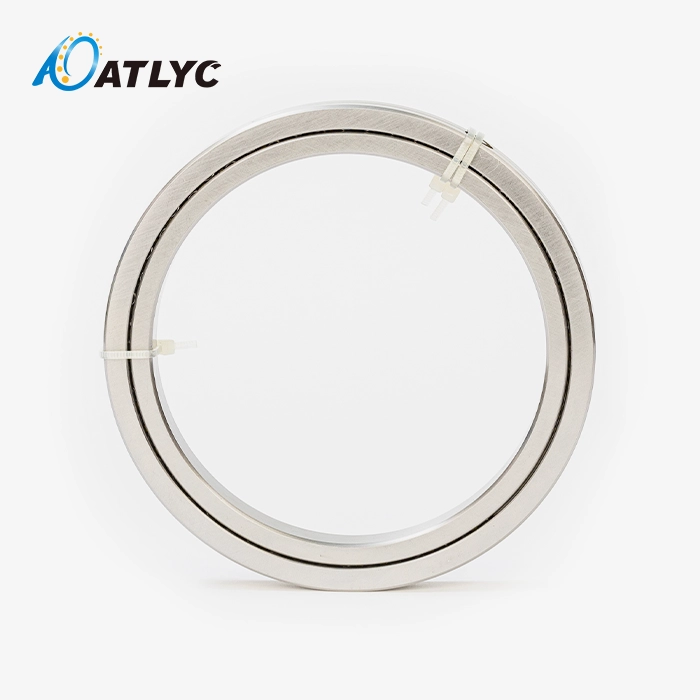
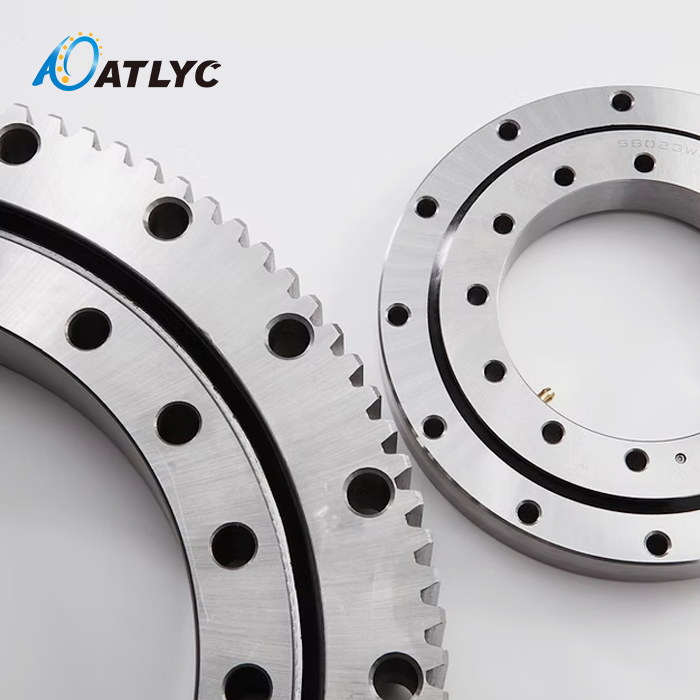
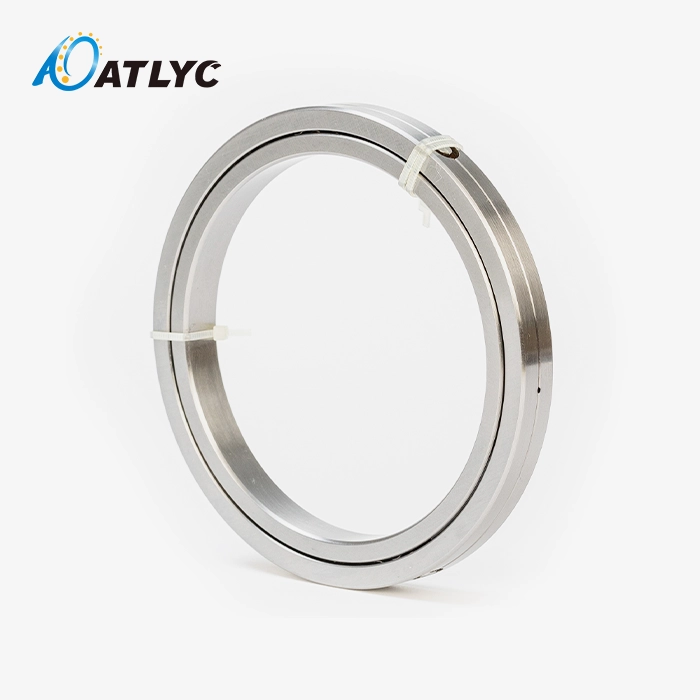
Crossed roller bearings are a special kind of bearing that can handle radial, axial, and moment loads all at the same time while taking up little space. Both CRBS and CRBH types use circular rollers that are placed at 90-degree angles to each other between V-groove raceways. This orthogonal arrangement gets rid of the need for multiple bearing parts, making the system simpler and lighter while providing superior stiffness through line contact instead of point contact.
Core Design Philosophy of CRBS Series
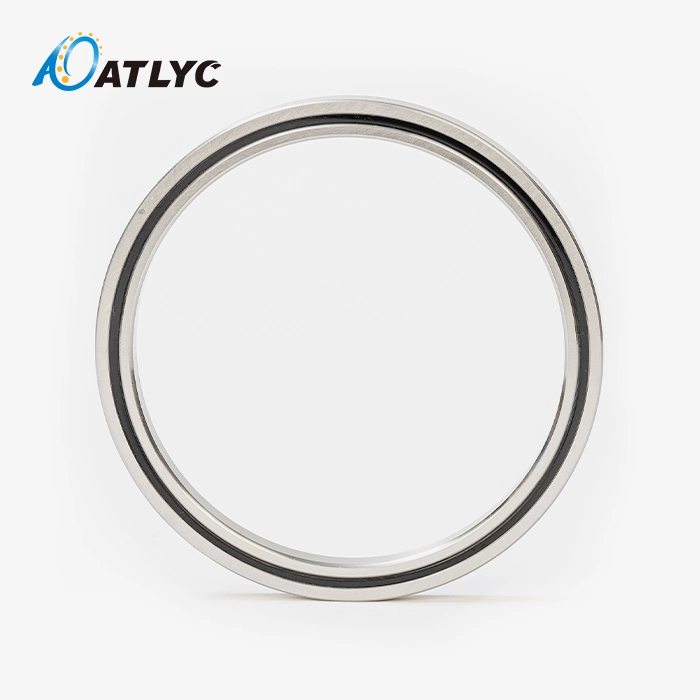
The CRBS series fills a very important need in the bearing market: it offers precise performance even when the environment is tough. Each unit has a composite sealing structure with an inner lip seal made of nitrile rubber (NBR) and an outer dust cover made of stainless steel. This two-barrier system protects to IP65 standards, keeping water, sharp particles, and chemicals that eat away at metal from getting in. Nitriding the sides of raceways makes a hard layer that doesn't rust or wear away, even when they're exposed to rough media.
CRBH Series Design Characteristics
When it comes to CRBH bearings, small dimensions and very tight standards are very important. Because they are thin, they can be used in places where space is limited, like robotic joint assemblies and medical scanning gantries. The design, which can be open or lightly sealed, reduces internal friction, which makes spinning smoother and placement more accurate in controlled settings.
Material Composition Differences
Material engineering is very different between these two series. CRBS units use alloy steels that have been treated with nitriding processes, which form a surface layer that is about 0.2 to 0.5 mm thick and hardened through diffusion. This process raises the surface hardness to 58–62 HRC while keeping the core tough enough to handle shock loads. The stainless steel dust covers don't rust in wet or salty environments, so they keep things from getting dirty from rust. CRBH bearings use through-hardened bearing steels that meet ISO 683-17 standards. T
Load Handling Capabilities
Load capacity ratings show the limits of what can be used in real life. CRBS bearings can only handle a small amount of load because they have to include a seal. Because of seal friction and internal clearance adjustments, they can usually handle 10-15% less static load than equivalent open designs. Dynamic load values are still competitive because the sealed environment keeps out gritty particles that speed up wear. By carefully controlling the preload, CRBH units make the contact stress distribution as even as possible, allowing for better dynamic load ratings in clean settings. Because they can handle moment loads, they are especially useful in extended applications, like robotic arms, where the angle of bending needs to stay within arc-seconds.
Table 1: Technical Specification Comparison
| Parameter | CRBS Series | CRBH Series |
|---|---|---|
| Sealing Type | Cover made of both NBR and steel (IP65) | Open or light seal |
| Surface Treatment | Nitrided Track (58–62 HRC) | Made through hardening (60–64 HRC) |
| Maintenance Interval | 12,000 hours of use | 3,000 to 5,000 hours (re-greasing) |
| Operating Temperature | -20°C to +120°C | -10°C to +80°C |
| Corrosion Resistance | Great (Marine/Chemical) | Moderate (In a controlled setting) |
These requirements are based on production standards from ISO 9001 and IATF 16949-approved producers. This makes sure that the quality of each batch of products is the same. Since 2015, our facility has kept these certifications by using statistical process control to keep defect rates below 50 PPM.
Performance Comparison: CRBS vs CRBH Bearings
When judging performance, it's not enough to look at lab specs; you also need to look at how things work in the real world. The total cost of ownership changes over the 5–15-year lifetime of an item based on how long it lasts, how accurate it is, and how much upkeep it needs.
Load Capacity Analysis
CRBS Crossed Roller Bearings can handle static loads of 15 to 85 kN, based on the bore width. This is enough for most industrial machinery and processing equipment. The sealed design spreads stress over a little wider contact zones, which makes up for the changes that need to be made to the clearances to fit the seal thickness. More telling are the dynamic load ratings. For example, a 50mm bore CRBS unit can take about 18 kN of dynamic load, which is enough for continued running at moderate speeds. CRBH bearings of the same size can handle 22 kN of dynamic load thanks to better preload and tighter tolerances. However, this benefit goes away quickly if dirt or dust gets into the bearing raceway.
Durability Under Industrial Conditions
Field data from car body shops shows how important it is to protect the environment in the real world. Even after being exposed to volatile solvents and atomized paint particles, CRBS units placed in spray booth rotating fixtures usually work for more than 18 months without losing any of their performance. Comparable CRBH bearings used in similar situations need to be replaced every 6 to 9 months because the seals wear out and the insides get dirty. The nitrided layer on the surface of CRBS raceways protects them from chemical etching, which makes micropitting happen in regular through-hardened steels. This means that wear trends can be predicted and unexpected downtime is less likely to happen.
Rotational Accuracy and Friction Characteristics
Applications for precise positioning show subtle differences. CRBH bearings can start with as little as 0.8 to 1.2 Nm of torque for a 60mm bore unit, and their working friction stays pretty much the same at all speeds. In servo-driven situations where motor size and heat production are important, this low friction is very important. Due to seal drag and grease shearing, CRBS units have a little more friction, which causes them to have a starting torque of about 1.5 to 2.0 Nm. However, friction stays the same across a range of temperatures and working hours because sealed lubricant stops viscosity loss due to contamination. As a result, CRBH is more accurate in the short term in clean rooms, while CRBS is accurate enough for long amounts of time in harsh settings.
Noise and Vibration Levels
Both operator ease and machine accuracy are affected by how well the acoustics work. When everything is perfect, CRBH bearings make very little noise—usually less than 55 dB(A) at full speed—because their perfectly matched wheels spread out the load evenly without any micro-slip. CRBS units make a little more noise—58 to 62 dB(A)—mostly from seal contact and grease stirring. When noise levels in factories are above 70 dB(A), the change is almost unnoticeable. When bearings work within certain load zones, measures of vibration acceleration show similar values (0.8–1.2 m/s²). This shows that sealing structures don't affect the basic dynamic balance.
Maintenance Requirements
Maintenance procedures are very different from one another. CRBS bearings come pre-oiled with synthetic grease that is designed to last for 12,000 hours, so most uses don't need to be oiled again. Periodic inspection checks the integrity of the seals and the torque of the mounting bolts. Depending on the load and speed, CRBH bearings need to be re-oiled every 3,000 to 5,000 hours.
Cost and Procurement Considerations
Total cost analysis looks at more than just the price per unit. It also looks at things like installation labor, maintenance costs, and the chance of downtime. To make sure uniform quality and quick expert help, procurement teams must look at both the skills of the supplier and the specifications of the parts.
Initial Purchase Price Analysis
CRBS Crossed Roller Bearings are more expensive than equivalent CRBH units—usually 30–45 percent more—because they have a more complicated sealing system and surface treatment. A CRBS unit with a 70mm bore could cost between $180 and 240 USD, while a CRBH unit with the same bore could cost between $120 and 160 USD.
Hidden Installation Expenses
Project costs are affected by how hard the installation is. To mount CRBH bearings accurately and change the preload in a controlled way, trained workers and special tools like torque wrenches with angle measuring capabilities are often needed. If the setup isn't right, the part will fail early or have too much friction, which will cost money to fix. Because there are internal clearances for thermal expansion and minor misalignment, CRBS units can handle wider installation tolerances.
Maintenance Cost Projections
Re-lubricating CRBH bearings costs money for both the materials and the people who do the work. About 2 to 5 grams of special grease ($3 to $8 per bearing) and 15 to 30 minutes of technician time are needed for each service cycle. If you add up the prices of maintaining hundreds of bearings in a factory, you get to $8,000 to $15,000 a year. CRBS units get rid of these ongoing costs and only need to be inspected visually every so often.
Supplier Evaluation Criteria
When choosing bearing providers, you need to look at more than just the catalog specs. Lead times depend on how much manufacturing capacity a supplier has. Suppliers with dedicated crossed roller production lines can keep delivery schedules of 4 to 6 weeks, while facilities that use shared equipment need 10 to 14 weeks. Quality certification is very important. Certifications from ISO 9001 and IATF 16949 show that statistical process control and tracking systems are well-established.
Lead Time and Inventory Management
When bought from well-known companies that keep their inventory deep, standard CRBS and CRBH sizes usually ship from stock within one to two weeks. Custom sizes or materials make lead times 6 to 10 weeks longer, which is because of the time it takes to prepare the tools and make sure the quality is good. Strategic buyers work out stocking deals for high-volume uses, which protects prices and ensures supply. Our company keeps $1.2 million worth of finished goods in stock across more than 350 bearing SKUs. This lets us respond quickly to customer needs while keeping their working capital commitments as low as possible.
Table 2: Five-Year Total Cost of Ownership
| Cost Category | CRBS (Per Unit) | CRBH (Per Unit) |
|---|---|---|
| First Purchase | $210 | $145 |
| Installation Work | $35 | $55 |
| Fixing things (5 years) | $0 | $120 |
| Rate of Replacement | 1.0x | 1.8x |
| Risk of Downtime | Low | Moderate |
| Total 5-Year Cost | $245 | $406 |
For this study, moderate contamination exposure and normal workplace job cycles are taken into account. By getting rid of failures caused by contamination, clean rooms move the economy toward CRBH.
Applications and Suitability in Various Industries
The best bearing choice is based on the needs of the industry. Conditions of the environment, the need for accuracy, and the ease of entry for maintenance are very different across sectors. This is why application understanding is so important for successful specification.
Robotics and Automation Equipment
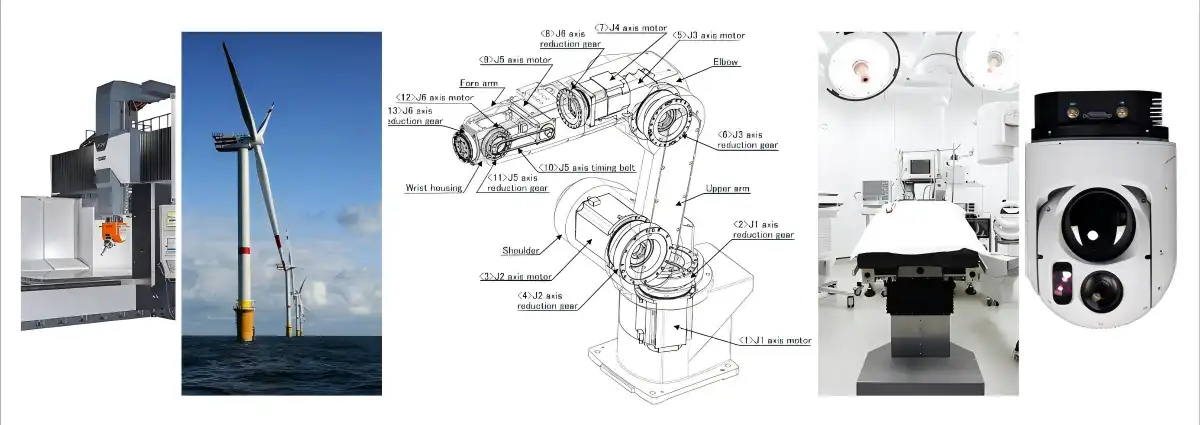
When collaborative robots work in shared human workspaces, they face a variety of environmental problems. Metal dust and cutting fluids can get into bearings when they are being put together, and temperature changes and moisture can happen when they are being packaged. In these situations, CRBS bearings protect joint actuators and keep placement accuracy within ±0.05mm even when they are exposed to contamination. Because the design is sealed, gritty particles can't get in and damage the raceways, which would cause more backlash.
Industrial Machinery Applications
Rotary tables for CNC machine tools need to be very rigid and accurate. In these situations, CRBH bearings support the main spinning and can handle cutting forces, object weight, and moment loads all at the same time, while keeping the indexing accuracy within 5 arc-seconds. The open form makes it easier to use oil mist lubrication, which is popular in machine tool settings. Food processing machines like slicers, conveyor pivots, and packing stations use CRBS units because they need to be able to clean their bearings with high-pressure spray and chemicals that kill germs. The IP65 sealing keeps water and lubricant from getting in, which would lower food safety standards.
Marine and Offshore Equipment
CRBS Crossed Roller Bearings with marine-grade seals and grease that stops corrosion are used in ship cranes, winches, and positioning systems. Field installations on offshore sites in the Middle East show that they can work reliably for more than three years without needing to be overhauled, even though they are exposed to constant salt spray and high temperatures. Standard bearing housings can get pitting and crevice corrosion, but the stainless steel dust covers don't. Naval engineers use CRBS for tasks that need to be precise and resistant to weather damage, willing to give up a little weight in exchange for much higher reliability.
Medical and Laboratory Equipment
Machines used for diagnostic imaging, like CT scanners, need to be very quiet and very focused. CRBH bearings allow the gantry to rotate smoothly with little shaking, which protects the picture and the patient's comfort. The small cross-section lets designers make the bore diameter as big as possible for wire routing while keeping the system area as small as possible. In controlled indoor settings, CRBH accuracy is also useful for laboratory centrifuges and automatic sample handlers. Medical device makers like the consistent quality that comes from IATF 16949 certified suppliers because they know that if a bearing fails, it could put patients at risk and make it harder to follow the rules.
Making the Right Choice: Factors to Consider When Selecting Between CRBS and CRBH
When choosing a bearing, you have to weigh different factors, such as protecting the environment versus accuracy, starting cost versus long-term costs, and supplier skills versus technical requirements. A structured decision framework makes these trade-offs clearer.
Environmental Assessment
Start by giving some details about your working surroundings. Find out how contaminated the air is by counting the particles in the air, the humidity levels, the types of chemicals that are present, and how much the temperature changes. Applications that will be exposed to environments with an IP54 grade or higher naturally choose CRBS. This kind of clean manufacturing environment (ISO Class 7) or better works well with CRBH designs. When situations are in between, it's not as clear-cut what to do because cost-benefit analysis has to weigh the risk of pollution against price increases.
Performance Requirements
List the exact load limits, speed ranges, and precision standards that you need. Instead of peak loads, use actual duty cycles to figure out safety factors. Most industrial automation loads can be handled by CRBS, but CRBH's higher dynamic rates are better for tasks that use close to 80% of its rated capacity. When sub-arc-minute accuracy is needed for precise positioning, CRBH is the better choice in clean settings. On the other hand, CRBS can keep up adequate precision (5–10 arc-minutes) in a wider range of situations.
Maintenance Infrastructure
Check out how well your building can be maintained. Cost-effectively meet CRBH standards can be done by companies with skilled workers, relubrication systems, and preventive maintenance programs. The maintenance-free operation of CRBS works better in places with few technical staff, remote installations, or high-volume production lines. Usually, equipment needs to be overhauled every year or every other year, so the 12,000-hour service gap fits in with planned breaks.
Supplier Partnership Considerations
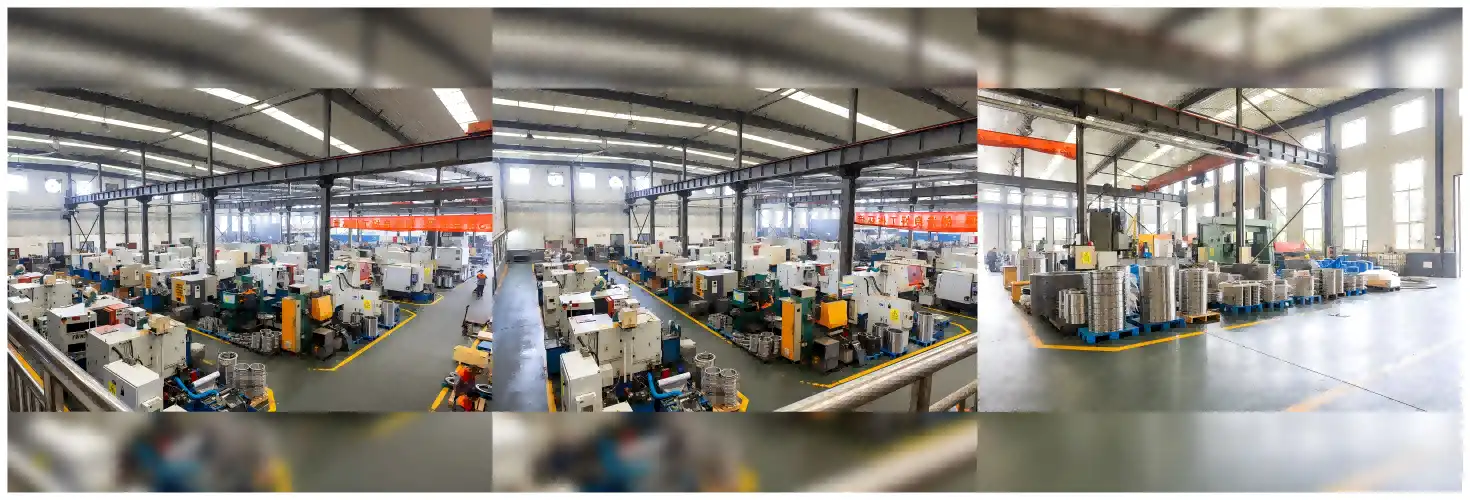
Often, the quality of the technical help is more important than small changes in the specifications. Check out the technical help that the provider offers. Do they offer help with application calculations, installation training, and failure analysis? Our team has six degreed engineers with an average of 12 years of experience who can help with difficult tasks. Our six production workshops can handle orders of 50 to 50,000 pieces with the same lead times. This means that we can always meet delivery dates. Quality certifications give people confidence, but if you can, you should check out the facilities in person to see the real process controls and testing equipment.
Cost-Performance Optimization
Make a choice matrix that takes into account the original cost, the expected lifetime, the risk of downtime, and the upkeep costs. Set weights based on what's most important to your organization. Even though it costs more at first, companies with production lines that are open 24 hours a day, seven days a week put a lot of weight on downtime risk. Job shops with flexible schedules can handle maintenance breaks better, which makes CRBH a good investment. Find the "break-even" points: at what amount of contamination or replacement regularity does CRBS start to cost less than CRBH?
Conclusion
CRBH or CRBS Crossed Roller Bearings should be chosen based on how well their bearing powers fit the needs of the application. CRBS offers the best environmental protection thanks to its built-in sealing, longer upkeep intervals, and construction that doesn't rust. It's perfect for outdoor equipment, washdown areas, and dirty industrial settings. For clean-room uses that need very precise positioning, CRBH offers higher accuracy, smaller size, and less friction. In general, neither design is better than the other; they both do a good job of meeting specific operational needs. For a specification to work, the surroundings, performance needs, and support infrastructure must all be honestly evaluated. Working with skilled manufacturers who have ISO 9001 and IATF 16949 certifications guarantees stable quality and quick technical help for the entire lifecycle of your equipment.
FAQ
How do service lifespans compare between CRBS and CRBH bearings?
CRBS bearings usually last between 15,000 and 25,000 hours of use in dirty environments, which is a lot longer than CRBH units' average of 8,000 to 12,000 hours in the same conditions because they are more likely to get dirty. When kept clean and under control, CRBH can last for 20,000 to 30,000 hours. Actual life varies on how much load is on it, how fast it is being used, and how well it is being maintained.
Can CRBS and CRBH bearings be interchanged in existing equipment?
When the bore, outer diameter, and width are all the same, the parts can be physically swapped out. However, functional substitution needs to be carefully considered. CRBS units might have a little more friction and power, which could change the size of the motor and how the control system is tuned. The sealed design makes it impossible to remove the extra sealing part. When CRBH substitution is done in contaminated areas, it could fail quickly. Before switching bearing types, talk to bearing suppliers for advice that is relevant to your purpose.
What maintenance practices extend bearing reliability?
Aside from checking the fastening torque and seals every 12,000 hours, CRBS units don't need much upkeep. Every 3,000 to 5,000 hours, CRBH bearings need to be re-oiled with a certain type of grease, and the old grease must be fully flushed out. Keep an eye on the working temperature and shaking. If either goes up by 10°C or 50%, that means problems are starting to happen and need to be looked into right away.
Partner with ATLYC for Premium Crossed Roller Bearing Solutions
ATLYC is a trustworthy company that makes CRBS Crossed Roller Bearings. They have been making fine products for 15 years and have quality systems that are ISO 9001 and IATF 16949 approved. Our research team offers full application support to help you choose the best bearings for your unique needs in terms of performance and environmental factors. We keep lead times and quality the same for all orders, from small prototypes to large production runs, thanks to our six specialized production workshops and 120 skilled workers. You can email our technical experts at auto@lyautobearing.com to talk about your application needs, get detailed technical datasheets, or get competitive quotes. We promise a reliable supply and quick customer service.
References
1. Harris, T.A., and Kotzalas, M.N. (2006). Advanced Concepts of Bearing Technology: Rolling Bearing Analysis, 5th Edition. CRC Press.
2. ISO 5593:1984. Rolling Bearings — Vocabulary. International Organization for Standardization.
3. Warda, B., and Chudzik, A. (2014). "Fatigue Life Prediction of the Radial Roller Bearing with the Correction of Roller Generators." International Journal of Mechanical Sciences, 89, 299-310.
4. SKF Group. (2018). Rolling Bearings Catalogue: Technical Product Information. SKF Publication PUB BU/P1 10000/3 EN.
5. Nguyen-Schäfer, H. (2015). Rotordynamics of Automotive Turbochargers, 2nd Edition. Springer International Publishing.
6. American Bearing Manufacturers Association. (2020). Load Ratings and Fatigue Life for Ball Bearings: ANSI/ABMA Standard 9-1990 (R2020). ABMA Standards Committee.
Learn about our latest products and discounts through SMS or email