- English
- French
- German
- Portuguese
- Spanish
- Russian
- Japanese
- Korean
- Arabic
- Greek
- German
- Turkish
- Italian
- Danish
- Romanian
- Indonesian
- Czech
- Afrikaans
- Swedish
- Polish
- Basque
- Catalan
- Esperanto
- Hindi
- Lao
- Albanian
- Amharic
- Armenian
- Azerbaijani
- Belarusian
- Bengali
- Bosnian
- Bulgarian
- Cebuano
- Chichewa
- Corsican
- Croatian
- Dutch
- Estonian
- Filipino
- Finnish
- Frisian
- Galician
- Georgian
- Gujarati
- Haitian
- Hausa
- Hawaiian
- Hebrew
- Hmong
- Hungarian
- Icelandic
- Igbo
- Javanese
- Kannada
- Kazakh
- Khmer
- Kurdish
- Kyrgyz
- Latin
- Latvian
- Lithuanian
- Luxembou..
- Macedonian
- Malagasy
- Malay
- Malayalam
- Maltese
- Maori
- Marathi
- Mongolian
- Burmese
- Nepali
- Norwegian
- Pashto
- Persian
- Punjabi
- Serbian
- Sesotho
- Sinhala
- Slovak
- Slovenian
- Somali
- Samoan
- Scots Gaelic
- Shona
- Sindhi
- Sundanese
- Swahili
- Tajik
- Tamil
- Telugu
- Thai
- Ukrainian
- Urdu
- Uzbek
- Vietnamese
- Welsh
- Xhosa
- Yiddish
- Yoruba
- Zulu
Where Are RB Cross Roller Bearing Solutions Used?
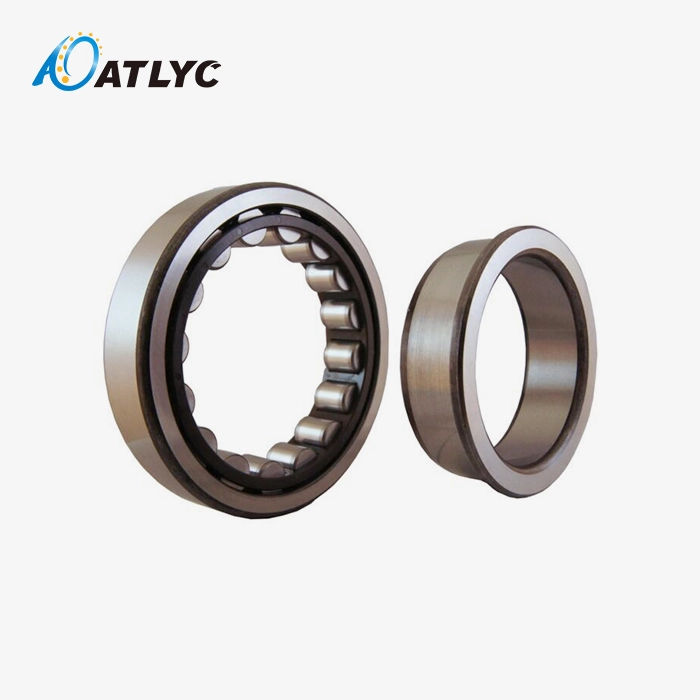
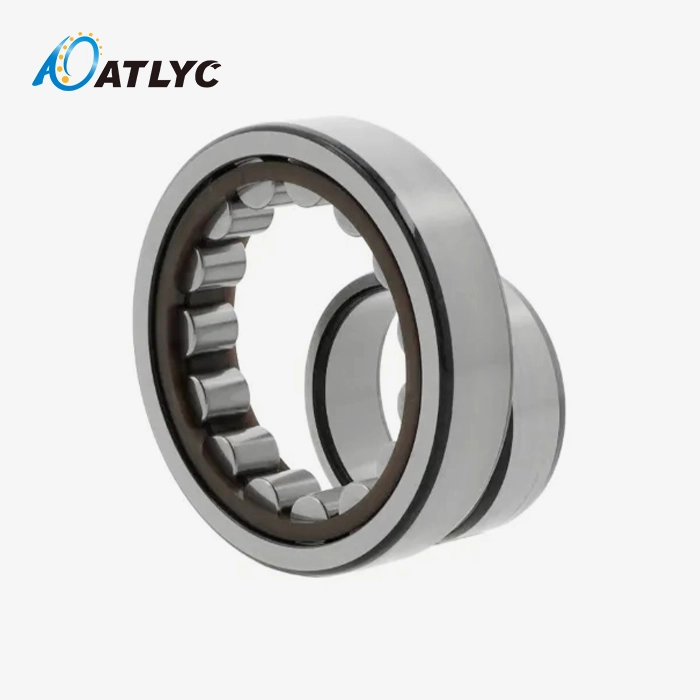
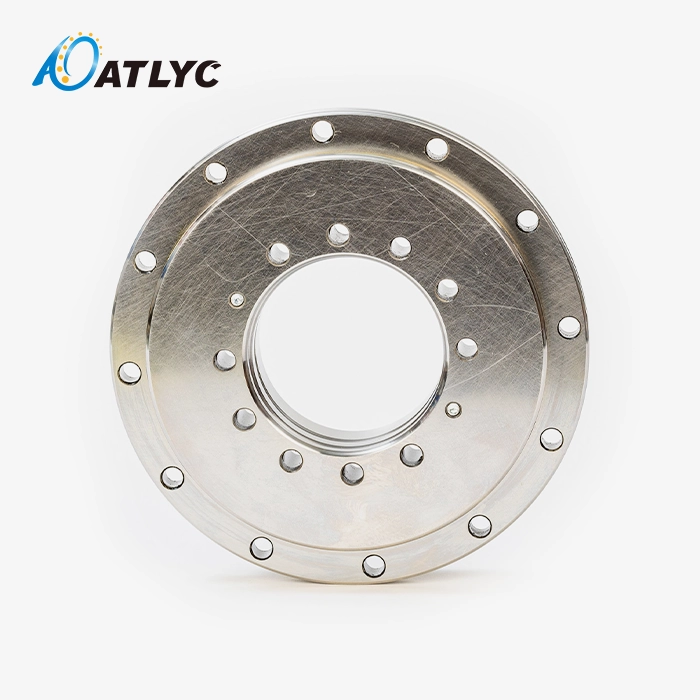
RB Cross Roller Bearings are high-precision rotary elements, with cylindrical rollers stacked at 90 degrees in a V-shaped raceway. A single bearing may accommodate radial, axial, and moment loads concurrently. The bearings range in size from 20mm to 1,100mm I.D. and 70mm to 1,500mm O.D. They include inner and outer ring integrity and an outer ring plug design. They are extensively used in industrial robot joints, CNC rotary tables, manipulator arms, medical imaging equipment, measurement instruments, IC production devices, etc., where compact space and great positional precision are needed simultaneously.
Understanding RB Cross Roller Bearings and Their Design Features
Crossed-Roller Configuration
What sets an RB Cross Roller Bearing apart? It’s the alternating roller design. The precision-ground raceways are at perfect 90-degree angles, and the cylindrical rollers are side-by-side and do not touch. This straight line arrangement allows each roller to hit the racetrack in a complete line. This distributes the stresses uniformly in all directions across the full bearing system and prevents one location from having a build-up of stress, which would reduce its life.
Integral Ring Design and Plug System
The structural integrity of the inner ring and the outer ring is maintained for the whole length of the assembly. When assembled, the outer ring has a stopper built in that covers the roller loading hole. This plug keeps the lubricant in and the rollers in place during installation and helps maintain the internal geometry constant. The integrated inner ring is designed in such a way that the inner ring is precisely movable, which is critical for cases where the housing is stationary and the shaft rotates.
Material and Accuracy Grades
The RB series bearing is composed of GCr15 and GCr15SiMn steel. Both these steels have excellent surface hardness after heating, which implies they have extended life under cyclic stresses.
| Specification | Range |
|---|---|
| Inner Diameter | 20 – 1,100 mm |
| Outer Diameter | 70 – 1,500 mm |
| Width | 12 – 110 mm |
| Material | GCr15, GCr15SiMn |
| Accuracy Grades | P6, P0, P5, P4, P2 |
Core Application Areas of RB Cross Roller Bearings
RB type bearings are employed in many different sectors. Each installation takes advantage of the bearing’s unique capability to sustain complicated combination loads within a tiny axial environment. This is difficult to perform with standard bearing configurations.
Industrial Robotics and Automation
In 6-axis robot arms, the waist and pivot joints are subjected to fast acceleration, severe moment loads, and often changing orientations. A crossed roller bearing at these joints prevents the end-effector from moving and maintains the position precision to within a few thousandths of a millimeter. Research on shared robot design often reveals that the high stiffness of rotary joints is critical for route accuracy. The RB structure solves this purpose without adding a lot of assembly height.
CNC Machining Centers and Precision Rotary Tables
Machine tool spindles and rotating tables require minimal radial and axial runouts to keep sizes within limits during cutting. The line contact design of an RB Cross Roller Bearing is rigid enough to absorb the cutting forces from different directions without bending the table. This is why RB-type slewing arrangements are commonly employed as the principal rotary support for precision rotary tables used in five-axis machine centers.
Medical Devices and Measuring Instruments
CT scanner gantries spin heavy detector devices at regulated speeds. Vibrations immediately impair image quality. Coordinate measuring tools (CMMs) and IC lithography stages need nanoscale-level precision. Low coefficient of friction and excellent runout precision make RB crossed roller bearings the bearing of choice for these applications. In such cases, any motion or uneven rotation would cause measuring or imaging problems.
Advantages of RB Cross Roller Bearings for Global B2B Buyers
When you purchase precise bearings, you are making selections that are more than just unit pricing. Here are the core performance advantages that directly impact company buyers’ total cost of ownership:
Single unit, multiple load capacity: One RB cross roller bearing substitutes for a pair of angular contact or tapered roller bearings, lowering housing complexity, assembly time, and total parts count. This consolidation leads to a smaller bill of materials and a simplified quality assessment at the assembly stage.
Energy-efficient low coefficient of friction: Optimized roller design and precision-ground raceways provide a low coefficient of friction, reducing drive motor size requirements and lowering heat production during continuous operating cycles.
Excellent runout precision: Precision grinding and strict quality control achieve radial and axial runout values within microns for P4/P2 grade parts, assuring continuous positional accuracy across lengthy production runs.
Long service life: Properly heat-treated and ground GCr15 and GCr15SiMn steel can endure cyclic loads without premature raceway fatigue, decreasing unexpected downtime and replacement frequency.
“All of these benefits are directly helping OEMs and equipment makers with lots of issues to be solved.” They need dependable bearing performance for large-volume manufacturing operations. “Over the life of a machine, the costs go down because parts need to be replaced less often and are easier to put together.
Comparing RB Cross Roller Bearings With Alternative Solutions
To choose the right type of bearing, you need to compare them fairly. Based on important buying criteria, the table below compares RB Cross Roller Bearings to common alternatives.
| Bearing Type | Multi-Load Capacity | Runout Accuracy | Space Requirement | Typical Application |
|---|---|---|---|---|
| RB Cross Roller | High (radial + axial + moment) | Very High | Compact | Robotics, rotary tables, medical |
| Angular Contact Ball | Moderate (paired required) | High | Larger (paired) | Spindles, gearboxes |
| Cylindrical Roller | Radial only | Moderate | Moderate | Heavy radial loads |
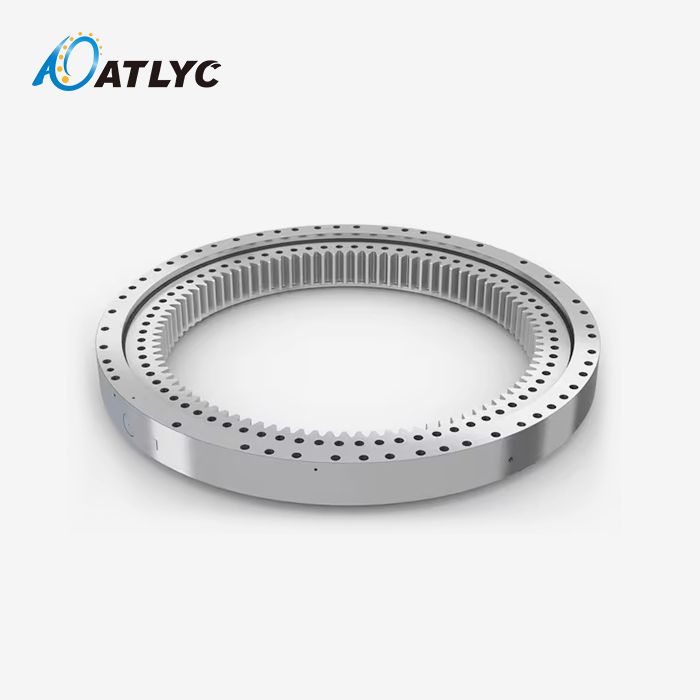
| Slewing Ring | High | Lower | Large | Cranes, turntables |
| Thrust Bearing | Axial only | Moderate | Moderate | Vertical shaft support |
To handle axial loads that go in both directions, angular contact ball bearings need to be placed in pairs. This makes the case longer and the preload adjustment more difficult. Slewing rings can handle big moment loads, but they aren't accurate enough for robot joints or measuring tools because they have a lot of runout. The RB design has a structural advantage that other kinds of bearings can't easily copy without a more complicated arrangement for uses that need all three types of load in a small area.
Procurement Insights for RB Cross Roller Bearings
When you get crossed roller bearings from a reliable manufacturer, there are a lot of technical and commercial problems to consider. The pricing is determined by the selected precision grade, material parameters, bearing diameter, and order quantity. Parts of grade P4 are more expensive than parts of grade P0, since more grinding passes and tighter checking restrictions are required. Bearings with an inner diameter larger than 400 mm consume more raw materials and require longer grinding machine cycles.
The lead times rely on the provider’s stock and capabilities. Standard sizes in P0 grade are often available in stock and ready to ship. Custom sizes, or parts in P4 or P2 grade, generally take 4 to 8 weeks to manufacture. Before you approve a supplier, ask for material certificates, dimensional inspection reports, and runout test data. This will assist you in preventing the receipt of large volumes of non-standard parts. The supplier is approved to ISO 9001 and IATF 16949, which means that there are quality control mechanisms in place and they are reviewed periodically.

Conclusion
In precision machinery, RB Cross Roller Bearings play a unique role: they can carry radial, axial, and moment loads all at the same time in a small space that no other type of bearing can match. Because they are made of GCr15/GCr15SiMn, have a crossed-roller shape, an integrated ring structure, and precision grades from P6 to P2, they are the best choice for robot joints, CNC rotary tables, medical imaging gantries, and IC production stages. When B2B procurement teams choose the right accuracy grade and work with a certified manufacturer, they lower the risk of not getting what they need and ensure that the equipment will work well for a long time.
FAQ
1. How long do RB cross roller bearings typically last in industrial service?
Service life depends on load, speed, lubrication, and installation accuracy. Under normal operating conditions with correct preload and scheduled re-lubrication, RB series bearings in robot joints or rotary tables commonly reach 20,000 hours or more before requiring replacement. Exceeding rated static load or running without adequate lubrication shortens life significantly.
2. Can a single RB bearing replace two angular contact bearings?
Yes. This is one of the primary design advantages. A single RB cross roller bearing handles radial, axial, and moment loads simultaneously, eliminating the need for paired angular contact or tapered roller setups. This simplifies housing design and removes the need for complex preload adjustment during assembly.
3. What lubrication does the RB series require?
Lithium-soap grease, such as Alvania EP2 or equivalent, is standard. Re-lubrication intervals depend on operating speed and temperature, but a 6–12 month schedule is typical for moderate duty cycles. The integral ring structure retains grease well between service intervals.
4. What accuracy grade should I specify for a CNC rotary table?
P5 or P4 grade is appropriate for CNC rotary tables in machining centers. P4 grade controls radial and axial runout within single-digit micron values, which supports the tight angular positioning tolerances expected in five-axis machining applications.
Partner with ATLYC for Your RB Cross Roller Bearing Supply
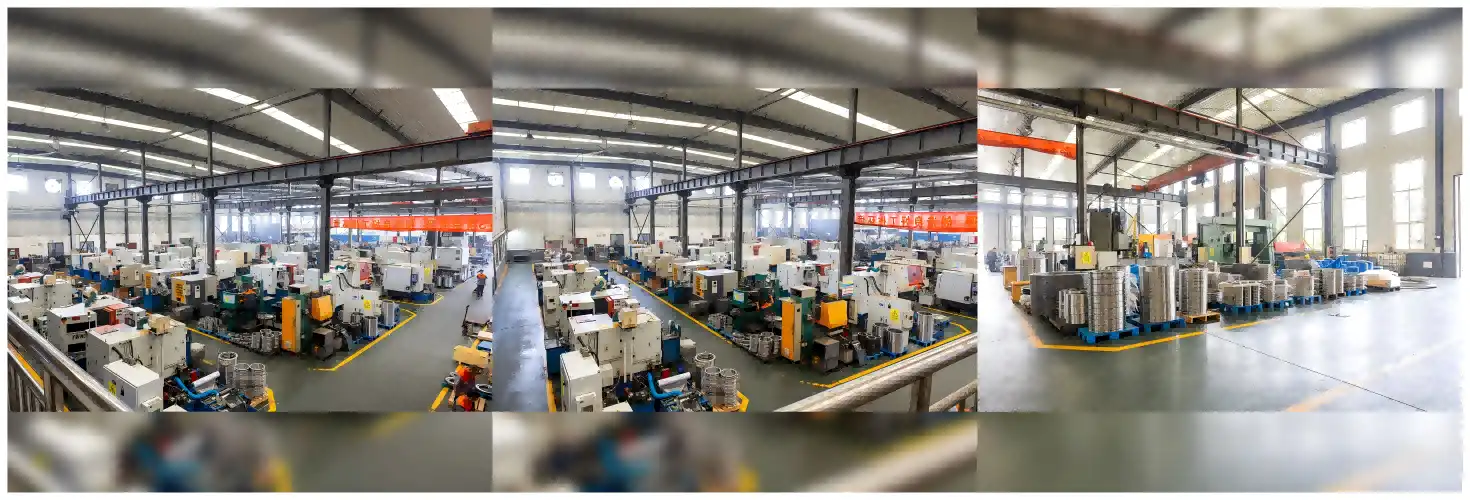
ATLYC, which stands for Luoyang Auto Bearing Co., Ltd., has been making precision bearings since 2010 in six production workshops with 120 trained workers. We sell checked RB Cross Roller Bearing products to people in the US, Germany, South Korea, and other places. Our products are certified by both ISO 9001 and IATF 16949. To get samples, dimensional data, or a custom quote from a reliable RB Cross Roller Bearing manufacturer, email our engineering team at auto@lyautobearing.com.
References
1. Harris, T. A., & Kotzalas, M. N. — Essential Concepts of Bearing Technology, Taylor & Francis, 2006.
2. Hamrock, B. J., Schmid, S. R., & Jacobson, B. O. — Fundamentals of Fluid Film Lubrication, Marcel Dekker, 2004.
3. ISO 492 — Rolling Bearings — Radial Bearings — Dimensional and Geometrical Tolerances, International Organization for Standardization, 2014.
4. NSK Ltd. — Rolling Bearing Technical Report: Precision Bearings for Machine Tools and Robots, NSK Technical Journal, 2018.
5. THK Co., Ltd. — Cross Roller Ring Technical Data and Application Guide, THK Engineering Reference, 2020.
6. American Bearing Manufacturers Association (ABMA) — ABMA Standard 20: Radial Bearings of Ball, Cylindrical Roller and Spherical Roller Types, ABMA, 2011.
Learn about our latest products and discounts through SMS or email