- English
- French
- German
- Portuguese
- Spanish
- Russian
- Japanese
- Korean
- Arabic
- Greek
- German
- Turkish
- Italian
- Danish
- Romanian
- Indonesian
- Czech
- Afrikaans
- Swedish
- Polish
- Basque
- Catalan
- Esperanto
- Hindi
- Lao
- Albanian
- Amharic
- Armenian
- Azerbaijani
- Belarusian
- Bengali
- Bosnian
- Bulgarian
- Cebuano
- Chichewa
- Corsican
- Croatian
- Dutch
- Estonian
- Filipino
- Finnish
- Frisian
- Galician
- Georgian
- Gujarati
- Haitian
- Hausa
- Hawaiian
- Hebrew
- Hmong
- Hungarian
- Icelandic
- Igbo
- Javanese
- Kannada
- Kazakh
- Khmer
- Kurdish
- Kyrgyz
- Latin
- Latvian
- Lithuanian
- Luxembou..
- Macedonian
- Malagasy
- Malay
- Malayalam
- Maltese
- Maori
- Marathi
- Mongolian
- Burmese
- Nepali
- Norwegian
- Pashto
- Persian
- Punjabi
- Serbian
- Sesotho
- Sinhala
- Slovak
- Slovenian
- Somali
- Samoan
- Scots Gaelic
- Shona
- Sindhi
- Sundanese
- Swahili
- Tajik
- Tamil
- Telugu
- Thai
- Ukrainian
- Urdu
- Uzbek
- Vietnamese
- Welsh
- Xhosa
- Yiddish
- Yoruba
- Zulu
Where to Buy Angular Ball Bearing 7014AC from OEM Suppliers
When searching for reliable sources to purchase the Angular Ball Bearing 7014AC, mid-to-large manufacturers and distributors should focus on certified OEM suppliers who meet ISO 9001 and IATF 16949 quality standards. This precision component—featuring a 70mm inner diameter, 110mm outer diameter, and 20mm width—serves critical roles in high-speed spindle applications where both radial and axial load capacity matter. Established manufacturers with proven export experience to markets including the United States, Germany, and South Korea typically offer consistent quality, technical customization, and reliable lead times that support long-term strategic partnerships.
Introduction
Precision engineering went into making the Angular Ball Bearing 7014AC so that it can solve problems that auto parts makers, industrial machinery builders, and automation equipment makers keep running into. Getting these bearings from reliable OEM sources has a direct effect on how well operations run, how long equipment stays up and running, and the quality of the final product. This detailed guide is for purchasing managers, mechanical engineers, bearing distributors, and OEM clients who know that decisions about what to buy aren't just based on price.As performance standards rise and manufacturing tolerances get tighter, the need for high-precision bearings keeps growing along global supply chains. With its unique 25-degree contact angle, the 7014AC bearing model provides an important middle ground between regular deep groove ball bearings and high-load versions. If you know where to get this part from a real OEM source and check the quality certifications, you can avoid expensive downtime, insurance issues, and equipment breaking down before it should.
Understanding Angular Ball Bearing 7014AC: Specifications and Applications
Core Technical Specifications
The Angular Ball Bearing 7014AC is an example of technical precision because it is made of high-quality materials and has accurate dimensions. According to ISO standards, the name includes the number "70" for the light dimension series, the number "14" for the bore diameter (14 × 5mm = 70mm), and the letter "AC" for the 25-degree theoretical contact angle that makes this bearing different from others.
| Specification | Value | Significance |
|---|---|---|
| Inner Diameter | 70 mm | Size of the shaft fitting |
| Outer Diameter | 110 mm | Need for housing bore |
| Width | 20 mm | Allocation of axial space |
| Contact Angle | 25° | Balance of load capacity |
| Material | GCr15 Bearing Steel | Hardness and resistance to wear |
| Precision Class | P5/P4/P2 | Levels of accuracy in measurements |
| Cage Material | Bakelite, Nylon | Fit for temperature and speed |
The precisely ground GCr15 bearing steel is very stable in terms of size even when the temperature changes, and it keeps its hardness properties the same. Manufacturers choose cage materials based on how they will be used. Bakelite works best in high-temperature situations that are common in ongoing industrial processes, while nylon cages work best in normal temperatures and make less noise.
Engineering Design Characteristics
This bearing has raceways that are moved away from each other along the bearing shaft. This creates the typical contact angle. This structure design supports both radial loads and unidirectional axial loads at the same time, which makes it essential for uses that need precise shaft positioning. For the best balance between high-speed performance of 15-degree bearings and large axial load capacity of 40-degree types, the 25-degree contact angle is the best choice. With manufacturing tolerances in the P5, P4, and P2 precision classes, buyers can find bearings that are accurate enough for their needs. Higher precision grades reduce vibration and runout, which is very important in CNC machine spindles where sub-micron positioning accuracy determines the quality of the final product. These precise classes have a direct relationship with the surface finishes and size errors that can be used on made parts.
Industrial Application Environments
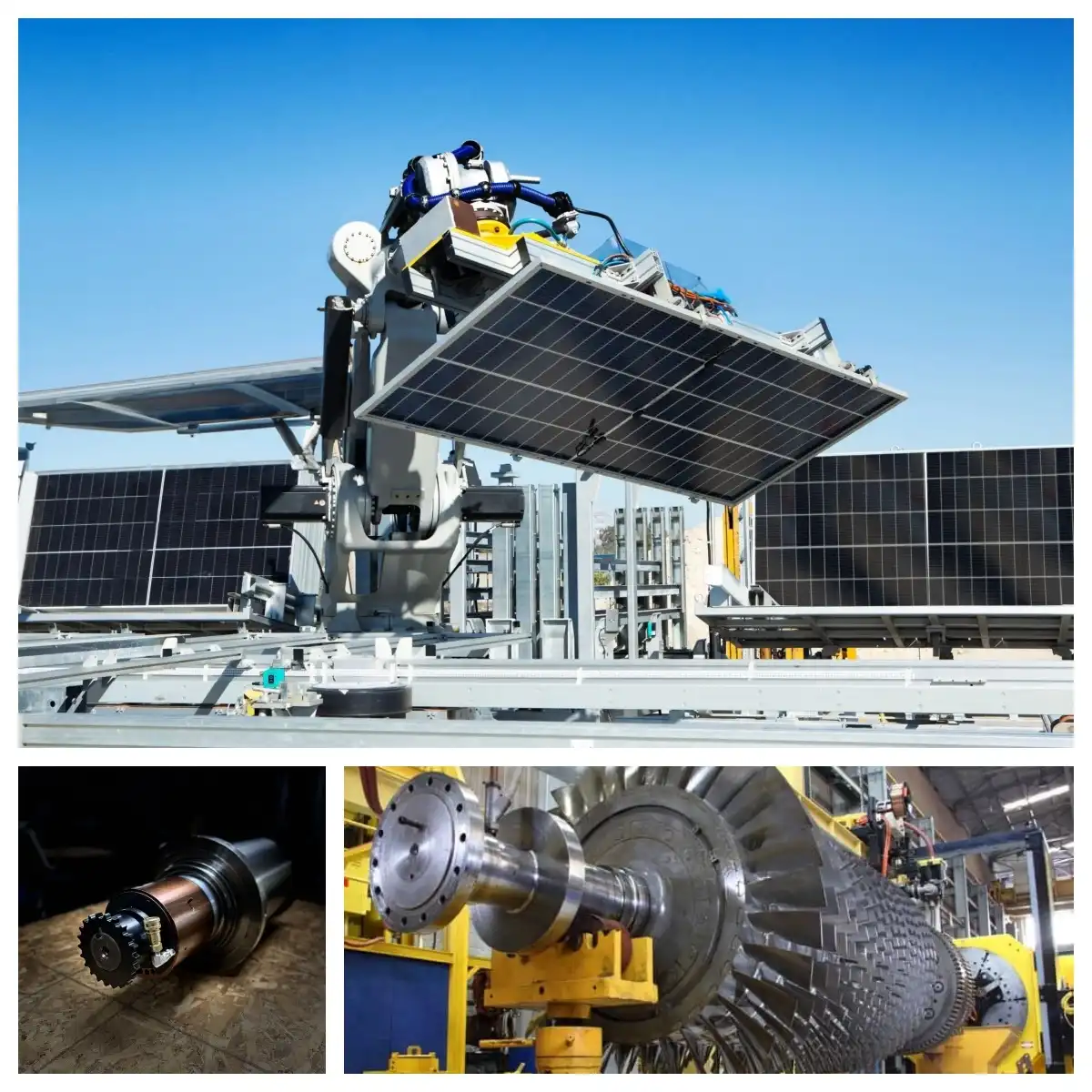
An angular contact ball bearing with a contact angle of 25 degrees is mostly used in high-speed CNC machine frames. When mounted in Back-to-Back (DB) arrangements, these bearings give the axial rigidity needed to resist cutting forces. They also have low thermal expansion, which keeps the accuracy of the machining during long production runs. The 7014AC can handle harsh conditions by mixing high-speed rotation with thrust loads caused by fluid pressure. This makes it useful for precision fluid machinery like screw compressors and turbo-molecular pumps. Even though sealed compressor housings often have poor lubrication, the bearing keeps working properly. These bearings are used in base and elbow sections of industrial robot joints. They are needed for precise pick-and-place operations with big payloads because of the tilting moments and combined loads.
Comparing Angular Ball Bearing 7014AC with Other Bearing Types
Variant Analysis Within the 7014 Family
Knowing the differences between the different types of angular contact bearings helps buying teams correctly define parts. This is the main difference between the Angular Ball Bearing 7014AC and the 7014C models: the 'C' suffix means a 15-degree contact angle that is best for higher rotational speeds but lower axial load capacity. On the other hand, the 7014B designation specifies a 40-degree contact angle that allows for maximum axial load support but not speed. The 7014AC3 version has changes to the design that affect the noise levels and the required interior clearances. These changes work well in situations where both load capacity and noise level are important. Different makers use different methods to treat materials and clean their surfaces, but all of them must follow the size rules in ISO 492 and ISO 199, which set the rules for bearing tolerances and internal clearances.
Comparison with Alternative Bearing Technologies
Deep groove ball bearings can be used in many different situations, but they are not as strong or able to handle large loads as angular contact designs. When engineers compare these technologies, they have to figure out if the extra complexity of paired angular contact mounting setups is worth it for the combined force conditions.
| Feature | Angular Contact 7014AC | Deep Groove Ball Bearing | Tapered Roller Bearing |
|---|---|---|---|
| Axial Load Capacity | High (only one way) | Moderate (with two directions) | Very High (only one way) |
| Speed Capability | High (if the right oil is used) | Very High | Moderate |
| Mounting Complexity | Needs to be paired (DB/DF) | Easy | Moderate |
| Precision Potential | P2 class is open | Normal for P5 class | Not as high as ball bearings |
| Temperature Sensitivity | Moderate | Low | Higher because of the moving touch |
Tapered roller bearings work great in situations where they need to handle a lot of axial load, but they make more heat because the rollers and raceways slide against each other. Because of this, they aren't good for high-speed, precise spindle uses; for those, angular contact ball bearings work better.
Selection Criteria for Application Matching
To pick the right bearing type, you need to carefully look at the operational parameters. Rotational speed is the main screening factor; uses that go over 8,000 RPM usually don't consider tapered roller bearings because they make too much heat. Angular contact bearings need either DB (back-to-back) or DF (face-to-face) mounting configurations to be rigid. This depends on the type of load they are carrying. Environmental factors like contamination exposure, changes in ambient temperature, and the ability of the lubrication system all affect the choice of bearing. Some types of sealed bearings give up some performance for better resistance to contamination, which is helpful for equipment that works in dirty or damp places. Extreme temperatures may require special cage materials or heat-stabilized bearing steel to keep the dimensions correct during thermal cycles.
Where to Buy Angular Ball Bearing 7014AC from Trusted OEM Suppliers
Evaluating Global OEM Brand Options
Well-known bearing makers like SKF, NSK, Timken, FAG, KOYO, and NTN have global marketing networks that help their products reach customers all over the world. These companies put a lot of money into research and development, precise manufacturing, and quality assurance methods that make sure parts always meet the written specifications. Buying Angular Ball Bearing 7014AC units from these well-known names lowers the risk of the purchase by allowing for tracking, warranty support, and expert help.SKF was the first company to make many new types of bearings, and it has factories on several continents to make sure the supply chain is always strong. NSK is especially good at working with precision machinery and cars, and they have a lot of experience helping CNC machine tool manufacturers. Timken has a lot of experience with both ball bearings and roller bearings. They offer engineering consulting services to help buyers choose the best bearings for their needs. However, new makers from industrialized areas are showing more and more that they can make quality bearings that meet world standards. It's not just about how well-known the brand is; it's also about checking certifications, manufacturing skills, and quality control methods. Many mid-sized manufacturers now have ISO 9001 and IATF 16949 certifications, and their prices are competitive, which is good for people who buy in bulk.
Identifying Certified Manufacturing Partners
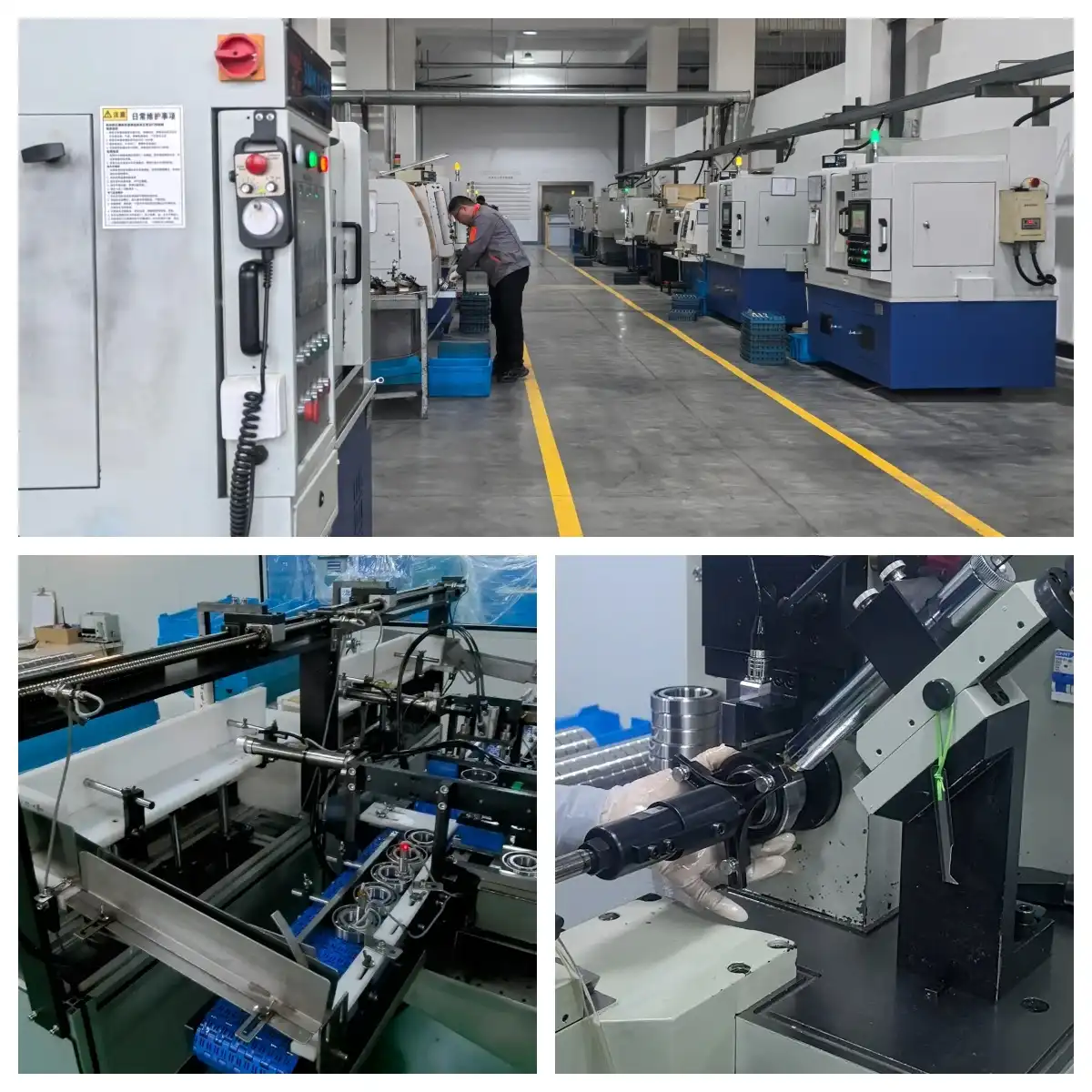
ATLYC is a type of specialized bearing manufacturer that combines the ability to make precise parts with high-quality standards around the world. Our building, which opened in 2010, has grown from a single workshop to six separate production areas over the course of 15 years of constant improvement. This growth path isn't just due to production size; it's also due to market trust and operational excellence. Our team of 120 trained workers does everything from production to quality control to research and development to assembly. This unified method makes sure that the whole manufacturing process is consistent while still being able to adapt to calls for customization. Our ISO 9001 and IATF 16949 certifications show that we are dedicated to quality management systems that meet the strictest standards in the car business.The infrastructure for manufacturing includes high-precision grinding tools that can reach P2 tolerance levels and climate-controlled assembly areas that keep things clean while the cage is being installed and lubrication is being applied. Before a product is officially approved for shipping, it goes through a series of quality inspections that check its dimensions, surface finish, and noise levels.
Verification Methods for Supplier Credibility
To make sure a seller is who they say they are, you need to look at more than just their website. Manufacturers who are legitimate give buyers certification paperwork that can be checked, such as ISO registration numbers that buyers can confirm by searching in separate registrar databases. Factory audit records from third-party inspection services give unbiased opinions on how well a factory can make things and how well it checks for quality. Ask for detailed technical data sheets with information on tolerances, material certifications, and test results that show how the product works. Suppliers with a good reputation will gladly give you this paperwork because it shows how good they are at making things. Testing samples in independent labs is one way to make sure of the material's composition and accuracy of measurements before placing large orders, but it costs money and takes time. Customer references from well-known manufacturers in your field can tell you a lot about how reliable a seller is, how well they deliver, and how quickly they respond to technical help requests. Consistent quality and business stability are signs of long-term supply relationships, which are very important when putting parts into important production equipment.
Procurement Considerations for Angular Ball Bearing 7014AC
Understanding Pricing Structures and Cost Drivers
The price of an Angular Ball Bearing 7014AC depends on more than just the cost of the raw materials. Precision class has a big effect on price. For example, P2 grade bearings cost more because they need more grinding operations and stricter inspection protocols to get better dimensional accuracy. The price of a cage depends on the material it is made of. Because of the higher cost of materials and the difficulty of molding phenolic resin cages, they are usually more expensive than nylon cages. When order numbers hit full production lot sizes, volume discounts become very big. Manufacturers get economies of scale when their production runs require the least amount of setup time and the most use of their equipment. Buyers should ask about price breaks at different levels of quantity and compare the cost of keeping goods with the savings per unit. A lot of sellers have tiered price systems that reward customers who buy from them on a yearly basis. When major bearing manufacturers charge more for their brands, it's because they spend more on research and development, have strict quality control programs, and maintain global technical support networks. These prices might be worth it if there are fewer warranty claims, longer service lives, and technical help available. New makers, on the other hand, often offer similar quality at lower prices thanks to their modern equipment and quality systems that have been approved.
Managing Lead Times and Delivery Logistics
For standard designs, the wait time for making angular contact ball bearings is usually between seven and fifteen working days. Custom specs, such as non-standard preload settings, special cage materials, or specific greasing needs, make manufacturing take longer because the schedule has to adjust to fit these unique processes. International shipping adds more factors that affect the total arrival time. Air freight cuts down on transit time but greatly raises the cost of shipping, which becomes important when ordering a lot of heavy bearing assemblies. Sea freight is a cheap way to ship big orders with long lead times, but it needs to be carefully coordinated with production plans to make sure there aren't any inventory shortages. Our factory keeps common 7014AC configurations in stock, so standard specifications can be delivered in seven business days. This inventory strategy strikes a balance between the need for working capital and the goal of providing excellent customer service. It does this by letting you respond quickly to urgent replacement needs while keeping your costs low. Custom orders are given priority, and the state of the production and when it's expected to be finished are communicated clearly.
Evaluating Total Cost of Ownership
The purchase price is only one part of the costs of owning something. Initial application costs more because of the special tools or heating equipment that are needed for installation. Lubrication systems, like grease, oil mist, or oil-air ones, have ongoing costs for maintenance that change based on how complicated the system is and how much it is used. The expected service life has a direct effect on how often something needs to be replaced and how much it costs to have it down for repairs. Although they cost more at first, premium bearings with better material quality and manufacturing precision often have longer operational lives that make up for the extra cost. Warranty terms and the availability of technical support protect you financially against premature failure and offer troubleshooting help that cuts down on the time needed to figure out what's wrong when there are operational problems. When there are a lot of parts to move, and frictional losses add up across many bearing points, energy economy is important. Motor loads and heat output go down when friction coefficients are low. This can lead to real energy savings in machines that work nonstop during multiple shifts.
Making the Right Purchase Decision: A Step-by-Step Guide
Defining Technical Requirements Systematically
To start planning your purchase, write down the operational parameters, such as the size of the shaft, the limits of the housing, the size and direction of the loads, the rotational speeds, and the ambient conditions. These specifications lay the groundwork for choosing the Angular Ball Bearing 7014AC and make it possible to have useful conversations with possible suppliers. Get design engineers to check that the angular contact configuration is better for the job than other types of bearings. Figure out the needed precision class based on how well you expect the tools to work. Precision grades P4 or P2 are needed for precision machine tools to get the spindle runout qualities they need. Precision grades P5 are usually fine for general industrial machinery. When choosing a cage material, you should think about the operating temperature ranges and speed needs that affect the choice between phenolic resin and nylon. When radial loads are put on angular contact bearings, they create induced axial forces that need to be carefully considered when mounting them. Back-to-back (DB) arrangements offer rigidity and the ability to handle moment loads, while face-to-face (DF) arrangements are better for situations that don't need as much rigidity. The preload standard affects the stiffness of the bearing and needs to match the needs of the application. For example, light preload is best for high-speed applications, while heavy preload gives the most rigidity for low-speed accurate placement.
Benchmarking Supplier Capabilities
Create criteria for judging that include quality certifications, manufacturing capacity, technical support availability, delivery performance, and business terms. Ask possible suppliers to give you specific capability statements that include lists of their equipment, how they control quality, and names of customers who have used similar products in the past. You can find suppliers whose business models match your buying habits by comparing their minimum order quantities to your inventory management strategy. Plan visits to the facility or ask for virtual tours that show how things are made and how quality control works. As signs of operational success, look at how well the workplace is organized, how engaged the employees are, and the state of the equipment. Ask sellers about their efforts to improve things all the time and their investments in manufacturing technology. These show that they want to stay competitive in the long run. Suppliers are set apart during the installation and operational phases by the level of technical help they offer. Check to see if the sellers provide services like application-building help, troubleshooting help, and failure analysis. These tools are helpful for improving the performance of bearings or figuring out sudden practical problems that cause delays in production.
Negotiating Agreements that are Mutually Beneficial
Instead of price fights, think of talks as conversations where everyone can help each other. Communication that is clear about expected output, delivery requirements, and quality standards is the basis for long-lasting relationships. Talk to your supplier about payment terms that balance your cash flow management with the cost of financing, keeping in mind that when you pay affects how flexible their prices are. In purchase agreements, quality assurance protocols should be clearly spelled out. List the standards for acceptance, such as allowed tolerances for size and shape, required surface finish, and acceptable amounts of operating noise. Set up methods for inspecting arriving materials and ways to deal with nonconforming products, such as who pays for replacements, how to return them, and when they need to be replaced. Write up official contracts that include technical details, pricing, delivery dates, and warranty terms. Include plans for regular business reviews that compare supplier performance to agreed-upon metrics and offer places to talk about ways to make things better. Long-term supply deals may allow commitments to a certain amount in exchange for better pricing, but they should also include ways for demand to change.
Conclusion
To get the Angular Ball Bearing 7014AC from reliable OEM sources, you have to balance technical requirements, quality control, and cost factors. Checking a supplier's credentials by looking at their certifications, abilities, and references is an important part of good procurement strategies. Accurate application matching is possible by knowing the bearing specs, such as the important 25-degree contact angle, precision class choices, and cage material options. Cost analysis that looks at the whole picture includes more than just the purchase price. It also looks at things like installation needs, expected service life, and ongoing maintenance costs. Long-term supply chain resilience is supported by strategic relationships with suppliers based on open communication, formal agreements, and ongoing performance evaluation. These relationships also ensure consistent component quality, which keeps production efficient and equipment reliable.
FAQ
What core specifications should I verify before purchasing angular contact ball bearings?
Make sure that the shaft and housing's bore and outer diameter measurements exactly match your needs. Even small differences can make it impossible for the parts to fit properly. Check to see if the contact angle (25 degrees for "AC") meets your load and speed needs. Compare the runout limits your application needs with the accuracy class (P5, P4, or P2). Choose a cage material that is right for the temperature range you will be working at, and make sure the grease will work with your repair system for the Angular Ball Bearing 7014AC.
How can I tell the difference between real OEM goods and fake bearings?
Genuine bearings have fixed, clear marks that show who made them, what kind of bearing it is, and where it was made. Ask for certificates of conformance that show what the material is made of and that its dimensions have been checked. Check the quality of the packaging—reliable manufacturers use strong, professionally printed materials. A price that is much lower than the market price usually means that the product is fake. To be sure of its authenticity, only buy from authorized distributors or directly from certified manufacturers.
What are the most important things that affect shipping lead times?
Within seven to fifteen working days, standard versions with popular specs are shipped. Lead times are longer when there are special needs, like a different setup, cages that aren't standard, or a different kind of lubricant. Scheduling production affects timing, so orders placed during times of high demand may not be filled on time. Choosing the right international shipping method has a huge effect on delivery. For example, air freight cuts down on transit time but costs more than ocean transport. The way a supplier stores its goods determines whether or not stock is available for instant shipment.
Partner with ATLYC for Reliable Angular Contact Ball Bearing Supply
ATLYC is ready to help you with your bearing procurement needs. They have been improving their manufacturing skills for 15 years. Our factory is ISO 9001 and IATF 16949 certified, and it uses precise grinding, strict inspection, and climate-controlled assembly processes to make Angular Ball Bearing 7014AC units that meet strict international standards. We can be your reliable source for high-precision spindle bearings because we deliver them within seven working days and offer full OEM customization. Get in touch with our technical team at auto@lyautobearing.com to talk about your unique application needs and get personalized suggestions backed by engineering knowledge and cheap pricing structures made for long-term manufacturing partnerships.
References
1. Harris, T.A. & Kotzalas, M.N. (2006). Essential Concepts of Bearing Technology: Rolling Bearing Analysis, Fifth Edition. CRC Press, Taylor & Francis Group.
2. ISO 492:2014. Rolling bearings — Radial bearings — Geometrical product specifications (GPS) and tolerance values. International Organization for Standardization.
3. SKF Group. (2018). Rolling Bearings Catalogue: Technical Product Information and Application Guidelines. SKF Group Publication.
4. Eschmann, P., Hasbargen, L., & Weigand, K. (1985). Ball and Roller Bearings: Theory, Design and Application, Second Edition. John Wiley & Sons.
5. NSK Ltd. (2019). Precision Machine Tool Spindle Bearings: Technical Selection Guide and Application Examples. NSK Technical Review Publication.
6. American Bearing Manufacturers Association. (2020). Load Ratings and Fatigue Life for Ball Bearings: Engineering Standards and Calculation Methods. ABMA Standards Publication.
Learn about our latest products and discounts through SMS or email