- English
- French
- German
- Portuguese
- Spanish
- Russian
- Japanese
- Korean
- Arabic
- Greek
- German
- Turkish
- Italian
- Danish
- Romanian
- Indonesian
- Czech
- Afrikaans
- Swedish
- Polish
- Basque
- Catalan
- Esperanto
- Hindi
- Lao
- Albanian
- Amharic
- Armenian
- Azerbaijani
- Belarusian
- Bengali
- Bosnian
- Bulgarian
- Cebuano
- Chichewa
- Corsican
- Croatian
- Dutch
- Estonian
- Filipino
- Finnish
- Frisian
- Galician
- Georgian
- Gujarati
- Haitian
- Hausa
- Hawaiian
- Hebrew
- Hmong
- Hungarian
- Icelandic
- Igbo
- Javanese
- Kannada
- Kazakh
- Khmer
- Kurdish
- Kyrgyz
- Latin
- Latvian
- Lithuanian
- Luxembou..
- Macedonian
- Malagasy
- Malay
- Malayalam
- Maltese
- Maori
- Marathi
- Mongolian
- Burmese
- Nepali
- Norwegian
- Pashto
- Persian
- Punjabi
- Serbian
- Sesotho
- Sinhala
- Slovak
- Slovenian
- Somali
- Samoan
- Scots Gaelic
- Shona
- Sindhi
- Sundanese
- Swahili
- Tajik
- Tamil
- Telugu
- Thai
- Ukrainian
- Urdu
- Uzbek
- Vietnamese
- Welsh
- Xhosa
- Yiddish
- Yoruba
- Zulu
Top Uses and Benefits of Angular Ball Bearing 7014AC
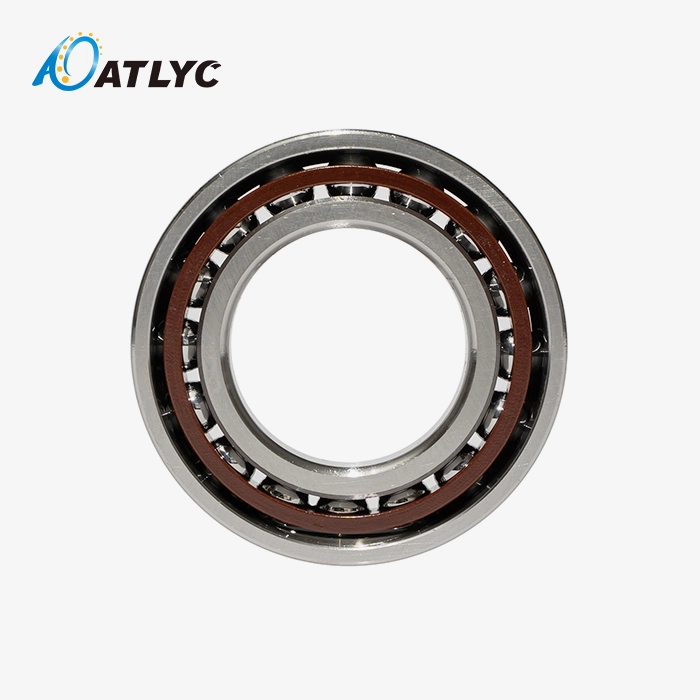
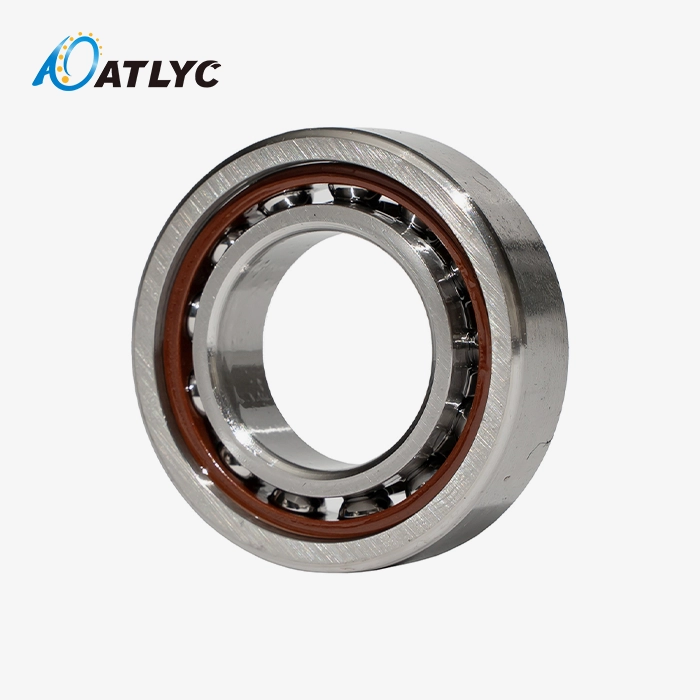
The Angular Ball Bearing 7014AC stands as a cornerstone component in precision machinery, delivering exceptional performance where combined radial and axial loads demand reliable solutions. This single-row angular contact bearing features a 25-degree contact angle that optimizes high-speed capability while maintaining substantial load capacity. With dimensions of 70mm inner diameter, 110mm outer diameter, and 20mm width, this bearing bridges the performance gap between speed-focused 15-degree variants and heavy-load 40-degree configurations, making it indispensable for sub-micron manufacturing environments and critical industrial applications.
Understanding Angular Ball Bearing 7014AC: Key Features and Technical Specs
The number 7014AC tells you important engineering information about this precision part. The "70" stands for the light ISO measurement series, and the "14" calculates the bore width (14 x 5 mm = 70 mm). The most important thing about the "AC" term is that it tells you the 25-degree theoretical contact angle that makes this bearing different from others.
Dimensional Specifications and Material Composition
This angular contact bearing is made of precision-ground GCr15 bearing steel, which makes it very stable in terms of size and resistance to wear. The inside diameter is 70 mm, the outside diameter is 110 mm, and the width is 20 mm. These sizes are the result of careful planning to match load capacity with the need for a small installation space. This bearing comes in different levels of accuracy (P5, P4, and P2) to meet different needs for precision. P5 (ABEC-5) is good for general industrial uses, P4 (ABEC-7) is good for high-precision machinery, and P2 (ABEC-9) is good for places that need to make things with very high precision.
Contact Angle Engineering
The 25-degree contact angle is a well-thought-out compromise that takes into account a number of performance factors at the same time. When compared to deep groove ball bearings, this design offers better axial stiffness while still generating less heat at high spinning speeds. Along the bearing axis, the raceways are moved away from each other, making the contact angle that can support both radial loads and linear axial loads at the same time.
Cage Materials and Their Applications
There are two main types of cage materials that are used in different situations. Bakelite cages made of phenolic resin work great in high-temperature situations because they can handle the high temperatures and still stay the same size. For normal workplace situations, nylon cages are better because they are quieter and cause less friction. Each choice of material improves performance qualities based on the needs of the application.
| Specification | Value/Range | Significance |
|---|---|---|
| Inner Diameter | 70 mm | The standard hole size for medium-duty uses |
| Outer Diameter | 110 mm | Small envelope for installations with limited space |
| Width | 20 mm | Maximum load capacity in the smallest amount of space |
| Contact Angle | 25° | Balanced ability to handle high speeds and rotational loads |
| Accuracy Class | P5/P4/P2 | Meets a range of exact needs |
| Speed Capability | Up to 14,000 RPM for grease and 22,000 RPM for oil-air | Allows activities at high speeds |
All of these specs work together to make sure that the bearing stays reliable and lasts a long time in high-speed, heavy-load situations that are common in industrial settings.
Top Application Areas and Industry Uses of Angular Ball Bearing 7014AC
Knowing which direction gives the most value helps buying teams make smart decisions about where to buy things. The Angular Ball Bearing 7014AC is used in many fields where accuracy, speed, and load capacity are all important.
High-Speed CNC Machine Spindles
As a normal part of supporting the main spindle, CNC milling and grinding centers rely on this bearing. When mounted back-to-back (DB) or in a triple form, it gives the rigidity needed to fight cutting forces while keeping thermal expansion low. This temperature stability keeps the accuracy of the cutting even during long production runs, where even small errors can hurt the quality of the part. Builders of machine tools choose these bearings because they can handle the complicated loading conditions that come up when circular cutting forces and axial thrust act at the same time. The 25-degree contact angle gives the tool the stiffness it needs to avoid deflection while still allowing rotational speeds that remove material as quickly as possible.
Precision Fluid Machinery
This angular contact bearing shows how versatile it is by working in tough conditions in high-speed screw compressors and turbo-molecular pumps. For these uses, fluid pressure creates thrust loads that need to be kept up while rotating at a high speed. The bearing can handle this complicated loading situation and keep working even tho there isn't much oil on it. Pump makers like how the bearing can handle shaft movement while keeping the seal's integrity. The exact contact angle makes sure that the load is evenly spread across the track, which stops stress build-ups that cause the bearing to fail early.
Industrial Robotics and Automation
Heavy-payload robotics uses these bearings in base and elbow joints, which are subject to tilting moments and combined loads that make the parts last less long. The stiff support properties of the bearing determine the zero-backlash motion control that is needed for accurate pick-and-place tasks. The predictable performance qualities of the bearing are liked by makers of automation equipment because they make motion control settings easier and improve repeatability. As robotics becomes more common in manufacturing, the need for reliable angular contact bearings keeps growing.
Automotive Transmission Systems
This size of bearing is used in transmission assemblies to support gears in situations where space is limited and heavy loads need to be supported. The small size of the bearing's cross-section lets it fit into small spaces, and its load capacity can handle gear mesh forces across the transmission's working range.
Energy Sector Applications
These bearings are used in wind turbine gearboxes and generator systems, where their dependability has a direct effect on upkeep costs and the amount of time that energy is produced. The long life of the bearing improves operating safety and cuts down on downtime in rural installation sites where getting service is hard to do.
Benefits of Choosing Angular Ball Bearing 7014AC for Your Procurement Needs
Choosing the right bearing affects the total cost of ownership, how often maintenance needs to be done, and how reliable the equipment is. When procurement workers look at component specs, they can see that the Angular Ball Bearing 7014AC has real benefits.
Superior Combined Load Handling
This bearing can handle both radial and unidirectional axial loads because it has a designed 25-degree contact angle. Because it can handle two loads at once, it often doesn't need extra thrust bearings. This makes assembly design easier and cuts down on the number of parts needed. The load distribution properties of the bearing make it last longer by avoiding stress build-ups that speed up wear. When a single type of bearing handles multiple load vectors, it makes things easier to design. This versatility makes it easier to keep track of inventory and makes buying parts easier for maintenance teams that take care of a wide range of equipment.
Enhanced Speed Capabilities
When compared to designs with a steeper contact angle, the 25-degree configuration allows for higher limiting speeds while still holding enough load. If you use the right kind of grease (synthetic grease for speeds up to 600,000 N·dm or oil-air systems for very high speeds), this bearing can spin faster than 22,000 RPM. The ability to change speed lets equipment makers increase production output without lowering the reliability of parts. Machine operators benefit when they can remove more material faster in machining tasks or process more fluids at once in fluid handling equipment.
Reduced Noise and Vibration
Precision manufacturing to P4 or P2 tolerances reduces runout and geometrical flaws that cause noise during operation. The bearing's low vibration properties help precision industries that need stable, quiet performance. By reducing cyclical stress, less vibration also increases the service life of nearby parts. The very low noise levels that this bearing offers are needed for quality-sensitive tasks like making medical devices or tools for making semiconductors. The procurement teams that work with these businesses know how valuable parts are that stay within tight limits for the whole time they're being used.
Cost Efficiency Through Bulk Procurement
When you buy in bulk for long-term use, the price per unit goes down a lot. Setting up supply chains with makers that allow OEM customization and uphold uniform quality standards saves even more money by cutting down on inspections and downtime caused by defects. Our manufacturing facility can handle large orders and deliver them within seven days, so your production schedules won't be affected. Our ISO 9001 and IATF 16949 certifications show that we are dedicated to providing uniform quality that meets global standards.
| Benefit Category | Specific Advantage | Impact on Operations |
|---|---|---|
| Load Versatility | Radial and axial support at the same time | Less complicated design and fewer parts |
| Speed Performance | It can go up to 22,000 RPM | Throughput and output went up |
| Precision | You can get P2 (ABEC-9) accuracy | Sub-micron precision in positioning |
| Noise Reduction | Operation with low vibration | Longer component life and better quality |
| Service Life | More resistance to wear | Less maintenance is needed and costs less |
| Customization | You can get OEM help | Optimization based on the application |
All of these benefits lower the total cost of ownership while also making the system work better. Maintenance advice, such as the right way to choose lubricants and handle bearings, extends their life and provides the best value for B2B procurement portfolios.
Comparison and Selection Guide: Angular Ball Bearing 7014AC vs Alternatives
To choose the best bearing, you need to know how the Angular Ball Bearing 7014AC stacks up against other options. Clear comparison factors that match the features of bearings with the needs of the application are helpful for procurement teams.
Contact Angle Variations: 7014C vs 7014AC vs 7014B
The main difference between these versions is the contact angle definition. The 7014C has a 15-degree contact angle that is best for maximum speed but not for vertical load capacity. Speed and load handling are both good on the 7014AC's 25-degree angle. The 7014B uses a 40-degree angle to support the most axial load at slower speeds. Which variant gives the best performance depends on the needs of the application. The C variant is better for high-speed spindles that are under modest loads, while the B version is better for heavy-duty uses that need a lot of axial support. The AC name can be used for most types of tasks, which is why it is used so widely across many businesses.
Size Comparisons: 7014AC vs 7214AC vs 7015AC
The 7214AC has the same 70mm bore diameter, but it is in the middle width line, which means it can hold more weight in a bigger space. The 7015AC keeps the light series the same, but the hole width goes up to 75 mm. These changes in size help choose the right bearing based on the load needs and the room that is available for installation.The different load capacities that can be found in a single bore size are appreciated by procurement teams that are in charge of equipment with standard shaft diameters. This gives you the freedom to upgrade your equipment without having to change the shaft.
Material Alternatives: Steel vs Ceramic Hybrid
Standard construction with GCr15 steel has been shown to be reliable and cost-effective in most situations. Ceramic hybrid bearings use silicon nitride balls instead of steel balls. This lowers friction and rotational force while allowing faster speeds. The better performance comes at a higher cost that should only be considered for specific high-speed tasks.
Mounting Configuration Considerations
When radial loads are put on single angular contact bearings, they create an induced axial force, which means they need to be mounted in pairs. Back-to-back (DB) design offers rigid support and can handle being out of line. Face-to-face (DF) design makes the support less stiff but narrows the bearing spread. Tandem (DT) attachment increases the vertical load capacity in one direction by two times. Application engineers can make sure that the design of equipment works best in certain situations when they understand these setup choices. Bearing suppliers who offer technical support can help you choose the right bearings and mount them correctly.
Procurement Considerations and Trusted Suppliers of Angular Ball Bearing 7014AC
Procurement methods that work well balance cost, quality, and the dependability of the supply chain. Understanding how the market works and what suppliers can do helps buyers get the best deals on Angular Ball Bearing 7014AC.
Quality Assurance and Certification
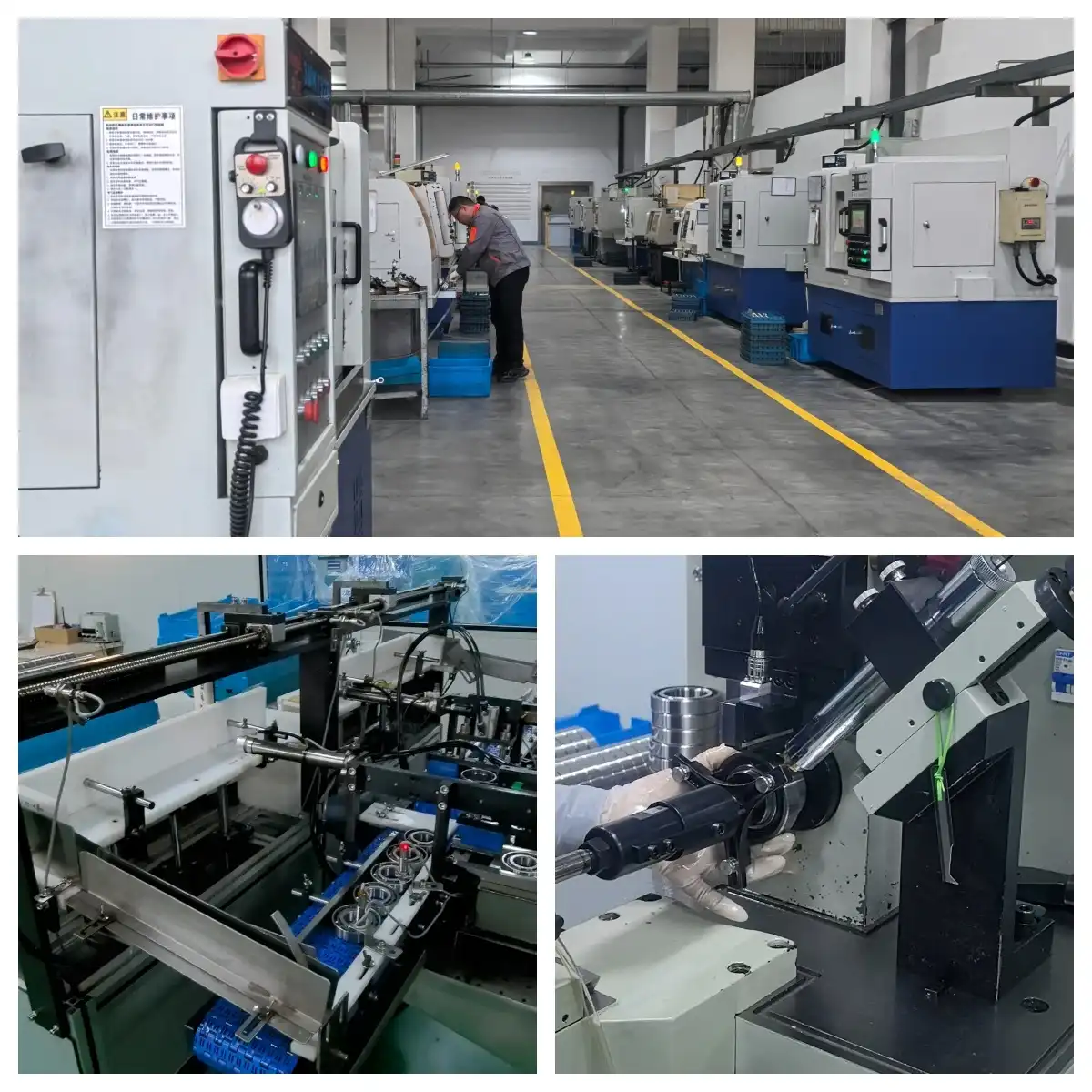
Real bearings from trustworthy companies always have the same high quality because they go through strict production controls. Getting ISO 9001 certification shows that you care about quality management systems, and IATF 16949 certification talks about the needs of the automobile business. These certifications show that the manufacturing process consistently produces accurate measurements and good material properties. At Luoyang Auto Bearing Co., Ltd. (ATLYC), we keep both certifications in all six of our manufacturing workshops, which are staffed by 120 skilled workers who work on production, quality control, and assembly. Our past of manufacturing for 15 years shows that we can produce large quantities and keep making improvements, which is something that procurement teams look for in long-term source relationships.
Minimum Order Quantities and Lead Times
Knowing the minimum order quantity (MOQ) standards and shipping schedules helps you plan your inventory well. When compared to special designs, standard production bearings usually have lower MOQs. Lead times depend on how complicated the order is, how busy the factory is right now, and where the goods are going to be shipped. We can handle both small batches and big orders, and our normal delivery time is seven days. This adaptability lets different buying plans work, like managing goods just-in-time or building stock strategically.
Authentication and Counterfeit Prevention
On the market for bearings, there are fakes that make tools less safe and reliable. Buying only from authorized distributors or directly from manufacturers protects you from getting low-quality copies. Real bearings come in the right package, come with the right paperwork, and can be tracked, but fakes don't. Because we work directly with the manufacturer, we don't have to worry about the risks that come with the marketing chain, and we can track every bearing that is made. This openness helps with quality checks and meeting the requirements for compliance documentation.
Technical Support and Customization
Suppliers who offer technical help are more valuable than just supplying parts. Applications analysis, lubrication suggestions, and unique changes are some of the things that can be done to make bearings work better in certain situations. With OEM help, equipment can be optimized for specific uses, which makes it work better and be more reliable. We offer complete technical support, which includes installation instructions, lubrication guidelines, and help with fixing problems. Because we can customize, we can meet specific application needs that standard catalog bearings can't fully meet.
Pricing Strategies for Volume Procurement
When you buy in bulk, you get economies of scale that lower the cost per item. Setting up yearly supply deals with volume promises can often get you better prices and make sure you have a supply. Instead of just looking at the unit price, procurement teams should look at the total cost of ownership, which includes things like warranty terms, technical support, and consistency of quality.
Conclusion
For tough industrial uses that need to handle loads, work at high speeds, and be precise, the Angular Ball Bearing 7014AC has been used and proven to work well. Because it is made of precision GCr15 steel, has a 25-degree contact angle, and comes in different accuracy grades, it is the best choice for CNC spindles, fluid machinery, robots, and automobile uses. When looking for these important parts, procurement professionals should know about the technical specifications, application requirements, and supplier capabilities. Long-term equipment dependability and operating efficiency can be ensured by choosing manufacturers with foreign certifications, customization support, and reliable delivery.
FAQ
What distinguishes 7014AC from 7014C bearings?
The main difference is in the shape of the contact angle. The Angular Ball Bearing 7014AC has a contact angle of 25 degrees, which allows for more axial load capacity. The 7014C, on the other hand, has a contact angle of 15 degrees, which is best for the highest spinning speeds but offers less axial support. Which variant gives the best performance depends on the application. For high-speed processes, the C variant works best, while the AC design is better for uses with large axial loads.
Why must angular contact bearings be mounted in pairs?
When radial loads are put on single angular contact bearings, they produce an induced axial force. Paired mounting systems, such as back-to-back (DB), face-to-face (DF), or tandem (DT), balance these forces and allow for two-way axial shaft adjustment. This matched design makes sure that the machine runs smoothly and that the load is evenly distributed across both sets of bearings.
What preload specification suits high-speed applications?
Light (L), Medium (M), and Heavy (H) are the names of preload types. For high-speed CNC applications, Light preload is usually needed to keep heat from building up too much, while Heavy preload is needed for low-speed, high-rigidity applications. The right choice of preload strikes a balance between operational stiffness and thermal management to get the best performance and service life from a bearing.
Can bearings from different manufacturers be interchanged?
Cross-manufacturer exchange is usually not a good idea unless the bearings are "universally matchable" (have an SU or DU suffix). Manufacturing tolerances affect standoff measurements, and mixing brands without checking properly can create the wrong preload conditions, which can cause the parts to fail early or work less well.
Partner with ATLYC for Reliable Angular Ball Bearing 7014AC Supply
ATLYC offers high-precision angular contact bearing solutions that are certified by ISO 9001 and IATF 16949. This guarantees consistent quality that meets global standards. Our factory makes bearings with accuracy grades of P5, P4, and P2. These bearings are used in a wide range of machines, from general commercial gear to ultra-precision equipment. We give mid-to-large manufacturers, OEMs, and distributors the supply reliability and technical support they need with seven-day delivery times and the ability to customize products for OEMs. Email our engineering team at auto@lyautobearing.com to talk about your particular needs and get full technical specs for the Angular Ball Bearing 7014AC we have in stock. As a well-known company that has been making products for 15 years and has been selling them all over the world, we combine precision manufacturing with scalable production to meet the needs of your growing and changing applications.
References
1. Harris, T.A. and Kotzalas, M.N. (2006). Advanced Concepts of Bearing Technology: Rolling Bearing Analysis, Fifth Edition. CRC Press, Taylor & Francis Group.
2. ISO 15(2017). Rolling Bearings - Radial Bearings - Boundary Dimensions General Plan. International Organization for Standardization, Geneva, Switzerland.
3. Wensing, J.A. (1998). On the Dynamics of Ball Bearings. Doctoral Dissertation, University of Twente, Enschede, Netherlands.
4. SKF Group (2018). Rolling Bearings Catalogue: Angular Contact Ball Bearings. SKF Group Publications, Gothenburg, Sweden.
5. ANSI/ABMA Standard 20-1996. Radial Bearings of Ball, Cylindrical Roller, and Spherical Roller Types - Metric Design. American Bearing Manufacturers Association.
6. Hamrock, B.J. and Dowson, D. (1981). Ball Bearing Lubrication: The Elastohydrodynamics of Elliptical Contacts. John Wiley & Sons, New York.
Learn about our latest products and discounts through SMS or email