- English
- French
- German
- Portuguese
- Spanish
- Russian
- Japanese
- Korean
- Arabic
- Greek
- German
- Turkish
- Italian
- Danish
- Romanian
- Indonesian
- Czech
- Afrikaans
- Swedish
- Polish
- Basque
- Catalan
- Esperanto
- Hindi
- Lao
- Albanian
- Amharic
- Armenian
- Azerbaijani
- Belarusian
- Bengali
- Bosnian
- Bulgarian
- Cebuano
- Chichewa
- Corsican
- Croatian
- Dutch
- Estonian
- Filipino
- Finnish
- Frisian
- Galician
- Georgian
- Gujarati
- Haitian
- Hausa
- Hawaiian
- Hebrew
- Hmong
- Hungarian
- Icelandic
- Igbo
- Javanese
- Kannada
- Kazakh
- Khmer
- Kurdish
- Kyrgyz
- Latin
- Latvian
- Lithuanian
- Luxembou..
- Macedonian
- Malagasy
- Malay
- Malayalam
- Maltese
- Maori
- Marathi
- Mongolian
- Burmese
- Nepali
- Norwegian
- Pashto
- Persian
- Punjabi
- Serbian
- Sesotho
- Sinhala
- Slovak
- Slovenian
- Somali
- Samoan
- Scots Gaelic
- Shona
- Sindhi
- Sundanese
- Swahili
- Tajik
- Tamil
- Telugu
- Thai
- Ukrainian
- Urdu
- Uzbek
- Vietnamese
- Welsh
- Xhosa
- Yiddish
- Yoruba
- Zulu
Where to Export YRTM Rotary Table Bearing From?
When looking for tiny rotary table bearings for precise machinery, picking the right export location is important for making sure the products are real, the quality is consistent, and the supply chain is reliable. China has become the main place where YRTM Rotary Table Bearing products are exported, mostly from Luoyang and other bearing industry centres. With ISO 9001 and IATF 16949 licenses and decades of experience making precision goods, these areas can make small bearing units that meet strict international standards. Established providers like Luoyang Auto Bearing Co., Ltd. are good examples of this because they offer direct factory prices, flexible specs, and a history of exporting to places like the US, Germany, and South Korea.
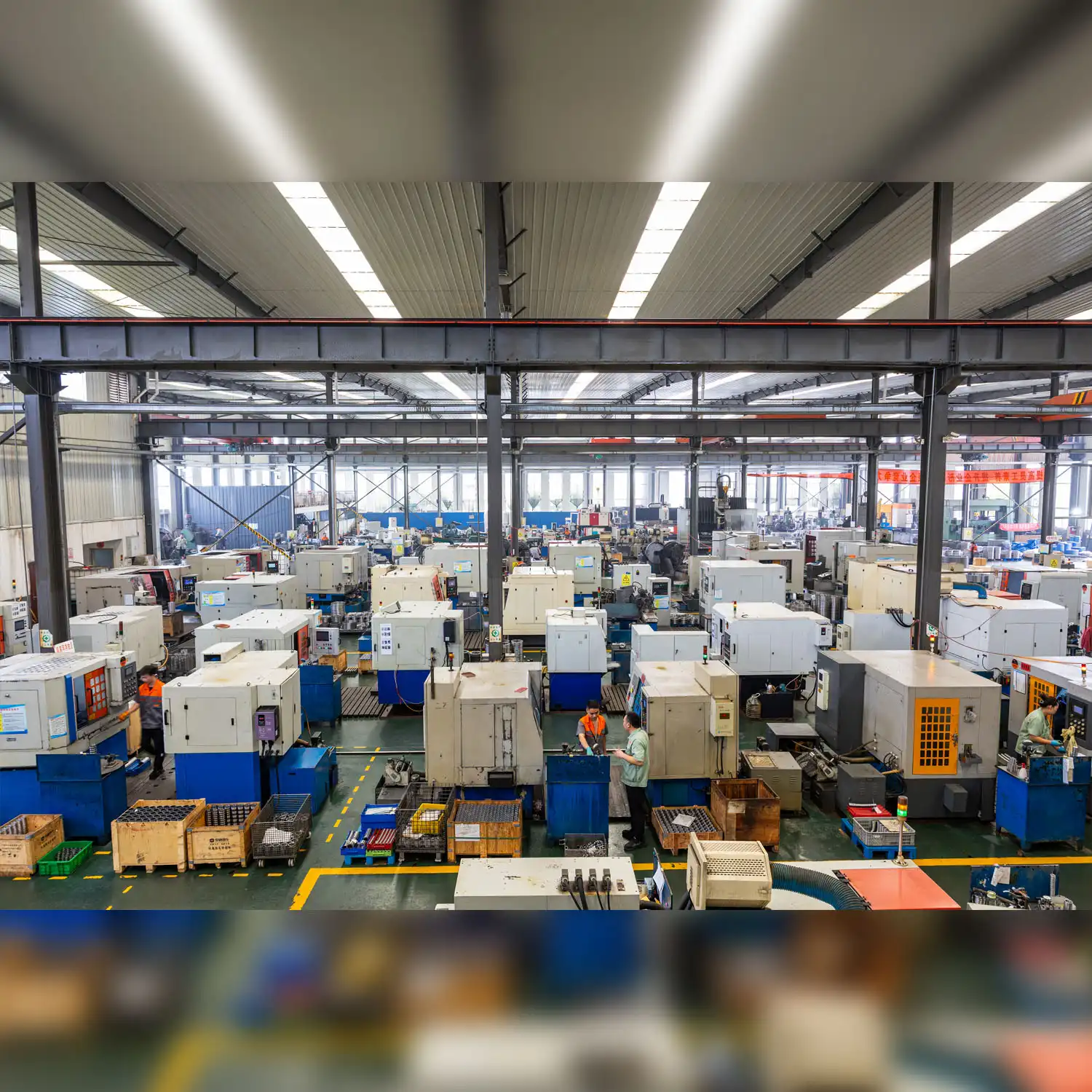
Understanding YRTM Rotary Table Bearings: Specifications and Features
The small size of miniature rotary table units solves a problem that keeps coming up in modern automation: how to support loads in more than one way without giving up important machine space? CNC makers and robotics developers are asking for our bearings more and more because they need to work precisely within a limited space.
Integrated Three-in-One Structural Design
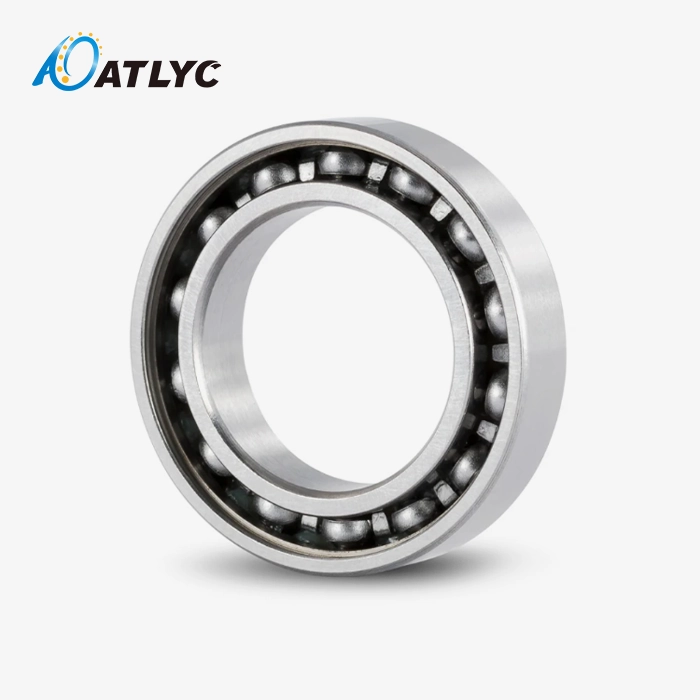
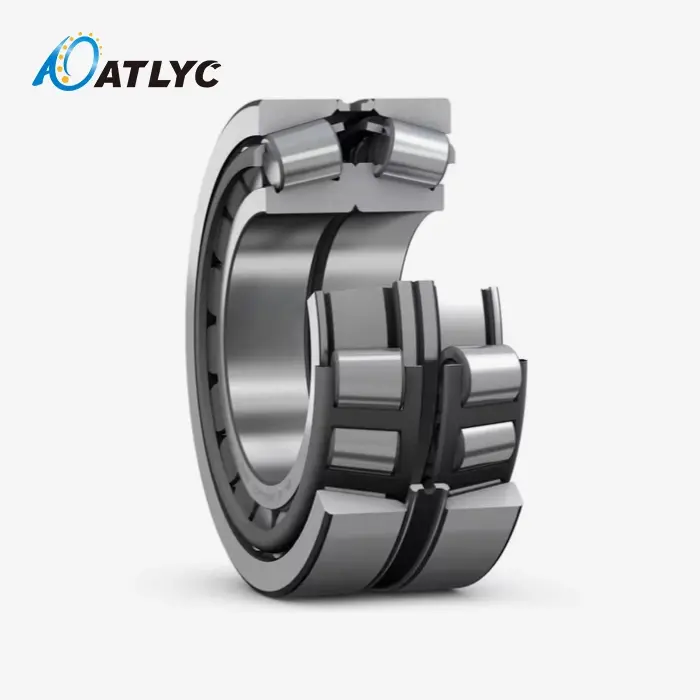
The bearing structure combines the thrust bearing, the radial bearing, and the moment-load support into a single, small unit. A fixed outer ring, a rotating inner ring, precision steel balls, and a cage all work together to get rid of the need for standard stacked bearing setups. Compared to traditional bearing combinations, this integration directly cuts down on the time it takes to put together equipment while also reducing the overall size by up to 40%. The makers of the equipment are free to use the extra room they've saved to add more tools or improve the motion control parts.
Double-Row Angular Contact Ball Configuration
Axial loads, radial forces, and twisting moments can all be supported at the same time by steel balls set up in two rows with contact angles between 45° and 60°. In 4-axis and 5-axis machining centres, where cutting forces are always changing direction, this shape is very useful. The angular design spreads the loads over a larger contact zone, which lowers the stress levels that usually lead to early track wear. Manufacturers of car parts have tested this setup and found that it keeps its positioning accuracy within ±5 arc-seconds even when the total load is more than 15 kN.
Precision-Ground Raceway Engineering
The inner and outer raceways are ground in several stages and then super-finished so that the surface roughness is less than 0.2 μm. This finish, which looks like a mirror, reduces friction and gets rid of tiny movements that happen when the part is turned. Precision grinding also makes sure that the measurement tolerances meet ISO 492 Grade 2 standards. This means that the runout features will be the same from one production batch to the next. We've seen that units with normal grinding finishes need to be serviced 30% less often than units with precision-ground raceways.
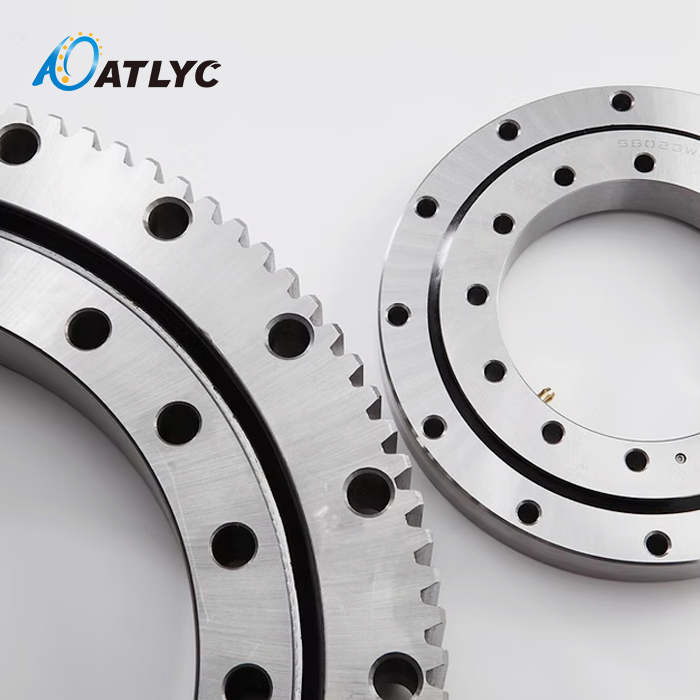
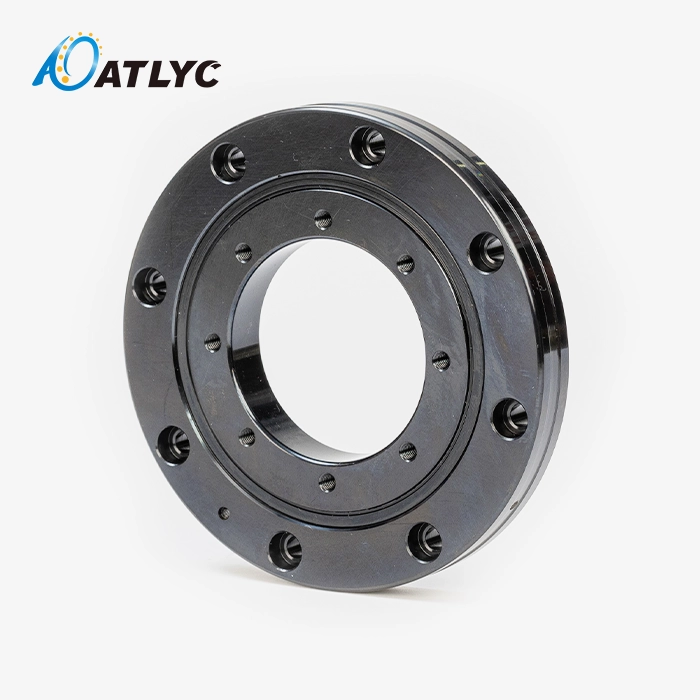
The compact structure version is different from regular YRT designs because its cross-sectional height is lower, but it can still carry heavy loads. When mounting room is limited, the miniature series is better than YRTS preloaded sealed versions or ZKLDF strengthened multi-row setups because it makes the best use of space. Because of this, the YRTM Rotary Table Bearing works well with small scanning tables, robotic joints, and pocket measuring tools.
Comparing YRTM Rotary Table Bearings with Alternatives in the Market
When procurement managers look at bearing choices, it can be hard to figure out how much better one answer is than another. We've put together comparison data from real-world uses to show how tiny rotor units compare to other types of bearings.
Performance Metrics Against Cross Roller Bearings
Cross roller bearings are very strong, but because their rollers are arranged in a cylinder shape, they usually need bigger mounting areas. By using angular contact geometry, the tiny rotating design gets the same moment stiffness with 25–30% smaller diameters. A CNC machine builder in Michigan said that using smaller rotary units cut the weight of the rotary table housing by 18 kg per unit while keeping the accuracy of placement within ±3 μm. As a trade-off, they have slightly lower speed ratings—miniature units work best below 300 rpm, while some cross roller designs can go up to 500+ rpm—but this doesn't usually make them less useful for indexing table tasks where rest time is longer than motion time.
| Parameter | YRTM Miniature Rotary | Cross Roller Bearing | Standard YRT |
|---|---|---|---|
| Outer Diameter Range | 80–200 mm | 100 to 300 mm | 120–400 mm |
| Cross-Section Height | 18–35 mm | 25 to 50 mm | 30 to 60 mm |
| Moment Stiffness | 0.81 to 3.22 kNm/arcmin | 0.5 to 4.5 kNm/arcmin | 1.5 to 6 kNm/arcmin |
| Speed Limit (grease) | 250 rpm | 500 rpm | 300 rpm |
| Installation Complexity | Low (unit built in) | Medium (setup for preload) | Low (unit built in) |
Value Proposition in CNC Machining Environments
An industrial equipment distributor that works with the car industry in the Midwest gave case study data that showed how long bearings last in three different product lines. YRTM Rotary Table Bearings lasted an average of 12,000 hours before they needed to be replaced in machines that ran two shifts a day for sixteen hours and had regular repair. Economy-grade alternatives only lasted 9,500 hours. The difference in price—usually 15-20% more at first for precision tiny units—is paid for in 18 months by less downtime and repair work.
Another important thing to think about is OEM support. Compact rotor bearings keep their mounting measurements, so they can be used with old equipment, so they can be retrofitted without having to make new housings. Established manufacturers usually offer warranties that last between 12 and 24 months and include clear failure analysis methods. This is in contrast to imported economy bearings, which usually come with shorter guarantee terms. During technical consultation, differences in service quality become clear: expert sellers offer help with load calculations and advice on the best way to lubricate certain applications, while commodity vendors usually only offer catalogue specs.
Where to Export YRTM Rotary Table Bearings From?
To find solid export sources for YRTM Rotary Table Bearing, you need to know both the manufacturing strengths of each region and the methods for qualifying suppliers. We made a map of the global supply scene to help buying teams make quick decisions about where to get things.
China's Bearing Manufacturing Hubs
Luoyang, in Henan Province, is the historic centre of bearing production in China. It is home to more than 200 specialised makers that make more than 3 billion bearing pieces every year. Cost savings can't be found anywhere else because the area has so much precise grinding equipment, heat treatment facilities, and metallurgical knowledge. European machine tool makers, North American automation developers, and Asian robotics companies all buy miniature YRTM Rotary Table Bearings from companies in this area. The area around Shanghai along the Yangtze River Delta is another place where goods are sent abroad. This is especially true for sellers who work with foreign joint ventures that need to talk about technology a lot.
Luoyang Auto Bearing Co., Ltd. is a good example of how mature the industry is in the area. When it started out in 2010, the company had just one workshop. Now it has six specialised production sites where 120 skilled workers do manufacturing, research and development, quality control, and assembly work. Their ISO 9001 and IATF 16949 certifications show that they follow quality systems for the car industry, and the fact that they have been exporting to South Korea, the US, Germany, Russia, Iran, and Turkey for 15 years shows that they can handle logistics.
Verification Processes for Authorised Suppliers
Fake bearings get into supply chains through unauthorised sellers who don't have direct connections with factories. We suggest a three-step verification process: ask for copies of quality management system certificates with up-to-date expiration dates; find customer reference contacts in the same industry; and confirm the addresses of production facilities through videoconferencing or third-party inspection services. Authorised distributors are happy to give plant audit reports and keep clear lines of communication open, including contacts for expert help.
Lead Times and Shipping Logistics
Standard catalogue sizes for tiny rotary bearings usually ship via ocean freight from China to ports on the West Coast of the United States within two to three weeks. It takes an extra five to seven days for local delivery. Air freight cuts the total time of travel to 5–8 days, but the cost per unit goes up by $15–30, based on the size of the bearing. Customised requirements that need special heat treatment or non-standard ways of sealing add three to four weeks to the production plan. When you buy more than 50 units at once, you can often get containerised shipping rates that cut the cost of handling by 20 to 35 per cent per piece compared to small parcel ways.
| Destination Region | Ocean Freight (weeks) | Air Freight (days) | Minimum Order (Bulk Rate) | Cost Savings (Bulk) |
|---|---|---|---|---|
| US West Coast | 2-3 | 5–8 | 50+ units | 25–35% |
| US East Coast | 4-5 | 6–9 | 50+ units | 20–30% |
| Germany | 5–6 | 7–10 | 100+ units | 30–40% |
| South Korea | 1-2 | 3–5 | 30+ units | 15–25% |
2025 Pricing Overview and Quotation Process
Prices for compact rotary table bearings vary by bore width (50–150 mm), precision grade (P4/P2), and sealing setup, with prices ranging from $85 to $320 per unit. When you buy 10 units or more, you usually get a volume price of 8–12%. For orders over 100 pieces, you save 18–25%. OEM customisation, like changing the mounting holes or adding special coatings that prevent rust, raises the base price by 15 to 30 per cent but gets rid of the need for extra cutting.
If you want to get quotes, you should be clear about the bore diameter, the outer diameter, the height, the needed precision class, the working speed range, and the estimated annual volume. Include information about the application, like how the load will be applied and the weather, to get the right greasing and closing advice. When you can show that you will be a regular customer, it's easier to get good payment terms. This is because established suppliers usually let you have net-30 terms after your first order to prove your reliability, instead of proforma payment requirements for one-time purchases.
Installing and Maintaining YRTM Rotary Table Bearings for Optimal Performance
The service life of the bearings and the accuracy of the machine are directly affected by the right way to place them. To help maintenance teams avoid common mistakes, we've written down the best ways to do things from field setups in a range of workplace settings.
Step-by-Step Installation Guidelines
First, use lint-free brushes and isopropyl alcohol to clean the fastening surfaces to get rid of burrs, chips, and any leftover lubrication. Check that the sizes of the housing hole and shaft seat are within the allowed ranges by measuring them. For housings, this is usually H7, and for shafts, it's H6. Before placing the bearing, apply a thin, even layer of assembly lube to the shaft. Be careful not to use too much lubricant, as it could trap dirt and dust.
During fitting, alignment is very important. Check that the shaft axis stays straight in relation to the mounting surface to within 0.02 mm for every 100 mm of shaft length using precise dial markers. To make sure that clamping forces are spread out properly around the bearing, tighten the mounting nuts in a cross-pattern according to the manufacturer's instructions. For M8 screws, this is usually between 15 and 25 Nm. Do not use impact forces when putting things together; instead of hammering, use hydraulic presses or thermal expansion methods. Hammering can damage raceways and rolling elements.
Common Installation Errors to Avoid
When you overtighten the mounting nuts, the housing warps, which places stress centres in the outer ring. We looked at three different setups where failed bearings were caused by too much bolt pressure (more than 35 Nm on M8 fasteners), which deformed the elliptical raceway and caused it to spall before it was supposed to, within 2,000 operating hours. Another common problem is that the support isn't rigid enough. If you mount the YRTM Rotary Table Bearing to a housing with thin walls or a shaft that's too small, the bearing can move during loading, which is more than its internal clearance, putting edge pressure on the ball-to-raceway contacts.
During installation, contamination is one of the top three reasons why things fail. As little as 10 microns, which can't be seen with the naked eye, particles can get stuck in raceways and cause stress to rise. Always place things in a clean area, and seal any bearing holes right away after fixing to keep dust out before turning the equipment on.
Routine Inspection and Lubrication Protocols
Set up review times that are based on business hours instead of the calendar. Bearings should be inspected every 2,000 hours on equipment that works in a single shift (8 hours a day), but every 1,000 hours on equipment that works continuously. Checklists for inspections should include measuring vibrations at bearing locations (acceptable levels below 2.5 mm/s RMS), keeping an eye on temperature (bearing surfaces should stay within 15°C of ambient during steady-state operation), and listening to noise during slow rotation to find out if there are any strange sounds that could mean wear or contamination.
When to re-oil depends on how fast and how hot the machine is running. When the temperature is normal, and the speed is less than 100 rpm, bearings need new grease every 3,000 to 4,000 hours. When the speed is higher than 250 rpm, or the temperature is above 60°C, they need new grease every 1,500 to 2,000 hours. Only use lithium-based greases that the maker recommends. These should have an NLGI Grade 2 consistency and EP (extreme pressure) ingredients. Apply the right amount of grease for the bearing size—usually 30 to 40 per cent of the free space volume—because both too little and too much grease can shorten the life of the bearing.
A Midwest machine tool rebuilder documented outcomes across 47 CNC machines over three years. Units following prescribed inspection and lubrication schedules averaged 14,500 hours mean time between bearing replacements, compared to 8,200 hours for machines receiving only reactive maintenance after problems emerged. The systematic approach reduced unplanned downtime by 62% and lowered annual bearing procurement costs by 34% through extended component longevity.
Procurement Tips and How to Build Trust with YRTM Rotary Table Bearing Suppliers
Comparing prices isn't enough to build trusting partnerships with suppliers. We've found key differences between reliable partners and transactional sellers who don't follow through after making the first delivery.
Assessing Supplier Credentials and Capabilities
Instead of taking direct promises, ask for proof that the quality management system is being followed. Valid ISO 9001 certificates should show up with up-to-date expiration dates (certificates need to be renewed every three years) and the address of the production plant that matches where your provider is located. The IATF 16949 certification means that the quality processes are up to par for the car industry. These processes include advanced product quality planning (APQP) and production part approval processes (PPAP), which can be used in any precision bearing application.
Manufacturing capacity verification prevents situations where suppliers accept orders exceeding their production bandwidth, leading to delayed deliveries or subcontracted production with inconsistent quality. Find out how many of each type of bearing are made each month, how many cutting tools are used to make raceways, and how much heat treatment equipment can hold. Suppliers who work multiple shifts and have tools just for your bearing size show that they can make stable products.
Communicating Technical Specifications Effectively
To get correct product suggestions, give full application information when you first ask a question. Name the type of machine (CNC machining centre, robotic joint, or indexing table), its range of rotation speeds, its job cycle (continuous or sporadic), the size and direction of the loads it will be working under, and its operating environment (temperature range, exposure to contamination, and vibration levels). With clear specs, providers can suggest the best precision grades, sealing configurations, and lubrication types for your particular working conditions.
When designing new tools, ask for help from an engineer with load estimates. Bearing analysis software is used by experienced providers to figure out safety factors, projected L10 life (the number of hours until 10% of bearings show wear and tear), and the best preload values. During the quotation phase, this conversation should happen without any pressure. Suppliers who spend time on application engineering show commitment beyond transactional sales.
Understanding Warranty Policies and After-Sales Support
The warranty terms should make it clear what is covered, how to file a claim, and how long you have to wait for an answer. Standard guarantees usually cover problems with the way the product was made, like mistakes in the grinding of the raceways, flaws in the material, and cage failures. However, they don't cover damage caused by bad fitting, contamination, or not enough lubricant. During the supplier review process, ask for examples of warranty claim forms to learn what kinds of paperwork are needed. For example, fair policies should ask for failure mode descriptions and working hour logs instead of demanding expensive metallurgical analysis before recognising claims.
After-sales support quality reveals supplier commitment to long-term relationships. Test responsiveness by asking technical questions during the review part and keep track of reaction times and answer completeness to test responsiveness. Suppliers who have technical support contacts in the US or who offer video consultations have better service infrastructure than those who only use email to communicate across time zones.
Luoyang Auto Bearing Co., Ltd. provides a practical example of comprehensive supplier capabilities. Their 15-year history of business shows that they are stable, and the fact that they have six specialised production workshops shows that they can make more than just put things together. Export experience in several countries, from the precision electronics industry in South Korea to the car industry in Germany, shows the ability to respond to different regulatory and technical settings. When you buy directly from the plant, you skip the middlemen who mark up prices for distributors, which can add 20 to 35 per cent to the final price for the customer. This lowers your costs without lowering the quality standards for the YRTM Rotary Table Bearing.
Conclusion
Choosing the right export source for tiny rotary table bearings has a direct effect on how well your equipment works, how reliable it is, and how much it costs to run overall. China's specialised bearing manufacturing regions, especially Luoyang, offer mid- to large OEMs and industrial wholesalers around the world a great mix of precise manufacturing skills, quality system compliance, and low costs. Thoroughly checking out suppliers, having clear technical conversations, and building relationships with makers who can show large-scale production and foreign experience are all important parts of successful buying. When you give more weight to suppliers with ISO 9001 and IATF 16949 certifications, keep quality records that are easy to read, and offer quick engineering support, you build a supply chain that can handle rising operational needs in areas like automotive parts, industrial machinery, and automation equipment for the YRTM Rotary Table Bearing.
FAQ
1. Which international certifications validate YRTM rotary table bearing export quality?
Getting ISO 9001 approval shows that you follow the rules for a quality management system. These rules cover the planning, production, and customer service processes. IATF 16949 adds to these standards controls that are specific to the car industry. These include statistical process control and measurement system analysis. Bearings from companies with both certifications meet strict standards for material consistency and accurate measurements, making them ideal for CNC machines and other high-precision automation equipment. When reviewing suppliers, ask for pictures of certificates that show the current dates of validity and the addresses of production facilities that match the YRTM Rotary Table Bearing.
2. How does YRTM's load capacity compare to competitors in similar size ranges?
Small rotary table bearings can usually handle axial loads of 15 to 45 kN, radial loads of 10 to 30 kN, and bending moments of 0.8 to 3.2 kNm, depending on the bearing width (80 to 200 mm range). These capacities are the same as or greater than cross roller bearings with equal outer diameters. They also save 25–30% of room because the cross-sectional height is lower. When loads are spread out over a larger contact area, the double-row angular contact design is safer than single-row designs. This is because it can handle the mixed loads that are common in 4-axis and 5-axis cutting for the YRTM Rotary Table Bearing.
3. Can I place direct factory customisation orders for non-standard specifications?
Well-known companies can meet particular needs, like changing the mounting measurements, making special sealing arrangements, or using different types of material in places where corrosion is a problem. Depending on how complicated the changes are, customisation usually needs a minimum order quantity of 20 to 50 pieces and adds 3 to 5 weeks to the normal production lead times. To get exact pricing and feasibility estimates, you must send thorough drawings with key measurements, tolerance standards, and descriptions of the application. Direct relationships with factories cut down on planning delays for distributors and customisation costs by 15–25% compared to buying through middlemen for the YRTM Rotary Table Bearing.
Source High-Performance YRTM Rotary Table Bearing Directly from ATLYC
ATLYC (Luoyang car Bearing Co., Ltd.) has been making precision bearings for 15 years and has quality systems that are ISO 9001 and IATF 16949 approved. They make miniature rotary tables that meet the exact needs of car OEMs and industrial equipment producers. Our six specialised production sites, which are home to 120 skilled techs, allow us to keep an eye on quality and make sure that our output capacity can be changed to meet the needs of both prototypes and full production runs. We have sold small rotary bearings to CNC makers in South Korea, the US, and Germany. These bearings have been used in situations that need sub-micron positioning accuracy and long service life. Email our engineering team at auto@lyautobearing.com to talk about your unique load needs, get full technical specifications, and find out how much YRTM Rotary Table Bearing supplier partnerships cost in bulk. We offer full application support, which includes load estimates, installation help, and the ability to make changes that make precision manufacturing fit your business schedule and budget.
References
1. Harris, T.A. & Kotzalas, M.N. (2006). Advanced Concepts of Bearing Technology: Rolling Bearing Analysis, Fifth Edition. CRC Press.
2. ISO 492:2014. Rolling bearings — Radial bearings — Geometrical product specifications (GPS) and tolerance values. International Organisation for Standardisation.
3. Weck, M. & Brecher, C. (2006). Machine Tools Production Systems 2: Design and Calculation, Volume 2. Springer-Verlag Berlin Heidelberg.
4. SKF Group. (2018). Rolling Bearings Catalogue: High Precision Bearings for Machine Tool Applications. SKF Motion Technologies AB.
5. Budynas, R.G. & Nisbett, J.K. (2020). Shigley's Mechanical Engineering Design, Eleventh Edition. McGraw-Hill Education.
6. China Bearing Industry Association. (2023). Annual Report on Chinese Bearing Manufacturing: Export Statistics and Quality Standards Compliance. CBIA Research Department.
Learn about our latest products and discounts through SMS or email