- English
- French
- German
- Portuguese
- Spanish
- Russian
- Japanese
- Korean
- Arabic
- Greek
- German
- Turkish
- Italian
- Danish
- Romanian
- Indonesian
- Czech
- Afrikaans
- Swedish
- Polish
- Basque
- Catalan
- Esperanto
- Hindi
- Lao
- Albanian
- Amharic
- Armenian
- Azerbaijani
- Belarusian
- Bengali
- Bosnian
- Bulgarian
- Cebuano
- Chichewa
- Corsican
- Croatian
- Dutch
- Estonian
- Filipino
- Finnish
- Frisian
- Galician
- Georgian
- Gujarati
- Haitian
- Hausa
- Hawaiian
- Hebrew
- Hmong
- Hungarian
- Icelandic
- Igbo
- Javanese
- Kannada
- Kazakh
- Khmer
- Kurdish
- Kyrgyz
- Latin
- Latvian
- Lithuanian
- Luxembou..
- Macedonian
- Malagasy
- Malay
- Malayalam
- Maltese
- Maori
- Marathi
- Mongolian
- Burmese
- Nepali
- Norwegian
- Pashto
- Persian
- Punjabi
- Serbian
- Sesotho
- Sinhala
- Slovak
- Slovenian
- Somali
- Samoan
- Scots Gaelic
- Shona
- Sindhi
- Sundanese
- Swahili
- Tajik
- Tamil
- Telugu
- Thai
- Ukrainian
- Urdu
- Uzbek
- Vietnamese
- Welsh
- Xhosa
- Yiddish
- Yoruba
- Zulu
What Lubricant Works Best with RA Series Crossed Roller Bearings?
When it comes to RA Series Crossed Roller Bearings, the most trusted industrial greases and oils are lithium-based greases with NLGI Grade 2 consistency and ISO VG 68–100 viscosity oils. High-quality synthetic greases with lithium complex thickeners keep the low friction coefficient that is important for crossed roller bearing performance while being very stable across a wide range of temperatures. Lightweight synthetic oils are better at getting rid of heat in high-speed robots and precision rotating tables. The best choice depends on your working conditions, load profiles, and maintenance skills, but these types of lubricants always give procurement workers the right mix of load-carrying capacity, smooth rotation, and longer service life.
Overview of RA Series Crossed Roller Bearings and Lubrication Essentials
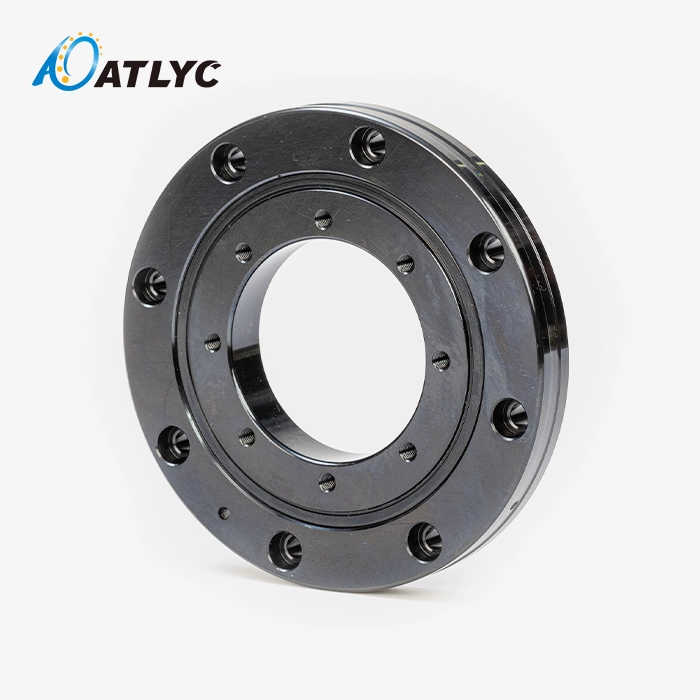
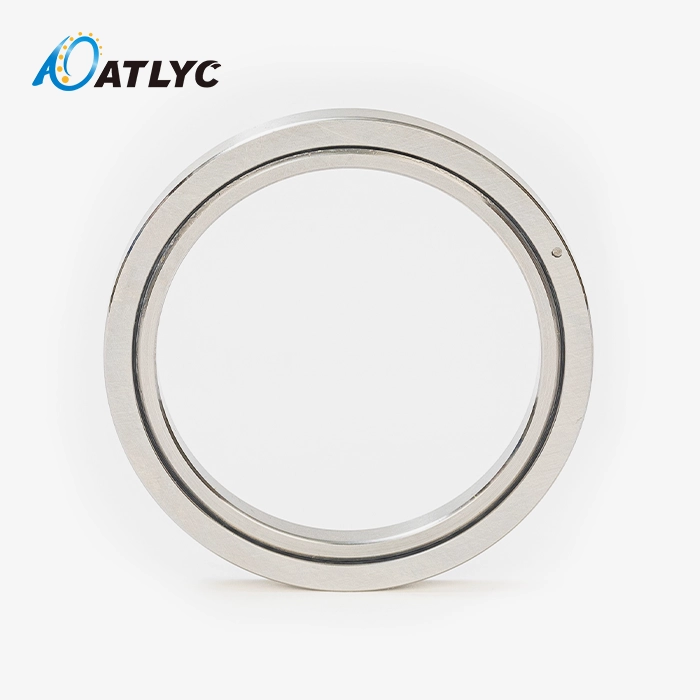
Because of how RA Series Crossed Roller Bearings are built, choosing the right lubrication is a smart choice rather than an accident. These very thin precision parts have cylinder-shaped wheels placed orthogonally within V-groove raceways. This makes contact patterns that are very different from those in regular ball bearings. They are very useful in robotic joints, CNC spinning tables, and medical imaging equipment because they can handle radial, axial, and moment loads all at the same time in a small space.
Why Lubrication Matters for Precision Crossed Roller Bearings
Proper greasing is important for many reasons. Between the roller elements and the raceways, it makes a protective film that keeps metal from touching metal, which speeds up wear. The lube gets rid of the frictional heat that is generated when the part turns, which is important for keeping the dimensions stable for accurate placement. It also protects against rust while in storage and while in use, which increases the useful life of assets in tough industrial settings.
But buying teams always have to deal with the same problems. If you choose oils that don't work well with these bearings, the excellent runout accuracy they offer can be lost. Too much lubrication raises the spinning force and generates too much heat, while not enough lubrication damages the raceways too soon. Engineers can choose lubrication methods that protect their investment and increase uptime by understanding these processes.
Design Characteristics Affecting Lubrication Requirements
The outer ring can be taken apart, and the inner ring is built in so that it fits together perfectly. This makes certain greasing paths. During assembly, grease needs to evenly reach all areas where the rollers touch the raceways. Because the bearings are crossed at 90-degree angles, the oil is spread out differently than in normal radial bearings. Sizes from 20mm to 350mm inside diameter and 70mm to 540mm outside diameter have different surface speeds and heat production patterns, so the right thickness must be chosen.
These parts, which are made from Gcr15 and Gcr15SiMn bearing steels with precision classes from P8 to P4, need oils that keep the quality of the surface finish. The level of vibration and noise is directly affected by the roughness of the raceway surface. This is why oil cleaning and additive chemistry are very important for B2B buyers who are looking for parts for medical devices or tools used to make semiconductors.
Types of Lubricants Suitable for RA Series Crossed Roller Bearings
Knowing the three main types of lubricants makes it easier to match goods to the needs of the job. Each type has its own benefits that depend on the seriousness of the application, the surroundings, and how easy it is to maintain.
Grease Lubrication Solutions
When it comes to general industrial gear, grease is the most common way to grease RA Series Crossed Roller Bearings. The semi-solid consistency offers natural binding qualities that keep internal parts free of contaminants and make relubrication easier. Lithium complex greases are used a lot in industry because they can handle temperatures up to 150°C and are very stable mechanically when they are vibrated.
Lithium soap greases with anti-wear additives keep the film strength in automation equipment and robot joints even when they are moving back and forth. During long periods of inactivity, the thickener structure keeps the base oil in contact points. This stops dry starts that damage precision raceways. Grease also absorbs small shocks, which is useful in robotics where acceleration rates change.
But when choosing grease, you need to pay close attention to the levels of uniformity. NLGI Grade 2 is the best for initial filling because it is easy to pump and keeps the right film thickness during operation. When the shaft is oriented vertically, greases that are softer may move out of load zones, while greases that are harder increase the starting force in precision positioning systems.
Oil Lubrication for High-Performance Applications
When temperature management determines design needs, oil lubrication is helpful. Because they actively remove frictional heat, circulating oil systems make it possible for machining centre rotating tables and measuring tools to spin faster. Mineral oils ISO VG 68 are good for moderate-speed uses, while manufactured polyalphaolefin (PAO) oils can be used in a wider range of temperatures and are more resistant to rusting.
Lubricating bearings with oil lets filtering systems keep getting rid of contaminants, which is very important in places where metal bits or process fluids could damage the bearings. When oil mist systems give the right amount to bearing zones, they keep protective films on all touch areas and reduce churning losses.
The main thing to think about is how complicated the closing is. When you use an oil bath or circulation method, you need strong shaft seals and housing designs that stop leaks. This makes the starting cost of the system higher. Maintenance teams need to keep an eye on the oil by analysing it regularly and seeing how the viscosity is changing and how much contamination there is so that they can plan changes before wear speeds up.
Specialised Solid and Dry Film Lubricants
In some harsh conditions, options to standard fluid lubricants are needed. Standard oils and greases can't be used in vacuum tanks used in IC manufacturing devices or high-temperature furnaces. When PTFE-based dry film coatings are attached to the surfaces of the raceways, they act as border lubricants, but they have much higher friction coefficients.
Adding graphite and molybdenum disulfide improves performance under high pressure in slow-speed situations with a lot of load. When the lubricant film breaks down, these solid lubricants stick to the surfaces that are in contact with each other. Bearings in medical equipment are put through repeated rounds of sterilisation, which is why synthetic greases with solid lubricant support are useful for surgery robots and C-arm positioning systems.
Understanding these unique choices enables procurement pros to meet specific needs without affecting the performance of bearings in common situations. When operating conditions call for more safety, the higher cost of special lubricants makes sense.
How to Select the Best Lubricant for RA Series Crossed Roller Bearings
Lubricant specification is based on a systematic review of working factors. This way cuts down on methods that rely on trial-and-error, which waste time and money and can damage tools.
Evaluating Load and Speed Parameters
The amount of load directly affects the width of the oil film that needs to be used. When robot wrist joints are under a lot of rotational and moment loads, they need oils or greases with a higher viscosity and strong, extreme-pressure additive packages. Find the bearing's speed factor (bearing size in mm ÷ RPM) to figure out how often to grease it. Values below 50,000 usually work well with grease, while higher speeds work better with oil because it better dissipates heat.
RA Series Crossed Roller Bearings spread loads over many contact points, which results in lower contact stresses than point-contact ball bearings. This shape lets a little lower viscosity oils work than angular contact bearings of the same size, which lowers the drag force and improves positioning accuracy. When matching lubricant qualities to application needs, engineering teams should look at the load ratings given by the manufacturer.
Temperature Range Considerations
More than any other factor, ambient and working temperatures determine which lube to use. Standard lithium greases stay the same substance between -20°C and 120°C, which is good for factories that keep the temperature and humidity under control. Production lines for auto parts that have bigger temperature changes need polyurea or lithium complex greases that can work continuously at 150°C.
Low temperatures can make it hard to pump grease and change the way oil flows. Mineral oils solidify at temperatures below zero, but synthetic base stocks stay flexible. This makes sure that lubricant gets to critical wear zones during cold starts. Applications that are hot speed up rust, which shortens the life of lubricants and requires them to be re-oiled more often.
Bearing heat creation makes the effects of the ambient temperature worse. Crossed roller designs have a low friction coefficient, which keeps them from self-heating too much. However, high-speed rotations or ongoing job cycles can still make bearing temperatures rise. By choosing the right grease, you can control the temperature of the bearings and keep their dimensions from changing, which would affect their exceptional runout accuracy.
Environmental and Contamination Factors
Protection against contamination is one of the main purposes of greasing. Bearings that are sealed keep the grease inside while keeping out particles, water, and process chemicals. For open bearing designs that work in dusty places, greases that are more tacky and don't absorb water are needed to keep the protection films in place.
In semiconductor chip alignment steps that are used in cleanrooms, regular lubricants that give off volatile substances are not allowed. Synthetic greases with low vapour pressure meet cleaning standards and protect against wear well enough. On the other hand, bearings in harsh outdoor settings are exposed to temperature changes, UV rays, and water, so they need to be made with weather-resistant materials.
When process fluids come into contact with bearing systems, chemical compatibility is very important. Some hydraulic oils, coolants, and solvents break down regular greases, so synthetic lubricants are needed that don't react with chemicals. To make sure that lubricants work with the equipment for its whole life, procurement requirements should list all possible contamination exposures.
Matching Lubricants to Specific Bearing Models and Dimensions
The amount of oil and how it is distributed depend on the size of the bearing. Smaller crossed roller bearings with inner sizes between 20 mm and 100 mm usually get greased up the first time they are put together, and they only need to be oiled every few years for moderate-duty uses. For routine repair, larger models with an inner diameter of about 350 mm may have lubrication holes that need to be fitted with a grease gun that works with these models.
The form of the outer ring being able to be taken off makes initial cleaning easier, but it needs careful attention during assembly. Before putting on the outer ring, the lubricant must be evenly spread over all roller surfaces and raceway grooves. This keeps dry spots from forming that speed up wear. When too much oil is pushed into rolling tracks, it increases torque and heat, so it is important to keep an eye on the amount.
The accepted cleanliness of the grease is affected by the precision class choice. Filtered oils with ISO 4406 cleanliness numbers of 16/14/11 or higher are needed for P4-class bearings that are used in measuring tools. Standard market lubricants can be used in P6 and P0 classes for less important tasks. By matching the quality of the oil to the exact needs, you can save money and keep performance high.
| Bearing Size Range | Recommended Grease Type | Typical Relubrication Interval | Oil Alternative |
|---|---|---|---|
| ID 20-80mm | Lithium complex NLGI 2 | 8,000-10,000 hours | ISO VG 68 synthetic |
| ID 80-200mm | Lithium complex NLGI 2 | 6,000-8,000 hours | ISO VG 100 mineral/synthetic |
| ID 200-350mm | Polyurea NLGI 2 | 5,000-7,000 hours | ISO VG 150 synthetic |
The gaps shown in this table are just suggestions; the real times will depend on how the system is working. Continuous use, high temperatures, and dirty environments lessen the service life. Intermittent use in clean environments, on the other hand, greatly increases the intervals.
Best Practices for Lubrication Application and Maintenance
When used correctly and maintained according to the right procedures, RA Series Crossed Roller Bearings last longer and have less unexpected downtime. These methods are used in many fields, from making parts for cars to putting together medical tools.
Initial Bearing Assembly Lubrication
Clean building areas to keep things from getting dirty during the first greasing. Using approved solvents, remove any protective oils from the bearing surfaces and let them evaporate completely before adding an operating lubricant. Check the raceways under a microscope to make sure the surface finish is good, and there are no signs of handling damage.
Apply the grease in a planned way to make sure it covers everything. Lay the inner ring flat on the upper track surface and spread grease evenly over it. Place the wheels and their filter in the right place and put grease between each part. To keep the rollers from moving, coat the lower outer ring raceway before carefully aligning and fitting the unit.
The amount of grease that is required is usually between 30% and 50% of the bearing's free internal space. Too much filling causes grinding resistance and temperature rise, while not enough lubrication leaves touch zones vulnerable. Bearing makers tell you how much filler to use based on the type of application. For example, precision positioning systems need less fill than fully loaded industrial drives.
For systems that use oil, you need to follow different steps. For a short time, bearing parts should be submerged in clean oil heated to about 80°C. This will allow capillary action to pull grease into all gaps. To finish putting the parts into their housings, drain off any extra oil and make sure they are properly wet.
Establishing Maintenance Schedules and Monitoring Protocols
Predictive repair methods make bearings last longer than just a few months. Vibration analysis finds problems before they get worse by looking for changes in the frequency range that show how wear or lubrication is breaking down. Temperature tracking finds changes in temperature from the normal range, which can mean that there isn't enough grease or the machine is under too much stress.
Regular checks make sure the lube is still good without taking anything apart. Using clean tools to take samples of grease from relubrication ports and look at its colour, consistency, and amount of contamination. Oxidation is shown by darkening, while water pollution shows up as a milky look or changes in structure. The grittiness shows that particles have gotten in and need to be fixed right away.
Procedures for relubrication must strike a balance between safety and over-filling. Use controlled amounts of new lubricant to get rid of old grease. Slowly turn the bearing to spread the new lubricant around and let old grease escape through seals or relief holes. When switching goods, grease compatibility is very important. Mixing thickeners that don't work well together can cause them to lose their structure and speed up wear.
Troubleshooting Common Lubrication-Related Issues
Too much oil or choosing the wrong viscosity can cause the working temperature to rise too high. Lowering the amount of grease used and letting the machine run for a few hours usually brings temperatures back to normal as extra material is pushed out of the rolling tracks. If the burning keeps happening, you may need to switch to oils with a lower viscosity or improve the cooling.
An unusual noise means that the bearings aren't oiled enough or are damaged by contamination. Intermittent clicking means that a single roller is broken, while constant grinding means that the raceways are damaged all over because they aren't getting enough oil. Stopping the machine right away stops a catastrophic failure, but once noise starts to appear, bearing replacement is often needed.
When starting power goes up, or positioning mistakes happen, it means that the lubricant is breaking down or contaminants are building up. Problems that are starting to show up can be found by measuring breakaway force and comparing the results to standard data. The old lubricant has to be fully taken off, the bearing parts have to be cleaned well, and new lubricant has to be put on following the right steps.
RA Series Crossed Roller Bearings Lubrication in Comparison with Alternatives
Engineers can make standards better for certain uses if they know how to lubricate RA Series Crossed Roller Bearings differently from other types of precision bearings. Different designs lead to different lube needs, even when performance goals are the same.
Lubrication Differences from Ball Bearings
By setting up preloads, angular contact ball bearings can be very hard, but they also create point contact pressures that need strong lubricant layers. Crossed roller bearings make line contact with lower contact pressures, which lets the oil have a slightly lower viscosity while still keeping the right film thickness. This trait lowers friction torque, which is helpful for precise placement tasks that need smooth motion.
When lubricating ball bearings, low-viscosity oils or specially made high-speed greases are often used to focus on their high-speed capabilities. Crossed roller setups put load capacity and rigidity ahead of pure speed. This means that moderate-viscosity lubricants work best for most robotic joint uses. The cylinder-shaped roller layout can also handle short gaps in lubrication better than point-contact designs.
Performance Implications in Robotic and Industrial Applications
Industrial robots that work nonstop over multiple shifts benefit from the temperature stability and load spread of crossed roller bearings. With the right amount of lubrication, placement precision stays within micrometres even when heat and pressure build up. When compared to ball bearings, synthetic greases allow for longer periods of time between relubrication, which lowers upkeep costs in multi-axis setups with many bearing locations.
A lot of cutting forces and heat cycles are put on bearings in heavy industrial settings, like rotating tables in machining centres. Because the crossed roller design can handle moment loads, it cuts down on the number of bearings that are needed, which makes lubrication easier. Centralised lubrication systems can easily service many bearing places and keep the right amount of lubricant on hand without any help from a person.
Medical imaging equipment needs to be very smooth and able to repeat its position. Low-noise synthetic greases on crossed roller bearings keep the rotation smooth, which is important for diagnostic picture clarity. The small size makes the equipment profiles thinner than with multiple ball bearing setups, and the right greasing makes sure that the machine runs quietly while the patient is being treated.
Comparing Performance with Leading Global Brands
International bearing makers like NSK and SKF put out detailed greasing instructions that were made after decades of experience in the field. These sources give good starting points, but Chinese companies with ISO 9001 and IATF 16949 certifications are more and more likely to offer similar quality at lower prices. If you choose the right lubricant, domestically produced crossed roller bearings can work as well as or better than imported bearings in challenging situations.
When planning how to buy things, it's helpful to know that the quality of the grease is often more important than where the bearings come from. When you buy value-priced bearings with premium synthetic greases from reputable sources, they can last almost as long as premium names. This method lowers the total cost of ownership while keeping production reliable. This is especially helpful for OEMs that are in charge of large-scale automation projects.
| Bearing Type | Contact Pattern | Preferred Lubricant | Typical Speed Limit | Lubrication Sensitivity |
|---|---|---|---|---|
| Crossed Roller (RA Series) | Line contact | Lithium complex NLGI 2, ISO VG 68-100 oil | Moderate (n×dm < 300,000) | Moderate |
| Angular Contact Ball | Point contact | Low-viscosity synthetic, ISO VG 32-68 oil | High (n×dm < 500,000) | High |
| Cylindrical Roller | Line contact | EP grease, ISO VG 100-150 oil | Moderate | Moderate |
Crossed roller bearings are in a performance range between pure radial and pure thrust types, as shown by this comparison. Their lubrication needs mirror this flexibility, combining load capacity with smooth spinning by choosing the right viscosity.

Conclusion
To choose the best oil for RA Series Crossed Roller Bearings, you have to weigh a lot of technical and practical factors. Lithium complex greases that are consistent with NLGI Grade 2 work well in a wide range of industrial settings, and synthetic oils help high-speed, precise equipment handle heat better. When procurement workers know how bearing size, load conditions, temperature exposure, and contamination risks affect lube choice, they can come up with solutions that make assets last longer and cost less to maintain. These bearings are essential for robots, machine tools, and automation systems because they can accurately place things and hold a lot of weight. To keep them in good shape, they need to be used correctly and monitored regularly. Engineers can get the most out of crossed roller bearing technology by matching the properties of the grease to the needs of the process.
FAQ
1. How Often Should RA Series Crossed Roller Bearings Be Relubricated in Heavy-Duty Applications?
When quality lithium complex greases are used, heavy-duty constant running usually needs to be relubricated every 3,000 to 5,000 hours. Intervals as short as 2,000 hours may be needed for applications with shock loads, temperature changes above 80°C, or dirty settings. Monitoring vibrations and checking temperatures on a regular basis find problems before they get too bad for planned repair. Intervals can be extended to 10,000 hours or more for bearings that work intermittently in clean, moderate-temperature settings. Setting standard performance measures during commissioning makes condition-based maintenance strategies possible, which improves reliability while keeping costs low.
2. Are Different Lubricants Required for Various RA Bearing Sizes?
Bearing size affects the amount of oil used instead of the basic type choice. Smaller types with an inner diameter of 20 mm to 80 mm usually use the same lithium complex greases as bigger ones, but the amount of filling that goes into them changes appropriately. RA Series Crossed Roller Bearings with a width of more than 200 mm might work better with oils that have a slightly higher viscosity (ISO VG 100–150) to keep the film layer right at higher surface speeds. The shape of the separate outer ring stays the same across all sizes, so the cleaning steps are the same no matter the size. Specifications for lubricants are based on precision class and application intensity more than on size alone.
3. What Symptoms Indicate Inadequate Lubrication in Crossed Roller Assemblies?
Usually, lubrication problems are detected before other signs show up when temperatures rise by 10 to 15°C above normal. Strange noises, like clicking sounds or grinding sounds that don't stop, mean that the wear is getting worse because the lube is breaking down or getting dirty. If there are more placement mistakes or changes in torque, it means that the lubricant isn't being spread evenly across the roller tracks. A visual check might show discoloured or split grease, contaminated with moisture, or a buildup of particles. If you take care of these early warning signs by replacing or adding more oil, you can avoid major failures that require replacing bearings and longer downtime.
Contact ATLYC for Expert RA Series Crossed Roller Bearing Solutions
ATLYC has been making precision bearings for 15 years and works with challenging industrial uses all over the world. Our production sites are ISO 9001 and IATF 16949 certified, and they make RA Series Crossed Roller Bearings for robotics, CNC machines, and automation equipment in the semiconductor, medical device, and car industries. We know that good bearing performance depends on more than just the part itself. The right choice of lubricant and the right way to use it will decide whether your equipment lasts as long as it's supposed to or breaks down early.
Our engineering team offers full technical support and can help you choose oils that are best for your operating conditions and level of care. Whether you need advice on how often to re-oil, how to keep pollution from spreading, or how to improve performance, our experts have a lot of experience helping customers in South Korea, the US, Germany, and other foreign markets. As a reputable company that makes RA Series Crossed Roller Bearings, we offer reasonable prices, dependable wait times, and quality that always meets international standards.
Reach out to auto@lyautobearing.com to discuss your specific application requirements and receive detailed product specifications tailored to your needs. Our commitment to long-term partnerships means we support your success beyond the initial purchase, providing the technical expertise and supply reliability that drive operational excellence in competitive manufacturing environments.
References
1. Harris, T.A. & Kotzalas, M.N. (2006). Advanced Concepts of Bearing Technology: Rolling Bearing Analysis, Fifth Edition. CRC Press.
2. Khonsari, M.M. & Booser, E.R. (2017). Applied Tribology: Bearing Design and Lubrication, Third Edition. John Wiley & Sons.
3. Lansdown, A.R. & Price, A.L. (2012). Materials to Resist Wear: A Guide to Their Selection and Use. Pergamon Press.
4. Neale, M.J. (Editor) (2001). The Tribology Handbook, Second Edition. Butterworth-Heinemann.
5. Hamrock, B.J., Schmid, S.R. & Jacobson, B.O. (2004). Fundamentals of Fluid Film Lubrication, Second Edition. Marcel Dekker.
6. Budynas, R.G. & Nisbett, J.K. (2020). Shigley's Mechanical Engineering Design, Eleventh Edition. McGraw-Hill Education.
Learn about our latest products and discounts through SMS or email