- English
- French
- German
- Portuguese
- Spanish
- Russian
- Japanese
- Korean
- Arabic
- Greek
- German
- Turkish
- Italian
- Danish
- Romanian
- Indonesian
- Czech
- Afrikaans
- Swedish
- Polish
- Basque
- Catalan
- Esperanto
- Hindi
- Lao
- Albanian
- Amharic
- Armenian
- Azerbaijani
- Belarusian
- Bengali
- Bosnian
- Bulgarian
- Cebuano
- Chichewa
- Corsican
- Croatian
- Dutch
- Estonian
- Filipino
- Finnish
- Frisian
- Galician
- Georgian
- Gujarati
- Haitian
- Hausa
- Hawaiian
- Hebrew
- Hmong
- Hungarian
- Icelandic
- Igbo
- Javanese
- Kannada
- Kazakh
- Khmer
- Kurdish
- Kyrgyz
- Latin
- Latvian
- Lithuanian
- Luxembou..
- Macedonian
- Malagasy
- Malay
- Malayalam
- Maltese
- Maori
- Marathi
- Mongolian
- Burmese
- Nepali
- Norwegian
- Pashto
- Persian
- Punjabi
- Serbian
- Sesotho
- Sinhala
- Slovak
- Slovenian
- Somali
- Samoan
- Scots Gaelic
- Shona
- Sindhi
- Sundanese
- Swahili
- Tajik
- Tamil
- Telugu
- Thai
- Ukrainian
- Urdu
- Uzbek
- Vietnamese
- Welsh
- Xhosa
- Yiddish
- Yoruba
- Zulu
When Should You Switch from Ball to RA Series Crossed Roller Bearings?
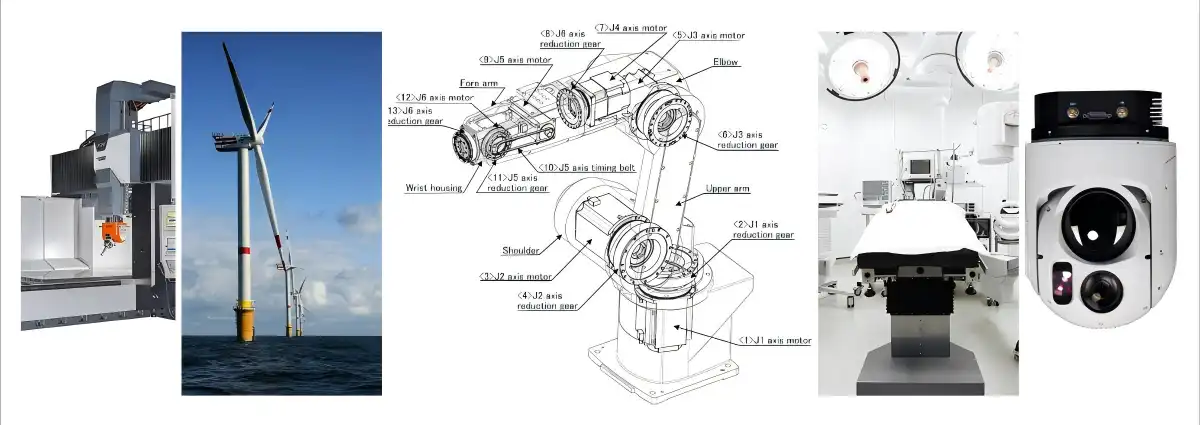
If the total load on your equipment is more than 50% of its stated capacity, there isn't enough room for dual-bearing setups, or you need rotational accuracy better than 0.005mm runout, you need to switch from ball bearings to RA Series Crossed Roller Bearings. The change is helpful, especially in robotic joints, precision spinning tables, and medical imaging equipment, where a single bearing needs to handle radial, axial, and moment loads at the same time while staying small and very rigid over long service cycles.
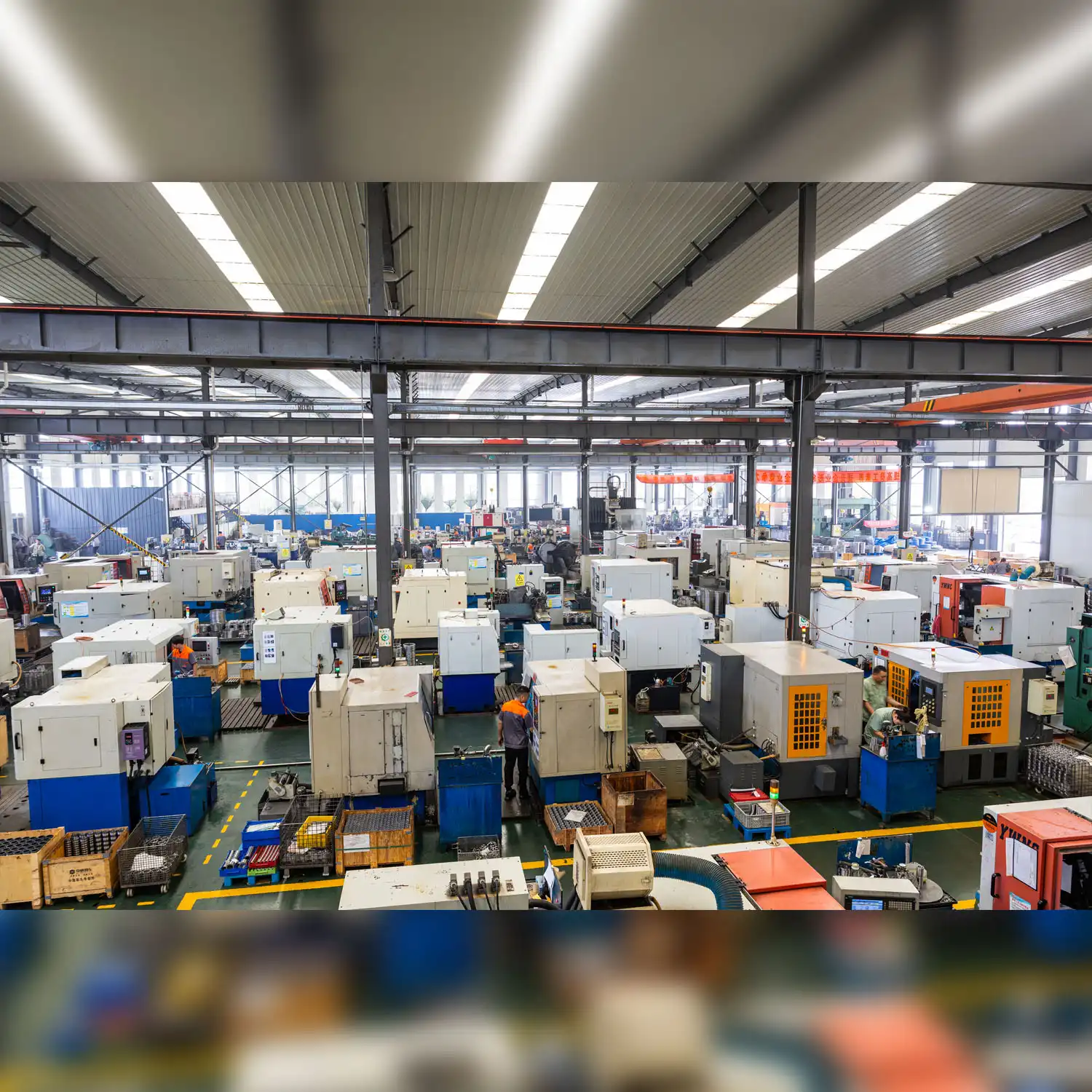
Understanding the Limitations of Ball Bearings
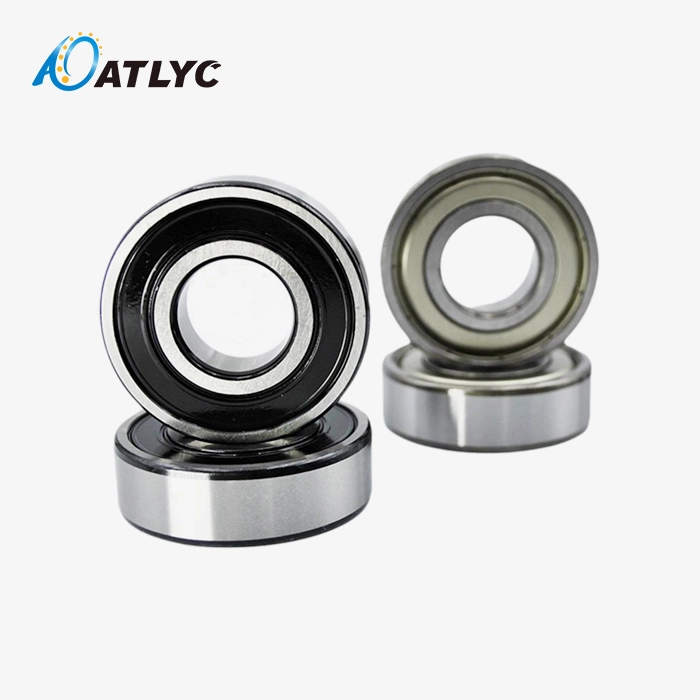
Ball bearings have been used successfully in industry for many years because they are easy to install and work well with a wide range of machines. Their circular rolling parts spread loads through point contact, which makes them good for medium-speed tasks where loads mostly move in one direction.
Load Capacity Constraints in Combined Load Scenarios
When horizontal and axial forces are applied at the same time, traditional ball bearing designs don't work well. The point contact between the balls and the raceways increases stress, making it harder for them to handle heavy moment loads without wearing out too quickly. When robotic manipulators are extended horizontally, this problem becomes clear: the cantilevered weight creates a lot of moment loads that ball bearings can't handle without having to double up parts.
Precision Degradation Under Operational Stress
The accuracy of a machine tool depends a lot on how strong the bearings are. Because of the way their contacts are designed, ball bearings move when they are loaded, which can cause positioning mistakes in precise operations. Such dimensional drift is not acceptable in manufacturing centres that cut aircraft parts to standards of just a few microns. The stretching at the ball-raceway junctions builds up across the bearing assembly, making it harder to repeat and lowering the quality of the final part.
Because ball bearings wear differently when loads are put on them together, maintenance times get shorter. Total cost of ownership tracking by procurement managers shows more downtime and replacements, especially for automation equipment that is always on. Because of how things work, engineers have to look for options that offer better load distribution and dimensional stability within the same mounting area.
What Are RA Series Crossed Roller Bearings?
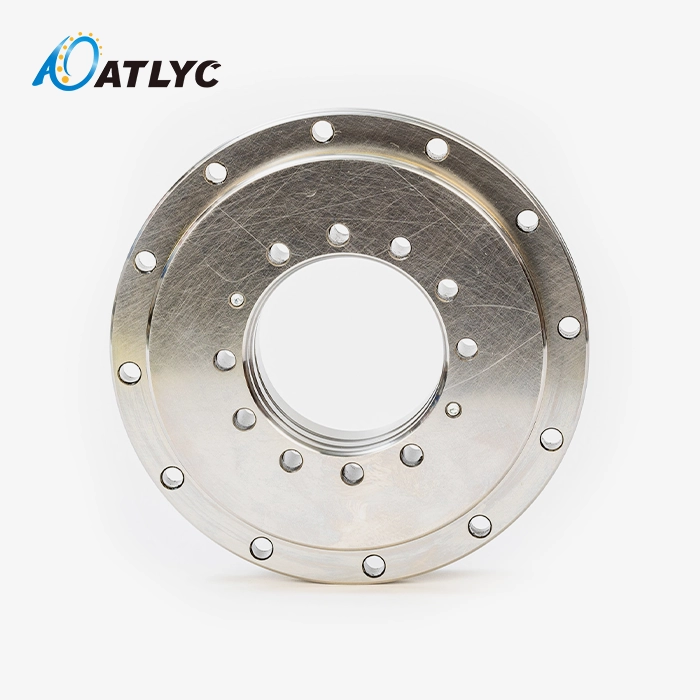
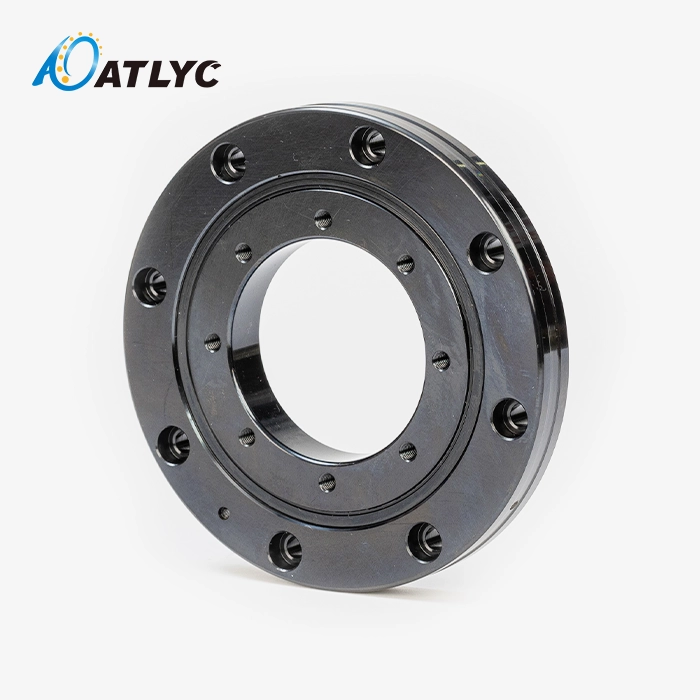
The RA Series Crossed Roller Bearings are a high-tech bearing option designed for uses where room, accuracy, and the ability to handle loads in multiple directions all come together. In contrast to regular ball bearings, these parts use cylinder-shaped rollers placed orthogonally at 90-degree angles inside precise V-groove raceways. This creates line contact that spreads forces over a lot more surface area.
Structural Design Advantages
The RA series has an outer ring that can be separated and an inner ring that is built in. This makes fitting easier, even in tight areas. This outer ring separability is especially useful for maintaining equipment because it lets workers change bearings without taking apart the whole assembly around them. The inner ring rotation design makes sure that the load path works as efficiently as possible, sending forces through the wheel setup with as little friction loss as possible.
With inner diameters from 20mm to 350mm and outer diameters from 70mm to 540mm, as well as widths from 12mm to 45mm, these bearings can fit a wide range of equipment sizes. Made from high-quality Gcr15 and Gcr15SiMn bearing steel, the mix gives the material great strength and wear resistance, which are important for high-cycle uses.
Performance Characteristics That Matter
It's not possible for ball bearings to handle high radial, axial, and moment loads at the same time, but RA bearings can. The crossed roller arrangement makes many load-carrying contact lines instead of points. This spreads forces along the whole length of the roller, which lowers contact stress. This shape creates very low friction coefficients, which allow for smooth spinning even when there is a lot of loading, which is needed to get rid of internal clearance.
One of the most impressive performance traits is runout precision. When V-groove raceways are ground to exact specifications and roller width errors are carefully managed, the rotational accuracy is very high. Manufacturers confirm these bearings in six different precision grades: P6, P0, P5, P4, P8, and P10. This lets procurement workers match the accuracy of the bearings to the needs of each application. For medical imaging tools to keep images stable, the bearings need to be P4 or P5 grade. On the other hand, P0 or P6 grade bearings work fine for general industry rotary tables.
When to Consider Switching: Key Indicators for RA Series Adoption
To find the best time to switch from ball bearings to crossed roller alternatives, you need to look at a number of key performance factors that have a direct effect on the efficiency of the equipment and the cost of running it.
Combined Load Requirements Exceeding Ball Bearing Capacity
Crossed roller technology is needed right away for equipment that creates large moment loads along with horizontal and axial forces. This happens a lot in industrial robot joints, where the manipulator arms stretch and move, creating complicated loading conditions that are too much for ball bearings to handle. Instead of two angular contact ball bearings, a single RA Series Crossed Roller Bearing can be used. This simplifies the design and increases the load capacity by 40 to 60 per cent in the same fitting space.
Compare the real load conditions to the stated capacities. When combined loads regularly go over 50% of a ball bearing's rated load, reliability worries arise. When ball bearings are used close to their maximum capacity, they wear out faster, which can cause random failure modes that throw off production plans.
Space Constraints Demanding Compact Solutions
Miniaturisation is becoming more and more important in modern equipment design without sacrificing functionality. This is a limitation that affects collaborative robots, tools used to make semiconductors, and portable medical devices. With widths as little as 12 mm, RA bearings have an extremely thin shape that lets engineers reduce the size of the bearing envelope while still keeping its stiffness.
Directly compare the installation footprint: to get the same load capacity with ball bearings, housings need to be wider to fit bearing pairs or single bearings with a bigger diameter. RA series components pack this capability into incredibly small spaces, making room inside the equipment shell for other important parts.
Precision Requirements Beyond Ball Bearing Capabilities
Standard ball bearings can only work up to a certain point when the rolling accuracy needs to be better than 0.005mm. Precision rotary tables, measuring tools, and devices for making integrated circuits all depend on bearing performance that stops wobble and keeps the table in place for millions of spin cycles.
Crossed roller designs have much less runout than ball bearing point contact because of the way the lines touch each other. This means that the surface finish will be better when machining, and that measurements will be more accurate when using measuring tools. Crossed roller technology is a direct way to fix problems where your quality control data shows changes in dimensions that can be linked to bearing runout.
RA Series Crossed Roller Bearings vs. Ball Bearings: A Comparative Analysis
To figure out the difference in performance between these bearing technologies, we need to look at certain factors that affect how well equipment works and how much to buy.
| Parameter for Performance | Ball Bearings | RA Series Crossed Roller Bearings |
|---|---|---|
| Radial Capacity for Load | Level 3 (point touch limitation) | Lots of (line contact optimisation) |
| Capacity for Axial Load | Limited (must make arrangements for stock) | Excellent (crossed math built in) |
| Load Capacity at the Moment | Not good (needs matched setup) | Better (method with only one bearing) |
| Accuracy in rotation | Standard (normal runout of 0.005 to 0.10 mm) | Exceptional (runout of 0.001-0.003 mm possible) |
| Width for installation | Wider for the same amount of space | Profile that is very thin (12–45 mm range) |
| Coefficient of Friction | Higher when loads are added together | Lower across the whole range of loads |
Load Distribution Mechanics
Point contact between circular elements and raceways moves loads through ball bearings. This puts stress in small areas. This concentration lowers the load capacity and speeds up the wear on the surface. RA Series Crossed Roller Bearings spread the same loads along the length of the circular roller. This makes contact lines that spread stress over a lot more space—usually 5 to 8 times more than ball contact patches.
This basic difference shows up in how long something works. Crossed roller stress distribution is very helpful for equipment that is exposed to shock loading or settings with a lot of vibration. Impact forces that would damage ball bearing raceways spread out more evenly across roller contact lines, which increases the life of the part and lowers the number of unexpected failures.
Rigidity and Deflection Comparison
The precision and reliability of a machine tool are directly affected by how rigid the bearings are. When the loads are the same, RA bearings bend 30 to 50 per cent less than similar ball bearing setups. This extra stiffness keeps the cutting tool in place while it's working, so finished parts don't have any mistakes in their measurements.
When purchasing managers look at the big picture of costs, this rigidity advantage lowers the amount of waste and the cost of redo in precision manufacturing settings. The higher cost of crossed roller bearings at first—usually 20–35% more than ball bearing alternatives—is quickly amortised when better yield rates and fewer quality rejects are taken into account.
Maintenance Interval Economics
The operational term differences between these technologies have a big effect on how care is planned and how much it costs over its whole life. When used in continuous-duty situations, RA bearings often have service lives of more than 50,000 hours, while ball bearings usually only last 20,000 to 30,000 hours in the same conditions.
Longer repair times lower the costs of downtime and the need to keep spare parts on hand. This reliability advantage is especially helpful for automation lines that work three shifts, since stopping output to change bearings costs a lot more than just the cost of the parts.
How to Procure RA Series Crossed Roller Bearings: Best Practices
To buy RA Series Crossed Roller Bearings successfully, you need to pay attention to the specifics of the specifications and the criteria used to choose the seller. These criteria make sure that the product is real and performs consistently.
Manufacturer Selection Considerations
Bearing companies with a good reputation have strict quality systems that are approved to ISO 9001 and IATF 16949 standards. These systems make sure that all output lots are the same in terms of size and material integrity. Global providers like FAG, NSK, KOYO, NTN, THK, Rexroth, and INA have good names, but for high-volume uses, the costs of buying from them often go over budget.
Chinese makers have become good options because they meet international quality standards and offer low prices. This change can be seen in Luoyang Auto Bearing Co., Ltd., which was founded in 2010. Over the past 15 years, we've grown from a single workshop to six specialised production sites. We've become experts at making high-precision bearings by constantly improving our processes and updating our equipment.
Our 120-person team works on production, research and development, quality control, and assembly, so they have a lot of experience at every stage of the manufacturing process. Our quality control systems have been certified by ISO 9001 and IATF 16949. We also have strong partnerships with customers in South Korea, the US, Germany, Russia, Iran, and Turkey, which shows that we can meet a wide range of foreign needs.
Critical Specification Parameters
To avoid expensive mistakes, it is important to clearly communicate the size and performance standards for crossed roller bearings when placing an order. Check the exact inner diameter, outer diameter, and width measurements against the building specs for the equipment. Even small differences can make installation go wrong or affect how the load is distributed.
| Type of Specification | Important Details | Effects of Buying |
|---|---|---|
| The size | Outside diameter (70–540 mm), inside diameter (20–350 mm), and width (12–45 mm) | Guarantees a good fit in the machine case |
| Very Good Quality | Class of accuracy: P8, P6, P0, P5, or P4 | Fits the quality of the bearing to the needs of the application |
| Details about the material | The steel is Gcr15 or Gcr15SiMn | changes how resistant it is to rust and how hard it is |
| Setting up the preload | Zero clearance (CC0) or a certain set value | Finds the stiffness and rotary torque |
| How much | Minimum order amounts and when to expect delivery | Lead time and product plans are affected |
The choice of accuracy grade has a big effect on both performance and cost. Precision grades P4 and P5 are good for medical devices, semiconductor equipment, and measurement tools that need to be accurate to the micron level. General industrial uses, like machine centre rotary tables, can work well with P0 or P6 grades, so you don't have to pay extra for extra precision.
Technical Support and Application Engineering
To choose the right bearing, you have to do a lot of complicated math to balance the load capacity, speed limits, and preload needs. Suppliers with a good reputation offer application engineering support to help customers get the best bearing specs for their individual needs. This technical teamwork stops either oversizing, which raises costs needlessly, or undersizing, which causes the project to fail too soon.
The best techniques for maintenance make bearings last a lot longer. Understanding is needed for the right lubrication times, contamination protection, and mounting processes. Manufacturers who provide detailed assembly instructions and upkeep schedules add value beyond just selling products. By improving bearing performance, these manufacturers lower the total cost of ownership.
Conclusion
When uses need higher load capacity, high precision, and small sizes, switching from ball bearings to RA Series Crossed Roller Bearings gives real performance benefits. The crossed roller design gets around some of the basic problems that come with ball bearing point contact geometry. It does this by spreading forces evenly across line contact surfaces, which reduces deflection and increases the operating lifetime. When procurement professionals look at this technology, they should compare their equipment needs to the combined load requirements, room constraints, and precision standards. Crossed roller solutions are more expensive at first than ball bearing alternatives, but when you look at the total cost of ownership, which includes less upkeep, higher production yield, and longer service intervals, crossed roller solutions often win out for demanding industrial uses. Partnering with makers that show they follow ISO 9001 and IATF 16949 standards guarantees consistent quality and reliable supply, which is necessary for operations to run smoothly.
FAQ
1. Can RA bearings replace all ball bearing applications?
RA Series Crossed Roller Bearings work great in places where they need to hold a lot of weight and be very strong at the same time. For artificial joints, spinning tables, and medical gear, they work great. But ball bearings may still be better for high-speed situations (above 2000 RPM) or situations with only radial loads because they have less rotating resistance and can handle a wider range of speeds.
2. How do lead times vary for custom specifications?
Standard catalogue sizes and popular precision grades ship from well-known manufacturers in two to three weeks. Custom inner sizes, ultra-high precision grades (P4), or special materials like stainless steel may take 6 to 8 weeks because they need to be ground in a special way and go through more quality control steps. Planning purchases around these dates keeps output from being interrupted.
3. What performance improvement can machine tools expect?
When machine tools move to crossed roller bearings, the rotational runout usually goes down by 30 to 50 per cent. This means that finished parts have tighter limits for size. Machining centres that make aerospace parts say that the better rigidity keeps the cutting position throughout processes, which leads to a more consistent surface finish and less tool wear.
Partner with ATLYC for Precision-Engineered RA Series Crossed Roller Bearings
ATLYC has been specialised in manufacturing for 15 years and can help you with your bearing procurement problems. They combine international quality standards with the benefits of Chinese precision manufacturing to make them more affordable. Our RA Series Crossed Roller Bearings can hold a lot of weight and turn very precisely, which is exactly what your automation systems, robotics, and precision machinery need. As a company that is ISO 9001 and IATF 16949 approved, we have strict quality control measures in place throughout the whole production process. These include choosing the best Gcr15 and Gcr15SiMn bearing steel as raw materials and checking the end dimensions to make sure they meet accuracy levels from P8 to P4. Our engineering team offers full application support and can help you choose the best bearing setups for your specific needs. We invite purchasing managers and OEM engineers to email us at auto@lyautobearing.com for technical advice and cheap quotes, whether you need catalogue sizes or custom sizes. Find out why people in the US, Germany, and South Korea choose ATLYC as their top seller of RA Series Crossed Roller Bearings for long-term business relationships.
References
1. Harris, T.A., and Kotzalas, M.N. (2006). Advanced Concepts of Bearing Technology: Rolling Bearing Analysis, Fifth Edition. CRC Press, Taylor & Francis Group.
2. Schaeffler Technologies AG & Co. KG. (2019). Crossed Roller Bearings: Design, Application and Engineering Calculations. Technical Publication Series, Industrial Bearing Solutions.
3. NSK Ltd. (2021). Precision Bearings for Machine Tool Applications: Technical Reference Guide. Motion & Control Technology Centre.
4. ISO 492:2014. Rolling Bearings — Radial Bearings — Geometrical Product Specifications (GPS) and Tolerance Values. International Organisation for Standardisation.
5. Witte, D.C. (2018). "Load Distribution Analysis in Crossed Roller Bearings for Robotic Applications," Journal of Tribology and Bearing Technology, Vol. 142, Issue 3, pp. 87-96.
6. THK Co., Ltd. (2020). Crossed Roller Bearings: Selection and Maintenance Manual for Precision Motion Control Systems. Engineering Documentation Series.
Learn about our latest products and discounts through SMS or email