- English
- French
- German
- Portuguese
- Spanish
- Russian
- Japanese
- Korean
- Arabic
- Greek
- German
- Turkish
- Italian
- Danish
- Romanian
- Indonesian
- Czech
- Afrikaans
- Swedish
- Polish
- Basque
- Catalan
- Esperanto
- Hindi
- Lao
- Albanian
- Amharic
- Armenian
- Azerbaijani
- Belarusian
- Bengali
- Bosnian
- Bulgarian
- Cebuano
- Chichewa
- Corsican
- Croatian
- Dutch
- Estonian
- Filipino
- Finnish
- Frisian
- Galician
- Georgian
- Gujarati
- Haitian
- Hausa
- Hawaiian
- Hebrew
- Hmong
- Hungarian
- Icelandic
- Igbo
- Javanese
- Kannada
- Kazakh
- Khmer
- Kurdish
- Kyrgyz
- Latin
- Latvian
- Lithuanian
- Luxembou..
- Macedonian
- Malagasy
- Malay
- Malayalam
- Maltese
- Maori
- Marathi
- Mongolian
- Burmese
- Nepali
- Norwegian
- Pashto
- Persian
- Punjabi
- Serbian
- Sesotho
- Sinhala
- Slovak
- Slovenian
- Somali
- Samoan
- Scots Gaelic
- Shona
- Sindhi
- Sundanese
- Swahili
- Tajik
- Tamil
- Telugu
- Thai
- Ukrainian
- Urdu
- Uzbek
- Vietnamese
- Welsh
- Xhosa
- Yiddish
- Yoruba
- Zulu
Where to Find RA5008UUCC0 Cross roller bearing Replacement Guide?
To find reliable alternatives to the RA5008UUCC0 Cross roller bearing, you need to know both the technical details and how to find them. Some reliable sources are ISO-certified companies that make precision cross roller bearings, B2B platforms that connect global wholesalers, and OEM-authorized outlets that make sure the products are real. This guide is for companies that make cars and heavy machinery and want to find reliable replacement parts that keep their operations running smoothly and meet strict quality standards. It covers technical details, how to choose a supplier, how to install the parts, and the best ways to buy them.
Understanding RA5008UUCC0 Cross Roller Bearing: Specifications and Performance
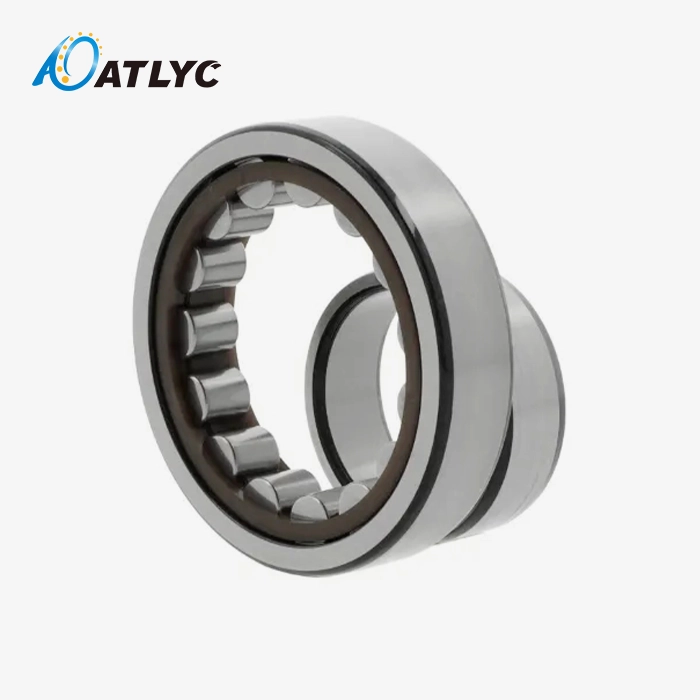
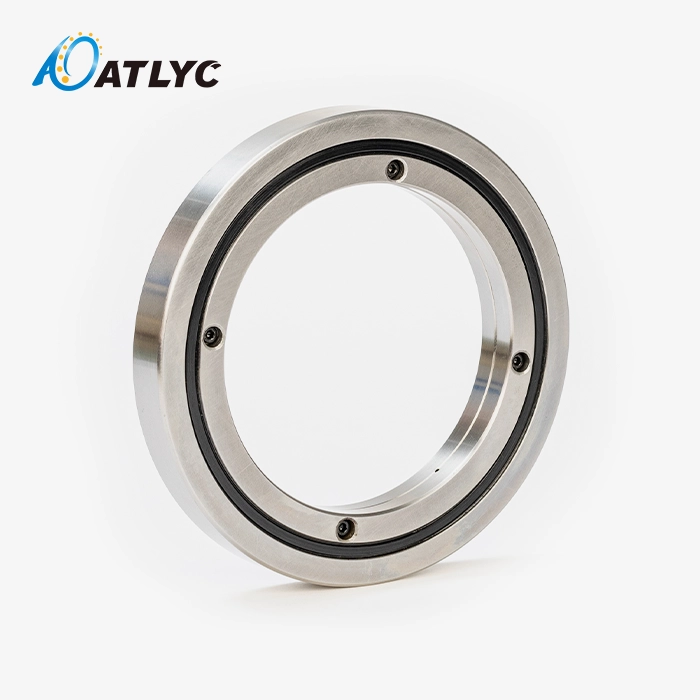
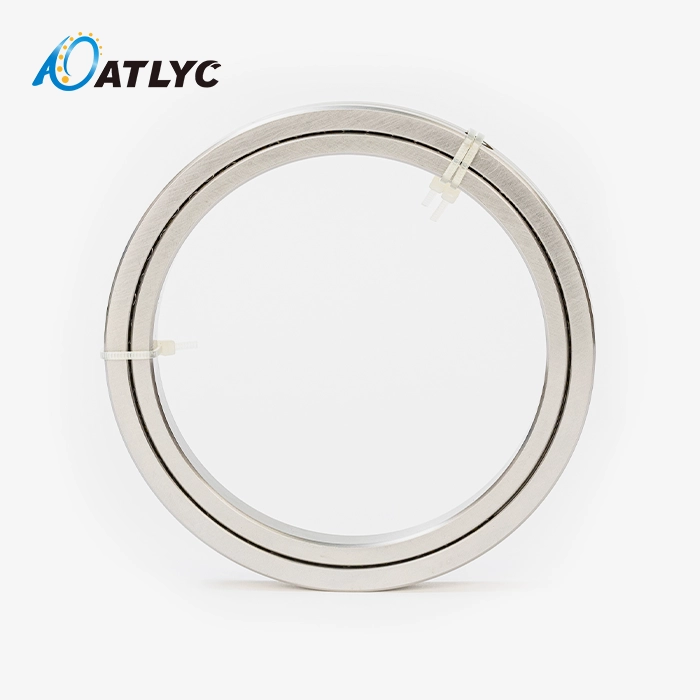
The RA5008UUCC0 Cross roller bearing is a big step forward in the engineering of ultra-thin bearings. This precision part is made with an inner diameter of 50 mm, an outer diameter of 66 mm, and a very narrow width profile of 8 mm. When you combine the separable outer ring design with the integral inner ring rotation architecture, you get very high rigidity while also reducing the amount of space needed. This is very important for modern robotic applications where weight and space limitations directly affect performance.
Dimensional Specifications and Design Architecture
The small shape of the bearing makes it possible to use it in tight mechanical assemblies where regular bearing shapes wouldn't work. Its cylinder-shaped rollers are spaced 90° apart between V-groove raceways, making a diagonal arrangement. This makes a 45° contact angle that spreads loads evenly in several directions. This cross-roller arrangement lets the bearing deal with rotational forces, thrust loads, and rolling moments all at the same time within a single assembly. This gets rid of the need for multiple bearing arrangements and lowers the number of places where fine equipment could fail.
'UU' stands for two-sided synthetic rubber seals that keep lubrication in and keep out contaminants. 'CC0', on the other hand, refers to a negative clearance or preload condition that eliminates internal play. This provides better rotational accuracy, which is necessary for applications that need positioning accuracy below 10 arc-seconds.
Material Composition and Manufacturing Standards
This part is made from high-quality Gcr15 or Gcr15SiMn bearing steel and goes through strict heat treatment steps to get the right hardness (58–62 HRC) and stability in its dimensions. These chromium-bearing steels have great resistance to wear and fatigue, which means they last longer even when they are used continuously. The choice of materials directly answers worries raised by buyers about the durability and total cost of ownership of components.
Precision levels for manufacturing range from P6 to P2 grades, and tighter tolerances can be made for certain uses. P5 and P4 grades are usually used for industrial robots and machining centers. P2 ultra-precision grades are used for optical inspection systems and equipment that make semiconductors and need accuracy down to the micron level.
Load Capacity and Performance Characteristics
This cross roller bearing RA5008UUCC0 can handle high radial, axial, and moment loads all in one small unit, while standard ball bearings need to be paired up to handle combined loads. The order of rollers perpendicular to each other creates a low friction coefficient, which helps the machine rotate smoothly with little starting torque. This is a quality that is valued in servo-driven automation systems, where energy economy and positional reaction time directly affect production flow. RA5008UUCC0 Cross roller bearing.
The bearing's high runout accuracy comes from how precisely it was made and how much preload it has. This feature makes sure that the rotation is steady, with no wobble or vibration. This protects sensitive measuring tools and makes machining tools last longer. Using the right grades of grease to lubricate keeps the protective film between the rolling elements and the raceways in place. This keeps metals from touching each other, which speeds up wear.
| Specification Category | RA5008UUCC0 Details | Industrial Significance |
|---|---|---|
| Inner Diameter | 50mm | Standard mounting interface for robotic joints |
| Outer Diameter | 66mm | Compact footprint for space-limited installations |
| Width | 8mm | Ultra-thin profile reduces assembly weight |
| Seal Type | UU (Dual Rubber Seals) | Protects against contamination in industrial environments |
| Clearance | CC0 (Negative/Preload) | Eliminates backlash for precision positioning |
| Material | Gcr15, Gcr15SiMn | High hardness and wear resistance |
Comparing RA5008UUCC0 Against Other Bearings for Informed Replacement
When looking at replacement options, knowing how the RA5008UUCC0 Cross roller bearing stacks up against other types of bearings and similar models helps procurement teams make smart choices that balance performance needs with budget limits.
Comparison with Similar Cross Roller Models
The RA5008 series is part of the small RA family, which grew out of the bigger RB family to meet the need for automation equipment that is lighter. Compared to the regular RA5008 that doesn't have seals, the RA5008UUCC0 version has dust protection that works well on shop floors where flying particles could damage the bearings. The RA5010 type can hold more weight because it is 10 mm wider, but it gives up the ultra-thin benefit that is important for some robotic wrist uses.
Different types of bearings, like the RE5013 and RU series, have different internal shapes. The RE type has needle rollers for higher load ratings in less space, while the RU models have fixing holes built right into the outer ring to make installation easier. Because each setup meets different application needs, it is important to directly compare them during the replacement design process.
Performance Against Alternative Bearing Types
When two angular contact ball bearings are placed back-to-back, they can handle combined loads, but they need a lot more space along their length than a single cross roller unit. Because they take up more room, ball bearing pairs can't be used in robotic joints that need to add more degrees of freedom within the same area.
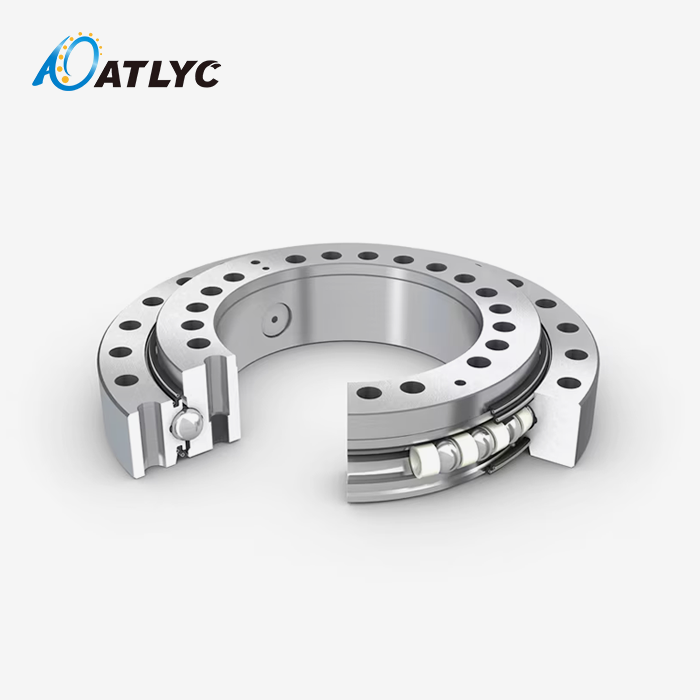
Slewing bearings can also handle loads in more than one direction, but they usually have diameters bigger than 200mm, which means they can't be used for precision instruments or small automation equipment. The crossed roller design fits in between regular bearings and big slewing rings. It provides high moment stiffness in diameters from 20mm to 300mm.
Tapered roller bearings are great for heavy rotational and thrust loads, but they have more wear and need to be carefully adjusted when they are installed. The preload standard for the cross roller bearing gets rid of the need for adjustments. This cuts down on assembly time and the chance of human mistakes, which is great for high-volume production operations that want to keep their processes consistent.
Supplier and Price Landscape Analysis
Some of the biggest companies in the world that make cross roller bearings are THK, IKO, NSK, Schaeffler (INA), and specialised Chinese companies like ATLYC RA5008UUCC0 Cross roller bearing. Japanese and European brands usually charge more because they have a good reputation and offer a lot of application engineering support. Chinese makers have slowly closed the quality gap while keeping their prices 30–40% lower than Western counterparts.
Price changes are caused by name placement, precision grades, seal configurations, and order amounts, among other things. Because of tighter manufacturing tolerances and more inspection requirements, bearings that meet P4 accuracy standards cost about 50–80% more than P5 equivalents. When you agree to buy a certain number of units every year, you'll get a discount ranging from 15% for the first 100 units to 35% for every 1,000 units you buy every year.
| Bearing Type | Load Handling | Space Efficiency | Rotational Accuracy | Typical Application |
|---|---|---|---|---|
| RA5008UUCC0 Cross Roller | Radial + Axial + Moment | Excellent (8mm width) | High (P5/P4 available) | Robotic joints, rotary tables |
| Angular Contact Pair | Radial + Axial | Moderate (requires spacing) | Moderate to High | Machine tool spindles |
| Slewing Bearing | High Moment Capacity | Poor (large diameter only) | Moderate | Cranes, excavators |
| Tapered Roller | Heavy Radial + Thrust | Moderate | Moderate | Automotive hubs, gearboxes |
Where to Buy RA5008UUCC0 Cross Roller Bearing: Trusted Sources and Suppliers
Finding suppliers who offer quality assurance, competitive prices, and reliable delivery schedules is key to successful procurement. OEM makers, authorised wholesalers, and specialised trade companies that serve a range of customer groups are all part of the global bearing supply chain.
Authorised manufacturers and the networks they use to sell their goods
Leading cross roller bearing makers keep regional distribution networks that make sure the products are genuine and offer technical support. THK works with exclusive distributors in North America who can quote and offer engineering advice the same day. As part of its distribution approach, NSK uses stocking wholesalers for standard sizes and direct sales for big orders and special specs.
European companies like Schaeffler focus on the car and aircraft markets by working closely with original equipment makers (OEMs). On the other hand, Japanese companies control the robotics market by working closely with companies that make automation equipment. Chinese companies, like ATLYC, have grown their global reach by going to foreign trade shows and making expert tools available in English. This helps them get past communication problems that used to stop them from entering new markets.
B2B Platforms and Online Procurement Channels
Digital purchasing platforms like Alibaba, Made-in-China, and GlobalSpec connect buyers with many suppliers. This lets buyers compare prices and check out vendors by looking at their past transactions and certifications. These platforms are especially helpful for smaller buying operations that don't have their own specialised bearing experts because they give them access to product catalogues and specification sheets that they could only get by contacting the maker directly.
Well-known distributors such as Motion Industries and Applied Industrial Technologies run online shopping sites that connect to their customers' ERP systems so that automatic reordering can happen when inventory levels drop. This integration makes it easier to manage procurement while also making sure that production operations that can't wait for missing parts always have access to what they need.
Evaluating Supplier Capabilities and Certifications
Quality certifications are objective proof that the manufacturing process is being controlled. IATF 16949 specifically addresses the needs of the automotive industry, including advanced quality planning methods and processes for approving production parts. ISO 9001 certification shows that quality management systems are documented. Suppliers that work with aerospace applications usually have AS9100 certification, which shows that they meet extra requirements for traceability and configuration management.
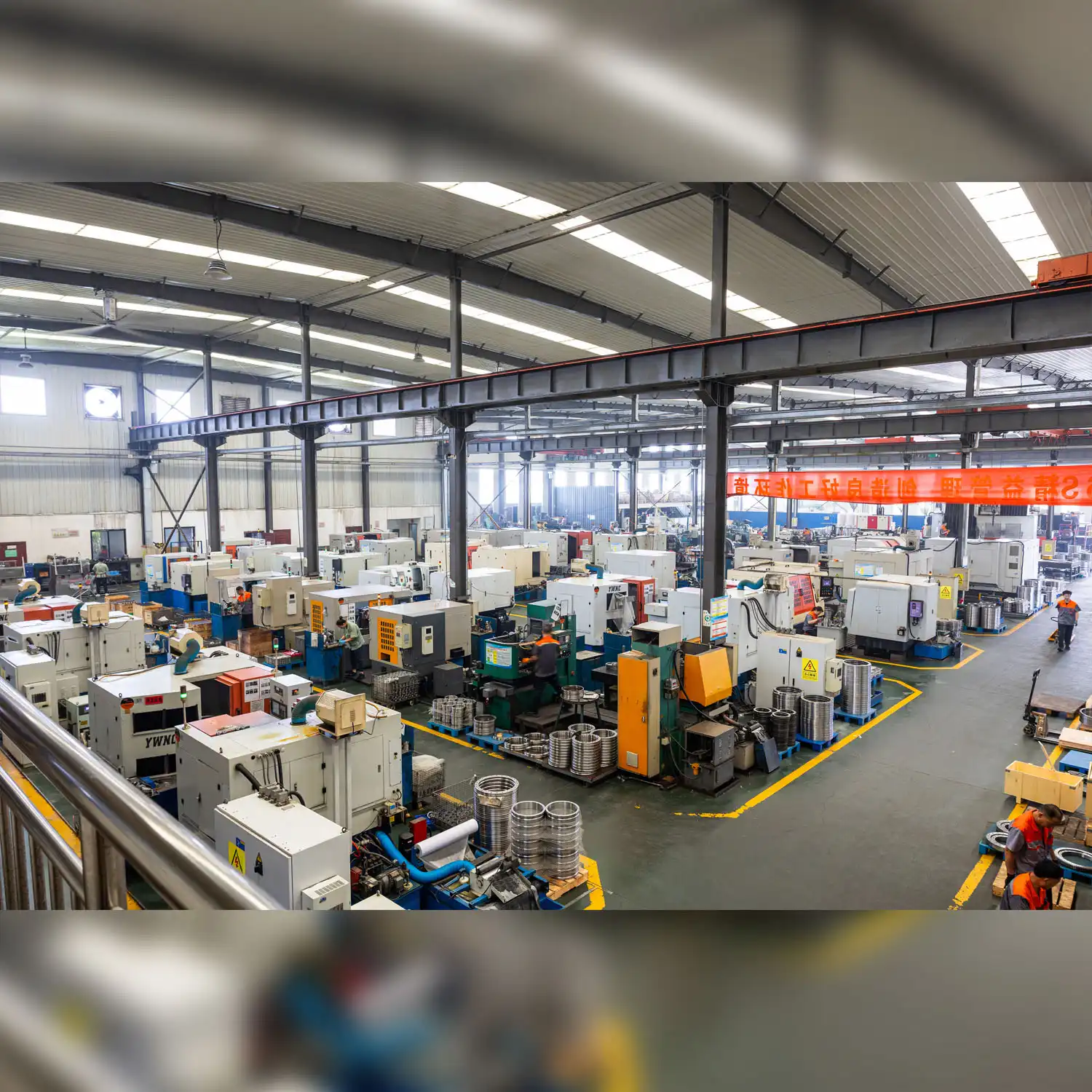
Assessments of manufacturing capacity should look at the amount of work that can be done, how consistent the lead times are, and how flexible the facility is to meet urgent orders. Suppliers with more than one production line can move capacity around when demand goes up, but suppliers with only one line risk having longer lead times during busy times. ATLYC has grown from one workshop to six specialised sites, showing that it can adapt to changing customer needs without affecting the trustworthiness of its deliveries.
Logistics Considerations and Lead Time Management
Catalogue items from Asian makers usually take between 4 and 6 weeks to get to U.S. ports by ocean freight. Air freight cuts travel time to 7–10 days, but it also raises logistics costs by 400–600%, so it can only be used for urgent replacements that keep production from stopping for too long, because the extra cost of the freight is too high. Because of shorter distances and established logistics partnerships, European suppliers usually quote delivery times of two to three weeks.
Keeping a safety stock of important bearings and setting up vendor-managed inventory arrangements where suppliers watch how much is being used and automatically order more are two inventory management strategies that balance carrying costs against stockout risks. These methods work especially well for bearings that take a long time to get or for uses where a failure would cause a lot of production problems.
Installation and Maintenance Guide for RA5008UUCC0 Bearing Replacement
Proper installation and maintenance practices directly influence bearing performance and service life. Understanding correct procedures prevents premature failure and maximizes return on component investment.
Pre-Installation Preparation and Inspection
Before installation, inspect mounting surfaces for damage, corrosion, or contamination that could compromise bearing seating. Surface finish should meet manufacturer specifications—typically Ra 1.6 μm or better—to ensure uniform load distribution across the bearing interfaces. Check shaft and housing dimensions against tolerance specifications, as excessive tightness generates mounting stresses while looseness permits fretting corrosion.
Verify that replacement bearings match original specifications, including bore diameter, outer diameter, width, seal configuration, and preload classification. Installing incorrect variants, even within the same model family, can result in inadequate load capacity or improper fit, affecting rotational accuracy.
Installation Procedures and Tooling Requirements
The separable outer ring design simplifies installation compared to integrated bearing types. Position the inner ring assembly onto the shaft, ensuring proper orientation if the bearing exhibits directional load characteristics. Slide the outer ring halves over the inner assembly, aligning mounting holes and ensuring rollers seat properly in both raceway halves.
Secure the outer ring using specified fasteners torqued to manufacturer recommendations. Under-torquing permits movement between ring halves, creating fretting wear and noise. Over-torquing distorts the raceway geometry, increasing friction and accelerating roller wear. Torque wrenches calibrated within the past 12 months ensure fastener preload remains within specification.
Avoid striking bearings during installation, as impact loads create brinelling—permanent indentations in raceways appearing as regular spacing corresponding to roller pitch. Use press-fit tooling, distributing force evenly across the bearing face rather than concentrating loads on the inner ring edges.
Lubrication Requirements and Maintenance Schedules
Factory-installed grease provides initial lubrication, but replenishment intervals depend on operating conditions, including speed, temperature, and contamination exposure. Clean environments with moderate speeds may extend intervals to 10,000 operating hours, while dusty conditions or elevated temperatures require 2,000-hour intervals.
Use only greases meeting bearing manufacturer specifications regarding base oil viscosity, thickener type, and operating temperature range. Mixing incompatible greases causes chemical reactions, degrading lubricant properties and accelerating wear. Document grease types and change intervals in maintenance records, ensuring consistency across bearing populations.
Troubleshooting Common Issues
Abnormal noise during operation indicates potential problems requiring immediate investigation. High-pitched squealing suggests inadequate lubrication or contamination, introducing abrasive particles. Low-frequency rumbling points toward raceway damage from overloading or impact during installation. Intermittent clicking often results from roller skidding caused by excessive preload or misalignment.
Increased operating temperature above normal levels signals rising friction from inadequate lubrication, contamination, or bearing overload. Temperature monitoring using infrared thermography during routine inspections detects developing problems before catastrophic failure occurs. Vibration analysis identifies bearing faults through characteristic frequency patterns corresponding to specific damage types, enabling predictive maintenance scheduling.
Maximizing Value: Why RA5008UUCC0 is the Preferred Choice for Precision Applications
Understanding the strategic advantages this bearing type provides helps justify specification decisions and demonstrates value beyond initial purchase price considerations.
Core Technical Advantages Driving Application Suitability
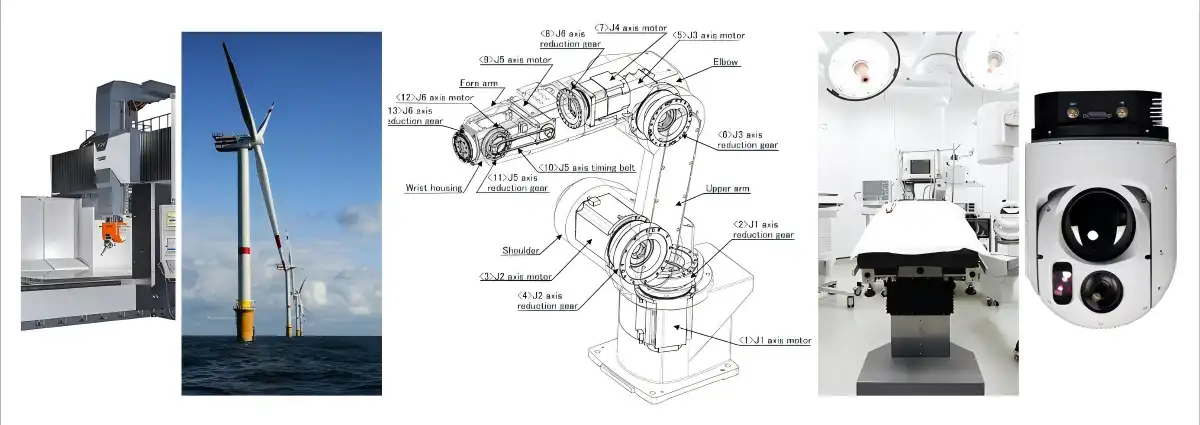
The bearing's ability to handle radial, axial, and moment loads at the same time in an 8mm cross-section solves some of the most important design problems in small automation equipment. To make the most of their payload capacity, robotic wrist joints need to be moment stiff so that cutting forces don't cause the tool to bend. At the same time, they need to be as light as possible. Using multiple units in traditional bearing arrangements makes the assembly more complicated and adds more tolerances that affect the accuracy of the position.
Its negative clearance specification gets rid of backlash, which would lower the accuracy of positioning in servo-controlled systems otherwise. When an artificial joint changes directions, any interior space in the bearings means that the tool center point can't move. This missed motion builds up across several joints, which could lead to positional mistakes that aren't accepted in precision measurement or assembly tasks. The fixed bearing makes sure that torque is transferred right away when the direction of motion changes, so the placement accuracy stays the same throughout the working range.
Better rigidity is especially helpful in machining centers, where tool chatter from not having enough stiffness hurts the surface finish and speeds up tool wear. The high moment stiffness of the crossed roller arrangement RA5008UUCC0 Cross roller bearing keeps it from deflecting under cutting forces. This lets it remove more material faster and with tighter tolerances than systems that use regular bearing arrangements.
Real-World Performance Validation
When automotive manufacturers put these bearings in robots that put together cars, the average time between failures is more than 25,000 hours of continuous duty cycles. This is a lot longer than ball bearing alternatives, which need to be replaced every 12,000 to 15,000 hours. This longer service life cuts down on the cost of maintenance workers and unplanned downtime that delays production.
Manufacturers of medical equipment like how smooth and quiet the bearing works in CT scanner gantries and surgery robot articulations, where patient comfort and accurate image alignment are very important. The low friction coefficient reduces the size of the drive motor that is needed, which lowers the system's power use and heat production in uses that need to keep temperatures low.
Builders of semiconductor manufacturing equipment choose ultra-precision P2 grade variants for wafer inspection systems that need runout accuracy below 2 microns to keep the optical alignment stable. The thermal stability of the bearing keeps the positional accuracy even when the temperature changes by 10 to 15°C, which is normal in cleanrooms. This means that thermal drift adjustment is not needed.
Emerging Technology Trends and Future Developments
New developments in the metallurgy of bearing steel promise longer fatigue life by creating microstructures that are smoother and cleaner, which will reduce the amount of non-metallic inclusions that cause rolling contact fatigue. The vacuum induction melting and electro-slag remelting processes make steels with 50% lower inclusion counts than usual. This means that the bearing life is increased by 30 to 40 percent.
Coating technologies, such as diamond-like carbon films and ceramic sprays, lower friction coefficients by 20 to 30 percent while also making surfaces less likely to wear down when they are only slightly oiled. These surface treatments are especially useful in vacuum situations or food processing settings where regular oils can't be used because they could get contaminated.
Putting sensors inside bearing systems to measure things like temperature, pressure, and load allows for real-time state tracking and planned repair. These smart bearings talk to each other using industrial protocols like IO-Link. They work perfectly with Industry 4.0 manufacturing execution systems that plan maintenance based on the actual condition of parts instead of safe time intervals.
Conclusion
To find reliable replacements for the RA5008UUCC0 Cross roller bearing, you need to know the technical specs, what the supplier can do, and the best ways to install the bearing. This very thin bearing is essential for robots, precision machinery, and automation equipment because it can hold heavy loads in a small space (50 mm hole, 66 mm outer diameter, and 8 mm width). Price alone is not enough for procurement teams to choose a provider. They also need to look at quality standards, production capacity, and shipping dependability. Using the right installation methods and maintenance schedules will extend the life of bearings and make them work more efficiently. Because the bearing is more rigid, accurate, and can handle loads in more than one direction, it is a good choice for precision applications that need reliable performance and don't need a lot of space.
FAQ
1. What are the exact dimensions of RA5008UUCC0 bearings?
The bearing measures 50mm inner diameter, 66mm outer diameter, and 8mm width. This ultra-thin profile enables integration into space-constrained robotic joints and rotary tables where traditional bearing arrangements prove too bulky. The 'UU' designation indicates dual rubber seals protecting internal components from contamination while retaining factory-installed lubrication.
2. How does load capacity compare to standard ball bearings?
Cross roller bearings handle radial, axial, and moment loads simultaneously within a single compact unit, eliminating the need for paired ball bearing arrangements. The perpendicular roller arrangement provides moment stiffness 3-4 times higher than ball bearing pairs of equivalent size, making them superior for applications experiencing overhung loads or requiring rotational accuracy under varying load directions.
3. Are customization options available for specialized machinery?
Manufacturers offer customizations, including modified seal materials for chemical resistance, special greases for extreme temperatures (-40°C to +150°C), and precision grades from standard P0 to ultra-precision P2. Custom bore diameters, mounting hole patterns, and integrated sensor provisions accommodate unique application requirements when order quantities justify tooling investments—typically minimum 50-100 units depending on modification complexity.
Partner with ATLYC for Reliable Cross Roller Bearing Solutions
ATLYC delivers high-precision cross roller bearings backed by ISO 9001 and IATF 16949 certifications, ensuring consistent quality for automotive and industrial applications. As an established RA5008UUCC0 Cross roller bearing manufacturer with 15 years of production expertise and six specialized workshops, we provide stable supply chains, competitive pricing, and technical customization support. Our engineering team assists with bearing selection, installation guidance, and application optimization. Whether you require prototype quantities or volume production, our manufacturing capacity serves OEMs, distributors, and end-users across robotics, automation, and precision machinery sectors. Contact auto@lyautobearing.com today to discuss your bearing requirements with experienced application engineers who understand your quality standards and delivery expectations.
References
1. Harris, T.A. & Kotzalas, M.N. (2006). Advanced Concepts of Bearing Technology: Rolling Bearing Analysis, Fifth Edition. CRC Press, Taylor & Francis Group.
2. ISO 492:2014. Rolling bearings — Radial bearings — Geometrical product specifications (GPS) and tolerance values. International Organization for Standardization.
3. Witte, D.C. (1973). Operating torque of tapered roller bearings. ASLE Transactions, Volume 16, Issue 1, pp. 61-67.
4. Gupta, P.K. (2011). Advanced Dynamics of Rolling Elements. Springer Science & Business Media, New York.
5. SKF Group. (2018). Rolling Bearings Catalogue: Technical Product Information. SKF AB, Gothenburg, Sweden.
6. Palmgren, A. & Lundberg, G. (1952). Dynamic capacity of rolling bearings. Journal of Applied Mechanics, Transactions of the ASME, Volume 19, pp. 165-172.
Learn about our latest products and discounts through SMS or email