- English
- French
- German
- Portuguese
- Spanish
- Russian
- Japanese
- Korean
- Arabic
- Greek
- German
- Turkish
- Italian
- Danish
- Romanian
- Indonesian
- Czech
- Afrikaans
- Swedish
- Polish
- Basque
- Catalan
- Esperanto
- Hindi
- Lao
- Albanian
- Amharic
- Armenian
- Azerbaijani
- Belarusian
- Bengali
- Bosnian
- Bulgarian
- Cebuano
- Chichewa
- Corsican
- Croatian
- Dutch
- Estonian
- Filipino
- Finnish
- Frisian
- Galician
- Georgian
- Gujarati
- Haitian
- Hausa
- Hawaiian
- Hebrew
- Hmong
- Hungarian
- Icelandic
- Igbo
- Javanese
- Kannada
- Kazakh
- Khmer
- Kurdish
- Kyrgyz
- Latin
- Latvian
- Lithuanian
- Luxembou..
- Macedonian
- Malagasy
- Malay
- Malayalam
- Maltese
- Maori
- Marathi
- Mongolian
- Burmese
- Nepali
- Norwegian
- Pashto
- Persian
- Punjabi
- Serbian
- Sesotho
- Sinhala
- Slovak
- Slovenian
- Somali
- Samoan
- Scots Gaelic
- Shona
- Sindhi
- Sundanese
- Swahili
- Tajik
- Tamil
- Telugu
- Thai
- Ukrainian
- Urdu
- Uzbek
- Vietnamese
- Welsh
- Xhosa
- Yiddish
- Yoruba
- Zulu
Why Is a YRTC High-Speed Rotary Table Bearing Essential for 5-Axis CNC?
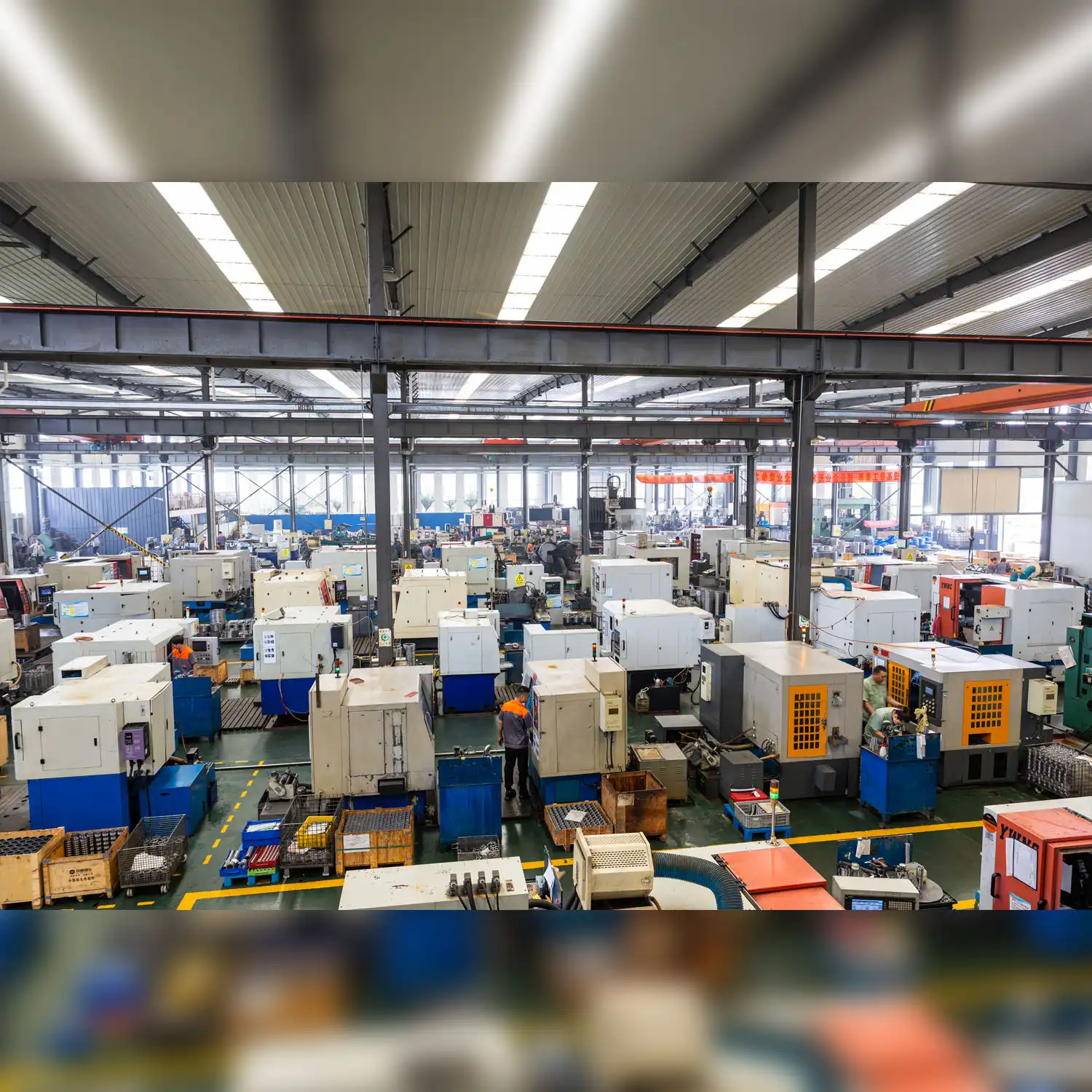
Five-axis CNC machining is the most demanding use of rotary tables in precision production. It needs a single spinning part to be rigid, accurate, and fast all at the same time. This is the place where a YRTC High-Speed Rotary Table Bearing really shines. YRTC builds on standard YRT technology and is designed to deal with the thermal and kinematic limits that show up when spindle speeds and table RPMs reach high levels needed for production. As cutting strategies get tougher and cycle times get shorter, Luoyang Auto Bearing Co., Ltd. has seen machine builders turn to this type of bearing. Before you start your next CNC job, you should read this piece because it has information about this type of bearing's structure, how it works, and how to choose one.
Understanding YRTC High-Speed Rotary Table Bearing Structure and Working Principle
Before comparing bearing types or evaluating suppliers, it helps to understand what actually sits inside this component and why its geometry matters so much for high-RPM performance.
Integrated Three-in-One Design
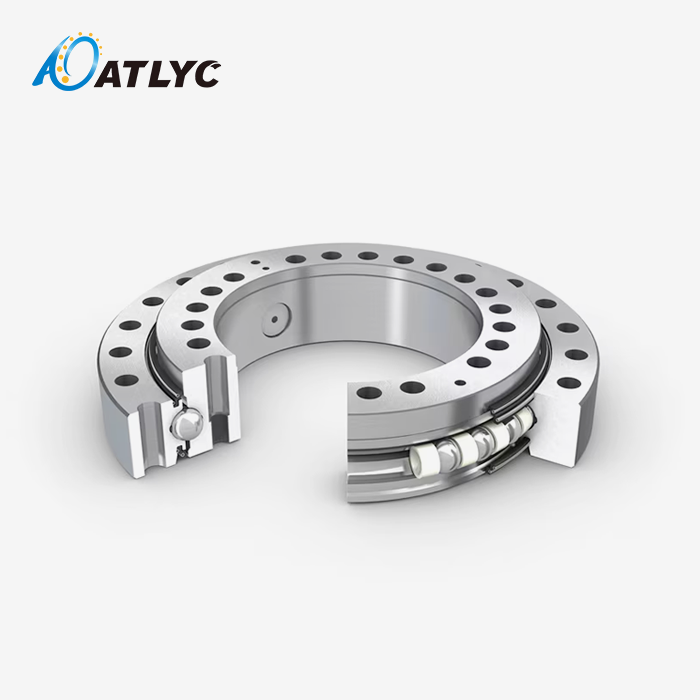
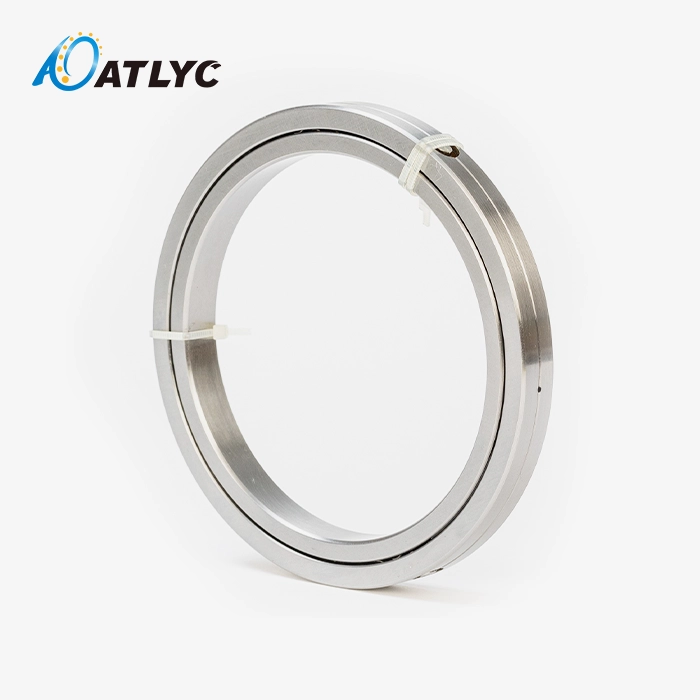
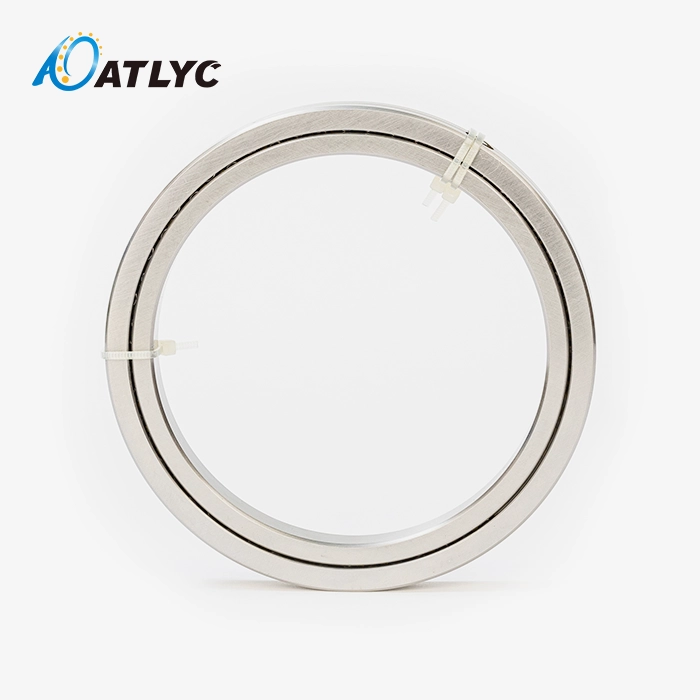
A YRTC High-Speed Rotary Table Bearing is a small unit that has a thrust bearing, a radial bearing, and an indexing mechanism all in one. The assembly is made up of an outer ring that connects to the mounting interface, an inner ring that connects to the spinning table, precision rollers grouped in rows that go in and out, and an advanced cage system that is designed to work at high speeds. This unified method gets rid of the need to put together several different bearings. This makes installation much easier and lowers the rotary axis's overall size, which is especially helpful on small 5-axis machines where room around the table is usually limited.
High-Speed Optimization Features
The letter "C" on a YRTC High-Speed Rotary Table Bearing means that it has been modified in a certain way to lower friction force at high speeds. A changed cage design lowers the rolling friction coefficient, and better roller steering stops skidding as the spinning speed goes up, which is a way that standard bearings fail when they are pushed beyond their intended range. Precision-ground raceways that are finished with super-finishing steps make sure that the motor runs smoothly and with little sound. These changes make it possible for the bearing to handle higher limiting speeds without getting too hot, which happens in regular combined-bearing setups and shortens their useful life.
Load Distribution Mechanism
This bearing is really useful for CNC work because it can handle multiple complex loads at the same time. Two rows of axial rollers handle the thrust loads and tilting moments that come from aggressive cutting passes. One row of radial rollers handles the radial forces that come from turning the table. Cutting force reactions are stopped directly at the bearing by the integrated moment capacity. This keeps the stress from moving to other parts of the machine structure. This load distribution is exactly what keeps positioning accuracy stable in real-world cutting situations where five axes are being used to turn and rotate at the same time.
| Load Type | Handled By | Relevance to 5-Axis CNC |
|---|---|---|
| Axial (thrust) | Two axial roller rows | Absorbs force from vertical cutting passes |
| Radial | One radial roller row | Supports lateral table load |
| Tilting moment | Combined roller geometry | Resists cutting force reactions during tilt |
Why 5-Axis CNC Machining Demands a YRTC High-Speed Rotary Table Bearing
Understanding the structure is only half the picture. The next question is why this specific bearing type has become almost a default choice for demanding 5-axis platforms.
Handling Multi-Directional Cutting Forces
During five-axis machining, forces are often applied from more than one direction at the same time. This is especially true when tilting and rotating parts at the same time. The double-row roller layout of a YRTC High-Speed Rotary Table Bearing was designed to handle composite loads instead of a single main force direction. This means that it can handle this multidirectional loading without affecting positioning accuracy. When machine builders use complicated tool paths, they often find that a properly matched bearing lowers the deflection that would show up as uneven surface finishes or changes in dimensions over the course of a long production run.
Achieving High Rotational Speeds Without Thermal Failure
One of the biggest problems with rotary tables is that they make a lot of heat. This is the main reason why normal combined-bearing setups don't work well at higher RPMs. This is directly dealt with by a YRTC High-Speed Rotary Table Bearing's improved cage design and lower friction levels, which stop heat from building up even during long high-speed cycles. This is very important for shops that make a lot of different parts at once. If the bearings aren't properly matched, thermal expansion can cause the table to move over the course of a shift, making it harder to keep the consistency between parts.
Maintaining Precision and Rigidity During Continuous Operation
A spinning table that holds tolerance is different from one that doesn't because it is rigid under load. When speed and load change during a cutting cycle, the precision-ground raceways inside a YRTC High-Speed Rotary Table Bearing keep the contact shape constant. This limits runout and axial play. This stability is often the difference between a bearing that lasts for years and one that needs to be replaced too soon in shops that make aircraft parts, medical devices, or other parts that need to be precise.
Comparing YRTC with Standard YRT, YRTS, and YRTM Bearings
Since several bearing variants share similar naming conventions, it's worth clarifying how the YRTC compares to its closest relatives before making a selection.
YRT vs YRTC: Standard Combined Roller Design vs High-Speed Optimization
The standard YRT bearing uses a combined roller design handling both radial and thrust loads, and it performs well across a broad range of general rotary table applications. A YRTC High-Speed Rotary Table Bearing builds on this same foundation but adds the modified cage and optimized roller guidance needed for meaningfully higher limiting speeds. In practical terms, if your application runs at moderate RPM with standard duty cycles, a YRT may be sufficient; once speed requirements climb and thermal stability becomes a concern, the YRTC becomes the more appropriate choice.
YRTS: Preloaded, Double-Sealed Alternative
The YRTS variant comes preloaded and features double-sided sealing, which suits applications prioritizing contamination protection and preset stiffness over maximum rotational speed. Compared to a YRTC High-Speed Rotary Table Bearing, the YRTS trades some speed capability for sealing robustness, making it a reasonable option in dustier shop environments where speed isn't the primary constraint. Understanding this trade-off early helps avoid selecting a bearing that's mismatched to your actual operating environment.
YRTM: Miniature Compact Structure for Space-Constrained Applications
The YRTM variant offers a miniature, compact structure designed for machines where space is at a genuine premium, such as small-format 5-axis mills or compact indexing tables. While it shares the same three-in-one integrated philosophy as a YRTC High-Speed Rotary Table Bearing, the YRTM prioritizes footprint reduction over top-end speed. For engineers designing smaller machining platforms, knowing this distinction prevents specifying a bearing that's either oversized for the application or, conversely, underpowered for the intended cutting loads.
| Bearing Variant | Key Characteristic | Best Application |
|---|---|---|
| YRT | Standard combined roller design | General-purpose rotary tables |
| YRTC | High-speed optimized cage and raceways | 5-axis CNC, high-RPM operations |
| YRTS | Preloaded, double-sided sealed | Contaminated or dusty environments |
| YRTM | Miniature, compact structure | Space-constrained machine platforms |
Selecting and Maintaining a YRTC High-Speed Rotary Table Bearing for Long-Term Performance
Choosing the right bearing is only the first step — proper selection criteria and ongoing maintenance determine whether it delivers the expected service life.
Choosing the Right Preload and Accuracy Grade
Preload directly affects rigidity, and getting it wrong in either direction causes problems: too little preload allows unwanted play, while too much accelerates wear and heat generation. When specifying a YRTC High-Speed Rotary Table Bearing, matching preload class and accuracy grade to your actual spindle speed and expected cutting loads is essential rather than defaulting to a generic mid-range option. Engineers should work from real operating data — expected RPM range, typical cutting forces, and duty cycle — to select a configuration that performs consistently rather than one that merely fits on paper.
Lubrication Strategies for High-Speed Operation
Lubrication becomes increasingly critical as rotational speed rises, since inadequate or incorrect lubricant can quickly negate the thermal advantages built into the bearing's design. A YRTC High-Speed Rotary Table Bearing typically requires a lubrication approach matched to its speed rating, whether that's grease formulated for high-speed service or an oil-air or oil-mist system for the most demanding applications. Establishing a consistent relubrication interval, rather than relying on a one-time application, helps preserve the friction-reducing benefits engineered into the cage and raceway design over the bearing's operating life.
Installation and Alignment Best Practices
Even a well-selected bearing underperforms if installation isn't handled carefully. Proper alignment during mounting prevents uneven load distribution across the roller rows, which otherwise leads to localized wear and premature failure. For a YRTC High-Speed Rotary Table Bearing specifically, following the manufacturer's torque specifications, verifying squareness during assembly, and avoiding contamination during installation all contribute meaningfully to achieving the rated speed and load performance the bearing was designed to deliver.
Conclusion
Selecting a YRTC High-Speed Rotary Table Bearing means choosing rigidity, thermal stability, and precision for demanding 5-axis operations. Established in 2010, Luoyang Auto Bearing Co., Ltd. has grown into a trusted manufacturer serving global markets including South Korea, the US, Germany, Russia, Iran, and Turkey, backed by ISO 9001 and IATF 16949 certification. With 120 skilled employees and six specialized workshops, our team is ready to help you specify the right bearing for your machining platform. Reach out today to discuss your project requirements.
FAQ
Q1: What makes a YRTC different from a standard YRT bearing?
The YRTC adds a modified cage and optimized roller guidance specifically designed to reduce friction and support higher rotational speeds.
Q2: What loads can a YRTC High-Speed Rotary Table Bearing handle?
It manages axial, radial, and tilting moment loads simultaneously, thanks to its two-row axial and single-row radial roller arrangement.
Q3: Is the YRTC suitable for 5-axis CNC machining centers?
Yes, it's specifically engineered for the multi-directional cutting forces and high-RPM demands typical of 5-axis operations.
Q4: How does lubrication affect YRTC bearing performance?
Proper lubrication, matched to speed rating, preserves the friction-reducing benefits of the cage design and helps prevent thermal buildup.
Q5: How do I choose between YRTC, YRTS, and YRTM variants?
It depends on your priority — YRTC for high speed, YRTS for sealed contamination protection, and YRTM for compact, space-limited installations.
Contact Us
Ready to specify the right YRTC High-Speed Rotary Table Bearing for your 5-axis CNC platform? Luoyang Auto Bearing Co., Ltd. combines 15 years of manufacturing experience with ISO 9001 and IATF 16949 certified quality systems to support your project from specification through delivery. Our engineering team can help you compare YRTC, YRTS, and YRTM options based on your actual speed, load, and space requirements. Send your application details to auto@lyautobearing.com and let's find the right high-speed rotary table bearing solution together — we look forward to supporting your next machining project.
References
1. American Bearing Manufacturers Association, Rotary Table and Turntable Bearing Standards.
2. Harris, T. A., Rolling Bearing Analysis.
3. Brändlein, J., et al., Ball and Roller Bearings: Theory, Design and Application.
4. International Organization for Standardization, ISO 492: Rolling Bearings — Tolerances.
5. American Society of Mechanical Engineers, ASME B5.54 Methods for Machine Tool Evaluation.
6. Society of Manufacturing Engineers, Fundamentals of Multi-Axis CNC Machining.
Learn about our latest products and discounts through SMS or email