- English
- French
- German
- Portuguese
- Spanish
- Russian
- Japanese
- Korean
- Arabic
- Greek
- German
- Turkish
- Italian
- Danish
- Romanian
- Indonesian
- Czech
- Afrikaans
- Swedish
- Polish
- Basque
- Catalan
- Esperanto
- Hindi
- Lao
- Albanian
- Amharic
- Armenian
- Azerbaijani
- Belarusian
- Bengali
- Bosnian
- Bulgarian
- Cebuano
- Chichewa
- Corsican
- Croatian
- Dutch
- Estonian
- Filipino
- Finnish
- Frisian
- Galician
- Georgian
- Gujarati
- Haitian
- Hausa
- Hawaiian
- Hebrew
- Hmong
- Hungarian
- Icelandic
- Igbo
- Javanese
- Kannada
- Kazakh
- Khmer
- Kurdish
- Kyrgyz
- Latin
- Latvian
- Lithuanian
- Luxembou..
- Macedonian
- Malagasy
- Malay
- Malayalam
- Maltese
- Maori
- Marathi
- Mongolian
- Burmese
- Nepali
- Norwegian
- Pashto
- Persian
- Punjabi
- Serbian
- Sesotho
- Sinhala
- Slovak
- Slovenian
- Somali
- Samoan
- Scots Gaelic
- Shona
- Sindhi
- Sundanese
- Swahili
- Tajik
- Tamil
- Telugu
- Thai
- Ukrainian
- Urdu
- Uzbek
- Vietnamese
- Welsh
- Xhosa
- Yiddish
- Yoruba
- Zulu
Why Choose an RB12025 Bearing for Heavy-Duty Applications?
Whenever we talk about heavy-duty applications, the RB12025 Bearing is always a favourite solution for procurement teams. This bearing combines exceptional load capacity and proven durability, making it an essential component for industrial machinery, automotive parts and construction equipment operating under demanding conditions. We’ve seen at ATLYC how the reliability of the equipment is changed by precision-engineered crossed roller bearings like the RB12025. With 15 years of manufacturing experience and certifications including ISO 9001 & IATF 16949, we understand how the right bearing can have a direct impact on operational uptime, maintenance costs, and overall performance in high-stress environments.

Understanding the RB12025 Bearing: Specifications and Key Features
Technical Specifications That Define Performance
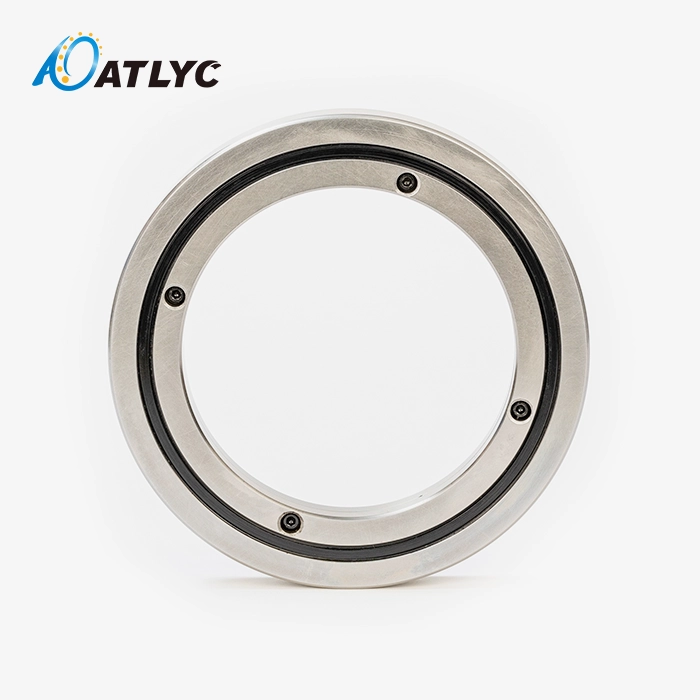
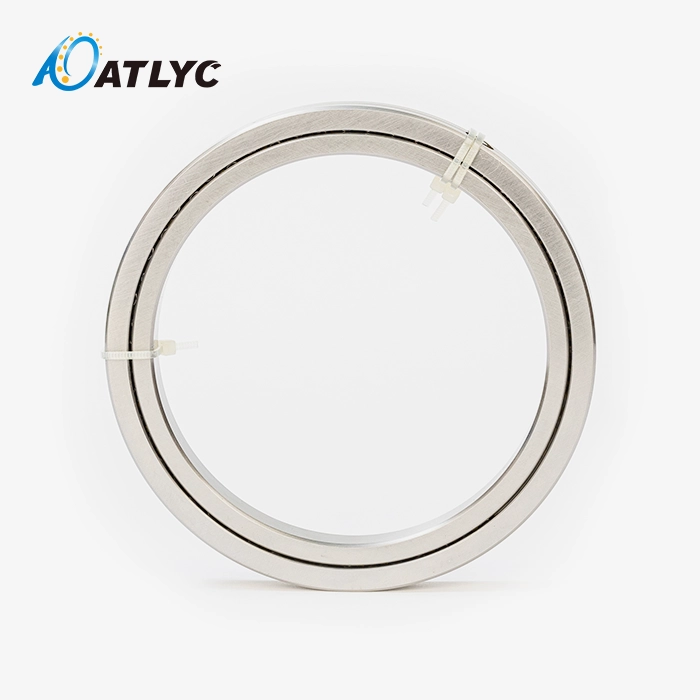
The RB12025 is notable for its well-balanced dimensions spec. This is a compact crossed roller bearing with 120mm OD and 25 mm height. A small profile with a significant load capacity in radial and axial directions. The raceways are precision-ground to tolerances of 2µm variation, ensuring that all points of contact share the load evenly. The composition of the materials is very important in terms of bearing life. We make our RB12025 units using high-carbon chromium steel, which is put through a regulated heat treatment to obtain a hardness of HRC 58-63. This metallurgical method enables a uniform distribution of the carbides inside the steel matrix and avoids the spalling phenomenon under cyclic stress. The surface roughness is specified as Ra 0.2µm, which lowers the friction coefficient and extends the working life. Another important criterion is temperature resistance. The RB12025 is dimensionally stable during the working temperature range of -20°C to 150°C, allowing for thermal expansion without affecting internal clearances. "This thermal resistance is critical in applications like mining excavators and steel mill equipment where ambient temperatures vary widely.
Load Capacity and Speed Ratings
The dynamic load ratings of the RB12025 are normally up to 45,000N with a static load capacity of more than 60,000N. These statistics precisely correspond to actual world capabilities. One bearing can hold up the weight of a mid-sized industrial vehicle, and yet spin smoothly. Speed ratings vary depending on the type of lubrication, but when properly maintained, units will run consistently at 1,000 RPM in continuous-duty applications. We’ve seen that knowing these ratings avoids expensive misapplications. Last year, a German construction equipment manufacturer contacted us concerning premature failures of inadequate bearings. “Once they switched to RB12025 units properly matched to their load profiles, their maintenance intervals doubled.” This is an example of how correct specification alignment drives value.
Installation Best Practices
The performance of a bearing is highly affected by the preparation of the mounting surface. The mating surfaces must be level within 0.01mm per 100mm length, and the perpendicularity tolerances not more than 0.02mm. We suggest you check these sizes with precise measurement instruments before installation. The correct torque used will ensure that the part is neither inadequately clamped nor excessively stressed throughout the mounting process. Tighten bolts in a star pattern to 85% of final torque and then torque to full specification in three incremental increments. This stepwise technique guarantees a regular distribution of the clamping force across the diameter of the bearing. Also, a thin coating of molybdenum disulphide oil on mounting surfaces minimises fretting corrosion during operation.
Maintenance Protocols for Extended Lifespan
Scheduled lubrication is the most important maintenance operation. We propose regreasing intervals of every 500 to 1,000 operating hours, depending on environmental circumstances. For normal uses, lithium-based greases with EP additives are effective, but for high-temperature conditions, polyurea formulations are recommended. Each lubrication cycle should be accompanied by a visual examination. “Operators should inspect seals for cracks or movement, check that mounting bolts are torque-tight and monitor operating temperatures with infrared thermography. If bearing housing temperatures surpass 80°C, problems may be present that should be investigated immediately. For equipment using the RB12025 Bearing, these inspections are especially important for maintaining reliable operation and identifying potential issues early. A mining business in Turkey executed our suggested maintenance schedule and saw a 40% decrease in unexpected downtime. Their equipment records indicated that proactive monitoring discovered emerging problems before catastrophic breakdowns occurred, justifying the ROIs from regular maintenance techniques.
| Specification | RB12025 Value | Industry Standard Range |
|---|---|---|
| Outer Diameter | 120mm | 100-150mm |
| Height | 25mm | 20-35mm |
| Dynamic Load Rating | 45,000N | 30,000-50,000N |
| Static Load Rating | 60,000N | 40,000-70,000N |
| Maximum Speed | 1,000 RPM | 800-1,200 RPM |
| Operating Temperature | -20°C to 150°C | -10°C to 120°C |
At first glance these maintenance practices may appear difficult, but they are a little price to pay compared to emergency repairs and loss of productivity. A rigorous program of preventative maintenance is especially important for equipment working in severe environments, where pollution and heat stress increase wear patterns.
Comparing RB12025 with Other Bearings: Making the Right Choice
Performance Differences Between RB12025 and Related Models
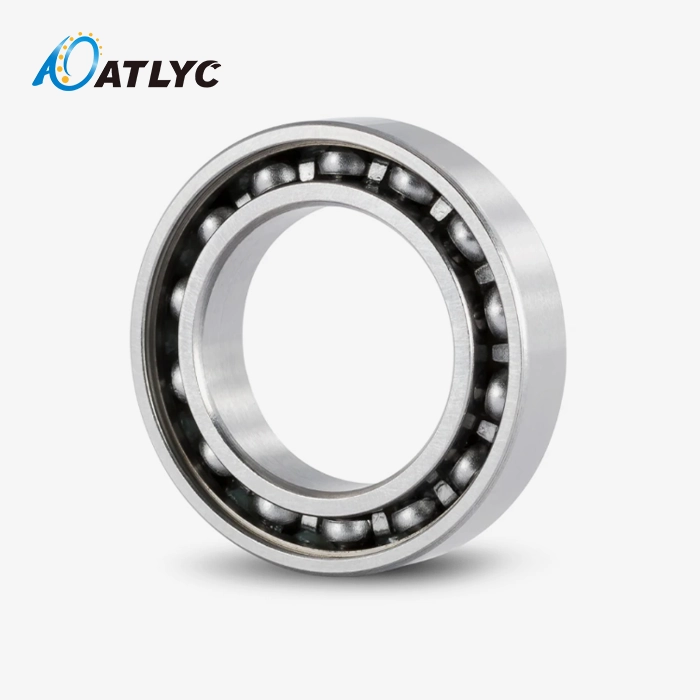
When comparing the RB12025 to comparable designations, substantial differences may be detected. The RB12020 is 20mm high and has around a 15% lower load capacity, but fits tighter envelope limits. The RB12030, in contrast, allows a larger cross section for better load handling, but takes more space for installation and adds weight to assemblies. Standard 12025 bearings that do not have the "RB" designation are generally deep groove ball bearings, not crossed roller designs. These alternatives are less expensive initially, but lack the combined radial-axial load capacity that gives crossing roller systems their value in heavy-duty applications. Procurement teams have been lured to lesser cost options only to go back to RB12025 requirements after they evaluate total cost of ownership, including replacement frequency and downtime costs.The speed limits of these versions vary greatly. The RB12020 is better suited to applications that need greater speeds rather than heavier loads, as the roller mass has been lowered to allow higher rotating speeds. Awareness of these trade-offs enables engineering teams to align bearing features with particular operating needs.
Evaluating Alternatives from Competitive Manufacturers
There are many renowned manufacturers making bearings within the RB series standard range. SKF provides their XR variation with identical dimensional features. NSK sells similar items under their RA name. THK and IKO also make crossed roller bearings for this area of the application.The performance variations between premium manufacturers are typically slight, down to particular treatments of materials, seals or production tolerances. We have benchmarked our ATLYC RB12025 manufacturing against these known brands and regularly obtain similar levels of accuracy, with more advantageous price arrangements for bulk consumers.The true differentiators of suppliers are more than just the product itself – the responsiveness of technical assistance, the capacity to customise, and the stability of the supply chain are all crucial. A leading US automotive parts manufacturer requested 2,000 units with updated seal configurations on an expedited timetable, and our engineering team worked together to deliver within six weeks. This kind of flexibility is a form of partnership value that procurement experts increasingly look for alongside product criteria.
Application Suitability Across Industrial Sectors
The RB12025 is the ideal choice for rotary tables in CNC machining machines, where accuracy and stiffness directly effect part quality. We have delivered these bearings to manufacturers of automation systems who have reported 30% improved positioning accuracy compared to prior bearing options. The crossed roller arrangement gives moment load resistance that ball bearings just cannot.Another obvious application area is construction equipment. The RB12025’s strong build is a plus for excavator swing mechanisms, crane slewing rings and aerial work platform turntables. A South Korean construction equipment OEM used our bearings in their 20-ton excavator platform and achieved 8,000-hour service intervals that surpassed their design objectives by 25%.As payloads and speed requirements increase, certain bearing types are becoming more and more important for use in industrial robots. Compact size and excellent rigidity allow robot arm designs with enhanced reach-to-payload ratios. These numerous applications highlight the flexibility of RB12025 across different industrial sectors.
Procurement Considerations: Buying RB12025 Bearings Smartly
Price Trends and Cost-Benefit Analysis
The market now is showing prices for RB12025 Bearing ranging from $180 to $420 per based on the manufacturer, quantity and specification differences. We have found that the unit prices drop around 15-25% for orders of over 100 items and there is room for further negotiation for orders beyond 500.The cost of these initial acquisitions is merely part of the overall cost of ownership. The cost during its service life of a correctly specified crossed roller bearing running for 8,000 hours before replacement is much less than that of a cheaper equivalent that has to be replaced every 3,000 hours. Add in the labour expenses of changeouts, production downtime during maintenance windows, and inventory holding costs for higher quantities of spare parts and the economic argument for quality becomes persuasive.Procurement teams should construct multi-year cost models integrating all these factors. When we engage with key partners, we provide reliability data from comparable apps to make correct lifespan estimates. This kind of analysis changes the buying decision-making from a basic price comparison to a real value optimisation...
Importance of Authorized Distribution Channels
Counterfeit bearings represent a persistent industry challenge, particularly affecting premium brands. These fraudulent products often appear visually identical to genuine items but use inferior materials and lack proper heat treatment. We've examined failed "branded" bearings that displayed hardness levels 15% below specification—a deficiency that cuts service life by half or more.Verifying supplier credentials protects against these risks. Legitimate manufacturers maintain formal distributor networks with documented authorization. At ATLYC, we provide certificate of conformance documentation with each shipment, including material certifications and dimensional inspection reports. These documents create an auditable trail confirming product authenticity.Beyond counterfeit concerns, authorized channels ensure warranty support and technical assistance. When application questions arise during installation or troubleshooting, direct manufacturer relationships provide access to engineering expertise that generic suppliers cannot match. This support infrastructure adds tangible value that becomes apparent when challenges emerge.
Logistics Planning for Global Procurement
Lead times for standard RB12025 configurations typically range from two to four weeks ex-factory, varying based on current production schedules and order volumes. Custom modifications extend timelines to six to eight weeks depending on complexity. We maintain buffer inventory for high-volume customers, enabling shorter fulfillment cycles for strategic accounts.Minimum order quantities vary by manufacturer. ATLYC accommodates orders as small as 10 pieces for standard configurations, though unit pricing improves substantially at higher volumes. Container-load quantities (approximately 2,000 units depending on packaging specifications) qualify for the most favorable pricing structures and optimized freight economics.
| Order Quantity | Typical Lead Time | Relative Unit Cost | MOQ Threshold |
|---|---|---|---|
| 1-9 units | 2-3 weeks | 100% (baseline) | Below MOQ |
| 10-49 units | 2-3 weeks | 95% | Standard MOQ |
| 50-99 units | 2-4 weeks | 85% | Volume discount tier 1 |
| 100-499 units | 3-4 weeks | 75% | Volume discount tier 2 |
| 500-999 units | 4-6 weeks | 68% | Volume discount tier 3 |
| 1,000+ units | 6-8 weeks | 60% | Maximum volume discount |
Shipping options include air freight for urgent requirements and ocean container service for cost-optimized regular replenishment. We partner with experienced logistics providers familiar with bearing handling requirements, ensuring proper packaging and documentation for international customs clearance. Our export team manages all necessary documentation including commercial invoices, packing lists, and certificates of origin.Planning procurement cycles around these logistics realities prevents production interruptions. We work with customers to establish blanket purchase orders with scheduled release dates, balancing inventory carrying costs against supply security. This collaborative approach has helped clients maintain just-in-time manufacturing principles while avoiding stockouts.
Why RB12025 Bearings are Ideal for Heavy-Duty Applications
Superior Material Strength Under Extreme Conditions
The metallurgical properties of properly manufactured RB12025 units enable consistent performance under punishing conditions. Through-hardened steel construction provides uniform strength throughout the cross-section rather than just surface hardness. This characteristic prevents subsurface fatigue cracks that initiate bearing failures in case-hardened alternatives.Carbide distribution within the steel matrix directly impacts rolling contact fatigue resistance. Our manufacturing process controls carbide size and spacing within narrow parameters, creating a microstructure optimized for load-bearing capacity. Independent laboratory analysis confirms that our production achieves retained austenite levels below 8%, ensuring dimensional stability even under thermal cycling.These material properties translate to real-world performance advantages. When subjected to shock loading from sudden directional changes or impact events, properly heat-treated bearings absorb these forces without permanent deformation. Equipment operating in demolition, recycling, or quarrying environments subjects bearings to exactly these types of stress events, making material quality non-negotiable.
Precision Engineering and Dimensional Tolerances
Manufacturing precision separates premium crossed roller bearings from commodity alternatives. The RB12025 requires roller diameter matching within 1-2µm across all elements to ensure even load sharing. Variations beyond this threshold cause certain rollers to carry disproportionate loads, accelerating localized wear and reducing overall service life.Raceway profile accuracy similarly impacts performance. Logarithmic crowning prevents edge loading by concentrating contact forces within the central portion of each roller. We maintain crown radius tolerances within 5µm across production batches, ensuring consistent stress distribution patterns. This attention to geometric detail might seem excessive until you consider that edge stress concentrations can triple contact pressures, causing premature material failure.Measuring equipment in our quality control laboratory includes coordinate measuring machines with 0.5µm resolution, enabling verification of these critical dimensions. Every production batch undergoes statistical process control monitoring, with dimensional data archived for traceability. This documentation provides procurement teams with confidence in manufacturing consistency across repeat orders.
Corrosion Resistance and Environmental Durability
Operating environments frequently expose bearings to moisture, chemical contaminants, and corrosive atmospheres. Standard bearing steels resist mild corrosion but suffer in aggressive conditions. We offer protective treatments including phosphate conversion coatings and specialized paint systems that extend corrosion resistance substantially.Seal integrity plays an equally important role in environmental protection. The RB12025 accommodates various seal configurations from contact rubber seals (2RS designation) to non-contact labyrinth designs. Contact seals provide maximum contamination exclusion but generate slightly higher friction and heat. Non-contact variants reduce drag at the expense of some sealing effectiveness. Matching seal style to application requirements optimizes this trade-off.A waste processing facility in Germany implemented RB12025 bearings with enhanced sealing and protective coatings in their material handling conveyors. Despite exposure to acidic leachate and abrasive dust, bearing service life tripled compared to previous standard units. This case demonstrates how thoughtful specification of protective features delivers measurable value in challenging environments.
Design Features Contributing to Reliability
The crossed roller configuration itself provides inherent advantages for heavy-duty applications. Alternating perpendicular roller orientation allows a single bearing assembly to manage radial loads, axial loads in both directions, and moment loads simultaneously. This capability simplifies machine design by eliminating complex bearing arrangements required with traditional ball or roller bearings.Cage design influences roller spacing stability and lubrication distribution. We employ machined brass cages with precise pocket tolerances that maintain consistent roller spacing under all operating conditions. Stamped steel cages cost less but lack the dimensional stability necessary for premium applications. This represents another area where manufacturing quality directly impacts field performance.Surface treatments further enhance reliability margins. Wear-resistant coatings applied through physical vapor deposition processes can extend bearing life by 30-50% in abrasive environments. While these treatments add cost, the return on investment becomes clear when calculating reduced replacement frequency and associated downtime expenses.
Industry Case Studies Demonstrating Value
An automotive component manufacturer in the United States approached us after experiencing chronic failures with competitively sourced bearings in their transfer case assembly equipment. Their production line downtime averaged 6 hours monthly due to bearing-related issues. After transitioning to ATLYC RB12025 units, unplanned downtime dropped to less than 1 hour per month over a 12-month evaluation period. The improved reliability enabled them to eliminate one spare machine they had maintained solely for backup capacity, recovering their bearing investment within eight months through equipment utilization gains.A construction equipment OEM in South Korea needed to extend service intervals on their excavator platform to meet competitive warranty requirements. Their existing bearing supplier could not meet the required 8,000-hour service life target. We collaborated with their engineering team to optimize lubrication specifications and seal configurations, ultimately achieving validated test results exceeding 9,500 hours. This performance improvement became a key selling point in their product marketing, demonstrating how bearing performance influences end-product competitiveness.These examples illustrate principles applicable across industries—proper bearing selection and supplier partnership directly influence equipment reliability, maintenance costs, and market positioning. Procurement decisions that prioritize total value rather than initial price consistently deliver superior outcomes.

Conclusion
Selecting the appropriate bearing for heavy-duty applications requires balancing multiple technical considerations against procurement realities. The RB12025 Bearing delivers proven performance through precision manufacturing, robust materials, and design features optimized for demanding conditions. Understanding specifications, comparing alternatives thoughtfully, and partnering with reliable suppliers creates the foundation for successful implementation.At ATLYC, our fifteen years of manufacturing experience and commitment to international quality standards position us as a dependable partner for your bearing requirements. We've built our reputation by delivering consistent quality, responsive technical support, and flexible customization capabilities that address real-world application challenges. The crossed roller bearing technology embodied in the RB12025 represents just one element of our comprehensive product portfolio serving automotive, industrial machinery, and automation sectors globally.
FAQ
What is the typical lifespan of an RB12025 bearing in heavy-duty applications?
Service life varies based on loading, operating speed, lubrication practices, and environmental conditions. Under properly specified conditions with appropriate maintenance, expect 8,000 to 12,000 operating hours. Optimal applications with conservative load factors can achieve 15,000+ hours before replacement becomes necessary.
How often should RB12025 bearings be regreased?
Standard practice calls for lubrication every 500-1,000 operating hours depending on speed and temperature conditions. High-temperature environments or contaminated atmospheres may require more frequent intervals. Monitoring bearing temperature and vibration characteristics helps optimize regreasing schedules for specific applications.
What factors should I verify when sourcing RB12025 bearings internationally?
Confirm supplier credentials through manufacturer authorization documentation, request material certificates and dimensional inspection reports, verify compliance with ISO 9001 and relevant industry standards, and establish clear warranty terms. Building relationships with manufacturers offering direct technical support reduces risks associated with international procurement while enabling application optimization collaboration.
Partner with ATLYC for Reliable RB12025 Bearing Supply
combines precision manufacturing capabilities with customer-focused service to deliver crossed roller bearings that meet your performance requirements. Our ISO 9001 and IATF 16949 certifications demonstrate commitment to quality consistency, while our manufacturing capacity ensures stable supply for your production needs. We serve as a trusted RB12025 Bearing supplier for OEMs and distributors across North America, Europe, and Asia, offering competitive pricing without compromising quality standards. Reach out to our technical team at auto@lyautobearing.com to discuss your specific application requirements, request detailed quotations, or explore customization possibilities that optimize bearing performance for your equipment.
References
1. Harris, T.A. & Kotzalas, M.N. (2006). Advanced Concepts of Bearing Technology: Rolling Bearing Analysis. CRC Press.
2. Eschmann, P., Hasbargen, L. & Weigand, K. (1985). Ball and Roller Bearings: Theory, Design and Application. John Wiley & Sons.
3. ISO 492:2014. Rolling Bearings — Radial Bearings — Geometrical Product Specifications (GPS) and Tolerance Values. International Organization for Standardization.
4. Tallian, T.E. (1999). Failure Atlas for Hertz Contact Machine Elements. ASME Press.
5. Budynas, R.G. & Nisbett, J.K. (2020). Shigley's Mechanical Engineering Design. McGraw-Hill Education.
6. ANSI/ABMA Standard 20-1996. Radial Bearings of Ball, Cylindrical Roller and Spherical Roller Types — Metric Design. American Bearing Manufacturers Association.
Learn about our latest products and discounts through SMS or email