- English
- French
- German
- Portuguese
- Spanish
- Russian
- Japanese
- Korean
- Arabic
- Greek
- German
- Turkish
- Italian
- Danish
- Romanian
- Indonesian
- Czech
- Afrikaans
- Swedish
- Polish
- Basque
- Catalan
- Esperanto
- Hindi
- Lao
- Albanian
- Amharic
- Armenian
- Azerbaijani
- Belarusian
- Bengali
- Bosnian
- Bulgarian
- Cebuano
- Chichewa
- Corsican
- Croatian
- Dutch
- Estonian
- Filipino
- Finnish
- Frisian
- Galician
- Georgian
- Gujarati
- Haitian
- Hausa
- Hawaiian
- Hebrew
- Hmong
- Hungarian
- Icelandic
- Igbo
- Javanese
- Kannada
- Kazakh
- Khmer
- Kurdish
- Kyrgyz
- Latin
- Latvian
- Lithuanian
- Luxembou..
- Macedonian
- Malagasy
- Malay
- Malayalam
- Maltese
- Maori
- Marathi
- Mongolian
- Burmese
- Nepali
- Norwegian
- Pashto
- Persian
- Punjabi
- Serbian
- Sesotho
- Sinhala
- Slovak
- Slovenian
- Somali
- Samoan
- Scots Gaelic
- Shona
- Sindhi
- Sundanese
- Swahili
- Tajik
- Tamil
- Telugu
- Thai
- Ukrainian
- Urdu
- Uzbek
- Vietnamese
- Welsh
- Xhosa
- Yiddish
- Yoruba
- Zulu
Best RE2508UUCC0 Cross roller bearing for High Precision Equipment
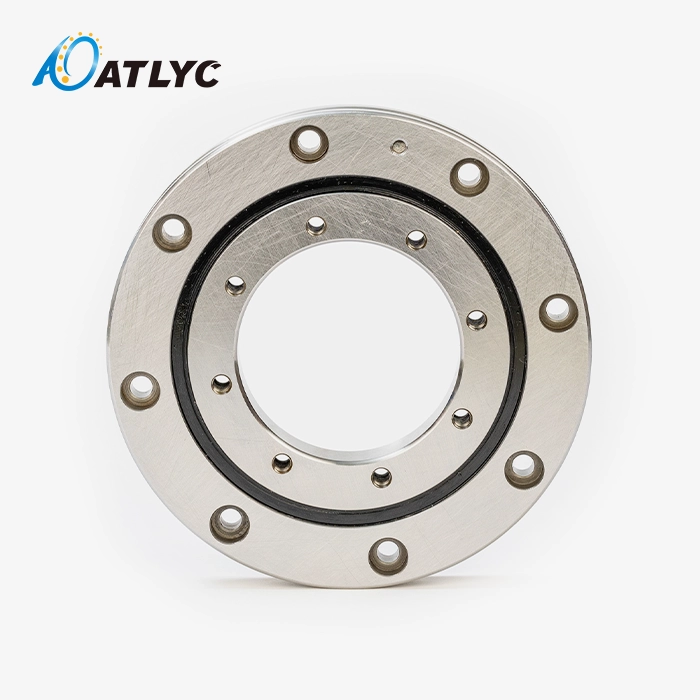
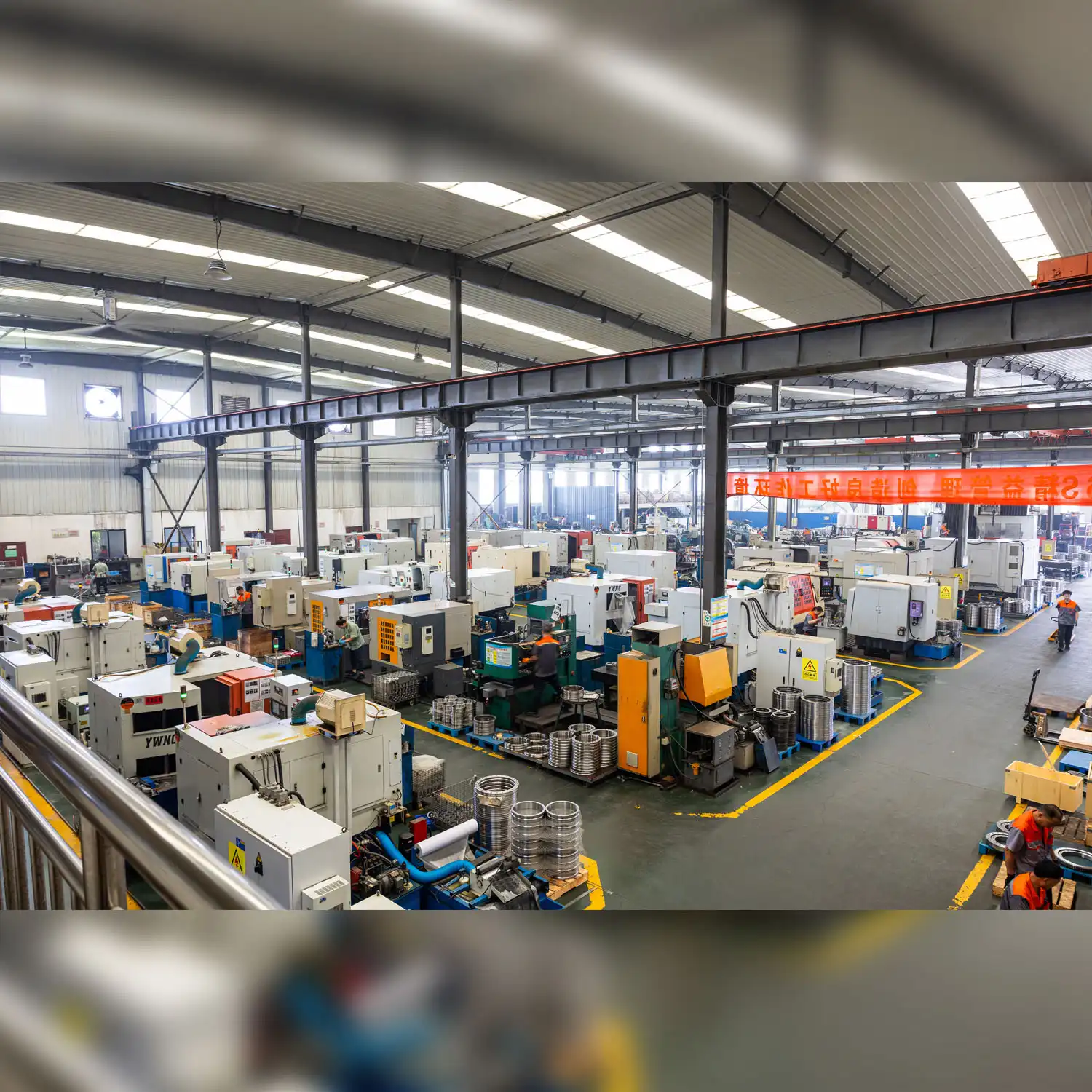
Precision manufacturing demands components that consistently deliver exceptional performance under complex loading conditions. The RE2508UUCC0 Cross roller bearing stands as a specialized solution engineered specifically for applications requiring high rigidity in constrained spaces. This compact bearing features a split inner ring and integrated outer ring configuration optimized for outer ring rotation scenarios, delivering multi-directional load handling within a single unit. With dimensions of 25mm inner diameter, 41mm outer diameter, and 8mm width, this bearing provides the foundation for reliable operation across demanding industrial environments.
Understanding RE2508UUCC0 Cross Roller Bearing Specifications and Advantages
Precision machine makers are always under pressure to make their products work better while taking up less space. RE2508UUCC0 Cross roller bearing technology solves this problem with new ways of designing that increase load capacity without making the installation bigger.
Core Design Architecture and How Things Work
For the RE2508UUCC0 Cross roller bearing, the V-groove raceways are precisely ground and have cylindrical rollers arranged orthogonally at 90-degree intervals. This crossed design lets a single compact unit handle radial, axial, and moment loads at the same time, so there's no need for complicated bearing setups that usually need several parts.The split inner ring design makes installation easier while keeping the structure strong while it's in use. Unlike regular bearings that need complicated mounting steps, this configuration makes assembly easier, which cuts down on installation time and the chance of mistakes. When the outer race is used as the turning part, the combined outer ring gives better rotational accuracy, providing steady performance that is necessary for precise positioning tasks.The CC0 negative clearance standard sets up a controlled preload situation that gets rid of pushback and makes the system more rigid overall. This preload guarantees zero-clearance operation, which means that positioning is more accurate and can be done more than once. The dual-sealed (UU) design stops particles from getting in while keeping the friction level low. This keeps the bearing raceways safe from contaminants that could lower their performance or shorten their life.
Technical Specifications and Material Properties
Knowing the technical details helps the buying team make smart choices that meet the needs of the tools. The bearing is made of high-carbon chromium bearing steel (Gcr15, Gcr15SiMn) that has been heat-treated to a hardness of 58 to 64 HRC. This ensures that the bearing will last longer under continuous loading conditions.
| Specification | Value | Significance |
|---|---|---|
| Inner Diameter | 25mm | Shaft mounting dimension |
| Outer Diameter | 41mm | Housing bore requirement |
| Width | 8mm | Axial space constraint |
| Material | Gcr15, Gcr15SiMn | High-carbon chromium steel |
| Accuracy Classes | P6, P0, P5, P4, P2 | ISO tolerance grades |
| Sealing Type | UU (dual sealed) | Contamination protection |
| Clearance | CC0 (negative clearance) | Zero-backlash preload |
You can choose from accuracy classes ranging from P6 (standard) to P2 (ultra-precision), depending on the tolerances needed for your application. The P5 and P4 grades are good for most industrial robotics and machine tool uses. The P2 rating is for ultra-precise semiconductor manufacturing and measurement equipment.
Performance Advantages That Drive ROI
The technical benefits directly lead to practical benefits that lower the total cost of ownership and make the initial investment worthwhile. The bearing can handle radial, axial, and moment loads all at the same time because it has multi-directional load capacity. This means that you don't need different thrust bearings or bearing pairs. This reduces the number of parts, makes assembly easier, and lowers the weight of the whole system.Controlled loading that increases rigidity gives exceptional stiffness properties that are necessary for precise positioning uses. The negative clearance specification makes sure that the system works the same way even when the load changes, so it stays accurate throughout its operational envelope. Rotational accuracy is usually better than ISO Class 5 limits, and this accuracy stays the same over the life of the bearing, so there isn't much need for drift and recalibration.The small installation size increases the load capacity while reducing the room needed. In robotic joints and precision machinery, where weight and room limitations directly affect the total system's abilities, this thin-section design is very useful. The two-sealing system stops particles from getting in without making torque drag much worse. This keeps things running smoothly in places like cleanrooms and factory floors.These performance traits work together to shorten the time between repair visits, keep unexpected downtime to a minimum, and increase the useful life of the equipment. When procurement teams are looking at bearing options, they shouldn't just look at the initial purchase price. They should also look at the total cost of ownership. This is because operational savings from less maintenance and better uptime usually cover higher upfront costs within the first year of operation.
Comparing RE2508UUCC0 with Other Bearing Types for Optimal Selection
To choose the right bearing technology, you need to know how the performance of each design compares to the others. RE2508UUCC0 Cross roller bearings are a special kind of bearing that is different from other types of bearings. They have benefits in some situations.
RE2508 Versus RE2506: Dimensional Differences and Application Fit
The inner diameters of the RE2508 and RE2506 types are both 25 mm, but the outer sizes and widths are different. The RE2506 has an outer diameter of 38 mm and a width of 6 mm, making it a smaller option for situations where room is at a premium. The standardized RE2508UUCC0 Cross roller bearing is bigger (41mm outer diameter, 8mm width), which makes it stronger and more load-bearing. This makes it suitable for uses with higher moment loads or that need more stability. The choice of application depends on the loading conditions and the amount of space that is available. Robotic wrist joints usually like the RE2506's small size, while bigger robotic elbow joints or spinning table uses usually need the RE2508's higher load capacity. By doing a thorough load study during the design process, the best bearings can be chosen that meet performance needs while also fitting within the available space and weight.
Cross Roller Bearings Versus Alternative Technologies
Knowing the changes in structure between the different kinds of bearings makes it easier to see why cross roller designs work so well in some situations. Slewing rings can handle multidirectional loads in the same way, but they need much larger installation diameters, which means they can't be used on small pieces of equipment. Cylindrical roller bearings can handle rotational loads very well, but they need different thrust bearings to handle axial loads. This means that there are more parts to put together and it's harder to do. Cross roller designs can hold a lot more weight than ball bearings, but ball bearings have less friction. A single cross roller bearing can be used instead of two angular contact ball bearings, which makes assembly easier and requires less room along the axis. This consolidation is especially helpful for robotics, where reducing arm weight directly raises payload capacity and operational speed.
Cost-Benefit Analysis for B2B Procurement
When making an investment choice, you should look at the total cost of ownership instead of just the buying price. Cross roller bearings usually cost more than regular bearings, but the operational benefits often make up for it by saving money over the bearings' lifetime. To figure out the real ROI, you need to look at a number of things. Load consolidation cuts down on the number of parts needed for building and gets rid of possible weak spots. Longer service times cut down on the cost of repair labour and keep production from stopping too often. In precision manufacturing, better accuracy lowers the amount of waste. In high-volume production settings, even small gains in quality save a lot of money. The costs of downtime often far outweigh the costs of parts by orders of magnitude. If a bearing fails on a robotic assembly line, it can cost a lot of money every hour in lost production. Reliability and long service life of cross roller bearings lower the number of failures, which protects against these huge cost events. Instead of making choices based only on the price of a component, procurement teams should work with engineers to create thorough lifecycle cost models that take these operational facts into account.
Installation, Maintenance, and Lubrication Guide for RE2508UUCC0 Bearings
The function and service life of a bearing are directly related to how well it is installed and maintained. Even high-quality RE2508UUCC0 Cross roller bearings won't work well if they aren't put correctly or aren't kept properly.
Installation Procedures for Optimal Performance
Preparing the mounting surface is the first step in getting the bearing to work right. To keep the bearing from warping during installation, the housing bores and shaft shoulders must be flat and perpendicular to within 0.005mm of the specified tolerances. Get rid of any burrs or sharp edges that could hurt the bearing seals or make stress points. To get rid of grinding dust, rust-preventative coatings, and other contaminants, clean all fastening surfaces very well. Even tiny particles stuck between the bearing and mounting surfaces can cause stress points in certain areas that shorten the life of the bearing. Use lint-free cloths and the right liquids, and make sure the bearings are completely dry before installing them. The split inner ring shape needs to be handled in a certain way. The holding structure of the application assembly makes sure that the two halves of the inner ring stay in the right place during installation. Carefully mount the bearing so that the split ring segments don't get out of alignment. This could cause uneven loading and wear that happens too soon. To keep the ring from warping, spread the mounting force evenly around the circumference instead of concentrating it in a few places. After installation, make sure the bearings are properly seated by measuring the end play and checking how smoothly they rotate. If the bearing can turn easily and there are no binding or rough spots, the arrangement is right. Write down the torque values and measurements of the rotational resistance during installation so that you have a starting point for future maintenance checks.
Maintenance Protocols and Troubleshooting
Routine inspections find problems as they start to form before they become major problems. Set up regular checks based on the number of hours they are used, checking the bearings for strange noises, more friction, or rising temperatures. An increase in running temperature is often a sign of poor greasing or contamination. Weird noise patterns may be a sign of damage or wear that is getting worse.
| Symptom | Probable Cause | Corrective Action |
|---|---|---|
| Increased friction | Inadequate lubrication | Relubricate per schedule |
| Temperature rise | Preload excessive or lubrication breakdown | Verify installation; replace lubricant |
| Noise or vibration | Contamination or wear | Inspect for damage; replace if needed |
| Backlash development | Bearing wear or mounting looseness | Check mounting bolts; assess bearing condition |
| Seal damage | Improper installation or environment | Replace bearing; improve protection |
During checks, keep an eye on the tightness of the mounting bolts because if they become loose, the bearings can move, which damages the mounting surfaces and speeds up wear. Maintain the specified torque levels throughout the operational life, retorquing as needed and in line with maintenance schedules. Pollution is the primary reason why bearings fail before they should. The dual-sealed design does a good job of protecting, but check the seals often for damage or wear. If the seal on a bearing is broken, it needs to be replaced because contaminants quickly speed up wear once security is broken.
Lubrication Best Practices
Proper oil keeps things running smoothly and stops them from wearing out too quickly. The standard UU sealed configuration comes with lithium-based grease that works well in most situations. Under normal circumstances, this first oil should last for 10,000 to 20,000 hours before it needs to be replaced. When to re-grease depends on things like the speed of rotation, the temperature, and the amount of dirt and dust in the environment. Continuous high-speed operation or high temperatures speed up the breakdown of lube, which means it needs to be serviced more often. Make maintenance schedules that are based on how things are actually working instead of just picking random times. Choose fluids that work well with the bearings and the conditions in which they will be used. Lithium-based greases work well in most industrial settings, but synthetic lubricants work better in high and low temperatures. For use in cleanrooms, vacuum-compatible greases that are made to reduce outgassing may be needed. Check the oil specs to make sure they work well together and give you the best performance. Use little lubricant so as not to over-grease, which creates too much heat and can damage the seal. Getting rid of old lubricant before putting on new grease keeps contamination from mixing and hurting performance. When you re-grease the bearing, turn it slowly so that the lube covers all of the raceway surfaces evenly.
Typical Applications of RE2508UUCC0 Cross Roller Bearings in High Precision Equipment
RE2508UUCC0 Cross roller bearing technology makes it possible for precise tools to work in a wide range of industries. Engineers can choose the right bearing designs when they know what the application needs.
Industrial Robotics and Automation Systems
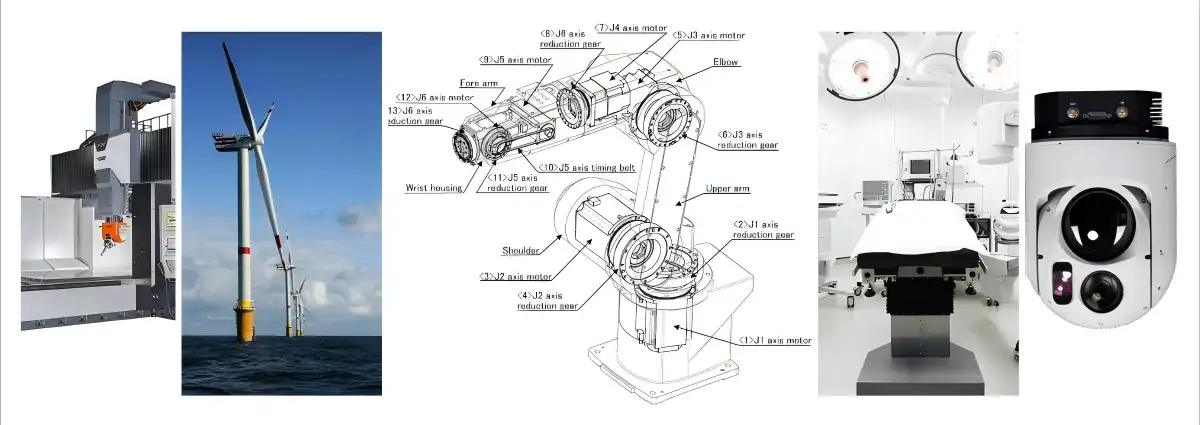
Robotic joint systems need bearings that can handle complex moment loads and keep the accuracy of their position. The RE2508UUCC0 Cross roller bearing gives precise path control and the rigidity it needs, so robots can stay on track even when the payload conditions change. The small size makes it easier to build a robot arm that is lighter, which improves acceleration and lowers the amount of energy used during operation. Cross roller bearing technology is especially helpful in the elbow and wrist joints of articulated robots. As the robot moves packages through its work envelope, these places receive a lot of moment loading. Because the bearing can handle radial, axial, and moment loads at the same time, there is no need for complicated bearing setups that would make the joint bigger and heavier. For safety and accuracy, collaborative robots that work close to people need to move in a smooth, precise way. Cross roller bearings have a low friction coefficient, which makes motion control smooth, which is important for joint applications. They also have zero backlash, which makes setting repeatable, which is important for assembly operations.
Machine Tool and Semiconductor Manufacturing
Cross roller bearings are used in rotary indexing tables on machining centers where exact positioning at any angle is important for multi-axis tasks. The high stiffness of the bearing keeps it from deflection during cutting processes, so the dimensions and quality of the surface finish stay the same. Rotational accuracy has a direct effect on the quality of the part. For example, bearing runout can cause errors in the size of the workpiece that lead to more scrap. Extremely accurate motion control is needed in cleanrooms for equipment used to make semiconductors. Cross roller bearings are used in IC bonding machines, wafer handling systems, and inspection tools to get the micron-level positioning accuracy needed for chip manufacturing. The sealed design stops the creation of particles that could pollute cleanrooms, and the smooth operation keeps vibrations to a minimum, which could harm delicate processes. Coordinate measuring machines (CMMs) and other precision tools depend on accurate bearings to make sure that measurements are accurate. Because the rotational accuracy of the bearing has a direct effect on measurement uncertainty, choosing the right precision bearing is essential for keeping tools calibrated and measuring with trust.
Medical Equipment and Optical Systems
Surgical robots need bearings that are accurate and reliable even when the load changes. The RE2508UUCC0 Cross roller bearing has zero pushback, which is needed for precise instrument control during minimally invasive procedures. In these procedures, patient results depend on how accurately the instruments are placed. The smooth operation makes it easier for surgeons to control the device, and the small size makes it possible to make instruments smaller. Cross roller bearings are used in spinning gantries and detector units of diagnostic imaging systems, such as CT scanners and X-ray machines. While holding heavy imaging parts and spinning at controlled speeds, the bearings must keep their accuracy. Motion-induced artefacts are avoided by low vibration operation, which protects the quality of the image. Cross roller bearings are used in gimbal mechanisms and scanning assemblies of optical inspection systems and laser processing equipment. The bearing holds the optical parts and allows for smooth movement, which keeps the beam in the exact position that is needed for checking and processing tasks. The sealed design keeps out dust and water, which could damage the glass surfaces.
Procuring RE2508UUCC0 Cross Roller Bearings: Brands, Suppliers, and Buying Tips
To do strategic buying, you need to know how the global bearing market works and put in place procedures that make sure you only buy real products. RE2508UUCC0 Cross roller bearings that meet world quality standards are made by a number of companies.
Leading Manufacturers and Quality Considerations
Japanese companies like NSK, IKO, and THK created the technology and have strong reputations for accuracy and dependability. Similar products are made by European companies like SKF, which also has large technical support networks. There are a lot of skills that Chinese makers have developed. For example, ATLYC has ISO 9001 and IATF 16949 certifications and offers reasonable prices. When judging a manufacturer, you need to look at their quality certifications, production ability, and expert help. Getting ISO 9001 certification shows that you are dedicated to quality management systems, and IATF 16949 certification talks about quality standards specific to the car industry that can be used for making precision bearings. Manufacturers who have both certifications usually use strict quality control methods to make sure their products always work well. Premium suppliers are different from basic suppliers because they offer technical help. Having access to application engineering help makes choosing bearings better and fixing performance problems easier. Suppliers who allow customisation offer solutions for unique uses that need different sizes or materials than what is normally available in catalogues.
Supplier Selection and Counterfeit Avoidance
There are fake bearings on the market that make tools less safe and less reliable. These risks can be avoided by using buying methods that guarantee real sourcing. This will also improve the speed of the supply chain. Work with authorised dealers while keeping close ties with the maker. Authorised channels sell real goods that come with warranties and technical support from the manufacturer. Ask for proof that the distributor is authorised and that the product can be tracked back to the factories that made it. Check the product's packaging and markings for mistakes that could mean it is fake. Genuine bearings have marks that are uniform and of high quality and are put on using precise methods. Products with bad writing, styles that don't match, or spelling mistakes are likely to be fake. Check the products you receive against the manufacturer's standard sheets. If the number of purchases warrants it, have independent tests done to make sure the products are the right size and the material doesn't break easily. Price is a good way to spot fakes when quotes are very different from what the market normally does. Fair price takes into account the costs of making the product, investing in quality control, and shipping it to customers. Quotes that are much lower than the going rate should lead to more investigation into the authenticity of the product and the legitimacy of the supplier.
Procurement Strategy and Supply Chain Optimization
Building smart ties with suppliers has benefits beyond just buying things. Long-term relationships let suppliers learn about the needs of each application and offer ways to make things better. Consistent order quantities help keep prices low and make sure that priority orders are filled when supplies are low. Minimum order numbers vary from manufacturer to manufacturer and distributor to distributor. Usually, they range from one piece for standard sizes to bigger quantities for custom configurations. Talk about MOQs based on how much you actually use, making sure to balance the costs of keeping inventory with the benefits of piece-price economies. Blanket purchase orders with scheduled releases keep inventory flexible while maximising prices. Lead times depend on how quickly you need the product and how you want it to be customised. Standard catalogue items usually ship within days, but custom configurations could take weeks or months, depending on when they are made. Plan your purchases so that these wait times are taken into account, and keep extra stock on hand in case something goes wrong with a key application that could stop production.
Conclusion
RE2508UUCC0 Cross roller bearing technology is very important for precision equipment that needs to be very rigid while still fitting into small spaces. The single unit has a load capacity in more than one way, great rotational accuracy, and zero-backlash operation thanks to new design concepts that have been improved over decades of use in industry. By knowing the scientific details, how the bearing works, and what it needs to be used for, you can choose a bearing that will give you the best performance and the lowest lifetime costs. Strategic procurement practices make sure that real products are sourced and build relationships with suppliers that will help the business succeed in the long term. When equipment makers use these bearings, their products are more precise, reliable, and efficient, which gives them a competitive edge.
FAQ
What load capacity can the RE2508UUCC0 Cross roller bearing handle?
Because the rollers are crossed, the RE2508UUCC0 Cross roller bearing can handle radial, axial, and moment loads all at the same time in a single, small unit. Dynamic load capacity is usually three to four times higher than that of regular ball bearings of the same size, though exact ratings depend on accuracy class and operating conditions. Manufacturers give thorough load rating tables that take these factors into account, which lets users accurately figure out how long a bearing will last in a given situation.
Can this bearing operate at high rotational speeds?
Cross roller bearings work best in low- to moderate speed situations where motion is irregular or oscillating, not when high-speed spinning is happening all the time. When the rollers are crossed, they slide against each other, which causes friction that is too high for long-term high-speed operation with normal grease lubricant. Applications that need constant high-speed rotation should look into other bearing technologies or use specialised oil lubrication systems that can get rid of the heat they create.
How frequently should lubrication maintenance occur during continuous operation?
In normal situations, pre-packed grease in protected bearings can last for 10,000 to 20,000 hours before it needs to be replaced. When working in places with high temperatures, big loads, or contamination, these times are cut down by the same amount. Check the temperature and noise levels of the bearings to see if the lubrication is wearing off. Change the maintenance schedules based on actual operating conditions instead of set times. There aren't many ways to re-grease sealed bearings, so when the first lubrication runs out of its useful life, the bearings usually have to be replaced completely.
Partner With ATLYC for Your Precision Bearing Requirements
ATLYC has been making high-quality bearings for 15 years and can meet the needs of tough industrial uses that need unwavering quality and dependability. Our RE2508UUCC0 Cross roller bearing production incorporates GCr15 and GCr15SiMn materials processed through precision heat treatment, achieving 58-64 HRC hardness, delivering extended service life under continuous loading. ISO 9001 and IATF 16949 certifications validate our commitment to quality management systems meeting international standards, ensuring consistent performance across production volumes. Six specialized manufacturing workshops enable scalable production supporting everything from prototype quantities to high-volume requirements, with technical support teams providing application engineering assistance throughout the procurement and implementation process. As a trusted RE2508UUCC0 Cross roller bearing manufacturer serving automotive, robotics, and precision machinery sectors across North America, Europe, and Asia, we combine Chinese manufacturing efficiency with global quality standards. Contact our engineering team at auto@lyautobearing.com to discuss your specific application requirements and discover how ATLYC precision bearings can enhance your equipment performance and operational reliability.
References
1. Harris, T.A. and Kotzalas, M.N. (2006). Advanced Concepts of Bearing Technology: Rolling Bearing Analysis, 5th Edition. CRC Press, Boca Raton.
2. ISO 5593:1984. Rolling Bearings - Vocabulary. International Organization for Standardization, Geneva.
3. Schaeffler Technologies AG & Co. KG (2019). Rolling Bearings: Bearing Types, Design, and Calculation. Technical Handbook, Herzogenaurach.
4. Khonsari, M.M. and Booser, E.R. (2017). Applied Tribology: Bearing Design and Lubrication, 3rd Edition. John Wiley & Sons, Hoboken.
5. Japanese Industrial Standards Committee (2015). JIS B 1506: Rolling Bearings - Crossed Roller Bearings. Japanese Standards Association, Tokyo.
6. American Bearing Manufacturers Association (2020). Load Ratings and Fatigue Life for Ball Bearings. ABMA Standard 9-1990 (R2020), Washington.
Learn about our latest products and discounts through SMS or email