- English
- French
- German
- Portuguese
- Spanish
- Russian
- Japanese
- Korean
- Arabic
- Greek
- German
- Turkish
- Italian
- Danish
- Romanian
- Indonesian
- Czech
- Afrikaans
- Swedish
- Polish
- Basque
- Catalan
- Esperanto
- Hindi
- Lao
- Albanian
- Amharic
- Armenian
- Azerbaijani
- Belarusian
- Bengali
- Bosnian
- Bulgarian
- Cebuano
- Chichewa
- Corsican
- Croatian
- Dutch
- Estonian
- Filipino
- Finnish
- Frisian
- Galician
- Georgian
- Gujarati
- Haitian
- Hausa
- Hawaiian
- Hebrew
- Hmong
- Hungarian
- Icelandic
- Igbo
- Javanese
- Kannada
- Kazakh
- Khmer
- Kurdish
- Kyrgyz
- Latin
- Latvian
- Lithuanian
- Luxembou..
- Macedonian
- Malagasy
- Malay
- Malayalam
- Maltese
- Maori
- Marathi
- Mongolian
- Burmese
- Nepali
- Norwegian
- Pashto
- Persian
- Punjabi
- Serbian
- Sesotho
- Sinhala
- Slovak
- Slovenian
- Somali
- Samoan
- Scots Gaelic
- Shona
- Sindhi
- Sundanese
- Swahili
- Tajik
- Tamil
- Telugu
- Thai
- Ukrainian
- Urdu
- Uzbek
- Vietnamese
- Welsh
- Xhosa
- Yiddish
- Yoruba
- Zulu
Why Choose RE Crossed Roller Bearings for Automation?
If you manage bearing procurement or engineer automated systems, you already know how much the right bearing matters. RE Crossed Roller Bearings stand out because they handle radial, axial, and moment loads simultaneously in a single compact unit — something most standard bearings simply cannot do. For automation applications where space is tight and positional accuracy is non-negotiable, RE Crossed Roller Bearings deliver the rigidity, precision grade, and load capacity that procurement teams and design engineers depend on. This guide breaks down exactly why they are a strong fit for your next project.

Understanding Crossed Roller Bearings and Their Role in Automation
What Makes the Design Different
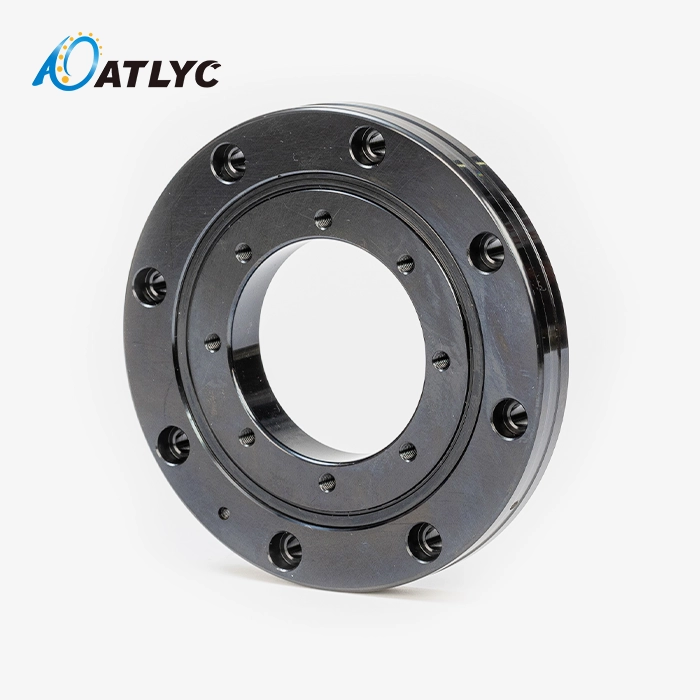
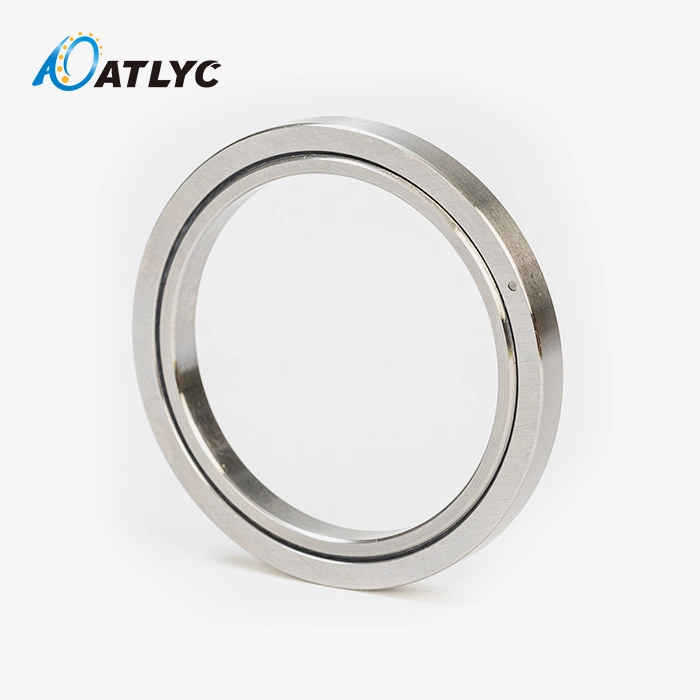
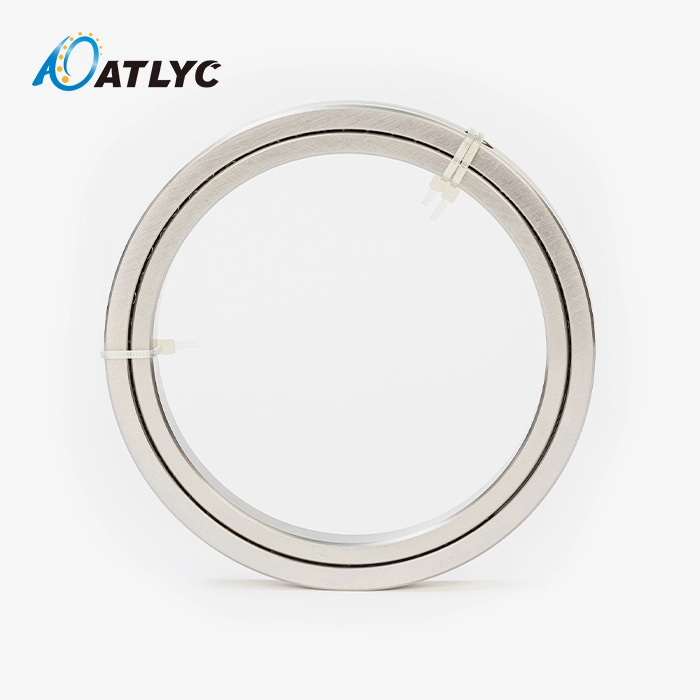
RE Crossed Roller Bearings have cylinder-shaped rollers placed at right angles to V-shaped raceways and spacers between them. This setup is orthogonal, which means that one bearing handles the combined loads instead of two separate ones. This makes the assembly size much smaller without lowering the stiffness of the structure.
Where They Are Used in Automation
Industrial robots, tools for handling semiconductor wafers, precise rotary tables, and medical imaging systems all use these bearings. In each case, the application needs accurate rotation that doesn't change even when the load is coming from different directions. When made to ISO P5 or P4 tolerance levels, a single RE Crossed Roller Bearing unit has runout accuracy in the micrometer range, immediately meeting the needs of these settings.
Why Rigidity Matters for Automated Systems
In automation, any deflection of a bearing means a mistake in its position. The 1:1 crossed-roller contact design makes the contact area between the roller and the track as big as possible. Published bearing engineering data says that this setup makes the bearings about three to four times stiffer than regular angular contact ball bearings of the same size. That difference has a direct effect on how repeatable it is to move robot joints and control CNC axes.
Comparing RE Crossed Roller Bearings with Other Bearing Types
Procurement managers need a clear comparison before they choose a type of bearing. Standard deep groove ball bearings, tapered roller bearings, and slewing rings are all good at different things. But these choices don't always work well when the job needs to handle loads in more than one direction inside a small space. Here are some examples:
| Bearing Type | Radial Load | Axial Load | Moment Load | Footprint |
|---|---|---|---|---|
| Deep Groove Ball Bearing | Moderate | Low | None | Compact |
| Tapered Roller Bearing | High | Moderate | Limited | Larger |
| Slewing Ring | High | High | High | Bulky |
| RE Crossed Roller Bearing | High | High | High | Compact |
The table shows that RE Crossed Roller Bearings are the only type that can handle loads going in all three directions while keeping the unit small. Crossed Roller Bearings are produced by companies like NSK, SKF, and THK, and they work well. However, ATLYC's RE series, which is certified by ISO 9001 and IATF 16949, offers similar quality at a better cost-performance ratio. It is backed by 15 years of production experience at Luoyang Auto Bearing Co., Ltd.
Material Advantage
High-carbon chromium bearing steel (GCr15) is what ATLYC uses as standard. It is heated until the surface is 58–64 HRC hard. This material doesn't get worn down or fatigued even when it's loaded and unloaded over and over again, which is a clear requirement for automatic equipment that works in shifts.
Tolerance and Accuracy
RE Crossed Roller Bearings are made to ISO P5, P4, and P2 standards and can handle zero-backlash loading. Zero backlash is not a nice-to-have in robot joint uses; it is a must for accurate settings that can be repeated.
Technical Specifications and Design Features of RE Crossed Roller Bearings
Structural Configuration
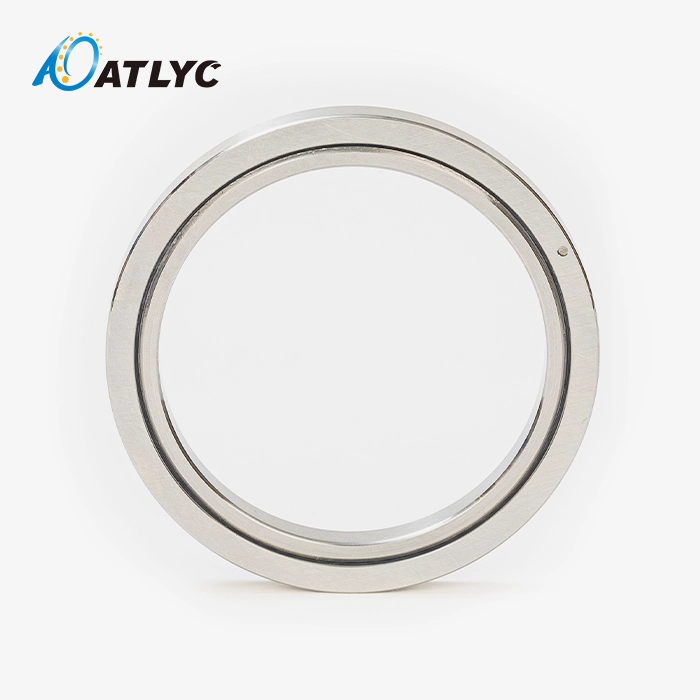
The outer ring of the RE series is merged, and the inner ring is split into two pieces. This design is best for situations where the outer ring needs to spin. This design keeps the bearing small while still letting it handle full loads in all directions. The V-groove raceways are carefully ground to meet the tolerance levels required by the ISO grade.
Here is a general guide to the sizes of the RE series products:
| Series | Bore Diameter Range (mm) | Outer Diameter Range (mm) | Precision Grade |
|---|---|---|---|
| RE (Standard) | 20–200 | 40–260 | P5 / P4 |
| RE (Heavy Duty) | 50–300 | 80–380 | P5 / P4 / P2 |
| RE (Custom OEM) | Per specification | Per specification | P4 / P2 |
Sealed vs. Open Design Options
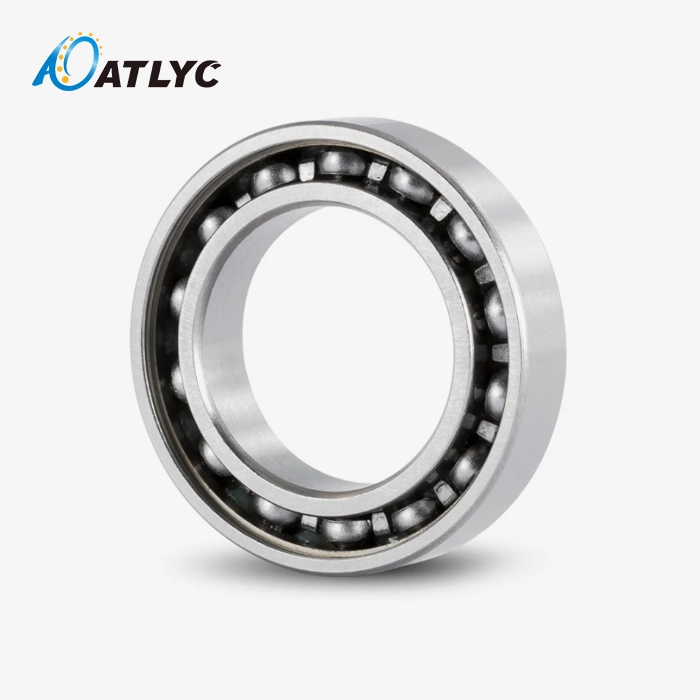
There are two types of RE Crossed Roller Bearings: covered and open. When it comes to making semiconductors and automating food preparation, sealed structures keep particles from getting into the internal raceway. When lubrication access or thermal management is important, open designs are better.
Maintenance and Service Life
When installed correctly and oiled at the right times, RE Crossed Roller Bearings are made to last for a long time with little upkeep. As part of its after-sales service, Luoyang Auto Bearing's engineering team gives advice on how to lubricate parts based on their unique use.
Procurement Considerations for B2B Clients
Minimum Order Quantities and Lead Times
It is possible to place both regular catalog orders and unique OEM production runs with ATLYC. The company has six production workshops and 120 production workers, so it can meet urgent buying needs quickly. Lead times depend on the standard and the number of orders. ATLYC has helped clients in the US, Germany, South Korea, Turkey, Russia, and Iran find what they need, and the deliveries have always been on time.
Authenticity and Certification
Buying RE Crossed Roller Bearings through official channels makes sure that they can be tracked, that the warranty covers them, and that all the paperwork is in order. ATLYC is certified by both ISO 9001 and IATF 16949, and all shipments come with quality records for each batch. This is a practical requirement for OEM clients whose quality systems need documentation from suppliers.
OEM and Custom Orders
ATLYC has worked with clients in the car assembly, industrial robots, and precision equipment manufacturing fields to meet their unique bearing needs. Working directly with ATLYC's technical team takes care of engineering sketches, requests for non-standard sizes, and requests for specific materials.
Why RE Crossed Roller Bearings Are the Preferred Choice for Automation
Finding the right bearing for an automation system means finding one that matches the system's load capacity, precision grade, dimensional range, and supply stability all at the same time. All of these needs are met by RE Crossed Roller Bearings, which are a single product line. Their zero-backlash design cuts down on positioning errors, their small size fits into tight mechanical housings, and the materials they are made of ensure long service life even when they are loaded and unloaded many times.
Since 2010, ATLYC's production size has grown from one workshop to six. This means that the company can handle higher order numbers as customer programs get bigger. Continuous investments in quality control and testing are in line with what mid- to large OEMs and industrial equipment makers expect from their suppliers.

Conclusion
It can be hard to deal with complex, multidirectional loads in a small mechanical space while keeping rotational accuracy at the micrometer level. RE Crossed Roller Bearings solve this common problem in automation engineering. Because of the way they are made, the materials they are made of, and the fact that they have no backlash, they are a good choice for robotics, semiconductor equipment, and precision rotary systems. ATLYC is a reliable source for procurement teams because it has a history of making things, foreign licenses, and a history of supplying major export markets. RE Crossed Roller Bearings from ATLYC are worth looking into if your automation program needs precise bearings with proven quality and a supply that can be scaled up.
FAQ
1. How do RE Crossed Roller Bearings improve robot joint precision?
The design of orthogonal rollers gets rid of backlash and keeps the contact shape constant even when the load is applied in different directions. This means that the RE Crossed Roller Bearings don't cause positional errors when the robot changes directions, which is a key part of making sure that industrial arms and shared robots can follow their paths accurately.
2. What customization options are available for RE Crossed Roller Bearings?
ATLYC lets you choose your own bore and outer diameter, non-standard widths, material (GCr15 or SUS440C steel), precision grade (P5, P4, P2), and whether the design is sealed or open. OEM clients can send drawings straight to the engineering team so they can be reviewed.
3. How does ATLYC ensure product authenticity and quality for international buyers?
All of ATLYC's RE Crossed Roller Bearings are shipped with batch traceability paperwork and certificates of conformance that meet the requirements of ISO 9001 and IATF 16949. With every package, buyers in the US, Germany, and South Korea have received the same quality marks.
Connect with ATLYC for RE Crossed Roller Bearings — Request a Quote Today
Luoyang Auto Bearing Co., Ltd. has been making precision products for 15 years, which helps ATLYC sell RE Crossed Roller Bearings to OEMs and dealers in the US, Germany, South Korea, and other places. As a certified manufacturer of RE Crossed Roller Bearings with ISO 9001 and IATF 16949, we can meet both standard and custom requirements and make sure quality is maintained at every step. You can email your questions to auto@lyautobearing.com to look at product details and ask for a price.
References
1. Harris, T. A., & Kotzalas, M. N. — Rolling Bearing Analysis: Essential Concepts of Bearing Technology, Taylor & Francis, 2006.
2. ISO 492:2014 — Rolling Bearings — Radial Bearings — Dimensional and Geometrical Tolerances, International Organization for Standardization, 2014.
3. Hamrock, B. J., Schmid, S. R., & Jacobson, B. O. — Fundamentals of Machine Elements, McGraw-Hill, 2005.
4. IATF 16949:2016 — Quality Management System Requirements for Automotive Production and Relevant Service Parts Organizations, IATF, 2016.
5. Bhushan, B. — Introduction to Tribology, Wiley, 2013.
6. Shigley, J. E., & Mischke, C. R. — Mechanical Engineering Design, McGraw-Hill, 2001.
Learn about our latest products and discounts through SMS or email