- English
- French
- German
- Portuguese
- Spanish
- Russian
- Japanese
- Korean
- Arabic
- Greek
- German
- Turkish
- Italian
- Danish
- Romanian
- Indonesian
- Czech
- Afrikaans
- Swedish
- Polish
- Basque
- Catalan
- Esperanto
- Hindi
- Lao
- Albanian
- Amharic
- Armenian
- Azerbaijani
- Belarusian
- Bengali
- Bosnian
- Bulgarian
- Cebuano
- Chichewa
- Corsican
- Croatian
- Dutch
- Estonian
- Filipino
- Finnish
- Frisian
- Galician
- Georgian
- Gujarati
- Haitian
- Hausa
- Hawaiian
- Hebrew
- Hmong
- Hungarian
- Icelandic
- Igbo
- Javanese
- Kannada
- Kazakh
- Khmer
- Kurdish
- Kyrgyz
- Latin
- Latvian
- Lithuanian
- Luxembou..
- Macedonian
- Malagasy
- Malay
- Malayalam
- Maltese
- Maori
- Marathi
- Mongolian
- Burmese
- Nepali
- Norwegian
- Pashto
- Persian
- Punjabi
- Serbian
- Sesotho
- Sinhala
- Slovak
- Slovenian
- Somali
- Samoan
- Scots Gaelic
- Shona
- Sindhi
- Sundanese
- Swahili
- Tajik
- Tamil
- Telugu
- Thai
- Ukrainian
- Urdu
- Uzbek
- Vietnamese
- Welsh
- Xhosa
- Yiddish
- Yoruba
- Zulu
Why Choose Spindle Bearing 71906C for Precision Performance?
When your manufacturing line demands nano-level precision, the bearing within your spindle is not a trivial feature – it is the determining element. 71906C spindle bearing is a high-precision angular contact ball bearing for situations where speed, rigidity, and temperature control are not optional. The thin-section bearing, Spindle Bearing 71906C, has a 30×47×9mm profile and a 15° contact angle, resulting in high radial stiffness and rotational stability at speeds beyond 30,000 RPM. If you are a B2B procurement team purchasing components for CNC equipment, automation systems, or industrial machinery, you need to know what this bearing is all about to make a good selection.
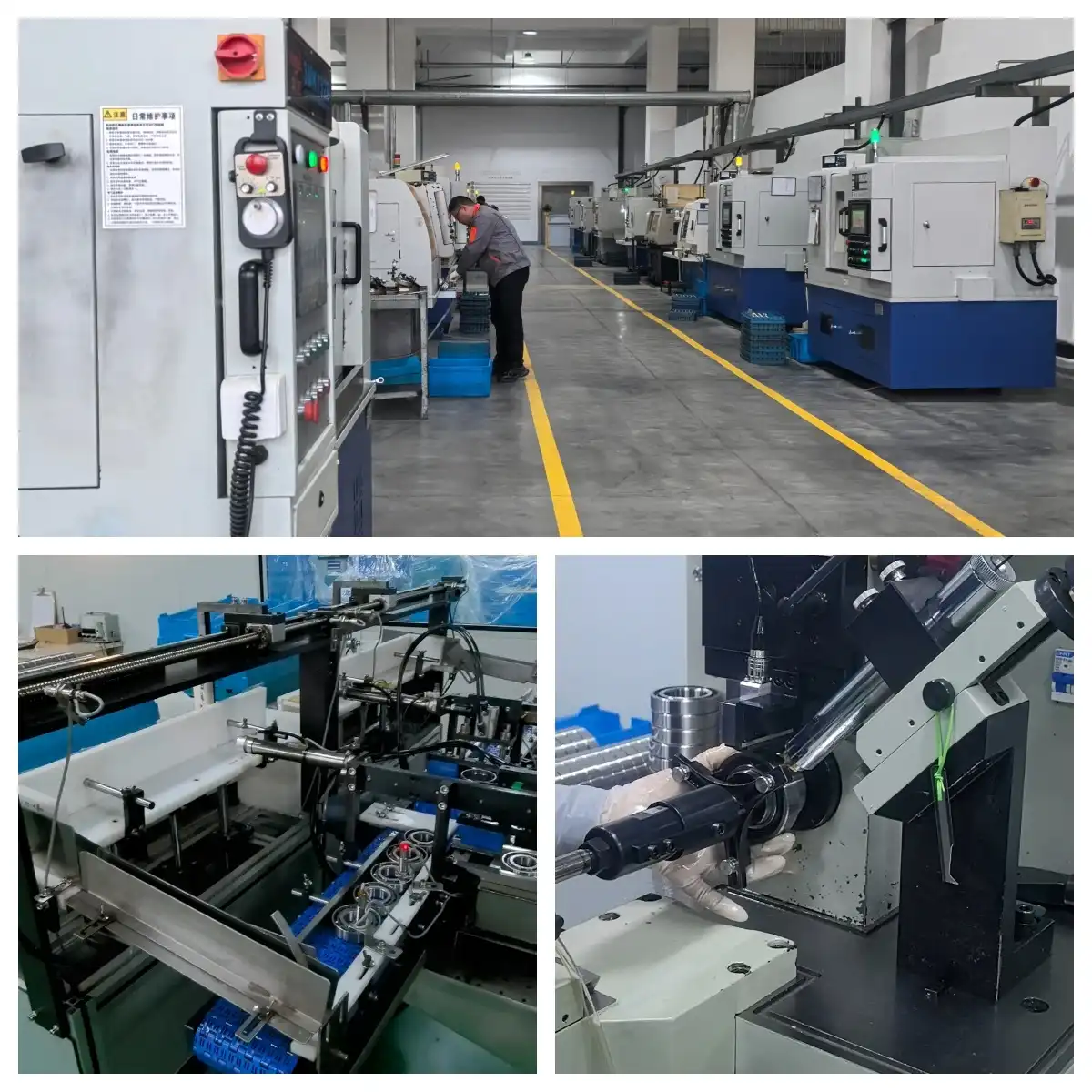
Understanding Spindle Bearing 71906C: Specifications & Performance
Core Dimensions and Material Construction
The 71906C is a part of the ISO Series 19 super-light group and has a bore diameter of 30mm, an outside diameter of 47mm, and a width of 9mm. The small cross-section enables engineers to use bigger shaft diameters in tight housing environments – an immediate solution to the problem of spindle droop in high-speed CNC machines. The inner and outer rings are made of vacuum-degassed chrome steel (100Cr6). Hybrid variations, labeled HC71906C, use silicon nitride (Si₃N₄) ceramic balls, which are 60% lighter than steel and greatly reduce centrifugal force and internal heat.
The cage is made of phenolic resin (TA) or PEEK (T85) and is chosen for thermal stability under harsh machining conditions. Tolerance grades might be ISO P4 (ABEC 7) or P2 (ABEC 9), with radial runout limitations as tight as 2.5 microns for P4-class bearings – important for obtaining sub-micron surface finishes on precision workpieces.
| Parameter | Value |
|---|---|
| Bore Diameter | 30 mm |
| Outer Diameter | 47 mm |
| Width | 9 mm |
| Contact Angle | 15° (C-type) |
| Tolerance Class | P4 (ABEC 7) / P2 (ABEC 9) |
| Max Speed (oil-air) | rpm up to 2,000,000 |
| Ball Material | 100Cr6 Steel / Si₃N₄ Ceramic |
How the 71906C Supports High-Speed CNC Spindles
This bearing performance is identified by the 15° contact angle. The C-type arrangement is more radially rigid than the 25° angle used in AC-type bearings, but it is less axially rigid. This trade-off is beneficial for fine finishing and internal grinding operations over 30,000 RPM. The improved raceway osculation in EHL reduces heat production in the contact areas, leading to a grease life enhancement of up to three times in hybrid ceramic setups.
Spindle Bearing 71906C is a common basis for universal pairing (DU) and is available for back-to-back (DB), face-to-face (DF), or tandem (DT) mounting configurations without shimming. This versatility also makes spindle stack assembly easier for CNC machine manufacturers and decreases assembly time throughout production and maintenance cycles.
Comparing Spindle Bearing 71906C with Alternative Bearings
Procurement engineers often evaluate the 71906C alongside other precision bearing types. The differences matter more than they might initially appear.
The 71906AC (25° angle) is designed for heavy axial loads and is suitable for milling operations with high cutting forces. But for high-RPM grinding spindles where the 71906C thrives, its lower speed ceiling makes it not suited. The 6206 deep groove ball bearing is economical but not an angular contact type needed for spindle-grade stiffness, and it cannot sustain the positional precision required of CNC internal grinding. Full-complement ceramic bearings provide electrical insulation, but forfeit speed capability and increase production complexity.
Here is a direct performance comparison across the most common angular contact alternatives:
| Bearing Type | Contact Angle | Speed Suitability | Primary Application |
|---|---|---|---|
| 71906C | 15° | Ultra-High (>30,000 RPM) | CNC grinding, PCB drilling |
| 71906AC | 25° | High | Milling, moderate axial loads |
| 71906E | 15° (Enhanced) | High | General precision spindles |
| 6206 DGBB | N/A | Moderate | General industrial use |
The 71906C's combination of thin-section design, P4/P2 tolerance, and universal pairing compatibility makes it the rational selection for manufacturers targeting sub-micron workpiece tolerances. Case evidence from CNC internal grinding operations confirms that spindles equipped with paired 71906C bearings maintain surface finish tolerances (Ra) in the sub-micron range for automotive fuel injector components—results that standard bearing types cannot replicate.
Procurement Guide: How to Source Spindle Bearing 71906C Efficiently
Identifying Reliable Suppliers and Evaluating Quality
Some of the established brands in the worldwide market for precision spindle bearings are SKF, FAG, NSK, NTN, Timken, and KOYO. Every manufacturer has their own internal geometry values – oscillation ratios, preload offset grinding tolerances, ball grades – that differ even when the external dimensions are the same. Uneven load distribution and premature failure result when brands are mixed in one spindle stack. This is a non-negotiable in spindle maintenance.
Quality verification for the Spindle Bearing 71906C should include the following inspection benchmarks:
- Rotational Accuracy (Kia/Kea): Radial runout of inner and outer rings verified against ISO 492 and DIN 620 standards; P4 class requires runout within 2.5 microns.
- Contact Angle Deviation: Must be held within 15° ±1° to ensure consistent preload in paired mounting configurations.
- Vibration and Noise Analysis (Anderon Meter Test): Three frequency bands are screened for micro-scratches on raceways or ball defects.
- Preload Verification: Axial displacement is measured under load to confirm Light (L), Medium (M), or Heavy (H) preload classification, matching the spindle's dynamic model.
These inspection points are the baseline standard any reputable 71906C supplier should meet before shipment.
Why Source from a Certified Chinese Manufacturer
Luoyang Auto Bearing Co., Ltd. has been a manufacturer of precision bearings since 2010 and is ISO 9001 and IATF 16949 certified. ATLYC is the brand name of Luoyang Auto Bearing Co., Ltd. In the last 15 years, the firm has grown from one automated workshop to six production facilities, with 120 trained staff in manufacturing, R&D, quality inspection, and assembly. Exports to South Korea, the United States, Germany, Russia, Iran, and Turkey, supplying mid- to big OEMs and distributors requiring consistent quality with competitive lead times. Bulk orders, unique requirements, and just-in-time delivery — we can do it.
Why Spindle Bearing 71906C Is the Rational Choice for Your Business
The 71906C tackles three long-standing difficulties in precision manufacturing: temperature buildup during prolonged high-speed operation, dimensional drift due to poor spindle stiffness, and accelerated wear under uneven lubrication. Its thin-section shape, coupled with a 15° contact angle and P4/P2 accuracy class, solves all three at the same time.
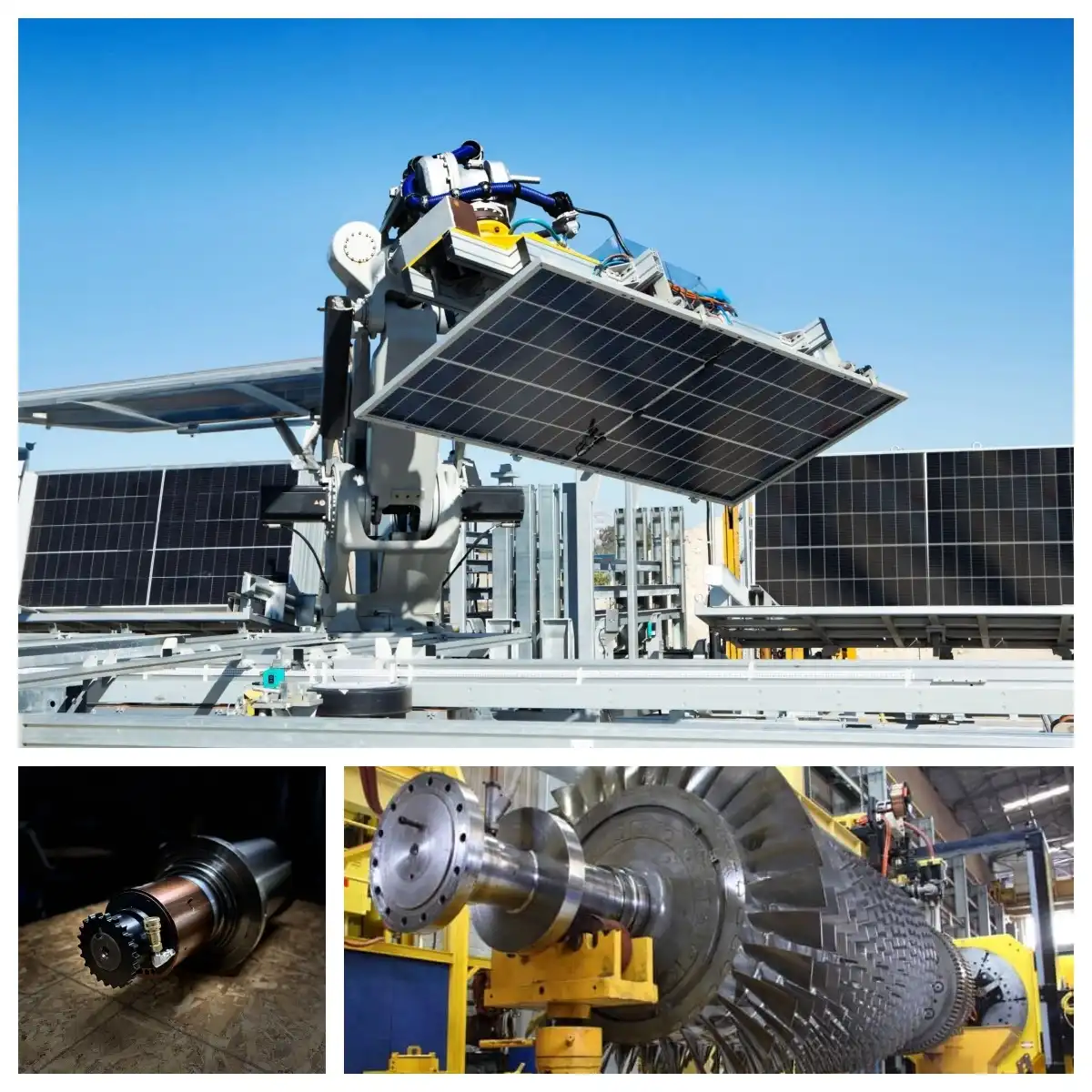
Think about the variety of uses this bearing makes possible. CNC internal grinding spindles use paired 71906C bearings for shaft stiffness when exposed to harsh coolant at speeds over 35,000 RPM. The low rotational inertia of the rolling elements reduces skidding damage during fast acceleration cycles in PCB drilling and router spindles, with a measurable extension of service life. The small cross-section of the bearing in robotic surgical arm actuators allows for compact joint design without compromising load capacity or zero-backlash performance.
These benefits immediately lead to less unexpected downtime, less frequent maintenance, and a quantifiable increase in part quality consistency, all of which are important to procurement managers who are accountable for controlling long-term operating costs.
Conclusion
The Spindle Bearing 71906C justifies its position in demanding precision applications not by marketing jargon, but by demonstrable technical performance. With a 15° contact angle, ISO P4/P2 tolerance class, universal pairing capability, and hybrid ceramic option, it is a technically solid response to the demands of high-speed, high-precision machining. The 71906C is a proven and well-documented solution for B2B customers looking for angular contact spindle bearings, with decades of application data in CNC, electronics, and medical device manufacturing.
FAQ
1. What is the difference between the 71906C and the 71906AC?
The C suffix denotes a 15° contact angle, which prioritizes radial stiffness and higher rotational speeds. The AC suffix indicates a 25° angle, which accommodates heavier axial loads but carries a lower speed ceiling. Use the C type for high-speed finish grinding; use the AC type for heavy-duty milling with significant axial cutting forces.
2. Should I consider hybrid ceramic balls for the 71906C?
Yes, when your application runs above 30,000 RPM or requires electrical insulation. Si₃N₄ ceramic balls are 60% lighter than steel, reducing centrifugal force and heat buildup at the contact zone. This extends grease life by two to three times compared to all-steel configurations.
3. How do I select the correct preload class?
Light preload suits maximum-speed, minimum-heat applications such as high-speed grinding. Medium or heavy preload is appropriate where spindle stiffness must resist substantial cutting forces, as in milling. Keep in mind that heavier preload directly reduces the maximum permissible RPM.
4. What lubrication is recommended?
For speeds up to 70% of the limiting speed, premium barium-complex spindle grease such as Klüber Isoflex is the standard choice. For speeds near the rated limit, an oil-air lubrication system is mandatory to dissipate heat and prevent cage failure.
Partner with ATLYC for Your 71906C Spindle Bearing Supply
ATLYC delivers certified spindle bearing 71906C solutions built to ISO 9001 and IATF 16949 standards, backed by 15 years of precision manufacturing experience. As a trusted Spindle Bearing 71906C manufacturer, we support bulk orders, custom specifications, and global logistics to meet your production schedule. Contact our engineering team at auto@lyautobearing.com to request a quote and discuss your sourcing requirements today.
References
1. International Organization for Standardization. (2014). ISO 492: Rolling bearings — Radial bearings — Tolerances.
2. American Bearing Manufacturers Association. (2020). ABMA Standard 20: Radial Bearings of Ball, Cylindrical Roller and Spherical Roller Types — Metric Design.
3. SKF Group. (2023). SKF Bearing Catalogue: Super-precision angular contact ball bearings.
4. Weck, M., & Brecher, C. (2006). Werkzeugmaschinen: Konstruktion und Berechnung (8th ed.).
5. NSK Ltd. (2022). NSK Precision Machine Components Catalog: High-Speed Angular Contact Ball Bearings.
6. Eschmann, P., Hasbargen, L., & Weigand, K. (1985). Ball and Roller Bearings: Theory, Design and Application.
Learn about our latest products and discounts through SMS or email
