- English
- French
- German
- Portuguese
- Spanish
- Russian
- Japanese
- Korean
- Arabic
- Greek
- German
- Turkish
- Italian
- Danish
- Romanian
- Indonesian
- Czech
- Afrikaans
- Swedish
- Polish
- Basque
- Catalan
- Esperanto
- Hindi
- Lao
- Albanian
- Amharic
- Armenian
- Azerbaijani
- Belarusian
- Bengali
- Bosnian
- Bulgarian
- Cebuano
- Chichewa
- Corsican
- Croatian
- Dutch
- Estonian
- Filipino
- Finnish
- Frisian
- Galician
- Georgian
- Gujarati
- Haitian
- Hausa
- Hawaiian
- Hebrew
- Hmong
- Hungarian
- Icelandic
- Igbo
- Javanese
- Kannada
- Kazakh
- Khmer
- Kurdish
- Kyrgyz
- Latin
- Latvian
- Lithuanian
- Luxembou..
- Macedonian
- Malagasy
- Malay
- Malayalam
- Maltese
- Maori
- Marathi
- Mongolian
- Burmese
- Nepali
- Norwegian
- Pashto
- Persian
- Punjabi
- Serbian
- Sesotho
- Sinhala
- Slovak
- Slovenian
- Somali
- Samoan
- Scots Gaelic
- Shona
- Sindhi
- Sundanese
- Swahili
- Tajik
- Tamil
- Telugu
- Thai
- Ukrainian
- Urdu
- Uzbek
- Vietnamese
- Welsh
- Xhosa
- Yiddish
- Yoruba
- Zulu
Can Tapered Roller Bearing 30305 Improve Load Performance?
The answer is yes: the Tapered Roller Bearing 30305 really does increase load performance, and the technical data confirms this conclusively. This single-row metric bearing can take combined radial and axial loads concurrently and has a Basic Dynamic Load Rating (Cr) of about 46.5 kN and a Static Load Rating (Cor) of 36.5 kN. The conical roller shape and the logarithmic raceway profile guarantee a uniform distribution of the contact stress throughout the roller length and avoid edge loading, even with a little shaft misalignment. For OEMs and procurement engineers buying precise components, knowing how—and why—this bearing performs the way it does is important to the decision on the supply chain.
Understanding the Design and Technical Specifications of Tapered Roller Bearing 30305
Boundary Dimensions and Material Composition
The 30305 is a tapered roller bearing based on ISO 355 and DIN 720. The boundary dimensions are exact: 25 mm bore diameter (d), 62 mm outer diameter (D), and breadth of assembly (T) of 18.25 mm. The bearing is made from SAE 52100 (GCr15) vacuum-degassed high-carbon chrome steel, heat-treated to a hardness of HRC 60–64. This metallurgical grade fulfills ASTM A295 specifications and offers excellent fatigue resistance under high Hertzian contact stress – a necessity in heavy-duty automotive and industrial machine applications.
The main dimensions and mechanical properties of the 30305 tapered roller bearing are summarized in the following table:
| Parameter | Value |
|---|---|
| Bore Diameter (d) | 25 mm |
| Outer Diameter (D) | 62 mm |
| Assembly Width (T) | 18.25 mm |
| Basic Dynamic Load Rating (Cr) | ~46.5 kN |
| Static Load Rating (Cor) | ~36.5 kN |
| Operating Temperature Range | -30°C to +120°C |
| Material | GCr15 (SAE 52100) |
| Cage Type | Pressed steel (J-type) |
Contact Angle and Roller Geometry
The Tapered Roller Bearing 30305 has a greater contact angle than the 302 series, which increases the axial load capacity of the bearing compared to its bore size. The logarithmic raceway profile is a prominent technical achievement – it avoids stress accumulation at the roller ends under misalignment situations, a frequent cause of failure in gearbox and axle applications. The J-type cage of pressed steel preserves roller spacing under dynamic circumstances, increasing service intervals and decreasing unexpected downtime.
The inner ring assembly (cone) and outer ring (cup) are separate. This overcomes a real assembly problem in car gearboxes where accurate preload adjustment or an interference fit is essential. This modular design enables engineers to attach the cup and cone individually, simplifying assembly in complicated industrial equipment designs.
Load Performance and Application Areas of 30305 Tapered Roller Bearing
The Tapered Roller Bearing 30305 is deployed across demanding sectors where combined load capacity and rigidity are non-negotiable. Here are the three primary application domains where it consistently demonstrates superior performance:
- Automotive Transmissions and Differentials (Pinion Shafts): The 30305 handles intense axial thrust generated by helical gears while sustaining shaft alignment under rapidly shifting torque loads. This directly mitigates gear tooth wear and extends drivetrain service life — a measurable cost benefit for OEM transmission manufacturers.
- Agricultural Machinery (Disc Harrows and Seeder Hubs): In dusty, contaminated field environments, this bearing withstands severe static and shock loads caused by uneven terrain. Its compatibility with robust sealing solutions makes it a practical choice where abrasive ingress is an ongoing operational threat.
- Industrial Reducers and Conveyor Systems: When mounted in pairs — back-to-back or face-to-face — the 30305 provides the rigidity needed for heavy-duty belt conveyor rollers operating under significant radial belt tension and continuous vibration cycles.
These application strengths make the 30305 tapered roller bearing a versatile asset for procurement managers sourcing across automotive, agricultural, and industrial machinery sectors. Its proven endurance in combined-load environments justifies its position as a preferred specification in global OEM supplier lists.
Comparing 30305 Tapered Roller Bearing with Alternatives
Choosing the right bearing requires more than matching a part number. Dimensional differences between closely related models carry significant consequences for load capacity and assembly fit.
| Bearing Model | Bore (d) | OD (D) | Width (T) | Dynamic Load Rating (Cr) |
|---|---|---|---|---|
| 30305 | 25 mm | 62 mm | 18.25 mm | ~46.5 kN |
| 30205 | 25 mm | 52 mm | 16.25 mm | ~34.0 kN |
| 30306 | 30 mm | 72 mm | 20.75 mm | ~64.0 kN |
| 30307 | 35 mm | 80 mm | 22.75 mm | ~80.0 kN |
The Tapered Roller Bearing 30305 occupies a precise load class that the 30205 cannot match — its larger outer diameter alone delivers a meaningful increase in dynamic load capacity. Against ball bearings of equivalent bore size, the tapered roller design manages combined loads far more efficiently; deep groove ball bearings in the same size range typically carry far lower axial load ratings and show earlier fatigue onset under sustained thrust conditions.
Purchasing managers are often faced with a choice between brand-certified OEM bearings and their aftermarket counterparts. SKF, Timken, NSK, NTN, KOYO, and FAG also make the 30305, and it is available to ISO boundary dimensions; thus may be interchanged in complete assemblies. However, it is not recommended to combine cups and cones from various manufacturers, as differences in internal geometry, such as raceway profile and contact angle tolerances, might cause unpredictable load distribution behavior and lower bearing life. Choosing a whole assembly from a reputable manufacturer minimizes the danger and preserves your warranty.
Maintenance, Troubleshooting, and Common Issues Affecting 30305 Bearing Performance
Lubrication and Preload Management
The most common failure mode for the Tapered Roller Bearing 30305 is raceway spalling — flaking caused by insufficient lubrication or incorrect preload settings. The bearing operates efficiently with lithium-complex grease or standard mineral oil within its rated temperature range of -30°C to +120°C. For applications exceeding 120°C continuously, heat stabilization treatment codes (S0–S4) and high-temperature grease formulations are required to prevent dimensional instability.
Setting the correct preload during installation is critical. Excessive preload generates heat and accelerates fatigue; insufficient preload introduces vibration and misalignment stress. Regular oil analysis programs help maintenance teams identify lubrication degradation before spalling progresses to component failure. Proper handling during storage — clean, dry environments with packaging intact — preserves raceway surface finish (Ra < 0.2 µm) and prevents corrosion prior to installation.
Procurement Strategies for Sourcing High-Quality 30305 Tapered Roller Bearings
For the 30305, quality assurance focuses on metallurgical integrity and dimensional accuracy. Certified vendors use Anderon meters to conduct 100 percent vibration testing in the low, medium, and high frequency bands to screen for raceway waviness or grinding abnormalities. Dimensional tolerance certification to ISO 492 Class Normal or P6 assures correct interference fits and interchangeability across world manufacturing lines.
When analyzing a Tapered Roller Bearing 30305 supplier, procurement managers should consider the ISO 9001 and IATF 16949 certifications as baseline qualifications. These certifications testify that quality management systems are compliant with worldwide automotive and industrial standards – not just on paper but also in production. Lead time reliability, minimum order flexibility, and technical support capabilities complete the supplier evaluation requirements for long-term collaboration.

Conclusion
The Tapered Roller Bearing 30305 tapered roller bearing offers demonstrable increases in load performance for automotive, agricultural, and industrial equipment applications. Its engineering solves real-world issues with GCr15 steel composition, logarithmic raceway profile, and separable cone-and-cup design for handling combined loads, shaft misalignment, and ensuring assembly quality. Over time, such performance is protected by three pillars: Correct installation, lubrication discipline, and approved supplier procurement. For procurement engineers managing worldwide supply chains, this is a technically solid and cost-effective option for specification based on ISO standards.
FAQ
1. How does the 30305 differ from the 30205 bearing?
Both bearings share a 25 mm bore, but the 30305 features a larger outer diameter (62 mm vs. 52 mm) and greater width (18.25 mm vs. 16.25 mm). This translates to significantly higher load ratings and greater durability for heavier-duty applications where the 30205 would reach fatigue limits prematurely.
2. Is preload adjustment necessary during installation?
Yes. Correct preload or endplay setting directly affects bearing rigidity and service life. Loose adjustment causes excessive vibration and wear acceleration; over-tightening generates heat buildup and premature fatigue. Always follow the equipment manufacturer's preload specifications during installation.
3. Can the 30305 operate above 150°C?
Standard GCr15 30305 bearings maintain dimensional stability up to 120°C. Continuous operation above 150°C requires heat stabilization treatment (S0–S4 designation) and compatible high-temperature grease to prevent internal dimensional changes and accelerated material degradation.
4. Are cups and cones interchangeable between different brands?
ISO boundary dimensions allow full assembly interchangeability between brands. However, mixing individual cups and cones from different premium manufacturers carries risk — internal geometry variations can alter contact angle behavior and reduce predicted bearing life.
Partner with ATLYC for Reliable Tapered Roller Bearing 30305 Supply
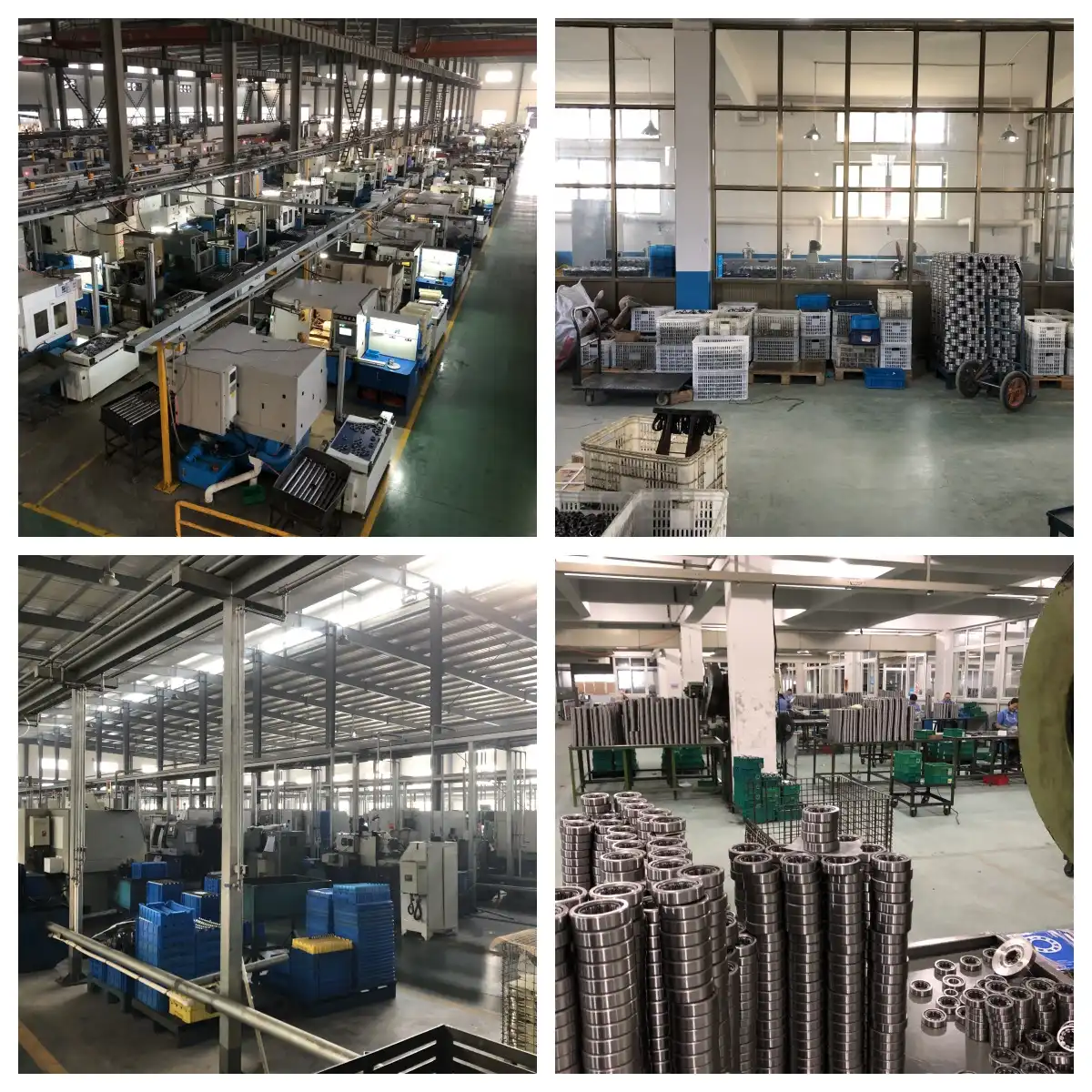
ATLYC — Luoyang Auto Bearing Co., Ltd. — has manufactured precision bearings since 2010, holding both ISO 9001 and IATF 16949 certifications across six production workshops. As a trusted Tapered Roller Bearing 30305 manufacturer serving clients in the USA, Germany, South Korea, and beyond, we offer scalable production, rigorous quality control, and dedicated technical support. Contact our engineering team directly at auto@lyautobearing.com to request specifications or a bulk supply quote.
References
1. SKF Group. (2023). Tapered Roller Bearings — Product Catalogue. SKF AB.
2. Timken Company. (2022). Tapered Roller Bearing Catalog. The Timken Company.
3. ISO. (2019). ISO 355:2019 — Rolling Bearings — Tapered Roller Bearings — Boundary Dimensions and Series Designations.
4. ASTM International. (2021). ASTM A295/A295M — Standard Specification for High-Carbon Anti-Friction Bearing Steel.
5. NSK Ltd. (2023). Tapered Roller Bearings Technical Data and Specifications. NSK Americas.
6. Bearing Engineers Society. (2022). Rolling Bearing Failure Analysis and Maintenance Best Practices.
Learn about our latest products and discounts through SMS or email
