- English
- French
- German
- Portuguese
- Spanish
- Russian
- Japanese
- Korean
- Arabic
- Greek
- German
- Turkish
- Italian
- Danish
- Romanian
- Indonesian
- Czech
- Afrikaans
- Swedish
- Polish
- Basque
- Catalan
- Esperanto
- Hindi
- Lao
- Albanian
- Amharic
- Armenian
- Azerbaijani
- Belarusian
- Bengali
- Bosnian
- Bulgarian
- Cebuano
- Chichewa
- Corsican
- Croatian
- Dutch
- Estonian
- Filipino
- Finnish
- Frisian
- Galician
- Georgian
- Gujarati
- Haitian
- Hausa
- Hawaiian
- Hebrew
- Hmong
- Hungarian
- Icelandic
- Igbo
- Javanese
- Kannada
- Kazakh
- Khmer
- Kurdish
- Kyrgyz
- Latin
- Latvian
- Lithuanian
- Luxembou..
- Macedonian
- Malagasy
- Malay
- Malayalam
- Maltese
- Maori
- Marathi
- Mongolian
- Burmese
- Nepali
- Norwegian
- Pashto
- Persian
- Punjabi
- Serbian
- Sesotho
- Sinhala
- Slovak
- Slovenian
- Somali
- Samoan
- Scots Gaelic
- Shona
- Sindhi
- Sundanese
- Swahili
- Tajik
- Tamil
- Telugu
- Thai
- Ukrainian
- Urdu
- Uzbek
- Vietnamese
- Welsh
- Xhosa
- Yiddish
- Yoruba
- Zulu
Why Do CNC Systems Use Cross Roller Bearing XSU Series?
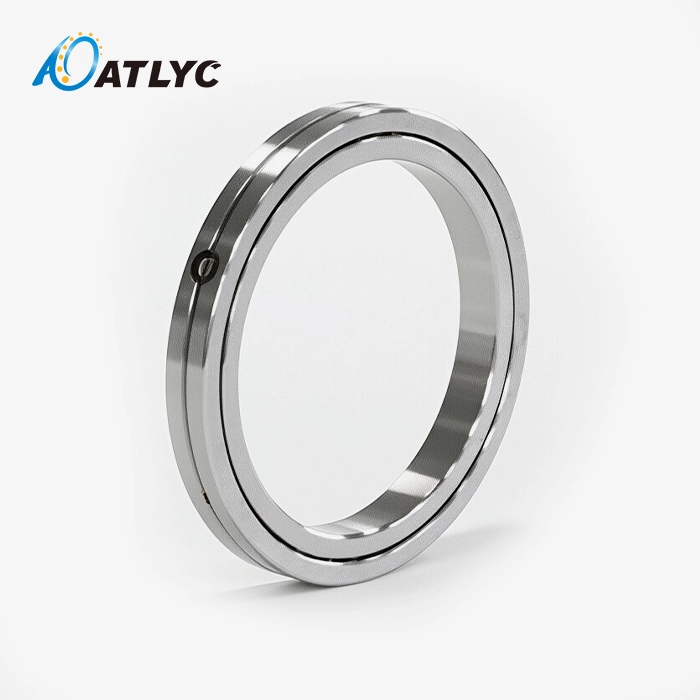
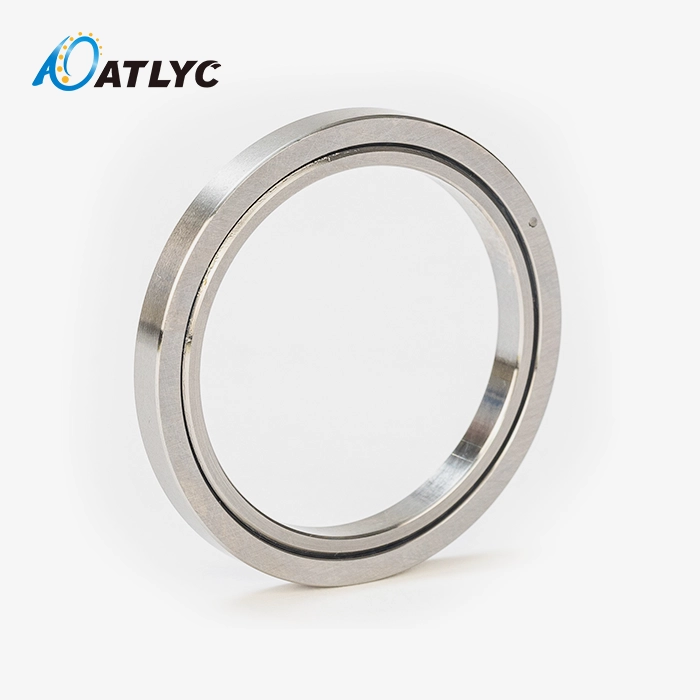
Cross roller bearings XSU series are used in CNC systems because they offer high stiffness, the ability to handle loads in multiple directions, and pinpoint accuracy all in a single, small package. Traditional bearing solutions need a lot of different parts or housings that are hard to understand. The XSU series, on the other hand, has a combined design with fixing holes already drilled in both the inner and outer rings. This gets rid of the need for complicated construction while supporting radial, axial, and moment loads at the same time. The V-groove raceways' orthogonal roller arrangement at 90 degrees ensures stable performance under dynamic machining conditions. This makes them essential for rotary tables, indexing mechanisms, and precision positioning systems where accuracy has a direct effect on the quality of the product and the efficiency of the operation.
Understanding Cross Roller Bearing XSU Series and Its Design Features
Bearings for modern CNC tools need to be able to handle a wide range of load situations without affecting the accuracy of the measurements. This problem is solved by smart engineering in the design theory behind these special bearings.
Integrated Ring Architecture
Compared to standard bearing assemblies, the monolithic design is a big step forward. Precision-machined mounting holes are in both the inner and outer rings, so they can be bolted directly to the surfaces they fit against without the need for extra fittings. This method gets rid of the tolerance stack-up problems that happen when several parts work together. Machine builders like this design because it lowers the height of the assembly and makes maintenance easier, especially in situations where room limits force the layout of the equipment.
Because the attachment features are built into the bearing structure, there is a fixed load path between the moving and still parts. When measured torque tools are used to tighten bolts in the suggested star pattern sequence, the rings keep their shape, and the precision-ground raceway profiles that are needed for smooth turning are maintained.
Crossed Roller Geometry Explained
The main part of this bearing system is two cylindrical wheels that are placed perpendicular to each other. Spacers between each roller keep them from touching directly, which stops pressure between the rolling parts. With this set-up, there are many touch points spread out across V-groove raceways that have been cut at exact angles.
The 1:1 cross-arrangement creates a large effective load center distance, which means that in moment load situations, a single bearing can be used instead of two ball bearings. Cost savings and easier machine design are directly linked to this physical benefit. When engineers are making rotating axes for machining centers, they really like how this arrangement keeps the axes in the same place even when the cutting force changes.
Material Composition and Heat Treatment
High-carbon chromium bearing steels Gcr15 and Gcr15SiMn are used to make these bearings of the Cross roller bearing XSU series. After being precisely forged and turned, parts go through controlled heat treatment steps that make them hard on the Rockwell scale, between 58 and 64 HRC. This range of hardnesses makes sure that the raceway surfaces don't bend under long-term loads and that the core is tough enough to handle shock loads.
In challenging situations, the choice of material has a direct effect on the life of the bearing. Gcr15SiMn alloy steel has silicon and manganese added to it, which makes it harder to work with and better at keeping its shape when heated and cooled. This makes the temperature more stable, which helps equipment that works in places where the temperature changes by keeping the same preload and clearance values across all working situations.
Here are the key technical specifications that define performance capabilities:
- Dimensional Range: Inner diameters range from 20 mm to 1100 mm to meet the needs of a wide range of applications; outer diameters range from 70 mm to 1500 mm to allow for freedom in machine design. Engineers can find the best mix between load capacity and room constraints by choosing a width between 12mm and 110mm.
- Precision Grades: According to ISO standards, the accuracy classes that can be chosen are P6, P0, P5, P4, and P2. The P5 grade is the standard for industrial robots and machining machines, and it has great runout accuracy of less than 5 microns. P4 and P2 grades are used in ultra-precision equipment that makes semiconductors and coordinate measuring machines that need to be accurate to within a micron.
- Load Handling: The cross-roller design lets a single bearing shell hold a lot of radial, axial, and moment loads. Because it can work in more than one way, it gets rid of the need for complicated bearing arrangements. This cuts down on the number of parts and possible failure points.
Manufacturing Quality Standards
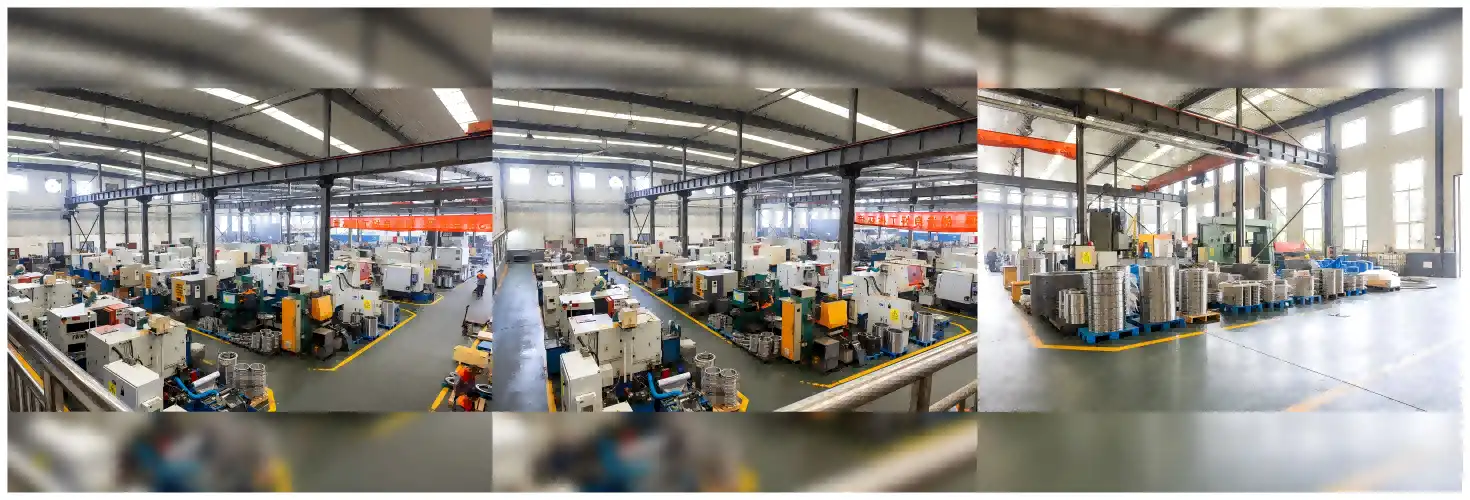
The way we make things at Luoyang Auto Bearing Co., Ltd. meets the standards for ISO 9001 and IATF 16949 approval. Specialised quality testers work on our 120-person team and check the accuracy of measurements, the finish on the surface, and the properties of the materials at different steps of production. Statistical process control methods keep an eye on how bearings work, making sure that the result is always the same and meets international standards.
Automatic grinding tools keep the shape of the raceways within micron-level accuracy. After being ground, parts are cleaned with ultrasonic waves to get rid of any leftover particles before being put together in a controlled, sterile setting. This careful attention to manufacturing detail makes sure that the bearings you receive will work reliably and predictably from the time they are installed until they are replaced.
Why CNC Systems Prefer the XSU Series: Performance and Application Benefits
Builders of machine tools and companies that make automation equipment always choose these bearings for tasks that need zero slack and high stiffness. The performance benefits directly lead to changes that can be measured in how well the equipment works and how much it produces.
Superior Rigidity and Minimal Deflection
The crossed wheel arrangement of the Cross roller bearing XSU series makes a bearing structure that is naturally stiff and doesn't bend when it's loaded. This stiffness keeps the tool-to-workpiece position accurate even when cutting forces change during operations. Manufacturers of machine tools have found that using a single high-rigidity solution instead of multiple traditional bearing setups lowers structural deflection by 40 to 60 percent in most rotary table uses.
When heavy-duty grinding is being done, where deep cuts create large moment loads, this stiffness property becomes very useful. The bearing stops the twisting motion that would otherwise make it hard to get accurate measurements on the final parts. When these high-rigidity bearing solutions are used in key motion directions, equipment at OEM sites with quality control reports less scrap.
Low Friction Coefficient for Smooth Motion
When compared to point-contact bearings, the circular roller shape and precision-ground raceways make for less friction. Starting torque stays the same throughout the rotation cycle. This gets rid of stick-slip problems that can happen in incremental motion systems and lead to positioning mistakes. This smooth spinning feature is very useful in situations where precise angle positioning is needed.
The bearings come ready to be installed because they were filled with high-quality lithium soap-based grease before they were made. The lubrication system keeps a thin film between the raceways and the rolling elements. This keeps the metals from touching each other too much. Maintenance times are much longer than with bearings, which need to be re-oiled often. This cuts down on downtime and service costs over the life of the equipment.
Application-Specific Performance Benefits
Different industries leverage the unique capabilities of these bearings to solve specific technical challenges. Understanding how various sectors deploy this technology helps procurement teams recognize opportunities within their own operations.
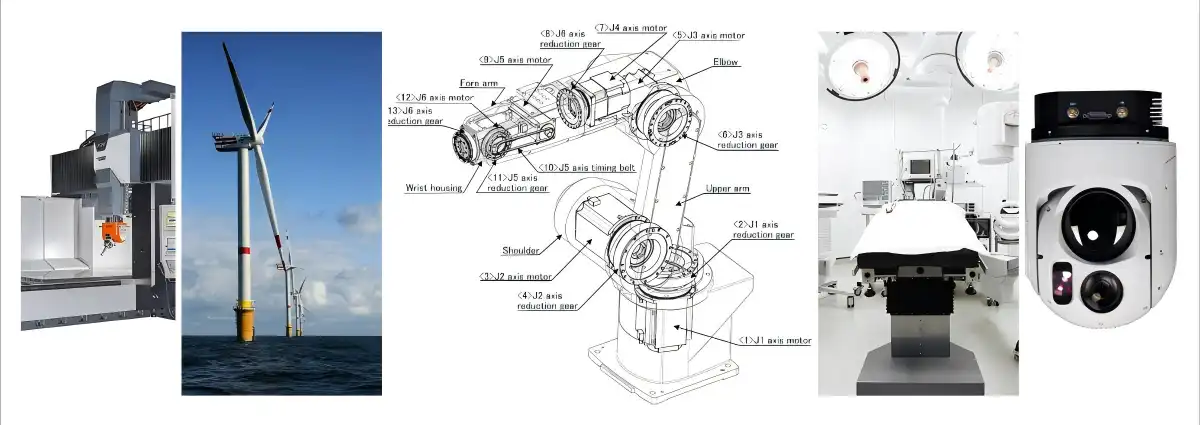
Industrial Robotics: These bearings are used by six-axis flexible robots at key joints and waist rotation points. Robot makers can keep the carrying capacity the same while reducing arm weight thanks to its high moment capacity and small size. Specifications for repeatability below ±0.02mm depend on bearing performance that stays the same after millions of motion cycles. Our bearings can handle the heavy loads that these uses put on them, and they have been shown to last more than 20,000 hours of constant industrial use.
Precision Rotary Tables: These bearings are the main way that indexing tables and constant rotating axes are held up in CNC machining centers. Integrated mounting holes make building the table easier by lowering the number of parts needed and the complexity of the production process. Cutting forces that go through the workpiece fittings directly load the bearing. This keeps the table in place without any bending. Because it is stable, makers can keep tight standards on complicated parts that need to be machined on more than one side.
Medical Imaging Equipment: During imaging processes, CT scanner gantries keep turning. While carrying the heavy weight of X-ray tubes and detection arrays, the bearing must allow the motion to be smooth and free of vibrations. In medical settings, it's important that the machine runs quietly, and the low friction makes sounds less noticeable. The small cross-section lets bigger bore openings work, so the patient tube can be any size while the structure stays stiff.
IC Manufacturing Devices: Equipment used to make semiconductors needs to be very clean and very accurate when placing. When specified with vacuum-compatible oils, these bearings meet strict cleanliness standards. These precision-grade bearings make it possible for wafer handling systems and printing tools to repeat positions down to the micron level.
Maintenance Protocols for Extended Service Life
How long a bearing lasts is directly related to how well it is installed and maintained. Before fixing, machine makers should make sure that the flatness of the mating surface stays within a range of 0.01 mm. We suggest grinding the bolt attachment faces to a surface finish of Ra 1.6μm or better because it changes how the load is distributed.
During fitting, the ring doesn't get warped because the bolts are tightened in a star design. Specifications for torque depend on the size of the bearing, but normal numbers are between 5 and 50 Nm, based on the width of the mounting hole. Following the manufacturer's instructions will make sure that the tightening force is spread evenly around the ring's edge.
How often inspections are done depends on how bad the application is. Keeping an eye on the starting power lets you know right away if the grease is wearing out or if contaminants are getting in. When torque goes up by more than 20% of the average number, it should be looked into. Using infrared thermography to check the operating temperature finds problems before they happen. These preventative repair methods extend the life of bearings and increase the amount of time that equipment is usable.
| Application Type | Typical Bearing Size | Precision Grade | Expected Service Life |
|---|---|---|---|
| Industrial Robot Joint | XSU 080 to XSU 200 | P5 | 20,000 hours or more |
| Machining Center Rotary Table | 300 to 600 XSU | P4 | 15,000 hours or more |
| Medical CT Gantry | XSU 500 to XSU 1000 | P5 | 10,000 hours or more |
| Equipment for Semiconductors | XSU 050 to XSU 300 | P4/P2 | 12,000 hours or more |
Comparing the XSU Series with Alternative Bearing Solutions
When equipment makers are looking at bearing choices, it's helpful to know how the different technologies stack up in terms of important performance metrics. Each type of bearing has its own benefits that make it better for a certain purpose.
XSU Versus XSUH Series
Compared to normal XSU models, the XSUH variant has higher load capacity values because it uses better materials and different heat treatment methods. This upgrade is good for situations where there isn't enough room for a bigger bearing size to carry the load. The better specifications come at a higher price, usually 30–40% more than similar XSU sizes.
We tell procurement teams to choose the XSUH series when looking at load estimates that working conditions are close to or higher than the usual XSU ratings. On the other hand, when load gaps are greater than 30%, the inexpensive XSU series performs reliably without spending too much. Technical performance and project budgets are both improved by matching the bearing's ability to the specific needs of the application.
Comparison with Standard Ball Bearing Arrangements
Dual angular contact ball bearings are often used in traditional designs, either back-to-back or face-to-face, to handle combined loads. There are some problems with this method, even though it works well in many situations. The arrangement of multiple parts raises the height of the assembly, necessitates careful choice of spacers to ensure proper loading, and adds more potential failure spots.
These problems are taken care of by a single unit bearing. The integrated design takes up less axial room, makes it easier to handle goods, and cuts down on the work needed to put it together. Load values are usually higher than those of comparable ball bearing pairs, and stiffness is better. When machine makers switch to this technology, they say that putting the machines together takes 40–50% less time than with traditional designs.
Cost-Performance Analysis
The initial bearing cost is only one part of the total cost of ownership. When you look at lifetime costs, you can get a better idea of economic value. Service labour costs go down when repair times are longer. More stiffness makes cutting more accurate, which lowers the amount of waste and the cost of repairs. Better dependability cuts down on unplanned downtime that throws off production plans.
Procurement professionals should ask for detailed technical specs from bearing providers when looking at their bids. These should include load rates, accuracy grades, and the expected service life under certain working conditions. This information lets us compare different options in an unbiased way. Our expert support team helps customers with bearing selection calculations, making sure that the goods they specify meet the needs of the application without being over-specified, which drives up costs.
Procurement Insights: Sourcing XSU Series Cross Roller Bearings Efficiently
When you buy precision bearings as a business, you need to be very careful when choosing your suppliers to make sure you get real products with consistent quality and on-time delivery. Purchasing experts can improve their sourcing tactics by understanding how the supply chain works.
Verification of Manufacturing Credentials
When looking at possible bearing providers, checking their quality standards gives you a good idea of how well they can make things. Getting ISO 9001 approval shows that you have put in place complete quality management systems. IATF 16949 is a standard that is especially made for the car industry. It makes sure that suppliers follow strict process rules that are needed for zero-defect manufacturing.
Luoyang Auto Bearing Co., Ltd. has been in business since 2010 and has grown from a single workshop to six specialised production sites in that time. Our 120-person staff is split into teams that work on production, research and development, quality control, and final assembly. This organisational system makes sure that all steps of production are supervised by professionals.
We keep our ISO 9001 and IATF 16949 certifications by having third parties check our work on a daily basis to make sure we are still following the rules. Each package of bearings comes with paperwork that includes reports on the dimensions of the bearings and material certifications that show where the steel came from. Customers can keep quality records that meet the standards of their own certifications because of this openness.
Understanding Pricing Factors
Bearing prices are affected by a number of factors. Size is the most important factor; bigger bearings need more material and take longer to machine. Prices are affected by precision grade standards because tighter tolerances require more grinding and checking steps. Bearings of the P4 grade usually cost 30–50% more than bearings of the P5 grade, and bearings of the P2 ultra-precision grade cost more because they have to be made in a special way.
Economies of scale lower unit costs when there are a lot of orders. When you buy 50 or more units at once, you can get a deal on the price. We work with buying teams to predict yearly needs, which lets us plan output in a way that makes it as efficient as possible. Blanket purchase orders with planned releases can save you money and help you keep the right amount of goods for your storage space.
Lead Time Considerations
Standard bearing sizes usually ship two to three weeks after an order is placed. Lead times are extended to 6 to 8 weeks for custom specs that need non-standard lengths or changed mounting hole patterns. This is because they need to be set up with special tools. Planning equipment builds with enough time to buy the parts ahead of time keeps planning problems from happening.
We keep a stock of standard sizes for use in industrial robots and machining centers. This critical stock lets us serve faster for urgent needs. By making your facility a regular customer, we can guess what you'll need and keep the right amount of goods on hand to support your production plans.
Global Logistics and Delivery
Customers in South Korea, the US, Germany, Russia, Iran, and Turkey buy from us through our well-established export business. Knowing the rules for foreign shipping makes sure that the right paperwork goes with every package. Export packaging keeps bearings safe while they're in transit. Materials that keep out wetness and shock-absorbing dunnage keep damage from handling or exposure to the environment at bay.
We work together with goods forwarders who offer good service and low prices. Door-to-door delivery choices make it easier to manage the getting process. Customers can track their packages and plan their arrival times at the receiving dock using the tracking information that is sent with each order.
| Order Amount | Level of Price | The average lead time | Recommended For |
|---|---|---|---|
| 1 to 10 units | Price List | Two to three weeks | Trial or prototype |
| 11 to 49 units | 10% Off for Large Orders | Two to three weeks | Small Runs of Production |
| 50 to 99 units | 20% Off for Large Orders | 3 to 4 weeks | Everyday Production |
| 100 or more units | Get A Custom Quote (Save 25–35% ) | 4 to 6 weeks | OEM and High Volume |
Enhancing Trust and Decision Confidence: Verification and User Feedback
When businesses buy important parts from each other, they have to consider a lot of factors, such as technical specs, seller reliability, and long-term value. To build trust, you need to communicate clearly and prove your success in writing.
Quality Control and Testing Protocols
Before it can be shipped, every made bearing of the Cross roller bearing XSU series goes through a thorough check. Dimensional checking makes sure that the measures for the inner diameter, outer diameter, and width are within the allowed ranges. Measurements of raceway roundness and surface finish make sure that grinding processes met the quality standards that were set. Starting torque testing finds any problems with the unit that are stopping it from turning smoothly.
Random sample damage testing proves that heat treatment works. Testing the rings' hardness on sections shows that the qualities of the surface and core are in line with what the material calls for. Metallurgical analysis checks the structure of the grains and makes sure there are no flaws that could cause them to break too soon. These test results are stored in quality systems that keep track of process capability indices. This makes it possible for projects to keep getting better.
Documentation that comes with packages of bearings makes it possible to track back to individual production lots. Customers who are having problems in the field can look at these records during failure analysis reviews. When guarantee claims are made, our quality team helps find the root cause and takes steps to fix the problem so it doesn't happen again.
Customer Testimonials and Case Studies
When these bearings are put into industrial machines, the makers say that the machines work better. After switching to precision-grade bearings in joint systems, a South Korean company that makes industrial robots saw an improvement in positioning consistency from ±0.05mm to ±0.02mm. Because of this improvement in accuracy, their robots could meet the standards for car assembly that used to require more expensive equipment.
A German company that makes machine tools changed the shape of its horizontal machining center rotary table so that it has an integrated bearing solution. The simpler design cut the number of parts needed to put together a table from 12 to 5. This cut the cost of making the table by 35%. After 18 months of customer use, field dependability data from the first 200 machines showed that none of the bearings failed. This proved that the design change was the right one.
These real-world results show how choosing the right bearings affects the performance of tools and the cost of making things. We'd be happy to talk to potential customers about their unique needs and offer technical advice that matches bearing specifications to working requirements.
Addressing Common Technical Concerns
During the review of suppliers, procurement teams often ask questions. Knowing how to put it, whether it will work with other designs, and how much upkeep is expected helps buyers make smart choices. Our technical support staff answers these questions in great detail because they have a lot of experience with these kinds of applications.
When people ask about compatibility, they usually want to know if two different bearing suppliers can exchange their dimensions. Different makers may use different shapes for mounting holes, but the sizes of envelopes are usually the same across the industry. We give you full drawings that show all the important measurements, so you can check the design before you place an order.
Maintenance needs in difficult working conditions should be talked about during the design phase. Better sealing options help protect bearings that are contaminated by coolant during grinding operations. In places where the temperature is high, you might need special oils that can handle higher temperatures. By finding these problems early on, we can suggest the right bearing arrangements that will ensure stable operation.
Conclusion
The Cross roller bearing XSU series has the best performance for CNC systems that need high rigidity, the ability to handle loads in multiple directions, and precise placement in small assemblies. The combined mounting design makes installation easier and gets rid of the tolerance stack-up problems that come with using multiple bearings together. These bearings are very stiff, rotate smoothly, and are very accurate. They are used in industrial robots, precision machining centers, medical imaging equipment, and the production of semiconductors. Working with a well-known company that has ISO 9001 and IATF 16949-certified quality systems is the best way to get important motion control parts. This will ensure stable product performance and the reliable supply chain support that is needed for global operations.
FAQ
1. What distinguishes the XSU series from conventional bearing solutions?
The unique feature is that fastening holes are carved directly into both the inner and outer rings, so there is no need for separate housings. Compared to housed bearing parts, this monolithic design cuts the height of the system by 30 to 40 percent while making it more rigid. The crossed roller shape lets one bearing handle radial, axial, and moment loads at the same time, instead of the two ball bearings that are usually used in standard designs.
2. How do precision grades affect application suitability?
Precision scores from P6 to P2 show how accurate the dimensions are and how well the machine runs. For most industrial uses, like robots and machining centers, the P5 grade is perfect because it is repeatable and doesn't cost too much. P4 and P2 grades are good for ultra-precision uses in semiconductor equipment and coordinate measuring tools that need to be able to place things accurately to the nearest micron. Because of the extra steps that need to be taken to make things with tighter standards, higher precision grades cost more.
3. Can these bearings operate in high-speed applications?
These bearings work best in low- to medium-speed situations, but they are also great for high-rigidity, precise-positioning tasks. When cylindrical rollers and spacers slide against each other, friction is created that limits the fastest rotating speeds compared to ball bearing options. Most of the time, oscillating motion or constant spinning below 500 RPM is used, and accuracy in placement and moment load capacity are more important than speed.
Source Your Precision Cross Roller Bearing XSU Series from ATLYC
Luoyang Auto Bearing Co., Ltd. (ATLYC brand) has been making precision bearings for 15 years and has quality systems that are ISO 9001 and IATF 16949 approved. Their products meet strict worldwide standards. Our Cross roller bearing XSU series supplier services help OEMs and wholesalers around the world who work in the automation, industrial machinery, and automobile industries. Our engineering team can help you choose the best bearings for your purpose, whether you need normal catalogue sizes or custom specs. We have reasonable bulk discounts, reliable wait times, and full expert help for the whole lifecycle of the product. Email our business-to-business buyers at auto@lyautobearing.com to talk about your unique needs and get quotes that are suited to your production needs.
References
1. Harris, T.A. & Kotzalas, M.N. (2006). Rolling Bearing Analysis: Essential Concepts of Bearing Technology (5th Edition). CRC Press, Taylor & Francis Group.
2. ISO 199:2014. Rolling Bearings — Thrust Bearings — Tolerances. International Organization for Standardization, Geneva, Switzerland.
3. Weck, M. & Brecher, C. (2006). Machine Tools Production Systems 2: Design and Calculation. VDI-Buch Series, Springer-Verlag Berlin Heidelberg.
4. Society of Manufacturing Engineers. (2018). Precision Bearing Systems in CNC Machine Tool Design. SME Technical Paper Series, Dearborn, Michigan.
5. Kakino, Y., Ihara, Y., & Nakatsu, Y. (2010). The Measurement of Motion Errors of NC Machine Tools and Diagnosis of Their Origins by Using the Telescoping Magnetic Ball Bar Method. CIRP Annals - Manufacturing Technology, Vol. 36, Issue 1, pp. 377-380.
6. Marsh, E.R. (2010). Precision Spindle Metrology. DEStech Publications, Lancaster, Pennsylvania.
Learn about our latest products and discounts through SMS or email