- English
- French
- German
- Portuguese
- Spanish
- Russian
- Japanese
- Korean
- Arabic
- Greek
- German
- Turkish
- Italian
- Danish
- Romanian
- Indonesian
- Czech
- Afrikaans
- Swedish
- Polish
- Basque
- Catalan
- Esperanto
- Hindi
- Lao
- Albanian
- Amharic
- Armenian
- Azerbaijani
- Belarusian
- Bengali
- Bosnian
- Bulgarian
- Cebuano
- Chichewa
- Corsican
- Croatian
- Dutch
- Estonian
- Filipino
- Finnish
- Frisian
- Galician
- Georgian
- Gujarati
- Haitian
- Hausa
- Hawaiian
- Hebrew
- Hmong
- Hungarian
- Icelandic
- Igbo
- Javanese
- Kannada
- Kazakh
- Khmer
- Kurdish
- Kyrgyz
- Latin
- Latvian
- Lithuanian
- Luxembou..
- Macedonian
- Malagasy
- Malay
- Malayalam
- Maltese
- Maori
- Marathi
- Mongolian
- Burmese
- Nepali
- Norwegian
- Pashto
- Persian
- Punjabi
- Serbian
- Sesotho
- Sinhala
- Slovak
- Slovenian
- Somali
- Samoan
- Scots Gaelic
- Shona
- Sindhi
- Sundanese
- Swahili
- Tajik
- Tamil
- Telugu
- Thai
- Ukrainian
- Urdu
- Uzbek
- Vietnamese
- Welsh
- Xhosa
- Yiddish
- Yoruba
- Zulu
Why Use RB Series Crossed Roller Bearings in Precision Equipment?
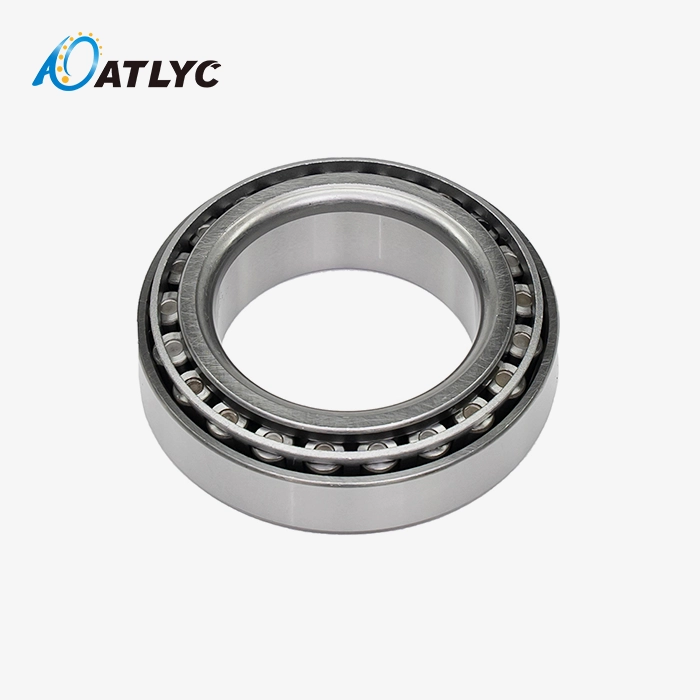
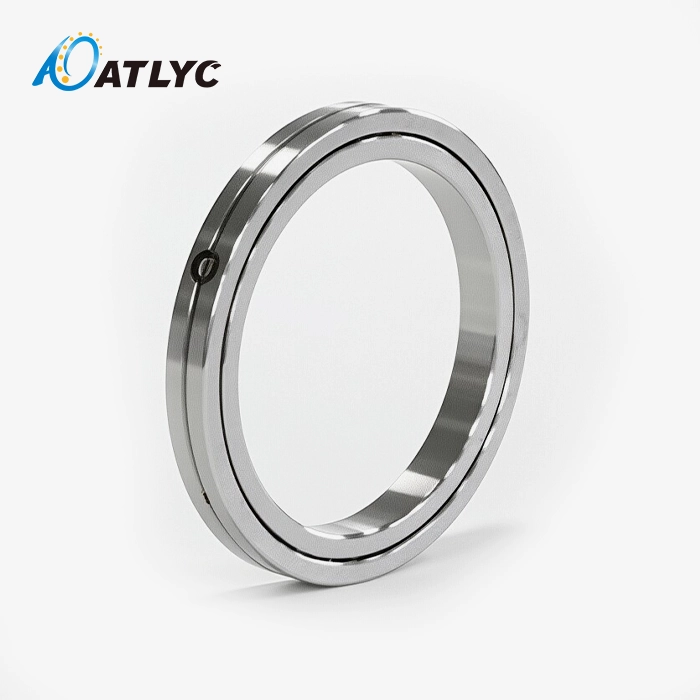
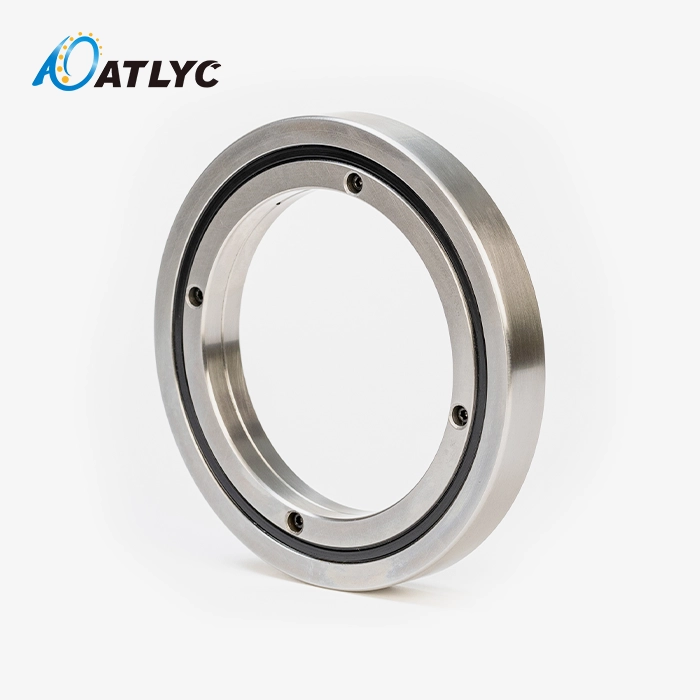
When precise machinery needs to be very accurate while being RB Series Crossed Roller Bearing loaded in many directions, RB Series Crossed Roller Bearings work very well, better than other types of bearings. This precision-engineered bearing has an inner ring that is integrated and an outer ring that is split and has a plug on one end. It was made for uses where multi-axis load handling and space efficiency are very important. Because of its unique crossed roller design, a single bearing can handle radial, axial, and moment loads at the same time, so there is no need for multiple bearing setups. This line of bearings is the best choice for industrial robots, machining centers, and precision equipment all over the world because it is small and rigid. This is especially true for manufacturers who want to use reliable parts that meet ISO 9001 and IATF 16949 standards.
Understanding RB Series Crossed Roller Bearings and Their Design Features
The engineering excellence behind crossed roller bearings begins with their distinctive internal architecture. Unlike traditional ball bearings that use spherical elements, this design employs cylindrical rollers positioned orthogonally at 90-degree angles within precision-ground V-groove raceways. This arrangement creates multiple contact points that distribute forces evenly across all directions, addressing a fundamental challenge in precision machinery: achieving multi-directional load capacity without compromising space efficiency.
Structural Configuration and Size Range Versatility
The split outer ring with plug makes installation and upkeep easier, and the integral inner ring gives the structure a lot of strength. We make these precise parts at Luoyang Auto Bearing Co., Ltd. in a wide range of sizes, from 12mm to 110mm wide, with inner diameters ranging from 20mm to 1100mm and outer diameters ranging from 70mm to 1500mm. This wide range of dimensions makes it compatible with a wide range of industrial uses, from small robotic joints to large rotary tables in machining centers. Precision spacing retainers keep rollers from touching each other, which eliminates friction and possible skewing problems during operation. This close attention to how parts work together directly leads to smoother rotation and longer service life, which are important factors for OEMs looking at long-term reliability and total cost of ownership.
Load Distribution Mechanics
The V-groove raceway design makes a contact angle that spreads the load evenly along the length of the wheel. The crossed arrangement makes sure that each roller shares the load fairly when the machine uses radial pressure from process forces, axial thrust from positioning movements, and moment loads from cantilevered masses. This mechanism shares the load and can hold more weight than ball bearings of the same size while keeping the friction coefficient low for smooth spinning.
Advantages of RB Series Crossed Roller Bearings Over Traditional Bearings
There are big differences in performance between bearing technologies that have a direct effect on how reliable equipment is and how much it costs to run. Traditional ball bearings work great for high-speed tasks, but not so well for mixed loading situations that happen a lot in precision equipment. Angular contact bearings can handle some multidirectional load requirements, but they usually need to be paired up, such as the RB Series Crossed Roller Bearing, which makes assembly more difficult and takes up more room.
Multi-Directional Load Capacity in Compact Envelopes
With the crossed roller design, radial forces, axial thrust, and overturning moments can all be supported at the same time in a very small space. In order to handle the complex loading, traditional solutions might need different radial bearings, thrust bearings, and structural supports for a robotic arm joint. These functions are combined into a single RB Series Crossed Roller Bearing, which cuts the size of the housing by up to forty percent while making the whole system more rigid. This saves room and has real design benefits. By letting more air flow around smaller bearing housings, equipment makers can lower the cost of materials, make assembly easier, and better control temperature. These benefits add up over time in many places where automated equipment is used. This is because the saved space allows for more powerful machines to fit within the available area.
Durability and Service Life Comparison
Calculating the service life depends on the load, the quality of the lubrication, and the surroundings. In robotics applications, independent testing has shown that crossed roller bearings with the right specifications usually last 50 to 80% longer than ball bearings with the same load. This longer life is because the cylindrical rollers make line contact instead of point contact like ball bearings do, spreading stress over a larger surface area and lowering contact pressure. Our bearings are used in rotary indexing tables by companies that make parts for cars, which is proof that they work in the real world. After 18 months of nonstop three-shift work, precise measurements showed that the raceways had worn down very little and the accuracy stayed within the original specifications. This steady performance under tough production conditions shows the cost-effectiveness that procurement experts look for when assessing the reliability of long-term supplies.
Installation, Maintenance, and Lifespan Optimization of RB Series Bearings
Proper installation techniques protect the substantial investment precision bearings represent. The split outer ring design simplifies mounting procedures compared to integral constructions, yet attention to detail remains essential for achieving rated performance.
Mounting Procedures and Critical Tolerances
Before installation, verify that the shaft and housing dimensions match the specified tolerances. Excessive interference causes preload that accelerates wear; insufficient interference allows unwanted movement during operation. We recommend using precision measuring instruments to confirm dimensions fall within the tolerance bands specified in our technical documentation. Clean all mating surfaces thoroughly to remove protective coatings, machining residue, and contamination. Even microscopic particles between the bearing and housing shoulder create misalignment that compromises accuracy. Apply a thin film of recommended lubricant to facilitate assembly while protecting surfaces from corrosion during storage. When pressing the bearing into position, apply force evenly across the appropriate ring—the inner ring if shaft-mounted, the outer ring if housing-mounted. Never transmit installation force through the rollers, as this creates brinelling damage that appears as operational vibration and premature failure. Purpose-designed installation tools distribute pressure uniformly, maintaining concentricity throughout the assembly process.
Wear Detection and Predictive Maintenance
Implementing condition monitoring extends bearing service life through early problem detection. Temperature monitoring provides the simplest indicator—gradual temperature increases suggest lubricant degradation or contamination intrusion, while sudden changes indicate acute problems requiring immediate investigation. Baseline temperature data collected during commissioning establishes reference points for meaningful trend analysis. Vibration analysis offers more sophisticated diagnostics. Modern sensors detect frequency patterns characteristic of specific defect types: outer raceway damage, inner raceway wear, roller defects, or cage issues. Establishing vibration monitoring during equipment installation creates historical data that algorithms analyze to predict remaining useful life and schedule maintenance during planned downtime rather than responding to unexpected failures. Visual inspection during scheduled maintenance intervals reveals contamination, lubricant condition, and seal integrity. Document findings photographically to track gradual changes in the RB Series Crossed Roller Bearing that individual inspections might overlook. This practice proves particularly valuable when multiple identical machines operate under similar conditions, allowing comparative analysis that identifies outliers requiring attention.
Procurement Insights: How to Source and Buy RB Series Crossed Roller Bearings
Strategic procurement balances cost management with quality assurance and supply chain reliability. Understanding the factors influencing bearing prices and supplier capabilities enables more effective negotiations and partnership development.
Pricing Structures and Volume Considerations
Crossed roller bearing pricing reflects manufacturing complexity, precision grade, size, and order volume. Larger sizes require more material and machining time, while higher precision grades demand additional grinding operations and quality verification. P4 grade bearings typically cost twenty to thirty-five percent more than P5 equivalents, reflecting the additional manufacturing precision and inspection rigor. Volume commitments unlock favorable pricing through production efficiency. Manufacturing setup costs are distributed across larger order quantities, reducing per-unit expenses. At Luoyang Auto Bearing Co., Ltd., we work with customers to identify optimal order quantities that balance inventory carrying costs against volume discounts. Annual purchase agreements provide predictable demand that enables production planning efficiency, benefits we share through competitive pricing structures. Beyond unit price, evaluate total landed cost including international shipping, customs duties, and logistics complexity. Direct factory sourcing eliminates distributor margins while ensuring authentic products backed by manufacturer warranties. Our export experience serving customers across South Korea, the United States, Germany, Russia, Iran, and Turkey provides expertise in navigating international trade requirements efficiently.
Lead Times and Logistics Planning
Standard-size crossed roller bearings typically ship within two to four weeks from order confirmation, while custom specifications require six to eight weeks, depending on complexity. Planning procurement timelines around production schedules prevents equipment delays and maintains project momentum. We recommend establishing safety stock levels for critical components, particularly when equipment downtime costs significantly exceed inventory carrying expenses. International shipping methods present tradeoffs between cost and speed. Sea freight offers economical transportation for planned replenishment orders, while air freight serves urgent requirements despite premium costs. Our logistics partners provide door-to-door service with RB Series Crossed Roller Bearing customs brokerage, simplifying international procurement complexity and ensuring proper documentation for tariff classification and duty calculation.
Performance Verification and Real-World Applications of RB Series Bearings
Empirical performance data validates theoretical advantages through measurable operational improvements. Tracking bearing performance across diverse applications provides insights that guide specification decisions and application engineering.
Industrial Robotics and Automation Equipment
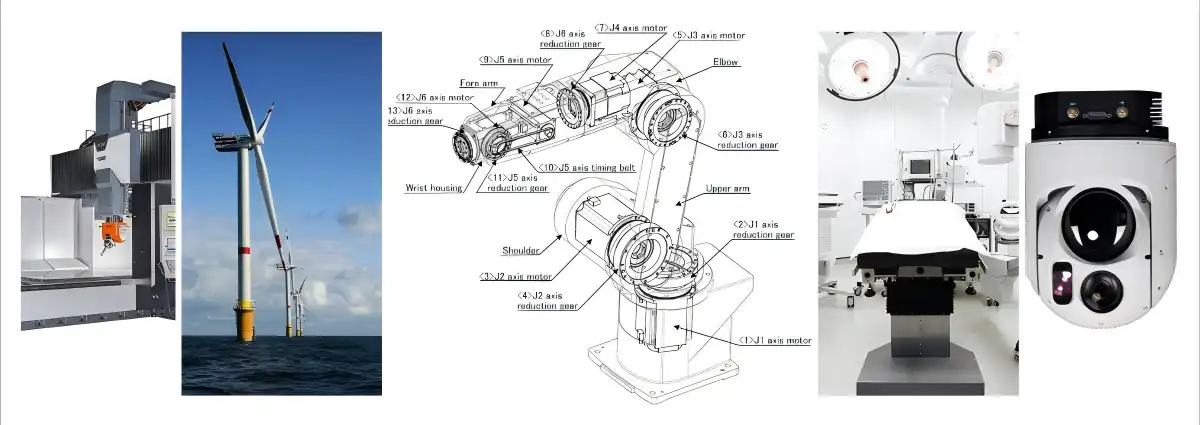
Robotic joints represent perhaps the most demanding crossed roller bearing application, combining high moment loads with continuous motion and positioning accuracy requirements. Automotive manufacturers using our bearings in six-axis robots report positional repeatability within 0.02mm after twelve months of continuous operation—accuracy that maintains welding quality and assembly precision throughout production campaigns. The compact envelope that crossed roller bearings enable allows robot designers to reduce arm segment weight, increasing payload capacity and extending reach without sacrificing structural rigidity. This performance advantage translates to broader application versatility and improved production economics through faster cycle times and enhanced flexibility.
Emerging Applications and Technology Trends
Semiconductor manufacturing equipment represents a growing application area where contamination control, precision, and reliability converge. Wafer handling robots and lithography positioning systems require bearings that operate reliably in vacuum environments or controlled atmospheres without outgassing that could contaminate process chambers. Our engineering team collaborates with equipment designers to optimize bearing specifications for these specialized requirements. Renewable energy systems present opportunities where bearing durability under variable loading conditions determines maintenance costs and system availability. Solar tracking systems using crossed roller bearings achieve precise positioning that maximizes energy capture while withstanding environmental exposure over twenty-year service lives. This emerging application demonstrates the versatility that precision bearing technology brings to evolving industrial demands.
Conclusion
The RB Series Crossed Roller Bearing represents proven technology that addresses precision equipment's most challenging requirements. Through simultaneous multi-directional load support, exceptional rigidity, and compact design, this bearing configuration enables machinery performance that conventional solutions cannot achieve. Material quality, manufacturing precision, and careful attention to installation and maintenance practices ensure reliable operation that minimizes downtime and optimizes total cost of ownership. Selecting the right bearing supplier involves evaluating not just component quality but also manufacturing capability, technical support, and supply chain reliability. With fifteen years of continuous improvement and international experience serving demanding markets, we bring expertise that supports successful equipment development and production stability.
FAQ
1. What makes crossed roller bearings superior to traditional ball bearings in precision applications?
Crossed roller bearings utilize cylindrical rollers arranged orthogonally, creating line contact that distributes loads across larger surface areas compared to ball bearings' point contact. This configuration simultaneously supports radial, axial, and moment loads within a single compact unit, eliminating the need for multiple bearing arrangements. The result delivers higher load capacity, superior rigidity, and better rotational accuracy—essential characteristics for robotics, machining centers, and precision positioning systems where performance directly impacts productivity and quality.
2. How often should RB Series bearings be relubricated, and what maintenance practices extend service life?
Relubrication intervals depend on operating conditions, duty cycles, and environmental factors. Industrial robots in controlled environments typically require annual service, while equipment exposed to contamination benefits from semi-annual lubrication. Beyond periodic relubrication, implementing condition monitoring through temperature and vibration analysis enables predictive maintenance that addresses developing issues before they cause failures. Proper initial installation following specified tolerances and using appropriate mounting tools prevents damage that compromises bearing performance throughout its service life.
3. Where can I source genuine RB Series Crossed Roller Bearings with verified quality certifications?
Sourcing directly from manufacturers holding ISO 9001 and IATF 16949 certifications ensures authentic products meeting international quality standards. Luoyang Auto Bearing Co., Ltd. offers comprehensive crossed roller bearing solutions with documented quality management systems, technical support, and established international shipping experience. Direct factory sourcing eliminates counterfeit risks while providing competitive pricing and reliable lead times essential for production planning.
Partner with ATLYC for Precision Bearing Solutions That Drive Equipment Excellence
Selecting the right crossed roller bearing supplier impacts equipment performance, production reliability, and long-term operational costs. ATLYC, through Luoyang Auto Bearing Co., Ltd., combines fifteen years of manufacturing expertise with ISO 9001 and IATF 16949 certified quality systems that ensure consistent precision and reliability. Our RB Series Crossed Roller Bearings serve demanding applications across robotics, machining centers, and precision equipment worldwide, trusted by manufacturers throughout South Korea, the United States, Germany, and beyond.
Whether you need standard configurations or customized solutions, our engineering RB Series Crossed Roller Bearing team provides technical consultation that optimizes bearing selection for your specific requirements. We offer competitive pricing for volume orders with transparent lead times and comprehensive global shipping. Contact our team today at auto@lyautobearing.com to discuss your precision bearing needs with experienced RB Series Crossed Roller Bearing suppliers committed to supporting your success.
References
1. Harris, T.A. & Kotzalas, M.N. (2006). Advanced Concepts of Bearing Technology: Rolling Bearing Analysis. CRC Press, Taylor & Francis Group.
2. Hirano, T. & Ishikawa, Y. (2018). "Precision Performance Analysis of Crossed Roller Bearings in Industrial Robot Applications." Journal of Mechanical Engineering Science, Vol. 232, Issue 14, pp. 2547-2561.
3. ISO 492:2014. Rolling Bearings — Radial Bearings — Geometrical Product Specifications (GPS) and Tolerance Values. International Organization for Standardization.
4. Kundrák, J. & Gyáni, K. (2013). "Investigation of Surface Roughness in Precision Grinding of Bearing Races." Manufacturing Technology, Vol. 13, No. 3, pp. 349-354.
5. Schaeffler Technologies AG & Co. KG. (2019). Crossed Roller Bearings: Design, Application, and Installation Guidelines. Technical Handbook, Industrial Division.
6. Xu, H. & Zhang, L. (2020). "Lubrication and Thermal Analysis of High-Precision Crossed Roller Bearings Under Combined Loading Conditions." Tribology International, Vol. 149, Article 105521.
Learn about our latest products and discounts through SMS or email