- English
- French
- German
- Portuguese
- Spanish
- Russian
- Japanese
- Korean
- Arabic
- Greek
- German
- Turkish
- Italian
- Danish
- Romanian
- Indonesian
- Czech
- Afrikaans
- Swedish
- Polish
- Basque
- Catalan
- Esperanto
- Hindi
- Lao
- Albanian
- Amharic
- Armenian
- Azerbaijani
- Belarusian
- Bengali
- Bosnian
- Bulgarian
- Cebuano
- Chichewa
- Corsican
- Croatian
- Dutch
- Estonian
- Filipino
- Finnish
- Frisian
- Galician
- Georgian
- Gujarati
- Haitian
- Hausa
- Hawaiian
- Hebrew
- Hmong
- Hungarian
- Icelandic
- Igbo
- Javanese
- Kannada
- Kazakh
- Khmer
- Kurdish
- Kyrgyz
- Latin
- Latvian
- Lithuanian
- Luxembou..
- Macedonian
- Malagasy
- Malay
- Malayalam
- Maltese
- Maori
- Marathi
- Mongolian
- Burmese
- Nepali
- Norwegian
- Pashto
- Persian
- Punjabi
- Serbian
- Sesotho
- Sinhala
- Slovak
- Slovenian
- Somali
- Samoan
- Scots Gaelic
- Shona
- Sindhi
- Sundanese
- Swahili
- Tajik
- Tamil
- Telugu
- Thai
- Ukrainian
- Urdu
- Uzbek
- Vietnamese
- Welsh
- Xhosa
- Yiddish
- Yoruba
- Zulu
7206AC Angular Contact Bearings for Next-Generation Machinery
When you need reliable precision and load-handling capability in modern industrial equipment, Angular Contact Bearings 7206AC deliver exactly what your machinery demands. These single-row ball bearings feature a 30mm bore diameter, 62mm outer diameter, and 16mm width configuration, specifically engineered with a 25° contact angle for optimal balance between radial and axial load capacity. The design addresses critical engineering challenges in high-speed applications, precision machinery, and demanding industrial environments where standard deep groove bearings fall short.
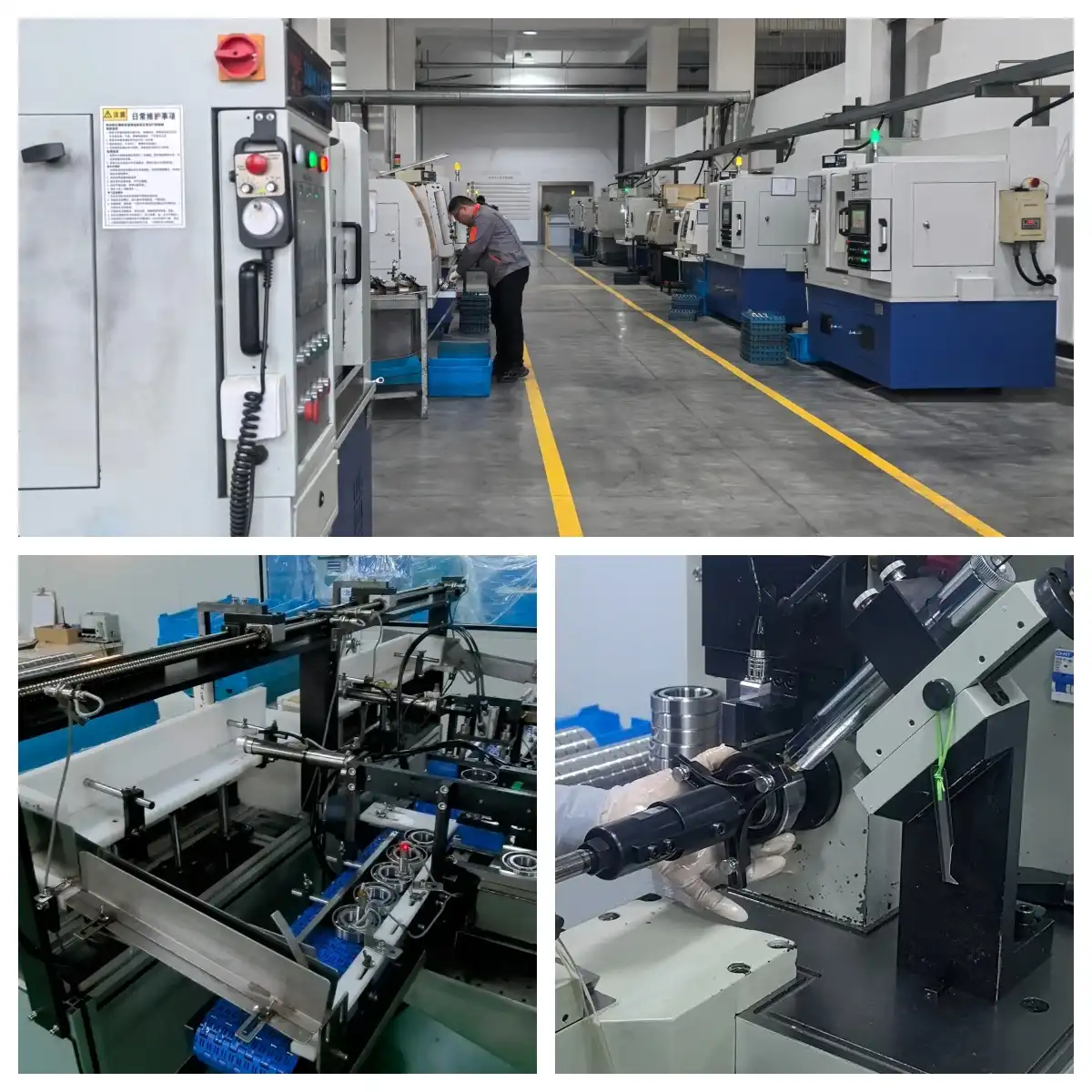
Understanding 7206AC Angular Contact Bearings: Features, Specifications, and Working Principles
The fundamental engineering excellence of these precision bearings lies in their optimised raceway geometry and contact mechanics. Unlike conventional deep groove bearings, the inner and outer ring raceways are axially displaced, creating the characteristic contact angle that enables simultaneous support of combined loads while maintaining exceptional rotational accuracy.
Core Structural Design and Technical Specifications
A well-balanced engineering solution is represented by the 7206AC designation. These bearings are ideal for small electric motors, gear reducers and gearbox components used in printing equipment due to their 30 mm inner diameter, 62 mm outer diameter and 16 mm breadth. An engineering compromise between load capacity and speed capabilities was the 25° contact angle. This particular angle offers better high-speed characteristics than the 40° designs often seen in heavy-duty applications and is more effective at handling axial loads than variants of 15°.
The dimensional stability and hardness retention under harsh operating conditions are guaranteed by the heat-treated GCr15 bearing steel construction. Tolerances that are essential for vibration-free operation and the correct application of preload in matched configurations are achieved by the precision grinding process. Cage materials can be chosen according to the needs of the application; Bakelite cages are very resistant to heat and have great dimensional stability, while nylon cages are lightweight and have great noise dampening capabilities.
Working Principle and Load Distribution Mechanics
Bearing service life is maximised, and stress concentrations are reduced by distributing loads throughout optimised contact ellipses, which is achieved by the contact geometry. When the system is running, the balls hit the raceways at an angle of 25 degrees, dividing the load routes into two directions according to the axial and radial forces. The dual-capacity design streamlines machine design and assembly complexity by doing away with the necessity for separate thrust bearing arrangements in many applications.
These angular contact bearings 7206AC, which are made to P5, P4, or P2 tolerance levels, keep their precision throughout their service life, guaranteeing that equipment will consistently work. P5 is suitable for most industrial uses, whereas P4 and P2 are better suited to high-precision spindle applications that require minimal vibration and runout to keep machining precise and surface finish quality good.
Performance Advantages in Industrial Applications
The 25° contact angle creates controlled heat generation during rotation, enabling sustained high-speed operation without thermal expansion issues that compromise precision. When mounted in preloaded pairs using DB (back-to-back), DF (face-to-face), or DT (tandem) configurations, these bearings provide exceptional stiffness that resists deflection under cutting forces in CNC machining centres and grinding equipment.
Load versatility stands as another critical advantage. The balanced contact angle handles both radial loads from unbalanced rotors and axial loads from thrust forces, making these bearings ideal for small electric motors where shaft deflection must be minimised and gear reducers where helical gear forces create complex load patterns. The precision maintenance characteristic ensures that initial installation accuracy remains consistent throughout the bearing's operational lifespan, delivering reliable performance in automation equipment and printing machinery transmission systems.
Comparing 7206AC Angular Contact Bearings with Alternatives: Making an Informed Choice
Understanding the distinctions between bearing types helps procurement managers select components that precisely match application requirements without over-specifying or compromising performance.
Structural and Functional Differences from Related Bearing Types
The standard 7206 ball bearing without the AC suffix typically features a deeper groove design suitable primarily for radial loads with limited axial capacity. The 7206AC variant introduces the 25° contact angle, fundamentally changing its load-handling characteristics and making it suitable for combined loading conditions. The 7206CC variant features a larger contact angle approaching 30-40°, providing increased axial capacity but reduced speed capability and higher friction generation during operation.
Deep groove ball bearings of similar dimensions offer superior radial load capacity and bidirectional axial load handling but lack the stiffness and precision characteristics essential for spindle applications. The C3 clearance models provide increased internal clearance to accommodate thermal expansion in high-temperature environments, whereas angular contact designs achieve rigidity through preload application rather than clearance adjustment.
Global Brand Reliability and Supplier Analysis
Procurement teams are starting to notice that specialised producers that satisfy ISO 9001 and IATF 16949 requirements provide better cost-efficiency ratios compared to well-known OEMs like SKF, FAG, NSK, and Timken, even though these brands have long-standing reputations for bearing quality. FAG caters to the industrial and automotive markets with thorough product documentation, whereas SKF bearings are available worldwide and come with substantial application engineering assistance, which allows them to charge premium prices. Timken is an expert in tough industrial settings, while NSK focuses on precise grades for use with machine tools.
There is now strong competition in this market area from Chinese bearing producers that have obtained international certifications. Established in 2010 and having invested fifteen years into R&D, manufacturers like ATLYC have created production capabilities that not only meet but exceed international standards, all while providing customers with affordable options for personalisation and low prices. These manufacturers showcase their production size and engineering experience through their ISO 9001 and IATF 16949 certifications, six specialised workshops, and 120 qualified staff. This demonstrates their ability to support long-term strategic relationships.
Selection Criteria for Optimal Bearing Choice
Choosing between alternatives requires evaluating speed requirements, load magnitudes and directions, precision needs, operating temperature ranges, and maintenance accessibility. Applications involving predominantly radial loads benefit from deep groove designs, while machinery experiencing significant axial thrust requires the angular contact configuration. High-speed spindles demand P4 or P2 precision grades with optimised cage designs, whereas general industrial equipment operates reliably with P5 grade bearings at reduced cost.
Purchasing 7206AC Angular Contact Bearings: Efficient Procurement Strategies
Effective procurement strategies balance quality assurance, supply chain reliability, and cost optimisation to keep production schedules running smoothly while controlling inventory costs.
Supplier Selection and OEM Verification Processes
Identifying trusted suppliers begins with certification verification. Manufacturers holding ISO 9001 and IATF 16949 certifications demonstrate commitment to quality management systems and automotive industry standards applicable to precision bearing production. Requesting material certificates, dimensional inspection reports, and performance test data helps verify product authenticity and quality consistency.
ATLYC exemplifies the reliable Chinese bearing manufacturer that combines precision manufacturing with global standards and scalable production capacity. Serving customers in South Korea, the United States, Germany, Russia, Iran, and Turkey since 2010, we have built international experience through consistent quality delivery and technical support that addresses real-world application challenges.
Critical Procurement Considerations
Manufacturers and product specifications determine the minimum order amounts. Because of its reduced minimum order quantity (MOQ), standardised configurations like the 7206AC are suitable for both mass production and replacement aftermarket demands. We provide quick replenishment for maintenance operations and production planning flexibility with our usual delivery time of 7 working days, which is another crucial element.
Shipping goods internationally necessitates meticulous planning and organisation. For large orders, shipping via consolidation can lower transportation costs per unit, and for those who need replacement parts quickly, expedited delivery alternatives are available. Reputable producers ensure smooth customs clearance in destination countries by providing accurate documentation and thorough packaging to protect bearing surfaces during transit.
Pricing Negotiation and Value Optimisation
Total cost of ownership, not unit price alone, should be the centre of attention in discussions for bulk orders. While bulk purchases often unlock discounts, constant quality, dependable delivery, technical support, and the flexibility to personalise provide the real value. Price stability enables us to forecast costs more precisely and manage budgets better, which is why we need to discuss long-term supply agreements.
Conditions of after-sales service and warranty bolster confidence among buyers. Beyond the initial purchase, manufacturers show they care about their customers' success by providing technical consulting, application engineering help, and transparent warranty coverage. Equipment can be differentiated and optimised for performance with the help of OEM and customisation support, which satisfies unique needs that regular catalogue goods do not meet.
Maintenance and Performance Optimisation of 7206AC Angular Contact Bearings
Maximising bearing lifespan and machinery uptime requires systematic maintenance practices, proactive troubleshooting, and performance optimisation strategies tailored to specific operating conditions.
Routine Maintenance Best Practices
First and foremost among maintenance considerations is the need for proper lubrication. Operating speed, temperature, and degrees of environmental pollution define the periodic regreasing intervals for grease-lubricated angular contact bearing 7206AC. For optimal high-speed performance, use only lubricants specified by the manufacturer. This will keep the friction properties as planned and guarantee compatibility with the cage materials.
To slow down the wear of bearing surfaces, contamination prevention shields them from corrosive chemicals and abrasive particles. Filtered lubricant supplies, effective sealing systems, and clean assembly techniques significantly increase service life. Vibration monitoring on a regular basis allows for planned maintenance to minimise production disruption by detecting growing problems before they cause catastrophic failure.
Troubleshooting Common Issues
Inadequate lubrication, contamination, or incorrect preload adjustment are common causes of excessive noise. If you want to know what's wrong with something, you can analyse the frequency patterns of the noise. Rumbling at low frequencies shows that the mounting is wrong or that there are preload issues, while high-frequency noise could mean that the surface is damaged or contaminated. Vibration analysis provides a quantitative evaluation of the condition of the bearing. Data on amplitude and frequency reveal the course of wear and enable predictive scheduling of maintenance.
Temperature monitoring can detect conditions such as insufficient clearance, high preload, or improper lubrication. When operating temperatures exceed design limits, they reduce bearing life expectancy and accelerate lubricant deterioration. To prevent irreparable damage, thermal imaging is used during operations to identify problem areas and direct repair efforts.
Advanced Performance Optimisation Techniques
High-speed applications benefit from optimised preload settings that balance stiffness requirements with friction generation. DB and DF mounting configurations using matched bearing sets achieve controlled preload through axial positioning, while DT tandem arrangements maximise axial load capacity for unidirectional thrust applications. Precision mounting practices ensure proper load distribution across all rolling elements, preventing edge loading that causes premature failure.
Heavy-load operations require careful attention to lubrication film thickness and replenishment intervals. Oil lubrication systems with filtration and cooling circuits maintain optimal operating conditions in demanding environments where grease lubrication proves inadequate. Condition monitoring integration and predictive maintenance tools help make maintenance decisions based on data, which reduces downtime and improves bearing reliability across equipment fleets.
Future Trends and Innovations in Angular Contact Bearings for Next-Generation Machinery
The bearing industry continues evolving to meet increasingly demanding requirements from automation, electrification, and sustainability initiatives driving next-generation machinery development.
Material and Manufacturing Advancements
Advanced bearing steels with improved cleanliness and refined microstructures extend fatigue life and enable higher load ratings within existing envelope dimensions. Ceramic hybrid bearings incorporating silicon nitride rolling elements reduce weight, increase speed capability, and provide electrical insulation in motor applications. Surface treatments, including specialised coatings, enhance corrosion resistance and reduce friction, broadening application possibilities in challenging environments.
Additive manufacturing technologies enable complex cage geometries optimised for specific applications, reducing weight while maintaining strength and improving lubricant distribution. These manufacturing innovations support customisation capabilities that address specialised requirements without traditional tooling investments.
Smart Lubrication and Monitoring Integration
IoT-enabled monitoring solutions integrate sensors directly into bearing assemblies or mounting structures, providing real-time data on temperature, vibration, and operating conditions. Cloud-based analytics platforms process this data using machine learning algorithms that identify developing problems and predict remaining useful life with increasing accuracy. Smart lubrication systems deliver precise lubricant quantities based on actual operating conditions rather than fixed intervals, optimising performance while reducing consumption.
These Industry 4.0 technologies transform maintenance strategies from reactive repair toward predictive intervention, reducing unplanned downtime and extending equipment lifespan. Data-driven procurement strategies leverage performance data from installed bearing populations to optimise specifications for new equipment and replacement parts.
Customisation and Sustainability Initiatives
Manufacturers increasingly offer customisation options addressing specific application requirements. Modified internal geometries, specialised cage materials, and application-specific lubrication solutions optimise performance beyond standard catalogue offerings. Environmental considerations drive development of longer-life designs that reduce replacement frequency, recyclable materials, and manufacturing processes with reduced energy consumption and waste generation.
Sustainability efforts extend beyond the product itself to encompass supply chain transparency, ethical sourcing of raw materials, and local manufacturing capabilities that reduce transportation environmental impact. These initiatives align with corporate sustainability goals while delivering practical performance and cost benefits.
Conclusion
Angular contact bearings, 7206AC, represent precision-engineered solutions for machinery demanding reliable performance under combined loading conditions. The 25° contact angle, GCr15 steel construction, and availability in P5, P4, and P2 precision grades make these bearings suitable for diverse applications, including electric motors, gear reducers, and printing machinery transmission components. Understanding the technical specifications, comparing alternatives systematically, implementing efficient procurement strategies, and maintaining bearings properly maximises equipment reliability and operational efficiency. As manufacturing technology advances toward Industry 4.0 integration and sustainability goals, selecting manufacturers with demonstrated quality certifications, production scale, and continuous improvement commitment ensures long-term supply reliability and partnership value that supports evolving application requirements.
FAQ
What distinguishes 7206AC bearings from standard 7206 ball bearings?
The "AC" suffix indicates a 25° contact angle design optimised for combined radial and axial loads, whereas standard 7206 bearings feature deeper groove geometry primarily supporting radial loads with limited axial capacity.
Which mounting configuration should I specify for my application?
DB (back-to-back) arrangements provide maximum rigidity for spindle applications; DF (face-to-face) configurations suit applications with external moments, and DT (tandem) mounting maximises unidirectional axial load capacity for thrust-dominated applications.
How do I determine the appropriate precision grade?
P5 grade suffices for general industrial equipment, P4 grade serves precision machinery requiring tight runout control, and P2 grade meets ultra-precision spindle applications where minimal vibration and maximum accuracy are essential.
What factors affect bearing service life?
Lubrication quality, contamination control, proper mounting practices, operating speed and load relative to ratings, and operating temperature all significantly influence service life expectancy.
Partner with ATLYC for Reliable Angular Contact Bearings 7206AC Supply

is your reliable supplier of angular contact bearing 7206AC, with 15 years of precision manufacturing experience and ISO 9001 and IATF 16949 certified quality systems. Our six specialised workshops and 120 skilled professionals deliver consistent quality with 7-working-day lead times that keep your production schedules on track. We support OEM partnerships and customisation capabilities that address your specific application requirements, backed by technical consultation and responsive after-sales support. Whether you require standard configurations or specialised solutions, our manufacturing scale and international experience serving customers across South Korea, the United States, Germany, Russia, Iran, and Turkey demonstrate our commitment to long-term strategic partnerships. Contact our team at auto@lyautobearing.com to discuss your bearing requirements and discover how ATLYC delivers the precision, reliability, and value your next-generation machinery demands.
References
1. Harris, T.A. and Kotzalas, M.N. (2006). Essential Concepts of Bearing Technology: Rolling Bearing Analysis. CRC Press, Taylor & Francis Group.
2. ISO 492:2014. Rolling Bearings – Radial Bearings – Dimensions and Tolerances. International Organisation for Standardisation.
3. Wardle, F.P. (2015). Ultra Precision Bearings. Woodhead Publishing Series in Electronic and Optical Materials.
4. SKF Group. (2018). Rolling Bearings Catalogue: Product Information and Selection Guidelines. SKF Group Technical Publications.
5. Eschmann, P., Hasbargen, L., and Weigand, K. (1985). Ball and Roller Bearings: Theory, Design and Application. Research Studies Press Ltd.
6. IATF 16949:2016. Quality Management System Requirements for Automotive Production and Relevant Service Parts Organisations. International Automotive Task Force.
Learn about our latest products and discounts through SMS or email