- English
- French
- German
- Portuguese
- Spanish
- Russian
- Japanese
- Korean
- Arabic
- Greek
- German
- Turkish
- Italian
- Danish
- Romanian
- Indonesian
- Czech
- Afrikaans
- Swedish
- Polish
- Basque
- Catalan
- Esperanto
- Hindi
- Lao
- Albanian
- Amharic
- Armenian
- Azerbaijani
- Belarusian
- Bengali
- Bosnian
- Bulgarian
- Cebuano
- Chichewa
- Corsican
- Croatian
- Dutch
- Estonian
- Filipino
- Finnish
- Frisian
- Galician
- Georgian
- Gujarati
- Haitian
- Hausa
- Hawaiian
- Hebrew
- Hmong
- Hungarian
- Icelandic
- Igbo
- Javanese
- Kannada
- Kazakh
- Khmer
- Kurdish
- Kyrgyz
- Latin
- Latvian
- Lithuanian
- Luxembou..
- Macedonian
- Malagasy
- Malay
- Malayalam
- Maltese
- Maori
- Marathi
- Mongolian
- Burmese
- Nepali
- Norwegian
- Pashto
- Persian
- Punjabi
- Serbian
- Sesotho
- Sinhala
- Slovak
- Slovenian
- Somali
- Samoan
- Scots Gaelic
- Shona
- Sindhi
- Sundanese
- Swahili
- Tajik
- Tamil
- Telugu
- Thai
- Ukrainian
- Urdu
- Uzbek
- Vietnamese
- Welsh
- Xhosa
- Yiddish
- Yoruba
- Zulu
RB8016UUCC0 Series Crossed Roller Bearing Load Capacity Guide
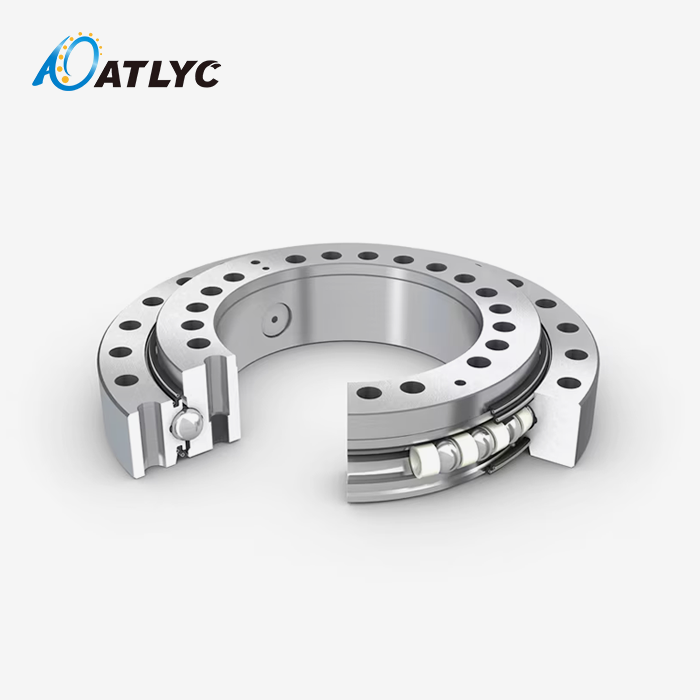
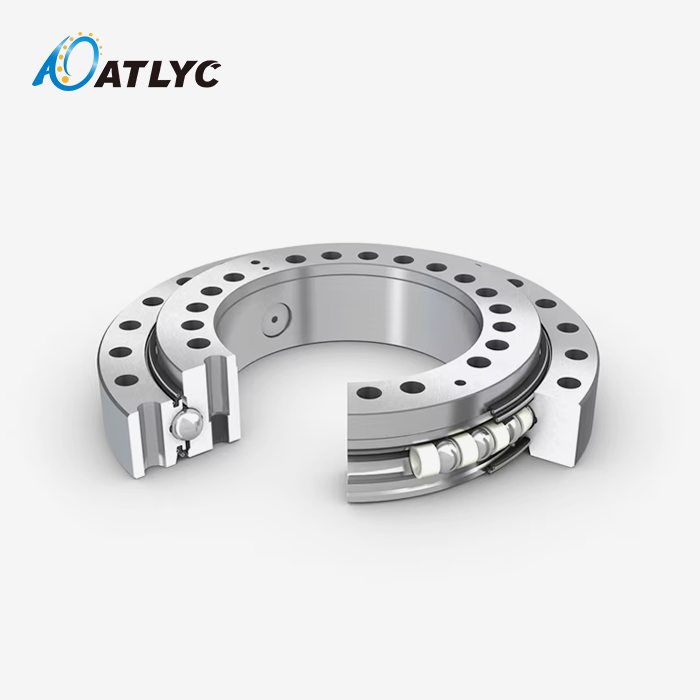
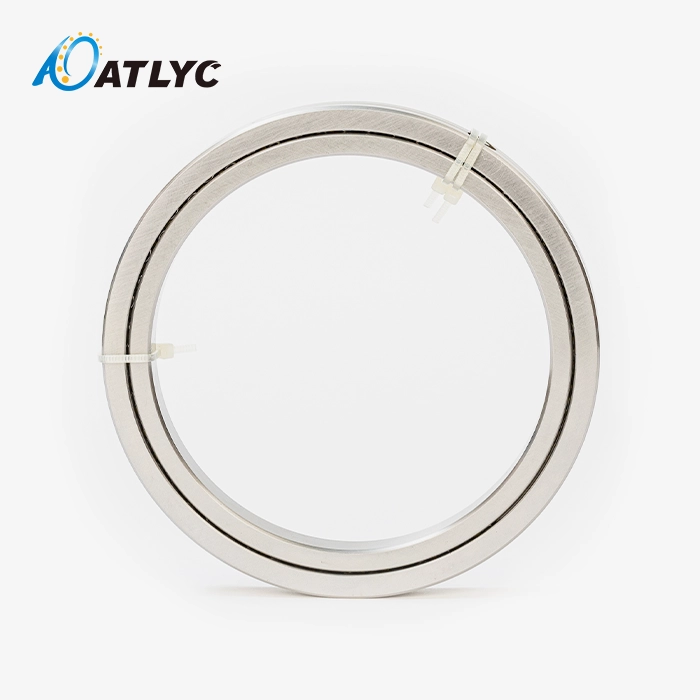
When choosing precision bearings for high-load situations, knowing the load capacity is important because it affects how long the equipment lasts and how reliably it works. The RB8016UUCC0 Series Crossed Roller Bearing has outstanding performance because it has an orthogonal roller setup that can handle radial, axial, and moment loads at the same time. It has an inner diameter of 80mm, an outer diameter of 105mm, and a width of 16mm. Made from Gcr15 and Gcr15SiMn steel in precision grades from P6 to P2, this bearing distributes loads more evenly thanks to line contact between cylindrical rollers and V-groove raceways. This makes it an essential part of industrial robots, CNC rotary tables, and medical imaging equipment.
Understanding RB8016UUCC0 Crossed Roller Bearing Specifications
The physics behind crossed roller bearings starts with choosing the right materials and making sure the shapes are right. Our bearings are made of Gcr15 and Gcr15SiMn bearing-grade steel, which was chosen because it keeps its strength and shape even when it is loaded and unloaded many times. The chromium content makes the material more resistant to wear, and the manganese content makes it easier to harden when heated.
Material Composition and Thermal Properties
Gcr15 steel has a base hardness of 60–65 HRC after the right heat treatment, and it can withstand temperatures up to 120°C without losing its structural integrity. Adding silicon and manganese to different types of Gcr15SiMn improves its heat conductivity by about 15%. This is very important for uses that need to rotate continuously or do short high-speed cycles. This choice of material has a direct effect on load capacity by lowering the changes in size caused by heat that could damage the shape of the raceway contacts.
Static and Dynamic Load Ratings Explained
There are two main numbers in load capacity specifications: the steady load rating (C0) and the dynamic load rating (C). The static number tells you how much force the bearing can hold while it's still and not deform permanently. For the RB8016 design, this is usually between 28,000 and 32,000 N. When figuring out fatigue life, the dynamic load rating takes into account how much weight something can hold while it is rotating. The crossed roller design can handle three to four times more weight than angular contact ball bearings of the same size. This is because the rollers and raceways touch in a straight line, while ball bearings only contact at points.
Dimensional Precision Across Accuracy Classes
Tolerances for inner and outer ring sizes, raceway runout, and roller diameter change are set by accuracy grades from P6 (normal) to P2 (ultra-precision). P5 and P4 grades suit most industrial automation requirements, limiting radial runout to under 5 micrometers. Medical instruments and tools used to make semiconductors often need the P2 grade, which achieves circular accuracy of less than a millimeter. Costs and delivery times are higher for higher precision grades because they need to be made in controlled settings and with strict inspection processes.
Comparing RB8016UUCC0 to Other Crossed Roller Bearings
Knowing about other options on the market helps buying teams make choices based on facts that meet the needs of the application and stay within the budget of the RB8016UUCC0 Series Crossed Roller Bearing. There are different types of crossed roller bearings on the market, and each one is best for a certain type of load and available space.
Design Differences from Conventional Ball Bearings
Standard deep groove ball bearings work great for high-speed, light-load tasks, but aren't stiff enough for big moment loads. Instead of two angular contact ball bearings, there is one crossed roller bearing. This makes the setup simpler and less likely to make alignment mistakes. The RB8016 bearing's 16mm width makes it easy to put in places where axial space is limited. With ball bearings, on the other hand, you might need 30–40mm of axial space to get the same resistance.
Performance Against Similar-Sized Models
When you look at the RB8016 next to the RB8015 (70mm bore), you can see how changes in size affect load capacity. The RB8016's bigger contact area boosts its static load capacity by about 18%, which makes sense when equipment is subjected to higher gravitational loads or shock hits. On the other hand, the RB8015 offers small weight savings that are useful in aerospace applications where every gram counts. During the design review phase, we talk to customers about these trade-offs and take into account both the current performance needs and the long-term upkeep accessibility.
Manufacturer Landscape and Quality Indicators
Major bearing makers like NSK, SKF, and KOYO have built their names over decades of mechanical study and improving quality control. At Luoyang Auto Bearing, our ISO 9001 and IATF 16949 certifications demonstrate adherence to international quality management standards, critical for serving automotive OEMs and industrial equipment manufacturers. For these certificates, process controls must be written down and followed, from inspecting raw materials to putting the product together at the end. This makes sure that the product works the same way in all production runs.
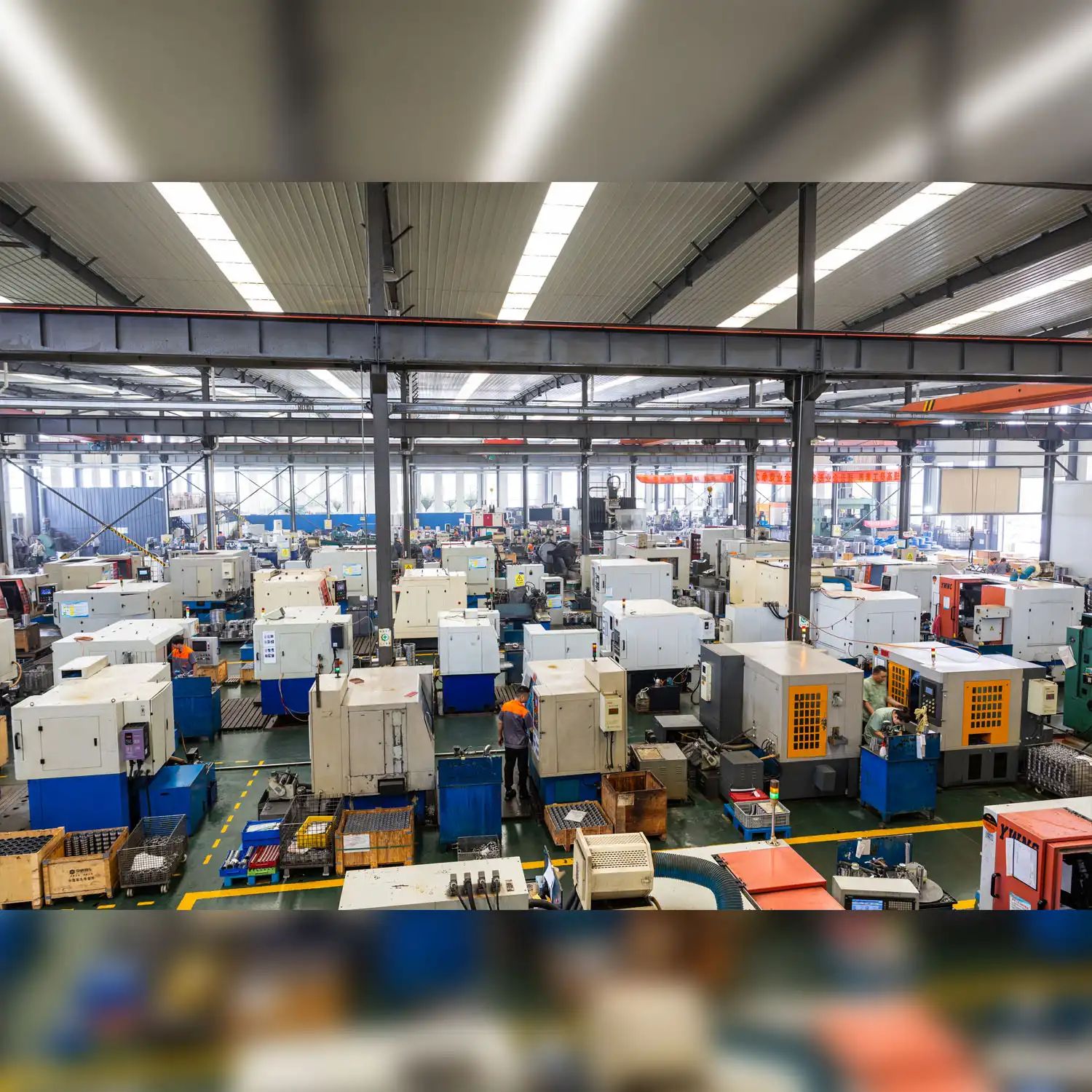
Our building, which opened in 2010, has grown from a single workshop to six specialized production areas. It now has 120 skilled workers in manufacturing, quality inspection, and engineering support offices. Our dedication to making precision bearings shows in this growth. We will be able to supply export markets in South Korea, the US, Germany, Russia, Iran, and Turkey with parts that meet strict international standards.
Practical Applications and Industry Use Cases
For example, crossed roller bearings are used in many different commercial settings because they can handle different types of loads and solve technical problems that other types of bearings can't.
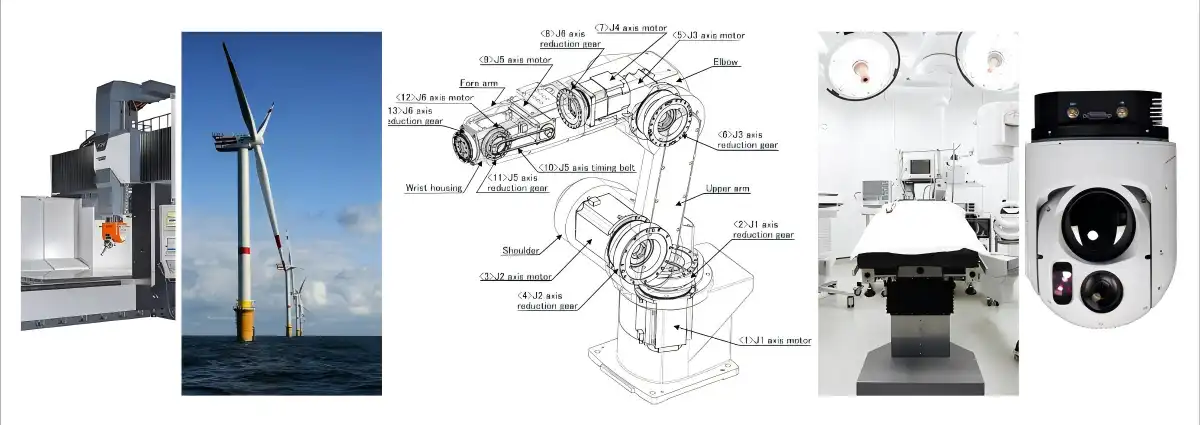
Industrial Robotics Joint Assemblies
There are crossed roller bearings in the waist and elbow joints of six-axis articulated robots. This is where moment loads are highest when the arm is extended with a payload on it. At full extension, a normal joint robot (cobot) that can carry 10 kg creates moment loads that are higher than 200 Nm. The RB8016 bearing handles these radial, axial, and moment forces all in one small unit. This gets rid of backlash that would otherwise make it hard to repeat positions. Our users say they can repeat the same thing within 0.05 mm over millions of motion cycles, which is very important for precise assembly tasks.
CNC Machining Center Rotary Tables
When cutting things with a lot of force, precision machining needs strong support. The item weight (static load) and cutting forces (dynamic load) on a horizontal machining center's rotating table change depending on which tool is being used. The crossed roller bearing keeps its positional accuracy even when the loads change. Its negative clearance design stops play that could leave chatter marks on finished surfaces. One European company that makes car parts said that part failure rates dropped by 30% after they switched their machining fixtures to precision crossed roller bearings.
Medical Imaging Equipment Applications
CT scanners move X-ray sources and detectors around patients at controlled speeds of the RB8016UUCC0 Series Crossed Roller Bearing. To keep image quality high, they need to run smoothly and stop vibrations. Crossed roller bearings have a low friction coefficient—usually between 0.002 and 0.004 when properly oiled—which keeps the speed of spinning steady while generating as little heat as possible. When cleaning is done a lot in healthcare settings, the built-in seals keep out dirt and germs. Compact dimensions allow patient-friendly equipment design without sacrificing structural integrity.
Precision Measurement Instrumentation
Coordinate measuring machines (CMMs) and optical inspection systems use the quality of the bearings' movement to set reference planes. Any wobble or runout is a direct result of measurement error. Crossed roller bearings of the P4 and P2 grades keep these differences to less than a micron, which means that measurements can be accurate within 1-2 micrometers over the whole turn. This level of accuracy is especially helpful for tools used to make integrated circuits (ICs), since the accuracy of wafer positioning has a direct effect on semiconductor output rates.
Procurement Guide for RB8016UUCC0 Crossed Roller Bearings
Strategic buying strikes a mix between short-term cost concerns and the reliability of the supply chain in the long run. Our method helps industrial buyers get good parts while keeping track of supplies and payments in a smart way.
Pricing Structure and Volume Considerations
The unit price of precision crossed roller bearings is based on the cost of materials, the difficulty of the manufacturing process, and the required accuracy grade. Prices for P6 grade bearings are the base price. For P5 grade bearings, the price goes up by 15-20%, and for P4 grade bearings, it goes up by 40–50% because they require more production steps and review time. Economies of scale are made possible by volume agreements. Usually, orders over 100 units qualify for tiered price discounts. We work with buying teams to guess how much we will need each year. Then, we set up blanket purchase orders with set release dates to make sure that production matches demand cycles.
Lead Time Expectations and Logistics Planning
Standard setups in P5 grade keep inventory available, and wait times of two to three weeks are normal for orders of less than fifty units. Custom specs or better precision grades take 6 to 8 weeks, which gives time for planning production and checking quality. International shipping can take an extra one to two weeks, based on where it's going and how long it takes to clear customs. We suggest keeping a safety stock of important bearings, especially for equipment that loses a lot of production when it breaks down without warning. Our transportation partners make tracking clear and make sure all the paperwork is in order so that customs processing goes smoothly.
Supplier Evaluation Criteria
When choosing a provider, you should look at more than just price. You should also look at how well they can help you technically and how much they can produce. Crossed roller bearings, deep groove ball bearings, and cylindrical roller bearings are all made in our six workshops. This gives us production freedom when parts change. The ISO 9001 and IATF 16949 certifications show that quality control is done in a planned way, and there are written steps for what to do when something doesn't meet standards. Help with application engineering, advice on choosing bearings, and failure analysis when operating problems happen are all examples of technical help.
What the warranty covers depends on the use and settings of the machine. There is a 12-month guarantee against material and manufacturing flaws for standard workplace use. When proper installation steps and upkeep plans are followed, extended warranties are given. We keep track of things using heat lot numbers and inspection records, which lets us figure out what went wrong if something fails too soon.
Maximizing Load Capacity: Tips and Best Practices
To get the estimated bearing life of the RB8016UUCC0 Series Crossed Roller Bearing, you need to pay attention to how the bearings are installed, how they are oiled, and how they are used. When these basics are ignored, even fine parts don't work as well as they should.
Installation, Alignment, and Mounting Practices
Cleaning the mating surfaces is the first step to proper mounting. Any dirt or dust on these surfaces causes high spots that change the shape of the bearing. The shape of the integral inner ring makes assembly easier than with separate bearings, but alignment is still very important. We suggest using alignment tools or dial indicators to make sure that the shaft and case are straight within 0.01 mm per 100 mm of diameter. The mounting bolts that hold the split outer ring in place should be torqued in a diagonal design so that the clamping force is spread out evenly. This will keep the ring from warping, which would make it harder for the rollers to divide the load.
Lubrication Selection and Application Methods
Most crossed roller bearing uses are best lubricated with grease. Lithium complex or polyurea greases are good at keeping out water and keeping temperatures stable. Initial fill should take up 30 to 40 percent of the bearing's free volume. If it's too full, it speeds up wear and increases churning losses. If it's too empty, it lowers the temperature rise. When constant spinning is needed at speeds above 500 RPM, oil circulation systems are the best way to get rid of heat. Synthetic oils with ISO VG 68–100 viscosity grades keep the width of the film the same at a lot of different temperatures.
Load Distribution Optimization
How loads move through the bearing depends on how it is mounted. When force acts at a distance from the bearing axis, as with cantilever loads, moment loads are related to that distance. Cutting down on overhung lengths lowers moment loads, which makes bearings last longer. When building equipment, putting the bearing close to where the load will be applied makes the stress spread better. By looking at load lines, you can often find ways to add support bearings or stiffen structural parts to old equipment that is wearing out too quickly.
Condition Monitoring Techniques
Temperature tracking finds problems with grease or misalignment before they become deadly. After a short run-in time, the working temperature of a bearing usually stays 15 to 25°C above room temperature. Temperature rises that happen slowly over a period of weeks are a sign of lubricant breakdown, while rapid rises could be caused by contamination or changes in the preload. Through frequency spectrum analysis, vibration analysis can find faults that are starting to form. For example, bearing flaw frequencies are different from gear mesh or motor electrical frequencies, which allows for a more focused diagnosis. Our technical support staff helps customers set up baseline signatures and warning levels that work for their business.
Conclusion
The RB8016UUCC0 Series Crossed Roller Bearing meets the needs of precise engineering with its orthogonal roller shape, high-quality steel construction, and small size. Because they can handle more weight than regular ball bearings, these parts are necessary for industrial robots, CNC rotating tables, medical imaging, and accurate measurement. When you choose between Gcr15 and Gcr15SiMn as a material and accuracy grades from P6 to P2, you can make a design that fits your performance needs and your budget. The operating lifespan of equipment is increased by proper installation, lubrication management, and condition tracking. At Luoyang Auto Bearing, our 15-year history of manufacturing development and foreign certifications helps us provide reliable parts for demanding uses all over the world.
FAQ
1. What is the maximum static load capacity for RB8016UUCC0 bearings?
Depending on the precision grade and the way it is mounted, the RB8016UUCC0 can usually handle steady loads between 28,000 and 32,000 N. This number tells you how much force the bearing can hold without permanently deforming when it's not moving. Dynamic ability during spin ranges from 18,000 to 22,000 N, which is used to figure out fatigue life. Actual numbers should be checked against datasheets from the maker that are specific to the precision grade.
2. How do crossed roller bearings compare to angular contact bearings for robot joints?
In the same amount of room, crossed roller bearings are 3–4 times more rigid than paired angular contact bearings in equivalent space. The single-unit design makes preload change easier and cuts down on the time it takes to put together. Low friction coefficients (0.002-0.004) make motion control easier, and zero-backlash features make setting more accurate. In situations where accuracy and small size are very important, these benefits make up for the higher unit cost.
3. Where can I purchase authentic RB8016UUCC0 bearings with warranty support?
Authorized wholesalers and direct relationships with manufacturers make sure that the products are real and that the warranties are honored. At ATLYC, we offer expert help, documented traceability, and ISO/IATF certification compliance throughout the lifetime of a product.
Partner with ATLYC for Reliable RB8016UUCC0 Bearing Supply
When choosing a crossed roller bearing maker, you should look at their production size, quality certifications, and their ability to provide long-term assistance. ATLYC has been making precision bearings for 15 years and has ISO 9001 and IATF 16949 certifications to show that we are committed to meeting world quality standards. Our six specialized workshops and 120 trained workers make sure that we can consistently meet production needs for any amount, from small prototypes to yearly supply agreements.
We are a reliable provider of RB8016UUCC0 Series Crossed Roller Bearing to automakers, industrial machinery makers, and builders of automation equipment all over the world. Our engineering team can help you choose the right bearings for your needs by analyzing your application and making unique changes when standard setups don't exactly meet your needs. Your supply chain and equipment purchases are safe when you have competitive prices for buying in bulk, as well as reliable lead times and full warranty support.
Our expert advisors can help you choose the best bearing setup, whether you're making plans for next-generation robotic systems, improving CNC machining centers, or finding replacement parts for old equipment. Talk to ATLYC about your precision bearing needs by emailing auto@lyautobearing.com.We give complicated industrial systems the quality, consistency, and help they need.
References
1. Harris, T.A. and Kotzalas, M.N. (2006). Advanced Concepts of Bearing Technology: Rolling Bearing Analysis, Fifth Edition. CRC Press, Boca Raton.
2. ISO 5593:1984. Rolling Bearings - Vocabulary. International Organization for Standardization, Geneva.
3. Schaeffler Technologies AG & Co. KG (2019). Crossed Roller Bearings: Design and Application Guidelines. Technical Publication TI 00117, Herzogenaurach.
4. American Bearing Manufacturers Association (2020). Load Ratings and Fatigue Life for Roller Bearings. ABMA Standard 11-1990 (R2020), Washington D.C.
5. Wensing, J.A. (1998). On the Dynamics of Ball Bearings. Doctoral Dissertation, University of Twente, Enschede, Netherlands.
6. NSK Ltd. (2021). Precision Crossed Roller Bearings Catalog No. E728g. Motion & Control Division, Tokyo.
Learn about our latest products and discounts through SMS or email