- English
- French
- German
- Portuguese
- Spanish
- Russian
- Japanese
- Korean
- Arabic
- Greek
- German
- Turkish
- Italian
- Danish
- Romanian
- Indonesian
- Czech
- Afrikaans
- Swedish
- Polish
- Basque
- Catalan
- Esperanto
- Hindi
- Lao
- Albanian
- Amharic
- Armenian
- Azerbaijani
- Belarusian
- Bengali
- Bosnian
- Bulgarian
- Cebuano
- Chichewa
- Corsican
- Croatian
- Dutch
- Estonian
- Filipino
- Finnish
- Frisian
- Galician
- Georgian
- Gujarati
- Haitian
- Hausa
- Hawaiian
- Hebrew
- Hmong
- Hungarian
- Icelandic
- Igbo
- Javanese
- Kannada
- Kazakh
- Khmer
- Kurdish
- Kyrgyz
- Latin
- Latvian
- Lithuanian
- Luxembou..
- Macedonian
- Malagasy
- Malay
- Malayalam
- Maltese
- Maori
- Marathi
- Mongolian
- Burmese
- Nepali
- Norwegian
- Pashto
- Persian
- Punjabi
- Serbian
- Sesotho
- Sinhala
- Slovak
- Slovenian
- Somali
- Samoan
- Scots Gaelic
- Shona
- Sindhi
- Sundanese
- Swahili
- Tajik
- Tamil
- Telugu
- Thai
- Ukrainian
- Urdu
- Uzbek
- Vietnamese
- Welsh
- Xhosa
- Yiddish
- Yoruba
- Zulu
Are CRBS Crossed Roller Bearings Better Than Ball Bearings?
Choosing between CRBS crossed roller bearings and ball bearings depends on your application's specific demands. CRBS crossed roller bearings excel in environments requiring multi-directional load handling, compact installation space, and exceptional environmental protection. Their unique perpendicular roller arrangement provides greater rigidity and moment load capacity within a single unit, while advanced sealing systems offer IP65-rated protection against contamination. Ball bearings, conversely, offer simplicity, cost-effectiveness, and versatility across general-purpose applications. The decision depends on whether your machinery prioritises space optimisation, precision under complex loads, and resilience in harsh environments—areas where sealed crossed roller bearings offer clear advantages over traditional ball bearing designs.
Understanding CRBS Crossed Roller Bearings and Ball Bearings
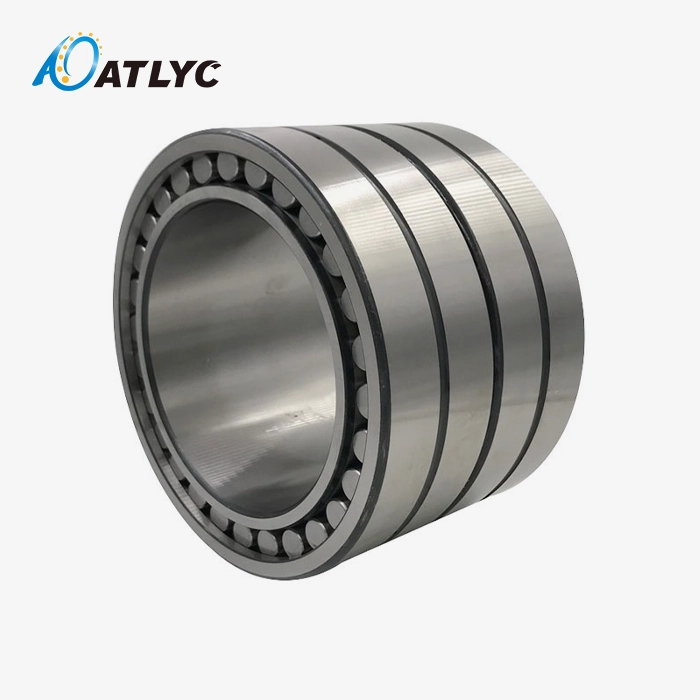
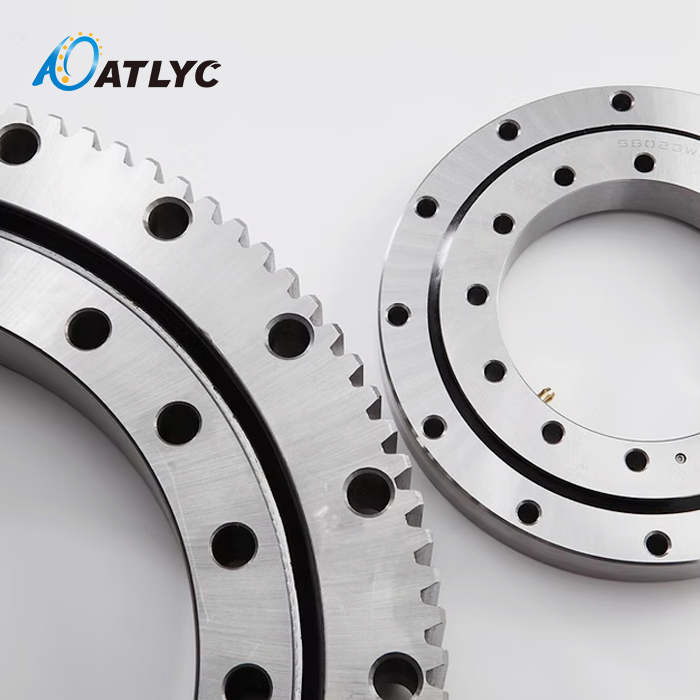
Crossed Roller Bearing Design Principles
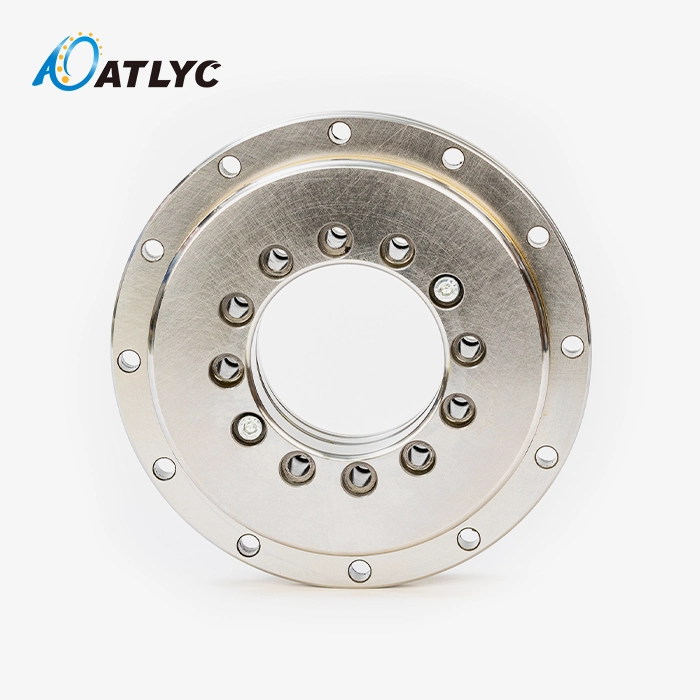
CRBS crossed roller bearing configurations are an advanced kind of precision bearing engineering. These units have cylindrical rollers positioned at 90-degree angles between V-groove raceways, allowing for the simultaneous handling of radial, axial, and moment loads in a single compact assembly. This perpendicular arrangement avoids the need for several bearing installations, resulting in less system complexity and total weight. The differentiating feature is their extensive sealing architecture. Each unit features dual-layer protection: an inner nitrile rubber (NBR) lip seal for oil resistance and an outside stainless steel dust cover for mechanical protection. This dual-barrier arrangement meets IP65 protection standards, making these bearings appropriate for wet, dusty, and chemically harsh conditions where ordinary designs would fail prematurely.
Ball Bearing Fundamental Structure
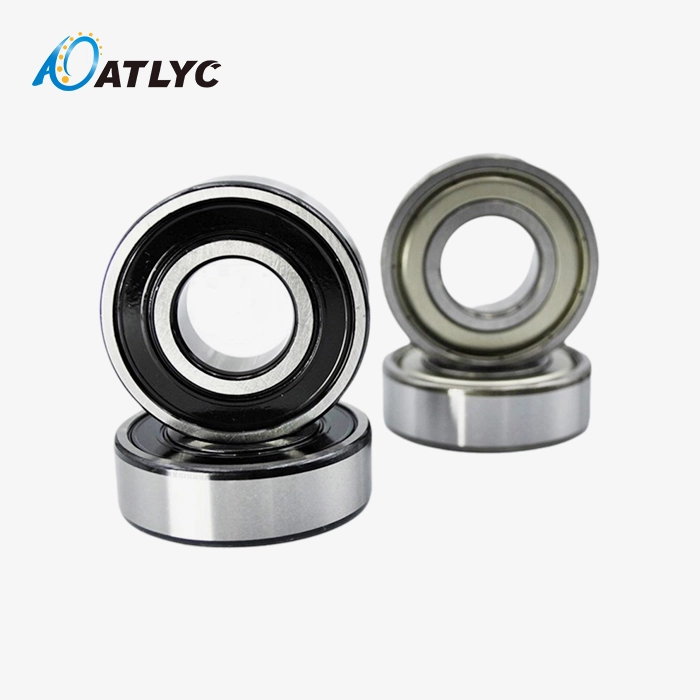
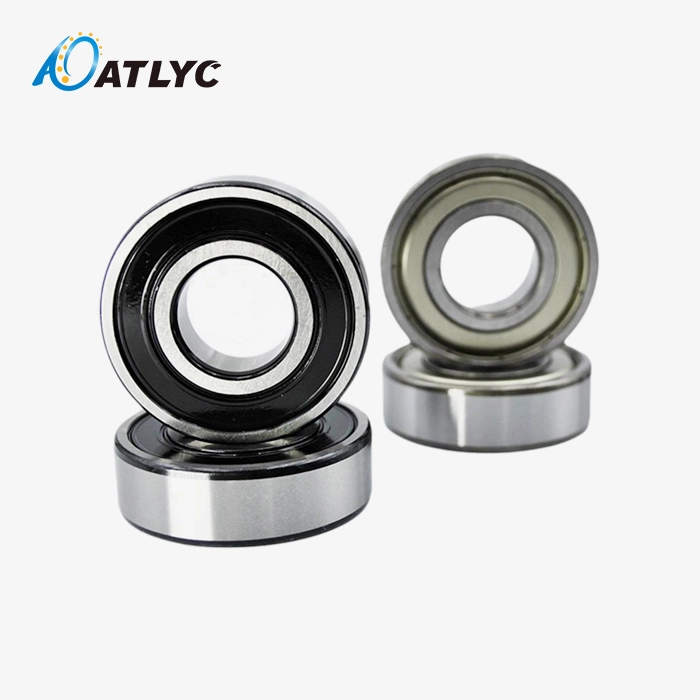
Ball bearings use spherical rolling elements between the inner and outer ring raceways, resulting in a simpler design with wide industrial applicability. Their point-contact shape allows for smooth rotation with low friction, making them ideal for high-speed applications with modest loads. Standard ball bearings often have rudimentary shielding or sealing options, but these rarely compare to the environmental protection levels obtained by specialised crossing roller types. Material selection varies greatly across various bearing types. For normal uses, ball bearings are often made of chrome steel (GCr15) or stainless steel. Crossed roller units frequently use nitrided raceway surfaces, which provide higher wear resistance and corrosion protection—an important advantage in demanding operating circumstances. Manufacturing precision for crossed-roller manufacture necessitates tighter tolerances, often ranging from P5 to P2 accuracy grades, as opposed to P6 or P0 standards used in ball bearing production.
Performance and Application Comparison
Load Capacity and Distribution
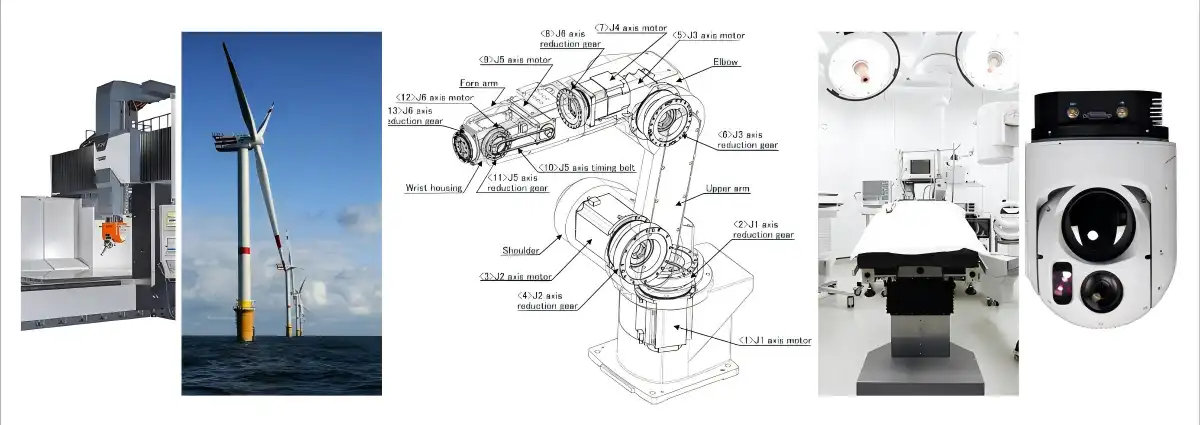
Crossed roller bearings have higher static and dynamic load ratings than similar-sized ball bearing units. The cylindrical roller's line contact distributes forces over a broader surface area than ball bearings' point contact, lowering stress concentrations and allowing for higher load capacities. This design is especially useful for applications with mixed loading conditions—radial forces, axial thrusts, and tilting moments all occurring at the same time. Test data from industrial robot joints clearly demonstrate this advantage. An 110 mm bore crossed roller bearing can withstand moment loads of up to 8,000 N·m, but identical ball bearing pairs require greater envelope dimensions to obtain comparable ratings. This load-handling efficiency translates directly into smaller machine designs and lower material costs for OEM makers.
Precision and Rotational Accuracy
Rotational accuracy requirements separate general-purpose applications from precision machinery. Ball bearings typically achieve runout tolerances between 5 and 15 micrometres in standard configurations, sufficient for many industrial applications. Sealed crossed roller bearings maintain tighter tolerances, often below 3 micrometres, even after extended operation in contaminated environments. The integrated sealing system preserves internal cleanliness, protecting dimensional accuracy and rotational smoothness throughout the bearing's service life. This consistency proves critical for CNC rotary tables, robotic manipulators, and medical imaging equipment where positioning errors accumulate and affect output quality. Manufacturers say that if crossed roller installations are properly maintained, they keep their original accuracy for 12,000 operating hours, while protected ball bearing arrangements in similar environments usually last for 8,000 hours.
Maintenance Requirements and Service Life
Operational expenses extend beyond initial purchase price. Ball bearings often require frequent re-lubrication and seal replacement when exposed to harsh conditions. The pre-filled high-temperature resistant and water-resistant grease in sealed crossed roller units extends maintenance intervals substantially. Field reports from automotive painting workshops show maintenance cycles extending from 4,000 hours with ball bearings to 12,000 hours with properly specified crossed roller alternatives. This extended service life stems from multiple design factors. Nitrided raceway surfaces resist corrosion and abrasive wear more effectively than standard heat treatment. The dual-layer sealing prevents coolant and chemical intrusion that typically causes premature bearing degradation. Procurement teams evaluating total cost of ownership find these maintenance reductions often justify higher initial investment, particularly in applications where downtime costs exceed component prices.
Advantages of Choosing CRBS Crossed Roller Bearings
The technical benefits of sealed crossed roller technology translate into tangible operational advantages for OEMs and end-users. Understanding these strengths helps procurement professionals identify applications where this bearing type delivers optimal value.
Compact Installation Footprint
Many modern machine designs are based on the need to save space. Crossed roller bearings compress the functionality of multiple ball-bearing arrangements into a single unit, typically reducing axial space requirements by 30 to40%. This compactness enables designers to minimise machine footprints without sacrificing rigidity or load capacity—a critical consideration for collaborative robots and medical equipment where size directly impacts usability. The integrated design eliminates spacers, housing components, and adjustment mechanisms required for ball bearing pairs, simplifying assembly processes and reducing part counts. Manufacturing engineers report assembly time reductions of 20–30% when transitioning from ball-bearing arrangements to crossed-roller solutions in rotary- table applications.
Multi-Directional Load Handling
Equipment experiencing complex loading benefits significantly from crossed roller geometry. The perpendicular roller arrangement handles radial forces, axial thrusts, and tilting moments simultaneously, maintaining dimensional stability under varying operational conditions. This capability prevents the binding and premature wear common when ball bearings operate under combined loads exceeding their design parameters. Outdoor robotic applications demonstrate this advantage clearly. Wind loading, payload shifts, and terrain variations create constantly changing force vectors. Sealed crossed roller bearings accommodate these variations without performance degradation, maintaining positioning accuracy that would require active compensation systems with ball bearing alternatives.
Environmental Protection and Durability
The advanced sealing system addresses a fundamental challenge in industrial environments—contamination control. Automotive painting booths, food processing lines, and marine applications expose bearings to moisture, particulates, and corrosive chemicals that rapidly degrade standard designs. Testing conducted in Middle Eastern petrochemical facilities, where temperatures exceed 45°C and airborne contaminants include corrosive compounds, shows sealed crossed roller units maintaining specified performance for 18-24 months compared to 6-9 months typical for protected ball bearings. This durability stems from the IP65-rated dual-layer seal preventing ingress while the nitrided raceway surface resists chemical attack that would pit standard bearing steels.
Southeast Asian food processing operations report similar advantages. Equipment cleaning protocols involving high-pressure water and caustic detergents traditionally required frequent bearing replacement. Transitioning to sealed crossed roller designs reduced bearing-related downtime by 60% while maintaining the hygienic standards required for food contact applications.
Market Comparison and Procurement Insights
Cost-Effectiveness Analysis
Initial pricing often creates hesitation when evaluating crossed roller bearings against ball bearing alternatives. Unit costs typically range from 150 to 250% higher than comparable ball bearing arrangements. This price differential narrows substantially when analysing total cost of ownership. Lifecycle cost modelling for precision rotary tables reveals that maintenance labour, downtime expenses, and replacement bearing costs accumulate rapidly with ball bearing installations in demanding applications. A typical CNC machine tool application shows payback periods of 18-24 months when specifying sealed crossed roller bearings instead of ball bearing pairs, with ongoing savings throughout the equipment's operational life. Volume procurement further improves cost-effectiveness. Manufacturers offering quantity discounts on standard CRBS crossed roller bearing sizes enable OEMs to reduce unit costs by 15-25% on orders exceeding 100 units, bringing pricing closer to premium ball bearing arrangements while retaining superior performance characteristics.
Sourcing and Supply Chain Considerations
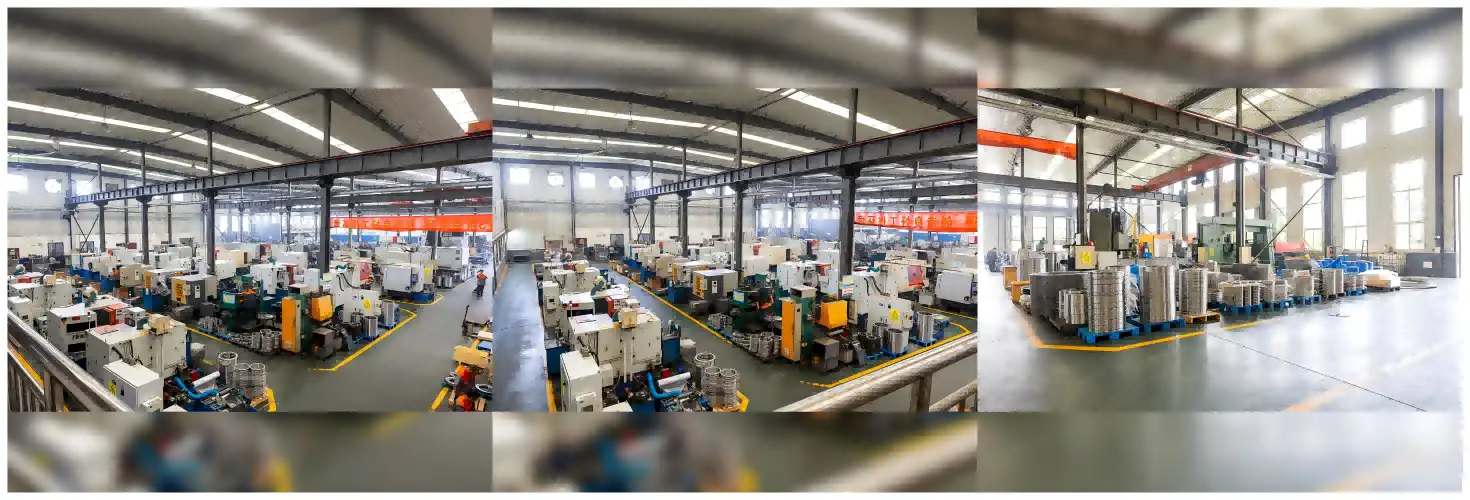
Procurement reliability matters equally to technical specifications. Established bearing manufacturers with ISO 9001 and IATF 16949 certifications demonstrate consistent quality and supply chain stability. Luoyang Auto Bearing Co., Ltd. exemplifies this manufacturing maturity, having expanded from a single workshop in 2010 to six specialised production facilities serving global markets, including South Korea, the United States, Germany, Russia, Iran, and Turkey. Lead times vary significantly between bearing types. Standard ball bearings often ship from distributor stock within 2-4 weeks. Crossed roller bearings, particularly sealed configurations, typically require 6-8 weeks for custom specifications. Planning procurement schedules around these timelines prevents production delays while allowing manufacturers to optimise bearing specifications for each application rather than accepting compromised designs based on inventory availability.
Warranty provisions and after-sales support differentiate reliable suppliers from commodity vendors. Reputable manufacturers provide technical consultation during specification, application-specific testing when required, and responsive support addressing field issues. This technical partnership is very helpful when adding advanced bearing technology to new equipment designs or fixing performance problems in existing installations.
Making the Right Bearing Choice: CRBS Crossed Roller Bearings or Ball Bearings?
Application-Specific Selection Criteria
Several factors guide optimal bearing selection. Load requirements form the foundation—applications with significant moment loads or combined loading favour crossed roller designs, while purely radial or purely axial loads may suit ball bearing solutions effectively. Precision targets define another decision boundary. Equipment requiring positioning accuracy below 5 micrometres typically benefits from crossed roller technology, whereas general machinery operating at 10-20 micrometre tolerances often functions adequately with quality ball bearings. Spatial constraints increasingly influence bearing selection. Compact equipment designs lacking space for multiple bearing installations find crossed roller solutions that enable configurations impossible with ball bearing arrangements. Conversely, applications with generous envelope dimensions may not justify the cost premium for space-saving designs.
Environmental exposure represents a critical consideration. Sealed crossed roller bearings deliver clear advantages in contaminated, wet, or corrosive environments. Clean, controlled conditions with minimal contamination risk reduce the value proposition for advanced sealing systems, potentially favouring simpler ball bearing designs with basic shields or seals.
Industry Case Studies
Manufacturers of marine deck equipment faced chronic bearing failures from saltwater exposure and mechanical shock loading. Transitioning from protected ball bearing pairs to sealed crossed roller units in crane pivot applications reduced maintenance callouts by 70% while extending bearing service life from an average of 8 months to 36 months—a transformative improvement for equipment operating in remote offshore locations. Automotive assembly lines installing robotic welding cells initially specified ball bearing arrangements in articulation joints. Premature failures from weld spatter contamination and coolant exposure prompted redesign using sealed crossed roller bearings. Downtime related to bearing issues decreased from 4-6 incidents monthly to less than one incident quarterly, improving production efficiency metrics and reducing unplanned maintenance costs.
Food packaging machinery operating under stringent hygiene requirements demonstrated similar benefits. Equipment undergoing daily high-pressure washdown cycles experienced bearing failures every 6-8 weeks with standard ball bearing installations. Sealed crossed-roller alternatives extended intervals to 12-18 months while maintaining the sanitary standards required for direct food-contact applications, reducing both maintenance costs and contamination risks.
Conclusion
The question of whether CRBS crossed roller bearings outperform ball bearings lacks a universal answer—optimal selection depends on specific application requirements. Crossed roller technology delivers measurable advantages in compact installations requiring multi-directional load handling, precision positioning, and environmental protection. The IP65-rated sealing system, nitrided raceway surfaces, and extended 12,000-hour maintenance intervals provide compelling value in harsh industrial conditions. Ball bearings remain effective and economical for applications with moderate loads, generous space envelopes, and controlled environments. Procurement decisions should weigh initial costs against lifecycle expenses, considering maintenance requirements, downtime risks, and performance consistency throughout the equipment's operational life. Technical consultation with experienced bearing manufacturers helps identify optimal solutions balancing performance requirements with budgetary constraints.
FAQ
Can CRBS crossed roller bearings directly replace ball bearing arrangements?
Direct replacement depends on mounting dimensions and load characteristics. Crossed roller units often occupy less axial space than ball bearing pairs, potentially requiring housing modifications. Load ratings typically improve substantially, but speed limitations may differ. Consulting bearing specifications and conducting application reviews ensures successful substitutions without performance compromises.
What maintenance schedules apply to sealed crossed roller bearings?
Sealed CRBS units pre-filled with high-temperature-resistant grease typically operate for 12,000 hours before requiring attention. Periodic inspection every 3,000-4,000 hours, checking for abnormal noise, vibration, or temperature elevation, identifies potential issues early. Harsh environments may necessitate more frequent monitoring, though the sealed design minimises contamination-related degradation.
How do lead times for crossed roller bearings compare to ball bearings?
Standard crossed roller configurations typically ship within 6-8 weeks, longer than commodity ball bearings but reasonable for planned procurement. Custom specifications may extend to 10-12 weeks. Establishing relationships with reliable manufacturers and forecasting requirements allows efficient inventory management without emergency expediting costs.
Partner with ATLYC for Advanced Bearing Solutions
When your equipment demands reliable performance in challenging conditions, ATLYC delivers engineered bearing solutions combining precision manufacturing with global quality standards. Our CRBS crossed roller bearings incorporate advanced sealing technology and nitrided raceway treatments, providing the environmental protection and durability your applications require.
With ISO 9001 and IATF 16949 certifications backing every production run, we maintain the consistent quality expectations of OEM manufacturers and global distributors. Our six specialised production facilities enable scalable output from prototype quantities to volume production, while our experienced engineering team provides technical consultation throughout your specification and integration process.
Contact our team at auto@lyautobearing.com to discuss your bearing requirements. We offer customised specifications, competitive volume pricing, and reliable lead times that support your production schedules. Whether you need CRBS crossed roller bearings for harsh environment applications or technical guidance selecting optimal bearing solutions, ATLYC combines 15 years of manufacturing expertise with responsive customer support. Request detailed specifications, application analysis, or volume quotations from a trusted CRBS cross-roller bearing manufacturer committed to your operational success.
References
1. Harris, T.A. and Kotzalas, M.N. (2006). Advanced Concepts of Bearing Technology: Rolling Bearing Analysis, Fifth Edition. CRC Press, Taylor & Francis Group.
2. Hamrock, B.J., Schmid, S.R., and Jacobson, B.O. (2004). Fundamentals of Fluid Film Lubrication, Second Edition. Marcel Dekker, Inc.
3. ISO 281:2007. Rolling bearings — dynamic load ratings and rating life. International Organisation for Standardisation.
4. Wijnant, Y.H. (1998). Contact Dynamics in the Field of Elastohydrodynamic Lubrication. PhD Thesis, University of Twente, Netherlands.
5. Stachowiak, G.W. and Batchelor, A.W. (2013). Engineering Tribology, Fourth Edition. Butterworth-Heinemann, Elsevier.
6. Tallian, T.E. (1992). Failure Atlas for Hertz Contact Machine Elements, Second Edition. ASME Press, American Society of Mechanical Engineers.
Learn about our latest products and discounts through SMS or email