- English
- French
- German
- Portuguese
- Spanish
- Russian
- Japanese
- Korean
- Arabic
- Greek
- German
- Turkish
- Italian
- Danish
- Romanian
- Indonesian
- Czech
- Afrikaans
- Swedish
- Polish
- Basque
- Catalan
- Esperanto
- Hindi
- Lao
- Albanian
- Amharic
- Armenian
- Azerbaijani
- Belarusian
- Bengali
- Bosnian
- Bulgarian
- Cebuano
- Chichewa
- Corsican
- Croatian
- Dutch
- Estonian
- Filipino
- Finnish
- Frisian
- Galician
- Georgian
- Gujarati
- Haitian
- Hausa
- Hawaiian
- Hebrew
- Hmong
- Hungarian
- Icelandic
- Igbo
- Javanese
- Kannada
- Kazakh
- Khmer
- Kurdish
- Kyrgyz
- Latin
- Latvian
- Lithuanian
- Luxembou..
- Macedonian
- Malagasy
- Malay
- Malayalam
- Maltese
- Maori
- Marathi
- Mongolian
- Burmese
- Nepali
- Norwegian
- Pashto
- Persian
- Punjabi
- Serbian
- Sesotho
- Sinhala
- Slovak
- Slovenian
- Somali
- Samoan
- Scots Gaelic
- Shona
- Sindhi
- Sundanese
- Swahili
- Tajik
- Tamil
- Telugu
- Thai
- Ukrainian
- Urdu
- Uzbek
- Vietnamese
- Welsh
- Xhosa
- Yiddish
- Yoruba
- Zulu
Bearing Selection: 5 Critical Factors Engineers Often Overlook
When evaluating bearing selection for industrial applications, engineers and procurement professionals face decisions that directly impact equipment uptime, maintenance costs, and operational efficiency. Through our 15 years of manufacturing bearings at ATLYC, we've observed that five critical factors consistently escape initial assessment phases—leading to premature failures, unexpected downtime, and budget overruns. Understanding load dynamics, material compatibility, bearing type nuances, installation precision, and environmental adaptations separates reliable systems from costly maintenance cycles. This guide examines these overlooked elements to help you optimize bearing performance and extend asset lifecycles across automotive components, industrial machinery, and automation equipment applications.

Understanding Load Types and Their Impact on Bearing Performance
Why Load Analysis Matters More Than You Think
Load characterization is the basis for good Bearing Selection, but a lot of engineers use simple assumptions that don't take into account how complicated things really are. There are three main types of loads that affect bearings: radial loads that run perpendicular to the shaft axis, axial loads that run parallel to the rotation, and combined loads that run in both directions. A pulley in a conveyor system mostly handles circular loads from the stress of the belt, while an axial force from the weight of the impeller and hydraulic pressure is handled by a vertical pump thrust bearing. Combined loads are common in manufacturing equipment. For example, the cutting forces on a milling machine spindle cause both radial tool pressure and axial feed-direction stress.
Interpreting Load Capacity Ratings Correctly
Misjudging the size or direction of the load speeds up the bearing's wear and tear through a number of failure modes. When rotational loads are higher than the maximum capacity, rolling elements put too much contact stress on the raceways. This leads to subsurface wear and, eventually, spalling. When deep groove ball bearings are overloaded in the axial direction, they wear out faster because the edges get loaded up. We have examples of automobile transmission bearings that didn't last the predicted 8 years but failed in just 18 months because engineers chose bearings that were only rated for steady-state torque transfer and didn't take into account dynamic shock loads during gear mesh engagement.
Applying Safety Factors in Industrial Contexts
For correct load analysis, you need to figure out the dynamic equivalent loads using formulas from the bearing manufacturer that take into account both the radial and axial components, and then you need to add the right safety factors. Safety factors of 1.5 to 2.0 times catalog rates are needed for heavy industrial uses that put shock loads on parts, like crushers and punches. The 22336 bearing used in mining rotating screens can handle high speeds and eccentric motion. To keep it from freezing up when temperatures change quickly, different versions need to have cages that are surface-hardened and tolerances that are loose (C4 clearance). The same type of bearing is used in steel rolling mill reduction gears to handle heavy shock loads sent through the drive trains and to bend the shaft when high power is applied in hot environments.
Bearing Material and Lubrication: Enhancing Durability and Performance
Material Properties That Define Bearing Longevity
Choosing the right material for a bearing has a direct effect on its load capacity, resistance to rust, temperature range, and service life. Chrome steel (SAE 52100) is still the standard for most uses because it is very hard (HRC 58–63) and doesn't wear down easily at temperatures below 150°C. Ceramic bearings with silicon nitride rolling elements have 60% less density than steel. This lowers centrifugal forces in high-speed applications and can handle temperatures up to 800°C. This makes them perfect for turbine and aerospace applications, even tho they cost 3 to 5 times as much as steel equivalents. Stainless steel bearings (440C) are better than chrome steel when it comes to corrosion. This is especially true in chemical, naval, and food preparation settings where water and other contaminants can damage chrome steel. On the other hand, it has 10-15% lower load ratings than chrome steel and is more likely to break if the heat treatment isn't done right. At ATLYC, our metallurgical analysis protocols check the amount of retained austenite and carbide in bearing steel to make sure that its dimensions stay the same when heated and cooled many times. This is an important quality control step that keeps the bearing geometry from changing while it's being used.
Lubrication Strategies for Different Operating Conditions
Industry studies show that 40% of early bearing failures are caused by choosing the wrong lubrication. Lubrication reduces friction, gets rid of heat, stops rust, and keeps out contaminants. Grease lubrication works well in most industrial settings where the speed is less than 70% of the bearing's highest rate. It's easy to use and keeps out contamination. Lithium complex greases can work in temperatures ranging from -30°C to 150°C, and polyurea formulations can handle temperatures up to 180°C, making them better for use in places like dryer drums and kiln rollers. At higher speeds, when grease churning makes too much heat, or in precision uses that need very little friction change, oil lubrication is needed. Circulating oil systems help keep things clean by removing heat from bearing areas and making it easier to filter the oil. At 15,000 RPM, a deep groove ball bearing in an electric motor needs to be oiled in an oil bath or oil mist to keep it from breaking down due to heat. At 1,500 RPM, however, standard grease works well on the same bearing. The numbers C3 and C4 show how much internal space they have. C3 is good for most uses, while C4 gives you more room for thermal growth in hot places. Using C3 clearance in situations where the temperature is higher than 100°C leads to bearing preload as parts expand, which speeds up wear and could cause seizure.
Bearing Type Selection: Ball Bearings vs Roller Bearings – What You Need to Know
Fundamental Differences in Load Distribution
Different contact physics for ball bearings and roller bearings determine which uses are best for each. Ball bearings make point contact between the rolling elements and the raceways. This lets them work at high speeds with less friction, but they can only hold a certain amount of weight. Roller bearings make line contact, which spreads loads over a larger surface area to support heavy rotational loads at slower top speeds. In electric motor applications with speeds up to 10,000 RPM, a 6015 deep groove ball bearing can handle both radial and axial loads. A cylindrical roller bearing with the same bore size can handle three times as much radial load, but it can't move in the opposite direction and can only handle speeds of about 6,000 RPM.
Specialized Bearing Variants for Demanding Applications
With an adjustable preload, tapered roller bearings can handle heavy combined loads. This is why they are necessary for wheel hubs, gearboxes, and machine tool spindles. The curved shape changes radial loads into axial ones that need to be balanced by bearing arrangements that are at right angles to each other. Spherical roller bearings have barrel-shaped rollers on a spherical outer raceway. They can self-align up to 3 degrees to fix mounting or shaft misalignment, which is very important for uses like paper machine rolls or vibrating screens where the structure bends when it's under load.
Sealed Versus Open Bearing Designs
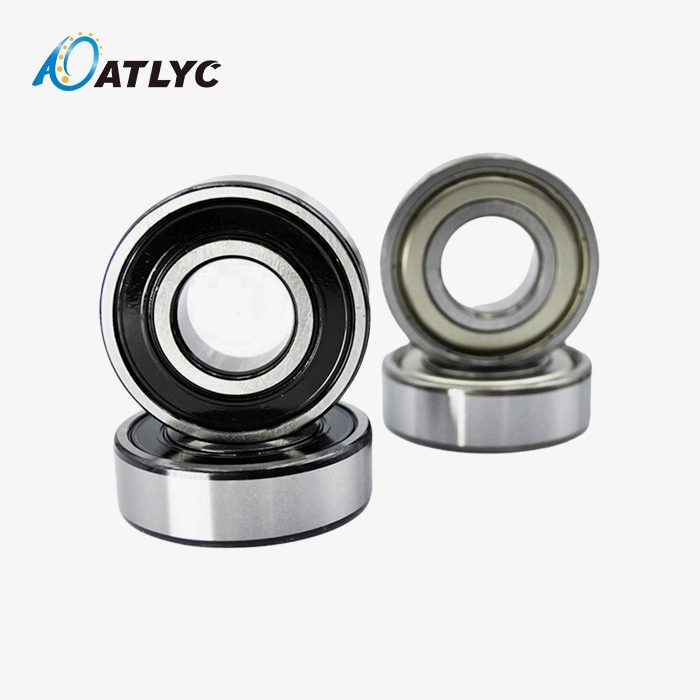
Bearing sealing has a big effect on how well it resists contamination and how often it needs to be maintained. Open bearings that don't have covers let you re-grease them and help the heat escape, but they let dust, wetness, and other process contaminants get into the internal parts. Shield-protected bearings have metal covers with small gaps between them to keep large particles out while still letting air flow. Contact seals with elastomer lips keep out contaminants well, but they create friction that slows things down and lose a little power. The following comparison clarifies bearing type selection based on application requirements:
| Bearing Type | Load Capacity | Speed Rating | Alignment Tolerance | Typical Applications |
|---|---|---|---|---|
| Deep Groove Ball | Moderately horizontal, not much axial | High (more than 10,000 RPM) | Needs exact alignment | Fans, pumps, and electric motors |
| Cylindrical Roller | High radial and low axial | Not too fast (6,000 RPM) | Small error | Heavy machines and gearboxes |
| Tapered Roller | A lot of loads at once | Not too fast (5,000 RPM) | Needs to be adjusted | Gearboxes, wheel hubs, and conveyors |
| Spherical Roller | Radar is very high, and axial is modest | Lessen (3,500 RPM) | Aligning itself to 3° | Mining tools and paper mills |
Proper Bearing Selection is needed for industrial uses because of the loads, speeds, and conditions in the surroundings. Sleeve bearings, which are sometimes called bushings or plain bearings, are used when noise and vibrations can be reduced by the moving action between metal, plastic, or hybrid sleeves. These parts are valued by industries because they are cheaper, require less maintenance, and make less noise at low speeds. This is especially true when precision isn't important, but dependability is.
Precision in Bearing Sizing and Mounting: Avoiding Costly Missteps
Dimensional Accuracy Prevents Compatibility Issues
Accurate measurements keep compatibility problems from happening. Mistakes in bearing sizing cause both short-term and long-term problems with how well they work. Within micron-level errors, the three most important dimensions—bore diameter, outer diameter, and width—must match the shaft and housing's specs. These measurements are written in ISO standard bearing designations: a 6015 bearing means a 75mm hole, but engineers must check the full specification, which includes the outer diameter (115mm) and width (20mm), to make sure the bearing will work with the case. Manufacturers keep very tight limits on sizes. For example, the bore width of precision-class bearings can change by only 0 to 8 micrometers, based on the size class.
Understanding Fit Tolerances and Their Consequences
When the shaft and housing fit together correctly, the bearings work as they should, without any internal stress or too much space. To stop creep, shaft fits usually use interference (press fit) for the inner rings that rotate, while housing fits use a small gap for the outer rings that stay in place to allow for heat expansion. Too much interference puts stress on the hoop, which lowers the internal space and could lead to loading, which speeds up fatigue. If there isn't enough interference, the bearing can turn around the shaft, which causes fretting corrosion that hurts both parts.
Installation Best Practices That Extend Bearing Life
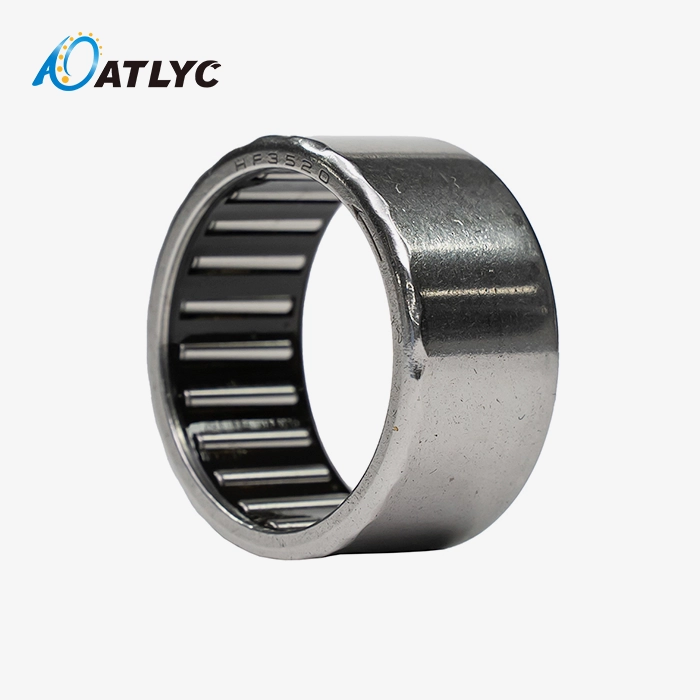
How the bearings are mounted has a big effect on how long they last. When you put force on rolling parts during installation, you make depressions (called "brinelling") that cause vibrations and speed up wear. For proper mounting, you can use hydraulic presses, induction heaters to expand the metal, or mechanical pullers that only push on the fitted ring. Alignment is still very important—a misalignment of as little as 0.001 inches per inch of bearing span can cause edge loading, which concentrates stress and cuts predicted life by 50% or more.RNU bearings, which are cylindrical roller bearings without an inner ring, show how quality control focuses on the accuracy of the upper unit and the rolling elements. When roller sorting within 2-micrometer diameter limits, the load is spread evenly across all elements. Mixed batches, on the other hand, create concentrated contact stress that causes early spalling. Since the shaft is the inner raceway that contacts the rollers directly, it needs to be hardened to HRC 58–63 and have a surface finish of Ra 0.2 micrometers. Many failures of bearings that are blamed on flaws in the product are actually caused by bad fitting or shaft preparation, which is something that quality makers can't control.
Speed, Environment, and Application Conditions: Tailoring Bearing Choice to Real-World Needs
Speed Limitations and Thermal Management
Different types of bearings, their sizes, how they are oiled, and the load conditions all affect how fast they can move. Manufacturers set maximum speeds that keep the rotational speed safe while still allowing for centrifugal forces, friction heating, and lubricant behavior. Because they have less contact area and friction, ball bearings can usually handle higher speeds than roller bearings. If you use oil to lubricate a 50mm bore deep groove ball bearing, it might be able to go 12,000 RPM, but only 8,000 RPM if you use grease. This is because grease creates heat through spinning losses. When working at high speeds, thermal issues become very important. Not letting enough heat escape leads to lubricant breakdown, changes in size due to thermal expansion, and a loss of material strength. For uses that go above 100°C all the time, you need special heat-stabilized bearing steel, high-temperature oils, and maybe even cooling from the outside. We've come up with ways to keep kiln support rollers working at a constant 200°C temperature by using bearings with more radial clearance to allow for thermal growth and synthetic ester-based lubricants that keep the film strong at high temperatures.
Environmental Factors That Compromise Bearing Performance
There are several decisions that affect the Bearing Selection process, which are affected by the operating environment. When chemical processes, saltwater contact, or wash-down cleaning create corrosive atmospheres, you need bearings made of stainless steel or a special coating. When there is rough dust or process debris in an area, it needs protected bearings with strong contact seals or external bearing isolators that keep the dust out while still allowing the shaft to move. For use in food processing and pharmaceuticals, bearings must have food-grade oils and be designed so that they can be cleaned often. Extreme temperatures make it hard for normal bearing materials and lubrication to work. When it's below -20°C, the viscosity of the lubricant rises, which raises the starting force and could cause the lube to run out. Synthetic lubricants are used in the Arctic to keep things moving at -40°C or lower. Vibration and shock loads from impact forces speed up wear and tear. Machines like shredders and crushers need bearings with strong cage designs and the right amount of space to keep the rollers from skewing when the load suddenly changes direction.
Application-Specific Selection Guidelines
Electromagnetic fields, electrical current flow (which causes arc erosion), and constant high-speed operation with light loads all put special stresses on electric motor bearings. Bearings that are insulated and have ceramic coats on the outer rings stop the flow of current that damages the flutes. When it comes to conveyor systems, resistance to contamination and a moderate speed are the most important things. Depending on the load, sealed deep groove ball bearings or spherical roller bearings are usually used.
The table below shows environmental factors and the corresponding bearing selection strategies:
| Environmental Challenge | Bearing Solution | Key Specifications | Application Examples |
|---|---|---|---|
| High Temperature (150-250°C) | Steel that is heat-stabilized and has a C4 clearance | No-sheen oil or polyurea grease | Rollers for kilns, dryer drums, and ovens |
| Corrosive Atmosphere | bearings made of stainless steel (440C) or plastic | lubricant that is safe for food or doesn't rust | Chemical production and marine tools |
| Heavy Contamination | Seals with three lips or bearing isolators | Sealed design with a labyrinth for avoiding it | Mining conveyors and farming tools |
| Extreme Cold (<-20°C) | Standard steel with a synthetic oil | Grease for low temperatures up to -40°C | Outdoor gear and refrigeration |
| High Shock Loading | Strong steel cage with C4 space | blade with a sphere or a curved blade | Shredders, crushers, and impact mills |
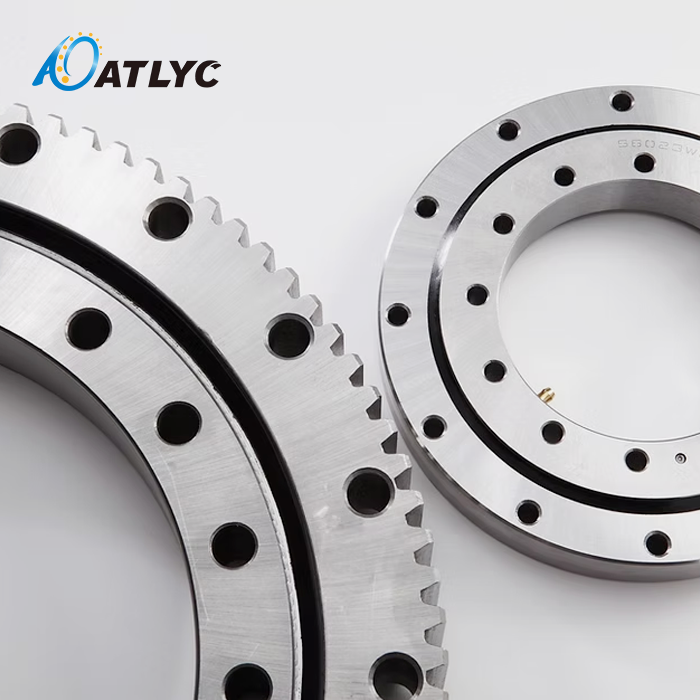
Slew bearing services show the advanced engineering needed for large-diameter rotating tasks in wind turbines, cranes, and loaders. Lifecycle management, precision cutting, and predictive maintenance are some of the services that make these high-value assets last longer. Professional remanufacturing cuts lead times from 30 to 50 weeks for new production to 2 to 6 weeks and capital costs by 40 to 60% compared to replacement costs. This is especially helpful for old equipment where the original specifications aren't available in current catalogs.

Conclusion
For Bearing Selection to work well, you need to carefully consider things like load factors, material compatibility, the benefits of each bearing type, fitting accuracy, and how well the bearing fits into its surroundings. When engineers don't pay attention to these important factors, their equipment breaks down early, has unplanned downtime, and is less reliable. In addition to steady-state estimates, load analysis must take into account changing situations and shock factors. The choice of material and lubrication should be based on the temperature range and the amount of contamination that will be present. When choosing a bearing type, you have to balance the load capacity with the speed needs and the alignment tolerance. Precision in installation stops stress from building up and misalignment damage. Environmental adaptation takes into account things like high temperatures, toxic environments, and the needs of a specific application. Procurement workers and design engineers can improve bearing performance, extend service intervals, and lower the total cost of ownership across a wide range of industrial applications by carefully addressing these five factors during the specification phase.
FAQ
What determines bearing internal clearance requirements?
The internal clearance number (C2, C3, C4) shows how much radial room there is between the raceways and the rolling elements before they are mounted. The C3 clearance is good for regular uses where the temperature stays below 80°C. The C4 gap allows for thermal expansion in hot places, which stops bearing pressure as parts expand during operation. When you choose C3 clearance for applications that go above 100°C, the bearing gets too tight, which speeds up wear and could cause seizure. On the other hand, using C4 in normal temperature environments causes too much internal play, which causes vibrations and makes load distribution less effective.
How do sealed bearings compare to open designs for maintenance?
Sealed bearings have shields or contact seals that keep out contaminants but don't let the bearings re-lubricate, so they work as parts that are always oiled. Open bearings let you add grease on a regular basis and make inspections easier, but they let outside contaminants get into the internal parts. Sealed designs require less upkeep work and keep out dust and water, while open designs work best in clean areas where relubrication stretches service life past the time when sealed bearings need to be replaced. When choosing between configurations, a total cost study should look at how hard it is to do upkeep, how polluted the environment is, and how much it will cost to replace.
Partner with ATLYC for Precision Bearing Solutions
ATLYC helps makers of cars and heavy machinery around the world by providing Bearing Selection knowledge backed by ISO 9001 and IATF 16949 certifications. Our engineering team offers technical support by matching bearing specifications to your exact application needs. They do this by looking at load conditions, environmental factors, and operational parameters to help you choose the best parts. We make high-precision bearings that meet international quality standards at prices that are competitive and with lead times that you can count on. We have 120 skilled workers and six specialized production workshops. Get in touch with our Bearing Selection experts at auto@lyautobearing.com to talk about your project needs and find out how working with an experienced bearing maker can make your equipment more reliable and lower your total cost of ownership.
References
1. Harris, T.A. & Kotzalas, M.N. (2006). Rolling Bearing Analysis: Essential Concepts of Bearing Technology. CRC Press, Boca Raton, Florida.
2. Schaeffler Technologies AG & Co. (2019). Rolling Bearings: Catalogue HR 1. Schaeffler Technologies, Herzogenaurach, Germany.
3. International Organization for Standardization. (2014). ISO 492:2014 - Rolling Bearings: Radial Bearings - Geometrical Product Specifications and Tolerance Values. ISO, Geneva, Switzerland.
4. Budynas, R.G. & Nisbett, J.K. (2020). Shigley's Mechanical Engineering Design, 11th Edition. McGraw-Hill Education, New York.
5. SKF Group. (2018). SKF Bearing Installation Handbook. SKF Group, Gothenburg, Sweden.
6. American Bearing Manufacturers Association. (2017). Load Ratings and Fatigue Life for Ball Bearings: ABMA Standard 9-1990 (R2017). ABMA, Washington, DC.
Learn about our latest products and discounts through SMS or email