- English
- French
- German
- Portuguese
- Spanish
- Russian
- Japanese
- Korean
- Arabic
- Greek
- German
- Turkish
- Italian
- Danish
- Romanian
- Indonesian
- Czech
- Afrikaans
- Swedish
- Polish
- Basque
- Catalan
- Esperanto
- Hindi
- Lao
- Albanian
- Amharic
- Armenian
- Azerbaijani
- Belarusian
- Bengali
- Bosnian
- Bulgarian
- Cebuano
- Chichewa
- Corsican
- Croatian
- Dutch
- Estonian
- Filipino
- Finnish
- Frisian
- Galician
- Georgian
- Gujarati
- Haitian
- Hausa
- Hawaiian
- Hebrew
- Hmong
- Hungarian
- Icelandic
- Igbo
- Javanese
- Kannada
- Kazakh
- Khmer
- Kurdish
- Kyrgyz
- Latin
- Latvian
- Lithuanian
- Luxembou..
- Macedonian
- Malagasy
- Malay
- Malayalam
- Maltese
- Maori
- Marathi
- Mongolian
- Burmese
- Nepali
- Norwegian
- Pashto
- Persian
- Punjabi
- Serbian
- Sesotho
- Sinhala
- Slovak
- Slovenian
- Somali
- Samoan
- Scots Gaelic
- Shona
- Sindhi
- Sundanese
- Swahili
- Tajik
- Tamil
- Telugu
- Thai
- Ukrainian
- Urdu
- Uzbek
- Vietnamese
- Welsh
- Xhosa
- Yiddish
- Yoruba
- Zulu
Why Is RB11020 the Go-To Bearing for 110 mm Shaft Applications?
When your industrial equipment operates with 110 mm shafts, selecting the right bearing determines whether your production line runs flawlessly or faces costly downtime. The RB11020 has established itself as the preferred solution for mid-to-large manufacturers because it combines crossed-roller precision with multi-directional load capacity in a single compact unit. This bearing's unique inner and outer ring integrity, paired with an outer ring plug design, delivers exceptional rigidity and positioning accuracy that heavy industrial applications demand. From automotive assembly lines to precision machining centers, the RB11020 consistently outperforms conventional bearing arrangements while reducing installation complexity and operational costs.

Comprehensive Overview of RB11020 Bearing Specifications
When purchasing managers know about the technical side of crossed-roller bearings, they can make choices that meet production needs and quality standards.
Dimensional Precision and Design Architecture
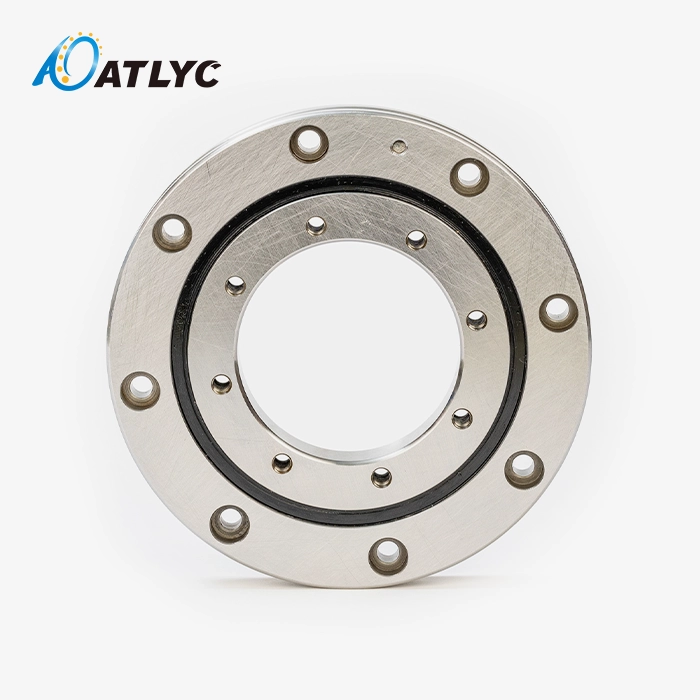
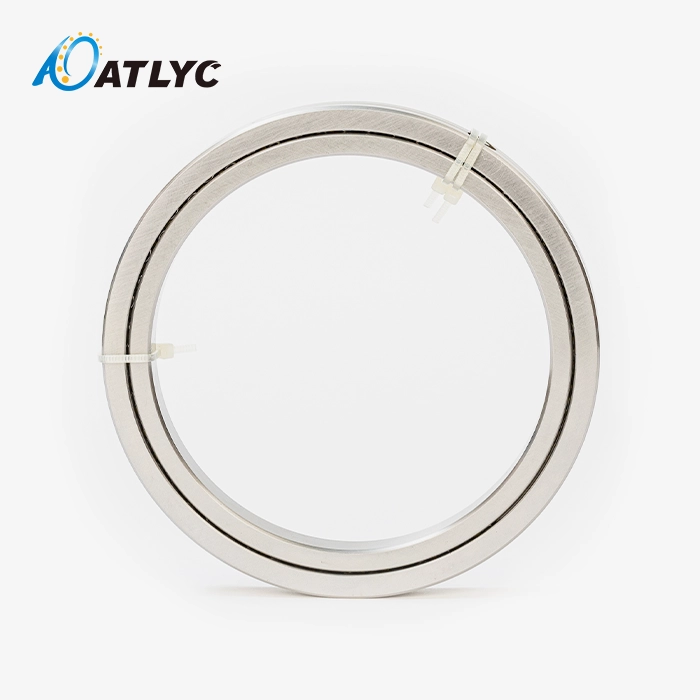
The RB11020 has a 110 mm hole diameter that was intentionally made for uses that need strong shaft support. This model fits perfectly in the RB series, which has inner diameters from 20 mm to 1100 mm and outer diameters from 70 mm to 1500 mm. It is best for medium- to heavy-duty industrial equipment. The crossed-roller setup places cylinder-shaped rollers at right angles inside precisely machined raceways. This creates a contact design that can handle radial, axial, and moment loads at the same time without the need for multiple bearing sets.
Material Composition and Load Capacity
By using Gcr15 and Gcr15SiMn bearing steels to make these precise parts, they will last even in harsh working conditions. Specialized heat treatments are used on these materials to make sure that the hardness is evenly distributed throughout the bearing structure. The RB11020 can handle large radial forces as well as axial thrust and moment loads that would normally need separate bearing arrangements. This is because the crossed-roller configuration distributes loads better than traditional ball bearings.
Operating Parameters and Performance Standards
This type of bearing works well in a wide range of temperatures that are common in industrial settings. Crossed-roller geometry has a low friction coefficient, which directly leads to less energy use and longer operational life. When you use precision grinding, you can get very accurate runout, which is what automatic production systems need for consistent placement. The RB11020 is available in a range of accuracy grades, from P6 to P4. It can be used in a wide range of situations, from standard workplace tools to high-precision measuring instruments.
| Technical Specification | RB11020 Value | Industrial Benefit |
|---|---|---|
| Bore Diameter | 110 mm | Ideal for use with mid-size shafts |
| Material Grade | Gcr15, Gcr15SiMn | Better resistance to wear and tear |
| Load Capacity | Multiple directions (axial, radial, and moment) | Gets rid of the need for multiple bearing sets |
| Accuracy Class | P6, P5, P4, P2 | Works for both normal and ultra-precision tasks |
| Friction Coefficient | Low | Cut down on energy use and heat production |
Because of these features, the bearing works especially well in situations where there isn't enough room to put multiple bearing units, but strong load conditions require top performance.
RB11020 vs. Alternative Bearings – Making the Right Choice
When comparing bearing choices, you need to look at how the different types handle different application problems and operational needs.
Performance Comparison with Standard Bearing Types
Deep groove ball bearings and tapered roller bearings normally need to be paired up in order to handle the total load that a single RB11020 can handle on its own. When looking at different options, keep in mind that standard bearing arrangements take up a lot more axial space and make installation more difficult because they require more precise alignment. The crossed-roller design combines load handling into a thinner profile. This makes equipment housings more compact and makes maintenance easier.
Series Variations and Model Selection
Within the RB family, models such as RB11019 and RB11022 have slightly different dimensions for shaft sizes that are close to each other. For 110 mm uses, the RB11020 is the best choice because it strikes the perfect mix between load capacity and small size. Choosing the right model makes sure that the tolerances for fit are correct and extends the life of the bearings by preventing the buildup of too much stress that happens when the wrong size is forced into an application.
Brand Quality Considerations
Different companies around the world, like NSK, SKF, Timken, and FAG, make crossed-roller bearings with different levels of quality, prices, and delivery times. Established companies like ATLYC have been making bearings for 15 years and have ISO 9001 and IATF 16949 certifications that make sure the quality stays the same throughout production runs. When looking at different suppliers, make sure to check the validity of their certifications and their ability to produce goods so that you can be sure of a reliable supply chain and access to expert help.
Knowing these differences helps procurement teams find reliable replacements when main stock options aren't available, which keeps production going without lowering the standards for equipment performance.
Procurement Insights: How to Buy RB11020 Bearing with Confidence
To get reliable bearing sources, you need to build smart relationships with suppliers and carefully evaluate your procurement partners.
Supplier Verification and Qualification
Authorized sellers and OEM partners make it possible to track down and authenticate products, which lowers the risk of fakes. When you start working with RB11020 makers, make sure you get proof of their quality management certifications and the production facilities' abilities. ATLYC has grown from one workshop to six specialized facilities, which shows that it has the manufacturing scale to handle consistent large orders while keeping precision standards high across all batches.
Pricing Structures and Volume Economics
When you buy in bulk, especially when you make long-term agreements for supplies, unit costs go down by a lot. Volume discounts usually start at orders of 100 units or more and go up gradually as commitments get bigger. Procurement managers who are watching their budgets should look at the total cost of ownership instead of just the original purchase price. This is because better bearing quality means less upkeep and longer replacement intervals.
Global Logistics and Support Services
Buying bearings internationally means coordinating shipping times, customs paperwork, and technical help across multiple time zones. Suppliers with a lot of experience who do business in South Korea, the US, Germany, Russia, Iran, and Turkey know the rules for sending and how to make sure packages get delivered on time in each area. Comprehensive guarantee terms and expert support after the sale add value beyond the initial transaction by helping to optimize equipment and fix problems throughout the operating life of the bearing.
These buying factors have a direct effect on how reliable production is and how well costs are managed. This makes choosing a seller just as important as meeting technical specifications.
Installation and Maintenance Guide for RB11020 Bearings
Proper handling procedures improve the performance of bearings and keep them from breaking down too soon in harsh industrial settings.
Installation Best Practices
Before you start installing, make sure the 110 mm shaft and housing hole are completely clean to get rid of any debris that could affect how well the bearing works. The RB11020's integral ring design makes installation easier than with separable bearing types, but you still need the right mounting tools. Make sure the mounting force is spread out properly around the bearing's diameter. Never put force through the rolling elements to protect the raceways. The outer ring plug system makes it easier to place things correctly and makes sure that the preload settings are right so that the stiffness features are at their best.
Lubrication Requirements and Schedules
Crossed-roller bearings need to be properly oiled to reduce friction and stop wear from happening too quickly. Choose lubricants based on the temperature ranges and speeds that will be used in your application. How often you need to re-grease depends on how the machine is being used. Depending on the load and the environment, the usual plan is every 500 to 2000 hours of use. The plug shape in the outer ring makes it easy to access places for lubrication maintenance without taking the whole bearing apart.
Troubleshooting Common Operational Issues
When something is working, strange noises usually mean that the bearing system isn't well oiled or is dirty. Too much preload, bad alignment, or not enough cooling can all cause operating temperatures to rise. Weird sound patterns can mean that wear is getting worse or that there were mistakes during installation that need to be fixed right away. Monitoring these performance indicators on a regular basis allows for preventative maintenance that stops catastrophic failures and increases the bearing service life of important production equipment.
Implementing these maintenance protocols ensures that your investment in precision bearings delivers maximum return through extended operational life and consistent performance.
Why RB11020 Remains the Preferred Choice in B2B Industrial Applications
This crossed-roller bearing design is still chosen by industrial makers because it solves several practical problems in a single part.
Versatility Across Operating Conditions
The RB11020 keeps its performance stable in a wide range of weather conditions and load conditions that are hard for other bearing types. This bearing can work in a wide range of manufacturing environments, from heavy industrial machinery that is always under load to assembly lines for cars that need to be cycled quickly. The crossed-roller design spreads stress out widely, which stops localized fatigue that shortens bearing life in situations where practical demands change.
OEM Integration and Compatibility
Major equipment makers use crossed-roller bearings in robotic joints, machining center rotary tables, and manipulator assemblies where precise positioning has a direct effect on the quality of the product. The small size makes it possible to fit into spaces that are limited, and the stiffness is important for keeping the positional accuracy during operation. Pharmaceutical companies, IC manufacturing plants, and companies that make precision measuring instruments all use this bearing technology in situations where accuracy and smooth operation are essential.
Total Cost Analysis and Long-Term Value
Precision crossed-roller bearings have higher initial unit costs than other types of bearings, but when you look at the total cost of ownership, you can see that they are much better in many ways. Getting rid of various bearing arrangements cuts down on the number of parts needed, makes upkeep easier, and cuts down on the amount of work needed to install them. Longer service lives and lower failure rates cut down on production stops and the costs of emergency replacements. Over thousands of hours of use, low friction ratios lead to energy efficiency gains that help lower running costs.
| Cost Factor | RB11020 Impact | Conventional Bearing Configuration |
|---|---|---|
| Initial Component Cost | More per unit | Less expensive for each individual |
| Installation Complexity | Installation of a single unit | Multiple bearings need to be aligned. |
| Maintenance Frequency | Longer periods between services | Inspection and replacement more often |
| Energy Consumption | Less loss of friction | There is more operational friction |
| Downtime Risk | Not as many failures | Failure is more likely when there is more complexity. |
These factors combine to position the RB11020 as a strategic investment rather than a simple purchase, especially for manufacturers who put a high value on operational efficiency and production reliability.

Conclusion
Because of its cutting-edge technology and proven track record in the business world, the RB11020 has become known as the best bearing for 110 mm shaft uses. Its crossed-roller design gives it the ability to carry loads in more than one direction, very accurate positioning, and high operational efficiency that other types of bearing arrangements can't match in the same amount of space. This bearing gives modern automatic production the reliable base it needs when it comes from qualified makers with ISO 9001 and IATF 16949 certifications. The RB11020 is a valuable product because it lowers the cost of upkeep, increases operational life, and supports production continuity in a wide range of industrial applications. This is why strategic procurement choices that focus on total cost of ownership are more important than initial component price.
FAQ
Understanding common concerns helps procurement teams and engineering staff maximize bearing performance in their specific applications.
What distinguishes RB11020 from RB11022 bearings?
The main change is in the physical dimensions; the RB11022 is made for slightly bigger shaft uses. Both use the same crossed-roller technology and material make-up, but the right model to choose depends on the shaft diameter compatibility. When you install the wrong size of RB11020, it leads to bad fit tolerances that lower the load capacity and speed up the wear process.
How can buyers verify genuine RB11020 products?
Ask sellers for certification paperwork like material test reports, measurement inspection records, and quality management system certificates. Manufacturers with a good reputation give full traceability information and welcome site checks. When tested against published specs, counterfeit bearings often don't have the right paperwork and don't match up in terms of size accuracy.
When does the RB11020 require maintenance intervention?
During regular machine checks, keep an eye on the temperature, noise level, and patterns of shaking. Temperature rises of more than 10°C above the baseline, new noise frequencies, or changes in the amplitude of vibrations are all signs of problems that need to be fixed right away. Regular relubrication based on operating hours stops wear before it happens, and yearly inspections of the dimensions find damage before it breaks.
Partner with ATLYC for Premium RB11020 Bearing Supply
ATLYC makes precision-engineered crossed-roller bearings and has been doing so for 15 years. They also offer full quality assurance. Our ISO 9001 and IATF 16949-certified factories make RB11020 bearings that meet the highest international standards. These bearings are used by automakers, original equipment manufacturers (OEMs), and global wholesalers all over the United States and the world. With six specialized production workshops and 120 skilled team members, we can consistently meet the needs of both small prototype orders and large-volume orders at prices that are competitive. Get in touch with our technical sales team at auto@lyautobearing.com to talk about your 110 mm shaft bearing needs, get full specs, or get price quotes from a reliable RB11020 source who wants to help your business succeed.
References
1. Harris, T.A., & Kotzalas, M.N. (2006). Essential Concepts of Bearing Technology: Rolling Bearing Analysis. CRC Press, Boca Raton.
2. Witte, D.C. (2012). "Operating Torque of Tapered Roller Bearings." Journal of Tribology, Vol. 134, Issue 3, pp. 031101-031109.
3. Budynas, R.G., & Nisbett, J.K. (2015). Shigley's Mechanical Engineering Design, 10th Edition. McGraw-Hill Education, New York.
4. ISO 492:2014. Rolling Bearings – Radial Bearings – Dimensions and Tolerances. International Organization for Standardization, Geneva.
5. Khonsari, M.M., & Booser, E.R. (2017). Applied Tribology: Bearing Design and Lubrication, 3rd Edition. Wiley, Hoboken.
6. Palmgren, A., & Lundberg, G. (1947). "Dynamic Capacity of Rolling Bearings." Acta Polytechnica Mechanical Engineering Series, Vol. 1, No. 3, pp. 1-52.
Learn about our latest products and discounts through SMS or email