- English
- French
- German
- Portuguese
- Spanish
- Russian
- Japanese
- Korean
- Arabic
- Greek
- German
- Turkish
- Italian
- Danish
- Romanian
- Indonesian
- Czech
- Afrikaans
- Swedish
- Polish
- Basque
- Catalan
- Esperanto
- Hindi
- Lao
- Albanian
- Amharic
- Armenian
- Azerbaijani
- Belarusian
- Bengali
- Bosnian
- Bulgarian
- Cebuano
- Chichewa
- Corsican
- Croatian
- Dutch
- Estonian
- Filipino
- Finnish
- Frisian
- Galician
- Georgian
- Gujarati
- Haitian
- Hausa
- Hawaiian
- Hebrew
- Hmong
- Hungarian
- Icelandic
- Igbo
- Javanese
- Kannada
- Kazakh
- Khmer
- Kurdish
- Kyrgyz
- Latin
- Latvian
- Lithuanian
- Luxembou..
- Macedonian
- Malagasy
- Malay
- Malayalam
- Maltese
- Maori
- Marathi
- Mongolian
- Burmese
- Nepali
- Norwegian
- Pashto
- Persian
- Punjabi
- Serbian
- Sesotho
- Sinhala
- Slovak
- Slovenian
- Somali
- Samoan
- Scots Gaelic
- Shona
- Sindhi
- Sundanese
- Swahili
- Tajik
- Tamil
- Telugu
- Thai
- Ukrainian
- Urdu
- Uzbek
- Vietnamese
- Welsh
- Xhosa
- Yiddish
- Yoruba
- Zulu
Can a Wind Turbine Spindle Bearing Reduce Downtime?
A wind turbine spindle bearing may minimise downtime, but only if it is designed, installed, greased, and checked according to the real operating circumstances. Critical to preventing unexpected stoppage due to wear and tear, overheating, contaminant damage, and misalignments are wind turbine spindle bearings. It can’t be done because the brakes, the gearbox, and the generator might all fail. The main bearing takes the significant stresses from the rotor to the powertrain. If it breaks, you'll need a crane and a lengthy break. These chapters guide you on how to choose the appropriate bearings, how to utilise them, and how to evaluate a provider.Different sections for persons in the US who purchase turbine parts, operate turbines, or develop turbines. Each section is based on a question customers ask before they purchase

What Is a Wind Turbine Spindle Bearing?
Role in the Drivetrain
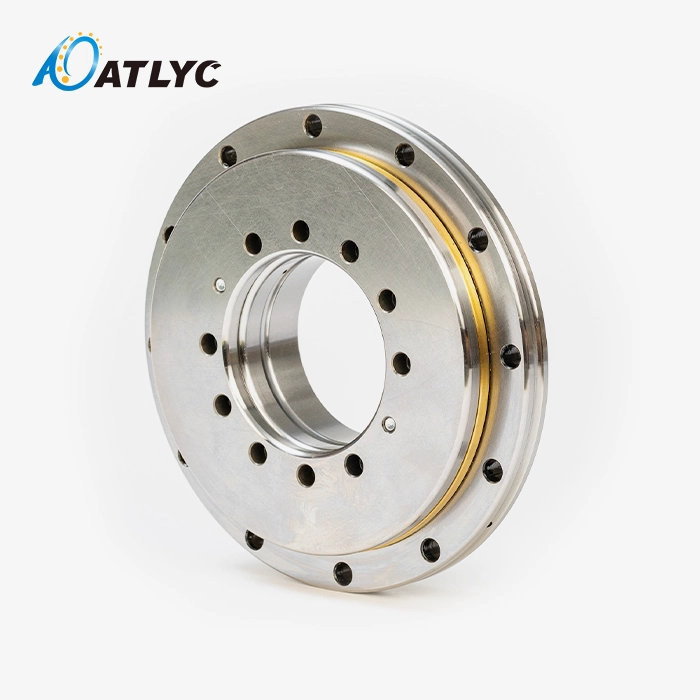
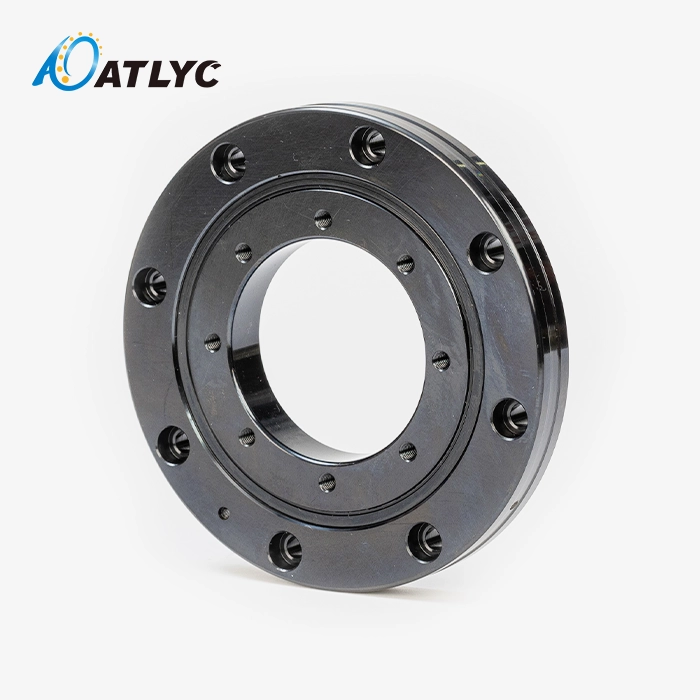
The spindle bearing of a wind turbine, which is also called the main shaft, is placed between the main shaft and the nacelle frame. The blades create loads including radial force, axial thrust, and overturning moment. It also guarantees smooth and accurate shaft rotation. The work environment is not excellent. The cargoes are hefty, and they move about in the wind. Seals may be damaged by dust, water, or salt spray. Fixing problems offshore or in distant locations is more expensive and time-consuming. So be careful to check the application drawing and OEM specifications before you purchase it. The spindle might be another one of the sections of the drivetrain as well.
Double-Row Tapered Roller Bearings
The double row tapered roller bearing is composed of a separable cone and cup. It is fitted with tapered rollers and can accommodate radial and axial forces as well as load. Since such is the case, it works excellently for medium to big onshore turbines that are 3MW to 8MW. Enables easier installation and maintenance too, since technicians can easily change out the sections they require without pulling the entire bearing apart. Less leisure and work time = less money spent. When correctly placed and preloaded, this kind of wind turbine spindle bearing will offer rigid, solid support for the shaft. If the shaft wanders around too much, the rollers wear down quicker because it puts unequal stress on them.
Spherical Roller Bearings
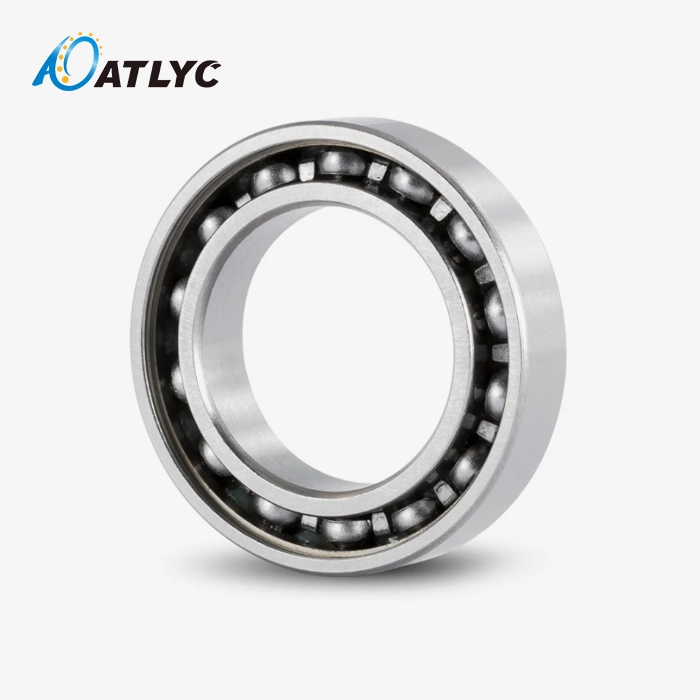
It has two rows of spherical rollers and can handle being out of alignment by up to 1.5°. It's also called a self-aligning roller bearing. That helps if the installation isn't quite right or if the shaft bends when it's full. Large offshore wind turbines of 10MW or more often use this design because it can handle shocks. The edge stress goes down when the rollers are self-aligned. When the edge stress goes down, so does fatigue. It has less axial stiffness, so make sure that the load is going in the same direction as how your drivetrain is set up. Our engineers compare both designs to your load data because a bad match in a wind turbine spindle bearing increases the likelihood of an unexpected stop.
How a Wind Turbine Spindle Bearing Reduces Downtime
Design Features That Limit Unplanned Stops
Things will last longer and break down less often if the bearing stays healthy. GCr15SiMn or 18CrNiMo7-6 are two of the best alloy steels. They are vacuum-carburized and quenched-tempered to make the core tough and the surface hard (HRC 60–64). The hard surface doesn't wear down quickly, and the core can handle being hit. Seals with two lips or a labyrinth shape that have an IP65 or IP66 rating keep out dust, water, and salt spray. On some models, there are W33-marked channels that let oil or grease get to the joint. These parts of a wind turbine spindle bearing cooperate to lessen friction and wear, which means that maintenance visits aren't needed as often.
Common Causes of Failure
Shock, misalignment, bad fittings, too little or too much clearance, contamination, corrosion, electrical current damage, and bad installation are just a few of the things that can cause something to fail. You also need to store things. Before it is put to use, a bearing can get false brinelling, fretting, or corrosion while it is being moved. A type of failure called white etching cracks has been looked at in great detail in wind gearbox bearings. Users have had to pay more to fix and use the crane because of these cracks. Inspectors can use ISO 15243 to give this kind of damage a standard name. When they happen, tell the difference between problems with the bearings and those with the gearbox, shaft, brakes, or generator. You should check something right away if it's shaking more, making strange noises, has discolored grease or metal pieces, or is getting hotter.
Monitoring and Performance Metrics
Watching them turns the signs into work that needs to be done, even if they don't mean anything. Noise, vibration, temperature, torque, and the state of the lubricant should all be watched. After that, compare these readings to a starting point that was set during commissioning. Long-term trends that go up cost less than ones that stop all of a sudden. When teams buy things, they shouldn't just look at how much the catalog weighs. It is helpful to know the static safety factor, operating temperature, relubrication interval, mean time between failures, and maintenance cost. The estimated L10 life is how long 90% of identical bearings last or longer under ISO 281 conditions. With these figures, the objective of a wind turbine spindle bearing is to lower the overall risk of a breakdown, not to get the lowest price per unit.
Selecting a Wind Turbine Spindle Bearing by Type, Size, and Material
Start With the Application
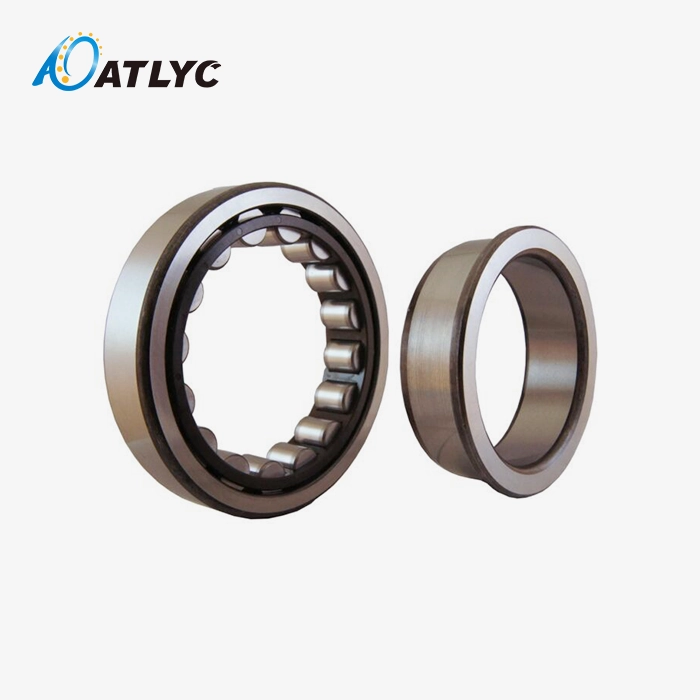
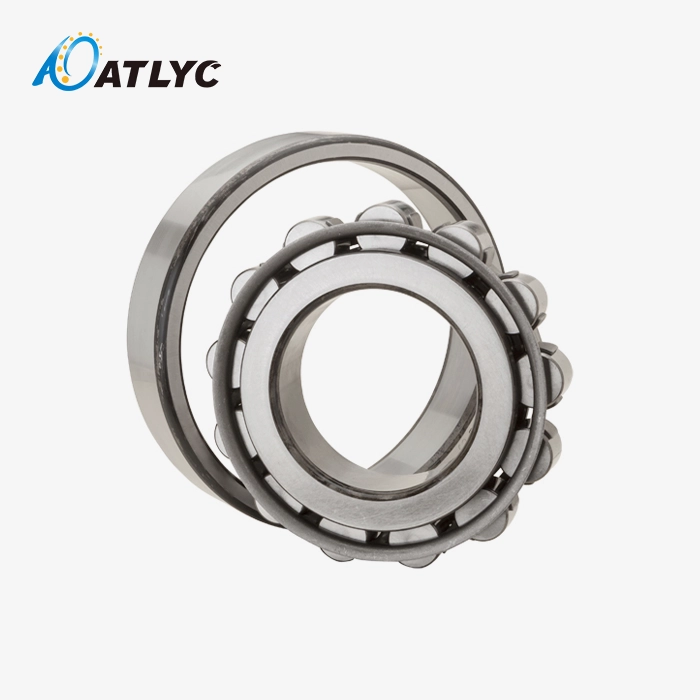
The choice isn't based on a favorite product, but on the whole application. Check the speed, the radial and axial loads, the moment loads, the temperature, the contamination, how easy it is to service, and the number of years you want it to last. Then put two or more designs next to each other. Some spherical roller bearings can handle heavy radial loads without getting out of alignment. Bearings that are tapered keep the shaft in place along its axis and carry all of its weight. High-capacity cylindrical roller bearings can be used to switch out old OEM parts in projects that repower 1.5MW to 2MW fleets. They can fit into the housing that is already there and make it stronger. You can judge sealed, open, steel, and hybrid ceramic options by their cost over the product's entire life, the environment, and the way the electricity works. Wind turbine spindle bearing failure could occur even if everything appears to be in order on paper.
Typical Size Ranges
Size comes after the rating of the turbine. You should not only make sure that the bore fits the shaft, but also check the outside diameter, width, shoulder dimensions, mounting space, speed, load ratings, and emergency conditions. The table below displays typical wind turbine spindle bearing ranges.
| Application | Turbine rating | Outer diameter |
|---|---|---|
| Onshore | 1.5MW–8MW | 800–1800 mm |
| Offshore | 10MW and above | 1800–3000 mm |
You can choose from sizes that are 400 mm to 1800 mm across the inside and 200 mm to 800 mm wide. Sizes can be made to order to meet specific load and space requirements for wind farms that are high up or very cold. We'll make sure it fits before we give you a quote if you send us a drawing.
Materials, Seals, and Cages
If something spins slowly and heavily, the bearing's life depends on what it's made of and how well it was made. We vacuum-carburize and quench-trench alloy steels like GCr15SiMn and 18CrNiMo7-6 to make the core strong (against wear and impact) and the surface tough (HRC 60–64). Strong brass or polyamide cages keep the rollers in place even when the load is heavy and the speed is slow. This stops vibration and wear. It's also important to have a good surface finish and protect against corrosion. The procurement specifications should also include tolerances, clearance class, traceability, inspection method, and dimensional stability to ensure that the second batch of each Wind turbine spindle bearing matches the first. It's also easier to plan for spare parts when batches are consistent.
Lubrication, Installation, and Maintenance for Longer Service Life
Choosing a Lubrication Method
How well you oil a bearing can often tell you how long it will last. You can pick based on temperature, load, speed, ease of access, and the chance of contamination. All of these will work: grease, oil circulation, automatic lubrication, and centralized systems. The lubricant needs to stay in a film while the main bearing moves back and forth. Most of the time, lithium-complex grease and extreme-pressure additives are used for automatic greasing. Too much or too little grease can make things hot, wear out quickly, and become tired. The protection can also be lost if you mix products that don't work well with each other. You shouldn't just use the calendar to figure out how often to re-grease; you should also check the temperature and vibration.
Installation Steps That Protect Bearing Life
On the day of installation, a lot of things go wrong right away. Make sure the parts are clean and that the shaft and housing fit together well. Also, make sure you only use approved heating or hydraulic tools. The clearance or preload needs to be just right. Too little clearance makes things hotter, and too much clearance lets them move. Before you mount it, make sure to protect the bearing. Don't move it around too much and keep it dry. False brinelling and fretting can start before the turbine even turns on. When the job is done, write down how tight the screws were and how straight they were. These notes will be used to guide subsequent inspections and will assist you in determining whether a changed reading was brought on by a loose part or the Wind turbine spindle bearing.
Inspection Routines and Record Keeping
With a simple routine, problems are found quickly. Every time you go there, check the temperature, noise, vibration, lubricant level, seal integrity, alignment, and fastener torque. Then, look at the end result and compare it to where you started. There is wear when the grease has turned dark or has metal bits in it. No need to wait, but you should act on the new readings before the next outage window. Things should be kept track of by serial number so that if something goes wrong in the field, you can trace it back to a production batch, a lubricant, or an installation team. After a few years, these records will show you how often your bearings really need to be serviced, so you can get new ones before they break.
Choosing a Wind Turbine Spindle Bearing Supplier
What to Ask a Bearing Supplier
A lot of people all over the world compare things like catalog bearings, OEM-designated replacements, custom designs, and sealed assemblies. Make sure you check out their lead times, quality systems, traceability, batch consistency, production capacity, and customer service after the sale. Get the records below if you need big wind bearings.
| Inspection item | Records to request | Purpose |
|---|---|---|
| Ultrasonic and magnetic particle testing | Test reports | Find subsurface voids and surface micro-cracks |
| Dimensional checks | Coordinate measuring machine data on runout, bore, and tolerance | Confirm precise interference fits |
| Metallurgical analysis | Retained austenite and case-depth hardness | Resist shock loads |
| Noise and vibration test | Baseline vibration signatures | Support condition monitoring |
| Material certificates | EN 10204 3.1 or 3.2 | Prove traceability |
You can be sure you'll have extra rings when you need them if you order them early.
A Five-Step Decision Path
Follow these steps to find out if getting a new bearing will help you get back to work faster. First, check that the seals, lubricant, anti-corrosion protection, and temperature range are all right for the job. The next step is to figure out the normal and peak loads, taking into account things like shocks, emergency stops, and misalignment. Next, choose the design that works best for you based on how you plan to maintain it: sealed, open, re-lubricatable, or monitored. Before the whole system goes live, test samples or a pilot unit and compare them to the old part in terms of noise, temperature, vibration, and lubricant condition. You should also compare how often the new part needs to be serviced. Last but not least, make sure there are approved part numbers, emergency delivery terms, technical records, and safety stock. Check in on your suppliers once a year to see how they're doing. When you follow this order, your guess turns into a well-thought-out choice.
How ATLYC Supports Wind Turbine Projects
Our company name is Luoyang Auto Bearing Co., Ltd. is a company that started out in 2010 with just one fully automated deep groove ball bearing workshop. It grew over 15 years to have six workshops, 120 skilled workers, and six main types of bearings. The company has clients in South Korea, the US, Germany, Russia, Iran, and Turkey. It also works with ISO 9001 and IATF 16949. Our team looks at your drawings, samples, operating data, and maintenance history before recommending a design for each Wind Turbine Spindle Bearing project. We can make sizes that work perfectly for some sites and help with shipping and setup. We will keep selling spare parts to OEMs and US distributors for a long time.

Conclusion
Downtime can be decreased when a wind turbine spindle bearing is designed with the turbine's actual loads, speed, temperature, contamination, and alignment. The article said that the bearing handles loads from the rotor that are radial, axial, and overturning. It also said that spherical roller and double-row tapered roller designs can be used for different turbine sizes. In the end, it was shown that the grade of steel, heat treatment, seals, and cages all have an effect on stress and wear resistance. Most of the time, parts break because they are overloaded, misaligned, not oiled properly, contaminated, or installed incorrectly. This is why the right lubricant, the right fit, and keeping an eye on the condition are just as important as the part itself. It's better for buyers to compare more than just unit price. Calculated life, inspection records, traceability, pilot test results, and the total cost of ownership are some of the things they should look at. It is less likely that service will go down and costs less when these checks are used together.
FAQ
How long does a wind turbine spindle bearing last?
What determines how long something lasts is its duty cycle, load, speed, lubrication, contamination, alignment, temperature, and how well it was put together. The L10 calculation can help, but before you decide to replace something, you should compare it to actual operating conditions and field data.
How do tapered and spherical roller designs differ?
Tapered roller bearings with two rows are very stiff and can handle loads in both directions. Roller bearings that are spherical can self-align by up to 1.5° and can handle shock well, but they are not as stiff along the axis as designs that are tapered.
Can I replace a main bearing uptower?
Yes, but you need certain tools to do it. There are more split-bearing solutions being used because they save money on downtime costs since they don't need to hire a heavy crane or take out the rotor.
What lead time should I plan for custom rings?
To make custom rings, it takes between 6 and 12 months to make them because the big rings have to be forged and ground very carefully. Plan ahead and know how many spare parts you'll need. Also, make sure you understand the delivery terms before you set a date.
Request a Wind Turbine Spindle Bearing Quotation from ATLYC
You can email ATLYC at auto@lyautobearing.com with your drawings, load data, quantity, and where the bearings need to go. They will then look at what you need. Please let us know if you need an OEM replacement, a prototype, or an order for US customers. With ISO 9001 and IATF 16949 certifications, six workshops, and 120 skilled workers, we support custom sizes and long-term supply as a Wind Turbine Spindle Bearing Manufacturer. Visit https://aotezhoucheng.aixdb.cn/ to learn more about the product.
References
1. Wind Energy Science, 2020 – Hart et al., "A review of wind turbine main-bearings: design, operation, modelling, damage mechanisms and fault detection"
2. National Renewable Energy Laboratory (NREL), 2013 – Sheng, "Report on Wind Turbine Subsystem Reliability: A Survey of Various Databases"
3. ISO 15243, 2017 – Rolling Bearings: Damage and Failure, Terms, Characteristics and Causes
4. IEC 61400-1, 2019 – Wind Energy Generation Systems, Part 1: Design Requirements
5. Materials Science and Technology, 2016 – Evans, "An updated review: white etching cracks (WECs) and axial cracks in wind turbine gearbox bearings"
6. IEC 61400-4, 2012 – Wind Turbines, Part 4: Design Requirements for Wind Turbine Gearboxes
Learn about our latest products and discounts through SMS or email