- English
- French
- German
- Portuguese
- Spanish
- Russian
- Japanese
- Korean
- Arabic
- Greek
- German
- Turkish
- Italian
- Danish
- Romanian
- Indonesian
- Czech
- Afrikaans
- Swedish
- Polish
- Basque
- Catalan
- Esperanto
- Hindi
- Lao
- Albanian
- Amharic
- Armenian
- Azerbaijani
- Belarusian
- Bengali
- Bosnian
- Bulgarian
- Cebuano
- Chichewa
- Corsican
- Croatian
- Dutch
- Estonian
- Filipino
- Finnish
- Frisian
- Galician
- Georgian
- Gujarati
- Haitian
- Hausa
- Hawaiian
- Hebrew
- Hmong
- Hungarian
- Icelandic
- Igbo
- Javanese
- Kannada
- Kazakh
- Khmer
- Kurdish
- Kyrgyz
- Latin
- Latvian
- Lithuanian
- Luxembou..
- Macedonian
- Malagasy
- Malay
- Malayalam
- Maltese
- Maori
- Marathi
- Mongolian
- Burmese
- Nepali
- Norwegian
- Pashto
- Persian
- Punjabi
- Serbian
- Sesotho
- Sinhala
- Slovak
- Slovenian
- Somali
- Samoan
- Scots Gaelic
- Shona
- Sindhi
- Sundanese
- Swahili
- Tajik
- Tamil
- Telugu
- Thai
- Ukrainian
- Urdu
- Uzbek
- Vietnamese
- Welsh
- Xhosa
- Yiddish
- Yoruba
- Zulu
Can Cross Roller Bearing RE Series Improve Machine Stability?
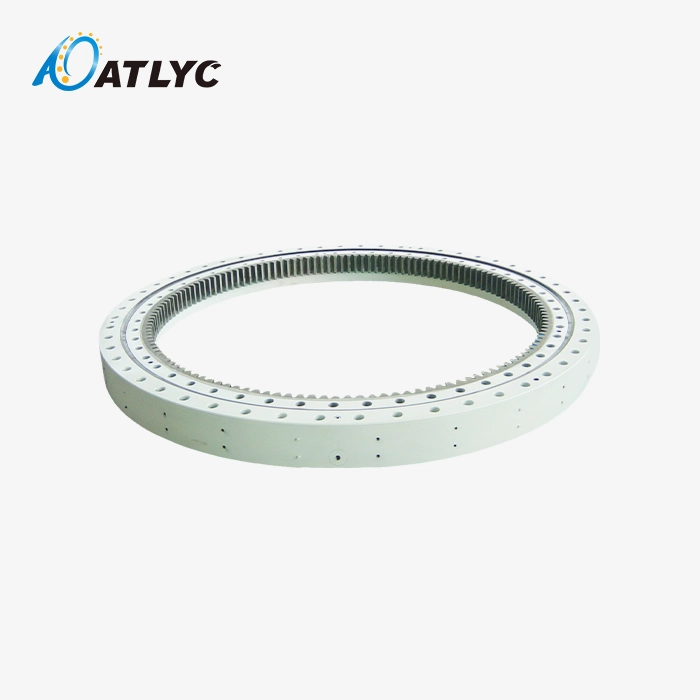
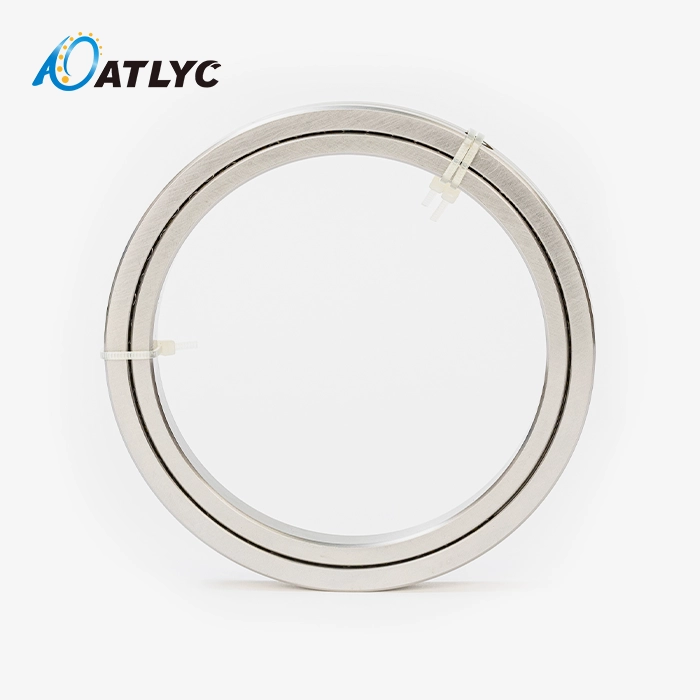
Stability of the machine has a direct effect on the accuracy of your work, the life of your tools, the Cross roller bearing RE series, and your bottom line. The Cross roller bearing RE line is a clear "yes" to this question. This carefully designed part has an outer ring that is integral and an inner ring that is split. This allows for very accurate rotation while handling radial, axial, and moment loads in a single small assembly. For OEMs and manufacturers who need consistent performance under a wide range of load conditions, the RE series provides measurable stability gains that lead to less downtime and longer machine service lives.
Understanding the Cross Roller Bearing RE Series
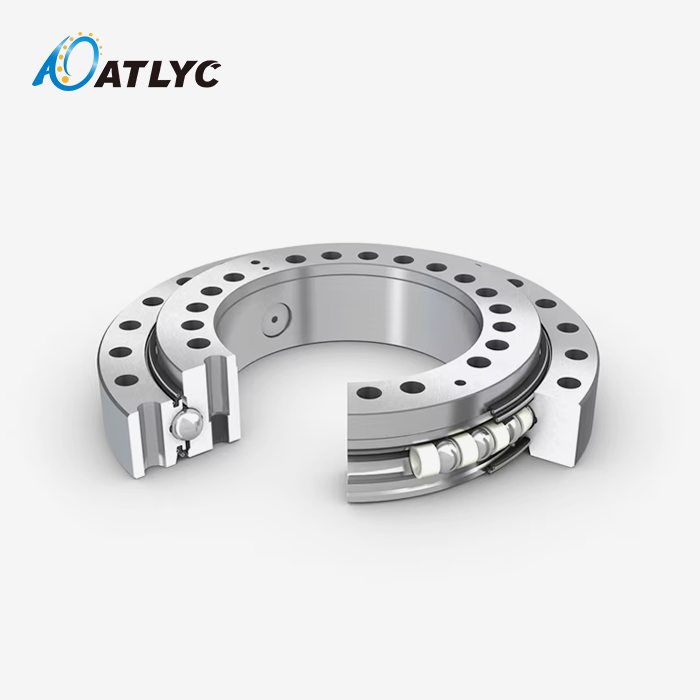
The engineering behind the Cross roller bearing RE series centers on a fundamental design innovation: cylindrical rollers positioned orthogonally at 90-degree intervals within precision V-groove raceways. This crossed arrangement creates multiple load contact points, distributing forces across the bearing structure rather than concentrating stress on limited areas.
Design Architecture and Core Specifications
When compared to split-ring options, the integral outer ring design is more rigid. This solid housing gets rid of any play or imbalance problems that can happen with regular bearing systems and makes them less stable. Also, the two-piece inner ring makes installation easier and makes it easier to do repairs without taking the whole machine apart. There are a variety of sizes available to meet the needs of different applications. The inner diameters range from 20mm to 1100mm, the outer diameters from 70mm to 1500mm, and the widths from 12mm to 110mm. This wide range of sizes lets engineers choose precisely sized parts that make the best use of the room while still meeting load capacity requirements.
Material Composition and Manufacturing Standards
The choice of material is very important for how well a bearing works. The RE line uses Gcr15 and Gcr15SiMn steels, which are both known for their high resistance to wear and their ability to keep their hardness over time. These chromium-bearing steels keep their structural integrity even when the temperature changes and the load changes. This helps the bearing work well for a long time. The final stability performance depends on how precisely the parts are manufactured. Within the RE series, there are accuracy scores ranging from P6 to P2, with P2 being the most precise. This detailed specification for accuracy lets procurement teams weigh costs against the needs of the application. For example, they could choose P5 or P4 grades for standard precision machinery and save P2 specifications for very important uses like medical imaging systems or equipment used to make semiconductors. When two loads are applied at the same time, the crossed roller design creates lower friction coefficients than regular ball bearings. Roller spacers placed between neighbouring rollers keep metals from touching directly, which reduces friction and makes sure that the load is spread out evenly. This design feature immediately leads to smoother rotation, less heat production, Cross roller bearing RE series, and longer periods between maintenance.
Why the RE Series Outperforms Traditional Bearings in Machine Stability
Traditional bearing solutions often require multiple components to manage complex load scenarios. A typical assembly might combine thrust bearings for axial loads, radial bearings for perpendicular forces, and additional support structures for moment loads. This multi-bearing approach introduces cumulative tolerances, assembly complexity, and increased failure points.
Integrated Load Management Capabilities
The RE series combines these tasks into a single unit. When radial forces act on your machinery, a set of wheels that are placed at right angles to each other take on the load. At the same time, horizontal thrust is controlled by the perpendicular roller set. Moment loads, which are spinning forces that make regular bearings less stable, are spread out over both roller sets, which work together. This unified method gets rid of the tolerance stack-up that happens in systems with more than one bearing. In a standard assembly, adding one more bearing can cause a misalignment of several microns. When these small differences happen in many parts, they add up to big runout mistakes that show up as vibration, faster wear, and less accurate positioning. When compared to standard ball bearing assemblies, there are big changes in how well they work. When ball bearings touch raceways at single points, they create stress zones that speed up surface wear. The crossed roller design spreads loads across line contact areas. This lowers peak stress levels by making the forces work on a larger surface area. This basic change in contact geometry makes operational life much longer; independent testing shows improvements in service life of over 40% under the same load conditions.
Rigidity and Deflection Characteristics
Machine tool builders and automation equipment manufacturers recognize that bearing rigidity directly influences machining precision and repeatability. The RE series delivers exceptional rigidity ratios—the relationship between applied load and resulting deflection. This high rigidity characteristic maintains positioning accuracy under variable cutting forces in CNC applications or during rapid acceleration-deceleration cycles in robotic joints. The solid outer ring construction contributes substantially to this rigidity advantage. When the outer ring rotates—common in many machinery configurations—the integral design eliminates flex points that would exist in split-ring alternatives. This structural continuity maintains geometric precision throughout rotation, translating into superior runout accuracy that precision equipment demands. Vibration damping represents another stability factor where the RE series excels. The crossed roller arrangement with Cross roller bearing RE series precision spacing creates a mechanically balanced system that resists harmonic vibration generation. In contrast, ball bearing assemblies can develop resonant frequencies under certain speed ranges, creating vibration signatures that compromise surface finish quality in machining operations or positioning accuracy in measurement instruments.
Practical Applications and Benefits of Cross Roller Bearing RE Series
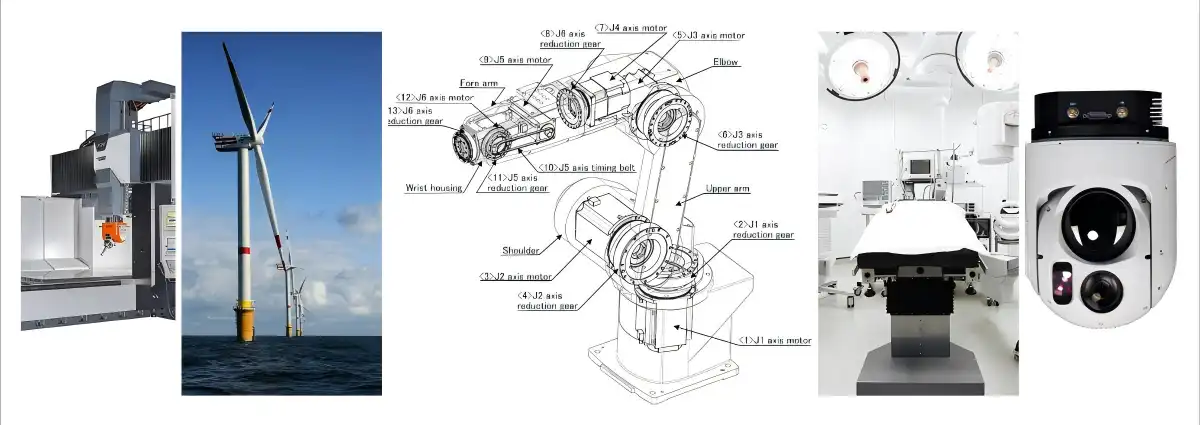
Industrial robot manufacturers specify cross roller bearings for joint assemblies where positioning accuracy directly impacts programming repeatability. A six-axis robotic arm might incorporate multiple RE series bearings at the elbow, wrist, and tool mount locations. The combined radial, axial, and moment load capacity enables compact joint designs without sacrificing rigidity, while the low friction coefficient reduces actuator power requirements and heat generation during continuous operation.
Precision Machining Centers and Rotary Tables
Machining centers utilize RE series bearings in rotary table assemblies where indexing accuracy determines part quality. A typical application involves mounting the workpiece fixture to the bearing's outer ring while the inner ring attaches to the machine base. This configuration leverages the integral outer ring's superior rotational accuracy to maintain positioning precision across thousands of indexing cycles. The stability benefits manifest in measurable quality improvements. Manufacturers report reducing positioning errors from ±15 arc-seconds with conventional bearing stacks to ±3 arc-seconds with RE series installations. This precision enhancement enables tighter tolerance machining without compensatory programming adjustments, reducing setup time while improving part consistency across production runs.
Maintenance Optimization and Service Life Extension
Proper maintenance practices maximize RE series performance and operational life. Lubrication monitoring represents the primary maintenance consideration, with relubrication intervals determined by operating speed, load conditions, and environmental factors. Standard industrial applications typically require lubrication assessment every 2000-3000 operating hours, though continuous high-speed operation or contaminated environments may necessitate more frequent attention. Vibration monitoring provides an early indication of potential issues before catastrophic failure occurs. Baseline vibration signatures established during commissioning serve as reference points for ongoing condition assessment. Deviation from baseline readings signals developing wear or contamination requiring investigation. This predictive approach enables scheduled maintenance during planned downtime rather than emergency repairs that halt production unexpectedly. Temperature monitoring complements vibration analysis for comprehensive condition assessment. Bearing operating temperatures should stabilize within predictable ranges under normal conditions. Sustained temperature increases indicate lubrication degradation, contamination ingress, or preload changes requiring corrective action. These monitoring practices, combined with the RE series' inherent durability, routinely deliver operational lives exceeding 30,000 hours in properly maintained installations.
Procurement Insights for the Cross Roller Bearing RE Series
Sourcing decisions significantly impact both procurement costs Cross roller bearing RE series and operational reliability. Reputable manufacturers maintain strict quality controls and provide certification documentation confirming material specifications, dimensional accuracy, and performance characteristics. This documentation proves essential for meeting ISO 9001 and IATF 16949 compliance requirements that automotive and aerospace applications mandate.
Supplier Evaluation Criteria
Quality certification represents the foundation of supplier assessment. Manufacturers holding ISO 9001 and IATF 16949 certifications demonstrate systematic quality management processes covering design, production, inspection, and traceability. These certifications assure that each bearing meets published specifications consistently across production lots. Technical support capabilities separate competent suppliers from merely transactional vendors. Complex applications often require engineering consultation regarding bearing selection, preload specifications, mounting procedures, and integration considerations. Suppliers offering application engineering support help optimize bearing selection, potentially identifying opportunities for cost reduction through right-sizing or suggesting alternative configurations that better match specific requirements. Lead time reliability influences production planning and inventory management strategies. Established manufacturers with substantial production capacity typically offer shorter, more predictable lead times compared to smaller operations or intermediary distributors. Volume purchase agreements often include lead time guarantees with penalty clauses protecting buyers against schedule disruptions.
Pricing Dynamics and Volume Considerations
Unit pricing varies substantially based on size, accuracy grade, and order quantity. Standard sizes in P5 accuracy grade represent the most economical option, with prices increasing approximately 20-30% for P4 grade and 50-80% for P2 precision specifications. Custom sizes or special materials command premium pricing reflecting tooling costs and smaller production runs. Volume discounts reward consolidated purchasing, with typical price breaks occurring at 50, 100, and 500-unit thresholds. Annual purchase agreements leveraging forecasted requirements often secure preferential pricing while ensuring supply availability throughout contract periods. This approach benefits both parties—manufacturers optimize production scheduling while buyers lock in favorable pricing and guaranteed capacity allocation. Payment terms and currency considerations affect total acquisition costs. International procurement introduces foreign exchange risk unless contracts specify pricing in the buyer's currency or include exchange rate adjustment clauses. Extended payment terms may carry pricing premiums reflecting financing costs, while accelerated payment schedules sometimes yield modest discounts.
Conclusion
The Cross roller bearing RE series delivers measurable machine stability improvements through integrated load management, exceptional rigidity, and precision manufacturing. Its unique orthogonal roller arrangement consolidates multiple bearing functions into single assemblies, simplifying machine design while enhancing performance reliability. Applications ranging from industrial robotics to medical devices benefit from reduced vibration, superior positioning accuracy, and extended service life. Strategic procurement focusing on certified manufacturers ensures quality consistency and technical support access. The combination of technical excellence and reliable supply partnerships positions the RE series as an optimal solution for precision machinery applications where stability directly impacts operational success and competitive advantage.
FAQ
1. What industries benefit most from the Cross roller bearing RE series?
Precision-focused industries gain the greatest advantage from RE series bearings. Industrial automation and robotics manufacturers value the combined load capacity and compact design for joint assemblies. Medical equipment producers specify these bearings for surgical robots and diagnostic imaging systems where positioning accuracy affects patient outcomes. CNC machine tool builders incorporate RE series components in rotary tables and precision indexing assemblies. Semiconductor manufacturing equipment, measuring instruments, and aerospace applications also leverage the exceptional stability and accuracy characteristics these bearings provide.
2. How does the RE series compare to conventional ball bearings for stability?
The crossed roller configuration offers substantial stability advantages over ball bearing assemblies. Ball bearings contact raceways at singular points, concentrating stress and limiting rigidity. The RE series distributes loads across line contact areas, providing higher rigidity while managing radial, axial, and moment loads simultaneously. This eliminates the tolerance stack-up that occurs when combining multiple ball bearings to manage complex loads. Practical results include reduced vibration, superior runout accuracy, and extended operational life under equivalent loading conditions.
3. What maintenance intervals should we expect?
Maintenance requirements vary with operating conditions. Standard industrial applications typically require lubrication assessment every 2000-3000 operating hours. Continuous high-speed operation, elevated temperatures, or contaminated environments may necessitate more frequent attention. Vibration and temperature monitoring provide condition indicators between scheduled maintenance. Properly maintained RE series bearings routinely achieve 30,000+ operating hours before replacement consideration.
Partner with ATLYC for Precision Bearing Solutions
At ATLYC, we understand that sourcing the right Cross roller bearing RE series supplier determines both immediate project success and long-term operational reliability. Established in 2010, our Luoyang-based manufacturing facility has evolved from a single workshop into a comprehensive bearing production enterprise spanning six specialized facilities. Our 120-person team combines precision manufacturing expertise with rigorous quality management certified under ISO 9001 and IATF 16949 standards—credentials that matter when your equipment demands consistent performance.
We manufacture Cross roller bearing RE series components Cross roller bearing RE series across the complete size spectrum, from 20mm to 1100mm inner diameters, offering accuracy grades from P6 through P2 to match your exact application requirements. Whether you're developing next-generation robotic systems, precision machining centers, or medical diagnostic equipment, our engineering team provides application-specific technical support to optimize bearing selection and integration. Reach out to auto@lyautobearing.com with your specifications, and we'll provide detailed quotations, technical documentation, and volume pricing that reflects our commitment to long-term manufacturing partnerships. Our established export track record serving manufacturers across the United States, Germany, South Korea, and beyond demonstrates our capability to deliver precision components that meet international standards with reliable lead times.
References
1. Harris, T.A. & Kotzalas, M.N. (2006). Advanced Concepts of Bearing Technology: Rolling Bearing Analysis, Fifth Edition. CRC Press, Taylor & Francis Group.
2. Eschmann, P., Hasbargen, L. & Weigand, K. (1985). Ball and Roller Bearings: Theory, Design and Application, Second Edition. John Wiley & Sons.
3. Hamrock, B.J., Schmid, S.R. & Jacobson, B.O. (2004). Fundamentals of Fluid Film Lubrication, Second Edition. Marcel Dekker, Inc.
4. ISO 199:2014. Rolling bearings — Thrust bearings — Geometric product specifications (GPS) and tolerance values. International Organization for Standardization.
5. Weck, M. & Brecher, C. (2006). Machine Tools 4: Automation and Control Systems. Springer-Verlag Berlin Heidelberg.
6. Tong, V.C. & Hong, S.W. (2016). Characteristics of tapered roller bearing subjected to combined radial and moment loads. International Journal of Precision Engineering and Manufacturing, Vol. 17, No. 9, pp. 1129-1136.
Learn about our latest products and discounts through SMS or email