- English
- French
- German
- Portuguese
- Spanish
- Russian
- Japanese
- Korean
- Arabic
- Greek
- German
- Turkish
- Italian
- Danish
- Romanian
- Indonesian
- Czech
- Afrikaans
- Swedish
- Polish
- Basque
- Catalan
- Esperanto
- Hindi
- Lao
- Albanian
- Amharic
- Armenian
- Azerbaijani
- Belarusian
- Bengali
- Bosnian
- Bulgarian
- Cebuano
- Chichewa
- Corsican
- Croatian
- Dutch
- Estonian
- Filipino
- Finnish
- Frisian
- Galician
- Georgian
- Gujarati
- Haitian
- Hausa
- Hawaiian
- Hebrew
- Hmong
- Hungarian
- Icelandic
- Igbo
- Javanese
- Kannada
- Kazakh
- Khmer
- Kurdish
- Kyrgyz
- Latin
- Latvian
- Lithuanian
- Luxembou..
- Macedonian
- Malagasy
- Malay
- Malayalam
- Maltese
- Maori
- Marathi
- Mongolian
- Burmese
- Nepali
- Norwegian
- Pashto
- Persian
- Punjabi
- Serbian
- Sesotho
- Sinhala
- Slovak
- Slovenian
- Somali
- Samoan
- Scots Gaelic
- Shona
- Sindhi
- Sundanese
- Swahili
- Tajik
- Tamil
- Telugu
- Thai
- Ukrainian
- Urdu
- Uzbek
- Vietnamese
- Welsh
- Xhosa
- Yiddish
- Yoruba
- Zulu
How to Select the Right RU42UU Cross Roller Bearing?
To choose the correct RU42UU Cross roller bearing, you need to carefully look at its technical details, the needs of the application, and the supplier's skills. This type of bearing has an outer and inner ring that are one piece and have fixing holes. The inner diameter is 20 mm, the outer diameter is 70 mm, and the width is 12 mm. The crossed roller design can handle large radial, axial, and moment loads all at the same time, and it keeps the rotational accuracy very high. When purchasing things, knowing these basic traits helps them match the performance of bearings with specific operational needs in robotics, precision machinery, and automation systems that need to be accurate and take up little room.
Understanding RU42UU Cross Roller Bearings: Key Specifications and Design Principles
Precision Dimensions and Material Composition
The RU42UU is a specially designed device for high-precision tasks that need small fitting areas. Its standard sizes—20 mm bore, 70 mm outer diameter, and 12 mm width—allow it to work with a wide range of industrial equipment designs. If you use Gcr15 or Gcr15SiMn steel to make something, it will be very hard and not break down easily. These materials go through heat treatment steps that create the best microstructure for bearing uses. This makes them last longer in tough circumstances. The choice of material has a direct effect on how much weight it can hold and how easily it can deform during constant use.
Integral Ring Design and Mounting Features
Unlike split-ring bearings, the RU42UU has inner and outer rings that are made of a single piece and have attachment holes built right in. Assembly tolerance stack-up, which often happens with multi-component designs, is not an issue with this build. The integral structure keeps the exact physical relationships even when the bearing is under load. This makes sure that the bearing works the same way for its entire life. Mounting holes that have already been drilled make installation easier and setup time shorter when putting together tools or doing maintenance. The mounting holes allow direct connection to machinery housings without the need for extra adapter parts. This simplified operation cuts down on possible alignment mistakes that can hurt the performance of the bearings. Engineers like this design feature because it helps them when they have to work with limited room or tight installation schedules and can't use the usual mounting methods.
Critical Comparison: RU42UU vs. Other Cross Roller Bearings
Performance Benchmarking Against RU40 Series
There are important differences in performance between the RU42UU and the smaller RU40 line. The RU42UU's bigger outer circle gives the raceway more surface area, which means it can hold more weight and be more rigid. The RU42UU can handle about 25–30% more rotational load than the RU40 because it has more rollers and a bigger contact area. The two bearings are designed in similar ways. This difference is very important in situations where there is vibration or shock loading because extra safety gaps keep things from breaking too soon. The differences in dimensions also change the way rotating friction works. Even though it is bigger, the RU42UU still has low friction coefficients because the roller shape has been optimised, and the RU42UU Cross roller bearing was made with great care. Applications that need to run continuously for a long time benefit from less heat production and better energy economy.
Application-Specific Suitability
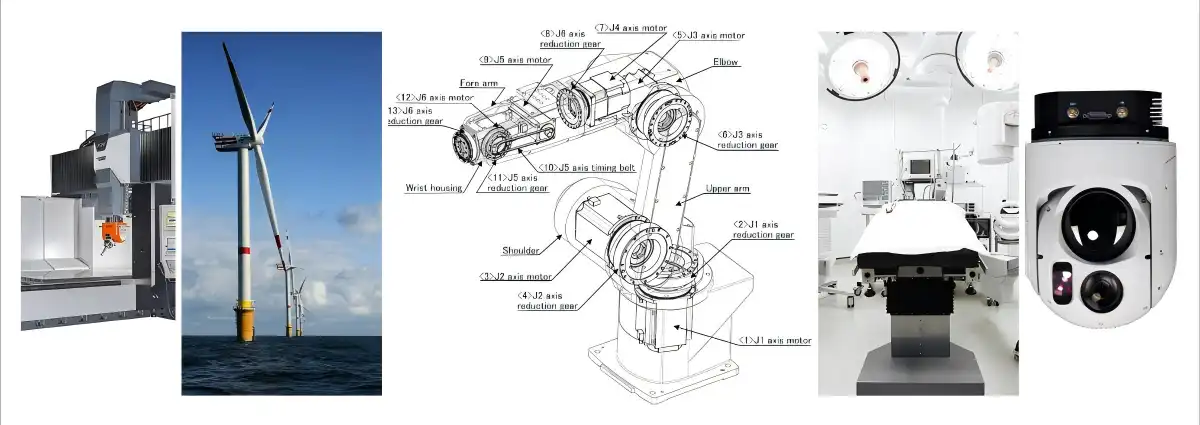
Different types of cross roller bearings work best in certain situations. The RU42UU is especially strong in robotic joint uses where loads are combined during quick changes in direction. It has options for precision classes from P6 to P2, which let you fit the accuracy of the bearing to the tolerances of the application. For the highest level of accuracy, medical equipment and measuring tools usually use P4 or P2 grades. Industrial manipulators, on the other hand, may use P5 or P6 grades, based on their needs. The RU42UU's moment load capacity helps manufacturing equipment like machining center rotary tables work better by stopping shifting forces during heavy cutting tasks. The stiffness of the bearing keeps the positioning accuracy that is needed to make parts with tight tolerances. IC manufacturing equipment needs to work without any contamination, which is why the sealed RU42UU version is perfect for cleanrooms.
How to Evaluate and Procure the Right RU42UU Cross Roller Bearing
Technical Requirements Assessment
A thorough technical needs analysis is the first step to a successful procurement. Engineers should write down the radial, axial, and moment loads that are predicted to happen during normal operation cycles. Conditions in the environment, such as temperature ranges, levels of contamination, and vibration exposure, affect the choice of bearing and the seal needs. Because speed factors affect how much lubrication is needed and what kind of cage material is chosen, operational speed documentation is necessary for accurate specification. Mounting room limitations often affect the choice of bearing. The RU42UU's small size makes it useful in places where regular bearing setups are too big. Accurately measuring the available installation measurements stops mistakes that cost a lot of money and delays in the project.
Supplier Qualification Criteria
Selecting qualified bearing suppliers significantly impacts procurement success and long-term operational reliability. Here are the critical evaluation factors when vetting potential manufacturing partners:
- ISO 9001 and IATF 16949 certifications demonstrate a commitment to quality management systems and automotive industry standards. These certifications indicate established quality control processes, traceability systems, and continuous improvement methodologies. Suppliers holding both certifications typically maintain manufacturing capabilities meeting stringent international requirements.
- Production capacity and scalability ensure consistent supply availability as project volumes fluctuate. Manufacturers operating multiple production workshops can accommodate varying order quantities without compromising delivery schedules. This capability proves essential when supporting product launches or seasonal demand variations.
- Technical support and customization services differentiate value-added suppliers from basic component vendors. Access to application engineering assistance helps optimize bearing selection and prevents costly specification errors. Customization capabilities enable modifications addressing unique application requirements not satisfied by standard catalog products.
- Quality, consistency, and defect rates directly impact production efficiency and warranty costs. Requesting quality documentation, inspection reports, and defect rate statistics provides objective evidence of manufacturing reliability. Established suppliers willingly share this information, demonstrating confidence in their production processes.
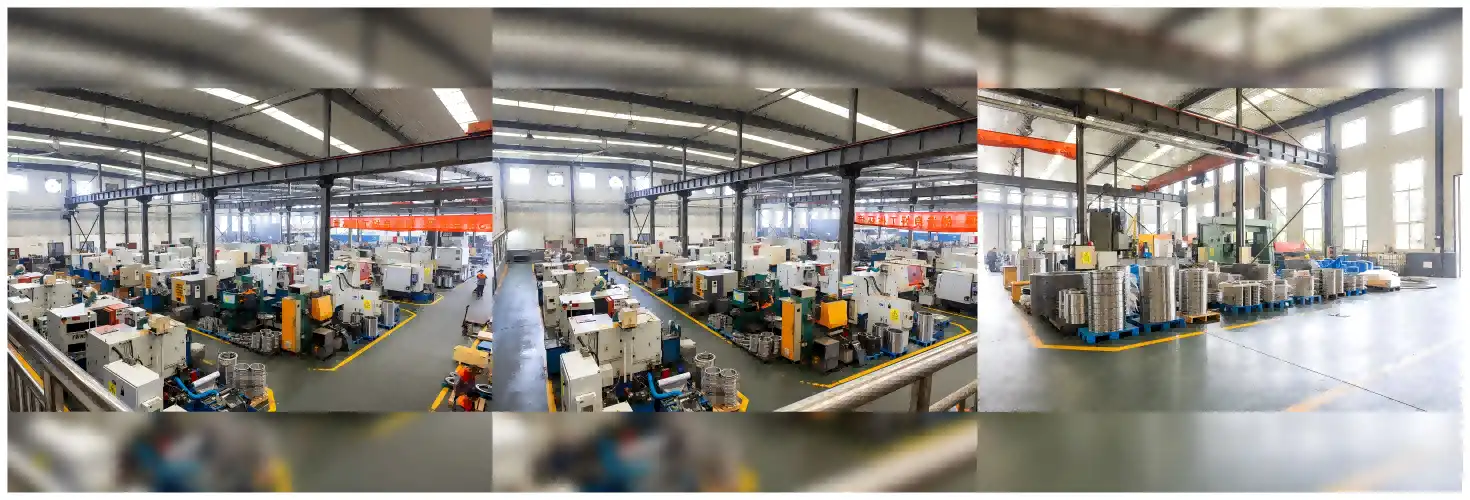
These supplier attributes collectively ensure procurement decisions support long-term strategic partnerships rather than transactional relationships. Manufacturers like Luoyang Auto Bearing exemplify these characteristics through fifteen RU42UU Cross roller bearing years of progressive growth, ISO 9001 and IATF 16949 certification, and expansion from single-workshop operations to comprehensive six-workshop facilities serving global markets.
OEM Versus Aftermarket Sourcing Strategies
OEM bearing procurement typically offers guaranteed compatibility and performance warranties, but often commands premium pricing. Aftermarket suppliers providing equivalent specifications can deliver significant cost savings while maintaining quality standards when properly qualified. Evaluating material certifications, dimensional inspection reports, and performance test data helps validate aftermarket bearing quality before procurement commitment. Volume purchasing negotiations should address minimum order quantities, delivery lead times, and quantity discount structures. Establishing blanket purchase orders with scheduled releases balances inventory carrying costs against procurement price advantages. Payment terms, currency options, and shipping arrangements require clarification before finalizing supplier agreements.
Installation, Maintenance, and Troubleshooting for Optimal RU42UU Performance
Professional Installation Procedures
Proper installation establishes the foundation for bearing longevity and performance. Clean mounting surfaces thoroughly, removing burrs, contaminants, and residual materials that could create stress concentrations or misalignment. Inspect mounting bores and shafts for dimensional accuracy and surface finish specifications before bearing installation. Apply appropriate installation tools, avoiding direct hammer strikes on bearing rings. Hydraulic presses or thermal installation methods prevent installation damage that compromises bearing integrity. Verify mounting hole alignment, ensuring even bolt loading across all attachment points. Torque mounting fasteners to manufacturer specifications using calibrated tools, following star-pattern tightening sequences for uniform clamping force distribution. Confirm bearing rotational smoothness after installation before full equipment assembly. Any binding, noise, or irregular resistance indicates potential installation problems requiring immediate correction. This verification step prevents costly equipment disassembly after complete machine assembly.
Lubrication and Preventive Maintenance
The dual seal design retains factory-installed lubrication, but periodic inspection ensures continued protection. Operating environments with extreme temperatures or heavy contamination may require lubrication interval adjustments. Select lubricants compatible with seal materials, avoiding chemical incompatibilities that degrade seal performance. Monitor bearing operating temperatures during initial equipment commissioning. Temperatures exceeding normal ranges suggest insufficient lubrication, excessive loads, or installation problems requiring investigation. Establish baseline temperature measurements during proper operation for comparison during future maintenance inspections. Implement vibration monitoring programs on critical equipment incorporating crossed roller bearings. Baseline vibration signatures captured during optimal operation provide reference data for condition-based maintenance strategies. Frequency analysis reveals developing problems before catastrophic failures occur, enabling planned maintenance during scheduled downtime rather than unexpected production interruptions.
Making an Informed Decision: Criteria for Selecting the Best RU42UU Cross Roller Bearing
Load Capacity and Durability Analysis
Matching bearing load ratings to application requirements provides appropriate safety margins without RU42UU Cross roller bearing unnecessary over-specification. Calculate maximum loads during all operating conditions, including startup, steady-state operation, and emergency stops. Apply appropriate safety factors accounting for shock loading, vibration, and potential misalignment that increases actual loads beyond theoretical calculations. Material selection influences bearing durability and service life. Gcr15 steel provides excellent general-purpose performance for most industrial applications. Gcr15SiMn offers enhanced properties for demanding environments with elevated temperatures or corrosive exposure. Understanding material characteristics helps optimize bearing selection for specific operational challenges.
Cost-Performance Balance
The best value is found when beginning costs are balanced against total ownership costs in purchasing decisions. While more expensive, higher precision types offer better accuracy and may have a longer useful life. By figuring out the accuracy needs of the application, you can avoid paying too much for precision that you don't need or buying bearings that aren't up to the task and breaking down early. Long-term value is higher for reliable suppliers, offer competitive prices, consistent quality, and quick technical help than for suppliers who are cheap but may not be reliable. When you add up the total cost of ownership, which includes buying, carrying, installing, maintaining, and possible failure costs, you can see what the real value offers of suppliers are.
Supplier Reliability Verification
For long-term supply partnerships to work, suppliers need to be carefully evaluated in more ways than just comparing prices at first. Manufacturing capacity, financial stability, and the ability to handle foreign logistics all help to make sure that supplies are always available, which helps keep production plans on track. Suppliers who have been exporting for a long time know what paperwork is needed, how to ship goods, and how to communicate with others in a way that makes foreign business run smoothly. Checking references with current customers is a great way to learn about a supplier's performance, quality control, and ability to solve problems. Site visits to manufacturing facilities let you see for yourself how things are made, how quality control systems work, and what technical skills are available. This helps you make smart choices about which suppliers to choose.
Conclusion
To choose the right RU42UU Cross roller bearing, you need to carefully look at its technical details, the needs of the application, and the supplier's skills. The bearing's special crossed roller design, seamless ring construction, and dual seal protection make it work very well in small spaces. The best choice is made by comparing possibilities based on the load, accuracy, and environmental conditions that are specific to the application. When you work with qualified manufacturers who hold ISO 9001 and IATF 16949 certifications, you can be sure of regular quality and a steady supply. The right way to install bearings and do preventative maintenance will make them last longer and work more reliably, protecting your machine investments and keeping production running smoothly.
FAQ
1. What lead times should we expect for bulk RU42UU orders?
Standard production lead times typically range from four to six weeks for volume orders, depending on quantity and specification requirements. Manufacturers maintaining an inventory of common configurations may offer shorter delivery schedules. Custom specifications requiring special materials or modified designs extend lead times accordingly. Establishing blanket purchase orders with scheduled releases helps manage inventory while ensuring consistent supply availability.
2. How do crossed roller bearings compare with conventional ball bearings?
Crossed roller bearings provide significantly higher load capacity and rigidity within equivalent envelope dimensions. The perpendicular roller arrangement handles combined radial, axial, and moment loads simultaneously, eliminating multiple bearing requirements. This design delivers superior rotational accuracy and reduced installation complexity compared to ball bearing combinations, achieving similar performance.
3. Can RU42UU bearings operate reliably in harsh industrial environments?
The dual seal protection system effectively shields internal components from contamination while retaining lubrication. This design enables reliable operation in dusty, dirty industrial settings where unsealed bearings would fail prematurely. Periodic inspection and appropriate maintenance ensure continued protection throughout the bearing's service life, even under challenging environmental conditions.
Partner with ATLYC for Premium RU42UU Cross Roller Bearing Solutions
ATLYC stands as your trusted RU42UU Cross roller bearing manufacturer, combining fifteen years of RU42UU Cross roller bearing precision manufacturing expertise with ISO 9001 and IATF 16949 certified quality systems. Our six specialized production workshops deliver consistent, high-precision bearings meeting the demanding requirements of automotive, robotics, and industrial automation applications. We serve major OEMs and distributors across the United States, Germany, South Korea, and global markets with reliable supply chains and technical support. Contact our engineering team at auto@lyautobearing.com to discuss your specific application requirements and receive customized procurement solutions backed by proven manufacturing excellence and scalable production capacity.
References
1. Harris, T.A. & Kotzalas, M.N. (2006). "Advanced Concepts of Bearing Technology: Rolling Bearing Analysis." CRC Press, Boca Raton.
2. Eschmann, P., Hasbargen, L. & Weigand, K. (1985). "Ball and Roller Bearings: Theory, Design and Application." John Wiley & Sons, New York.
3. ISO 5593:1984. "Rolling Bearings - Vocabulary." International Organization for Standardization, Geneva.
4. Hamrock, B.J. & Dowson, D. (1981). "Ball Bearing Lubrication: The Elastohydrodynamics of Elliptical Contacts." Wiley-Interscience, New York.
5. SKF Group Technical Manual (2018). "Rolling Bearings Catalogue: Cross Roller Bearings for Precision Applications." SKF Group Publications, Sweden.
6. Tallian, T.E. (1992). "Simplified Contact Fatigue Life Prediction Model: Ball and Roller Bearings." ASME Journal of Tribology, Vol. 114, Issue 2.
Learn about our latest products and discounts through SMS or email