- English
- French
- German
- Portuguese
- Spanish
- Russian
- Japanese
- Korean
- Arabic
- Greek
- German
- Turkish
- Italian
- Danish
- Romanian
- Indonesian
- Czech
- Afrikaans
- Swedish
- Polish
- Basque
- Catalan
- Esperanto
- Hindi
- Lao
- Albanian
- Amharic
- Armenian
- Azerbaijani
- Belarusian
- Bengali
- Bosnian
- Bulgarian
- Cebuano
- Chichewa
- Corsican
- Croatian
- Dutch
- Estonian
- Filipino
- Finnish
- Frisian
- Galician
- Georgian
- Gujarati
- Haitian
- Hausa
- Hawaiian
- Hebrew
- Hmong
- Hungarian
- Icelandic
- Igbo
- Javanese
- Kannada
- Kazakh
- Khmer
- Kurdish
- Kyrgyz
- Latin
- Latvian
- Lithuanian
- Luxembou..
- Macedonian
- Malagasy
- Malay
- Malayalam
- Maltese
- Maori
- Marathi
- Mongolian
- Burmese
- Nepali
- Norwegian
- Pashto
- Persian
- Punjabi
- Serbian
- Sesotho
- Sinhala
- Slovak
- Slovenian
- Somali
- Samoan
- Scots Gaelic
- Shona
- Sindhi
- Sundanese
- Swahili
- Tajik
- Tamil
- Telugu
- Thai
- Ukrainian
- Urdu
- Uzbek
- Vietnamese
- Welsh
- Xhosa
- Yiddish
- Yoruba
- Zulu
Why is the SX011848 Crossed Roller Slewing Bearing Essential for Precision Systems?
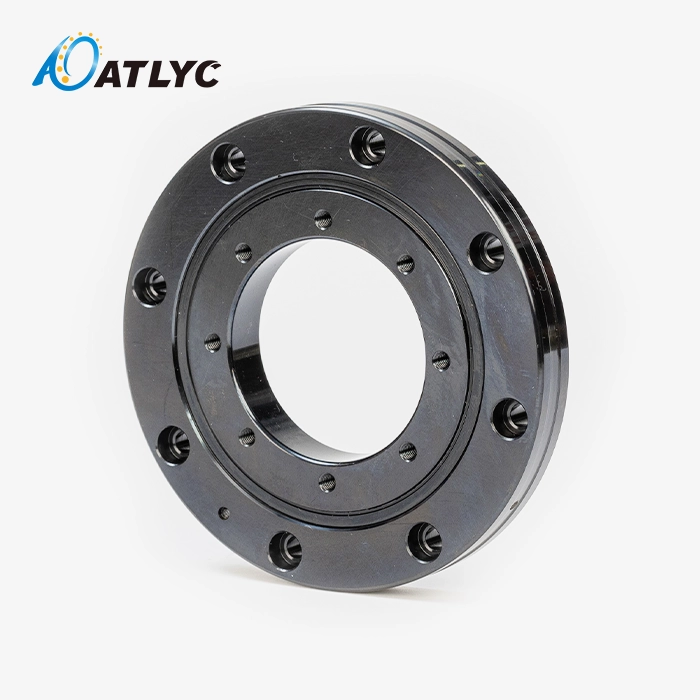
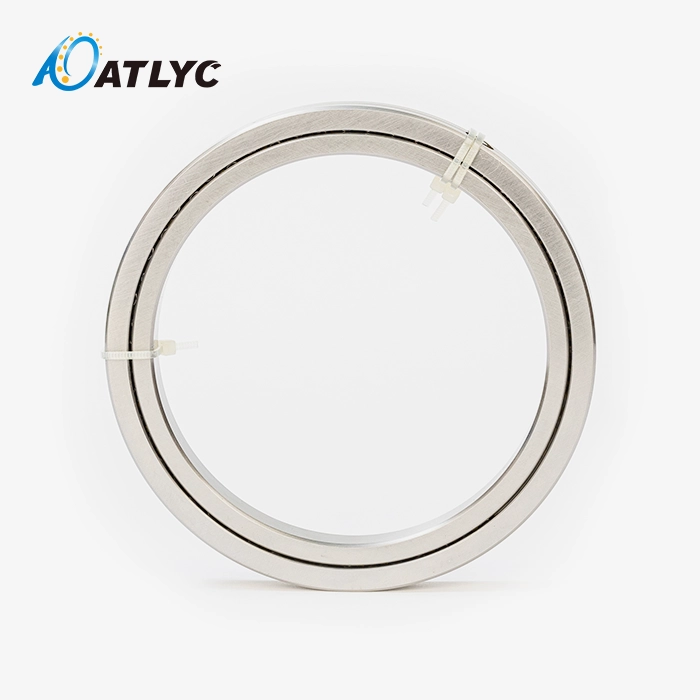
In precision engineering, the SX011848 Crossed Roller Slewing Bearing is an important part that delivers unmatched performance when space is limited and accuracy is required. This very thin bearing can handle radial, axial, and moment loads all in one small unit. This means that you don't need two separate bearings, which take up valuable installation space. This crossed roller bearing has an inner diameter of 240 mm, an outer diameter of 300 mm, and a width of only 28 mm. It is very rigid while taking up very little space, which is important for modern industrial robots, precision rotary tables, and advanced medical equipment where every millimetre counts.
Understanding the SX011848 Crossed Roller Slewing Bearing
Precision bearings represent the backbone of modern automation, and understanding their fundamental architecture helps engineers make informed sourcing decisions. The crossed roller bearing category distinguishes itself through innovative design principles that maximize load distribution efficiency.
Design, Architecture, and Operating Principles
The SX011848 has cylinder-shaped rollers placed at right angles to the inner and outer raceways. This makes a lot of contact points that spread loads evenly in all directions. The way forces move through the bearing system is changed by this orthogonal arrangement. In contrast to regular ball bearings, which put most of the stress on a small number of contact points, the crossed roller configuration fairly distributes radial loads, axial forces, and tilting moments across all of the rollers. The bearing has an inner ring that is built in and an outer ring piece that is split. Three fastening bands hold the outer ring parts in place, keeping the structure strong while it works. Polyamide spacers divide the rollers so that metal doesn't touch metal, and the rotation cycles are smooth. With this structural approach, you can get the load capacity and accuracy that you'd usually get from two angular contact bearings, but in a much smaller space.
Technical Specifications That Matter
The SX011848 is made from Gcr15 and Gcr15SiMn bearing steels, which have the best qualities for resistance to fatigue and maintaining their shape. These chrome-based alloys go through controlled heat treatment processes that make them hard enough to survive millions of rotation cycles while being loaded all the time. The 90-degree V-groove raceway design makes the contact area between the rollers and the raceways as big as possible. This gives the system great stiffness under moment loads, which is very important for precise placement. Different types of applications can use accuracy grades ranging from the standard P6 class to the P5, P4, and ultra-precision P2 classes. If your robotic joint needs to be able to repeat its position to the micron level, the P4 or P2 grades will give you runout accuracy that keeps tolerances tight over long service intervals. This scale lets procurement teams find a balance between performance standards and budget limits while still meeting all operational needs.
Advantages of Using SX011848 in Precision Systems
Performance advantages directly translate to operational efficiency and equipment longevity, making component selection a strategic consideration rather than merely a technical specification exercise. The crossed roller bearing delivers measurable SX011848 Crossed Roller Slewing Bearing benefits across multiple performance dimensions.
Multi-Directional Load Management Capability
Within a single bearing unit, the crossed roller design supports radial forces, axial forces from both directions, and tilting moments all at the same time. This flexibility makes the system a lot simpler than traditional designs that need different sets of radial and thrust bearings. The SX011848 can handle multi-axis loads on your machine center rotary table when cutting forces create complicated loading patterns. It does this without the need for extra support bearings. Engineers like how this simplification cuts down on the time it takes to put the system together, gets rid of problems with alignment between different bearing points, and makes the whole system lighter.This all-around load-handling ability is especially helpful for manufacturing equipment that works with changing loads. When there is fast motion, axial forces rise while radial loads stay the same. The crossed roller design can handle these changes in dynamic load without lowering performance, so the positioning accuracy stays the same across the entire operating envelope.
Enhanced Rigidity for Precision Positioning
The 90-degree V-groove raceway shape makes the contact surface area between the rollers and the raceways as big as possible. This gives the system great stiffness, which is important for precise positioning tasks. Even very small vibrations or deflections can lower yield rates when your IC manufacturing device places silicon wafers for photolithography processes. The rigid bearing structure doesn't bend when it's under pressure, so the tooling and workpiece stay in the exact same place. Moment load capability is especially important in robotic manipulator cantilever configurations. When the robot arm moves horizontally, gravity causes the joint bearings to tilt by a large amount. The SX011848 can handle these moments while keeping the smooth spin, which lets you place the endpoint accurately, no matter how the arm is positioned or how heavy the payload is.
Common Applications of SX011848 Crossed Roller Slewing Bearing
Real-world applications demonstrate how precision bearings enable technological advancement across diverse industrial sectors. Understanding these use cases helps procurement professionals recognize opportunities within their own operations.
Industrial Robotics and Automation Equipment
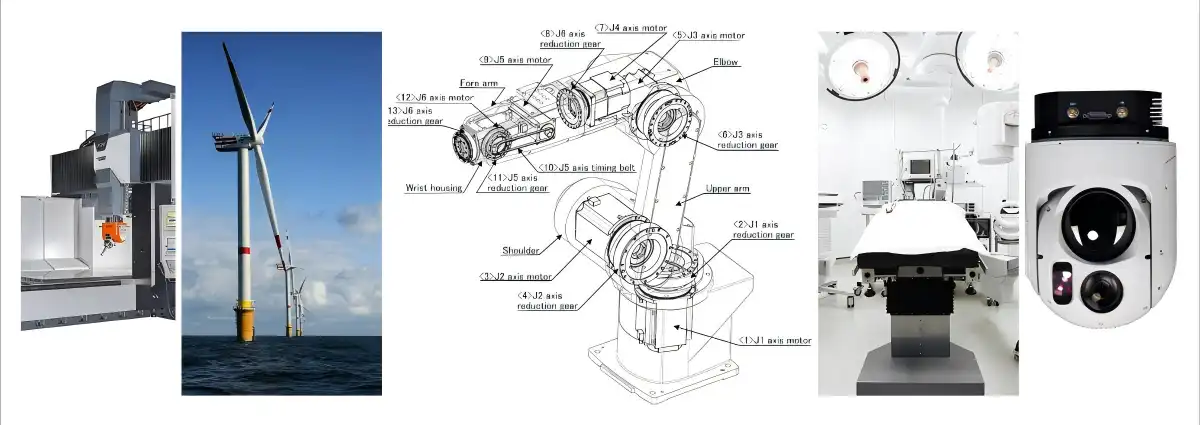
Robotic joints represent perhaps the most demanding application environment for precision bearings, combining continuous operation with stringent accuracy requirements. Articulated robot arms utilize crossed roller bearings at each joint axis, where the SX011848's multi-directional load capacity handles gravitational forces, payload weights, and dynamic acceleration loads simultaneously. The bearing's smooth rotation enables precise trajectory following, essential for welding operations, assembly tasks, and material handling processes. Collaborative robots working alongside human operators require predictable, controlled motion characteristics that prevent sudden movements. The low friction and consistent torque profile of crossed roller bearings contribute to the sophisticated motion control that makes collaborative robotics practical and safe.
Precision Machining Centers and Rotary Tables
Machining center rotary tables demand bearings that maintain positioning accuracy while withstanding substantial cutting forces. During five-axis milling operations, the rotary table bearing experiences complex loading from multiple simultaneous cutting edges engaging the workpiece. The SX011848 maintains table position accuracy within arc-seconds, ensuring machined features meet tight geometric tolerances. SX011848 Crossed Roller Slewing Bearing is specified on aerospace and medical component drawings. Indexing accuracy directly impacts production quality and throughput. When the bearing provides reliable, repeatable positioning across thousands of index cycles, manufacturers reduce scrap rates and eliminate time-consuming verification measurements between operations. This reliability transforms the bearing from a commodity component into a value-generating asset that protects profit margins.
Selecting and Maintaining the SX011848 Crossed Roller Slewing Bearing
Informed component selection and proactive maintenance practices maximize bearing service life while ensuring consistent performance throughout the operational envelope. Strategic decision-making during the procurement phase pays dividends across years of reliable operation.
Load Analysis and Bearing Selection Criteria
Proper bearing selection begins with a comprehensive load analysis covering static capacity, dynamic loading, and fatigue life calculations. Engineers must evaluate worst-case loading scenarios, including emergency stop conditions, collision events, and maximum payload configurations. The crossed roller bearing's published load ratings provide the foundation for these calculations, ensuring adequate safety margins exist throughout the application envelope. Comparing the SX011848 against alternative bearing types like four-point contact bearings or cylindrical roller versions requires understanding the specific advantages each design offers. Four-point contact bearings handle pure axial loads efficiently but sacrifice some radial capacity, while cylindrical roller bearings excel in pure radial applications yet provide limited moment capacity. The crossed roller configuration delivers balanced performance across all loading modes, making it the preferred choice for applications experiencing complex, multi-directional forces.
Installation Best Practices for Long-Term Performance
Mounting surface preparation significantly impacts bearing performance and service life. Mating surfaces must exhibit flatness within specified tolerances, typically measured in microns per diameter length. Surface finish requirements ensure uniform load distribution around the bearing circumference, preventing stress concentrations that accelerate fatigue crack initiation. Cleanliness during assembly prevents contamination ingress that generates wear particles and compromises rotational smoothness. Torque specifications for fastening ring bolts require careful attention, as under-tightening allows micro-movement that frets mating surfaces while over-tightening introduces distortion that compromises accuracy. Following manufacturer-specified torque sequences and values ensures proper preload distribution and maintains dimensional accuracy after installation is complete.
Procurement and Supplier Guide for SX011848 Bearings
Sourcing decisions impact not only initial acquisition costs but also long-term operational reliability and total cost of ownership. Strategic supplier relationships deliver value beyond transactional pricing advantages.
Evaluating Supplier Credentials and Manufacturing Capability
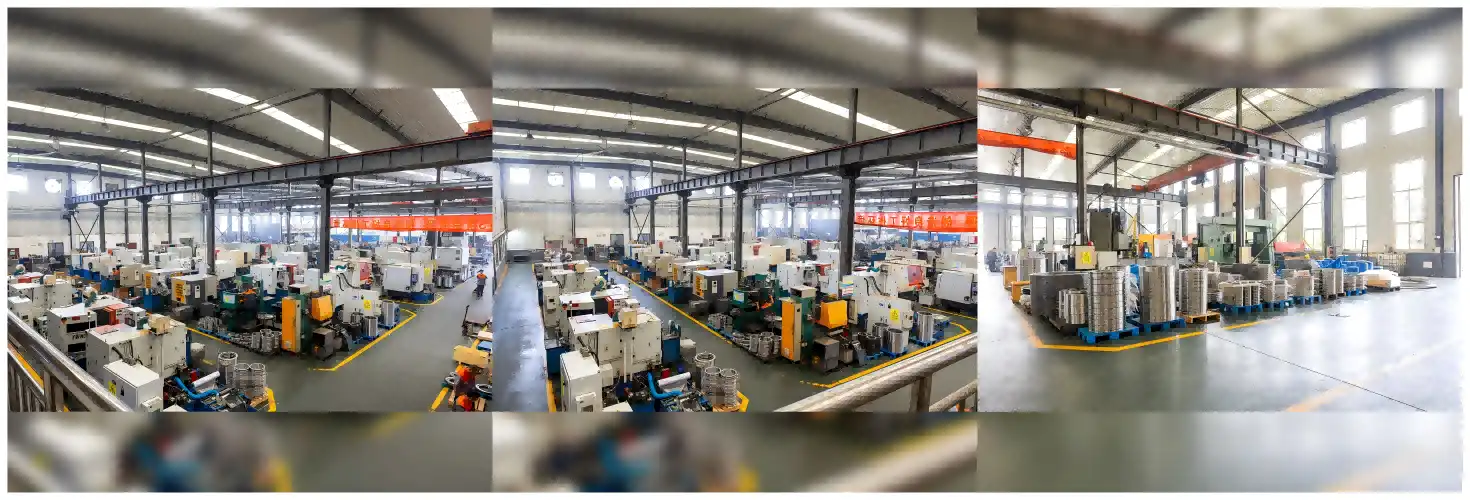
Quality certifications provide objective evidence of manufacturing process control and commitment to consistent product quality. ISO 9001 certification demonstrates implementation of comprehensive quality management systems covering all operational aspects from design through delivery. IATF 16949 certification specifically addresses automotive industry requirements, including advanced product quality planning, production part approval processes, and continuous improvement methodologies that benefit all precision manufacturing applications. Manufacturing capacity and production scale indicate a supplier's ability to fulfill ongoing volume requirements without compromising quality or delivery performance. Luoyang Auto Bearing Co., Ltd. operates six specialized workshops staffed by 120 skilled employees dedicated to production, research and development, quality inspection, and assembly operations. This infrastructure supports consistent output quality while maintaining flexibility to accommodate custom specifications and SX011848 Crossed Roller Slewing Bearing volume fluctuations.
Technical Support and Customization Capabilities
Engineering support during the specification and application phase adds substantial value beyond commodity-bearing supply. Experienced application engineers help optimize bearing selection, recommend mounting configurations, and troubleshoot installation challenges. Access to technical expertise accelerates project timelines and reduces costly trial-and-error approaches during prototype development phases. Customization capability enables bearing modifications that optimize performance for specific application requirements. Modifications might include specialized seal configurations for contaminated environments, alternative cage materials for extreme temperature service, or precision grade upgrades for ultra-high accuracy applications. Suppliers demonstrating design flexibility and manufacturing agility become strategic partners supporting product differentiation and competitive advantage.
Pricing Structures and Lead Time Considerations
Understanding factors influencing bearing pricing helps procurement professionals negotiate favorable terms while ensuring quality standards remain uncompromised. Material costs, manufacturing complexity, precision grade requirements, and order volumes all impact unit pricing. Volume commitments often unlock price reductions reflecting manufacturing efficiency gains and reduced transaction overhead. Establishing blanket purchase agreements with scheduled releases balances inventory carrying costs against volume pricing advantages. Lead time expectations require alignment with production planning cycles and inventory management strategies. Standard catalog items typically ship within shorter intervals than custom configurations requiring engineering review and specialized manufacturing processes. Building supplier relationships that include forecast sharing and capacity planning coordination minimizes expediting costs and prevents production disruptions from component shortages. Companies serving export markets, including South Korea, the United States, Germany, Russia, Iran, and Turkey, demonstrate logistical competence in managing international shipping complexities and customs documentation requirements.
Conclusion
The SX011848 Crossed Roller Slewing Bearing delivers performance characteristics essential for modern precision systems where space constraints, multi-directional loading, and accuracy requirements intersect. Its unique crossed roller configuration eliminates compromises traditionally required when selecting between radial capacity, axial capacity, and moment resistance. Manufactured from premium bearing steels and available in precision grades through P2 classification, this bearing supports applications across industrial robotics, precision machining, medical equipment, and semiconductor manufacturing. Strategic supplier selection, considering quality certifications, manufacturing capacity, and technical support capabilities, establishes partnerships that extend beyond transactional relationships, delivering long-term value through consistent quality and reliable delivery performance.
FAQ
1. What distinguishes crossed roller bearings from conventional ball or roller bearing designs?
Crossed roller bearings arrange cylindrical rollers alternately at 90-degree angles, creating contact points that simultaneously support radial, axial, and moment loads within a single compact unit. Conventional designs typically require multiple bearings to achieve equivalent load capacity across all directions, consuming additional space and increasing system complexity.
2. What service life can be expected from the SX011848 under typical operating conditions?
Service life depends on actual loading relative to rated capacity, lubrication quality, operating environment, and maintenance practices. When applied within published load ratings with appropriate lubrication and proper installation, crossed roller bearings routinely achieve millions of rotation cycles. Specific life calculations require detailed loading analysis using established bearing life equations.
3. Can the SX011848 be customized for specialized industrial applications?
Yes, bearing customization addresses specific application requirements, including modified seal configurations, alternative cage materials, special lubrication provisions, or precision grade upgrades. Discussing your unique requirements with experienced application engineers identifies practical modifications that optimize performance for your operational environment.
Partner with ATLYC for Your SX011848 Crossed Roller Slewing Bearing Requirements
ATLYC brings 15 years of precision bearing manufacturing expertise to SX011848 Crossed Roller Slewing Bearing for your most demanding applications. Our ISO 9001 and IATF 16949 certified production facilities house six specialized workshops where 120 skilled professionals manufacture crossed roller bearings meeting international quality standards. When you need a reliable SX011848 Crossed Roller Slewing Bearing supplier delivering consistent quality with competitive lead times, our engineering team provides comprehensive technical support from specification through installation. Contact us at auto@lyautobearing.com to discuss your project requirements and receive a detailed quotation addressing your specific performance criteria and volume needs.
References
1. Harris, T.A. & Kotzalas, M.N. (2006). Advanced Concepts of Bearing Technology: Rolling Bearing Analysis, Fifth Edition. CRC Press, Taylor & Francis Group.
2. Wensing, J.A. (2012). On the Dynamics of Ball Bearings. PhD Thesis, University of Twente, Netherlands.
3. SKF Group. (2018). Rolling Bearings Catalog: Design Considerations for High-Precision Applications. SKF Motion Technologies AB, Sweden.
4. ISO 492:2014. Rolling Bearings — Radial Bearings — Geometrical Product Specifications (GPS) and Tolerance Values. International Organization for Standardization.
5. Budynas, R.G. & Nisbett, J.K. (2015). Shigley's Mechanical Engineering Design, Tenth Edition. McGraw-Hill Education, Chapter 11: Rolling-Contact Bearings.
6. Gao, X. & Huang, P. (2017). "Load Distribution and Contact Analysis of Crossed Roller Bearings." Journal of Mechanical Engineering Science, Vol. 231, No. 4, pp. 732-745.
Learn about our latest products and discounts through SMS or email