- English
- French
- German
- Portuguese
- Spanish
- Russian
- Japanese
- Korean
- Arabic
- Greek
- German
- Turkish
- Italian
- Danish
- Romanian
- Indonesian
- Czech
- Afrikaans
- Swedish
- Polish
- Basque
- Catalan
- Esperanto
- Hindi
- Lao
- Albanian
- Amharic
- Armenian
- Azerbaijani
- Belarusian
- Bengali
- Bosnian
- Bulgarian
- Cebuano
- Chichewa
- Corsican
- Croatian
- Dutch
- Estonian
- Filipino
- Finnish
- Frisian
- Galician
- Georgian
- Gujarati
- Haitian
- Hausa
- Hawaiian
- Hebrew
- Hmong
- Hungarian
- Icelandic
- Igbo
- Javanese
- Kannada
- Kazakh
- Khmer
- Kurdish
- Kyrgyz
- Latin
- Latvian
- Lithuanian
- Luxembou..
- Macedonian
- Malagasy
- Malay
- Malayalam
- Maltese
- Maori
- Marathi
- Mongolian
- Burmese
- Nepali
- Norwegian
- Pashto
- Persian
- Punjabi
- Serbian
- Sesotho
- Sinhala
- Slovak
- Slovenian
- Somali
- Samoan
- Scots Gaelic
- Shona
- Sindhi
- Sundanese
- Swahili
- Tajik
- Tamil
- Telugu
- Thai
- Ukrainian
- Urdu
- Uzbek
- Vietnamese
- Welsh
- Xhosa
- Yiddish
- Yoruba
- Zulu
Can SX011848 Crossed Roller Slewing Bearing Replace Multiple Bearings?
Yes, the SX011848 Crossed Roller Slewing Bearing effectively replaces multiple conventional bearings in compact assembly configurations. This advanced component simultaneously handles radial loads, axial forces from both directions, and moment loads within a single ultra-thin unit measuring just 28mm in width. By consolidating the functionality that typically requires separate angular contact bearings or dual-bearing arrangements, it reduces installation complexity, lowers total component costs, and improves system rigidity—making it an optimal choice for space-constrained precision applications in robotics, medical devices, and automated manufacturing equipment.
Understanding the SX011848 Crossed Roller Slewing Bearing Design Features
Advanced Crossed-Roller Architecture
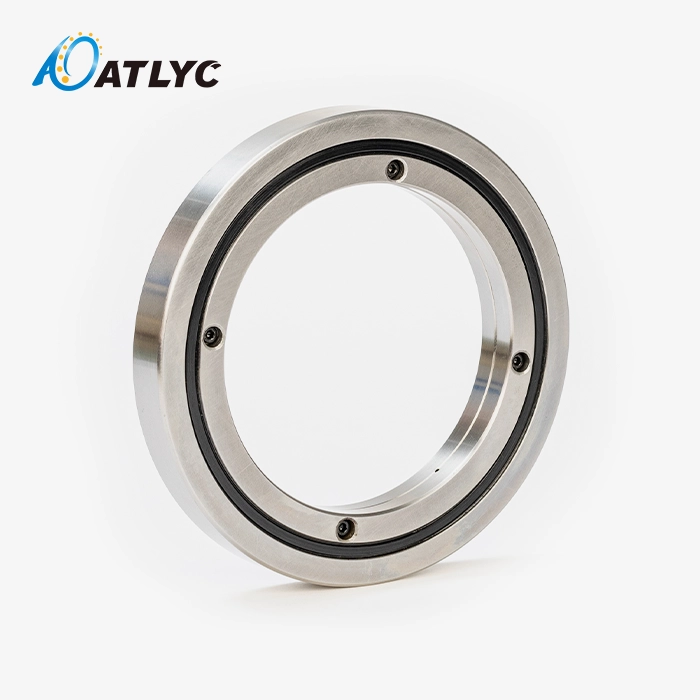
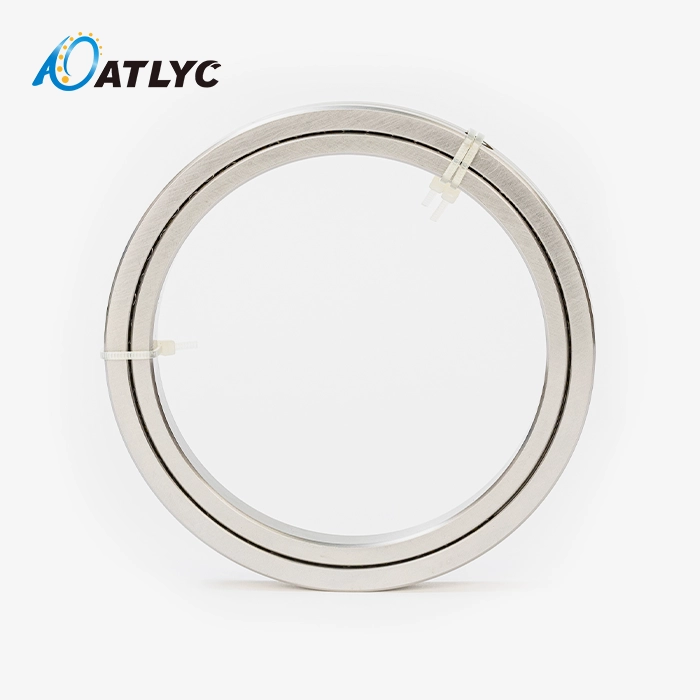
Compared to other types of bearings, crossed roller bearings are made with a very different design theory. The SX011848 Crossed Roller Slewing Bearing has cylinder-shaped rollers that are placed at exact 90-degree angles between the inner and outer ring raceways. This collection of straight lines makes many load-bearing contact points that spread forces evenly in all directions. Unlike ball bearings, which rely on point contact, this crossed-roller configuration achieves line contact, which greatly increases the load capacity while maintaining a very small footprint. Our manufacturing team has improved this design over many years of making products for companies from Germany to South Korea. The bearing has an inner ring that is integral and an outer ring unit that is split. Three precisely made fastening rings hold the outer ring parts in place, keeping the structure strong even when it's rotating quickly and being loaded in different ways. Individual rollers are separated by polyamide spacers, which keep metals from touching each other and keep the bearing rotating smoothly and consistently for its entire life.
Technical Specifications and Material Excellence
The size and shape of this bearing directly solve the problem engineers face when they have to make small spinning systems. With an inner diameter of 240mm, an outer diameter of 300mm, and a width of only 28mm, the SX011848 Crossed Roller Slewing Bearing can hold the most weight while taking up the least amount of room along its length. This very thin profile gets rid of the need for mounting holes in the inner and outer rings. This design choice keeps the structure strong while needing flange and bearing seat fixation methods. The choice of material is very important for the performance and longevity of bearings. We make these precise parts out of Gcr15 and Gcr15SiMn bearing steel alloys, which are specially designed to be very hard, resistant to wear, and stable in size even when loaded and unloaded many times. These high-carbon chromium steels go through controlled heat treatment methods that create the best microstructure. This makes sure that they work the same way in a wide range of temperatures and tough working conditions. Our ISO 9001 and IATF 16949 certifications make sure that every bearing meets strict international quality standards, from checking the raw materials to putting them together in the end.
Comparing SX011848 with Other Bearing Types in Multi-Bearing Assemblies
Conventional Ball Bearing Limitations
When used at high speeds, traditional deep groove ball bearings work great, but they have a hard time handling mixed loads. Two angular contact ball bearings, arranged back-to-back or face-to-face, might be needed in a normal setup to handle radial loads, axial forces, SX011848 Crossed Roller Slewing Bearing, and moment loads all at the same time. This arrangement needs more axial room, makes the assembly more complicated, and could cause alignment problems during installation. Each additional bearing in the assembly adds a new possible failure point and needs its own lubrication management. Ball slewing bearings are made for rotating uses but are usually less rigid than crossed roller configurations. When moment loads are put on ball bearings, they deform more elastically, which means they are less accurate in precision uses. Due to higher contact stresses at the ball-raceway interfaces, maintenance plans usually call for more frequent attention. Over long amounts of time, this stress concentration can cause the raceway to wear out faster than it should, especially in situations where the motion is oscillating instead of steady rotation.
Tapered Roller Bearing Assemblies
Tapered roller bearings can take both radial and axial loads well and have a great load capacity. To achieve multidirectional load capacity, however, setups that are paired and careful preload adjustment are needed. To get the best internal clearance during the fitting process, precise shimming or locknut adjustment is needed. This takes time and needs special measuring tools and knowledge. When it comes to the total cost of ownership, these assemblies are more complicated when you look at how much room they take up compared to a single crossed roller bearing with the same load capacity. This is because they require more work to put together, check their alignment, and do regular maintenance. In a tapered roller assembly, each bearing needs its own access points for lubrication and monitoring routines. The risk of contamination goes up as the number of sealing surfaces goes up. From working with clients in the car parts and industrial machinery industries, we've seen over and over again that making bearing arrangements simpler cuts down on both planned and unplanned downtime.
Key Advantages and Applications of SX011848 Crossed Roller Slewing Bearing
Multi-Directional Load Handling Capability
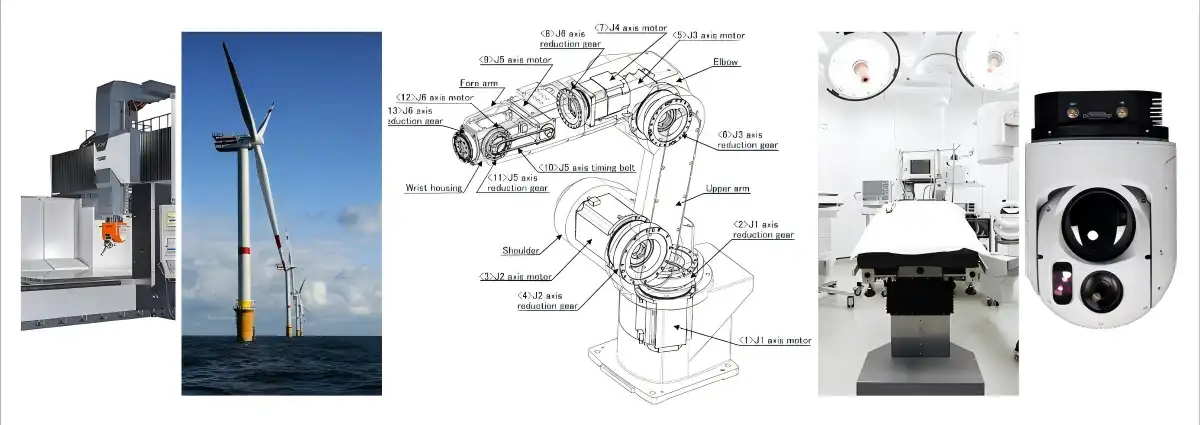
The core technical advantage driving adoption across diverse industries centers on simultaneous multi-axis load capacity. The crossed-roller arrangement handles radial forces, bidirectional axial loads, and tilting moments within a single integrated structure. This multidirectional capability stems from the alternating roller orientation—as one roller resists radial loads, its perpendicular neighbor counters axial forces and moment loads. The result is a bearing that responds to complex, variable loading conditions without requiring external support structures or auxiliary bearing sets. Quantifying this advantage requires examining real-world application scenarios. Industrial robot joints experience rapidly changing load vectors as manipulator arms move through programmed motion sequences. A traditional bearing assembly might use two angular contact bearings to handle these complex loads, each rated for specific load components. The SX011848 Crossed Roller Slewing Bearing consolidates this functionality, reducing component count while improving system rigidity. Our engineering support team has assisted OEM clients in achieving up to 30% reduction in rotational assembly costs through this consolidation approach, while simultaneously improving positional repeatability in critical robotic welding and assembly operations.
Maintenance Efficiency and Operational Longevity
Maintenance requirements scale directly with component count and assembly complexity. Each bearing seal, lubrication point, and adjustment interface represents a potential maintenance task and failure mode. By consolidating multiple bearings into a single SX011848 Crossed Roller Slewing Bearing, equipment designers dramatically simplify maintenance protocols. Single lubrication access points replace multiple grease fittings. Periodic inspection routines focus on one component rather than coordinating maintenance across multiple bearing positions. The operational lifespan benefits extend beyond simple maintenance schedule reduction. Crossed roller bearings inherently distribute loads across more rolling elements compared to ball bearings of similar size. This load distribution reduces peak contact stresses on individual rollers and raceways, slowing wear accumulation and extending rated bearing life. In continuous-duty applications typical of automated manufacturing lines, this longevity advantage translates directly to reduced spare parts inventory costs and fewer production interruptions for bearing replacement. Our quality management system ensures consistent manufacturing standards that support predictable bearing performance across production lots, enabling reliable equipment lifecycle planning.
Procurement Considerations for SX011848 Crossed Roller Slewing Bearings
Identifying Qualified Manufacturing Partners
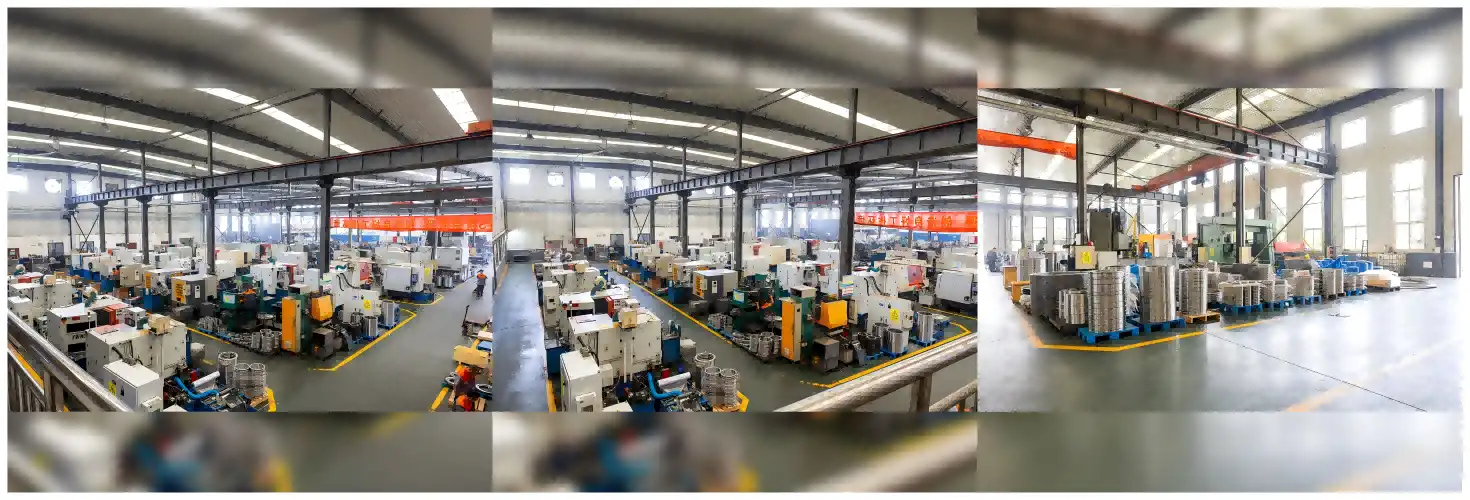
Sourcing decisions for precision bearings carry long-term implications for equipment performance and supply chain reliability. Procurement professionals should prioritize manufacturers demonstrating verifiable quality management systems, production scale capability, SX011848 Crossed Roller Slewing Bearing, and established international trade experience. ISO 9001 and IATF 16949 certifications provide baseline assurance of process control and continuous improvement commitment. These standards ensure manufacturing facilities maintain documented procedures covering material traceability, process validation, and final product inspection protocols. Our facility in Luoyang represents the type of manufacturing partner that aligns with strategic sourcing objectives. Since establishing operations in 2010, we have systematically expanded from a single workshop to six specialized production areas, employing 120 skilled professionals dedicated to bearing production, quality inspection, and technical support. This growth trajectory demonstrates both market acceptance and operational maturity. Our client base spans South Korea, the United States, Germany, Russia, Iran, and Turkey—geographic diversity that reflects our capability to meet varying international quality expectations and regulatory requirements.
Commercial Terms and Supply Chain Reliability
Lead time predictability ranks among the top concerns in procurement discussions with our clients. Component availability directly impacts production scheduling and inventory carrying costs. Established manufacturers with dedicated production capacity for crossed roller bearings can offer more reliable delivery commitments compared to traders or smaller operations producing occasional batches. Our production planning systems coordinate raw material procurement, heat treatment scheduling, and precision grinding operations to maintain consistent lead times even during peak demand periods. Bulk pricing structures become relevant when evaluating the total cost of ownership. While unit price comparisons provide initial cost visibility, volume commitments often unlock significant per-piece cost reductions. Procurement managers developing annual contracts or multi-year supply agreements should explore tiered pricing schedules that reward purchase volume while providing budget predictability. We structure commercial terms to align supplier and customer interests—volume commitments enable production efficiency investments that ultimately benefit all parties through improved quality consistency and cost competitiveness.
After-sales support and warranty policies separate strategic manufacturing partners from transactional suppliers. Technical assistance during initial equipment integration, application engineering guidance, and responsive problem resolution all contribute to successful bearing implementation. Our engineering team provides dimensional verification data, load calculation support, and mounting specification recommendations tailored to specific equipment designs. Warranty policies covering material defects and manufacturing workmanship provide risk mitigation, while clear return and replacement procedures minimize downtime when occasional quality issues arise despite rigorous inspection protocols.
Maintenance Tips and Lifespan Optimization for SX011848 Bearings
Lubrication Management Protocols
Proper lubrication fundamentally determines bearing lifespan and performance consistency. The SX011848 Crossed Roller Slewing Bearing requires periodic relubrication to maintain protective film thickness between rolling elements and raceways. Lubrication intervals depend on operating conditions—continuous rotation applications may require quarterly attention, while oscillating motion applications might extend intervals to annual schedules. Equipment manufacturers should consult application-specific recommendations based on load levels, speed ranges, and environmental exposure. Grease selection impacts both lubrication effectiveness and maintenance intervals. Lithium-based greases with appropriate consistency ratings suit most general industrial applications. High-temperature environments may warrant synthetic greases with elevated dropping points, while food processing or pharmaceutical applications might require NSF-certified food-grade lubricants. Over-greasing presents risks comparable to insufficient lubrication—excess grease creates churning resistance, generates heat, and may compromise seal effectiveness. Maintenance teams should follow specified grease quantities, typically SX011848 Crossed Roller Slewing Bearing, measured in grams per bearing volume, rather than filling cavities completely.
Inspection Routines and Early Warning Indicators
Proactive condition monitoring identifies developing problems before catastrophic failures occur. Routine inspection protocols should include visual examination for lubricant leakage, contamination ingress, or visible wear debris. Temperature monitoring using infrared thermography or contact thermometers can detect abnormal friction conditions, indicating inadequate lubrication or developing damage. Vibration analysis provides another diagnostic tool—baseline vibration signatures established during commissioning enable comparison with periodic measurements to identify trending deterioration. Acoustic monitoring represents an accessible inspection method requiring minimal equipment investment. Trained maintenance personnel can detect abnormal bearing noise using handheld ultrasonic instruments or even careful listening during equipment operation. Smooth, quiet operation indicates a healthy bearing condition, while grinding sounds, clicking, or irregular noise patterns suggest roller damage, contamination presence, or inadequate lubrication. Early detection enables planned maintenance interventions during scheduled downtime rather than reactive repairs following unexpected equipment failures.
Operational Best Practices for Maximized ROI
Operating conditions significantly influence bearing service life. Maintaining equipment within specified load ratings prevents premature fatigue damage and extends operational lifespan. Impact loads and shock conditions particularly stress bearing components—applications involving frequent starting and stopping or oscillating motion may experience reduced service life compared to smooth, continuous rotation. Equipment designers should incorporate adequate safety factors when selecting bearing sizes and load ratings, accounting for occasional overload conditions and application-specific duty cycles. Environmental protection extends bearing life in challenging operating conditions. Contamination from metal chips, process fluids, or airborne particulates accelerates wear and can cause premature failure. Effective sealing arrangements, regular cleaning protocols, and proper equipment enclosure design all contribute to bearing protection. Temperature extremes stress bearing materials and lubricants—applications in high-temperature environments may require specialized heat-resistant materials, while cold environments can compromise lubricant flow characteristics. Our technical support team provides guidance on environmental protection strategies tailored to specific application challenges.
Conclusion
The SX011848 Crossed Roller Slewing Bearing delivers compelling advantages for equipment designers seeking to consolidate multi-bearing assemblies into single, space-efficient components. Its crossed-roller design simultaneously handles radial, axial, and moment loads within an ultra-thin 28mm profile, eliminating the complexity of traditional paired bearing arrangements. Manufactured from premium Gcr15 bearing steel to ISO 9001 and IATF 16949 standards, this precision component serves demanding applications across robotics, medical equipment, automation systems, and industrial machinery. Procurement professionals benefit from its reduced installation complexity, simplified maintenance requirements, and extended operational lifespan. Strategic sourcing from established manufacturers with demonstrated production scale, international experience, and technical support capabilities ensures supply chain reliability and performance consistency. Proper lubrication management and proactive condition monitoring maximize return on investment throughout the bearing's service life.
FAQ
1. What load capacity advantages does the SX011848 provide compared to ball bearings?
The crossed-roller configuration achieves line contact rather than point contact, distributing loads across a greater surface area. This design delivers approximately 30-40% higher radial and moment load capacity compared to similarly sized ball bearings. The alternating roller orientation simultaneously resists forces from all directions, eliminating the need for paired bearing arrangements that traditional designs require. Applications experiencing combined loading benefit most from this multidirectional capacity within a single compact component.
2. How does bearing precision grade selection impact equipment performance?
Precision class directly determines rotational accuracy and positional repeatability. P5 grade bearings suit general industrial automation applications with moderate accuracy requirements. P4 precision enables high-accuracy robotic positioning and precision rotary tables. P2 represents the highest accuracy class, essential for measuring instruments and IC manufacturing equipment, where micron-level positioning accuracy affects output quality. Higher precision grades command premium pricing but prove cost-effective when equipment performance depends on exceptional rotational accuracy.
3. What maintenance intervals should operators expect for the SX011848 bearing?
Lubrication intervals typically range from quarterly schedules for continuous high-speed rotation to annual maintenance for low-speed oscillating applications. Operating conditions, including load levels, speed, temperature, and contamination exposure, all influence appropriate maintenance frequency. Visual inspection during routine equipment maintenance identifies potential issues between scheduled lubrication services. Establishing baseline vibration and temperature signatures enables condition-based maintenance approaches that optimize service intervals based on actual bearing condition rather than fixed calendar schedules.
Partner with ATLYC for Reliable Crossed Roller Bearing Solutions
ATLYC brings 15 years of precision bearing manufacturing excellence to your most demanding applications. As a certified SX011848 Crossed Roller Slewing Bearing manufacturer operating six specialized production workshops with 120 dedicated professionals, we combine ISO 9001 and IATF 16949 quality systems with competitive pricing and reliable global delivery. Our engineering team provides comprehensive technical support from initial design consultation through after-sales service, ensuring seamless integration of these advanced bearings into your equipment. Whether you require standard specifications or custom configurations tailored to unique application requirements, our scalable production capacity and consistent quality standards support your long-term supply needs. Contact us today at auto@lyautobearing.com to discuss your bearing requirements and discover how our precision manufacturing capabilities can enhance your equipment performance and reduce total ownership costs.
References
1. Harris, T.A., and Kotzalas, M.N. (2006). Advanced Concepts of Bearing Technology: Rolling Bearing Analysis, Fifth Edition. CRC Press, Boca Raton.
2. Schaeffler Technologies AG & Co. KG. (2019). Crossed Roller Bearings: Design, Application, and Selection Guidelines. Technical Publication WL 82 115/3, Herzogenaurach.
3. ISO 199:2014. Rolling bearings — Thrust bearings — Geometrical product specifications (GPS) and tolerance values. International Organization for Standardization, Geneva.
4. Wensing, J.A. (2018). On the Dynamics of Ball Bearings in High-Precision Applications. Precision Engineering Journal, Volume 51, pp. 569-579.
5. American Bearing Manufacturers Association. (2020). Load Ratings and Fatigue Life for Roller Bearings. ABMA Standard 11-2020, Washington, D.C.
6. Nguyen-Schäfer, H. (2015). Rotordynamics of Automotive Turbochargers: Linear and Nonlinear Rotordynamics with Bearing Modeling. Springer International Publishing, Cham.
Learn about our latest products and discounts through SMS or email