- English
- French
- German
- Portuguese
- Spanish
- Russian
- Japanese
- Korean
- Arabic
- Greek
- German
- Turkish
- Italian
- Danish
- Romanian
- Indonesian
- Czech
- Afrikaans
- Swedish
- Polish
- Basque
- Catalan
- Esperanto
- Hindi
- Lao
- Albanian
- Amharic
- Armenian
- Azerbaijani
- Belarusian
- Bengali
- Bosnian
- Bulgarian
- Cebuano
- Chichewa
- Corsican
- Croatian
- Dutch
- Estonian
- Filipino
- Finnish
- Frisian
- Galician
- Georgian
- Gujarati
- Haitian
- Hausa
- Hawaiian
- Hebrew
- Hmong
- Hungarian
- Icelandic
- Igbo
- Javanese
- Kannada
- Kazakh
- Khmer
- Kurdish
- Kyrgyz
- Latin
- Latvian
- Lithuanian
- Luxembou..
- Macedonian
- Malagasy
- Malay
- Malayalam
- Maltese
- Maori
- Marathi
- Mongolian
- Burmese
- Nepali
- Norwegian
- Pashto
- Persian
- Punjabi
- Serbian
- Sesotho
- Sinhala
- Slovak
- Slovenian
- Somali
- Samoan
- Scots Gaelic
- Shona
- Sindhi
- Sundanese
- Swahili
- Tajik
- Tamil
- Telugu
- Thai
- Ukrainian
- Urdu
- Uzbek
- Vietnamese
- Welsh
- Xhosa
- Yiddish
- Yoruba
- Zulu
CRBH Cross Roller Bearings for Space-Saving Designs
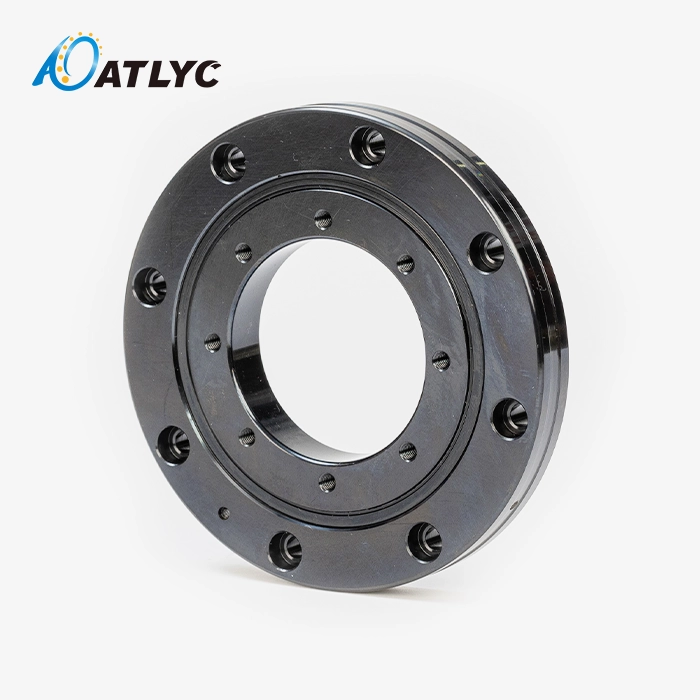
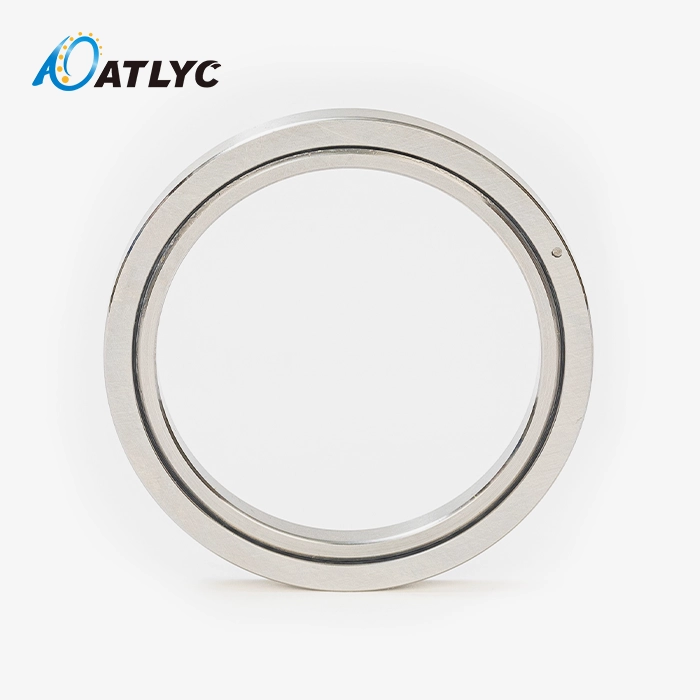
When your manufacturing systems demand precision in the tightest envelopes, space becomes your most valuable resource. The CRBH cross-roller bearing represents a fundamental shift in how engineers approach compact rotation solutions. This thin-wall, high-rigidity bearing combines radial, axial, and moment load capacity into one streamlined component, removing the need for multiple bearing installations. The orthogonal roller arrangement in V-groove raceways, along with solid ring construction, provides positioning accuracy and load stability that split-ring alternatives cannot match. We've watched this technology transform production lines where every millimetre counts and mechanical reliability directly impacts your bottom line.
Understanding CRBH Cross Roller Bearings: Design and Features
Integrated Ring Architecture That Changes Everything
The fundamental difference between the CRBH series and conventional crossed roller designs lies in its solid one-piece inner and outer ring construction. We manufacture these rings from high-grade bearing steel, subjecting them to precision grinding and super-finishing processes that achieve surface roughness values critical for minimal-friction operation. This integrated structure eliminates the deflection points inherent in split-ring assemblies, where joint discontinuities create weak spots under heavy loads. Your engineering team will appreciate that this design choice prevents installation-induced deformation—a common failure mode when mounting flanges compress split rings beyond their elastic limits. The solid construction maintains specified clearances regardless of housing tolerances or mounting stress variations, which translates directly to consistent rotational accuracy across your production batches.
The Orthogonal Roller Configuration Explained
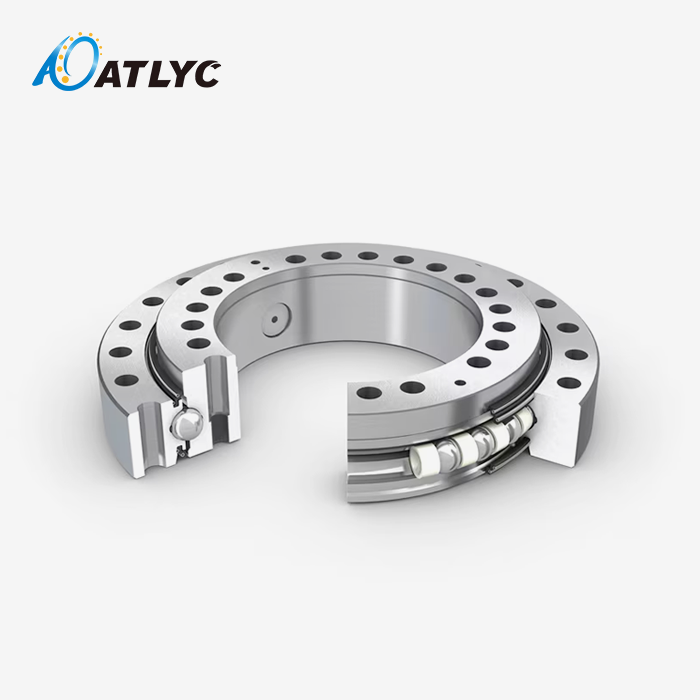
Cylindrical rollers within crossed roller bearings alternate their orientation at precisely 90-degree intervals between the V-groove raceways. Each roller contacts both the inner and outer ring at optimised angles calculated to maximise load distribution across the entire bearing circumference. This perpendicular arrangement creates what we call multi-directional load handling—the ability to simultaneously resist forces coming from radial directions, axial thrust, and tilting moments without requiring external preload adjustments. The geometry works because half the rollers handle loads in one direction while their perpendicular neighbours manage forces at right angles. Your assembly experiences this as exceptional rigidity despite the bearing's minimal cross-sectional profile. The CRBH variant takes this further with wall thicknesses reduced by 30-40% compared to standard CRB series at equivalent bore diameters, achieving diameter-to-thickness ratios reaching 10:1.
Precision Spacer Systems and Lubrication Technology
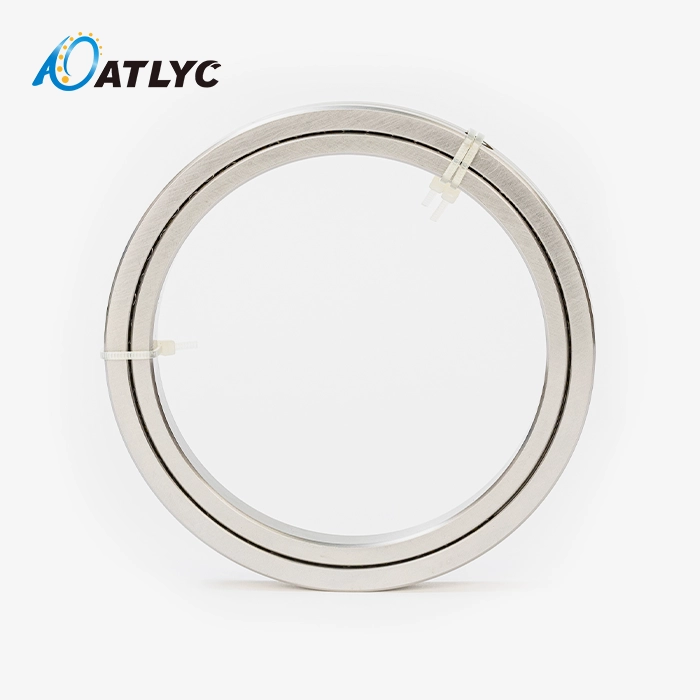
Between each roller sits a precision-manufactured separator preventing direct roller-to-roller contact during operation. We engineer these spacers from lightweight aluminium alloys in the CRBH series to reduce rotational inertia—a critical factor for servo-driven applications requiring rapid acceleration and deceleration cycles. The spacer system serves multiple functions beyond simple separation. It maintains uniform roller spacing around the entire circumference, prevents roller skew under varying loads, and enables higher rotational speeds compared to full-complement designs where rollers contact each other. Lubrication in thin-wall cross roller bearings presents unique challenges due to limited internal volume. We've addressed this through super-finished raceways that reduce surface asperities requiring thick lubricant films. The optimised grease formulations we specify decrease friction coefficients to 0.0015 or below, resulting in operating temperatures that extend bearing service life well beyond standard alternatives. Thin rubber lip seals maintain this lubrication environment while preserving the compact profile your designs demand.
Advantages of CRBH Cross Roller Bearings for Space-Saving Applications
The competitive pressures facing OEMs and industrial equipment manufacturers increasingly centre on doing more with less—tighter packaging, lighter assemblies, and improved performance from smaller footprints. Thin-wall crossed roller technology directly addresses these constraints through measurable advantages that impact both your design flexibility and operational costs.
Exceptional Rigidity Within Minimal Envelopes
The integrated ring structure of our CRBH cross roller bearing provides stiffness values comparable to bearings with significantly larger cross-sections. We measure this as reduced deflection under equivalent loads—your precision positioning systems maintain accuracy because the bearing itself doesn't flex away from nominal geometry. Manufacturing equipment utilising these bearings in rotary table applications reports positioning repeatability within 2-3 microns even under varying cutting forces, a performance level previously requiring much heavier bearing arrangements. This rigidity advantage extends to moment load capacity. A single thin-wall crossed roller bearing can resist tilting moments that would require paired angular contact bearings with substantial axial separation. Your mechanical designers gain freedom to create slimmer rotating joints in robotic arms, more compact swivel mechanisms in assembly equipment, and lighter gantry systems in inspection machines.
Dramatic Space Reduction Compared to Traditional Bearing Combinations
Traditional bearing arrangements for applications requiring multi-directional load capacity typically employ two deep groove ball bearings or paired tapered roller bearings mounted with specific preload and separation distances. The CRBH series replaces these dual-bearing setups with a single component, reducing axial length by 40-50% while often decreasing radial dimensions as well. We've documented installations where this space savings enabled entirely new product configurations. A medical imaging equipment manufacturer consolidated their gantry rotation mechanism by replacing four angular contact bearings with two thin-wall crossed roller bearings, reducing assembly height by 38mm and cutting rotating mass by 23%. The weight reduction alone improved motor efficiency enough to downsize the drive system, creating cascading benefits throughout the design.
Reduced Maintenance and Extended Service Intervals
The precision manufacturing standards we maintain for these bearings, including ISO 9001 and IATF 16949-certified quality systems, lead to defect rates that are lower than industry averages and service lives that are noticeably longer than competing products. Super-finished raceways wear more slowly because surface irregularities that accelerate fatigue simply aren't present to the same degree. The low friction coefficient of 0.0015 generates less heat, reducing thermal stress on lubricants and sealing components. Your maintenance teams will find these bearings require less frequent inspection and greasing compared to conventional designs. When operating noise levels are below 50 dB, it is easier to monitor conditions because abnormal sounds that show developing problems are easy to hear against the quiet baseline operation. We've tracked installations in automated assembly equipment running continuous three-shift operations, where thin-wall crossed roller bearings exceeded 15,000 operating hours before requiring replacement, compared to 8,000-10,000 hours, which is typical for previous bearing solutions in the same applications.
Comparing CRBH Cross Roller Bearings with Other Bearing Types
Performance Benchmarking Against Standard Bearing Technologies
Engineers selecting rotation components face numerous alternatives, each with distinct characteristics affecting application suitability. Standard cylindrical roller bearings offer high radial capacity but require separate thrust bearings for axial loads. Angular contact ball bearings handle combined loads but need paired arrangements with precise mounting for optimal performance. Four-point contact bearings provide multi-directional capacity in compact cross-sections but sacrifice load ratings and rigidity compared to crossed roller designs. The CRBH cross roller bearing distinguishes itself by simultaneously optimising multiple parameters. Load capacity per unit of cross-sectional area exceeds that of four-point contact bearings by 40-60% in typical sizes. Rigidity values surpass angular contact pairs while occupying 30% less axial space. Rotational accuracy meets P4 and P2 precision grades essential for motion control applications where positioning errors accumulate into significant product defects.
Cost-Performance Analysis for Procurement Decision-Making
Procurement professionals evaluating bearing solutions rightly focus on total cost of ownership rather than just purchase price. Initial acquisition costs for precision crossed roller bearings typically run 40-70% higher than standard bearing combinations. However, the lifecycle economics shift dramatically when accounting for reduced maintenance, extended service intervals, and design simplification benefits. Consider a robotic joint application requiring 100 units annually. Traditional bearing arrangements using paired angular contact bearings cost approximately $85 per assembly, including both bearings, spacers, and mounting hardware. A comparable thin-wall crossed roller bearing costs $125. Over a typical 5-year product lifecycle with a 15,000-hour service life, the crossed roller solution eliminates one bearing replacement cycle, saving $45 per unit in parts and $30 in labour. The net advantage is $50 per unit over five years, multiplied by your production volume.
We've established competitive positioning against established brands through manufacturing capabilities that deliver equivalent technical specifications at 15-25% lower prices. Our ISO-certified quality management systems and 15 years of production experience provide the reliability assurance your supply chain requires. Additionally, our cost structure reflects efficient Chinese manufacturing operations rather than premium European or Japanese pricing models.
Procurement Considerations: Buying CRBH Cross Roller Bearings for Your Projects
Defining Your Technical Requirements Accurately
Successful bearing selection begins with precise specification of your application's operating conditions. Load analysis should quantify not just maximum values but also load directions, combinations, and duty cycles. A rotary table experiencing intermittent 5000N radial loads and constant 2000Nm moment loads requires different bearing selection than continuous uniform loading at the same peak values.
Your technical team should document these parameters:
- Load Specifications: Separate radial, axial, and moment load values with attention to whether they act simultaneously or sequentially. Dynamic loads varying during rotation cycles need maximum and RMS values for fatigue life calculations.
- Speed Requirements: Both average operating speeds and peak acceleration rates matter for thin-wall designs where rotational inertia affects response characteristics. Applications exceeding 500 RPM may require specialised cage materials and lubrication strategies.
- Environmental Conditions: Operating temperature ranges, contamination exposure, and surrounding atmosphere influence sealing and material specifications. Clean room environments allow minimal seals, preserving compact dimensions, while harsh industrial settings demand more robust protection, potentially increasing size.
- Mounting Constraints: Available envelope dimensions, housing material and rigidity, mounting surface accuracy, and accessibility for installation affect bearing selection and sometimes require custom modifications to standard product lines.
Evaluating Supplier Capabilities and Credentials
The bearing supplier you select becomes a critical partner in your product's performance and reliability. We recommend evaluating potential sources across several dimensions beyond simple price comparison. Manufacturing capacity and scalability matter when your product succeeds, and order volumes grow—suppliers unable to scale production create supply chain vulnerabilities during your peak demand periods.
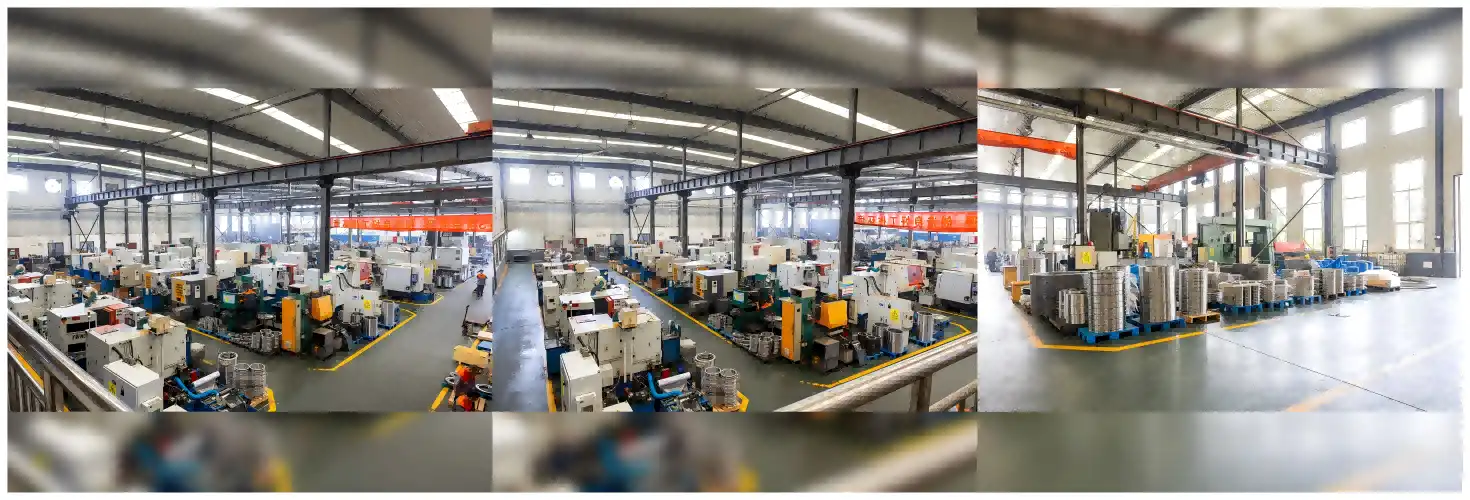
At Luoyang Auto Bearing, our six workshop facilities and 120 specialised employees provide production flexibility, handling orders from prototype quantities through volume production runs. We've expanded our manufacturing footprint specifically to serve growing international customers without sacrificing the responsive communication and technical support that build successful partnerships.
Certification credentials verify that suppliers maintain consistent quality systems rather than relying on final inspection to catch defects. Our ISO 9001 and IATF 16949 certifications demonstrate documented processes controlling every production stage from incoming material inspection through final testing and packaging. These aren't merely certificates on the wall—they represent daily discipline, ensuring that the bearings you receive meet specifications batch after batch.
Understanding Lead Times and Order Logistics
International procurement of precision components requires realistic planning around manufacturing and shipping timelines. Standard CRBH cross-roller bearing sizes from our existing production typically ship within 15-20 business days for quantities under 500 units. Volume orders requiring dedicated production runs may extend to 30-35 days depending on size and specification complexity.
Custom modifications adding special seals, non-standard preload values, or dimensional adjustments add engineering time before manufacturing begins. We typically complete custom design reviews within 5-7 business days, providing detailed drawings and specification confirmations before starting production tooling. This front-end investment prevents costly misunderstandings and ensures the bearings you receive integrate seamlessly into your assemblies.
Shipping logistics from our Luoyang facilities to U.S. destinations currently run 18-25 days via ocean freight for consolidated shipments or 5-7 days via air freight for urgent requirements. We work with experienced freight forwarders handling customs documentation and can arrange delivery to your facility or contract manufacturer depending on your supply chain structure.
Real-World Applications and Case Studies Showcasing Space-Saving Benefits
Industrial Robotics and Collaborative Robot Joints
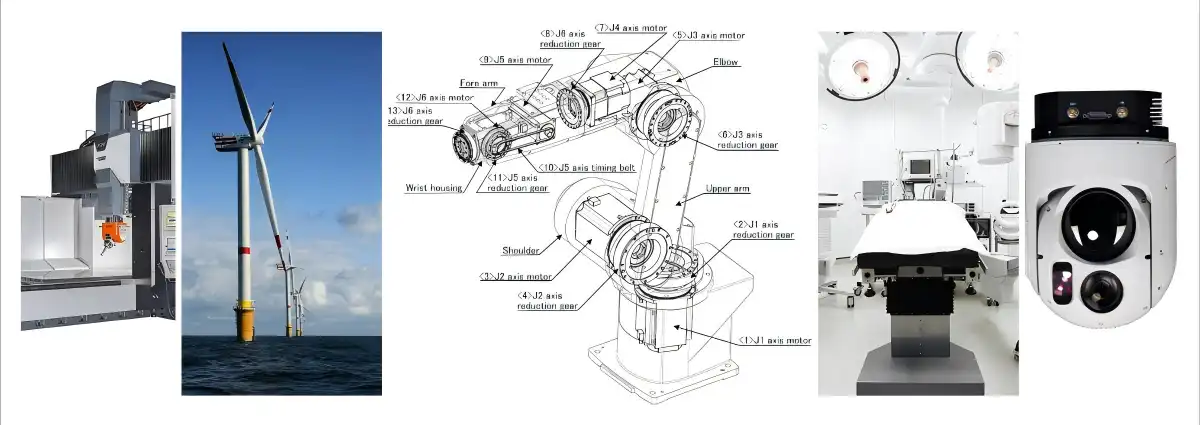
The explosive growth in industrial automation and collaborative robotics has created intense demand for compact, precise rotation solutions. Robot joint design faces competing constraints—sufficient load capacity and rigidity for accurate positioning; minimal size and weight to maximise reach and payload; and long service life under repetitive motion cycles reaching millions of rotations annually.
A Midwest automation equipment manufacturer approached us with requirements for a new collaborative robot design targeting electronics assembly applications. Their previous joint design used paired angular contact bearings in a configuration consuming 64mm of axial space and weighing 420 grams per joint. The assembly required six bearings total across three primary joints, creating both size and cost challenges in a market segment with aggressive pricing pressure.
We specified thin-wall crossed roller bearings matching their load requirements in a 45mm axial envelope weighing 280 grams. The space savings enabled arm segment length increases of 8% without changing the overall robot footprint, directly improving working envelope and application versatility. Weight reduction decreased motor loads by 15%, allowing smaller drive components and improving motion response characteristics. The customer reports their robot now achieves positioning repeatability of ±0.05mm compared to ±0.08mm previously, a performance improvement their customers immediately noticed in assembly quality metrics.
Precision Rotary Tables and CNC Machining Centres
Manufacturing equipment utilising rotary positioning faces demanding operating conditions—heavy cutting forces create combined radial and moment loads; coolant and chip contamination require effective sealing; and accuracy requirements where positioning errors multiply across multiple operations. Traditional rotary table designs employ large-diameter slewing rings or multiple bearing arrangements, adding substantial weight and complexity.
A machine tool manufacturer serving the aerospace component market needed rotary table solutions for 5-axis machining centres that produce turbine components from titanium and nickel alloys. Cutting forces during these operations generate substantial moments trying to tilt the table from its programmed position. Their existing design used four cylindrical roller bearings arranged in a complex housing requiring precise machining and careful assembly procedures. The table runout was 8 to 12 microns, which is fine for most uses but not good enough for aerospace work that needs the tightest tolerances.
Replacing this arrangement with two CRBH series crossed roller bearings simplified the housing design, reduced overall height by 45mm, and improved measured runout to 3-5 microns. The integrated ring structure eliminated assembly-induced errors from the previous multi-bearing configuration. Processing time for turbine blade root forms improved because reduced table runout meant less compensation programming and fewer scrapped parts from accumulated positioning errors. The customer calculated ROI recovery in under 18 months through reduced scrap rates alone, without accounting for the simplified maintenance procedures and longer service intervals the new bearings provided.
Medical Imaging and Diagnostic Equipment
Medical device manufacturers face unique challenges balancing performance requirements with size, weight, and noise constraints. Diagnostic imaging equipment particularly demands smooth, quiet rotation combined with precise positioning and compact packaging. Patient comfort considerations make operating noise a critical specification while installation space in medical facilities remains limited.
A medical equipment OEM developing portable ultrasound systems required rotation mechanisms for their articulating display arm. The design needed to support a 4kg display panel, provide smooth positioning adjustment without jerky motion, operate silently in clinical environments, and fit within a 35mm diameter envelope matching the arm's aesthetic profile. Initial prototypes using miniature ball bearing arrangements produced unacceptable noise levels and lacked sufficient rigidity—the display would droop slightly when positioned horizontally, frustrating clinicians trying to maintain optimal viewing angles.
Our thin-wall CRBH cross roller bearing solution provided the required moment capacity within the size constraint while operating at 48 dB during adjustment motion. The solid ring construction eliminated the slight play inherent in the previous bearing arrangement, giving the display arm a premium feel with no perceptible position drift. The medical device manufacturer now specifies these bearings across their product line, citing both performance improvements and positive customer feedback about the mechanical quality of their systems.
Conclusion
The evolution of precision bearing technology continues driving innovation across industrial sectors where compact, reliable rotation solutions unlock new design possibilities. Our thin-wall crossed roller bearings represent 15 years of manufacturing refinement focused on the specific needs of OEMs and industrial equipment manufacturers requiring consistent quality at competitive pricing. The integrated ring architecture, orthogonal roller configuration, and precision manufacturing standards we maintain deliver measurable advantages in space savings, load capacity, and service life compared to traditional bearing arrangements. Your procurement decisions today shape product competitiveness for years ahead—selecting bearing partners with proven production scale, quality certifications, and responsive technical support ensures your supply chain supports rather than constrains your engineering ambitions.
FAQ
What makes CRBH bearings different from standard crossed roller bearings?
The CRBH variant features optimised thin-wall construction, with ring thicknesses reduced by 30-40% compared to the standard CRB series at equivalent bore sizes. This achieves diameter-to-thickness ratios reaching 10:1 while maintaining load capacity through precision manufacturing and material selection. The series utilises lightweight aluminium-alloy cages, reducing rotational inertia for servo applications that require rapid motion response.
How do I determine the correct bearing size for my application?
Sizing requires calculating equivalent dynamic and static loads, incorporating your radial, axial, and moment load components. Standard bearing catalogues provide rating values and calculation methods. We recommend consulting our engineering team—provide your load data, speed requirements, and envelope constraints, and we'll specify appropriate bearing models with calculated service life predictions.
Can these bearings operate in contaminated environments?
Standard CRBH bearings include thin rubber lip seals suitable for clean industrial environments. Applications involving coolant exposure, metal chips, or abrasive dust require enhanced sealing options we provide as modifications. Contact seals increase drag torque slightly while improving contamination resistance. We'll recommend sealing solutions matching your specific environmental conditions.
Partner With ATLYC for Your Precision Bearing Requirements
Selecting the right CRBH Cross roller bearing supplier impacts your product's performance, production schedule reliability, and long-term competitiveness. ATLYC (Luoyang Auto Bearing) brings 15 years of specialised manufacturing experience serving OEMs and industrial equipment manufacturers across automotive, automation, and precision machinery sectors. Our ISO 9001 and IATF 16949 certified facilities produce high-rigidity crossed roller bearings meeting international quality standards, while our competitive pricing reflects efficient operations rather than premium brand positioning. We maintain production capacity supporting both prototype quantities and volume orders with typical lead times of 15-20 days for standard configurations. Technical support doesn't end at shipment—our engineering team assists with bearing selection, installation guidance, and ongoing application support. Contact us at auto@lyautobearing.com to discuss your specific requirements and receive detailed quotations for your current projects.
References
1. Harris, T.A. & Kotzalas, M.N. (2006). Advanced Concepts of Bearing Technology: Rolling Bearing Analysis, Fifth Edition. CRC Press, Taylor & Francis Group.
2. Schaeffler Technologies AG & Co. (2019). Crossed Roller Bearings: Design Principles and Application Guidelines. Technical Publication TI 00117-3 EN, Industrial Division.
3. ISO 492:2014. Rolling bearings — Radial bearings — Geometrical product specifications (GPS) and tolerance values. International Organisation for Standardisation.
4. Weck, M. & Brecher, C. (2006). Machine Tools Production Systems 3: Design and Calculation, Volume 3. Springer-Verlag Berlin Heidelberg, Manufacturing Engineering Series.
5. Palmgren, A. (1959). Ball and Roller Bearing Engineering, Third Edition. SKF Industries Inc., translated by G. Lundberg and revised by B. Hemmingsson.
6. THK Co., Ltd. (2021). Cross Roller Ring Technical Catalogue, Publication No. 303-1E. Precision Machinery Components Division, Engineering Data and Application Examples.
Learn about our latest products and discounts through SMS or email