- English
- French
- German
- Portuguese
- Spanish
- Russian
- Japanese
- Korean
- Arabic
- Greek
- German
- Turkish
- Italian
- Danish
- Romanian
- Indonesian
- Czech
- Afrikaans
- Swedish
- Polish
- Basque
- Catalan
- Esperanto
- Hindi
- Lao
- Albanian
- Amharic
- Armenian
- Azerbaijani
- Belarusian
- Bengali
- Bosnian
- Bulgarian
- Cebuano
- Chichewa
- Corsican
- Croatian
- Dutch
- Estonian
- Filipino
- Finnish
- Frisian
- Galician
- Georgian
- Gujarati
- Haitian
- Hausa
- Hawaiian
- Hebrew
- Hmong
- Hungarian
- Icelandic
- Igbo
- Javanese
- Kannada
- Kazakh
- Khmer
- Kurdish
- Kyrgyz
- Latin
- Latvian
- Lithuanian
- Luxembou..
- Macedonian
- Malagasy
- Malay
- Malayalam
- Maltese
- Maori
- Marathi
- Mongolian
- Burmese
- Nepali
- Norwegian
- Pashto
- Persian
- Punjabi
- Serbian
- Sesotho
- Sinhala
- Slovak
- Slovenian
- Somali
- Samoan
- Scots Gaelic
- Shona
- Sindhi
- Sundanese
- Swahili
- Tajik
- Tamil
- Telugu
- Thai
- Ukrainian
- Urdu
- Uzbek
- Vietnamese
- Welsh
- Xhosa
- Yiddish
- Yoruba
- Zulu
How Do 60 Series Ball Bearings Improve Performance?
The 60 Series Ball Bearings have a small, precise design that makes them work much better than heavier bearing series. They do this by lowering friction coefficients by up to 30%. These ISO metric light series bearings make machines more efficient by reducing the amount of energy lost and being able to handle both circular and mild axial loads at high speeds. Because of their streamlined geometry, they can fit into smaller housings without losing rotational accuracy. This makes them perfect for micro-motors, precision instruments, and office tools that are limited in space and need to reduce weight and dependability.
Understanding 60 Series Ball Bearings: Specifications and Design Features
Precise Dimensional Standards and Engineering Excellence
To meet strict industry standards, 60 Series Ball Bearings are made with exact measurements, close tolerances, and high-quality materials. These single-row deep groove bearings are made to ISO 15 and DIN 625 standards. They have a smaller cross-section compared to their hole size than the 62 (Medium) and 63 (Heavy) series options. The number "60" refers to the width range, and the outer circle is best for uses that need very little radial room. This way of engineering lets people who make tools keep building sizes within certain limits while keeping rotational accuracy high. The bearings are made of high-carbon chrome steel (GCr15/SAE 52100) that goes through a special heat process to get the hardness levels that are best for maximum stress life and wear resistance: 60 to 64 HRC.
Advanced Cage Systems and Sealing Technology
Their deep hole design makes 60 Series Ball Bearings more stable and able to hold more weight, and the different types of cages allow them to be used in a variety of settings. The cage choices that are offered are:
- Steel stamped cages (M): These are strong and good at removing heat, so they can be used at high speeds. They also keep their shape under changing loads and are a cheap option for standard industrial settings.
- Brass cages (TN): These have better temperature stability and lower noise levels, which is especially helpful in precision tools where noise levels affect measurement accuracy and the user experience.
- Polyamide synthetic cages: These are strong but light, and they are very resistant to chemicals. This makes them perfect for places where traditional materials might break down because of chemicals or big changes in temperature.
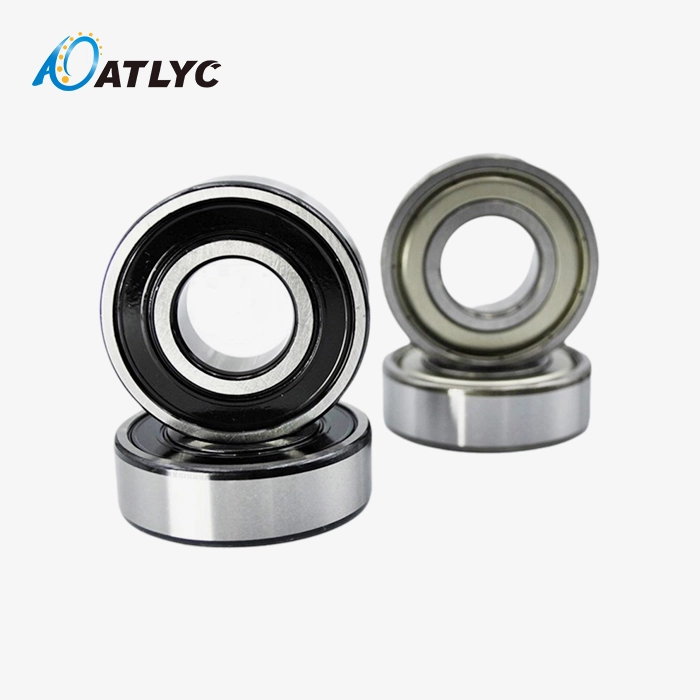
When these cage systems are used with the internal shape of the bearing, they improve efficiency. Different types of sealing choices, like ZZ (metal shields) and 2RS (rubber seals), keep the oil intact while stopping particles from getting in. This extends the service life of the system.
Comparative Performance Advantages
The light series bearings are better in terms of size and performance compared to the 62 and 6000 series bearings. The improved shape of the raceway gives osculation ratios of about 52 to 53%, which makes sure that the performance is matched between load capacity and low friction torque. High-precision versions have radial runout values lower than 5 micrometers and meet accuracy standards P0, P6, P5, and P4 to meet the needs of demanding applications.
How 60 Series Ball Bearings Optimize Machine Performance
Friction Reduction and Energy Efficiency
By reducing the amount of friction between the ball and raceways, these precision bearings help machines run faster and use less energy. The improved ball-to-raceway contact shape cuts down on energy loss by a large amount. In some cases, the friction coefficient drops by up to 30% compared to heavier bearing types. This improvement in efficiency directly leads to lower operating costs and higher machine output. The deep, continuous lines in the raceways make the best contact pattern, which spreads loads evenly while keeping rolling resistance low. This way of building makes sure that the motors and other equipment that they drive use less power while still doing the same amount of work. This helps reach goals for system efficiency and environmental sustainability.
Enhanced Load Handling and Durability
Their strong design can handle both horizontal and axial loads, which makes them last longer and cuts down on downtime by making them less likely to wear out. The bearings can handle light axial loads going in either direction at high speeds, which makes them useful in a wide range of loading situations. The fine steel balls make the machine run smoothly, and the heat-treated steel rings keep their shape even when the conditions of use change.60 Series Ball Bearings are very good at keeping processes running smoothly, even when the load and speed change. The mix of material properties and geometric optimization leads to a longer service life. In many cases, an application can run for more than 10,000 hours without needing any upkeep.
Industry-Specific Performance Benefits
These bearings are used in many 60 Series Ball Bearings fields where efficiency and dependability are important. In electric motor uses, they allow for higher power density by letting motor makers make the bearing housing smaller while still meeting the load capacity requirements. The smaller size and lighter weight make the dynamic reaction better in servo motor uses that often go through quick cycles of speeding up and slowing down. When used in conveyor systems and automation equipment, these bearings help factories cut down on repair downtime and increase the overall efficiency of their equipment (OEE). The consistent performance traits make repair plans more reliable and lower the rate of unexpected failures.
Selecting the Best 60 Series Ball Bearings for Your Needs
Application-Specific Selection Criteria
Choosing the right type varies depending on the needs of the product, such as how important speed, load, or alignment are. Deep groove versions work great in situations where high spinning speeds and light axial and radial loads are needed. When choosing a bearing, you should think about the range of speeds it can handle. Standard configurations can handle speeds up to 85% of the reference speed limits while still letting noise and shaking levels be acceptable. The environment has a big impact on choices about which bearings to use. Applications that are open to water or dirt do better with protected setups (2RS). High-temperature settings may need special lubricant mixes and cage materials that stay stable at all temperatures.
Material and Precision Grade Considerations
Standard steel and specialty alloys are both good materials, but they have different performance, cost, and toughness levels. For most industry uses, the normal GCr15 bearing steel works very well. However, for harsh environments or longer service life needs, special materials may be needed. There are different levels of precision, from P0 (normal) to P4 (ultra-precision), to meet different needs for accuracy. Higher precision grades offer better rotational accuracy and lower noise levels, but they also need better preparation of the fixing surface and installation methods. The choice should strike a mix between performance needs, cost, and the production tolerances that can be used in the application.
Supplier Evaluation and Quality Assurance
Evaluating suppliers makes sure that you can get high-quality goods from suppliers who have a history of being reliable and consistent. These are important factors in B2B buying. Quality standards, such as ISO 9001 and IATF 16949, show that the manufacturing process is consistent and that the company can control the whole process. The supplier's ability to make things, offer expert help, and make changes should all be in line with long-term supply needs and possible application changes. As part of the review process, the shipping reliability, quality of expert documentation, and ability to provide help after the sale should all be looked at. Comprehensive technical advice from suppliers can be very helpful in choosing the right bearings and installing them correctly.
Maintenance Best Practices to Maximize 60 Series Ball Bearing Performance
Installation Techniques and Tooling Requirements
To keep bearings from failing too soon, they must be installed correctly and with the right tools. When installing the bearing, it's important to take into account how precise it is, which means using clean areas and the right heating or pressing tools. How the shaft and housing are prepared, including the required surface finish and measurement limits, has a direct effect on how well the bearing works and how long it lasts. Controlling the temperature during installation keeps fine parts from getting damaged by heat. Heating methods should keep the temperature even throughout the material and avoid burning, 60 Series Ball Bearings, which could change their qualities. Controlled force application is possible with hydraulic installation tools, which lowers the chance of damage from impact loading during assembly.
Lubrication Management and Selection
Lubrication is a key part of keeping friction low and extending the life of bearings. The type of oil used and how often it needs to be applied depend on the working conditions. Whether to use grease or oil for lubrication relies on the speed needs, the temperature ranges that the machine will be working in, and how easy it is to do upkeep. Oil lubrication systems usually work better in high-speed uses because they better get rid of heat and contamination. The use of grease for lubrication makes upkeep easier and seals well against pollution. The amount of lubricant needs to be carefully managed because both too little and too much grease can hurt efficiency. The operating temperature changes the viscosity and age properties of lubricants, so they need to be checked and replaced on a regular basis based on the results of condition tracking.
Condition Monitoring and Predictive Maintenance
Vibration analysis and temperature checks done on a regular basis help find problems before they happen, which cuts down on unplanned downtime. Vibration tracking systems can spot problems as they start to form before they become catastrophic. This lets repair activities be planned ahead of time, which keeps production as uninterrupted as possible. Monitoring the temperature gives you an early warning of deteriorating lube or unusual pressure conditions. Trend study of operational factors lets you plan preventative maintenance that finds the best times to replace parts. For precision bearing uses to get the most out of their investment, it is important to follow these upkeep best practices.
Where and How to Purchase 60 Series Ball Bearings Efficiently
Sourcing Strategies and Supply Chain Optimization
When you buy precision bearings from reputable business-to-business (B2B) providers and online stores, you can get benefits like big discounts and reliable delivery times. Having ties with more than one seller guarantees a steady supply of goods and a range of competitive pricing choices. When global sourcing, things to think about are making sure that quality standards are met, deliveries are reliable, and expert help is available in a variety of time zones. Modern procurement platforms offer thorough technical specs, approval paperwork, and real-time inventory data that make it easier to choose and place an order. Digital buying tools make it easy to compare prices and specs across many sources, and they keep thorough records for compliance and auditing reasons.
Customization Services and Technical Support
OEM customization services offer custom answers for machinery needs that are unique. Custom bearing solutions may include changed internal gaps, special lubricant, 60 Series Ball Bearings, or unique sealing arrangements that make the bearings work better in certain situations. Technical consulting services help find the best ways to put bearings and set them up so that they work well and last a long time. As part of engineering support, you should be able to help choose bearings, analyze applications, and fix problems. Suppliers with a lot of expert resources can build useful relationships with customers that go beyond just selling products and include ongoing application optimization and performance improvement.
Cost Optimization and Quality Assurance
Fast shipping and clear price policies make the buying process go more smoothly. Procurement experts can make the most of their budgets by understanding what affects costs, like the quality of the materials, the name of the manufacturer, and bulk discounts. This is done without affecting the performance or availability of the bearings. Volume buy deals can save you a lot of money and make sure that you always have enough supplies for your production needs. Quality assurance programs should have processes for inspecting new parts as they come in, checks of suppliers, and performance tracking systems that keep an eye on how well bearings work in real-world situations. This information is useful for making future choices about purchases and managing relationships with suppliers.

Conclusion
60 Series Ball Bearings are a high-tech engineering answer that dramatically improves performance in a wide range of industrial settings. Their small size, high level of precision during production, and wide range of configuration choices help equipment makers get the best performance while meeting strict weight and space requirements. When you combine less friction, better durability, and reliable operation, you get real benefits like better energy efficiency, lower repair costs, and longer machine service life. Choosing, installing, and maintaining things correctly can help you get the most out of these benefits and make sure they work well for long periods of time.
FAQ
1. What materials are commonly used in manufacturing these precision bearings?
These precision bearings are predominantly manufactured from high-carbon chrome steel (GCr15/SAE 52100), which undergoes specialized heat treatment to achieve hardness levels of 60-64 HRC. This material provides excellent fatigue resistance and wear characteristics. Stainless steel variants (AISI 440C) are available for corrosive environments, while cage materials include steel stamped, brass (TN), and polyamide options depending on application requirements.
2. How do these bearings compare to roller bearings in industrial applications?
Ball bearings excel in high-speed applications and provide lower friction compared to roller bearings, making them ideal for applications prioritizing rotational speed and energy efficiency. While roller bearings offer higher load capacity, ball bearings provide better performance in applications with combined radial and axial loading. The choice depends on specific load requirements, speed parameters, and space constraints within the application.
3. What maintenance strategies effectively extend bearing life in high-speed machinery?
Effective maintenance plans include managing oil properly by choosing the right lube and replacing it at the right time, keeping an eye on vibrations to spot problems before they get worse, and keeping an eye on temperatures to spot situations where the machine isn't working normally. Installation quality has a big effect on service life, so it's important to use the right mounting methods and keep the surroundings clean. Condition-based repair programs that use predictive analytics find the best time to replace things while also stopping them from breaking down without warning.
Partner with ATLYC for Superior 60 Series Ball Bearing Solutions
ATLYC stands as your reliable 60 Series Ball Bearings manufacturer, combining 15 years of precision manufacturing experience with ISO 9001 and IATF 16949 certified quality systems. Our comprehensive production capabilities span six specialized workshops, ensuring consistent supply reliability and competitive pricing for your industrial applications. With our advanced GCr15 bearing steel technology, multiple precision grades (P0/P6/P5/P4), and versatile cage configurations, we deliver customized solutions that meet your exact specifications while maintaining our standard 7-day delivery commitment.
Contact our engineering team at auto@lyautobearing.com to discuss your specific requirements and discover how our precision bearing solutions can optimize your equipment performance while reducing operational costs.
References
1. Harris, T.A. & Kotzalas, M.N. "Essential Concepts of Bearing Technology: Rolling Bearing Analysis." CRC Press, 2019.
2. Hamrock, B.J., Schmid, S.R. & Jacobson, B.O. "Fundamentals of Fluid Film Lubrication in Ball Bearing Applications." Industrial Engineering Review, 2018.
3. ISO 15:2011. "Rolling bearings - Radial bearings - Boundary dimensions, general plan." International Organization for Standardization, Geneva.
4. Nelias, D. & Ville, F. "Detrimental Effects of Debris Dents on Rolling Contact Fatigue in Ball Bearing Applications." Journal of Tribology, 2020.
5. Palmgren, A. "Ball and Roller Bearing Engineering: Principles and Applications in Modern Manufacturing." SKF Engineering Publications, 2019.
6. Wardle, F.P. "Ultra-precision Bearing Technology for High-Speed Applications: Design Principles and Performance Optimization." Precision Engineering Journal, 2021.
Learn about our latest products and discounts through SMS or email