- English
- French
- German
- Portuguese
- Spanish
- Russian
- Japanese
- Korean
- Arabic
- Greek
- German
- Turkish
- Italian
- Danish
- Romanian
- Indonesian
- Czech
- Afrikaans
- Swedish
- Polish
- Basque
- Catalan
- Esperanto
- Hindi
- Lao
- Albanian
- Amharic
- Armenian
- Azerbaijani
- Belarusian
- Bengali
- Bosnian
- Bulgarian
- Cebuano
- Chichewa
- Corsican
- Croatian
- Dutch
- Estonian
- Filipino
- Finnish
- Frisian
- Galician
- Georgian
- Gujarati
- Haitian
- Hausa
- Hawaiian
- Hebrew
- Hmong
- Hungarian
- Icelandic
- Igbo
- Javanese
- Kannada
- Kazakh
- Khmer
- Kurdish
- Kyrgyz
- Latin
- Latvian
- Lithuanian
- Luxembou..
- Macedonian
- Malagasy
- Malay
- Malayalam
- Maltese
- Maori
- Marathi
- Mongolian
- Burmese
- Nepali
- Norwegian
- Pashto
- Persian
- Punjabi
- Serbian
- Sesotho
- Sinhala
- Slovak
- Slovenian
- Somali
- Samoan
- Scots Gaelic
- Shona
- Sindhi
- Sundanese
- Swahili
- Tajik
- Tamil
- Telugu
- Thai
- Ukrainian
- Urdu
- Uzbek
- Vietnamese
- Welsh
- Xhosa
- Yiddish
- Yoruba
- Zulu
How Do RE Cross Roller Bearings Improve Rotation Accuracy?
RE Cross Roller Bearings improve spinning accuracy with their special V-shaped raceways and perpendicular roller design, which spreads loads evenly across many contact points. This cross-configuration keeps the stiffness very high while reducing radial and axial runout to sub-micron levels. The form of the integral outer ring gets rid of structural flaws, so the quality stays the same during continuous operation. When combined with high-carbon chromium-bearing steel (GCr15) that is made to very tight tolerances for size, these bearings achieve accuracy grades from P6 to P4. They provide the micrometer-level accuracy needed in robotics, medical devices, and automated systems where even small changes can hurt performance.
Understanding the Basics of Cross Roller Bearing Design
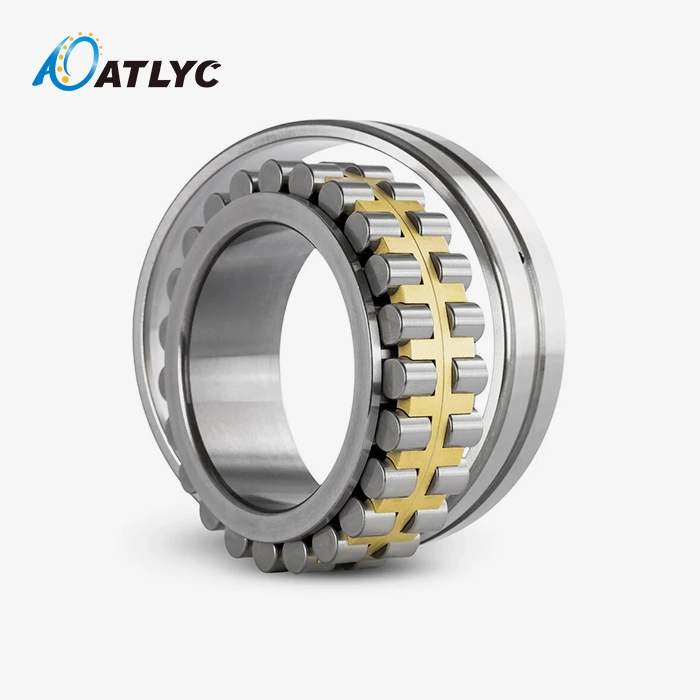
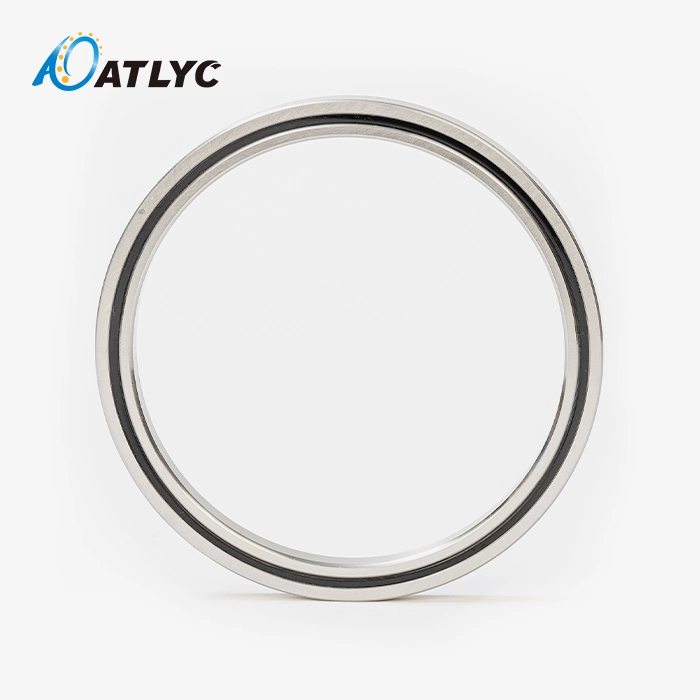
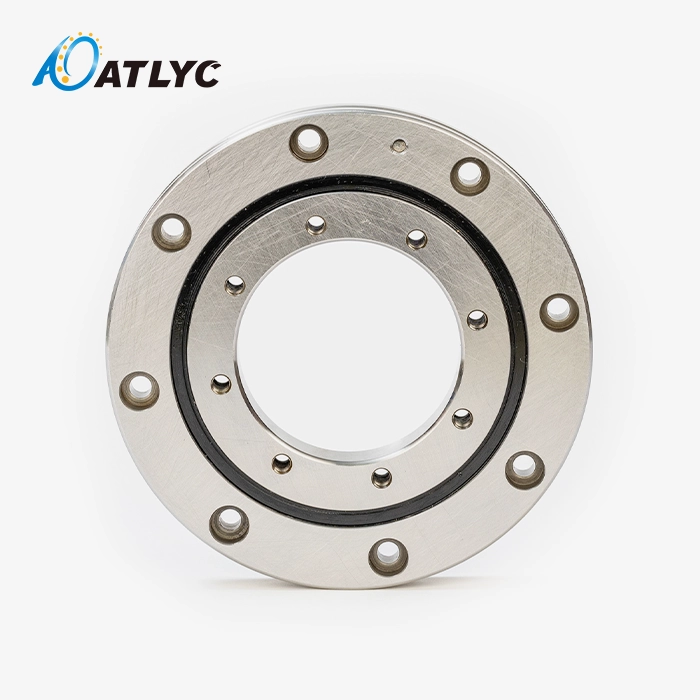
In terms of precision engineering, RE Cross Roller Bearing technology is a big step forward because it solves problems that standard ball bearings can't. The basic design includes cylinder-shaped wheels set at right angles to each other inside V-groove raceways that were specially made. This alternating design makes a small load-bearing frame that can handle many complex force vectors at the same time.
Structural Configuration and Load Distribution
The unique feature of this type of bearing is its split inner ring arrangement and merged outer ring. This setup lets you precisely change the preload during installation, which has a direct effect on the accuracy of the spin. When set up correctly, the design of perpendicular rollers makes line contact instead of point contact, which spreads stress over a bigger surface area. This design concept lowers the amount of pressure in certain areas, which usually leads to elastic deformation in regular bearing systems.
To make these parts, you need to heat-treat vacuum-degassed high-carbon chromium bearing steel (GCr15 or GCr15SiMn) to 58–64 HRC. The material goes through strict quality controls, such as magnetic particle screening, to find tiny cracks that could affect its function. With inner diameters from 20 mm to 1100 mm and outer diameters from 70 mm to 1500 mm and widths from 12 mm to 110 mm, these bearings can meet a wide range of industrial needs.
Roller Separation and Friction Management
Spacers between each roller keep them from touching directly, which stops skewing and reduces friction force. This separation device makes sure that motion is smooth even when there is a lot of loading. Because this design has a low friction coefficient, it directly improves spinning accuracy by lowering the amount of heat and mechanical resistance that could cause runout mistakes during long-term use.
Key Factors That Make Cross Roller Bearings Superior in Rotation Accuracy
RE Cross Roller Bearings are the best choice for precision uses because of a number of technical reasons. Knowing about these factors helps people who work in buying decide if they are right for certain business needs.
Exceptional Rigidity and Multi-Directional Load Capacity
Because the rollers are arranged in a 1:1 cross-shape, they have three to four times more tension per unit volume than angular contact ball bearings. This stiffness keeps the positional accuracy during operation by stopping displacement under load. A single bearing unit handles radial forces, axial thrust, and overturning moments all at the same time. This gets rid of the complexity and cumulative limits that come with systems with multiple bearings. This combined load handling immediately leads to better spinning accuracy, since fewer parts mean fewer places where mistakes could happen.
This trait is especially useful for applications that need to handle a lot of moment loads. Over millions of cycles, robotic joints that do repeated positioning jobs stay accurate because the structural integrity of the bearing doesn't change when it wears down. The combined design stops the misalignment problems that happen with stacked bearings, where different units may settle or change over time.
Precision Manufacturing and Runout Control
To get sub-micron circular accuracy, manufacturing must be very precise. Laser micrometers are used in factories to check that mounting areas are flat and concentrically centered, making sure they meet strict geometric standards. High-precision magnetic probes are used to measure rotational runout, which is the main pass/fail metric for outer ring uses. Quality standards that follow JIS B 1514 make sure that parts can be switched out and that performance will be the same from one production batch to the next.
There are different levels of dimensional accuracy, ranging from P6 to P4. P4 is the most exact level and is best for ultra-precise machinery. These groups describe the accepted ranges for variations in the bore diameter, the outer diameter, and the combined bearing width tolerance. By choosing the right accuracy grade when you buy the bearing, you can be sure that it will meet your needs without adding extra costs.
Material Stability and Thermal Control
Any accurate machine that rotates has to deal with changes in temperature. The bearing steel that was carefully chosen has very low thermal expansion coefficients, so its dimensions stay the same across a wide range of working temperatures. Heat treatment methods even out the stress inside a material, which keeps it from warping when it's heated and cooled. This thermal stability is especially useful in continuous-duty situations where heat from friction could otherwise cause runout changes that could be measured.
The regular hardness of the material ensures that all roller contact surfaces wear in the same way. Uneven wear patterns would cause accuracy to slowly decline over time, but controlled manufacturing makes sure that the material qualities are all the same, which stops performance from declining too quickly.
Applications Where Cross Roller Bearings Excel in Precision
RE Cross Roller Bearing technology helps companies stay ahead of the competition by making their products better and running their businesses more efficiently.
Industrial Robotics and Automation
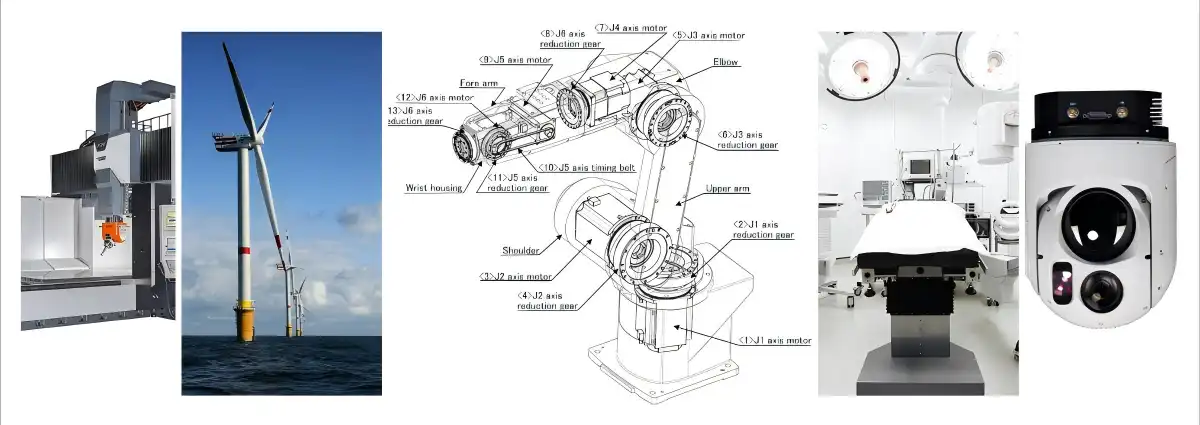
Robotic parts need to be able to move smoothly and precisely over long job cycles. Robots can repeat their positions to within a few micrometers because the RE Cross Roller Bearings can handle moment loads while keeping rotating accuracy. This level of accuracy has a direct effect on the quality of assembly in auto factories, where standards for component placement are getting tighter to make cars safer and better at their jobs.
Low-friction properties make it possible for collaborative robots to move slowly and precisely with the help of human operators. The lower power needs mean smaller servo motors and less energy use, but the accuracy needed for sensitive tasks like putting together electronics or making medical devices is still there.
CNC Machining Centers and Precision Equipment
Accurate bearings are needed for rotary tables in machining centers to keep the item in place during multi-axis processes. Over time, mistakes caused by bearing runout have a direct effect on the accuracy of a part's dimensions and the quality of its surface finish. RE Cross Roller Bearings help keep these mistakes to a minimum, so makers can meet standards for tightening tolerances without having to make changes that slow down production.
Measuring tools and devices used to make integrated circuits (ICs) are examples of places where controlling external pollution is important, and accuracy is very important. The sealed design choices of the bearing protect its interior parts while keeping the sub-micron accuracy needed for optical measurement systems and handling semiconductor wafers.
Medical Equipment and Scientific Instrumentation
For diagnostic accuracy, medical imaging equipment needs to be able to rotate in a way that doesn't cause vibrations. RE Cross Roller Bearings make images clearer by getting rid of mechanical flaws that could hide clinical details. They do this by running smoothly and with little runout. Surgical robots also need this level of accuracy to keep instruments in the same place during minimally invasive procedures.
The regular placement accuracy of laboratory automation equipment that works with biological samples keeps samples from getting contaminated and ensures that experiments can be repeated. These uses show how bearing performance has a direct effect on results in mission-critical settings where equipment dependability can't be compromised.
Comparing Cross Roller Bearings to Other Bearing Types
Knowing the trade-offs in performance between bearing technologies helps you make smart purchasing choices that are in line with the needs of your application.
Performance Benchmarking Against Ball Bearings
Because they are light and have a point contact shape, traditional deep groove ball bearings work well in high-speed situations. But because they aren't very hard and can't hold much weight, they can't be used for precise tasks that need to handle loads in more than one way at the same time. To handle complex loads, ball bearings usually need to be paired or stacked, which adds to the system's overall accuracy by introducing cumulative errors.
RE Cross Roller Bearings are more rigid and can be installed in a single unit, which makes machine design easier and improves accuracy. The downside is that they have slightly higher friction ratios than ball bearings, which means they work better in situations where accuracy is more important than maximum rotational speed.
Angular Contact Bearings and Preload Considerations
You can prime angular contact bearings to make them more rigid, but this setup needs to be mounted precisely and usually uses matched bearing sets. Because it's hard to get and keep the right setup during installation and operation, there are many factors that can affect the accuracy.
RE Cross Roller Bearings have a split inner ring design that makes adjusting the preload easier. This makes it easier for techs to get the contact conditions they need more reliably. This useful benefit cuts down on startup mistakes and makes sure that speed stays the same across different machine builds.
Cost-Performance Analysis for Procurement
RE Cross Roller Bearings cost more than normal ball bearings, but their combined functions often lower the total cost of the system. Getting rid of various bearing systems lowers the number of parts needed, makes managing inventory easier, and cuts down on the work needed to put them together. Total cost of ownership goes down even more because a better load spread leads to longer service life.
When procurement experts look at different suppliers, they should not only look at unit prices but also at technical help, the ability to make changes, and the reliability of delivery. Well-known brands like NSK, THK, SKF, and KOYO have a lot of products to choose from. However, buying from ISO 9001 and IATF 16949-approved makers guarantees quality at a reasonable price.
Practical Guide to Procuring and Maintaining Precision Bearings
For execution to go well, selection criteria, provider evaluation, and upkeep methods that keep accuracy up for the life of the system must all be carefully thought out.
Selection Criteria Based on Application Requirements
The first step in choosing bearings is to figure out the load. Engineers have to figure out the highest radial forces, axial loads, and moment loads that the RE Cross Roller Bearings will have to deal with while it's working. They also have to include shock loads that come from quick stops or starts. The choice of bearing size and accuracy grade is based on safety factors that are right for the job cycle and how important the application is.
Supplier Evaluation and Quality Verification
When a manufacturer gets certified to ISO 9001 and IATF 16949 standards, it shows that they are dedicated to quality management systems and methods for ongoing improvement. With these certificates, you can be sure that the dimensions will be the same across production batches and that you can track the product all the way through the manufacturing process.
When doing application building and fixing, being able to provide technical support is very helpful. Suppliers who offer technical help help you choose the best bearings and give you advice on how to place them in a way that keeps their accuracy. Customization makes it possible to meet specific application needs that normal catalog goods can't meet.
Reliability of lead times affects how production schedules and supplies are managed. When suppliers consistently deliver on time, it's possible to use lean stocking practices, which lower carrying costs and keep production going. Asking for examples from current customers in similar businesses gives you more information about how well a supplier does their job than what they say in their ads.
Maintenance Protocols for Sustained Accuracy
The basis for correct operation is set by following the right steps for installation. Using the right fastening tools keeps bearings from getting damaged during installation, and following the manufacturer's torque recommendations keeps the preload at the right level without putting too much stress on the parts. Once everything is installed, it is aligned to make sure that the fixing areas are flat and straight.
How you handle lubrication has a direct effect on how well and how long bearings last. By choosing oils that work with the working temperatures and speeds, you can keep the low-friction properties and avoid premature wear. Too much lubrication raises working temperatures and can make seals less effective. On the other hand, too little lubrication speeds up wear and adds particulate contamination from material loss.
Condition tracking finds problems as they start to happen before they become major problems. Baseline performance markers are made by keeping track of working temperatures, vibration patterns, and noise levels. If these baselines aren't met, it could mean some problems need to be looked into. Setting up regular reviews that happen at the same time as equipment maintenance checks makes sure that any problems with seal wear, oil changes, or mounting surface wear that could affect accuracy are found quickly.
Accidental damage can be avoided by treating things correctly during repair tasks. Bearings should be kept in their safe package until they are installed, and they should not be touched by precision surfaces because that could damage or contaminate the surface. Corrosion that could change the accuracy of measurements or the quality of the surface finish can't happen in controlled-humidity storage areas.
Conclusion
RE Cross Roller Bearings give modern, precise equipment the rotational accuracy it needs by combining clever engineering that handles loads in multiple directions into small, rigid units. The perpendicular roller layout, seamless outer ring design, and precision production all work together to get runout control of less than one micron, which is important for robots, CNC machining, and medical uses. The accuracy is maintained across all operating temperature ranges thanks to the choice of materials and their thermal stability. The total cost of ownership is also lowered by making installation and upkeep easier. Choosing the right accuracy grades, working with certified makers, and following the right upkeep procedures will ensure long-term performance that meets the higher precision standards needed in all industries.
FAQ
1. How do cross roller bearings enhance accuracy relative to traditional ball bearings?
The pattern of vertical rollers makes line contact across V-shaped raceways, which spreads loads more evenly than point contact, which is what ball bearings do. This design reduces runout directly by making the structure three to four times stiffer and minimizing the amount of elongation. The continuous outer ring gets rid of split-ring errors, keeping the geometry accurate as the ring turns. Separating the rollers also stops the skewing and changes in friction that cause mistakes in the accuracy of RE Cross Roller Bearings.
2. What maintenance practices optimize bearing performance and longevity?
Using calibrated torque specs for proper fitting sets the right preload without putting too much stress on the parts. Choosing a lubricant that fits the operational factors stops wear before it's due, and the amount of time between relubrications is based on the job cycle and the environment. Condition monitoring that keeps an eye on temperature, shaking, and noise can spot problems before they get too bad. Seal check stops pollution from getting in, which speeds up wear and lowers accuracy. Following these rules keeps the accuracy of the measurements and makes the service life much longer than setups that aren't taken care of.
3. Are customization services available for specific industrial requirements?
Certified makers offer customization options such as changing the sizes, making special sealing arrangements for tough locations, and upgrading the materials for situations with high temperatures or corrosion. For ultra-precision uses, custom accuracy grades above the normal P4 levels are best. Lead times for customized goods depend on how complicated the changes are, so it's best to work with suppliers early on in the planning process. To make custom specs work best, technical support teams help with application building.
Partner with ATLYC for High-Precision RE Cross Roller Bearings
ATLYC has been making precision bearings for 15 years and has ISO 9001 and IATF 16949-approved quality systems as well as scalable production capacity to serve original equipment makers (OEMs) in the car industry, producers of industrial equipment, and global distributors. Our research team helps you choose the right RE Cross Roller Bearings for the job, making sure they meet your load requirements and accuracy standards. They also provide full technical documentation and quick customer service. Get in touch with our experts at auto@lyautobearing.com to talk about your project needs, get full specs, or get quotes for large orders. We have been a supplier of precision bearings for a long time, so you can count on us to give you consistent quality, reasonable pricing, and reliable wait times that work with your production plans and long-term relationship goals.
References
1. Harris, T.A. & Kotzalas, M.N. (2006). Advanced Concepts of Bearing Technology: Rolling Bearing Analysis, Fifth Edition. CRC Press, Taylor & Francis Group.
2. Nishioka, M. & Yamamoto, T. (2015). "Precision Analysis of Cross Roller Bearings in Robotic Joint Applications." Journal of Mechanical Engineering Science, Vol. 229, Issue 14, pp. 2534-2547.
3. Schaeffler Technologies AG & Co. KG (2019). Rolling Bearings: Catalogue HR 1 - Principles, Calculation, Examples. Schaeffler Group Industrial Division.
4. International Organization for Standardization (2014). ISO 199:2014 - Rolling Bearings - Thrust Bearings - Geometrical Product Specifications (GPS) and Tolerance Values. ISO Technical Committee 4.
5. Xu, H., Zhang, D., & Wang, L. (2018). "Thermal Stability and Accuracy Retention in High-Precision Cross Roller Bearings." Tribology International, Vol. 125, pp. 156-165.
6. Japanese Industrial Standards Committee (2012). JIS B 1514:2012 - Cylindrical Roller Bearings - Boundary Dimensions and Tolerances. Japanese Standards Association.
Learn about our latest products and discounts through SMS or email