- English
- French
- German
- Portuguese
- Spanish
- Russian
- Japanese
- Korean
- Arabic
- Greek
- German
- Turkish
- Italian
- Danish
- Romanian
- Indonesian
- Czech
- Afrikaans
- Swedish
- Polish
- Basque
- Catalan
- Esperanto
- Hindi
- Lao
- Albanian
- Amharic
- Armenian
- Azerbaijani
- Belarusian
- Bengali
- Bosnian
- Bulgarian
- Cebuano
- Chichewa
- Corsican
- Croatian
- Dutch
- Estonian
- Filipino
- Finnish
- Frisian
- Galician
- Georgian
- Gujarati
- Haitian
- Hausa
- Hawaiian
- Hebrew
- Hmong
- Hungarian
- Icelandic
- Igbo
- Javanese
- Kannada
- Kazakh
- Khmer
- Kurdish
- Kyrgyz
- Latin
- Latvian
- Lithuanian
- Luxembou..
- Macedonian
- Malagasy
- Malay
- Malayalam
- Maltese
- Maori
- Marathi
- Mongolian
- Burmese
- Nepali
- Norwegian
- Pashto
- Persian
- Punjabi
- Serbian
- Sesotho
- Sinhala
- Slovak
- Slovenian
- Somali
- Samoan
- Scots Gaelic
- Shona
- Sindhi
- Sundanese
- Swahili
- Tajik
- Tamil
- Telugu
- Thai
- Ukrainian
- Urdu
- Uzbek
- Vietnamese
- Welsh
- Xhosa
- Yiddish
- Yoruba
- Zulu
How Does Angular Ball Bearing 7014AC Compare in Load Distribution?
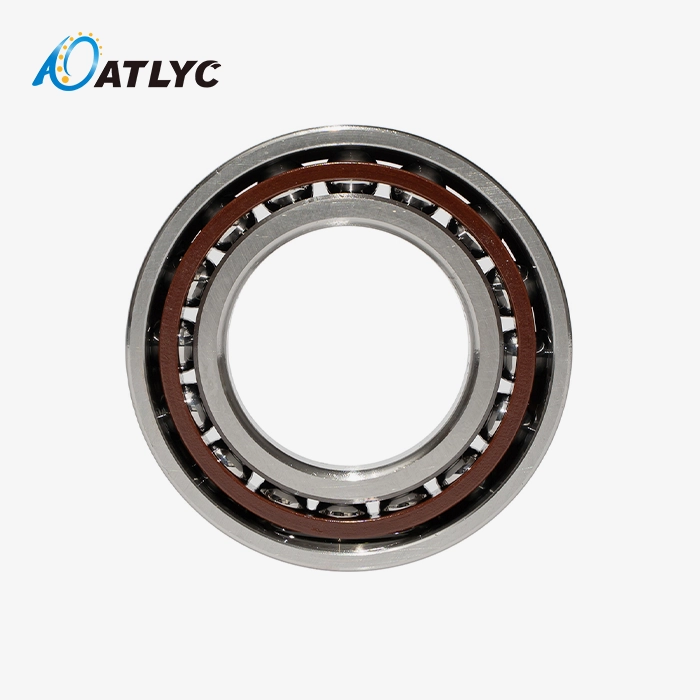
The Angular Ball Bearing 7014AC is great at spreading loads because it has a 25-degree contact angle that was carefully designed to make the best load lines between the raceways and rolling elements. This arrangement lets you handle both radial and axial loads at the same time, spreading forces evenly across contact points to reduce stress peaks. This bearing is made from GCr15 bearing steel and has an inner diameter of 70mm, an outer diameter of 110mm, and a width of 20mm. It can handle more weight than standard deep groove bearings and is essential for high-precision spindle applications where even force distribution affects the accuracy and longevity of the operation.
Understanding the Load Distribution Mechanism of 7014AC Angular Contact Ball Bearings
Angular contact ball bearings operate on fundamentally different principles from conventional radial bearings. The defining characteristic lies in how loads transfer through the bearing assembly.
Internal Geometry and Contact Angle Design
In our 7014AC bearing, the 25-degree contact angle is the angle between the line that connects the contact points on the ball and raceway and a plane that is perpendicular to the bearing axis. At this angle, asymmetric load paths are made that can handle combined loading situations well. Machines that make both radial forces from rotating masses and axial thrust from operating dynamics can use the geometry of the contact angle to send these forces in the best way possible through hardened steel balls and onto precision-ground raceways. The way we make things makes sure that every raceway shape stays within very tight limits. Along the bearing plane, the raceways are spaced apart from each other. This creates the characteristic contact angle that tells us how much weight the bearing can hold. Because of the way the shapes are arranged, angular contact ball bearings naturally fight axial displacement while keeping radial support.
Cage Material Selection and Performance
The choice of cage material has a direct effect on how well the load is distributed. Our 7014AC bearings come with either Bakelite (phenolic resin) or nylon cages, and each is best for a certain type of use. Bakelite cages can survive high temperatures that are common in high-speed spindle applications. They also stay stable in size, which keeps the ball spacing and contact geometry the same. Nylon cages are very good at reducing vibrations, which makes load changes smoother during acceleration and deceleration stages. The cage keeps the balls far enough apart to stop skewing and make sure that each rolling element adds the same amount to the load distribution. This even engagement between all balls increases the useful load capacity and increases the service life of the bearing.
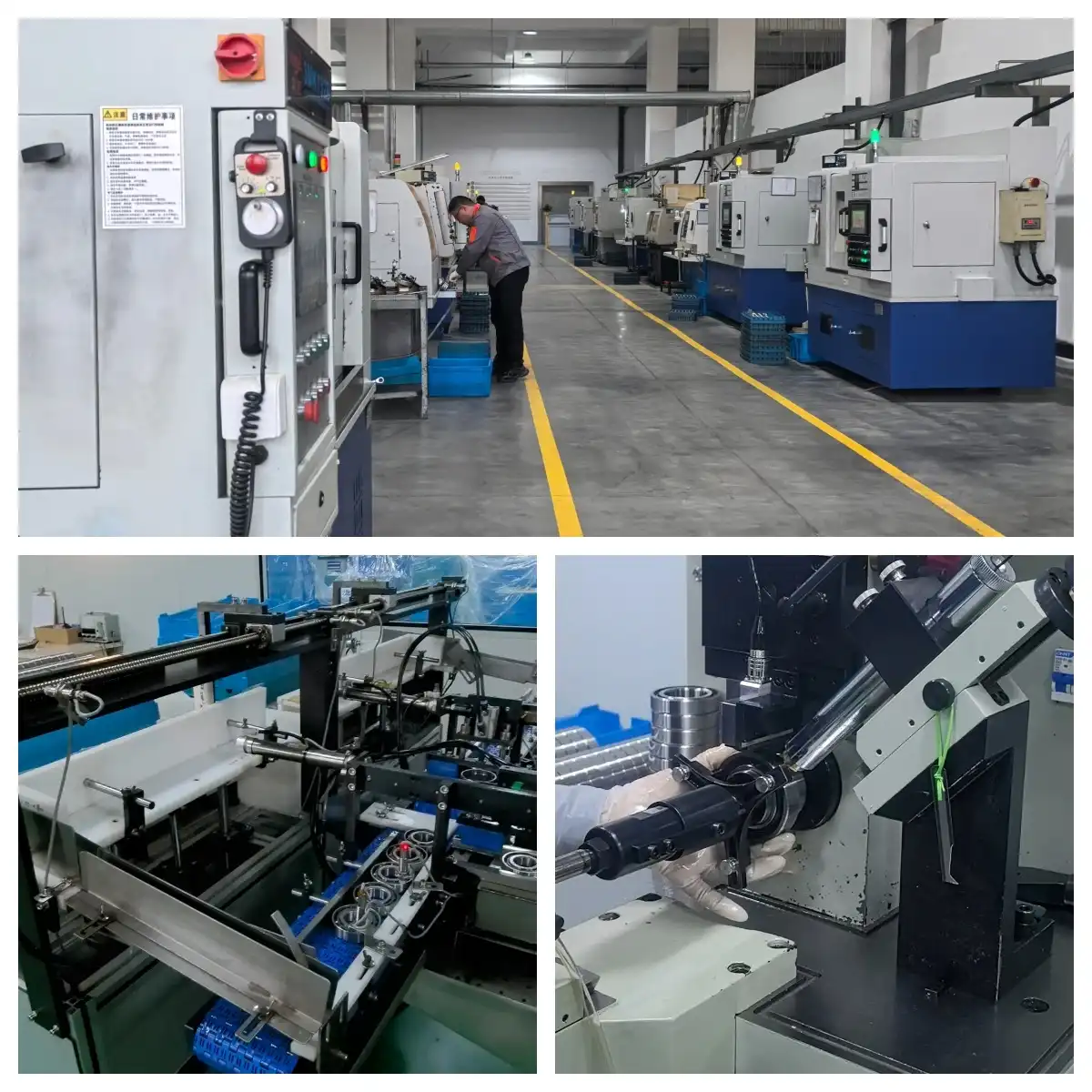
Comparative Analysis of 7014AC Bearing Load Distribution vs Alternative Bearings
Understanding how the 7014AC compares to alternative bearing designs, the Angular Ball Bearing 7014AC helps procurement professionals make informed decisions based on specific application requirements.
7014AC vs 7014B Configuration Differences
The main difference between the 7014AC and 7014B versions is the size of the contact angle. The contact angle on our 7014AC is 25 degrees, while the one on our 7014B is 40 degrees. This difference has a big effect on how loads are distributed and what kinds of applications can use them. The 40-degree angle in 7014B bearings makes them better for uses with mostly thrust loads because it increases their axial load capacity. However, this limits the speed that can be reached because the higher contact angle causes more rolling resistance and heat at high rotational speeds. Our 7014AC design strikes a good balance between providing strong axial load support and keeping the high-speed efficiency needed for spindle applications.
Clearance Variants and Load Distribution
The 7014AC/C3 designation indicates a bearing with C3 internal clearance—slightly greater than standard. This clearance specification affects load distribution patterns, particularly during thermal expansion. As operating temperatures rise, bearing components expand at different rates. The C3 clearance accommodates this expansion without preloading the bearing excessively, maintaining intended load distribution characteristics across temperature ranges. Applications involving elevated operating temperatures or interference fits benefit from C3 clearance variants, as they prevent unintended preload that would alter contact stress patterns and potentially reduce bearing life.
Key Specifications and Dimensional Insights Impacting 7014AC Load Distribution
Precise specifications define how effectively angular contact ball bearings distribute operational loads throughout their service life.
Critical Dimensional Parameters
Our 7014AC bearing maintains exact dimensions: 70mm bore diameter, 110mm outside diameter, and 20mm width. These measurements follow ISO standards, ensuring compatibility with standardized housing and shaft configurations. Manufacturing tolerances for these dimensions directly influence load distribution uniformity—excessive dimensional variation creates uneven contact patterns that concentrate loads and accelerate fatigue. The bearing's cross-sectional geometry, particularly raceway curvature radius, determines contact ellipse dimensions. Engineers calculate contact stress using Hertzian contact theory, which shows that slightly larger raceway radii reduce maximum contact pressures by spreading loads across larger contact areas. Our manufacturing process controls raceway profiles to optimize this balance between contact area and rolling resistance.
Precision Grade Impact on Load Performance
We produce the 7014AC in P5, P4, and P2 precision classes, each offering progressively tighter tolerances on dimensional accuracy, running accuracy, and surface finish. Here's how precision grades affect load distribution: Angular Ball Bearing 7014AC performance: P5 Precision Grade: Suitable for general industrial machinery where load distribution consistency meets standard operational requirements. Dimensional tolerances allow minor variations in contact patterns that remain acceptable for most applications.P4 Precision Grade: Delivers enhanced load distribution uniformity through tighter raceway roundness and ball diameter consistency. Machine tool spindles and precision equipment benefit from this grade, as more uniform contact patterns reduce vibration and improve operational accuracy.Higher precision grades command premium pricing but deliver measurable performance advantages in demanding applications where load distribution consistency directly impacts product quality and equipment longevity.
Practical Applications and Real-World Performance of 7014AC Bearings in Load Scenarios
Understanding theoretical load distribution principles becomes meaningful only when connected to actual industrial applications where these bearings deliver tangible performance benefits.
Machine Tool Spindle Applications
Machine tool spindles represent the primary application domain for angular contact ball bearings like the 7014AC. During cutting operations, spindles experience complex loading—radial forces from cutting loads, axial thrust from tool engagement, and moment loads from tool overhang. The 7014AC bearing's load distribution characteristics address these demands effectively. When mounted in DB (back-to-back) configuration, pairs of these bearings create rigid support that resists both radial and bidirectional moment loads. The 25-degree contact angle provides sufficient axial stiffness to maintain tool position accuracy while allowing the high-speed operation essential for productive machining. We've supplied these bearings to automotive component manufacturers running high-speed machining centers. Operators reported consistent dimensional accuracy across production runs, attributing performance to the bearing's stable load distribution characteristics that maintain spindle positioning precision despite varying cutting forces.
Mounting Configuration Impact on Load Management
The DB (back-to-back) mounting arrangement pairs two angular contact bearings with their contact angle lines converging. This configuration creates a rigid bearing arrangement with high moment load capacity—critical for applications where shaft Angular Ball Bearing 7014AC deflection must be minimized. The mirrored load paths of DB-mounted bearings distribute moments symmetrically, preventing the shaft tilting that would compromise precision in spindle applications. Alternative arrangements like DF (face-to-face) or tandem mounting offer different load distribution characteristics suited to specific operational requirements. Our technical team assists customers in selecting optimal mounting configurations based on application load profiles and performance objectives.
Procurement Considerations for 7014AC Angular Contact Ball Bearings
Securing reliable bearing supplies that meet technical specifications and delivery requirements demands careful supplier evaluation and procurement strategy.
Supplier Qualification and Quality Assurance
As a manufacturer holding both ISO 9001 and IATF 16949 certifications, ATLYC maintains quality management systems aligned with international standards. These certifications demonstrate our commitment to consistent manufacturing processes that deliver bearings meeting specified performance parameters batch after batch. When evaluating bearing suppliers, procurement managers should verify certification authenticity and manufacturing capability. Our facility houses six specialized workshops staffed by 120 skilled employees dedicated to production, quality inspection, and assembly operations. This vertical integration ensures quality control throughout manufacturing stages, from raw material verification through final inspection.
Lead Times and Supply Chain Reliability
Industrial procurement timelines demand predictable delivery schedules. We maintain an inventory of standard 7014AC configurations, enabling 7-working-day delivery for typical orders. This rapid turnaround supports maintenance operations and production schedules without requiring customers to maintain excessive bearing inventory. Understanding that unexpected equipment failures demand immediate attention, we've structured our production scheduling to accommodate urgent requirements. Our global shipping network reaches customers in South Korea, the United States, Germany, Russia, Iran, and Turkey with reliable logistics that protect bearing quality during transit.
Cost-Performance Evaluation
Bearing procurement decisions should consider the total cost of ownership rather than the purchase price alone. While premium bearings from established global brands command higher prices, quality Chinese manufacturers like ATLYC deliver comparable performance at competitive pricing through efficient manufacturing processes and optimized supply chains. Our 7014AC bearings undergo identical quality verification protocols as premium alternatives—dimensional inspection, raceway surface analysis, rotational testing, and batch sampling that ensures consistent specifications. Procurement managers gain cost advantages without compromising the load distribution performance and reliability that their applications demand.
Conclusion
The Angular Ball Bearing 7014AC delivers superior load distribution through precisely engineered 25-degree contact angle geometry, GCr15 steel construction, and manufacturing accuracy that maintains consistent performance across demanding industrial applications. Compared to alternative bearing designs, the 7014AC offers optimized balance between axial load capacity and high-speed capability essential for spindle applications. With dimensions of 70mm bore, 110mm outside diameter, and 20mm width, available in P5/P4/P2 precision grades, these bearings provide procurement professionals with reliable solutions backed by ISO 9001 and IATF 16949 certified manufacturing processes, ensuring consistent quality and 7-day delivery timelines.
FAQ
1. How does the 25-degree contact angle affect load distribution in the 7014AC bearing?
The 25-degree contact angle creates optimized load paths that distribute combined radial and axial forces evenly across rolling elements and raceways. This geometry allows efficient handling of simultaneous load types while maintaining high-speed capability, unlike steeper angles that favor axial loads at the expense of speed performance.
2. What distinguishes 7014AC from 7014B bearing configurations?
The primary difference lies in the contact angle—7014AC features 25 degrees while 7014B employs 40 degrees. The 7014AC provides balanced performance for applications with moderate combined loads and high-speed requirements, whereas 7014B offers greater axial capacity suited to predominantly thrust-loaded applications.
3. How can I verify authentic 7014AC bearings for critical applications?
Verify bearings match exact specifications: 70mm inner diameter, 110mm outer diameter, 20mm width, with proper marking indicating contact angle designation. Request certification documentation confirming material specifications and precision grade. Reputable suppliers like ATLYC provide traceable quality documentation with each shipment.
Partner with ATLYC for Reliable Angular Contact Ball Bearing 7014AC Supply
Optimizing your machinery performance begins with selecting Angular Ball Bearing 7014AC the right angular contact ball bearing supplier. ATLYC combines 15 years of precision manufacturing expertise with ISO 9001 and IATF 16949 certified quality systems, delivering 7014AC bearings that meet exacting specifications for load distribution and operational reliability. Our 7-day delivery commitment, OEM customization capabilities, and technical support ensure your procurement needs are met with professional service. Contact our team at auto@lyautobearing.com to discuss your specific application requirements and discover how our Angular Ball Bearing 7014AC solutions support your operational excellence as a trusted manufacturer serving global markets.
References
1. Harris, T.A. and Kotzalas, M.N. (2006). "Rolling Bearing Analysis: Essential Concepts of Bearing Technology." CRC Press, Fifth Edition.
2. ISO 15:2017. "Rolling bearings — Radial bearings — Boundary dimensions, general plan." International Organization for Standardization.
3. Witte, D.C. (1973). "Operating Torque of Tapered Roller Bearings." ASLE Transactions, Volume 16, Issue 1, pp. 61-67.
4. Palmgren, A. (1959). "Ball and Roller Bearing Engineering." SKF Industries Inc., Third Edition.
5. ANSI/ABMA Standard 20-1996. "Radial Bearings of Ball, Cylindrical Roller and Spherical Roller Types — Metric Design." American Bearing Manufacturers Association.
6. Eschmann, P., Hasbargen, L., and Weigand, K. (1985). "Ball and Roller Bearings: Theory, Design and Application." John Wiley & Sons, Second Edition.
Learn about our latest products and discounts through SMS or email