- English
- French
- German
- Portuguese
- Spanish
- Russian
- Japanese
- Korean
- Arabic
- Greek
- German
- Turkish
- Italian
- Danish
- Romanian
- Indonesian
- Czech
- Afrikaans
- Swedish
- Polish
- Basque
- Catalan
- Esperanto
- Hindi
- Lao
- Albanian
- Amharic
- Armenian
- Azerbaijani
- Belarusian
- Bengali
- Bosnian
- Bulgarian
- Cebuano
- Chichewa
- Corsican
- Croatian
- Dutch
- Estonian
- Filipino
- Finnish
- Frisian
- Galician
- Georgian
- Gujarati
- Haitian
- Hausa
- Hawaiian
- Hebrew
- Hmong
- Hungarian
- Icelandic
- Igbo
- Javanese
- Kannada
- Kazakh
- Khmer
- Kurdish
- Kyrgyz
- Latin
- Latvian
- Lithuanian
- Luxembou..
- Macedonian
- Malagasy
- Malay
- Malayalam
- Maltese
- Maori
- Marathi
- Mongolian
- Burmese
- Nepali
- Norwegian
- Pashto
- Persian
- Punjabi
- Serbian
- Sesotho
- Sinhala
- Slovak
- Slovenian
- Somali
- Samoan
- Scots Gaelic
- Shona
- Sindhi
- Sundanese
- Swahili
- Tajik
- Tamil
- Telugu
- Thai
- Ukrainian
- Urdu
- Uzbek
- Vietnamese
- Welsh
- Xhosa
- Yiddish
- Yoruba
- Zulu
Why is the Tapered Roller Bearing 30 Series Used in Axle Systems?
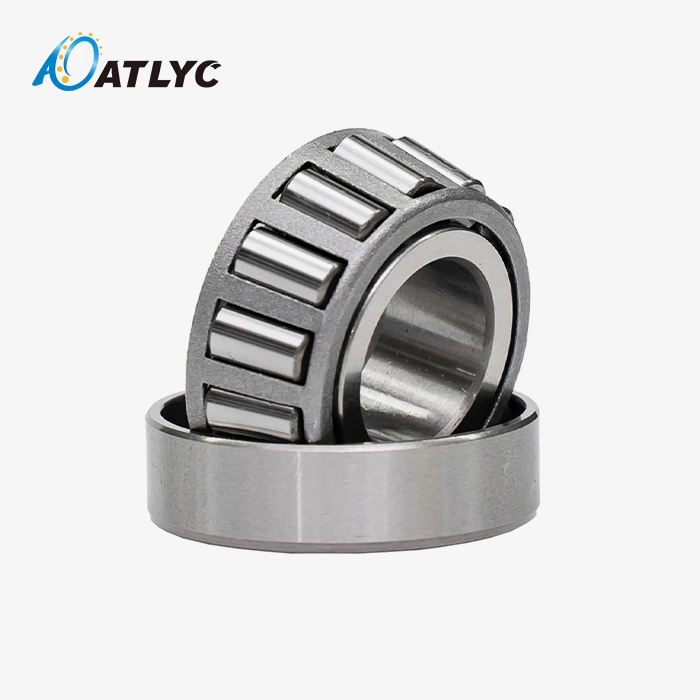
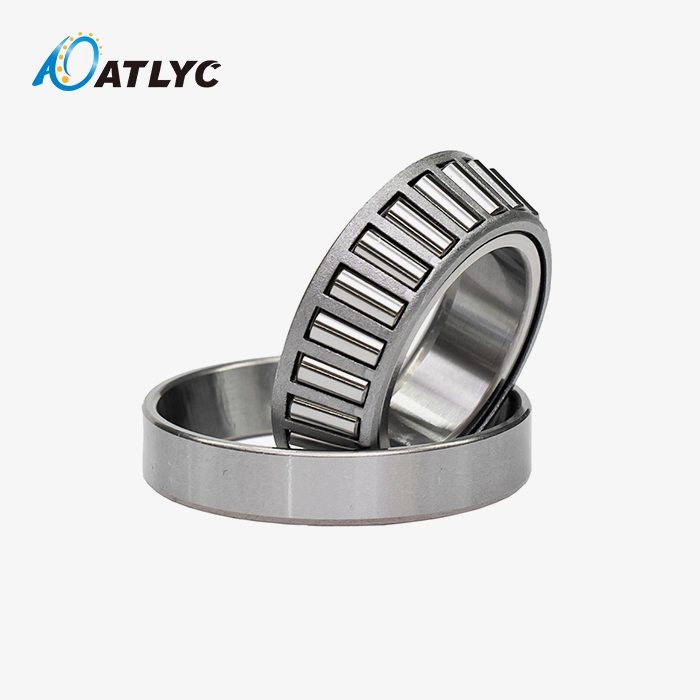
The Tapered Roller Bearing 30 series is the most popular choice for axle system uses because it can handle both radial and single-direction axial loads at the same time. This set of bearings is designed with contact angles between 10° and 30°. Its conical shape, in which all contact points meet on a single axis, makes it the best at distributing load. This design gets rid of edge loading and spreads forces evenly across each roller, which makes it last a lot longer in medium- to low-load situations like those found in automotive hubs, industrial reducers, and farm machinery gearboxes. The design of the separate outer ring lets the cup and cone assemblies be mounted separately. This makes installation easier and allows for precise clearance changes that account for thermal expansion during operation.
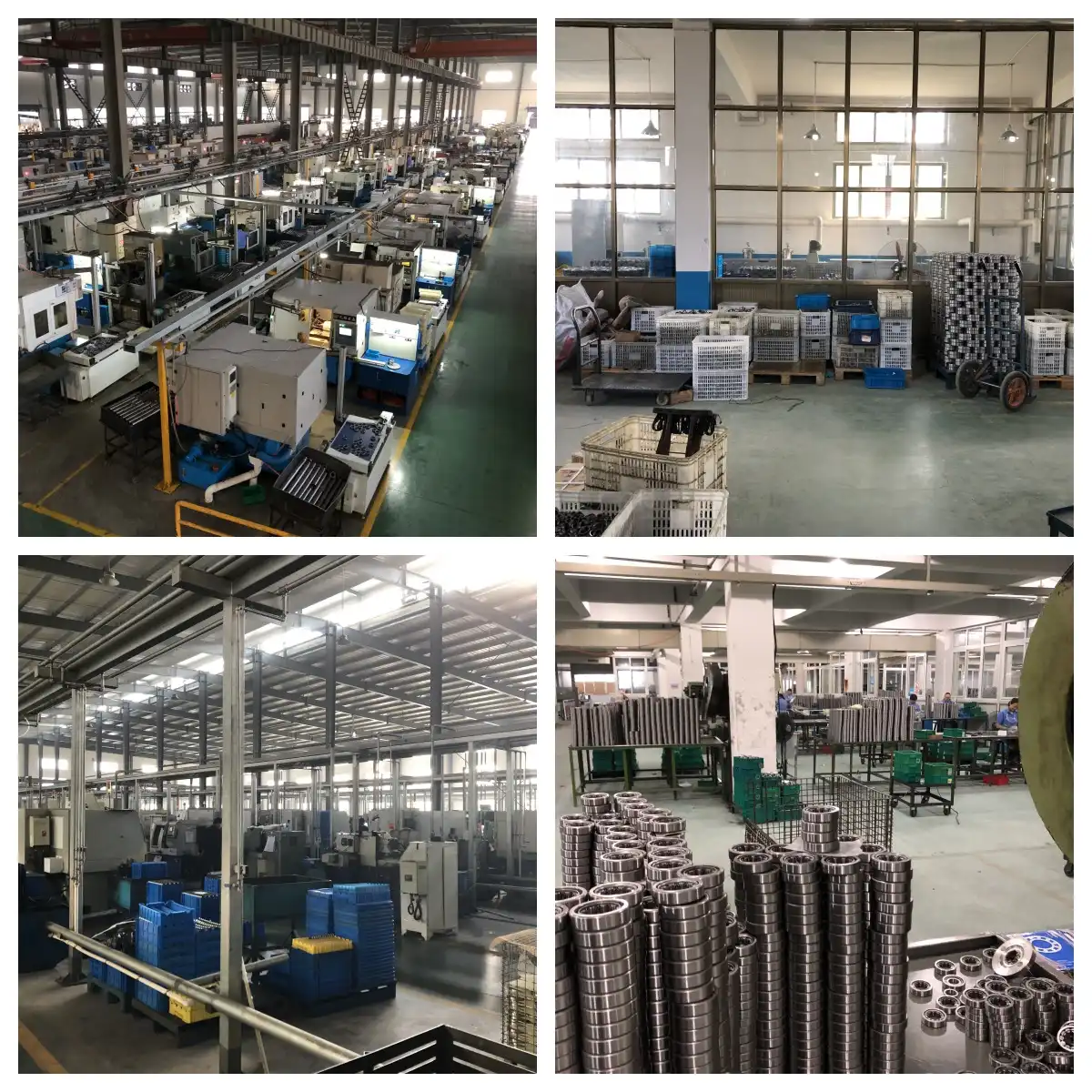
Understanding the Tapered Roller Bearing 30 Series: Specifications and Working Principles
The foundation of this bearing's performance lies in its meticulous engineering and conformity to international standards, including ISO 355 and DIN 720 specifications.
Technical Specifications and Dimensional Range
Metric single-row tapered roller bearings with inner diameters from 10mm to 500mm, outer diameters from 26mm to 1000mm, and widths from 8mm to 200mm are made at our factory. This wide range of measurement options lets purchasing managers choose the exact layouts needed for different axle uses without sacrificing quality standards. Because there are different levels of precision—P0 for everyday uses, P6 for more precise needs, and P5 for very precise installations—engineering teams can find the best mix between cost and performance needs. Longevity and load capacity of bearings are directly affected by the materials they are made of. For the inner and outer rings, we use GCr15 bearing steel, which is very hard after being heated. Rollers are made from GCr15SiMn or 20Cr2Ni4A alloy steel, which was chosen because they don't wear down easily when loaded and unloaded many times. Pressed steel cages are good for general-purpose uses, while brass cages are better for high-speed or high-temperature settings where stability of dimensions is important.
Separable Design and Adjustable Clearance
In contrast to fixed-clearance ball bearings, tapered roller designs let the clearance be changed after they have been installed. The cone (the inner ring with rollers) and the cup (the outer ring) mount separately, which lets techs control the internal clearance by moving the cone up and down during assembly. This ability to be adjusted is very helpful for heavy-duty uses that need to account for thermal expansion or for fine-tuning bearing preload to stop unwanted shaft deflection. Based on operating temperature ranges, shaft materials, and housing configurations, our expert support team helps customers figure out the right clearance values. This collaborative method makes sure that every installation of bearings, Tapered Roller Bearing 30 series, works at its best from the start.
Core Advantages of the Tapered Roller Bearing 30 Series in Axle Systems
When evaluating bearing solutions for axle assemblies, procurement professionals consistently recognize specific performance advantages that justify specifying the 30 series over alternative designs.
Superior Load Capacity Through Material Excellence
Using special heat treatment methods on high-carbon chromium-bearing steel results in very high hardness levels (usually 58 to 65 HRC) on all contact areas. This level of toughness, which is kept up by carefully controlling the quenching and tempering processes, means that each bearing can handle the highest loads that come up when a vehicle speeds up, slows down, or turns. Our ISO 9001 and IATF 16949-certified quality control system makes sure that all of our production batches are the same. Each bearing goes through a lot of tests that cover twelve key performance indicators, and the qualification rate stays above 99.9%. This level of uniformity gets rid of the variation that some suppliers have which leads to unexpected field failures.
Maintenance Advantages and Service Life Extension
How long a bearing lasts is directly related to how well it is oiled. We include full lubrication instructions with every package. These instructions include suggested lubricant viscosity grades, relubrication times, and fill amounts. The open form of standard 30 series bearings makes it easier for lubricant to flow, which helps get rid of frictional heat and wear particles that could speed up the wear process. Installation methods have a big effect on how well things work in the field. Our technical paperwork includes torque specs, suggestions for mounting tools, and step-by-step assembly instructions that keep you from making common mistakes like skewing the rollers or damaging the raceways when press-fitting. We teach customer support teams how to do installations, which cuts down on callbacks and warranty claims. These benefits add up to measurable value: less unplanned downtime, lower total cost of ownership, and more reliable tools. When automotive OEMs switch hub assemblies from standard ball bearings to high-quality tapered roller bearings, service intervals are 15 to 20 percent longer.
Comparative Analysis: Tapered Roller Bearing 30 Series vs Alternatives
Understanding how the 30 series compares to other bearing types helps procurement teams make informed decisions aligned with their specific application requirements.
Dimensional and Load Profile Comparisons
The 30 series fits into a certain category within the larger family of tapered roller bearings. The 30 series usually has narrower width profiles than the 302 series. This makes it good for installations with limited axial room. The 303 series, on the other hand, has a wider track and can carry more weight, but it needs axle housings that are bigger. The 32000 line is made for heavy-duty uses and has much bigger rolling elements and thicker rings. We walk customers through detailed load calculations as they look at these choices. If you only look at the static capacity values of a bearing, it might not be good enough when you take into account dynamic loads, misalignment, and temperature changes. Our tech support team looks at the load spectra of our customers to help them choose the best series.
Supplier Evaluation Criteria
Global bearing makers like SKF, NSK, Timken, Tapered Roller Bearing 30 series, and FAG have built their names over many years of delivering high-quality products and coming up with new technologies. But procurement professionals are becoming more and more aware that reputable Chinese makers can provide similar technical performance at lower costs. Luoyang Auto Bearing Co., Ltd. has spent fifteen years building up its manufacturing skills to match those of well-known foreign brands. Our six specialised workshops do everything, from handling the raw materials to putting the whole thing together. This makes sure that everything can be tracked and that the quality is controlled. Customers in South Korea, the US, Germany, Russia, Iran, and Turkey have shown their trust in our work by placing repeat orders and signing supply deals that last for more than one year. When looking at suppliers, you should pay close attention to their quality certifications, production capacity, ability to provide technical support, and the reliability of their supply chains. When figuring out long-term value, warranty terms and professional support after the sale are often just as important as the price at first.
Practical Guide for the Procurement and Installation of Tapered Roller Bearing 30 Series
Successful bearing procurement extends beyond simply placing purchase orders. Strategic buyers implement systematic processes that ensure component quality, delivery reliability, and installation success.
Identifying Trustworthy Global Suppliers
Reputable bearing manufacturers demonstrate their credibility through multiple channels. Valid ISO 9001 and IATF 16949 certifications, available for verification through accreditation bodies, confirm adherence to international quality management standards. Production capacity transparency—including equipment lists, facility tours, and process documentation—indicates confidence in manufacturing capabilities. We encourage prospective customers to request sample evaluations before committing to volume orders. Our quality assurance team ships test quantities with full dimensional reports, material certifications, and performance test data. This transparency builds trust and allows your engineering teams to validate compatibility with existing systems. Lead time consistency separates reliable suppliers from opportunistic vendors. We maintain safety stock for common 30 series configurations, enabling shipment within 5-7 business days for standard orders. Custom specifications requiring special materials or dimensional modifications typically ship within three weeks, with clear milestone communications throughout production.
Shipping, Warranty, and After-Sales Support
International logistics present challenges that experienced bearing suppliers help customers navigate. We coordinate with freight forwarders specializing in industrial components, arranging consolidated shipments that reduce per-unit transportation costs. Proper packaging—including rust-preventive coatings, moisture barriers, and impact-resistant containers—protects bearing quality during transoceanic shipping and inland distribution. Our standard warranty covers manufacturing defects for eighteen months from the shipment date or twelve months from installation, whichever occurs earlier. Warranty claims require documentation, including installation records, operating conditions, and failure analysis reports. This structured approach allows us to identify root causes and implement corrective actions that prevent recurrence. Technical support extends throughout the product lifecycle. Our engineering team fields inquiries regarding bearing selection, installation, troubleshooting, and performance optimization. We maintain detailed application records for repeat customers, enabling faster response times when specifications need updating or when introducing bearings into new product lines.
Real-World Applications and Case Studies in Axle Systems
Theory becomes meaningful only when validated through practical implementation. Our fifteen years of serving the global bearing market have generated extensive application experience across diverse industries.
Automotive Hub Assemblies
A European automotive component manufacturer approached us seeking cost reduction in their mid-size sedan hub assemblies, Tapered Roller Bearing 30 series, without compromising quality. Their existing supplier's lead times had extended to twelve weeks, creating production scheduling challenges. We analyzed their load specifications, operating temperature range, and required service life, recommending a 30 series tapered roller bearing configuration with optimized internal geometry. After validating samples through their standard 500-hour endurance testing protocol, the customer transitioned to production volumes. Over eighteen months of field operation across 50,000 vehicles, warranty returns attributable to bearing failure decreased by 23% compared to their previous supplier. The customer attributed this improvement to tighter dimensional control and superior material consistency in our manufacturing process.
Agricultural Machinery Gearboxes
Seasonal usage patterns in agricultural equipment create unique bearing challenges. Extended storage periods risk corrosion, while intense harvest-season operation generates heat and contamination exposure. A Turkish agricultural equipment OEM needed bearings that could withstand these cycling conditions while meeting competitive price targets. Our solution combined standard 30 series bearings with enhanced rust-preventive coatings and detailed storage recommendations. We worked with their maintenance documentation team to develop farmer-friendly inspection procedures that identified potential issues before catastrophic failures occurred. Three growing seasons of field experience validated the approach, with bearing-related failures dropping to less than 0.3% of units produced. These real-world successes demonstrate how proper bearing selection, quality manufacturing, and comprehensive technical support combine to deliver measurable customer value. We maintain detailed case study documentation available to prospective customers facing similar application challenges.

Conclusion
Tapered roller bearings are the most common type used in axle systems. They have many technical benefits, including being able to handle more weight, having changeable clearance for better performance, and being easy to install because they are separate. The 30 series is designed for medium-load applications that need to save room and money while still meeting technical standards. Quality manufacturing, which is proven by ISO 9001 and IATF 16949 certifications, makes sure that all output batches work the same way. Buying from trustworthy suppliers with proven engineering help, clear quality systems, and quick technical support is the best way to get the most value over the lifecycle of a product. Precision bearing manufacturing has been our speciality for fifteen years, which allows us to meet the high standards of car, industrial, and farm equipment makers who need reliable parts to help them stay competitive.
FAQ
1. What factors determine tapered roller bearing lifespan in axle applications?
Bearing longevity depends on load magnitude relative to rated capacity, lubrication quality, replenishment frequency, contamination exposure, installation precision, and operating temperature. Bearings loaded to 30-40% of their dynamic capacity rating typically achieve rated L10 life expectancy, while overloading or inadequate lubrication dramatically reduces service intervals. Environmental sealing and proper clearance adjustment also significantly influence durability.
2. How does the 30 series handle combined radial and axial loads simultaneously?
The tapered raceway geometry creates contact angles between 10° and 30°, allowing force decomposition into radial and axial components distributed across the roller length. This design eliminates the need for separate thrust bearings in many applications. Proper clearance adjustment ensures optimal load distribution between bearing rows in paired configurations, maximizing capacity.
3. What distinguishes the 30 series from 302 and 303 tapered roller bearings?
The primary differences involve dimensional envelopes and load ratings. The 30 series features moderate-width profiles suitable for space-constrained installations, while the 303 series offers increased width and capacity for heavier loads. The 302 series addresses specific metric size requirements. Selection depends on available axle space, load magnitude, and cost considerations balanced against performance requirements.
Partner with ATLYC for Your Tapered Roller Bearing 30 Series Requirements
Selecting the right tapered roller bearing supplier influences Tapered Roller Bearing 30 series your product quality, production efficiency, and customer satisfaction. At ATLYC (Luoyang Auto Bearing Co., Ltd.), we've dedicated fifteen years to mastering precision bearing manufacturing for demanding automotive and industrial applications. Our ISO 9001 and IATF 16949 certified facilities produce tapered roller bearing 30 series configurations meeting exact specifications for hub assemblies, reducers, and gearbox applications. We maintain a comprehensive inventory across dimensional ranges from 10mm to 500mm bore diameters, available in P0, P6, and P5 precision grades. Contact our engineering team at auto@lyautobearing.com for technical consultation, custom specification development, or bulk order quotations. As an established tapered roller bearing 30 series manufacturer serving customers across South Korea, the United States, Germany, and twenty other countries, we deliver the quality consistency, competitive pricing, and supply reliability that strategic partnerships require.
References
1. Harris, T.A. & Kotzalas, M.N. (2006). Advanced Concepts of Bearing Technology: Rolling Bearing Analysis, CRC Press, Fifth Edition.
2. ISO 355:2007, Rolling bearings — Tapered roller bearings — Boundary dimensions, International Organization for Standardization.
3. Budynas, R.G. & Nisbett, J.K. (2015). Shigley's Mechanical Engineering Design, McGraw-Hill Education, Tenth Edition.
4. Lynwander, P. (1983). Gear Drive Systems: Design and Application, Marcel Dekker Inc., Mechanical Engineering Series.
5. SKF Group (2018). Rolling Bearings Catalogue: Technical Reference Guide for Bearing Selection and Application, SKF Publication PUB BU/P1 17000/3 EN.
6. Khonsari, M.M. & Booser, E.R. (2017). Applied Tribology: Bearing Design and Lubrication, John Wiley & Sons, Third Edition.
Learn about our latest products and discounts through SMS or email