- English
- French
- German
- Portuguese
- Spanish
- Russian
- Japanese
- Korean
- Arabic
- Greek
- German
- Turkish
- Italian
- Danish
- Romanian
- Indonesian
- Czech
- Afrikaans
- Swedish
- Polish
- Basque
- Catalan
- Esperanto
- Hindi
- Lao
- Albanian
- Amharic
- Armenian
- Azerbaijani
- Belarusian
- Bengali
- Bosnian
- Bulgarian
- Cebuano
- Chichewa
- Corsican
- Croatian
- Dutch
- Estonian
- Filipino
- Finnish
- Frisian
- Galician
- Georgian
- Gujarati
- Haitian
- Hausa
- Hawaiian
- Hebrew
- Hmong
- Hungarian
- Icelandic
- Igbo
- Javanese
- Kannada
- Kazakh
- Khmer
- Kurdish
- Kyrgyz
- Latin
- Latvian
- Lithuanian
- Luxembou..
- Macedonian
- Malagasy
- Malay
- Malayalam
- Maltese
- Maori
- Marathi
- Mongolian
- Burmese
- Nepali
- Norwegian
- Pashto
- Persian
- Punjabi
- Serbian
- Sesotho
- Sinhala
- Slovak
- Slovenian
- Somali
- Samoan
- Scots Gaelic
- Shona
- Sindhi
- Sundanese
- Swahili
- Tajik
- Tamil
- Telugu
- Thai
- Ukrainian
- Urdu
- Uzbek
- Vietnamese
- Welsh
- Xhosa
- Yiddish
- Yoruba
- Zulu
How Does Tapered Roller Bearing 30 Series Perform Under Pressure?
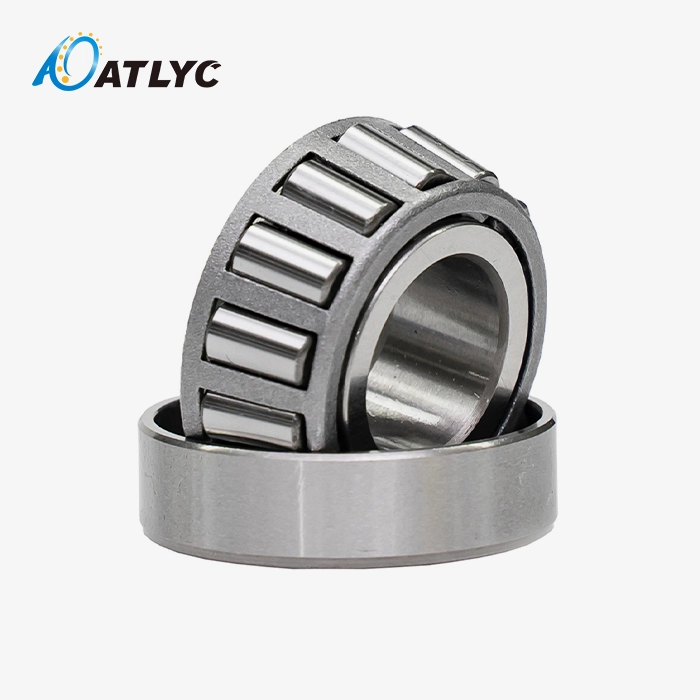
The Tapered Roller Bearing 30 series consistently demonstrates exceptional performance under pressure by distributing combined radial and axial loads through its unique conical geometry. With contact angles ranging from 10° to 30°, these metric single-row bearings handle medium to light-load scenarios with remarkable precision. The tapered raceway design ensures all contact points converge on a common axis, eliminating edge loading and uniformly distributing forces across roller length. This engineering advantage translates into superior load capacity and extended service life compared to cylindrical roller alternatives, making the 30 series a reliable choice for demanding industrial environments.
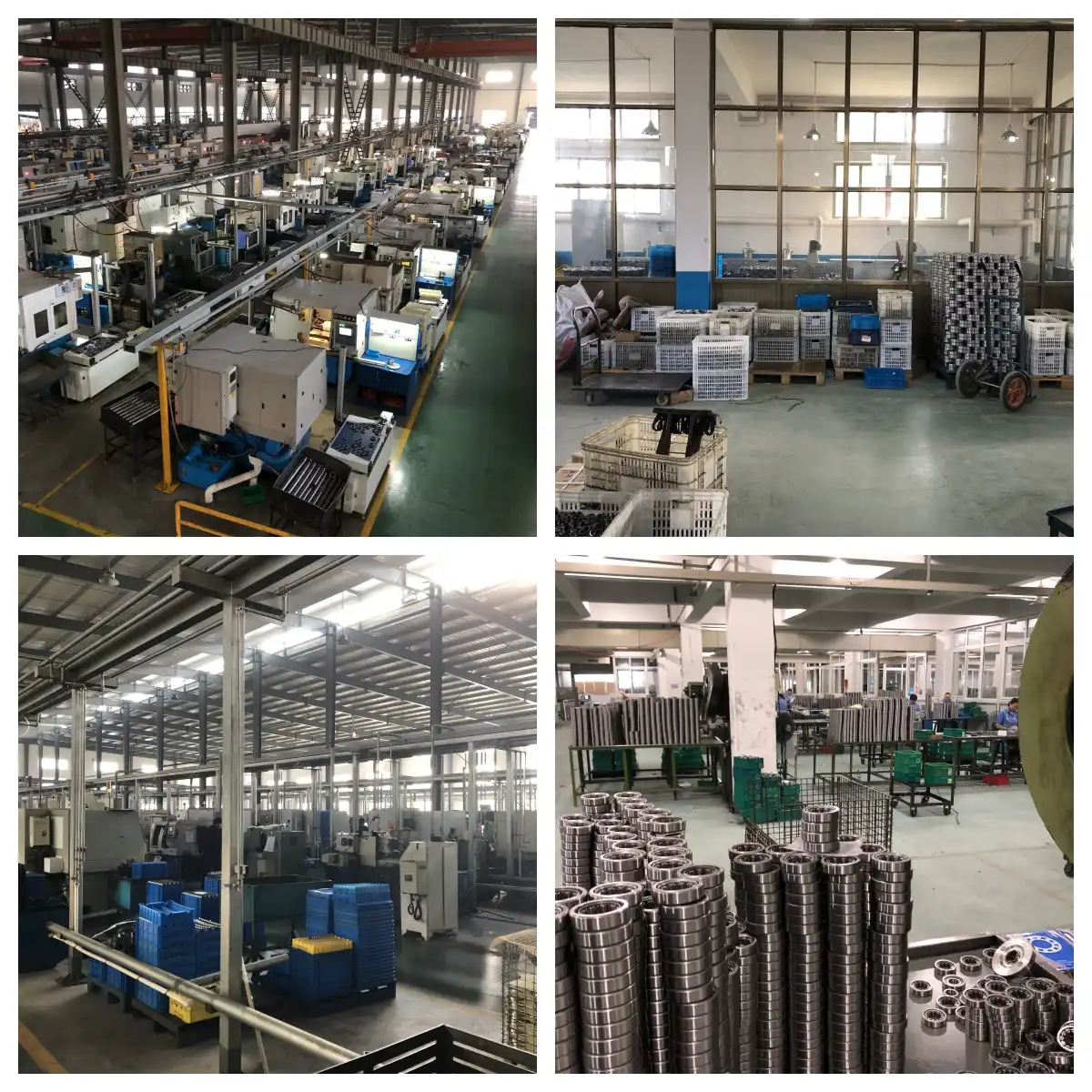
Understanding the Design and Specifications of Tapered Roller Bearing 30 Series
The engineering behind tapered roller bearings represents decades of refinement in load management technology. Our 15 years of manufacturing experience at Luoyang Auto Bearing Co., Ltd. has taught us that precision in design directly translates to performance under pressure. The 30 series embodies this principle through carefully calculated specifications that meet ISO 355 and DIN 720 standards.
Conical Geometry and Load Distribution Principles
The conical geometry advantage stands as the defining characteristic of this bearing family. Unlike parallel roller configurations, the tapered design creates a contact pattern that naturally accommodates combined loading conditions. Each roller maintains optimal contact across its entire length, preventing stress concentration at edges. This geometry allows the bearing to handle radial loads while simultaneously managing axial thrust in one direction—a capability critical for automotive hubs and machine tool spindles where multi-directional forces are constant realities. Our manufacturing process ensures dimensional precision across every component. The inner ring features a tapered raceway machined to exacting tolerances, while the outer ring remains separable for simplified installation. This separable design benefits assembly procedures by allowing independent mounting of the cup and cone assembly, enabling precise clearance adjustment during installation to optimize preload settings for specific application requirements.
Dimensional Range and Precision Classes
The size range spans inner diameters from 10mm to 500mm, outer diameters from 26mm to 1000mm, and widths from 8mm to 200mm. This wide dimensional variety allows procurement managers to source bearings for applications ranging from compact agricultural machinery gearboxes to substantial industrial reducers from a single supplier. Precision classes available include P0, P6, and P5 grades. P0 represents standard precision suitable for most industrial applications, delivering reliable performance at competitive pricing. P6 offers tighter tolerances for applications requiring reduced vibration levels, such as machine tool positioning ends. P5 provides the highest precision grade for critical applications where runout and dimensional Tapered Roller Bearing 30 series accuracy directly affect final product quality.
Performance Analysis Under Pressure: How the 30 Series Excels
Real-world performance data separates theoretical capabilities from practical reliability. Our experience supplying automotive and industrial equipment manufacturers across South Korea, the United States, Germany, Russia, Iran, and Turkey has provided extensive validation of how these bearings respond to operational stress.
Load Capacity Comparison Across Bearing Types
When comparing load-handling capabilities, tapered roller configurations demonstrate clear advantages in specific scenarios. Ball bearings excel in high-speed applications with moderate loads but struggle when axial and radial forces combine. Cylindrical roller bearings handle substantial radial loads yet lack axial capacity entirely. Spherical roller bearings accommodate misalignment but introduce complexity and cost. The 30 series strikes a practical balance, handling combined loading with a contact angle optimized for medium to light-load scenarios. Dynamic load ratings vary by specific model within the series, but the geometry consistently delivers superior performance when both radial and unidirectional axial forces are present. This capability explains widespread adoption in automobile wheel hubs, where cornering forces create complex loading patterns that pure radial bearings cannot adequately manage. Static load ratings deserve equal consideration during procurement decisions. When equipment operates intermittently or experiences shock loading, static capacity determines whether permanent deformation will occur during stationary periods. The line contact between tapered rollers and raceways distributes static loads across a greater surface area than point contact designs, reducing stress concentration and preventing brinelling damage.
Corrosion Resistance and Maintenance Intervals
Environmental exposure introduces additional performance considerations. Standard bearing steels offer limited corrosion resistance in humid or contaminated environments. While the 30 series is offered in open-type configuration as standard, dust covers are available as optional features for applications where particulate contamination poses a risk. Maintenance intervals depend heavily on operating conditions. Clean, temperature-controlled environments with proper lubrication enable extended service intervals. Harsh conditions with contamination exposure or temperature extremes necessitate more frequent inspection and relubrication. Our technical support team assists customers in establishing maintenance schedules based on specific application parameters, ensuring optimal service life without excessive maintenance burden.
Making the Right Choice: 30 Series vs Related Bearing Series and Types
Selecting appropriate bearings requires understanding subtle differences across related product families. The 30 series occupies a specific niche within the broader tapered roller bearing landscape, and recognizing where alternative series offer advantages helps procurement professionals optimize equipment design.
Comparative Analysis: 30 Series, 32 Series, and Extended Families
The 32 series represents a parallel product line with slightly different dimensional proportions and contact angles. While both series handle combined loading, the 32 series typically features steeper contact angles, providing greater axial load capacity at the expense of maximum radial capacity. Applications with predominantly axial loading, such as certain gearbox configurations, may benefit from 32 series selection. Extended families, including the 30200 and 30300 series designations, represent dimensional subgroups within the broader 30 series classification. These numerical suffixes indicate specific dimension Tapered Roller Bearing 30 series ranges and load ratings. Understanding these subdivisions enables precise matching of bearing specifications to application requirements. Our engineering team provides selection assistance, analyzing your load conditions, speed requirements, and space constraints to recommend the optimal configuration. Cross-series comparison reveals trade-offs inherent in bearing selection. Larger contact angles increase axial capacity but reduce radial capacity and maximum speed capability. Wider bearings distribute loads across a greater surface area but require additional axial space. Procurement decisions should balance these competing factors against application priorities and cost considerations.
Application Suitability and Operational Limitations
Automotive hubs represent an ideal application for the 30 series, where vehicle weight creates substantial radial loading and cornering forces introduce axial components. The separable design simplifies hub assembly procedures, while adjustable clearance accommodates thermal expansion during extended highway operation. Reducer gearboxes benefit similarly, as gear tooth forces create combined loading patterns that tapered geometry manages effectively. Machine tool spindles present more nuanced requirements. Positioning ends typically use tapered roller bearings for their rigidity and load capacity, while high-speed ends often employ angular contact ball bearings for reduced friction. The 30 series serves positioning applications well, providing the axial rigidity necessary for precise machining while handling cutting forces without excessive deflection. Speed limitations exist for all bearing types, determined by centrifugal forces acting on rolling elements and cage designs. While the 30 series handles moderate speeds effectively, applications approaching or exceeding grease lubrication speed limits may require alternative bearing types or forced lubrication systems. Our technical documentation provides detailed speed ratings for each model, enabling accurate assessment during design phases.
Procurement Guidance for Global Buyers: Finding the Best Tapered Roller Bearing 30 Series Suppliers
Sourcing decisions carry long-term implications for equipment reliability and supply chain stability. Global procurement professionals balance quality assurance, cost competitiveness, and supplier reliability when establishing bearing supply relationships. Our 15-year evolution from a single automated workshop to a comprehensive six-category manufacturing enterprise positions us to serve as your strategic partner in precision bearing supply.
Evaluating Manufacturing Capacity and Quality Certifications
Manufacturing capacity directly influences supply reliability and lead time consistency. At Luoyang Auto Bearing, our expansion to six specialized workshops enables scalable production that accommodates both prototype quantities and full-scale production runs. This capacity growth supports customers experiencing business expansion without requiring supplier transitions that introduce quality risk. Quality certifications provide objective verification of manufacturing capabilities. Our ISO 9001 and IATF 16949 certifications demonstrate compliance with automotive industry quality standards, critical for OEM applications where component failure carries significant liability exposure. These certifications require continuous process monitoring and improvement, ensuring consistent product quality across production batches. Supplier facility visits offer valuable insights beyond certifications. Observing manufacturing processes, inspection equipment, and quality control procedures provides confidence in supplier capabilities. We welcome customer audits and facility tours, recognizing that transparency builds the long-term trust necessary for strategic partnerships.
Authenticity Verification and After-Sales Support
Counterfeit bearings represent a persistent supply chain risk, particularly in international procurement. Verification strategies include supplier certification review, product documentation examination, and physical inspection of packaging and marking. We provide complete traceability documentation with each shipment, including material certifications and inspection reports that verify authenticity and specification compliance. Warranty terms should address defect responsibility and replacement procedures clearly. Our warranty covers manufacturing defects while establishing reasonable parameters for proper installation and operation. This balanced approach protects your interests while acknowledging that bearing life depends on application conditions and maintenance practices outside our control. After-sales support extends beyond warranty replacement to include technical consultation and application engineering assistance. As equipment evolves or operating conditions change, our team provides ongoing guidance to optimize bearing selection and maintenance practices. This collaborative relationship maximizes equipment reliability throughout its service life.
Maintenance and Long-Term Performance: Best Practices to Maximize Bearing Life
Proper maintenance practices extend bearing life substantially beyond nominal Tapered Roller Bearing 30 series ratings. Our experience supporting customers across diverse industries has identified critical factors that separate premature failures from units achieving exceptional service intervals. Implementing these practices reduces the total cost of ownership while improving equipment reliability.
Lubrication Management and Inspection Protocols
Lubrication regimes must match operating conditions and bearing configuration. Grease lubrication suits most industrial applications, providing simplicity and contamination protection. Oil lubrication becomes necessary for high-speed applications or when heat dissipation requirements exceed grease capabilities. The open-type configuration of standard 30 series bearings accommodates both lubrication methods, though proper sealing becomes critical with oil systems. Grease selection should consider operating temperature range, speed parameters, and compatibility with existing lubricants if multiple bearing types share common lubrication systems. Lithium-based greases serve general-purpose applications effectively, while synthetic formulations extend temperature range and service intervals in demanding environments. Over-greasing creates excessive churning resistance and temperature rise, while under-greasing leads to metal-to-metal contact and rapid wear. Inspection intervals should be established based on operating severity. Continuous operation under stable conditions enables extended intervals, perhaps quarterly or semi-annually. Intermittent operation with shock loading or contamination exposure warrants monthly inspection. Visual examination for leakage, listening for unusual noise, and vibration monitoring provide early warning of developing problems before catastrophic failure occurs.
Troubleshooting Common Issues and Performance Optimization
Vibration analysis identifies developing bearing problems before failure. Increased vibration amplitude or frequency changes indicate roller surface defects, contamination, or inadequate lubrication. Establishing baseline vibration signatures during commissioning enables meaningful comparison during routine monitoring. This condition-based maintenance approach prevents unexpected downtime while avoiding unnecessary bearing replacement. Temperature monitoring complements vibration analysis. Bearing operating temperature should stabilize within the expected range based on load and speed conditions. Gradual temperature increase suggests lubrication degradation or internal wear progression. Sudden temperature spikes indicate lubrication failure or severe contamination requiring immediate attention. Infrared thermography during operation provides a non-invasive temperature assessment across multiple bearing locations efficiently. A preventive maintenance case from one of our automotive component manufacturing customers illustrates these principles. After implementing vibration monitoring and scheduled relubrication based on operating hours, bearing life increased by 40% while unexpected failures decreased by 85%. This proactive approach reduced production downtime and maintenance costs substantially, demonstrating clear return on investment from structured maintenance programs.

Conclusion
The Tapered Roller Bearing 30 series delivers reliable performance under pressure through engineering principles refined over decades of industrial application. Conical geometry manages combined loading effectively, while material selection and precision manufacturing ensure consistent quality. Our ISO 9001 and IATF 16949 certifications validate manufacturing processes that maintain specification compliance across production volumes. Proper bearing selection matched to application requirements, combined with structured maintenance practices, maximizes service life and equipment reliability. Luoyang Auto Bearing's 15-year evolution provides the manufacturing scale, technical expertise, and quality assurance systems necessary to support your precision bearing requirements with confidence.
FAQ
1. What operating temperature range can the 30 series withstand?
Standard GCr15 steel maintains hardness and dimensional stability up to approximately 150°C during continuous operation, covering most automotive and industrial machinery applications. Brief temperature excursions slightly beyond this range are tolerable, though prolonged exposure above 150°C may reduce material hardness through tempering effects. Applications with higher temperature requirements should be discussed with our engineering team to evaluate material alternatives or cooling strategies.
2. How does performance compare with ball bearings under heavy loads?
Tapered roller bearings excel when combined radial and axial loads are present, particularly in medium to heavy-load scenarios. Ball bearings handle pure radial or axial loads efficiently at high speeds but lack the load capacity for heavy combined loading. The line contact in roller bearings distributes forces across a greater surface area than the point contact of ball bearings, enabling substantially higher load ratings. This advantage makes the 30 series preferable for automotive hubs, reducers, and similar applications where loading complexity exceeds ball bearing capabilities.
3. What maintenance practices prevent premature bearing failures?
Regular lubrication maintains protective film between rolling elements and raceways, preventing metal-to-metal contact that causes rapid wear. Inspection protocols should monitor vibration, temperature, and noise for early problem detection. Proper installation, ensuring correct mounting and clearance adjustment, prevents edge loading and uneven stress distribution. Contamination control through appropriate sealing protects internal surfaces from abrasive particles. Following these fundamental practices substantially extends bearing life beyond nominal L10 ratings.
Partner With ATLYC for Reliable Tapered Roller Bearing 30 Series Supply
Luoyang Auto Bearing Co., Ltd. (ATLYC) brings 15 years of precision manufacturing expertise to your bearing procurement needs. Our 120 skilled professionals across production, quality inspection, and engineering departments ensure every Tapered Roller Bearing 30 series tapered roller bearing meets demanding specifications. We manufacture the complete 30 series range with inner diameters from 10mm to 500mm, maintaining precision grades P0, P6, and P5 to match your exact requirements. As a qualified tapered roller bearing 30 series supplier with ISO 9001 and IATF 16949 certifications, we serve automotive OEMs and industrial equipment manufacturers across global markets with consistent quality and reliable lead times. Our technical team provides application engineering support, helping optimize bearing selection and installation procedures for maximum equipment performance. Contact our procurement specialists at auto@lyautobearing.com to discuss your specific requirements and receive a detailed quotation with competitive pricing for both sample orders and volume production runs. We deliver the manufacturing scale, quality assurance, and technical partnership your operations deserve.
References
1. Harris, T.A., and Kotzalas, M.N. (2006). "Advanced Concepts of Bearing Technology: Rolling Bearing Analysis, Fifth Edition." CRC Press, Taylor & Francis Group.
2. Eschmann, P., Hasbargen, L., and Weigand, K. (1985). "Ball and Roller Bearings: Theory, Design and Application, Second Edition." John Wiley & Sons.
3. ISO 355:2007. "Rolling bearings — Tapered roller bearings — Boundary dimensions and series designations." International Organization for Standardization.
4. Tallian, T.E. (1992). "Simplified Contact Fatigue Life Prediction Model—Part I: Review of Published Models." Journal of Tribology, Transactions of the ASME, Vol. 114, pp. 207-213.
5. Zhou, R.S., and Cheng, H.S. (1995). "Correlation of Ball Bearing Vibration Characteristics with Distributed Defects." Tribology Transactions, Vol. 38, No. 2, pp. 330-336.
6. Zaretsky, E.V. (2013). "Rolling Bearing Steels – A Technical and Historical Perspective." Materials Science and Technology, Vol. 28, No. 1, pp. 58-69.
Learn about our latest products and discounts through SMS or email